Get FREE email communications from Fodor's Travel, covering must-see travel destinations, expert
trip planning advice, and travel inspiration to fuel your passion.
We've compiled the best of the best in USA - browse our top choices for the top
things to see or do during your stay.
Sorry! We don't have any recommendations for USA right now.
Sights Filter
The Rookery
Chicago Loop
Fodor's Choice
Share This
(c) Afagundes | Dreamstime.com
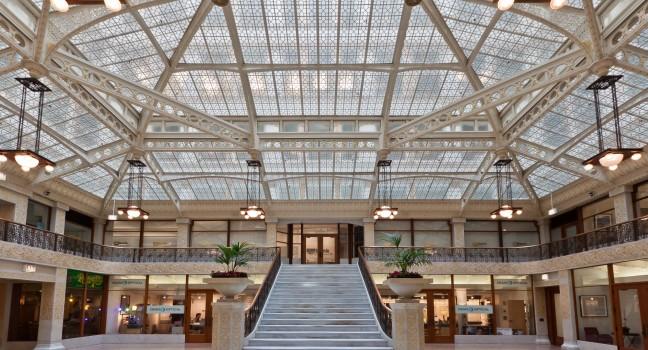
This 11-story structure, with its eclectically ornamented facade, got its name from the pigeons and politicians who roosted at the temporary city hall constructed on this site after the Great Chicago Fire of 1871; the structure didn't last long, and The Rookery replaced it. Designed in 1885 by Burnham & Root, who used both masonry and a more modern steel-frame construction, The Rookery was one of the first buildings in the country to feature a central court that brought sunlight into interior office spaces. Frank Lloyd Wright, who kept an office here for a short time, renovated the two-story lobby and light court, eliminating some of the ironwork and terra-cotta and adding marble scored with geometric patterns detailed in gold leaf. The interior endured some less tasteful alterations after that, but it has since been restored to the way it looked when Wright completed his work in 1907.
Rose Bowl and Flea Market
Fodor's Choice
Share This
spirit of america / Shutterstock
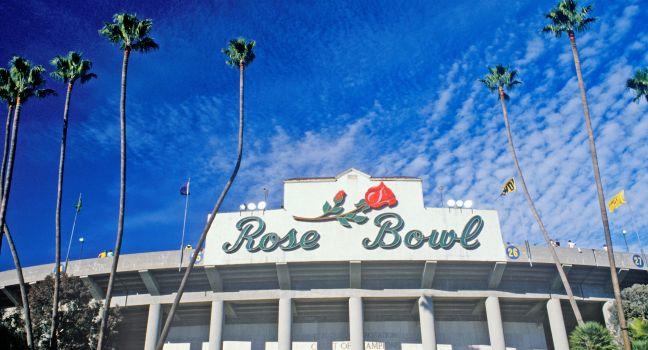
With an enormous rose on its exterior, this 90,000-seat stadium, host of many Super Bowls and home to the UCLA Bruins and the annual Rose Bowl Game on New Year’s Day, also regularly sees performances from the biggest recording artists in the world. Set at the bottom of a wide arroyo in Brookside Park, the facility is closed except during events, incuding its famed Flea Market, a Southern California institution. The massively popular and eclectic event, which happens the second Sunday of each month (rain or shine), deservedly draws crowds that come to find deals from more than 2,500 vendors on goods including mid-century and antique furniture, vintage clothing, pop culture collectibles, books, and music. Food and drink options are on hand to keep shoppers satiated, parking is free, and general admission is just $13. Bring cash to avoid an inevitable line at the ATM, and feel free to try your hand at haggling.
Sandy Beach Park
Fodor's Choice
Share This
(c) Phillipgray | Dreamstime.com
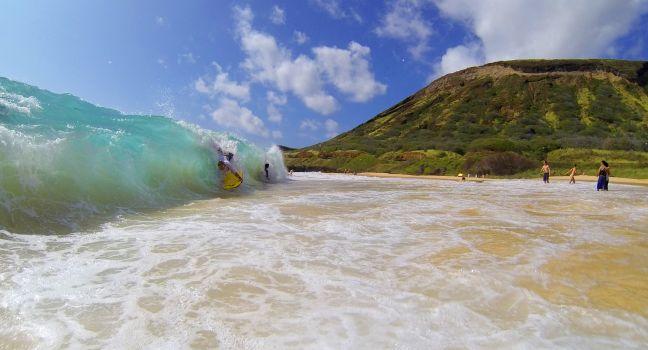
Very popular with locals, this broad, sloping beach is covered with sunbathers who come to soak up the rays and watch "The Show"—a shore break that's like no other in the Islands. Monster ocean swells rolling into the beach combined with the sudden rise in the ocean floor cause waves to jack up and crash magnificently. Expert surfers and bodyboarders young and old brave the dangers to enjoy some of the biggest barrels around. Use extreme caution when swimming here. The stretch is nicknamed Break-Neck Beach for a reason: many neck and back injuries are sustained here each year. Amenities: lifeguards; parking (no fee); showers; toilets. Best for: walking.
Recommended Fodor's Video
Santa Monica Pier
Santa Monica
Fodor's Choice
Share This
Celsodiniz | Dreamstime.com
Souvenir shops, carnival games, arcades, eateries, an outdoor trapeze school, a small amusement park, and an aquarium all contribute to the festive atmosphere of this truncated pier at the foot of Colorado Boulevard below Palisades Park. The pier's trademark 46-horse Looff Carousel, built in 1922, has appeared in several films, including The Sting. The Soda Jerks ice-cream fountain (named for the motion the attendant makes when pulling the machine's arm) inside the carousel building is a pier staple, and the MariaSol restaurant at the end of the pier serves great fajitas. Free concerts are held on the pier in the summer.
The Seaport
Financial District
Fodor's Choice
Share This
Sepavo | Dreamstime.com
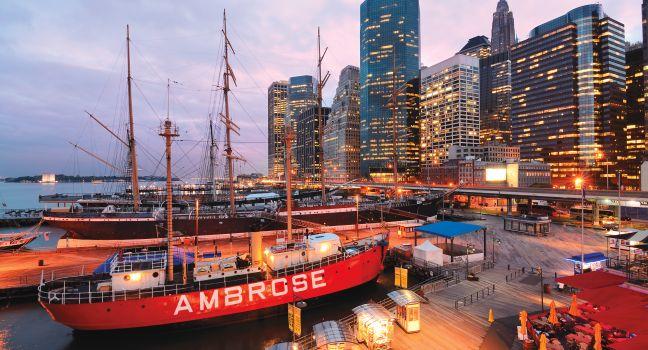
Had this charming cobblestone neighborhood not been declared a historic district in 1977, the city's largest concentration of early-19th-century commercial buildings would have been destroyed. Thankfully, they survived, and in recent years have come to enjoy new life. The landmarked "South Street Seaport Historic District" has undergone a thorough makeover as a diverse shopping and dining destination, with seasonal markets, art installations, IPIC Theater (a luxury cinema with dining), and live entertainment—plus a simplified moniker as The Seaport.
At the intersection of Fulton and Water Streets, the main Seaport gateway, is the Titanic Memorial Lighthouse, a small white lighthouse that commemorates the sinking of the RMS Titanic in 1912. Beyond the lighthouse, Fulton Street turns into a cobblestone pedestrian mall. On the south side of Fulton is The Seaport's architectural centerpiece, Schermerhorn Row, a redbrick terrace of Georgian- and Federal-style warehouses and countinghouses built from 1810 to 1812. Cross South Street to Pier 16, where historic 19th- and 20th-century ships are docked. Pier 16 also is the departure point for various seasonal cruises. (Ship tours are included in the admission to the South Street Seaport Museum).
Across South Street along the East River are Pier 17 and the renovated Tin Building. Previously the longtime site of the Fulton Fish Market, in 2022, the latter reopened as the Tin Building by renowned chef Jean-Georges Vongerichten, a high-end dining destination and specialty food market ( tinbuilding.com). In 2018, the Pier 17 building became a multilevel office complex with several restaurants and bars at street level, and a 60,000-square-foot rooftop that's programmed with concerts and seasonal pop-ups ( rooftopatpier17.com). But the real highlight is the wraparound public wharf that's open year-round, with seating and stunning views of the harbor and Brooklyn Bridge.
Seattle Aquarium
Downtown
Fodor's Choice
Share This
(c) Afagundes | Dreamstime.com
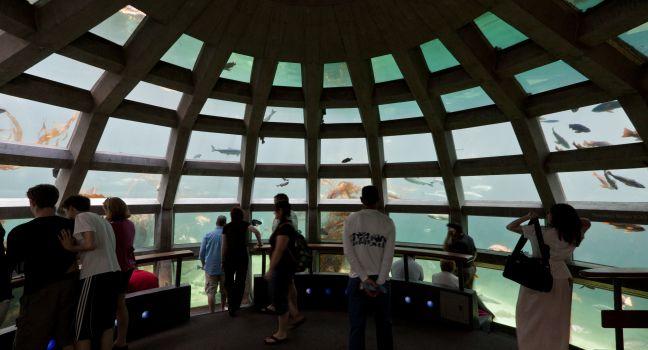
The Seattle Aquarium ranks among the best in the country, sitting right on the water's edge and housing exhibits that highlight the beauty and biodiversity of the Pacific Northwest. Inside, darkened galleries and glowing tanks showcase everything from hypnotic jellyfish to clever, color-shifting octopuses. The Life on the Edge tide pools recreate Washington’s rocky shores, letting kids get hands-on with sea stars, urchins, and sponges. If you’re visiting in fall or winter, bundle up—the Marine Mammal area sits outdoors along the waterfront, where brisk Puget Sound breezes are part of the experience.
The Seattle Public Library
Downtown
Fodor's Choice
Share This
(c) Jackbluee | Dreamstime.com
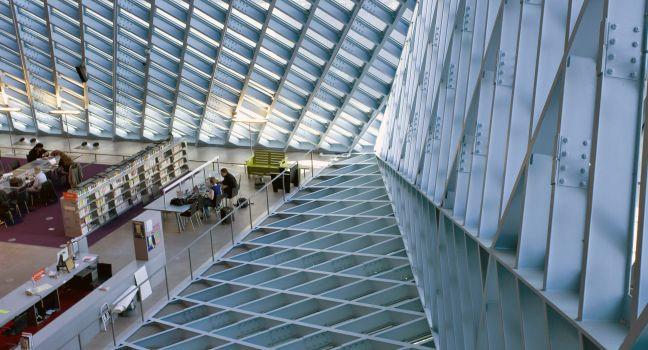
The hub of Seattle's 26-branch library system is a stunning jewel of a building that stands out against the concrete jungle of Downtown. Designed by renowned Dutch architect Rem Koolhaas and Joshua Ramus, this 11-story structure houses more than a million books, a language center, terrific areas for kids and teens, hundreds of computers, an auditorium, a "mixing chamber" floor of information desks, and a café. The building's floor plan is anything but simple; stand outside the beveled glass-and-metal facade of the building and you can see the library's floors zigzagging upward. Tours are self-guided via a laminated sheet you can pick up at the information desk; there's also a number you can call on your cell phone for an audio tour. The reading room on the 10th floor has unbeatable views of the city and the water. Readings and free film screenings happen on a regular basis.
Shedd Aquarium
South Loop
Fodor's Choice
Share This
(c) Del7891 | Dreamstime.com
One of the most popular aquariums in the country, the Shedd houses more than 32,500 creatures from around the world. A shark-filled 400,000-gallon tank is part of "Wild Reef," which explores marine biodiversity in the Indo-Pacific. The exhibit also has colorful corals, stingrays that slide by under your feet, and other surprising creatures, all from the waters around the Philippines. Whales and dolphins live in the spectacular Oceanarium, which has pools that seem to blend into Lake Michigan. The aquatic show here stars dancing belugas, leaping dolphins, and comical penguins. Be sure to get an underwater glimpse of the dolphins and whales through the viewing windows on the lower level, where you can also find a bunch of information-packed, hands-on activities. In 2022, the Shedd implemented a dynamic pricing plan for non-Chicago residents: advance ticket prices will vary based on projected attendance.Lines for the Shedd often extend all the way down the neoclassical steps. Buy a ticket in advance to avoid the interminable wait, or spring for a CityPASS.
Shelburne Museum
Fodor's Choice
Share This
Allan Wood Photography / Shutterstock
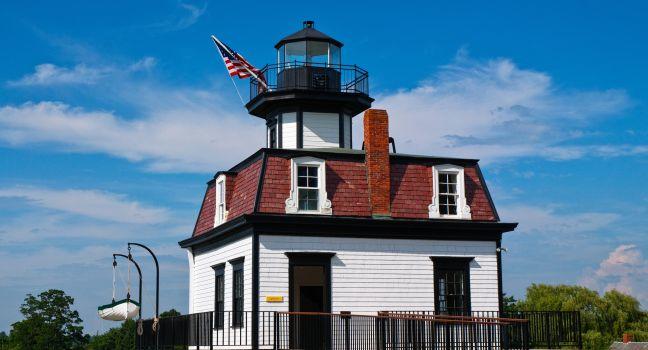
You can trace much of New England's history simply by wandering through the 45 acres and 39 buildings of this museum. Some 25 buildings were relocated here, including an old-fashioned jail, an 1871 lighthouse, and a 220-foot steamboat, the Ticonderoga. The outstanding 150,000-object collection of art, design, and Americana consists of antique furniture, fine and folk art, quilts, trade signs, and weather vanes; there are also more than 200 carriages and sleighs. The Pizzagalli Center for Art and Education is open year-round with changing exhibitions and programs for kids and adults.
Siesta Key Beach
Fodor's Choice
Share This
Dawn M Whalen / Shutterstock
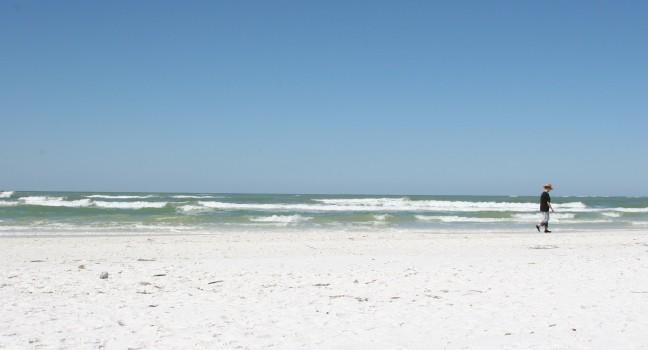
This popular beach has fine, powdery quartz sand that squeaks under your feet, very much like the sand along the state's northwestern coast. You'll also find 40 acres of nature trails and tons of amenities. Don't forget to bring a volleyball—or a tennis racket. Amenities: food and drink; lifeguards; toilets. Best for: partiers; sunset; swimming; walking.
Smithsonian National Air and Space Museum
The Mall
Fodor's Choice
Share This
F11photo | Dreamstime.com
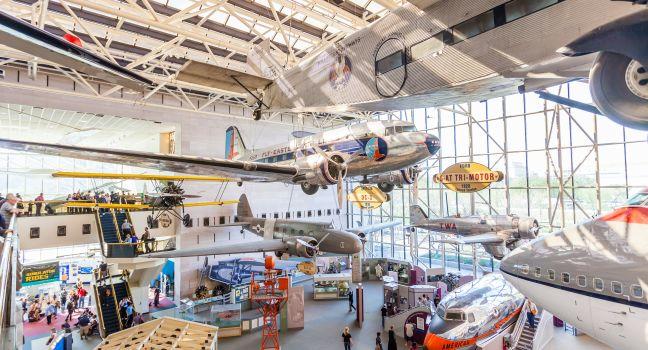
This is one of the country's most visited museums. Between its two buildings, it attracts 6 to 8 million people annually to the world's largest collection of historic aircraft and spacecraft. More than 20 galleries tell the story of aviation—from the earliest human attempts at flight to supersonic jets and spacecraft. The museum reopened in late 2022 after undergoing a series of renovations, and more are currently in the works. The renovated museum features hundreds of new artifacts to the building, such as the WR-3 air racer built by Neal Loving, the first African American certified to race airplanes; a T-38 flown by Jackie Cochran, the first woman to break the sound barrier; and Sean Tucker's custom-built aerobatic biplane, and the Aviation Specialties Unlimited Challenger III.
Buy IMAX theater and planetarium tickets up to two weeks in advance or as soon as you arrive (times and prices vary); then tour the museum. Museum tickets are free, but visitors must reserve tickets in advance for every member of their group, regardless of age.
The three-story museum store is the largest (and one of the best) in all the Smithsonian museums. You'll find souvenirs, clothing, books and movies, kites, and many collector items. It is closed during construction, but two satellite stores are available.
Smithsonian's National Zoo
Upper Northwest
Fodor's Choice
Share This
Condor 36 / Shutterstock
The Smithsonian's National Zoo and Conservation Biology Institute features 1,800 animals representing 360 species, as close as you can get to their native surroundings. Arrive between 11 and 2 (weather permitting), and you can catch orangutans traversing the "O" line, a series of cables and towers near the Great Ape House that allow the primates to swing hand over hand about 50 feet above your head. The famous pandas are leaving at the end of 2023, but there are plenty of other animals that beguile. The multigenerational herd of elephants—part of the zoo's conservation campaign to save this endangered species from extinction—is a perennial favorite. Along the Claws and Paws Pathway, the binturongs (also known as bearcats) smell like buttered popcorn, and petite Pallas's cats hide in plain sight. The zoo was designed by famed landscape architect Frederick Law Olmsted, who also designed New York's Central Park. Try visiting early morning or late afternoon, since many animals sleep midday. Nighttime visits are especially fun during the Christmas holiday as the zoo sparkles with the annual ZooLights event.
Snug Harbor Cultural Center and Botanical Garden
Livingston
Fodor's Choice
Share This
(c) Sangaku | Dreamstime.com
One of the largest ongoing adaptive reuse projects in America, Snug Harbor Cultural Center and Botanical Garden’s 83-acre campus—with 3 museums, 26 buildings, 9 gardens, 10 acres of wetlands, and a 2-acre farm—is an ideal place to enjoy nature, history, and the arts. Its on-site attractions are managed and, if applicable, ticketed independently of each other (although some are a part of an encompassing Discovery Pass). Events, performances, and cultural celebrations occur regularly throughout campus.
\n
The Newhouse Center for Contemporary Art is Staten Island's oldest contemporary art gallery, exhibiting vibrant, dynamic displays of local and international artwork, all housed in Snug Harbor’s landmarked Greek Revival building. Next door, the Noble Maritime Collection maintains historic collections specific to Staten Island's maritime past. Enjoy the Staten Island Children's Museum with kids, or visit the Staten Island Museum, with exhibits on art, history, and science—including a partial life-size replica of a mastodon. Among the unique botanical gardens is the Ming Dynasty--inspired New York Chinese Scholar's Garden, one of the first classical outdoor scholar’s gardens in North America, fabricated in Suzhou and constructed on-site.
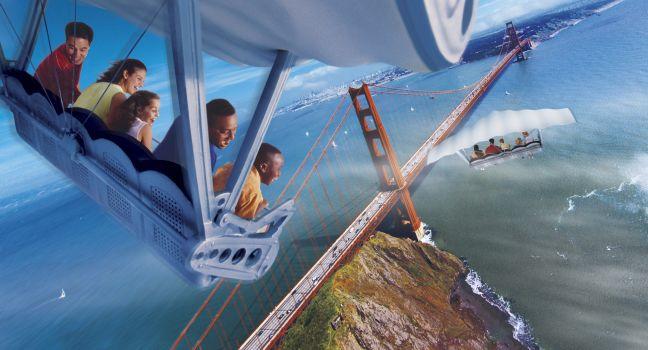
If you've ever wondered what it's like to fly, or at least hang glide, this attraction is your chance to enjoy the sensation without actually taking the plunge. It uses motion-based technology to literally lift you in your seat 40 feet into the air within a giant projection-screen dome. As you soar above the wonders of the world—from the sharp peaks of the Alps and the Great Wall of China to Sydney Harbor in Australia and the spires of Neuschwanstein Castle in Bavaria—you feel the wind and dodge the spray of leaping whales.
The flight is so mild (and the view so thrilling) that even very timid children love it. For people with disabilities: Those with mobility impairments must transfer from their wheelchairs to the ride system. Equipped for video-captioning devices. Service animals aren't permitted on the ride. Long lines mean this should be one of your first stops upon entering the park, or you can wait until just before fireworks to try for a shorter line.
Solomon R. Guggenheim Museum
Upper East Side
Fodor's Choice
Share This
Adriano Castelli / Shutterstock
Frank Lloyd Wright's landmark nautilus-like building is renowned as much for its famous architecture as for its superlative collection of modern and contemporary art and well-curated shows, some of which utilize the entire museum. Opened in 1959, shortly after Wright's death, the Guggenheim is acclaimed as one of the greatest buildings of the 20th century. Inside, under a 96-foot-high skylight, just over a quarter-mile long ramp spirals down past current exhibits. The museum has strong holdings of works by Vasily Kandinsky (over 150 paintings), René Magritte, Jeff Koons, Paul Klee, Marc Chagall, Francis Bacon, and Faith Ringold. In 2023, the museum hired its first associate curator of art and technology to promote artists working with technology.
Wright's superior design was criticized by some who believed that the distinctive building detracted from the art, but the spiraling layout allows artwork to be viewed from different angles and distances. On permanent display, the museum's Thannhauser Collection is made up primarily of works by French Impressionists and Postimpressionists Van Gogh, Degas, Picasso, and Manet. Escape the crowded lobby by taking the elevator to the top and working your way down the spiral. The Cafe Rebay offers snacks, salads, and sandwiches, while the gift shop is near the museum's exit.
Staten Island Ferry
Financial District
Fodor's Choice
Share This
Christopher Penler / Shutterstock
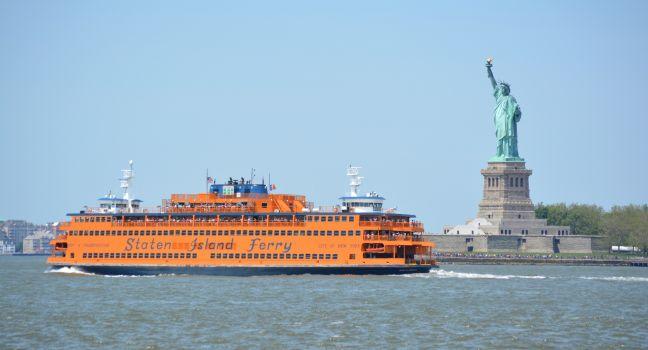
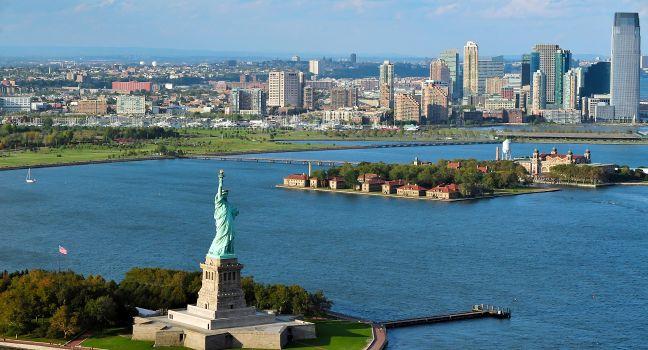
Some 70,000 people ride the free ferry daily to Staten Island, one of the city's five boroughs, and you, too, can join them for the city's most scenic commute. Without paying a cent, you get phenomenal views of the Lower Manhattan skyline, the Statue of Liberty, Ellis Island, and Governors Island during the 25-minute cruise across New York Harbor. You also pass tugboats, freighters, and cruise ships—a reminder that this is very much still a working harbor. The ferry sails every 15–30 minutes (24 hours a day, 365 days a year) from Whitehall Terminal at Whitehall and South Streets, on the east side of Battery Park. You must disembark once you reach the opposite terminal, but you can loop around and reboard if you don't plan to stay. A small concession stand on each ferry sells a few snacks and beverages (including beer). If you're sightseeing, avoid the packed morning and afternoon rush hours.
Statue of Liberty
Financial District
Fodor's Choice
Share This
ChameleonsEye / Shutterstock
For millions of immigrants, the first glimpse of America was the Statue of Liberty, and today it remains a powerful symbol of American ideals. Liberty Enlightening the World, as the statue is officially named, was presented to the United States in 1886 as a gift from France. The 152-foot-tall figure was sculpted by Frédéric-Auguste Bartholdi and erected around an iron skeleton engineered by Gustave Eiffel. It stands atop an 89-foot pedestal designed by Richard Morris Hunt, with Emma Lazarus's sonnet "The New Colossus" ("Give me your tired, your poor, your huddled masses . . .") inscribed on a bronze plaque at the base.
There is no admission fee for either the Statue of Liberty or Ellis Island, but an adult ferry ride (which goes round-trip to both Liberty Island and Ellis Island) costs $25.50, and includes entrance to the statue's pedestal and museum. Access to the statue's crown, via a famously narrow, twisting staircase, is strictly limited and tickets must be booked months in advance. Ferries leave from Battery Park (and from Liberty State Park in New Jersey) every 25–30 minutes depending on the time of year (buy your tickets online at www.statuecruises.com). There are often long lines, so arrive early, especially if you have a timed-entry ticket (strongly recommended since they do sell out). There is a pleasant indoor-outdoor café on Liberty Island. In 2019, a new 26,000-square-foot museum opened on the island to showcase the statue's history and legacy, with artifacts including the statue's original torch, across three interactive galleries.
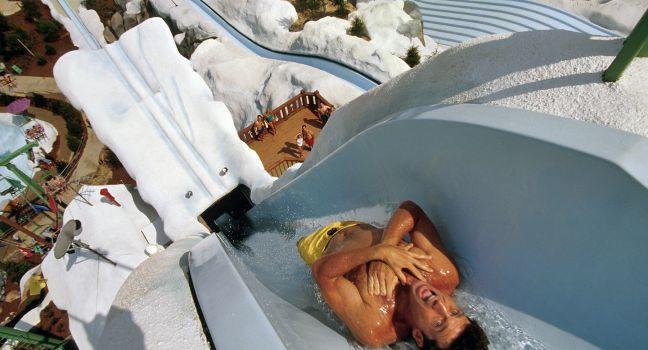
Each of these three body slides is about 300 feet long and snakes in and out of rock formations, through caves and tunnels, and under waterfalls, but each has a slightly different view and offers a twist. The one in the middle has the longest tunnel; the others feature secrets you'll have to discover for yourself. Brace for splashdown on all three slides! Maximum speed is about 20 mph, and the trip takes about 30 seconds. These slides are not appropriate for guests who are pregnant or who have heart, back, or neck problems.
Try each of the three slides for different twists.
Starting on the "ski jump" tower atop the green slopes of Mt. Gushmore, you slide straight down—some 12 stories at about 55 mph—and then into a tunnel before a white-water splash landing at the end of the 360-foot-long run. It looks almost like a straight vertical drop, and you can't help but feel like a movie stunt double as you take the plunge. If you're watching from the beach below, you can't hear the yells of the participants, but you can bet many of them are screaming their heads off. If you have heart, neck, or back problems or are pregnant, avoid this attraction—one of the most intense in all of Disney. For people with disabilities: This attraction requires walking up two flights of stairs and is not suited to those with mobility issues. Make this your first stop early in the day. Summer afternoon waits can be up to two hours.
Supreme Court of the United States
Capitol Hill
Fodor's Choice
Share This
Gary Blakeley / Shutterstock
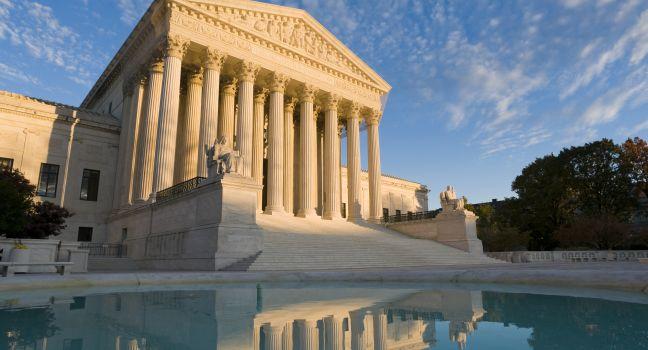
It wasn't until 1935 that the Supreme Court got its own building: a white-marble temple with twin rows of Corinthian columns designed by Cass Gilbert. Before then, the justices had been moved around to various rooms in the Capitol; for a while they even met in a tavern. William Howard Taft, the only man to serve as both president and chief justice, was instrumental in getting the court a home of its own, though he died before the building was completed. Today, you can sit in the gallery and see the court in action.
The court convenes on the first Monday in October and hears cases until April (though court typically is in session through June). There are usually two arguments a day, beginning at 10 in the morning, Monday through Wednesday, in two-week intervals. For the most contentious cases, viewers have been known to queue up days before. Oral arguments typically conclude in April, and for the remainder of the term, the court releases orders and opinions.
The court displays its calendar of cases a month in advance on its website. You can't bring your overcoat or electronics such as cameras and cell phones into the courtroom, but you can store them in a locker. Entry to visit the resolving exhibits inside is suspended at the time of publication.
Taos Pueblo
Fodor's Choice
Share This
photogal / Shutterstock
For nearly 1,000 years, the mud-and-straw adobe walls of Taos Pueblo have sheltered Tiwa-speaking Native Americans. A United Nations World Heritage Site, the multistory Pueblo is the largest of its kind. The pueblo's main buildings, a north house and a south house, are separated by the Rio Pueblo de Taos, a river that originates high in the mountains at the sacred Blue Lake, the primary source of Taos Pueblo’s drinking and irrigation water. These two structures are believed to have been built between 1000 and 1450. The mica-flecked adobe walls are maintained by continuously refinishing them with new plaster and clay washes. Some walls are several feet thick in places. The roofs of each of the five-story structures are supported by large timbers, or vigas, hauled down from the mountain forests, with smaller pieces of pine or aspen latillas placed between the vigas. To finish the roof, it is packed full of dirt.
Taos Pueblo has retained 95,000 acres of its original homeland. Forty-eight thousand acres of this was won back from the U.S. government through Taos Pueblo’s historic legal fight for the return of Blue Lake. Tribal custom allows no electricity or running water in the two houses of the ancient Pueblo, where varying members (roughly 150) of Taos Pueblo live full-time. An additional 1,900 or so live in homes outside of the ancient pueblo. The pueblo also has schools, cemeteries, a health center, farms and fields, buffalo pastures, powwow grounds, and many religious dwellings including traditional kivas and the Catholic Church of San Geronimo.
Although the population is predominantly Catholic, the people of Taos Pueblo also maintain their original religious traditions. The public is invited to certain ceremonial and social dances held throughout the year: highlights include the Feast of Santa Cruz (May 3); Taos Pueblo Pow Wow (mid-July); Santiago and Santa Ana Feast Days (July 25 and 26); San Geronimo Days (September 29 and 30); Procession of the Virgin Mary (December 24); and Deer Dance or Matachines Dance (December 25). While you're at the pueblo, respect all rules and customs, which are posted prominently. There are some restrictions on personal photography. Guided tours are available daily and are the best way to start your visit. Tours are led Taos Pueblo community members and provide insight into both the history and present-day life of the Pueblo.
Telegraph Hill and the Filbert Steps
Fodor's Choice
Share This
trekandshoot / Shutterstock
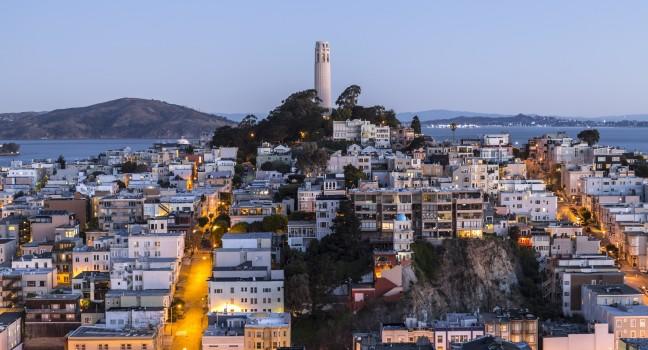
Residents here have some of the city's best views, as well as the most difficult ascents to their aeries. The hill rises from the east end of Lombard Street to a height of 284 feet and is capped by Coit Tower. If you brave the slope, though, you'll be rewarded with a "secret treasure" San Francisco moment. Filbert Street starts up the hill, then becomes the Filbert Steps when the going gets too steep. You can cut between the Filbert Steps and another flight, the Greenwich Steps, on up to the hilltop. As you climb, you pass some of the city's oldest houses and are surrounded by beautiful, flowering private gardens. In some places the trees grow over the stairs, so it feels like you're walking through a green tunnel; elsewhere, you'll have wide-open views of the bay. The cypress trees that grow on the hill are a favorite roost of local avian celebrities, the wild parrots of Telegraph Hill; you'll hear the cries of the cherry-headed conures if they're nearby. The name comes from the hill's status as the first Morse code signal station back in 1853.
Tenement Museum
Lower East Side
Fodor's Choice
Share This
wdstock / iStockphoto
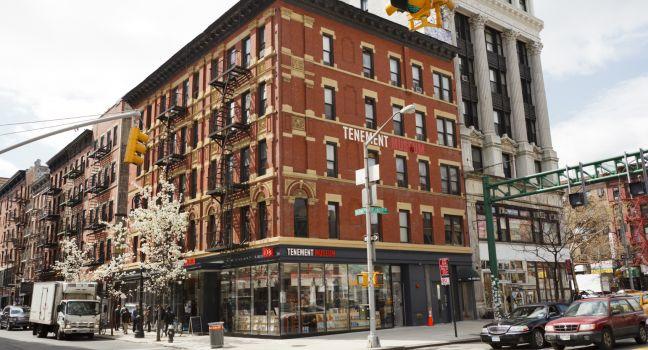
For a step back to various points in time on the Lower East Side, book one of the experiences that revolve around the partially restored 19th-century buildings that comprise the Tenement Museum. Options include apartment tours, neighborhood walks (including "Reclaiming Black Lives" introduced in 2021), and informative talks. At 97 Orchard Street, theme tours take you through the preserved apartments of several generations of immigrants who lived in the building. The "Hard Times" tour visits the homes of Natalie Gumpertz, a German–Jewish dressmaker (dating from 1878), and Adolph and Rosaria Baldizzi, Catholic immigrants from Sicily (1935). "Sweatshop Workers" visits the Levine family's garment shop–apartment and the home of the Rogarshevsky family from Eastern Europe (1918), while "Irish Outsiders" explores the life of the Moores, an Irish American family living in the building in 1869. Nearby, at 103 Orchard Street, the Under One Roof exhibition explores the lives of immigrant families from Poland, China, and Puerto Rico who lived in the building after World War II. All the tours fill up fast so it's best to sign up in advance.
Thomas Jefferson Memorial
The Mall
Fodor's Choice
Share This
Zack Frank / Shutterstock
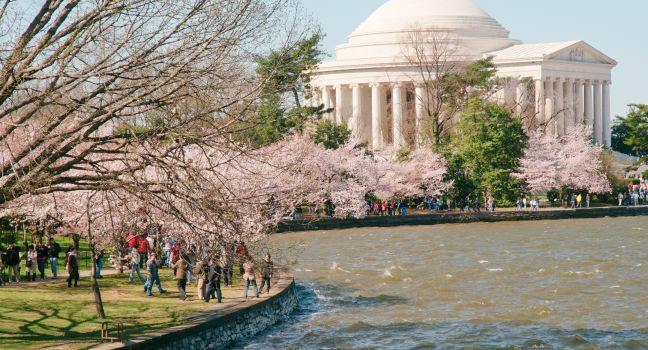
In the 1930s, Congress decided to build a monument to Thomas Jefferson as prominent as the Washington and Lincoln memorials. Workers scooped and moved tons of the river bottom to create dry land for the spot due south of the White House. Jefferson had always admired the Pantheon in Rome, so the memorial's architect, John Russell Pope, drew on it for inspiration. His finished work was dedicated on April 13, 1943, the bicentennial of Jefferson's birth. The bronze statue of Jefferson stands on a 6-foot granite pedestal. Surrounding the statue are his writings about freedom, which have since come under scrutiny for their inherent hypocrisy, as Jefferson owned many enslaved people in his lifetime. The Smithsonian National Museum of African American History and Culture delves into Jefferson's transgressions in its Monticello exhibit Paradox of Liberty.
Tidal Basin
The Mall
Fodor's Choice
Share This
Debratos | Dreamstime.com
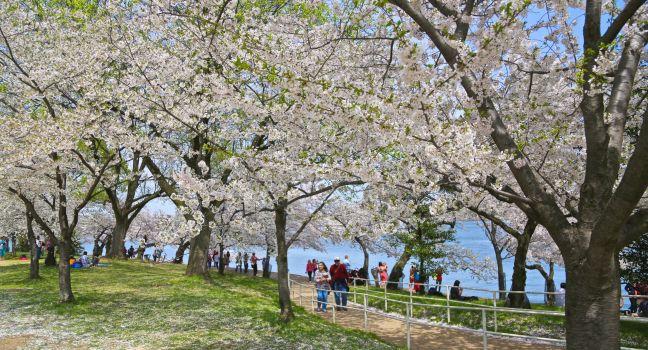
The Tidal Basin, a partially man-made reservoir between the Potomac and the Washington Channel, is part of West Potomac Park, adjacent to the Mall. It's the setting for memorials to Thomas Jefferson, Franklin Delano Roosevelt, Martin Luther King Jr., and George Mason. Two gargoyles on the sides of the Inlet Bridge can be seen as you walk along the sidewalk hugging the basin. The inside walls of the bridge also feature two other sculptures: bronze, human-headed fish that once spouted water from their mouths. Sculptor Constantin Sephralis, who also worked on the National Cathedral, made them in honor of John Fish, the park's chief, who was retiring at the time. Once you cross the bridge, continue along the Tidal Basin to the right. This route is incredibly scenic when the famous cherry trees are in bloom. The trees, a gift from the Japanese during the administration of William Howard Taft, are the Tidal Basin's most iconic feature beyond the memorials.
In 1852, Day Ju, one of the first three Chinese to arrive in San Francisco, dedicated this temple to the Queen of the Heavens and the Goddess of the Seven Seas, and the temple looks largely the same today as it did more than a century ago. Duck into the inconspicuous doorway, climb three flights of stairs, and be surrounded by the aroma of incense in this tiny, altar-filled room. In the entryway, elderly ladies can often be seen preparing "money" to be burned as offerings to various Buddhist gods or as funds for ancestors to use in the afterlife. Hundreds of red-and-gold lanterns cover the ceiling; the larger the lamp, the larger its donor's contribution to the temple. Gifts of oranges, dim sum, and money left by the faithful, who kneel while reciting prayers, rest on altars to different gods. Tin How presides over the middle back of the temple, flanked by one red and one green lesser god. Taking photographs is not allowed.
Top of the Rock
Midtown West
Fodor's Choice
Share This
Sean Pavone / Shutterstock
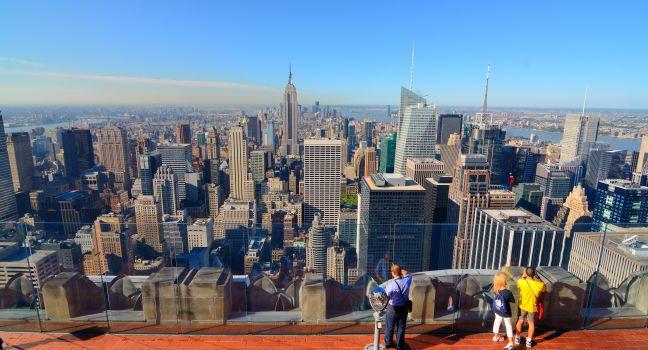
Sky-high views dazzle visitors to the Top of the Rock, Rockefeller Center's famous, multifloor observation deck. Arrive presunset to watch New York's five boroughs (and New Jersey) morph into a dazzling wash of colors, casting magic-hour light on the Empire State and Chrysler Buildings, Central Park to the north, and World Trade Center towers to the south. Indoor exhibits include films of Rockefeller Center's history, a building model, and endless photo ops—including the Beam Experience, where you can re-create the famous 1932 "Lunch atop a Skyscraper" picture; and the Skylift compact, private elevator rising above the deck (each requires separate tickets).
Rapid elevators lift you to the 67th-floor interior viewing area, and then an escalator leads to the outdoor deck on the 69th floor for sightseeing through glass safety panels. Take another elevator or stairs to the 70th floor for a 360-degree, open-air NYC panorama on a deck that stretches nearly 200 feet long. You can opt for a general-admission ticket or the Rock's combo deal with other local attractions (like MoMA); or better still, save money across town by investing in a CityPASS or other NYC sightseeing pass. For Rock Center only, starting at $95, the Express Pass allows sunset entrance and ticket rescheduling (for poor weather or any other reason). Starting at $190, the VIP Pass includes expedited entry, a guided tour, Skylift and Beam Experience tickets, sparkling wine at the Weather Room café, and a gift-shop discount.
Torrey Pines State Natural Reserve
La Jolla
Fodor's Choice
Share This
Marina Ivanova / shutterstock
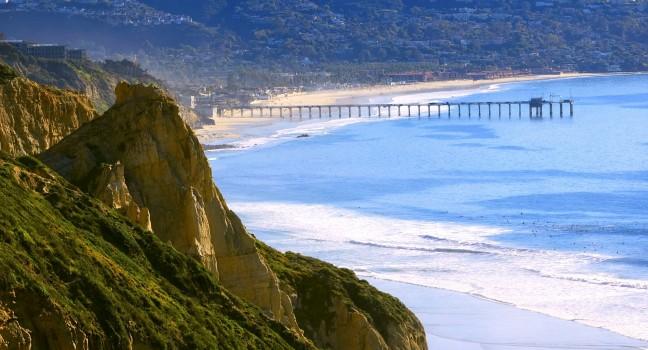
Pinus torreyana, the rarest native pine tree in the United States, enjoys a 1,500-acre sanctuary at the northern edge of La Jolla. About 6,000 of these unusual trees, some as tall as 60 feet, grow on the cliffs here. The park is one of only two places in the world (the other is Santa Rosa Island, off Santa Barbara) where the Torrey pine grows naturally. The reserve has several hiking trails leading to the cliffs, 300 feet above the ocean; trail maps are available at the park station. Wildflowers grow profusely in spring, and the ocean panoramas are always spectacular. From December to March, whales can be spotted from the bluffs. When in this upper part of the park, respect the restrictions. Not permitted: picnicking, camping, drones, smoking, leaving the trails, dogs, alcohol, or collecting plant specimens.
You can unwrap your sandwiches, however, at Torrey Pines State Beach, just below the reserve. When the tide is out, it's possible to walk south all the way past the lifeguard towers to Black's Beach over rocky promontories carved by the waves (avoid the bluffs, however; they're unstable). Los Peñasquitos Lagoon at the north end of the reserve is one of the many natural estuaries that flow inland between Del Mar and Oceanside. It's a good place to watch shorebirds. Volunteers lead guided nature walks at 10 am on Friday, Saturday, Sunday, and holidays.
Toy Story Mania!
Disney's Hollywood Studios
Fodor's Choice
Share This
By McDoobAU93 [GFDL or CC-BY-SA-3.0-2.5-2.0-1.0], via Wikimedia Commons
Great toys like Mr. Potato Head, Woody, and Buzz Lightyear from Disney's hit film franchise Toy Story never lose their relevance. The action here involves these beloved characters and takes place inside the toy box of Andy, the boy whose toys come to life when he's not around. Step right up and grab a pair of 3-D glasses before boarding your jazzed-up carnival tram. Soon you're whirling onto the midway where you can use your spring-action shooter to launch darts at balloons, toss rings at aliens, and splatter eggs at barnyard targets.
You'll rack up points for targets hit and see your tally at ride's end. Try using a rat-a-tat shooting approach to increase your score. Don't let Rex's fear of failure slow you down—shoot for the stars, and earn a salute from the Green Army Men. For people with disabilities: Guests using ECVs must transfer to a standard wheelchair. Equipped for video-captioning and audio-description devices. Check with a host about boarding with a service animal. It's so addictive that you might want to ride first thing and then return later in the day.
Tribune Tower
Near North Side
Fodor's Choice
Share This
(c) Steveheap | Dreamstime.com
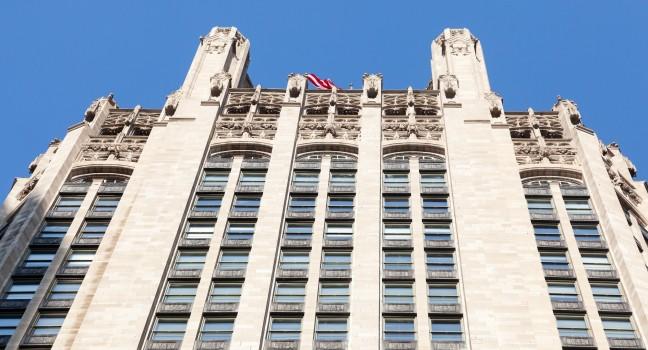
Big changes have arrived at this iconic tower, which opened in 1925 to house the Chicago Tribune. Sold by the Tribune Company to CIM Group and Golub & Company for $240 million in 2016, the neo-gothic structure is no longer home to the newspaper, and WGN’s final broadcast there took place in 2018. Now the interior is 162 luxury residences with more than 55,000 square feet of indoor amenities. Visitors can still see fragments from famous sites, including the Taj Mahal and the Alamo, embedded in the building’s façade.
Subscribe to Newsletter
Sign up for Travel Tips & News
I want emails from Fodor's Travel with travel information and promotions. I can unsubscribe
any time using the unsubscribe link at the end of all emails.
Thank you for your interest!
Look out for our newsletters with travel tips and special offers.
Sign up for Travel Tips & News
By signing up for the
newsletter, I agree to the Privacy Policy. You must check the box to subscribe
Thank you for your interest!
Look out for our newsletters with travel tips and special offers.