Get FREE email communications from Fodor's Travel, covering must-see travel destinations, expert
trip planning advice, and travel inspiration to fuel your passion.
We've compiled the best of the best in USA - browse our top choices for the top
things to see or do during your stay.
Sorry! We don't have any recommendations for USA right now.
Sights Filter
Balboa Peninsula
Share This
Newport's best beaches are on a 3-mile stretch called Balboa Peninsula. The picturesque Newport Harbor is on one side, and sandy, broad beaches on the other. It's one of the most intense surfing and bodysurfing spots in Orange County, at the Wedge, at the south end of the peninsula. Rip currents and punishing waves mean it's strictly for the pros—but it sure is fun to watch an experienced local ride it.
Stinson Beach
Share This
When the fog hasn't rolled in, this expansive stretch of sand is about as close as you can get in Marin to the stereotypical feel of a Southern California beach. There are several clothing-optional areas, among them a section south of Stinson Beach called Red Rock Beach. Pets are not allowed on the national park section of the beach.
Swimming at Stinson Beach can be dangerous; the undertow is strong, and shark sightings, though infrequent, have occurred. Lifeguards are on duty in the summer months.
On any hot summer weekend, roads to Stinson are packed and the parking lot fills, so factor this into your plans. The town itself—population 600, give or take—has a nonchalant surfer vibe, with a few good eating options and pleasant hippie-craftsy browsing. Amenities: food and drink; lifeguards (summer); parking (no fee); showers; toilets. Best for: nudists; sunset; surfing; swimming; walking, windsurfing.
Ala Moana Regional Park
Ala Moana
Fodor's Choice
Share This
(c) Dubphoto | Dreamstime.com
A protective reef makes Ala Moana essentially a ½-mile-wide saltwater swimming pool. Very smooth sand and no waves create a haven for families and stand-up paddleboarders. After Waikiki, this is the most popular beach among visitors, and the free parking area can fill up quickly on sunny weekends. On the Waikiki side is a peninsula called Magic Island, with shady trees and paved sidewalks ideal for jogging. Ala Moana Regional Park also has playing fields, tennis courts, and a couple of small ponds for sailing toy boats. The beach is for everyone, but only in the daytime; after dark, it's a high-crime area, with many unhoused people. Amenities: food and drink; lifeguards; parking (free); showers; toilets. Best for: swimming; walking.
Recommended Fodor's Video
Alki Point and Beach
West Seattle
Fodor's Choice
Share This
HansUntch / iStockphoto
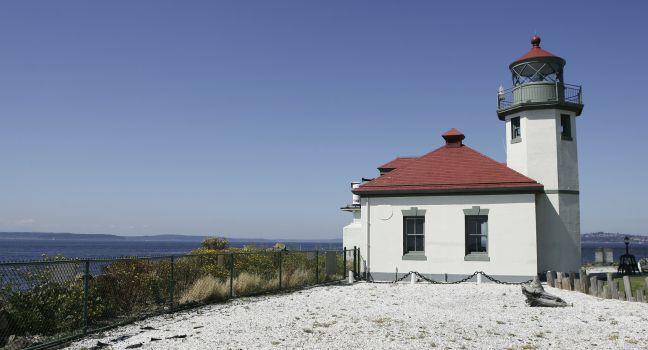
In summer, this is as close to California as Seattle gets—and some hardy residents even swim in the cold, salty waters of Puget Sound here (water temperature ranges from 45ºF to 60ºF). This 2½-mile stretch of sand has views of the Seattle skyline and the Olympic Mountains, and the beachfront promenade is especially popular with skaters, joggers, strollers, and cyclists. Year-round, Seattleites come to build sand castles, beachcomb, play volleyball, fly kites, enjoy the views, and people watch; in winter, storm-watchers come to see the crashing waves. Facilities include drinking water, grills, picnic tables, and restrooms; restaurants line the street across from the beach.
Alki Point is the place where David Denny, John Low, and Lee Terry arrived in September 1851, ready to found a city. The Alki Point Lighthouse dates from 1913. One of 195 Lady Liberty replicas found around the country, Miss Liberty (or Little Liberty) lives near the 2700 block of Alki Avenue SW and is a popular meeting point for beachfront picnics and dates.
To get to the beach from Downtown, take either Interstate 5 south or Highway 99 south to the West Seattle Bridge (keep an eye out, as this exit is easy to miss) and exit onto Harbor Avenue SW, turning right at the stoplight. After Harbor Ave. SW curves south to become Alki Ave. SW, watch for the Alki Flower Houses on the left at 1400 Alki Ave. SW. The pair of 1914 houses, tucked between two high-rise condominium buildings, overflow with vibrant blossoms, inspired by owner Randie Stone's Hawaiian upbringing and nurturing the property's status as a wildlife habitat, while making it a photo-worthy gem. Alki Beach is a three-minute drive south from here.
Anaehoomalu Bay
Fodor's Choice
Share This
Bonita R. Cheshier / Shutterstock
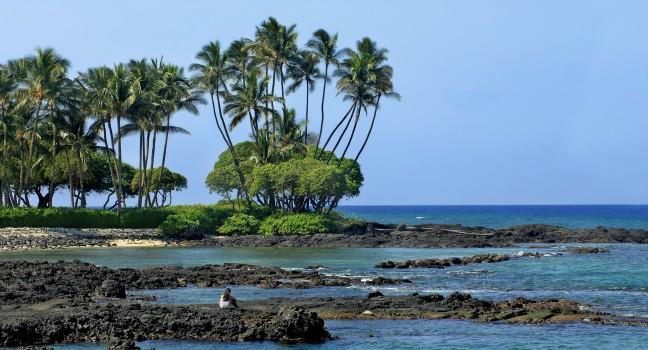
This gorgeous, expansive stretch of white sand, fringed with coconut palms, fronts the Waikoloa Beach Marriott and is a perfect spot for swimming, windsurfing, snorkeling, and diving. Unlike some Kohala Coast beaches near hotel properties, this one is very accessible to the public and offers plenty of free parking. The bay is well protected, so even when the surf is rough or the trade winds are blasting, it's fairly calm here. (Mornings are calmest.) Snorkel gear, kayaks, and body boards are available for rent at the north end.
Locals will appreciate your efforts to use the proper name (pronounced ā'-nāe-ho'o-mā'lu) rather than simply its nickname, "A-Bay."
Behind the beach are two ancient Hawaiian fishponds, Kuualii and Kahapapa, that once served ancient Hawaiian royalty. A walking trail follows the coastline to the Hilton Waikoloa Village next door, passing by tide pools, ponds, and a turtle sanctuary where sea turtles can often be spotted sunbathing on the sand. Footwear is recommended for the trail. Amenities: food and drink; parking (no fee); showers; toilets; water sports. Best for: snorkeling; sunset; swimming; walking.
Bill Baggs Cape Florida State Park
Key Biscayne
Fodor's Choice
Share This
Steve Heap / Shutterstock
Thanks to inviting beaches, sunsets, and a tranquil lighthouse, this park at Key Biscayne's southern tip is worth the drive. In fact, the 1-mile stretch of pure beachfront has been named several times in Dr. Beach's revered America's Top 10 Beaches list. It has 18 picnic pavilions available as daily rentals, two cafés that serve light lunches (including several Cuban specialties), and plenty of space to plant the umbrellas and chairs that you can rent. The walking and bicycle paths provide wonderful views of Miami's dramatic skyline. From the southern end of the park you can see a handful of houses rising over the bay on wooden stilts, the remnants of Stiltsville, built in the 1940s and now protected by the Stiltsville Trust. The nonprofit group was established in 2003 to preserve the structures, which showcase the park's rich history. Bill Baggs also has bicycle rentals, a playground, fishing piers, and guided tours of the Cape Florida Lighthouse, South Florida's oldest structure. The lighthouse was erected in 1845 to replace an earlier one damaged in an 1836 battle with the Seminole tribe. Free tours are offered at the restored cottage and lighthouse Thursday to Monday at 10 am and 1 pm. Be there a half hour beforehand. Amenities: food and drink; lifeguards; parking (no fee); showers; toilets. Best for: solitude; sunset; walking.
Haena Beach Park
Fodor's Choice
Share This
tropicdreams / Shutterstock
This drive-up beach park favored by campers year-round has a wide bay named Makua bordered by two large reef systems, creating favorable waves for skilled surfers during peak winter conditions. Entering the water can be dangerous in winter when the big swells roll in. In July and August, waters at this same beach are usually as calm as a lake, and throughout summer this is a premier snorkeling site. It's not unusual to find a food vendor parked here, selling sandwiches and drinks out of a converted bread van. Adjacent to this beach is Tunnels Beach. This is not the same beach as Kee Beach, which is located in Haena State Park.
Parking is extremely limited (the lot typically fills up by 8:30 am), and all vehicles illegally parked outside of designated parking zones are subject to fines and towing. You can also park your car in the shuttle parking lot in Waipa, west of Hanalei Town, and board the North Shore Shuttle for a ride to the beach park ($40 round-trip with seven stops); see gohaena.com for details and reservations. Amenities: food and drink; lifeguards; parking (no fee); showers; toilets. Best for: snorkeling; surfing; walking.
Hanalei Bay
Fodor's Choice
Share This
Steve Heap / Shutterstock
This 2-mile crescent beach cradles a wide bay in a setting that is quintessential Hawaii: the sea is on one side, and behind you are the mountains, often ribboned with waterfalls and changing color in the shifting light. In winter, Hanalei Bay boasts some of the biggest onshore surf breaks in the state, attracting world-class surfers, and the beach is plenty wide enough for sunbathing and strolling. In summer, the bay is transformed—calm waters lap the beach, sailboats moor in the bay, and outrigger-canoe paddlers ply the sea. Pack the cooler, haul out the beach umbrellas, and don't forget the beach toys because Hanalei Bay is worth scheduling for an entire day, maybe two. Several county beach parks—some with pavilions, and all with ample facilities—can be found along the bay: Black Pot (east bay, between the pier and the river mouth, named for the large cookpot used for traditional communal gatherings here), Hanalei Pavilion (west of Black Pot), and Waioli (west of Hanalei Pavilion, with three parking lots accessed off Weke Road). Amenities: lifeguards; parking (no fee); showers; toilets. Best for: sunset; surfing; swimming; walking.
Hanauma Bay Nature Preserve
Fodor's Choice
Share This
TanArt / Shutterstock
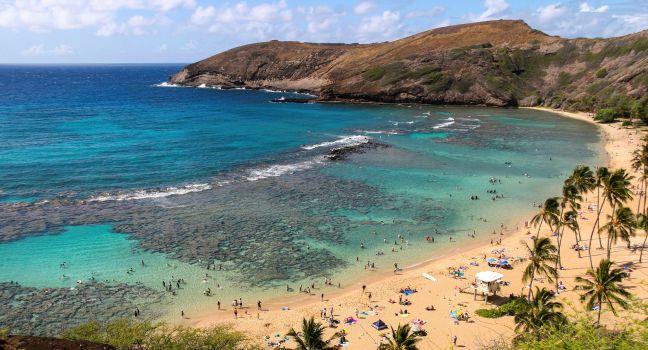
Picture this as the world's biggest open-air aquarium: you come to see fish, and fish you'll see. Due to their exposure to thousands of visitors every week, these fish are more like family pets than the skittish marine life you might expect. An old volcanic crater has created a haven from the waves where the coral has thrived. Note that there's a fee for nonresidents to enter the preserve; make reservations and prepay online ahead of time (locals have a morning time period where they can walk in without a reservation). You must also watch a nine-minute video about the nature preserve in its educational center before being allowed down to the bay. Snorkel equipment and lockers are available for rent, and you can walk the short distance from the parking lot or take a tram.It's best to visit early in the morning (around 7), as it's difficult to park later in the day. Need transportation? Take TheBus each way from anywhere on the island. Amenities: food and drink; lifeguards; parking (fee); showers; toilets. Best for: snorkeling; swimming.
Hapuna Beach State Recreation Area
Fodor's Choice
Share This
(c) Nopow | Dreamstime.com
One of Hawaii's most breathtaking beaches, Hapuna is a ½-mile-long stretch of white perfection, with turquoise water that is calm in summer, so it's good for kids, with just enough rolling waves to make bodysurfing and body boarding fun. Watch for the undertow; in winter it can be very rough. There is excellent snorkeling around the jagged rocks that border the beach on either side, but high surf brings strong currents. Known for awesome sunsets, this is one of the island's best places to see the "green flash" as the sun dips below a clear horizon.
Parking is ample, although the lot can fill up by midday and the beach can get crowded on weekends and holidays. Plenty of picnic tables and lots of grass overlooking the beach offer shady respite on a hot day. Lifeguards are on duty during peak hours. Amenities: lifeguards; parking (fee); showers; toilets; water sports. Best for: sunset; surfing; swimming; walking.
Hookipa Beach
Fodor's Choice
Share This
Mike Brake / Shutterstock
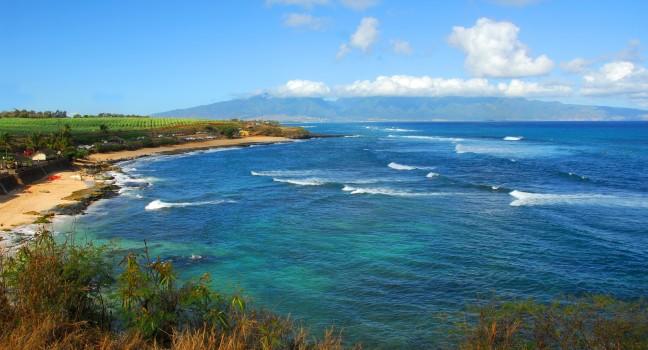
To see some of the world's finest windsurfers, hit this beach along the Hana Highway. It's also one of Maui's hottest surfing spots, with waves that can reach 20 feet. Although Hookipa isn't really a good swimming beach, it does have a few protected reef areas that provide a shore break and places to play in the water, so getting wet isn’t completely out of the question. It's also not the place to learn windsurfing, so if you're not experienced in the sport, it's best to just hang out and watch the pros. There are picnic tables and grills, though the pavilion area isn't particularly inviting. Amenities: lifeguard; parking (no fee); showers; toilets. Best for: surfing; windsurfing.
John Pennekamp Coral Reef State Park
Fodor's Choice
Share This
Microgen/istockphoto
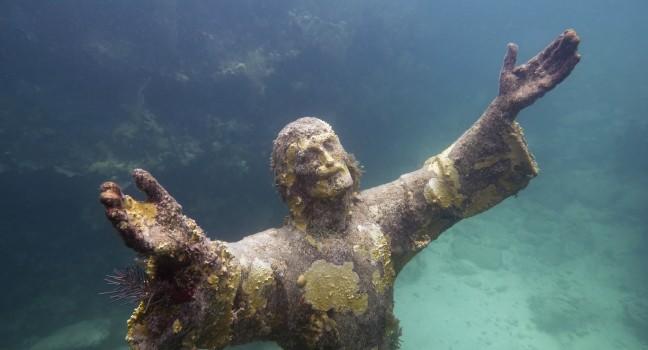
This state park is on everyone's list for easy access to the best diving and snorkeling in Florida. The underwater treasure encompasses 78 nautical square miles of coral reefs and sea-grass beds. It lies adjacent to the Florida Keys National Marine Sanctuary, which contains 40 of the 52 species of coral in the Atlantic Reef System and nearly 600 varieties of fish, from the colorful parrotfish to the demure cocoa damselfish. Whatever you do, get in the water. Snorkeling and diving trips ($39 and $90, respectively; equipment extra) and glass-bottom-boat rides to the reef ($32) are available, weather permitting. One of the most popular snorkel trips is to see Christ of the Deep, the 2-ton underwater statue of Jesus. The park also has nature trails, two man-made beaches, picnic shelters, a snack bar, and a campground. Amenities: food and drink; parking (fee); showers; toilets; water sports. Best for: snorkeling; swimming.
Kailua Beach Park
Fodor's Choice
Share This
Eddygaleotti | Dreamstime.com
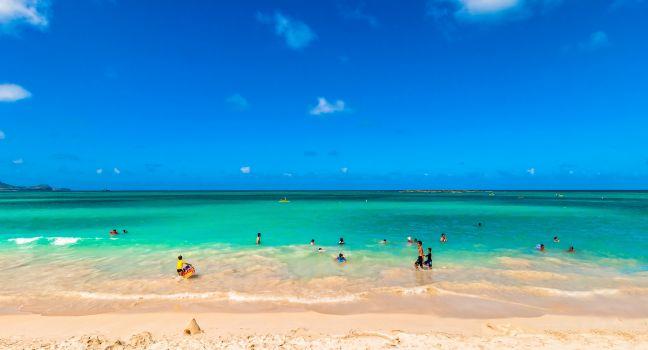
A cobalt-blue sea and a wide, continuous arc of powdery sand make this one of the island's best beaches, as illustrated by the crowds of local families who spend their weekend days here. The water is calm, a line of palms and ironwoods provides shade on the sand, and a huge park has picnic pavilions where you can escape the heat. This is also the "it" spot for windsurfing or kiteboarding, and you can rent kayaks nearby at Kailua Beach Adventures (130 Kailua Rd.) for day trips to the Mokulua Islands. Amenities: lifeguards; parking (no fee); showers; toilets; water sports. Best for: swimming; walking; windsurfing.
Kalalau Beach
Fodor's Choice
Share This
(c) Nainoac | Dreamstime.com
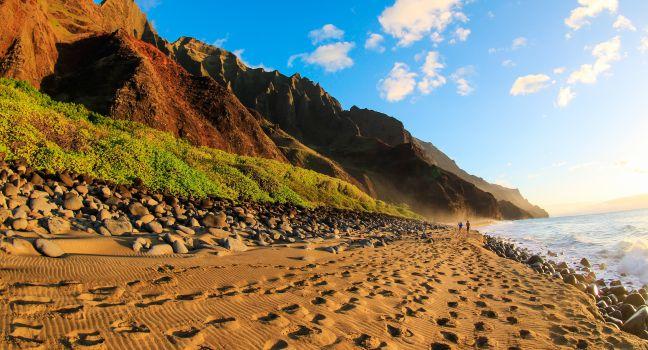
Located at the end of the trail with the same name, Kalalau is a remote beach in the spectacular Napali Coast State Wilderness Park. Reaching it requires an arduous 11-mile hike along sea-cliff faces (permit required), through steaming tropical valleys, and across sometimes-raging streams. The trail has zero-to-limited cell phone service and is recommended for experienced hikers only. Another option is to paddle a kayak to the beach—summer only, though, or else the surf is way too big. All boat and kayak tours must be through a permitted guided company. The beach is anchored by a heiau on one end and a waterfall on the other.
The safest time to come is summer, when the trail is dry and the beach is wide, cupped by low vegetated sand dunes and a large walk-in cave on the western edge. Day hikes into the valley offer waterfalls, freshwater swimming pools, and wild tropical fruits. Though state camping permits are required, the valley often has a significant illegal crowd, which has strained park facilities and degraded much of its former peaceful solitude. Helicopter overflights are near-constant in good weather. Amenities: none. Best for: solitude; sunset; walking.
Kapalua Bay Beach
Fodor's Choice
Share This
idreamphoto / Shutterstock
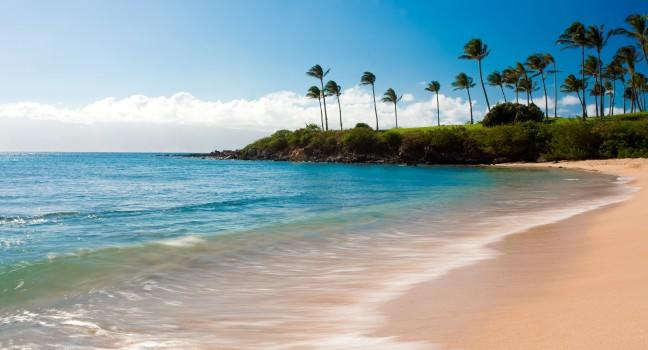
Over the years, Kapalua has been recognized as one of the world's best beaches, and for good reason: it fronts a pristine bay that is good for snorkeling, swimming, and general lazing. Just north of Napili Bay, this lovely sheltered shore often remains calm late into the afternoon, although currents may be strong offshore. Snorkeling is easy here, and there are lots of colorful reef fish. This popular area is bordered by the Kapalua Resort, so don't expect to have the beach to yourself. Walk through the tunnel from the parking lot at the end of Kapalua Place to get here. Amenities: parking (no fee); showers; toilets. Best for: snorkeling; sunset; swimming.
Kaunaoa Beach
Fodor's Choice
Share This
(c) Dmitriko | Dreamstime.com
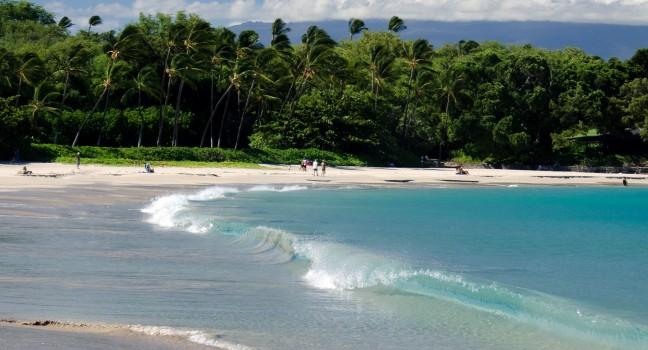
Hands down one of the most beautiful beaches on the island, if not the whole state, Kaunaoa features a short crescent of pure white sand framed by coconut palms. The beach, which fronts the Mauna Kea Beach Hotel, slopes very gradually, and there's great snorkeling along the rocks. Classic Hawaii postcard views abound, especially in winter, when snow tops Maunakea to the east. When conditions permit, waves are good for body and board surfing also. Currents can be strong in winter, so be careful. Get a cocktail at the beach cabana and enjoy the sunset.Public parking is limited to a few spaces, so arrive before 10 am or after 4 pm. If the lot is full, head to nearby Hapuna Beach, where there's a huge parking lot ($10 per vehicle). Try this spot again another day—it's worth it!Amenities: parking (no fee); showers; toilets; water sports. Best for: snorkeling; sunset; swimming; walking.
Kekaha Kai State Park -- Mahaiula Side
Fodor's Choice
Share This
SYLVIO MICHEL / Shutterstock
It's slow going down a 1.8-mile, bumpy but partially paved road off Highway 19 to this beach park, but the lovely beaches are worth it when you reach the end. Very low-profile rentals may have some trouble making the drive. This state park encompasses three beaches: from south to north, Mahaiula, Makalawena, and Kua Bay, which has its own entrance. Mahaiula and Makalawena are classically beautiful expanses of white sand with dunes. Makalawena has great swimming and body boarding. ( Makalawena, sandwiched between the two state parks, is private property and falls under the jurisdiction of Kamehameha Schools Bishop Estates.) Watch out for rough surf and strong currents, especially in winter. From Makalawena, a 4½-mile trail leads to Kua Bay. If you're game, work your way on foot to the top of Puu Kuili, a 342-foot-high cinder cone with a fantastic coastline view. But be prepared for the heat and bring water, as there are no services of any kind in the park. Gates at the highway entrance close promptly at 7, so you must leave the lot by about 6:30. Amenities: toilets. Best for: swimming.
Kure Beach
Fodor's Choice
Share This
tony740607 / Shutterstock
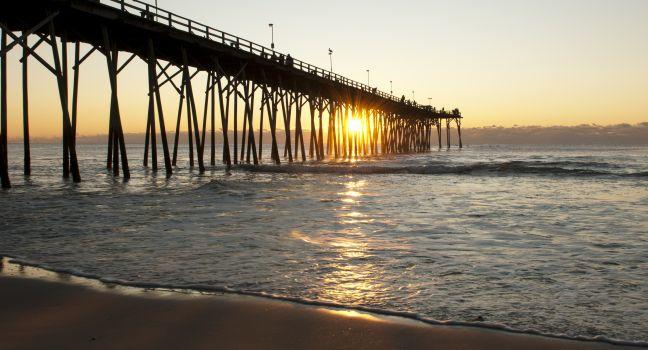
Family memories are made here on tall ocean piers where kids reel in their first big catches. You can swim, beachcomb, kiteboard over the big blue sea, or scuba dive down to find some of the Cape Fear Coast's dozens of shipwrecks. Wildlife excursions set off from various nature trails, birding sites, and miles of undeveloped beach at the southern end. Shorebirds and loggerhead sea turtles inhabit the remote reserve of Zeke's Island. At Fort Fisher, the Confederacy's largest earthen fort, you can trace Kure Beach's history. Amenities: food and drink; lifeguards (generally Memorial Day to Labor Day); parking (mostly no fee). Best for: sunrise; sunset; surfing; swimming; windsurfing.
Mahaulepu Beach and Makauwahi Cave
Fodor's Choice
Share This
Nina B / Shutterstock
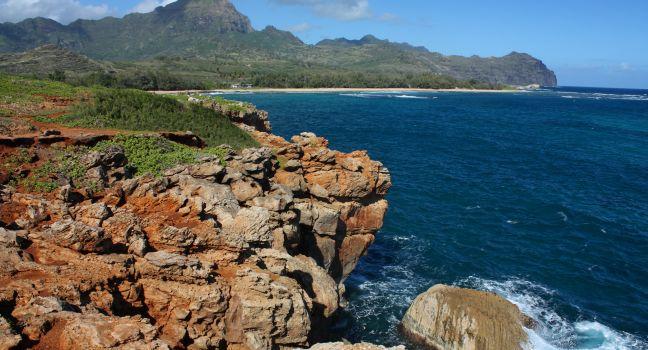
This 2-mile stretch of coast, with its sand dunes, limestone hills, sinkholes, and the Makauwahi Cave, is unlike any other on Kauai. Remains of a large ancient settlement, evidence of great battles, and the discovery of a now-underwater petroglyph field indicate that Hawaiians lived in this area as early as AD 700. Mahaulepu's coastline is unprotected and rocky, which makes venturing into the ocean hazardous. There are three beach areas with bits of sandy-bottom swimming; however, the best way to experience Mahaulepu is simply to roam, on foot or horseback along the sand or trails. Pack water and sun protection.Access to this beach is via private property. Before driving or hiking here, check current gate hours and conditions as the unpaved road can be closed due to weather, grading, or movie filming. Access is during daylight hours only, so be sure to depart before sunset or risk getting locked in for the night.Amenities: parking (no fee). Best for: solitude; sunrise; walking.
Makena Beach State Park
Fodor's Choice
Share This
Ivan_Sabo / Shutterstock
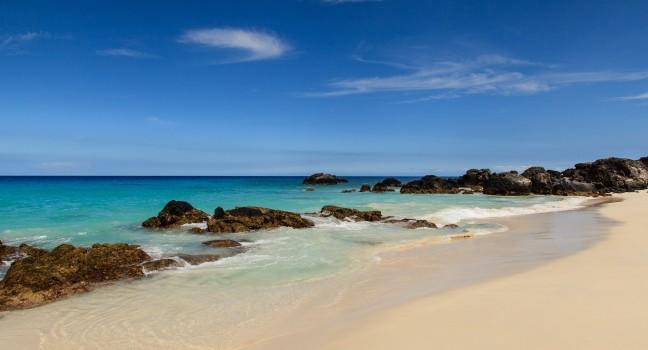
Aquamarine water sparkles off the shore of this 3,000-foot-long, 100-foot-wide stretch of deep golden sand. Indeed, Big Beach—whose more-proper, Native Hawaiian name is Oneloa—is so beautiful that locals lobbied for the creation of a state park to protect it. For a dramatic, sun-drenched beach vista, climb Puu Olai, the steep cinder cone near the first entrance you pass if you're driving south. About the only time the view here is obscured is in the early afternoon, when the so-called Makena cloud rolls in. Swim with caution here: the shore drop-off is steep, and swells can be big.
On the other side of the cinder cone is Little Beach, which attracts bodysurfers and other free spirits, some of whom believe that clothing is optional, even though this is technically illegal. Skimboarders catch air at Makena's third entrance, which is a little tricky to find (it's just a dirt path with street parking). Access to all the beaches here requires paid parking and an entrance fee for non-resident visitors. Amenities: lifeguards; parking; toilets. Best for: surfing; swimming; walking.
Napili Beach
Fodor's Choice
Share This
(c) Love2pic | Dreamstime.com
Surrounded by sleepy condos, this round bay is a turtle-filled pool lined with a sparkling white crescent of sand. Sunbathers love this beach, which is also a terrific sunset spot. The shore break is steep but gentle, so it's great for bodyboarding and bodysurfing. It's easy to keep an eye on kids here as the entire bay is visible from everywhere. The beach is right outside the Napili Kai Beach Resort, a popular local-style resort for honeymooners and families, only a few miles south of Kapalua. Amenities: showers; toilets. Best for: sunset; surfing; swimming; snorkeling.
Napoopoo Beach
Fodor's Choice
Share This
Vlad Turchenko / Shutterstock
Gorgeous and undeveloped, this area in the state historical park offers extraordinary vistas and protected swimming. The shoreline is rocky, but the area is surrounded by high green cliffs, creating calm conditions for superb swimming, snorkeling, and diving (beware of jellyfish). Protected Hawaiian spinner dolphins come to rest and escape predators during the day. Captain James Cook first landed in Hawaii here in 1778, but a year later he was killed in a skirmish with Hawaiians, now marked by a monument on the bay's north end. Rocky but walkable trails lead to Hikiau Heiau, a sacred place for the Hawaiian people. Please proceed respectfully and do not walk on it or enter it. Parking is very limited. Be aware of the off-limits area (in case of rockfalls) marked by orange buoys. Amenities: parking (no fee); showers; toilets. Best for: snorkeling; swimming.
Nauset Light Beach
Fodor's Choice
Share This
Rolf_52 / Shutterstock
Adjacent to Coast Guard Beach, this sandy beach is backed by tall dunes, frilly grasses, and heathland. The trail to the Three Sisters lighthouses takes you through a pitch-pine forest. Parking here is extremely limited and fills up quickly in summer; plan to arrive early. Amenities: lifeguards; parking (fee); showers; toilets. Best for: sunrise; surfing; swimming; walking.
Poipu Beach Park
Fodor's Choice
Share This
cleanfotos / Shutterstock
At the most popular beach on the South Shore, the snorkeling and swimming are good during calm seas; when the surf's up, the bodyboarding and surfing are good, too. Frequent sunshine, grassy lawns, play equipment, and easy access add to the appeal, especially with families. The endangered Hawaiian monk seal often makes an appearance, and if you stop by just after sunset, you're likely to witness record numbers of protected green sea turtles coming ashore to sleep. (Please stay at least 10 feet away and do not photograph with flash.) Take a walk west on a path fronting numerous resorts. Note that at the time of writing, this beach is one of a few on Kauai that may institute a parking fee for nonresidents. Amenities: food and drink; lifeguards; parking (no fee); showers; toilets. Best for: snorkeling; sunbathing; swimming.
Polihale State Park
Fodor's Choice
Share This
Nickolay Stanev / Shutterstock
The longest stretch of beach in Hawaii starts in Kekaha and ends about 15 miles west at the start of Napali Coast. On the far west end is the 5-mile-long, 140-acre Polihale State Park, a remote beach accessed via a rough, rutted, potholed, 5-mile road at the end of Route 50 in Mana. (Four-wheel drive is recommended, and rental car companies may prohibit use of their vehicles here.) In addition to being long, this beach is 300 feet wide in places and backed by sand dunes 50 to 100 feet tall. Cultural sites, including burial sites, are located within the sensitive dune system. It is frequently very hot, with almost no shade and scorching sand. Start the day with a full tank of gas and a cooler filled with food and drink. Though it's a popular beach, the ocean here has dangerous currents and is not recommended for recreation. No driving is allowed on the beach. The U.S. Navy's Pacific Missile Range Facility is adjacent, so access to the coastline in front of the base is monitored and restricted. The park is open for day use until sunset; permits are required for overnight camping. Amenities: parking (no fee); showers; toilets. Best for: solitude; sunset; walking.
Punaluu Black Sand Beach Park
Fodor's Choice
Share This
David Lousick / Shutterstock
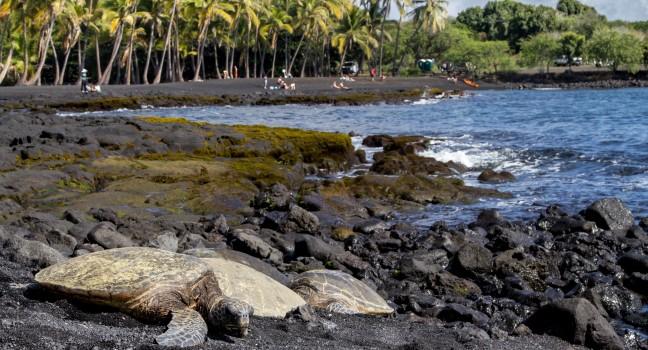
A must-do on a south-southeast-bound trip to the volcano, this easily accessible black-sand beach is backed by low dunes, brackish ponds, and tall coco palms. The shoreline is jagged, reefed, and rocky. Most days, large groups of sea turtles nap on the sand—a stunning sight. Resist the urge to get too close or disturb them; they're protected by federal and state law, and fines for harassment can be hefty. Removing black sand is also prohibited. Extremely strong rip currents prevail, so only experienced ocean swimmers should consider getting in the water here. A popular stop for locals and tour buses alike, this beach park can get busy; the north parking lot is usually quieter. Shade from palm trees provides an escape from the sun, and at the northern end of the beach lie the ruins of Kaneeleele Heiau, an old Hawaiian temple. Amenities: parking (no fee); showers; toilets. Best for: walking.
Race Point Beach
Fodor's Choice
Share This
Rolf_52 / Shutterstock
Race Point Beach, one of the Cape Cod National Seashore beaches in Provincetown, has a wide swath of beautiful sand stretching far off into the distance around the point and Coast Guard station. Because of its position facing north, the beach gets sun all day long. Keep an eye out for whales offshore; it's also a popular fishing spot. Daily parking is $25; the annual seashore pass grants access to all six national park beaches for $60. Amenities: lifeguards; parking (fee); showers; toilets. Best for: sunrise; sunset; surfing; swimming; walking.
Sandy Beach Park
Fodor's Choice
Share This
(c) Phillipgray | Dreamstime.com
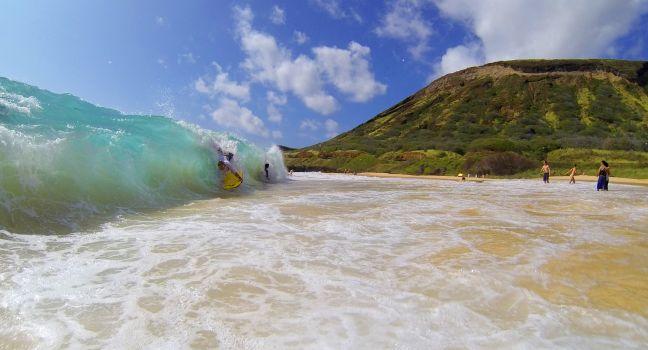
Very popular with locals, this broad, sloping beach is covered with sunbathers who come to soak up the rays and watch "The Show"—a shore break that's like no other in the Islands. Monster ocean swells rolling into the beach combined with the sudden rise in the ocean floor cause waves to jack up and crash magnificently. Expert surfers and bodyboarders young and old brave the dangers to enjoy some of the biggest barrels around. Use extreme caution when swimming here. The stretch is nicknamed Break-Neck Beach for a reason: many neck and back injuries are sustained here each year. Amenities: lifeguards; parking (no fee); showers; toilets. Best for: walking.
Siesta Key Beach
Fodor's Choice
Share This
Dawn M Whalen / Shutterstock
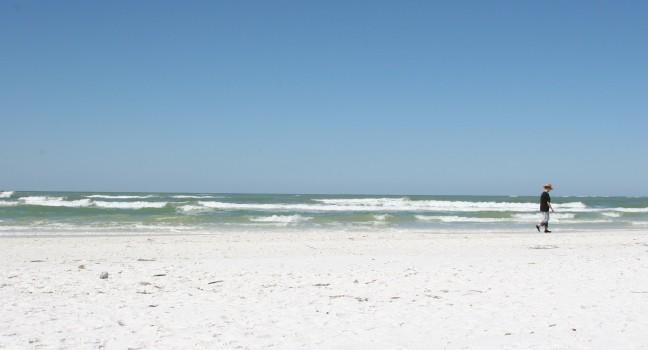
This popular beach has fine, powdery quartz sand that squeaks under your feet, very much like the sand along the state's northwestern coast. You'll also find 40 acres of nature trails and tons of amenities. Don't forget to bring a volleyball—or a tennis racket. Amenities: food and drink; lifeguards; toilets. Best for: partiers; sunset; swimming; walking.
Waianapanapa State Park
Fodor's Choice
Share This
Marisa Estivill / Shutterstock
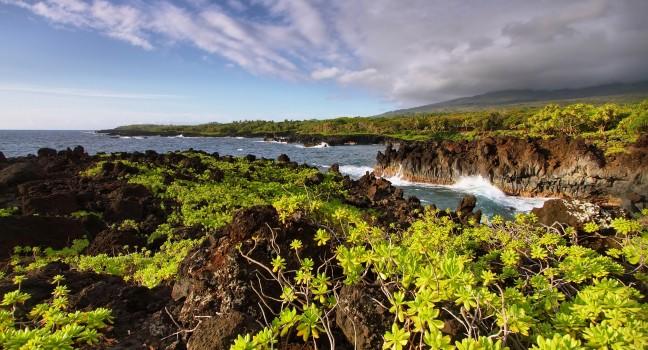
This black volcanic-pebble beach fringed with green beach vines and palms will remain in your memory long after your visit. Swimming here is both relaxing and invigorating. Strong currents bump smooth stones up against your ankles, while seabirds flit above a black, jagged sea arch, and fingers of white foam rush onto the beach. There are picnic tables and grills. At the edge of the parking lot, a sign tells you the sad story of a doomed Hawaiian princess. Stairs lead through a tunnel of interlocking Polynesian hau (a native tree) branches to an icy cave pool—the secret hiding place of the ancient princess (you can swim in this pool, but beware of mosquitoes). In the other direction a dramatic 3-mile coastal path continues past sea arches, blowholes, cultural sites, and even a ramshackle fishermen's shelter, all the way to Hana town. Amenities: parking (no fee); showers; toilets. Best for: swimming; walking.
Subscribe to Newsletter
Sign up for Travel Tips & News
I want emails from Fodor's Travel with travel information and promotions. I can unsubscribe
any time using the unsubscribe link at the end of all emails.
Thank you for your interest!
Look out for our newsletters with travel tips and special offers.
Sign up for Travel Tips & News
By signing up for the
newsletter, I agree to the Privacy Policy. You must check the box to subscribe
Thank you for your interest!
Look out for our newsletters with travel tips and special offers.