10457 Best Sights in USA

Background Illustration for Sights

We've compiled the best of the best in USA - browse our top choices for the top things to see or do during your stay.

Union Square Park and Greenmarket

Fodor's Choice
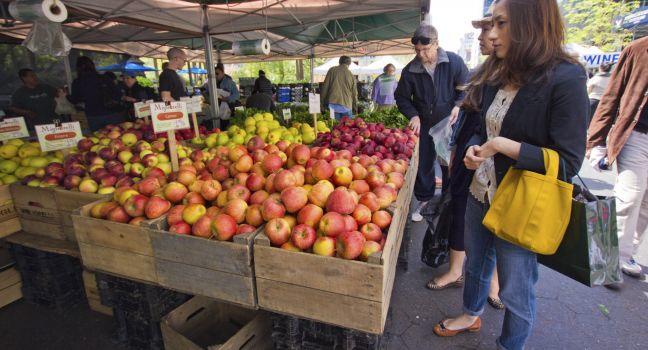
NEW YORK CITY - APR. 20: Woman selects produce at Union Square Greenmarket in NYC on Apr 20, 2012. This world famous farmers' market began in 1976 and has grown to 140 farmers during peak season.; Shutterstock ID 100566316; Project/Title: Weekend Getaways;
littleny/Shutterstock

A park, farmers' market, meeting place, and the site of rallies and demonstrations, this pocket of green space and surrounding public square sit in the center of a bustling residential and commercial neighborhood. The name \"Union\" originally signified that two main roads—Broadway and 4th Avenue—crossed here. It took on a different meaning in the late 19th and early 20th centuries, when the square became a rallying spot for labor protests; many unions, as well as fringe political parties, moved their headquarters nearby.

\n

Union Square is at its best on Monday, Wednesday, Friday, and Saturday (8–6), when the largest of the city's greenmarkets draws farmers and food purveyors from the tristate area selling fruit and vegetables, plants, fresh-baked pies and breads, cheeses, cider, fish, and meat. Between Thanksgiving and Christmas, artisans sell gift items and food at the large Union Square Holiday Market ( www.usqholiday.nyc).

\n

New York University dormitories, theaters, and cavernous commercial spaces occupy the restored 19th-century commercial buildings that surround the park, along with some chain stores and restaurants. Statues in the park include those of George Washington, Abraham Lincoln, Mahatma Gandhi (often wreathed in flowers), and the Marquis de Lafayette (sculpted by Frédéric-Auguste Bartholdi, designer of the Statue of Liberty).

United States Capitol

Capitol Hill Fodor's Choice
The US United States Capitol building for Democrat Republican Government Senate and House congress parties under a summer blue sky with white clouds.
Splosh | Dreamstime.com

Beneath the Capitol's magnificent dome, the day-to-day business of American democracy takes place: senators and representatives debate, coax, cajole, and ultimately determine the law of the land. For many visitors, the Capitol is the most exhilarating experience Washington has to offer. It wins them over with a three-pronged appeal: it's the city's most impressive work of architecture; it has on display documents, art, and artifacts from 400 years of American history; and its legislative chambers are open to the public, allowing you to actually see your lawmakers at work.

Before heading to the Capitol, pay a little attention to the grounds, landscaped in the late 19th century by Frederick Law Olmsted, famed for New York City's Central Park. On these 274 acres are both the city's tamest squirrels and the highest concentration of TV news correspondents, jockeying for a good position in front of the Capitol for their "stand-ups." A few hundred feet northeast of the Capitol are two cast-iron car shelters, left from the days when horse-drawn trolleys served the Hill. Olmsted's six red-granite lamps directly east of the Capitol are worth a look, too. A small, hexagonal brick structure with shaded benches, a fountain, and a small grotto, called the Summerhouse, is a wonderful place to escape the summer heat.

The design of the building was the result of a competition held in 1792; the winner was William Thornton, a physician and amateur architect from the West Indies. With its central rotunda and dome, Thornton's Capitol is reminiscent of Rome's Pantheon. This similarity must have delighted the nation's founders, who sought inspiration from the principles of the Republic of Rome.

The cornerstone was laid by George Washington in a Masonic ceremony on September 18, 1793, and, in November 1800, both the Senate and the House of Representatives moved down from Philadelphia to occupy the first completed section: the boxlike portion between the central rotunda and today's north wing. (Efforts to find the cornerstone Washington laid have been unsuccessful; a 1991 search was conducted using a metal detector to locate the engraved plate—it was not found. The location may be under the southeast corner of what is today National Statuary Hall.) By 1807, the House wing had been completed, just to the south of what's now the domed center, and a covered wooden walkway joined the two wings.

The "Congress House" grew slowly and suffered a grave setback on August 24, 1814, when British troops led by Sir Alexander Cockburn marched on Washington and set fire to the Capitol, the White House, and numerous other government buildings. (Cockburn reportedly stood on the House speaker's chair and asked his men, "Shall this harbor of Yankee democracy be burned?" The question was rhetorical; the building was torched.) The wooden walkway was destroyed, and the two wings gutted, but the exterior structure was left standing thanks to Architect Benjamin Henry Latrobe's use of fireproof building materials. Congress debated moving the Capitol to another location, but in 1815 it authorized President Madison to borrow from local banks to rebuild, on their existing sites, the Capitol, White House, and cabinet quarters. Latrobe supervised the rebuilding of the original Capitol, adding American touches such as the corncob-and-tobacco-leaf capitals to columns in the east entrance of the Senate wing. He was followed by Boston-born Charles Bulfinch, and, in 1826, the Capitol, its low wooden dome sheathed in copper, was finished.

North and south wings were added in the 1850s and 1860s to accommodate a growing government trying to keep pace with a growing country. The elongated edifice extended farther north and south than Thornton had planned, and, in 1855, to keep the scale correct, work began on a taller, cast-iron dome. President Lincoln was criticized for continuing this expensive project while the country was in the throes of the Civil War, but he called the construction "a sign we intend the Union shall go on." This twin-shell dome, a marvel of 19th-century engineering, rises 288 feet above the ground and weighs 4,500 tons. It expands and contracts up to 4½ inches a day, depending on the outside temperature. The allegorical figure atop the dome, often mistaken for Pocahontas, is called Freedom. Sculptor Thomas Crawford had first planned for the 19½-foot-tall bronze statue to wear the cloth liberty cap of a freed Roman slave, but Southern lawmakers, led by Jefferson Davis (who was Secretary of War and in charge of the Capitol construction), objected. An "American" headdress composed of a star-encircled helmet surmounted with an eagle's head and feathers was substituted. A light just below the statue burns whenever Congress is in session at night.

The Capitol has continued to grow. Between 1959 and 1962, the east front was extended 32 feet, creating 90 new rooms. Preservationists have fought to keep the west front from being extended because it's the last remaining section of the Capitol's original facade. A compromise was reached in 1983, when it was agreed that the facade's crumbling sandstone blocks would simply be replaced with stronger limestone.

Free gallery passes to watch the House or Senate in session can be obtained only from your representative's or senator's office; both chambers are open to the public when either body is in session. In addition, the House Gallery is open 9 am to 4:15 pm weekdays when the House is not in session. International visitors may request gallery passes from the House or Senate appointment desks on the upper level of the visitor center. Your representative's or senator's office may also arrange for a staff member to give you a tour of the Capitol or set you up with a time for a Capitol Guide Service Tour. When they're in session, some members even have time set aside to meet with constituents. You can link to the home page of your representative or senators at  www.house.gov and  www.senate.gov.

Free reservations are required to visit the Capitol. They can be made through either the Capitol Visitor Center website or through the office of your representative or senators. Only those with tour reservations may enter the Capitol Visitor Center; allow time to go through security. Bags can be no larger than 18 inches wide, 14 inches high, and 8½ inches deep, and other possessions you can bring into the building are strictly limited. (The full list of prohibited items is posted at  www.visitthecapitol.gov.) There are no facilities for leaving personal belongings, but you can check your coat. If you're planning a visit, check the status of tours and access; security measures may change. Note that only those with tour reservations may enter the Capitol Visitor Center.

United States Holocaust Memorial Museum

The Mall Fodor's Choice
The Holocaust museum in Washington DC.
Afagundes | Dreamstime.com

This museum asks you to consider how the Holocaust was made possible by the choices of individuals, institutions, and governments and what lessons they hold for us today. The permanent exhibition, The Holocaust, tells the stories of the millions of Jews, Romani, Jehovah's Witnesses, homosexuals, political prisoners, the mentally ill, and others killed by the Nazis between 1933 and 1945. The exhibitions are detailed and sometimes graphic but powerful.

Upon arrival, you are issued an "identity card" containing biographical information on a real person from the Holocaust. As you move through the museum, you read sequential updates on your card. In the early exhibits, Hitler's rise to power and the spread of European anti-Semitism are thoroughly documented with films of Nazi rallies, posters, newspaper articles, and recordings of Hitler's speeches, immersing you in the world that led to the Holocaust. Exhibits include footage of scientific experiments done on Jews, artifacts such as a freight car like those used to transport Jews to concentration camps, and oral testimonies from Auschwitz survivors. Rotating exhibitions highlight how genocide is still a real worldwide issue, featuring the stories of current survivors.

After this powerful experience, the Hall of Remembrance, filled with candles, provides a much-needed space for quiet reflection.

Tickets are required for entry into the museum. For up-to-date information about hours, tickets, and exhibitions, visit their website.

100 Raoul Wallenberg Pl. SW, Washington, DC, 20238, USA
202-488–0400
Sight Details
Free; $1 per ticket service fee for advance online reservations
Closed Sun.
Must reserve in advance

Something incorrect in this review?

Recommended Fodor's Video

Upper Colorado River Scenic Byway—Highway 128

Fodor's Choice
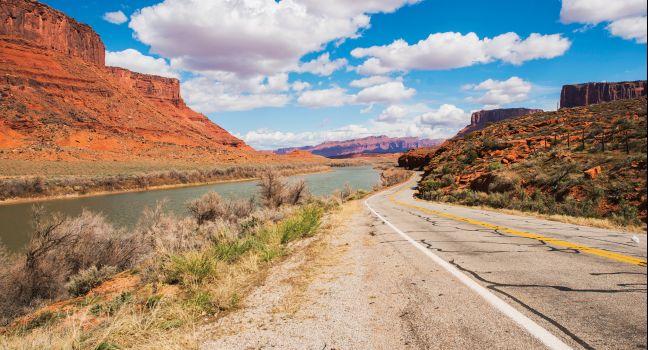
Scenic Utah Highway 128 Along Colorado River. Moab, Utah, United States.
welcomia / Shutterstock

One of the most scenic drives in the Four Corners region, Highway 128 intersects U.S. 191, 3 miles south of Arches. The 44-mile highway runs along the upper Colorado River, with 2,000-foot red rock cliffs rising on both sides. This gorgeous river corridor is home to a winery, orchards, and a couple of luxury lodging options. It also offers a spectacular view of world-class climbing destination Fisher Towers before winding north to Interstate 70. Give yourself an hour to 90 minutes to drive it, though be aware that traffic can get congested in the summer. For the full experience, go through the ghost town of Cisco by taking Exit 214 if you're heading east on I–70 and stop by the delightful Buzzard's Belly General Store. Full of snacks, soda, art, and fun knickknacks, it's an off-beat take on a general store, and you'll likely want to take some pictures to show your friends.

Uwajimaya

International District Fodor's Choice
Lots of apples in Uwajimaya Asian Foods and Gifts store in Seattle.
(c) Jackbluee | Dreamstime.com

This huge, fascinating Japanese supermarket is a feast for the senses, and a 2020 remodel makes it easier to navigate the colorful mounds of fresh produce and aisles of delicious packaged goods, with unique sweets and savory treats from countries throughout East and Southeast Asia. A busy food court serves sushi, Japanese bento-box meals, Chinese stir-fry combos, Vietnamese spring rolls, and an assortment of teas and tapioca drinks. You'll also find authentic housewares, cosmetics, toys, and more. There's also a fantastic branch of the famous Kinokuniya bookstore chain. The large parking lot is free for one hour with a minimum $10 purchase or two hours with a minimum $20 purchase—don't forget to have your ticket validated by the cashiers.

Valley Forge National Historical Park

Fodor's Choice
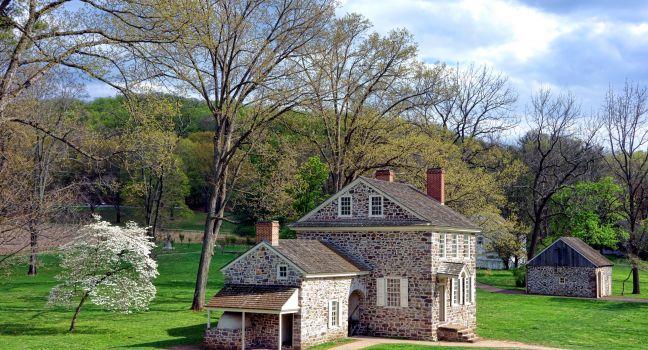
George Washington Headquarters of the American Revolutionary War Continental Army encampment in Isaac Potts field stone house scenic site at Valley Forge National Historical Park near Philadelphia in Pennsylvania.
(c) Olivierl | Dreamstime.com

The 3,500-acre park is the location of the 1777–78 winter encampment of General George Washington and the Continental Army, where winter tested and proved the army's perseverance. Begin at the excellent Valley Forge Visitor Center for touring information and to explore displays of historical objects and immersive modern exhibits about the encampment and the men and women of all kinds who spent the winter here. The center also has an area with regional visitor information, an orientation film, and the Encampment Store. Take a nine-stop, 10-mile driving tour (free cell phone guide) or buy the audio guide ($8.95); or take a narrated trolley tour (limited times other than summer; reserve ahead) for $22. Call ahead if you want to hire a private tour guide. Stops include reconstructed log huts of the Muhlenberg Brigade and the National Memorial Arch, which pay tribute to the soldiers, and Washington's headquarters.

\n

In 1777 the army had just lost the nearby battles of Brandywine, White Horse, and Germantown, but Washington and his troops were actually encouraged (although exhausted), because they had fought the British well. While the British occupied Philadelphia, Washington's soldiers endured horrid conditions—blizzards, inadequate food and clothing, and disease. Although no battle was fought at Valley Forge, 2,000 soldiers (of about 12,000) died here. The troops did win the war of will, regaining strength under the leadership of Prussian drillmaster Friedrich von Steuben. In June 1778 Washington led his troops away from Valley Forge in search of the British.

\n

The park contains more than 35 miles of jogging and bicycling paths (bike rentals available in summer; call ahead) and hiking trails, and you can picnic in designated areas. A leisurely visit takes about half a day.

Venice Beach Boardwalk

Fodor's Choice
VENICE,CA - DECEMBER 18, 2013: Ocean Front Walk of Venice Beach in Venice, US. This boardwalk is 2.5 kilometer long
oneinchpunch / Shutterstock

The surf and sand of Venice are fine, but the main attraction here is the boardwalk scene, which is a cosmos all its own. Go on weekend afternoons for the best people-watching experience; you'll see everything from Baywatch wannabes to break-dancers to TikTok influencers to would-be messiahs. You can also swim, fish, surf, and skateboard, or have a go at racquetball, handball, shuffleboard, and basketball (the boardwalk is the site of hotly contested pickup games). Or you can rent a bike or in-line skates and hit the Strand bike path, then poke around the gloriously tacky tourist and souvenir shops before pulling up a seat at a sidewalk café and watching the action unfold.

Vietnam Veterans Memorial

The Mall Fodor's Choice
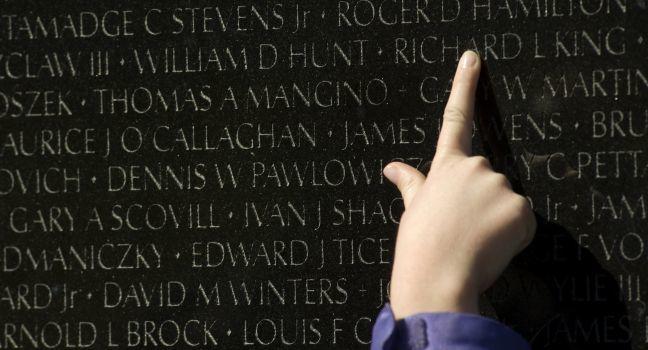
a finger points out a name inscribed at the Vietnam Veterans Memorial in Washington, DC; Shutterstock ID 10795432; Project/Title: Fodors; Downloader: Melanie Marin
John Keith / Shutterstock

"The Wall," as it's commonly called, is one of the most visited sites in Washington, D.C. The names of more than 58,000 Americans who died in the Vietnam War are etched in its black granite panels, creating a powerful memorial. Jan Scruggs, a corporal who served in Vietnam, conceived the memorial, and Maya Lin, a then-21-year-old architecture student at Yale, designed the landmark.

Thousands of offerings are left on the wall each year; many people leave flowers, and others leave soldiers' uniform items or letters of thanks.

In 1984, Frederick Hart's statue of three soldiers and a flagpole was erected to the south of the wall, with the goal of winning over veterans who considered the memorial a "black gash of shame." In 2004, a plaque was added to honor veterans who died after the war as a direct result of injuries in Vietnam, but who fall outside Department of Defense guidelines for remembrance at the wall.

The Vietnam Women's Memorial was dedicated in 1993. Glenna Goodacre's bronze sculpture depicts two women caring for a wounded soldier while a third kneels nearby; eight trees around the plaza commemorate the eight women in the military who died in Vietnam.
Names on the wall are ordered by the date of death. To find a name, consult the alphabetical lists at either end of the wall. You can get assistance locating a name at the white kiosk with the brown roof near the entrance. At the wall, rangers and volunteers wearing yellow caps can look up the names and supply you with paper and pencils for making rubbings. Every name on the memorial is preceded (on the west wall) or followed (on the east wall) by a symbol designating status. A diamond indicates "KIA." A plus sign (found by a small percentage of names) indicates "MIA."

23rd St. NW and Constitution Ave. NW, Washington, DC, 20024, USA
202-426–6841
Sight Details
Free

Something incorrect in this review?

Waianapanapa State Park

Fodor's Choice
Waianapanapa State Park
(c) Rrxxuu | Dreamstime.com

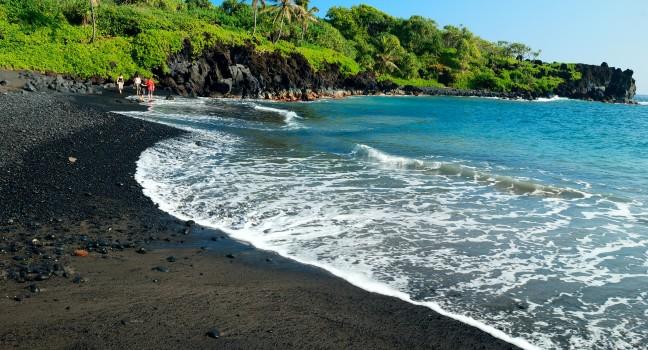
The dramatic landscapes at this oceanside state park are bound to leave a lasting impression. It has one of Maui's few black-sand beaches, as well as freshwater caves for adventurous swimmers to explore. To the left you'll find the volcanic sand beach, picnic tables, and cave pools; to the right is an ancient trail that snakes along the ocean past blowholes, sea arches, and archaeological sites. Bird lovers could linger for hours watching the comings and goings of seabirds on the ocean outcroppings. The tide pools here turn red several times a year. Scientists say it's explained by the arrival of small shrimp, but legend claims the color represents the blood of Popoalaea, said to have been murdered in one of the caves by her husband, Chief Kakae. 

There is a private cemetery on the grounds of the park, so be mindful to keep out of this area. Reservations are required for all out-of-state visitors, so you'll need to plan your day carefully to make your reservation time. With a permit, you can stay in a state-run cabin or campsite for a steal. It's wise to reserve as early as possible, as these spots book up quickly.

Waianapanapa State Park

Fodor's Choice
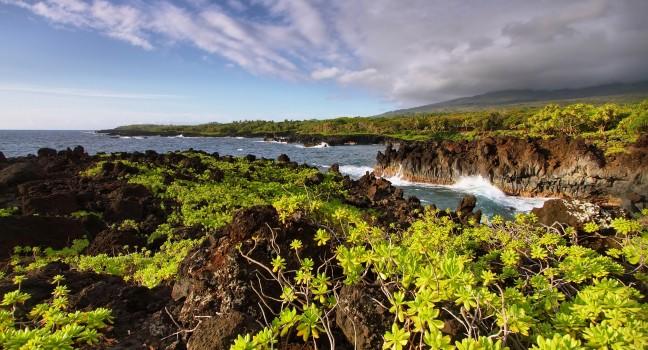
View of the coast and lush vegetation in Waianapanapa State park, Maui island, Hawaii, USA.
Marisa Estivill / Shutterstock

This black volcanic-pebble beach fringed with green beach vines and palms will remain in your memory long after your visit. Swimming here is both relaxing and invigorating. Strong currents bump smooth stones up against your ankles, while seabirds flit above a black, jagged sea arch, and fingers of white foam rush onto the beach. There are picnic tables and grills. At the edge of the parking lot, a sign tells you the sad story of a doomed Hawaiian princess. Stairs lead through a tunnel of interlocking Polynesian hau (a native tree) branches to an icy cave pool—the secret hiding place of the ancient princess (you can swim in this pool, but beware of mosquitoes). In the other direction a dramatic 3-mile coastal path continues past sea arches, blowholes, cultural sites, and even a ramshackle fishermen's shelter, all the way to Hana town. Amenities: parking (no fee); showers; toilets. Best for: swimming; walking.

Waimea Bay Beach Park

Fodor's Choice
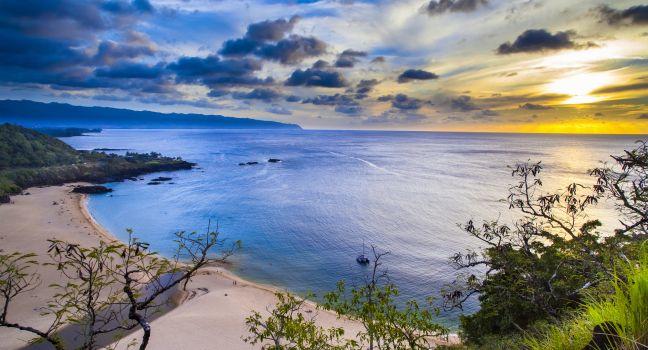
Sunset from above Waimea Bay on Oahu, Hawaii's North Shore.
Shane Myers Photography / Shutterstock

Made popular in that old Beach Boys song "Surfin' U.S.A.," this is a slice of big-wave (25 to 30 feet) heaven in winter. Summer is the time to swim and snorkel in the calm waters, and the beach is good for families then. The shore break is great for novice bodysurfers. Due to the beach's popularity, its postage-stamp parking lot is often full, but it's also possible to park along the side of the road and walk in. Amenities: lifeguards; parking (no fee); showers; toilets. Best for: snorkeling; surfing; swimming.

61-31 Kamehameha Hwy., Pupukea, HI, 96712, USA

Something incorrect in this review?

Waimea Valley

Fodor's Choice
Waimea Falls, Waimea Valley, Oahu, Hawaii
(c) Kraskoff | Dreamstime.com

Waimea gets lots of press for the giant winter waves in the bay, but the valley itself is a newsmaker and an ecological treasure, with a local nonprofit working to conserve and restore its natural habitat. Follow the Kamananui Stream up the valley through the 1,875 acres of gardens. The botanical collections here have more than 5,000 species of tropical flora, including a superb gathering of native Hawaiian and international plants. It's the best place on the island to see native species, such as the endangered Hawaiian moorhen. You can visit the restored Hale o Lono heiau (shrine) and other ancient archaeological sites as well; evidence suggests that the area was an important spiritual center. Daily activities include botanical walking tours and cultural tours. This is also the venue for the Haleiwa Farmers' Market every Thursday from 2 to 6. At the back of the valley (a ¾-mile walk one-way), Waihi Falls plunges 45 feet into a swimming pond. Bring your board shorts—a swim is the perfect way to end your hike, although the pond can get crowded. Bring mosquito repellent, too; it can get buggy.
Washington National Cathedral

Upper Northwest Fodor's Choice
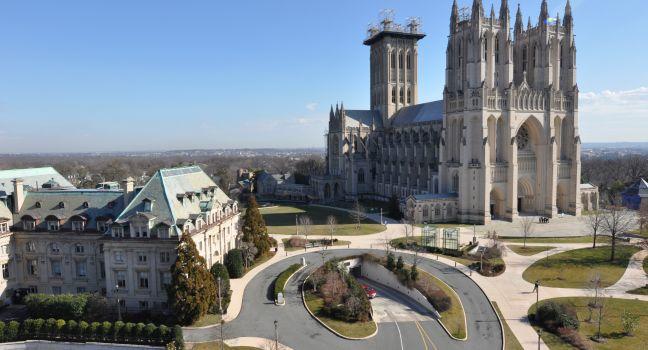
National Cathedral in Washington, DC being repaired after Earthquake.
Rokusfocuspix | Dreamstime.com

Construction of the world's sixth-largest cathedral began in 1907 with a rock from the village of Bethlehem and the structure has been the spiritual symbol of Washington ever since. It was finally completed in 1990. Like its 14th-century English Gothic counterparts, it has a nave, flying buttresses, transepts, and vaults, all built stone by stone. The stunning cathedral is Episcopalian, but it's the site of frequent interfaith services. State funerals for presidents Eisenhower, Reagan, Ford, and George H. W. Bush, as well as Senator John McCain, were held here, and the tomb of Woodrow Wilson—the only president buried in Washington, D.C.—is in the south nave. The Pilgrim Observation Gallery provides a wonderful view of the city, and the cathedral is blessed with the lovely Bishop's Garden, designed by Frederick Law Olmsted Jr., with fruit trees, towering oaks and yews, and roses interspersed with stonework from European ruins. A variety of tours is offered, including the popular "Gargoyle" tours. The cathedral is acclaimed for its year-round concerts, national holiday commemorations, and other musical performances.

3101 Wisconsin Ave., NW, Washington, DC, 20016, USA
202-537–6200
Sight Details
From $15
Grounds open dawn–dusk
Admission is free for worship services; sightseeing requires a ticket

Something incorrect in this review?

Washington Park Arboretum

Fodor's Choice
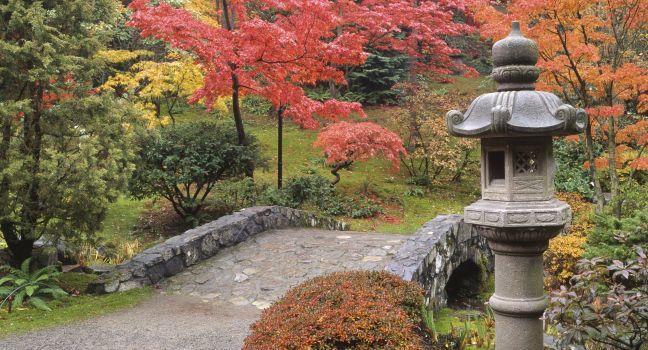
Japanese Garden in Autumn; Washington Park Arboretum; Seattle, Washington; USA.
mlwphoto / Shutterstock

This 230-acre arboretum may be the most beautiful of Seattle's green spaces. On calm weekdays, the place feels really secluded. The seasons are always on full display: in warm winters, flowering cherries and plums bloom in its protected valleys as early as late February, while the flowering shrubs in Rhododendron Glen and Azalea Way bloom March through June. In autumn, trees and shrubs glow in hues of crimson, pumpkin, and lemon; in winter, plantings chosen specially for their stark and colorful branches dominate the landscape. A 1¼-mile trail that connects to an existing path to create a 2½-mile accessible loop, giving all guests access to areas that were previously hard to reach.

March through November, visit the peaceful Japanese Garden, a compressed world of mountains, forests, rivers, lakes, and tablelands. The pond, lined with blooming water irises in spring, has turtles and brightly colored koi. An authentic Japanese tea house reserved for tea ceremonies is open to the public on Saturdays and some additional days (check  www.seattlejapanesegarden.org for details). Visitors who would like to enjoy a bowl of tea and sweets can purchase a $10 "Chado" tea ticket at the Garden ticket booth.

The Graham Visitors Center at the park's north end has descriptions of the arboretum's flora and fauna (which include 130 endangered plants), as well as brochures, a garden gift shop, and walking-tour maps. Free tours are offered on the first Thursday of each month at 11:30 am. There is a pleasant playground at the ball fields on the south end of the park.

Washington Square Park

Greenwich Village Fodor's Choice
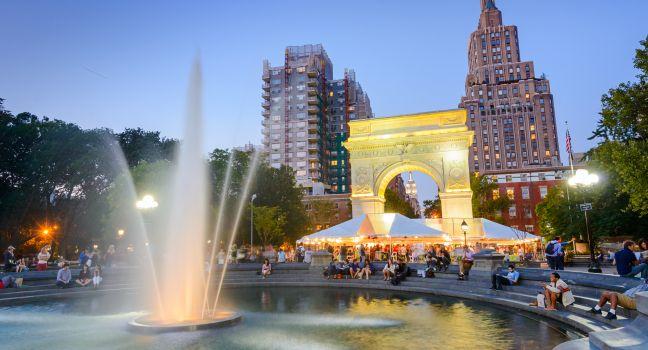
NEW YORK CITY - SEPTEMBER 12, 2012: Crowds gather at Washington Square Park. The historic park is popular in the summer.
(c) Sepavo | Dreamstime.com

NYU students, street musicians, skateboarders, chess players, and those just watching the grand opera of it all generate a maelstrom of activity in this physical and spiritual heart of Greenwich Village. The 9¾-acre park with its gorgeous central fountain had inauspicious beginnings as a cemetery, principally for yellow-fever victims—an estimated 10,000–22,000 bodies lie below (a headstone was even unearthed in 2009). In the early 1800s, the park was a parade ground and the site of public executions; the notorious Hanging Elm still stands at the northwest corner of the square. 

\n

The triumphal European-style Washington Arch at the square's northern flank marks the start of 5th Avenue. The original wood-and-papier-mâché arch, situated a half block north, was erected in 1889 to commemorate the 100th anniversary of George Washington's presidential inauguration. The arch was reproduced in Tuckahoe marble in 1892, and the statues—Washington as General Accompanied by Fame and Valor on one side, and Washington as Statesman Accompanied by Wisdom and Justice on the other—were added in 1916 and 1918, respectively.

5th Ave. between Waverly Pl. and 4th St., New York, NY, 10003, USA

Something incorrect in this review?

Watkins Glen State Park

Fodor's Choice
Watkins Glen waterfall in woods with rocks and stream in Watkins Glen state park in New York State
Songquan Deng / Shutterstock

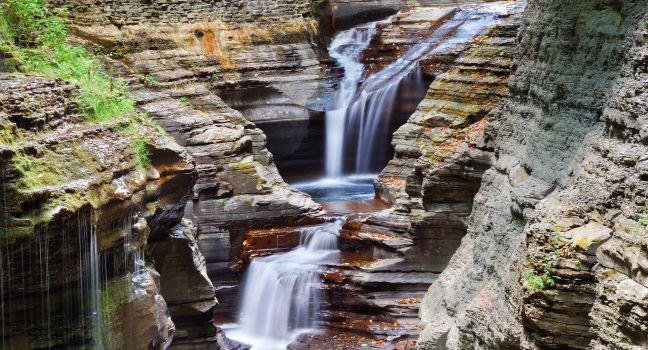
The main entrance to this park is in downtown Watkins Glen. Campgrounds are scattered around the beautiful Glen Creek. The waters drop about 500 feet in 2 mile and include 19 waterfalls. The easy 1½-mile gorge trail runs parallel to the creek, and 300-foot cliffs border the water. One bridge spans 165 feet over the water. The park also has an Olympic-size pool. "Timespell," a computerized light-and-sound show, explains the geological development of the gorge. It's screened on the sides of the glen. The gorge isn't accessible in winter.
1009 N Franklin St., Watkins Glen, NY, 14891, USA
607-535--4511
Sight Details
$8 per car

Something incorrect in this review?

White Plains Beach

Fodor's Choice
White Plains beach
S6300128 by b b

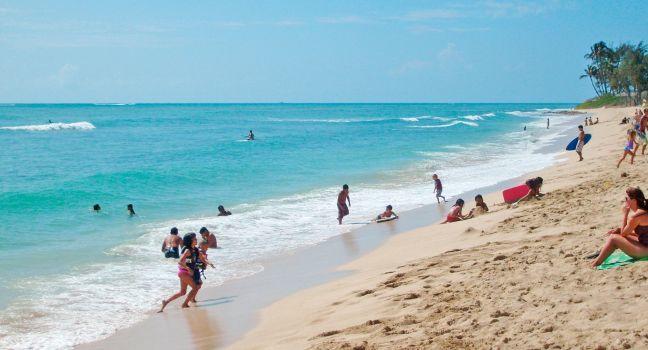
Concealed from the public eye for many years as part of the former Barbers Point Naval Air Station, this beach is reminiscent of Waikiki but without the condos and the crowds. It is a long, sloping stretch with numerous surf breaks, but the beach is also mild enough at the shore for older children to play freely. It has views of Pearl Harbor and, over that, Diamond Head. Although the sand lives up to its name, the real impact of this beach comes from its history as part of a military property for the better part of a century. Expansive parking, great restroom facilities, and numerous tree-covered barbecue areas make it a great day-trip spot. As a bonus, a Hawaiian monk seal takes up residence here several months out of the year (seals are rare in the Islands). Amenities: lifeguards; parking (no fee); showers; toilets. Best for: surfing; swimming.

Essex Rd. and Tripoli Rd., Kapolei, HI, 96707, USA

Something incorrect in this review?

Whitney Museum of American Art

Meatpacking District Fodor's Choice
New building of Whitney Museum on Gansevoort Street in Manhattan, designed by architect Renzo Piano.
Hannoonnes | Dreamstime.com

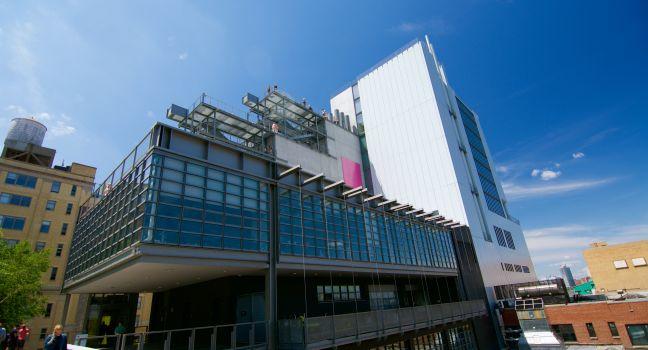
The Renzo Piano–designed museum welcomes visitors with a lively plaza, bold works of contemporary and modern American art, plenty of terraced outdoor spaces, and expansive windows. There are eight floors (not all open to the public), with a lauded French bakery on the ground floor and a café on the eighth floor. The galleries house rotating exhibitions from the permanent collection of postwar and contemporary works by artists such as Jackson Pollock, Jim Dine, Jasper Johns, Mark Rothko, Chuck Close, Cindy Sherman, and Roy Lichtenstein. Notable pieces often on view include Hopper's Early Sunday Morning (1930), Bellows's Dempsey and Firpo (1924), Calder's beloved Circus, and several of O'Keeffe's dazzling flower paintings.

\n

The Whitney experience is as much about the setting as the incredible artwork. The outdoor terraces on floors six, seven, and eight are connected by exterior stairs that provide a welcome reprieve from crowded galleries as well as stunning skyline views. Visitors 25 and under get in free with valid ID; Friday night is free to all 5–10 pm. Skip the line and buy tickets in advance online; same-day tickets are often available.

99 Gansevoort St., New York, NY, 10014, USA
212-570–3600
Sight Details
$30
Closed Tues.

Something incorrect in this review?

Willis Tower

Chicago Loop Fodor's Choice
The Willis Tower (formerly Sears Tower) glass windows skyscraper in downtown Chicago, Illinois, United States. The EL mass transport system, pedestrians and cars on the street.
(c) Afagundes | Dreamstime.com

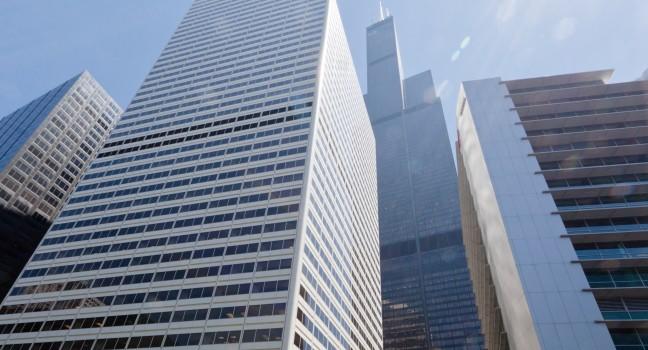
Designed by Skidmore, Owings & Merrill in 1974, the former Sears Tower was the world's tallest building until 1996. The 110-story, 1,730-foot-tall structure may have lost its title and even changed its name, but it’s still tough to top the Willis Tower's 103rd-floor Skydeck—on a clear day it offers views of Illinois, Michigan, Wisconsin, and Indiana. Enter on Jackson Boulevard to take the ear-popping ride up. ( Check the visibility ratings at the security desk before you decide to ascend.) Video monitors turn the 70-second elevator ride into a thrilling trip. Interactive exhibits inside the observatory bring Chicago's dreamers, schemers, architects, musicians, and sports stars to life; and computer kiosks in six languages help international travelers key into Chicago hot spots. For many visitors, though, the highlight (literally) is stepping out on the Ledge, a glass box that extends 4.3 feet from the building, making you feel as if you're suspended 1,353 feet in the air.

Wissahickon Valley Park (Valley Green)

Chestnut Hill Fodor's Choice
Wissahickon Park, Philadelphia, Pa
DSC_7800 by Jared Rubinsky

There are many great sections of Fairmount Park, but the 1,800 acres around Valley Green known as Wissahickon Valley Park may be the most stunning. Miles and miles of trails running along and above the river lead to covered bridges, a statue of a Lenape chief (rife with inaccuracies but created with good intentions), caves used by a 17th-century free-love cult, large boulders that drip water, and mallards quacking for bread bits. Forbidden Drive, on which cars are forbidden, runs from Northwestern Avenue (the westernmost part of Chestnut Hill) all the way to Lincoln Drive, where it connects to a bike and walking path that leads one way to Historic Rittenhouse Town (where you can also park and enter) and the other way to Manayunk and Kelly Drive, with additional bike/walking paths that take you to the city or out along the Schuylkill to Valley Forge. There are also many miles of surprisingly difficult mountain-bike trails. The Valley Green Inn is a very attractive restaurant with decent food at Forbidden Drive and Valley Green Road. Other recommended spots to hike to include Hudson and Andorra Meadows, Thomas Mill Covered Bridge, and Toleration Statue.

Valley Green Rd., Philadelphia, PA, 19118, USA
215-247–0417
Sight Details
Free

Something incorrect in this review?

World War II Memorial

The Mall Fodor's Choice
The National World War II Memorial, Washington, DC; Shutterstock ID 132698252; Project/Title: Photo Database top 200
AppalachianViews/Shutterstock

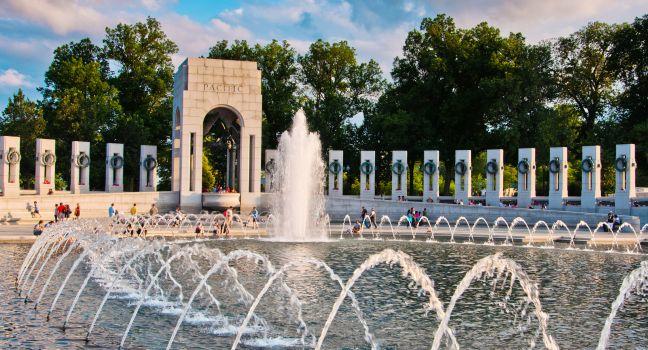
This symmetrically designed monument, in a parklike setting between the Washington Monument and Lincoln Memorial, honors the 16 million Americans who served in the armed forces, the more than 400,000 who died, and all who supported the war effort at home. An imposing circle of 56 granite pillars, each bearing a bronze wreath, represents the United States and its territories of 1941–45. Four bronze eagles, a bronze garland, and two 43-foot-tall arches inscribed with "Atlantic" and "Pacific," representing victory on both fronts, surround the large circular plaza. The roar of the water comes from the Rainbow Pool, here since the 1920s and renovated to form the memorial's centerpiece. There are also two fountains and two waterfalls. The Field of Stars, a wall of more than 4,000 gold stars, commemorates more than 400,000 Americans who lost their lives in the war. Bas-relief panels depict women in the military, medics, the bond drive, and V-J Day, all telling the story of how World War II affected Americans daily.

17th St. SW and Home Front Dr. SW, Washington, DC, 20024, USA
202-426–6841
Sight Details
Free

Something incorrect in this review?

Wrigley Field

Wrigleyville Fodor's Choice
Wrigley Field, Chicago, Illinois, USA
Mike Liu / Shutterstock

You need not be a baseball fan to enjoy a visit to the nation's second-oldest major league ballpark—venerable, ivy-covered Wrigley Field. This hallowed stadium hosted its first major league game in 1914 and has been home to the Chicago Cubs since 1916; the Bears also played here for a half-century before decamping to Soldier Field in 1970. The original hand-operated scoreboard is still in use today, and even though updates and renovations have added plenty of digital screen space, the character that makes this place so special remains intact. If you look up along Sheffield and Waveland Avenues beyond the bleachers, you can see the rooftop patios where baseball fans pay high prices to cheer for the home team; devoted "ball hawks" sit in lawn chairs on Sheffield, waiting for foul balls and home runs to fly their way. While you're here, check out the Harry Caray statue commemorating the late Cubs announcer, or hang out after the game in Gallagher Way, the new plaza built after the team was acquired from the Tribune Company by the Ricketts family. Big-name concerts by the likes of Pearl Jam and Bruce Springsteen are also staged here when the team is out of town.

Yankee Stadium

South Bronx Fodor's Choice
The Yankees are at home playing against the Seattle Mariners on Mothers Day, May 13, 2012 at Yankee Stadium, New York City.
(c) Ericro | Dreamstime.com

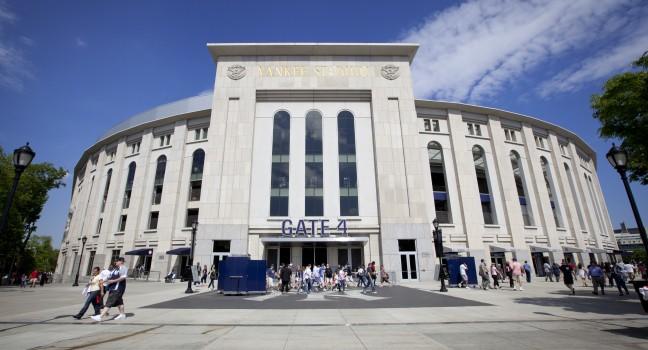
From April through October, you can see one of baseball's great franchises, the \"Bronx Bombers,\" in action at their $1.5 billion Yankee Stadium, opened in 2009 right across the street from the site of the original (aka \"the House that Ruth Built\"), which is now parkland. Tickets can be pricey, but the experience is like watching baseball in a modern-day coliseum. It's quite opulent: a traditional white frieze adorns the stadium's top; inside, limestone-and-marble hallways are lined with photos of past Yankee greats. History buffs and hard-core fans should visit the museum (set on the main level and open 'til the end of the eighth inning), filled with team memorabilia, and Monument Park (closes 45 minutes prior to first pitch), with plaques of past Yankee legends, by center field. Pregame and off-season one-hour stadium tours are held on a near-daily basis year-round; visit the Yankees website for more info on times and ticketing.

Glacier Bay National Park and Preserve

Fodor's Choice
Margerie Glacier in Glacier Bay National Park, Alaska.
Sorincolac | Dreamstime.com

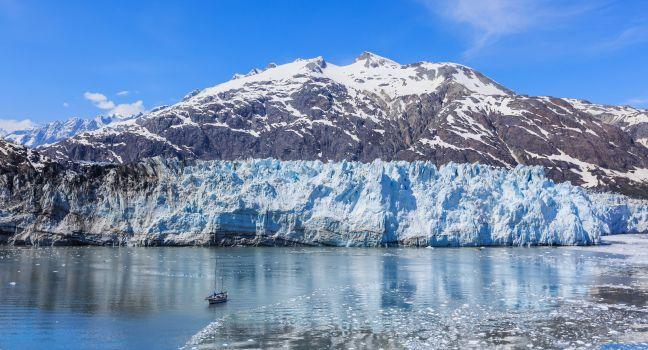
Tidewater glaciers in Glacier Bay National Park calve icebergs into the sea with loud blasts. Humpback whales breach, spout, and slap their tails against the water. Coastal brown bears feed on sedge, salmon, and berries. Bald eagles soar overhead, and mountains in the Fairweather Range come in and out of view. This magical place rewards those who get out on the water—whether it be in a cruise, a day boat, or a kayak. Glacier Bay is a marvelous laboratory for naturalists of all persuasions. Glaciologists, of course, can have a field day. Animal lovers can hope to see the rare glacial "blue" bears of the area, a variation of the black bear, which is here along with the brown bear; mountain goats in late spring and early summer; and seals on floating icebergs. Humpback whales are also abundant in these waters; the best time to see them is June through early August. Birders can look for the more than 200 species that have already been spotted in the park, and you are assured bald eagle sightings. The bay is a still-forming body of water fed by the runoff of the icefields, glaciers, and mountains that surround it. Today many glaciers in the park, including the namesake glacier of naturalist John Muir, who was one of the region's earliest proponents, continue to retreat: the Muir Glacier's terminus is now scores of miles farther up the bay from the small cabin he built there. However, some of the glaciers are still healthy, such as the Johns Hopkins Glacier and the Marjorie Glacier, which receive enough snow to maintain their size or even grow. Bartlett Cove, an area that's been ice-free for more than 200 years, has a lush spruce-and-hemlock rain forest as well as the 2,500-square-foot Huna Tribal House (Xunaa Shuká Hít), a space for tribal members and for visitors to learn about Tlingit history and culture.
Going-to-the-Sun Road

Fodor's Choice
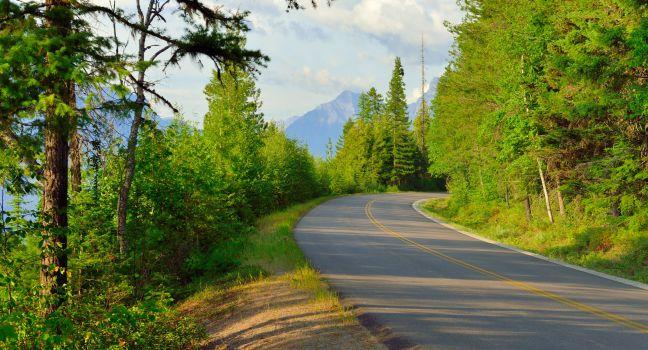
Going to the sun road near McDonald lake in Glacier National Park, Montana in summer
Alexey Kamenskiy / Shutterstock

This magnificent, 50-mile highway—the only American roadway designated both a National Historic Landmark and a National Civil Engineering Landmark—crosses the crest of the Continental Divide at Logan Pass and traverses the towering Garden Wall. Open from mid-June to mid-September only (due to heavy snowfalls), this is one of the most stunning drives in Glacier National Park. A multiyear Sun Road rehabilitation project will result in some driving delays due to reconstruction. The drive is susceptible to frequent delays in summer. To avoid traffic jams and parking problems, take the road early in the morning or in the evening (when the lighting is ideal for photography and wildlife is most likely to appear). Glacier National Park Service operates a free hop on, hop off shuttle service from Apgar Visitor Centre to St. Mary Visitor Centre during the peak season. Vehicle size is restricted to under 21 feet long, 10 feet high, and 8 feet wide, including mirrors, between Avalanche Creek Campground and Sun Point. Cyclists enjoy traveling the open part of the road in early June before it is open to vehicular traffic.
Italian Market

Bella Vista Fodor's Choice
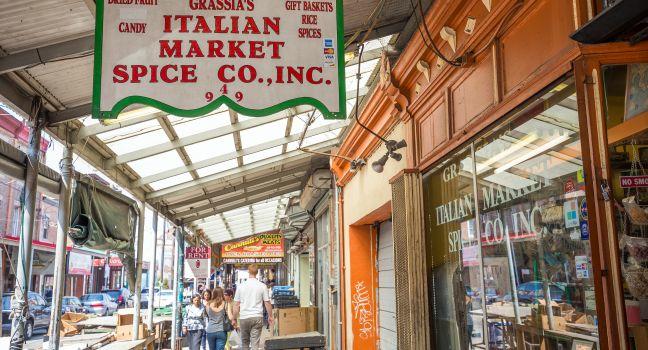
PHILADELPHIA - MAY 8: Philadelphia's Italian market on May 8, 2015. The market is the oldest working outdoor market in the United States.
(c) F11photo | Dreamstime.com

It's more Naples than Philadelphia: vendors crowd the sidewalks and spill out onto the streets; live crabs wait for the kill, while it's too late for the lambs and pigs displayed in butcher-shop windows; fresh, seasonal produce is piled high. The market dates to the turn of the last century, when it was founded by Italian immigrants. You'll find fresh pastas, cheeses, spices, meats, fruits and vegetables, and dry goods and kitchen equipment, as well as junky dollar-stores and funky boutiques. These days the market has become more diversified, with the addition of several Mexican grocers, a natural foods grocer, taquerias, a sandwich shop popular with foodies, and several coffee spots.

9th St. between Washington Ave. and Christian St., Philadelphia, PA, 19147, USA
Sight Details
Many businesses are closed Sun. evenings and all day Mon., but there is no firm market-wide rule

Something incorrect in this review?

Kenai Fjords National Park

Fodor's Choice
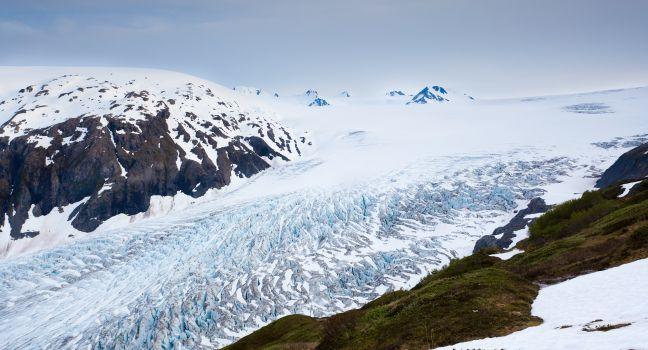
Exit glacier from Harding Icefield Trail; Shutterstock ID 81953920; Project/Title: 10 Most Beautiful Hikes in the US; Downloader: Fodor's Travel
puttsk/Shutterstock

Seward is the gateway to the 669,984-acre Kenai Fjords National Park. This is spectacular coastal parkland incised with sheer, dark, slate cliffs rising from the sea, ribboned with white waterfalls, and tufted with deep-green spruce. Kenai Fjords presents a rare opportunity for an up-close view of blue tidewater glaciers as well as some remarkable ocean wildlife. If you take a day trip on a tour boat out of Seward, it's highly likely you'll see frolicking sea otters, crowds of Steller sea lions lazing on the rocky shelves along the shore, a porpoise or two, bald eagles, and tens of thousands of seabirds. Humpback whales and orcas are sighted occasionally, and mountain goats wander the seaside cliffs. The park's coastal fjords are a favorite of sea kayakers, who can camp or stay in reserved public-use cabins. One of the park's chief attractions is Exit Glacier, which can be reached only by the one road that passes into Kenai Fjords. Trails inside the park lead to an overlook of the vast Harding Icefield. Named for President Warren G. Harding, this area has more than three-dozen glaciers flowing from it. Backcountry travelers should also be aware that some of the park's coastline has been claimed by local Native organizations and is now private property. Check with park headquarters to avoid trespassing on Native land.

17-Mile Drive

Fodor's Choice

Primordial nature resides in quiet harmony with palatial, mostly Spanish Mission–style estates along 17-Mile Drive, which winds through an 8,400-acre microcosm of the Pebble Beach coastal landscape. Dotting the drive are rare Monterey cypresses, trees so gnarled and twisted that Robert Louis Stevenson described them as "ghosts fleeing before the wind." The most famous of these is the Lone Cypress.

Other highlights include Bird Rock and Seal Rock, home to harbor seals, sea lions, cormorants, and pelicans and other sea creatures and birds, and the Crocker Marble Palace, inspired by a Byzantine castle and easily identifiable by its dozens of marble arches.  If you spend $35 or more on dining in Pebble Beach and show a receipt upon exiting, you'll receive a refund off the drive's $11.75 per-car fee.

17-Mile Dr., Pebble Beach, CA, 93953, USA
Sight Details
$12 per car, free for bicyclists

Something incorrect in this review?

1719 Museum & Hans Herr House

Fodor's Choice

Built in 1719 and listed on the National Register of Historic Places, the Hans Herr House is the oldest building in Lancaster County and the oldest remaining Mennonite meeting house in the Western Hemisphere. It is believed to have been the residence of Herr, a Mennonite bishop, and was where his descendants lived. The main house remained a home until the early 1900s, when it fell into disuse. Never modernized, the house retains most of its original old-country German features, which were preserved when it was restored in the 1970s. An hour-plus tour covers the house and grounds, which include two other Pennsylvania German homes, Colonial-era barns and outbuildings, and a collection of period farm equipment. The site's re-created Native American longhouse, which illuminates the culture of the Conestoga–Susquehannock tribe, is a highlight.

1881 Napa Wine History Museum

Fodor's Choice

Sharing a 19th-century Victorian with a ground-floor wine bar, this free, well-organized mezzanine-level museum surveys the Napa Valley's wine-growing origins with fascinating memorabilia and tools of the trade. Among the latter include now taboo farm implements like "soil injectors" used to blast insecticides into the soil. Under the wine bar's Baccarat chandelier, guests can transition their education into the present by purchasing a payment card and proceeding to stations dispensing 2-, 4-, or 6-ounce self-serve pours. Three popular strategies are selecting Cabernets from a single Napa Valley AVA, comparing ones from several subappellations, or sampling a few 100-point wines.  You don’t need to taste to tour the museum, which is next door to Oakville Grocery.