10457 Best Sights in USA

Background Illustration for Sights

We've compiled the best of the best in USA - browse our top choices for the top things to see or do during your stay.

Martha's Vineyard Camp Meeting Association
Oak Bluffs Fodor's Choice
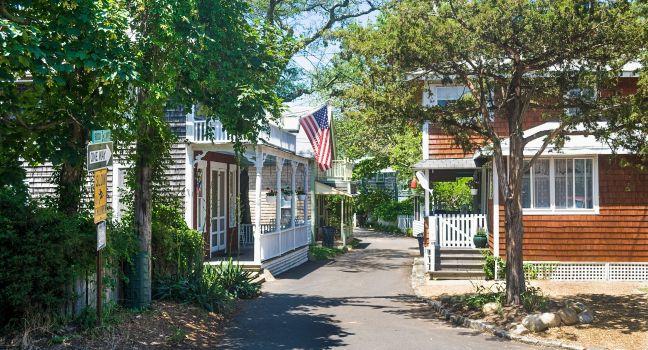
Narrow streets and quaint cottages in Oak Bluffs on June 26, 2011. Oak Bluffs on Martha’s Vineyard is popular for the historic gingerbread style homes located there.
(c) Andykazie | Dreamstime.com

This 34-acre warren of streets is tightly packed with more than 300 gaily painted Carpenter Gothic Victorian cottages with wedding-cake trim; they date mainly to the 1860s and '70s, when visitors coming for Methodist revivalist services began to lease lots and build houses for summer use. As you wander through this fairy-tale setting, imagine it on a balmy summer evening, lighted by the warm glow of paper lanterns hung from every cottage porch. This describes the scene on Illumination Night at the end of the Camp Meeting season, which is attended these days by some fourth- and fifth-generation cottagers—and newcomers: some houses do change hands, and some are rented. Attendees mark the occasion as they have for more than a century, with lights, song, and open houses for families and friends. Ninety-minute tours of the area are conducted at 11 am on Tuesday and Thursday in July and August; the Friday night Sunset Concert Series on Tabernacle Green is always festive.

Martin Luther King Jr. National Memorial

The Mall Fodor's Choice
Washington DC, USA - October 17, 2014: The Martin Luther King Jr. Memorial located on the National Mall on the Tidal Basin in Washington DC is America's 395th National Park.
(c) Kropic | Dreamstime.com

One of the most iconic American figures, Martin Luther King Jr., stands among the presidents on the National Mall. For his dedication on October 16, 2011, President Barack Obama said, "This is a day that would not be denied." The memorial opened on August 22, 2011, 15 years after Congress approved it in 1996 and 82 years after the famed civil rights leader was born in 1929. Located strategically between the Lincoln and Jefferson memorials and adjacent to the FDR Memorial, the crescent-shaped King Memorial sits on a 4-acre site on the curved bank of the Tidal Basin. There are two main ways to enter the memorial. From West Basin Drive, walk through a center walkway cut out of a huge boulder, the Mountain of Despair. From the Tidal Basin entrance, a 28-foot-tall granite structure shows a likeness of King looking out toward Jefferson's statue. 
King's words explain the symbolism of the mountain and stone: "With this faith, we will be able to hew out of the mountain of despair a stone of hope." Chinese sculptor Lei Yixin carved the centerpiece stone; his design won the commission among more than 900 entries in an international competition. Fittingly, Yixin first read about King's "I Have a Dream" speech at age 10 while visiting the Lincoln Memorial.
The themes of democracy, justice, hope, and love are reflected through quotes on the south and north walls and the Stone of Hope. The quotes reflect King's speeches, sermons, and writings from 1955 through 1968. Waterfalls in the memorial reflect King's use of the biblical quote: "Let justice roll down like waters and righteousness like a mighty stream."

Massachusetts Museum of Contemporary Arts

Fodor's Choice
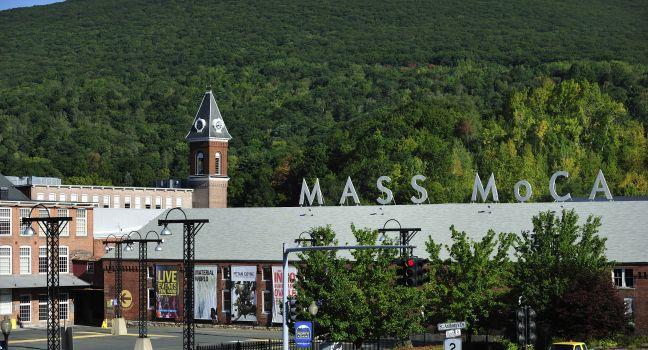
Berkshires, MA, USA -September. 4. 2010: Massachusetts Museum of Contemporary Art (Mass MoCA) in North Adams, Massachusetts
T photography / Shutterstock

Formerly the home of the Sprague Electrical Company, the nation's largest center for contemporary visual and performing arts is one of the finest such facilities in the world, a major draw for its art shows, large music festivals, dance presentations, and film screenings. Expansion in 2017 nearly doubled the amount of gallery space, bringing the total to a quarter million square feet, which includes the wall drawings of Sol LeWitt, an immersive light-based exhibit by James Turrell, and a large room in the main gallery that allows for massive exhibits that wouldn't fit anywhere else. A Kidspace, studios, cafés, shops, and festivals and other special events round out the offerings.

Recommended Fodor's Video

The Met Cloisters

Washington Heights Fodor's Choice
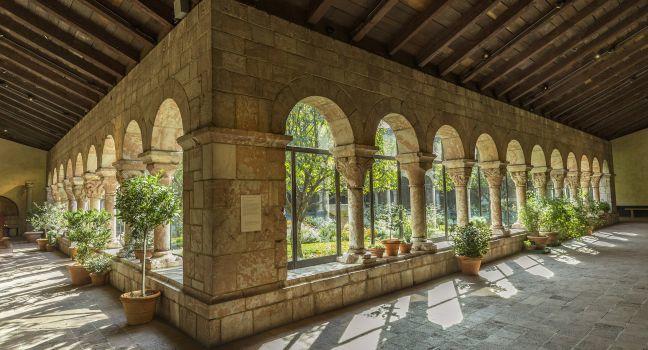
NEW YORK, USA - OCT 22, 2015: Colonnade and garden at The Cloisters, the branch of The Metropolitan Museum of Art devoted to the art and architecture of medieval Europe, , New York,USA.
(c) Meinzahn | Dreamstime.com

Perched on a wooded hill in Fort Tryon Park, near Manhattan's northwestern tip, the Cloisters museum and gardens houses part of the medieval collection of the Metropolitan Museum of Art and is a scenic destination in its own right. Colonnaded walks connect authentic French and Spanish monastic cloisters, a French Romanesque chapel, a 12th-century chapter house, and a Romanesque apse. One room is devoted to the 15th- and 16th-century Unicorn Tapestries, which date from 1500 and are must-see masterpieces of medieval mythology and craftsmanship. The tomb effigies are another highlight, as is the Reliquary containing silver and gold religious objects. Two of the three enclosed gardens shelter more than 250 species of plants similar to those grown during the Middle Ages, including flowers, herbs, and medicinals; the third is an ornamental garden.

\n

Concerts of medieval music are held regularly, and there are holiday concerts in December. Concert tickets include same-day admission to the museum, and tickets to either the main Met on 5th Avenue or to the Met Cloisters include same-day admission to the other. The outdoor Trie Café is open during museum hours, rain or shine, April through October, with a light menu of sandwiches, desserts, and coffee.

99 Margaret Corbin Dr., New York, NY, 10040, USA
212-923–3700
Sight Details
$30 (includes same-day admission to the Metropolitan Museum of Art); New York State residents have a pay-what-you-wish option
Closed Wed.

Something incorrect in this review?

The Metropolitan Museum of Art

Upper East Side Fodor's Choice
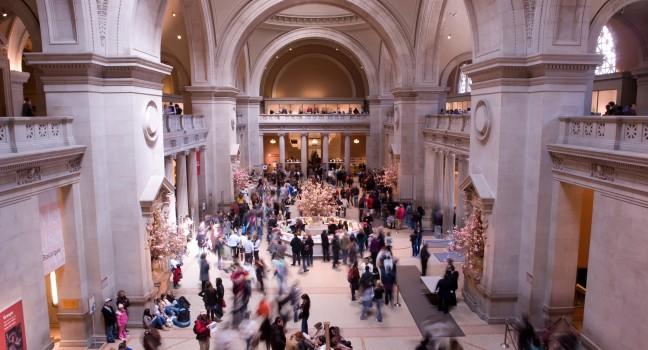
View of the hall of Metropolitan Museum in New York.
Asier Villafranca / Shutterstock

 If Manhattan had no museums other than the colossal Metropolitan Museum of Art, you could still occupy yourself for days—even a week—roaming its labyrinthine corridors. It is the largest museum in the western hemisphere, with more than 1.5 million works of art representing 5,000 years of world history, so plan ahead and be selective. The famous Egyptian Art collection (including the Temple of Dendur) is reason enough to visit. Other don't-miss sections include the renovated Michael C. Rockefeller Wing, the extensive European Paintings galleries, the magnificent Islamic Art galleries, the vibrant collection of Impressionist paintings, the American Wing, the Anna Wintour Costume Institute (named for the celebratedVogue editor-in-chief, and known for hosting the annual star-studded Met Gala), and tons (literally) of ancient Greek and Roman statues. Kids will love the Arms and Armor displays. 

\n

Be aware of ongoing renovations. A rebuild of the Ancient Near Eastern and Cypriot Art galleries will continue into early 2026; check the website and museum map to plan your visit around gallery closures. In between exhibits, take a break at the Cantor Roof Garden, open late April through late October, or at one of five cafés and lounges offering light bites and cocktails. Or book a reservation for The Met Dining Room, an upscale restaurant with Central Park views and a seasonal menu. Admission includes same-day entry to The Met Cloisters, a combination of medieval European art, architecture, and gardens in Fort Tryon Park in Upper Manhattan. Make the most of your visit by downloading a free digital or audio guide from The Met's website or take advantage of guided tours available in 10 different languages.

1000 5th Ave., New York, NY, 10028, USA
212-535–7710
Sight Details
$30 (includes same-day admission to Met Cloisters); New York State residents have a pay-what-you-wish option
Closed Wed.

Something incorrect in this review?

Millennium Park

Chicago Loop Fodor's Choice
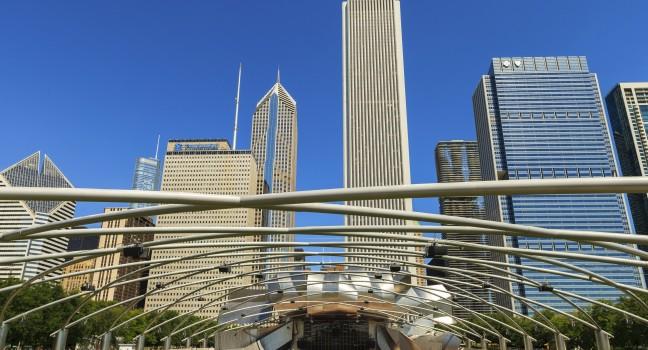
CHICAGO, ILLINOIS AUGUST 21: The popular Jay Pritzker Pavilion in Millennium Park on a beautiful summer day in downtown on August 21, 2011 in Chicago.
Fotoluminate LLC / Shutterstock

With Anish Kapoor's giant, polished-steel Cloud Gate sculpture (affectionately known as "The Bean"), the fun fountains, and a Disney-esque music pavilion, this park quickly stole the hearts of Chicagoans and visitors alike when it opened in 2004. The showstopper is Frank Gehry's stunning Jay Pritzker Pavilion. Dramatic ribbons of stainless steel stretching 40 feet into the sky look like petals wrapping the music stage. The 1,525-seat Harris Theater for Music and Dance provides an indoor alternative for fans of the performing arts.

In the park's southwest corner, the Crown Fountain features dozens of Chicagoans' faces rotating through on two 50-foot-high glass block–tower fountains. When a face purses its lips, water shoots out its "mouth." Kids love it, and adults feel like kids watching it. More conventional park perks include the lovely Lurie Garden (a four-season delight) and the seasonal McCormick Tribune Ice Rink, which opens for public skating each winter.

Mission Dolores Park

Fodor's Choice
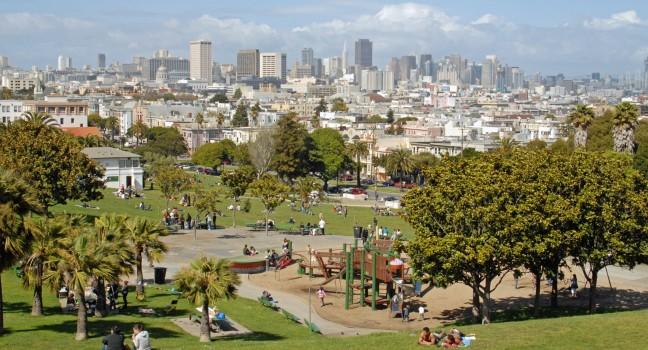
Dolores Park in San Francisco, looking northeast toward downtown.
(c) Rahurlburt | Dreamstime.com

A two-square-block microcosm of life in the district, Mission Dolores Park is one of San Francisco's liveliest green spaces: dog lovers and their pampered pups congregate, kids play at the extravagant playground, and hipsters hold court, drinking beer and rosé cans on sunny days. (Fair warning: if it's over 70°F, the place can get packed like traffic at rush hour for picnic-blanket space.) During the summer, Dolores Park hosts movie nights, performances by the San Francisco Mime Troupe, and pop-up events and impromptu parties. Spend a warm day here—maybe sitting at the top of the park with a view of the city and the Bay Bridge—surrounded by locals and that laid-back, still-abundant San Francisco energy, and you may well find yourself plotting your move to the city. The best views are in the southwest corner, near the historic Golden Fire Hydrant that saved the neighborhood after the 1906 earthquake.

Mokuaikaua Church

Fodor's Choice
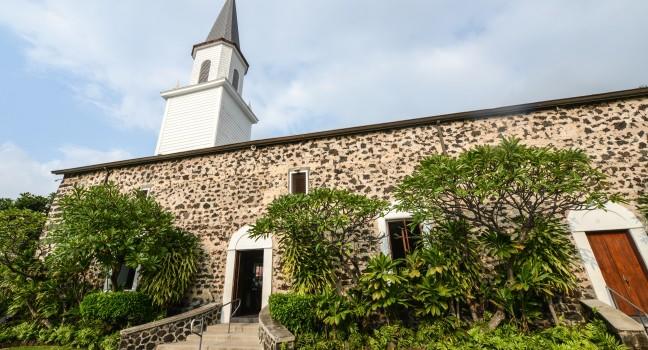
Mokuaikaua Church in Kona is the oldest Christian church in the Hawaiian Islands.
(c) Demerzel21 | Dreamstime.com

Site of the first Christian church in the Hawaiian Islands, this solid lava-rock structure, completed in 1837, is mortared with burned lime, coral, and kukui (candlenut) oil and topped by an impressive 112-foot steeple. The ceiling and interior were crafted of timbers harvested from a forest on Hualalai and are held together with wooden pegs, not nails. Inside, behind a panel of gleaming koa wood, rests a model of the brig Thaddeus as well as a koa-wood table crafted by Henry Boshard, pastor for 43 years. The sanctuary is still undergoing renovations, but if you attend Sunday services, they are glad to give you a tour.

MoMA PS1

Long Island City Fodor's Choice
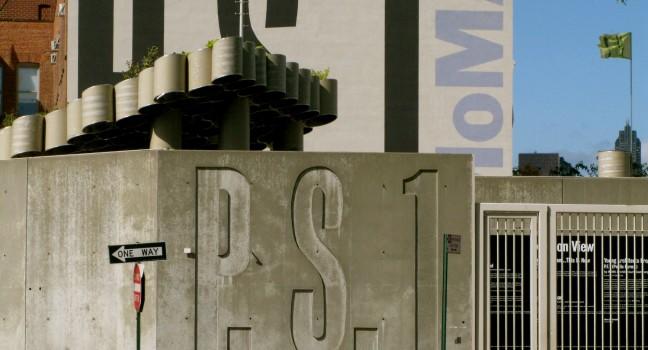
MoMA PS1 Queens New York NY, USA
PS1 by guillermo varela

A pioneer in the \"alternative-space\" movement, MoMA PS1 rose from the ruins of an abandoned school in 1976 as a sort of community arts center for the future, focusing on the work of currently active experimental and innovative artists. Long-term installations include work by Sol LeWitt, James Turrell, and Pipilotti Rist. Every available corner of the enormous building is used; discover art not only in former classrooms–turned–galleries, but also in the boiler room, and even in some bathrooms.

22--25 Jackson Ave., Queens, NY, 11101, USA
718-784–2084
Sight Details
$10
Closed Tues. and Wed.

Something incorrect in this review?

Monument Valley Navajo Tribal Park

Fodor's Choice
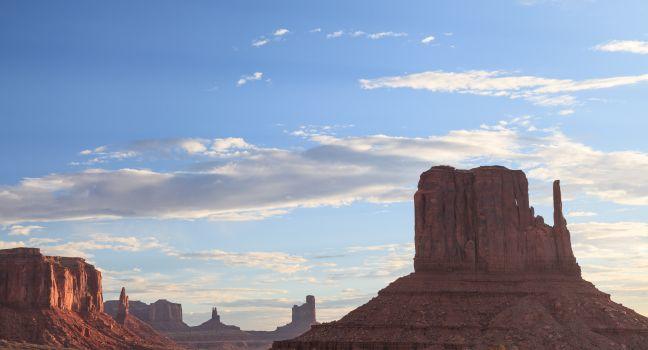
View of buttes and mesas of Monument Valley Navajo Tribal Park
Guoqiang Xue / Shutterstock

For the most breathtaking (and recognizable) views of the iconic West, this is the place. The soaring red buttes, eroded mesas, deep canyons, and naturally sculpted rock formations found here are an easy 21-mile drive south of Mexican Hat on U.S. 163 across Navajo land. Monument Valley is a small part of the more-than-7-million acre Navajo Reservation and is sacred to the Navajo Nation, or Diné (pronounced din-eh, which means "the people"), as they refer to themselves. For generations, the Navajo have grown crops and herded sheep in Monument Valley, considered to be one of the most scenic and mesmerizing destinations in the Navajo Nation. Director John Ford made this fantasy land of buttes, towering rock formations, and mesas popular when he filmed Stagecoach here in 1938.

The 90,000-acre Monument Valley Navajo Tribal Park lies within Monument Valley. A 17-mile self-guided driving tour on a dirt road (there's only one road, so you can't get lost) passes the memorable Mittens and Totem Pole formations, among others. Drive slowly, and be sure to walk (15 minutes round-trip) from North Window around the end of Cly Butte for the views. Call ahead for road conditions in winter. The Monument Valley visitor center has a small crafts shop and exhibits devoted to ancient and modern Native American history. Most of the independent guided tours here use enclosed vans and you will usually be approached in the parking lot; you can find about a dozen approved Navajo Native American guides in the center. They will escort you to places you are not allowed to visit on your own. This surreal landscape constantly changes with the rising and setting sun.

The Morgan Library & Museum

Murray Hill Fodor's Choice
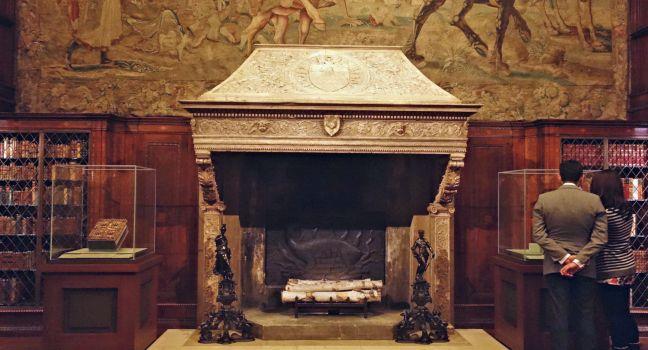
The Morgan Library & Museum, in New York City, which was originally founded to house the private library of American financier J. P. Morgan.
(c) Bigapplestock | Dreamstime.com

The treasures inside this museum and research center, gathered by financier John Pierpont Morgan (1837–1913), are exceptional: medieval and Renaissance illuminated manuscripts, Old Master drawings and prints, and autographed literary and musical manuscripts. Some of the library's crowning achievements on paper include letters penned by John Keats and Thomas Jefferson; a summary of the theory of relativity in Einstein's own elegant handwriting; three Gutenberg Bibles; drawings by Dürer, Leonardo da Vinci, Rubens, Blake, and Rembrandt; the only known manuscript fragment of Milton's Paradise Lost; Thoreau's journals; and original manuscripts and letters by Charlotte Brontë, Jane Austen, Thomas Pynchon, and many others. Rotating exhibits highlight works from the collection and other arts and cultural subjects. Additionally, the museum recognizes the importance of its inaugural director, Belle da Costa Greene.

\n

225 Madison Ave., New York, NY, 10016, USA
212-685–0008
Sight Details
$25; free admission Fri. 5--8 pm but online advance reservations required
Closed Mon.; garden closed late Oct.--May

Something incorrect in this review?

The Mount

Fodor's Choice
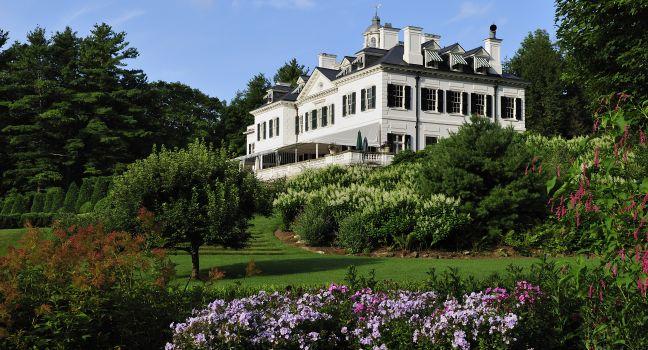
Berkshires, MA, USA -August. 30. 2011: The Mount, the summer home of the novelist Edith Wharton, now is museum in Lenox, state of Massachusetts, USA
T photography / Shutterstock

This 1902 mansion with myriad classical influences was the summer home of novelist Edith Wharton. The 42-room house and 3 acres of formal gardens were designed by Wharton, who is considered by many to have set the standard for 20th-century interior decoration. In designing the Mount, she followed the principles set forth in her book The Decoration of Houses (1897), creating a calm and well-ordered home. Summer is a fine time to enjoy the informal café and occasional free concerts on the terrace. Guided tours take place during regular hours, the private "ghost tour" after hours, and noteworthy authors make regular visits to discuss their latest books.

2 Plunkett St., Lenox, MA, 01240, USA
413-551–5111
Sight Details
$20
The grounds are free and open daily from dawn to dusk

Something incorrect in this review?

Museum of Contemporary Art Chicago

Near North Side Fodor's Choice
Museum Of Contemporary Art Chicago.
(c) Sianamira | Dreamstime.com

A group of art patrons who felt the great Art Institute was unresponsive to modern work founded the MCA in 1967, and it has remained a renegade art museum ever since. It doesn't have any permanent exhibits; this lends a feeling of freshness but also makes it impossible to predict what will be on display at any given time. Special exhibits are devoted mostly to original shows you can't see anywhere else.

220 E. Chicago Ave., Chicago, IL, 60610, USA
312-280–2660
Sight Details
$15 suggested donation; free Tues. for Illinois residents
Closed Mon.

Something incorrect in this review?

Museum of International Folk Art (MOIFA)

East Side and Canyon Road Fodor's Choice
Plaza at the International Folk Art Museum
Plaza at the International Folk Art Museum by Granger Meador

Located atop Museum Hill, this museum delights visitors of all ages with its permanent collection of more than 130,000 objects from about 100 countries. In the Girard Wing, you'll find thousands of amazingly inventive handmade objects such as a tin Madonna, a devil made from bread dough, dolls from around the world, and miniature village scenes. The Hispanic Heritage Wing rotates exhibitions of art from throughout Latin America, dating from New Mexico's Spanish-colonial period (1598–1821) to the present. The exhibits in the Neutrogena Wing rotate, showing subjects ranging from outsider art to the magnificent quilts of Gee's Bend. Lloyd's Treasure Chest, the wing's innovative basement section, provides a behind-the-scenes look at the museum's permanent collection and explores the question of what exactly constitutes folk art. The innovative Gallery of Conscience explores topics at the intersection of folk art and social justice. Each exhibition also includes educational activities for both kids and adults. Allow time to visit the outstanding gift shop and bookstore.

Museum of Modern Art (MoMA)

Midtown West Fodor's Choice
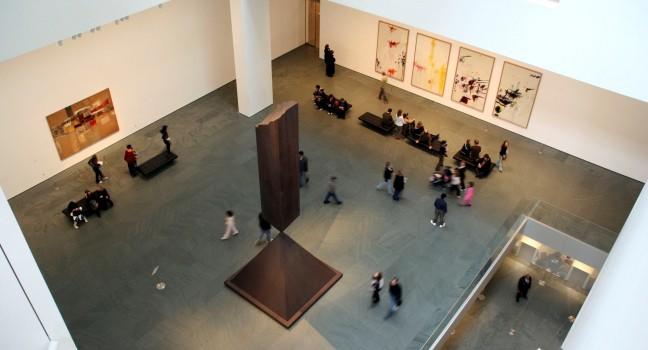
Redesigned interior of the Museum of Modern Art in New York.
(c) Mirceani | Dreamstime.com

Housing one of the world's finest collections of modern art, MoMA is renowned for its permanent collection, which includes masterpieces by Picasso, Van Gogh, Monet, Kahlo, Warhol, and Dalí, as well as its first-rate multimedia exhibitions. MoMA completed a $450 million renovation and expansion in 2019, and the building now features walkways between old and new galleries, each organized to showcase familiar masters alongside great, but lesser-known, artists—many of them women and people of color. Contemporary works and those of varied media also are strategically exhibited beside familiar classics. The displays breathe new life into the institution's curatorial experience.

\n

MoMA spans six levels, and it's helpful to explore from top to bottom. See the most famous works on Floors 4 and 5; installations on 6; and galleries of photography, drawings, architecture projects, and special exhibitions on the lower floors. Level 1 remains home to the delightful Abby Aldrich Rockefeller Sculpture Garden. Within the museum, dine at high-end The Modern; snack at cafés on Floor 2; and enjoy outdoor views from the Terrace café on Floor 6. The cellar-level cinema screens international films and theme series (museum entry is a discounted $14 with your film ticket). Browse at the famous MoMA Store and MoMA Design Store (across 53rd Street). Entry is free for NYC residents the first Friday of each month, 4–8 pm. The first-floor galleries are always free and open to the public.

11 W. 53rd St., New York, NY, 10019, USA
212-708–9400
Sight Details
$30

Something incorrect in this review?

Na Aina Kai Botanical Gardens & Sculpture Park

Fodor's Choice
Na Aina Kai
IMG_7400 by Jeff Muceus

Joyce and Ed Doty's love for plants and art spans the 240 acres here and includes many different gardens, a hardwood plantation, an ahupuaa (a Hawaiian land division), a re-created Navajo compound, an Athabascan village, a Japanese teahouse, a hedge maze, a waterfall, and access to a sandy beach. Throughout the grounds are more than 200 bronze sculptures, one of the nation's largest collections. One popular feature is a children's garden with a 16-foot-tall Jack and the Beanstalk bronze sculpture, gecko maze, tree house, kid-size train, and, of course, a tropical jungle. Located in a residential neighborhood and hoping to maintain good neighborly relations, the nonprofit organization limits tours. Tour lengths vary from 1½ to 5 hours. Reservations are required for all tours, including the self-guided stroll.

4101 Wailapa Rd., Kilauea, HI, 96754, USA
808-828–0525
Sight Details
Tours from $20
Closed weekends
Reservations required for all tours

Something incorrect in this review?

Napili Beach

Fodor's Choice
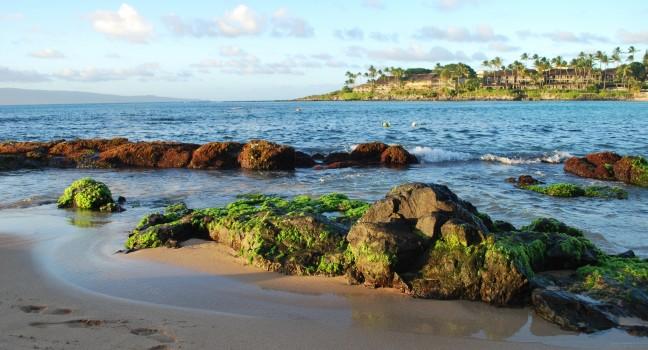
Maui beach, Napili Bay moss covered rocks, ocean view.
(c) Love2pic | Dreamstime.com

Surrounded by sleepy condos, this round bay is a turtle-filled pool lined with a sparkling white crescent of sand. Sunbathers love this beach, which is also a terrific sunset spot. The shore break is steep but gentle, so it's great for bodyboarding and bodysurfing. It's easy to keep an eye on kids here as the entire bay is visible from everywhere. The beach is right outside the Napili Kai Beach Resort, a popular local-style resort for honeymooners and families, only a few miles south of Kapalua. Amenities: showers; toilets. Best for: sunset; surfing; swimming; snorkeling.

5900 Lower Honoapiilani Hwy., Napili, HI, 96761, USA

Something incorrect in this review?

Napoopoo Beach

Fodor's Choice
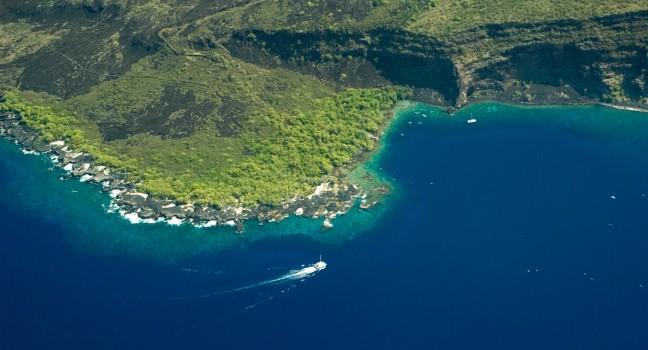
Kealakekua Bay, Big Island aerial shot, Hawaii.
Vlad Turchenko / Shutterstock

Gorgeous and undeveloped, this area in the state historical park offers extraordinary vistas and protected swimming. The shoreline is rocky, but the area is surrounded by high green cliffs, creating calm conditions for superb swimming, snorkeling, and diving (beware of jellyfish). Protected Hawaiian spinner dolphins come to rest and escape predators during the day. Captain James Cook first landed in Hawaii here in 1778, but a year later he was killed in a skirmish with Hawaiians, now marked by a monument on the bay's north end. Rocky but walkable trails lead to Hikiau Heiau, a sacred place for the Hawaiian people. Please proceed respectfully and do not walk on it or enter it. Parking is very limited. Be aware of the off-limits area (in case of rockfalls) marked by orange buoys. Amenities: parking (no fee); showers; toilets. Best for: snorkeling; swimming.

Napoopoo Rd. off Hwy. 11, just south of mile marker 111, Captain Cook, HI, 96750, USA
808-961–9544
Sight Details
Free

Something incorrect in this review?

The National Aquarium

Fodor's Choice
BALTIMORE, USA - JANUARY 31, 2014: National Aquarium buildings at Inner Harbor pier on January 31, 2014 in Baltimore, USA. Colorful reflections of buildings in ice on a sunny winter day.
Andrei Medvedev / Shutterstock

The most-visited attraction in Maryland has nearly 20,000 fish, sharks, dolphins, and amphibians dwelling in 2 million gallons of water. The Blacktip Reef exhibit mimics a coral reef in the Indo-Pacific waters. It features pufferfish, stingrays, and more unusual creatures, such as the tasselled wobbegong, a carpet shark. In the Living Seashore exhibit, visitors can touch live stingrays. The aquarium also features reptiles, birds, plants, and mammals in its rain-forest environment, housed inside a glass pyramid 64 feet high. Atlantic bottlenose dolphins are part of several entertaining presentations that highlight their agility and intelligence. The aquarium's famed shark tank and Atlantic coral reef exhibits are spectacular. Arrive early to ensure admission, which is by timed intervals; by noon, the wait is often two to three hours, especially on weekends and holidays.

501 E Pratt St., Baltimore, MD, 21202, USA
410-576–3800
Sight Details
$39.95

Something incorrect in this review?

National Archives Museum

Fodor's Choice
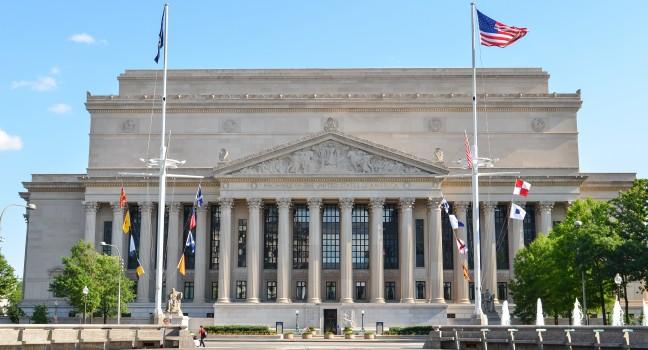
Archives of the United States Building in Washington DC.
Orhan Cam / Shutterstock

Monument, museum, and the nation's memory, the National Archives, headquartered in a grand marble edifice on Constitution Avenue, preserves more than 13 billion paper records dating from as far back as 1774, more than 40 million photographs, and billions of recent electronic records. The National Archives and Records Administration is charged with preserving and archiving the most historically significant U.S. government records at its centers nationwide and in presidential libraries. Admission is free, but reservations are recommended during the busy summer months and cost a nonrefundable $1. Head to recreation.gov at least six weeks in advance of your visit.

Charters of Freedom—the Declaration of Independence, the Constitution, and the Bill of Rights—are the star attractions. They are housed in the archives' cathedral-like rotunda, each on a marble platform and surrounded by argon gas within cases that have gold-plated titanium frames and bulletproof protective glass.

On display at the entrance to the David M. Rubenstein Gallery's Records of Rights exhibit is a 1297 Magna Carta, the document of English common law whose language inspired the Constitution. This Magna Carta, one of four remaining originals, sets the stage for interactive exhibits that trace the civil rights struggles of African Americans, women, and immigrants. Highlights include the discharge papers of an enslaved person who fought in the Revolutionary War to gain his freedom; the mark-up copy of the 1964 Civil Rights Act; and letters to the president from children who questioned segregation.

The Public Vaults convey the sense of going deep into the stacks. You can find records that give a glimpse into federal investigations, from the Lincoln assassination to Watergate. Watch films of flying saucers, used as evidence in congressional UFO hearings, and listen to the Nuremberg trials or Congress debating Prohibition. Reservations to visit the archives are highly recommended; those for guided tours or timed-visit entries should be made at least six weeks in advance.

National Constitution Center

Historic Area Fodor's Choice
Interior of National Constitution Center for the US Constitution on Independence Mall, Philadelphia, Pennsylvania.
(c) Americanspirit | Dreamstime.com

This 160,000-square-foot attraction brings the U.S. Constitution to life with exhibits tracing the development and adoption of the nation's guiding document. The interactive “The Story of We the People” takes you from the American Revolution through the Constitution's ratification to major events in the nation's constitutional history, including present-day events like the inauguration of President Barack Obama, Hurricane Katrina, and the recent economic crisis. Later, you can play the role of a Supreme Court justice deciding an important case, walk among the framers in Signers' Hall, and add your signature to the list of Founding Fathers. The facility has 100-plus exhibits and plays host to many events with major historians, authors, and political figures.

525 Arch St., Philadelphia, PA, 19106, USA
215-409–6700
Sight Details
$19 (extra charges for some special exhibits)
Closed Mon. and Tues.
Advance tickets recommended

Something incorrect in this review?

National Gallery of Art, East Building

The Mall Fodor's Choice
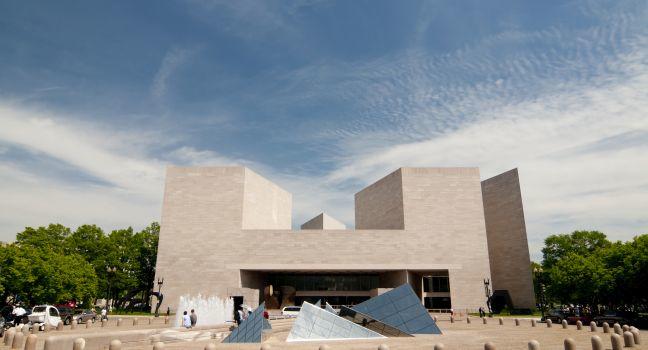
The Dramatic Facade of the East Building of the US National Gallery of Art in Washington DC.
Jwblinn | Dreamstime.com

The East Building opened in 1978 in response to the changing needs of the National Gallery, mainly to house a growing collection of modern and contemporary art. The building itself is a modern masterpiece. The site's trapezoidal shape prompted architect I.M. Pei's dramatic approach: two interlocking spaces shaped like triangles provide room for a library, galleries, auditoriums, and administrative offices. Inside the ax-blade-like southwest corner, a colorful, 76-foot-long Alexander Calder mobile dominates the sunlight atrium. Visitors can view a dynamic 500-piece collection of photography, paintings, sculpture, works on paper, and media arts in thought-provoking chronological, thematic, and stylistic arrangements.

Highlights include galleries devoted to Mark Rothko's giant, glowing canvases; Barnett Newman's 14 stark black, gray, and white canvas paintings from The Stations of the Cross, 1958–1966; and several colorful and whimsical Alexander Calder mobiles and sculptures. You can't miss Katharina Fritsch's Hahn/Cock, 2013, a tall blue rooster that appears to stand guard over the street and federal buildings from the roof terrace, which also offers views of the Capitol. The upper-level gallery showcases modern art from 1910 to 1980, including masterpieces by Constantin Brancusi, Marcel Duchamp, Sam Gilliam, Henri Matisse, Joan Miró, Piet Mondrian, Jackson Pollock, and Andy Warhol. Ground-level galleries are devoted to American art from 1900 to 1950, including pieces by George Bellows, Edward Hopper, Georgia O'Keeffe, Charles Sheeler, and Alfred Stieglitz. The concourse level is reserved for rotating special exhibitions.

The East Building Shop is on the concourse level, and the Terrace Café looks out over the atrium from the upper level. You can access an audio tour on your mobile device, and docent-led tours are available most days. Check the website for times and themes.

National Museum of Mexican Art

Pilsen Fodor's Choice
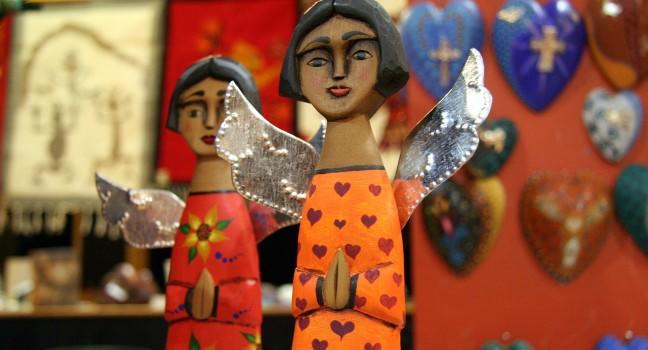
Wood carving artwork by Artist Jacobo Angeles Ojeda.
Wood carving artwork by Artist Jacobo Angeles Ojeda by Gozamos

The largest Latino cultural museum in the country (and the first Latino one accredited by the American Alliance of Museums) is definitely worth a look. Its galleries house impressive displays of contemporary, traditional, and Mesoamerican art from both sides of the border, as well as vivid exhibits that trace immigration woes and political struggles. The 20,000-piece permanent collection includes pre-Cuauhtemoc artifacts, textiles, folk art, paintings, prints, and drawings. Every fall the giant Day of the Dead exhibit stuns Chicagoans with its altars from artists across the U.S. and Mexico.

National Portrait Gallery

Downtown Fodor's Choice
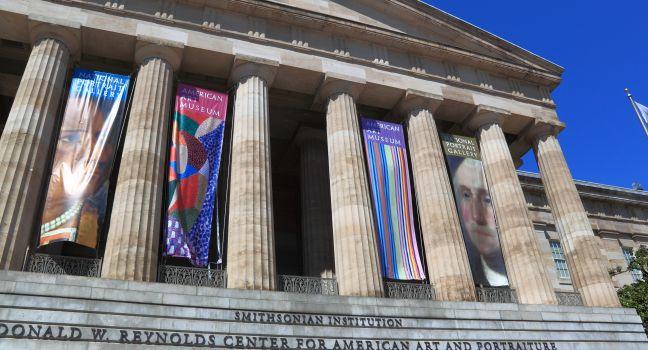
Smithsonian Institutions Donald W. Reynolds Center for American Art and Portraiture at Washington DC, United States.
(c) Luckydoor | Dreamstime.com

The intersection of art, biography, and history is illustrated here through images of people who have shaped U.S. history. There are prints, paintings, photos, and sculptures of subjects from George Washington to Madonna.

This museum shares the National Historic Landmark building Old Patent Office with the Smithsonian American Art Museum. Built between 1836 and 1863 and praised by Walt Whitman as the "noblest of Washington buildings," it is deemed one of the country's best examples of Greek Revival architecture.

America's Presidents gallery, offering insights into the leaders---from George Washington until the present---is one of the most popular exhibitions. In this gallery, you'll see the only complete collection of presidential portraits outside the White House. Highlights include Gilbert Stuart's 1796 "Landsdowne" portrait of George Washington, Alexander Gardner's "cracked-plate" image of Abraham Lincoln from Lincoln's last formal portrait session before his assassination in 1865, a sculpture of Andrew Jackson on a horse, and political cartoonist Pat Oliphant's sculpture of George H.W. Bush playing horseshoes.

From portraits of World War II generals Eisenhower and Patton to Andy Warhol's Time magazine cover of Michael Jackson, the third-floor gallery, Twentieth-Century Americans, offers a vibrant tour of the people who shaped the country and culture of today. If seeing former first lady Michelle Obama is on your list, get to the gallery early, as this is a sought-after portrait. 

There are free docent-led tours Saturdays and Sundays at noon and 2:30 pm. Check the website to confirm the times. At the Lunder Conservation Center on the third and fourth floors, you can watch conservators at work.

National World War II Museum

Warehouse District Fodor's Choice
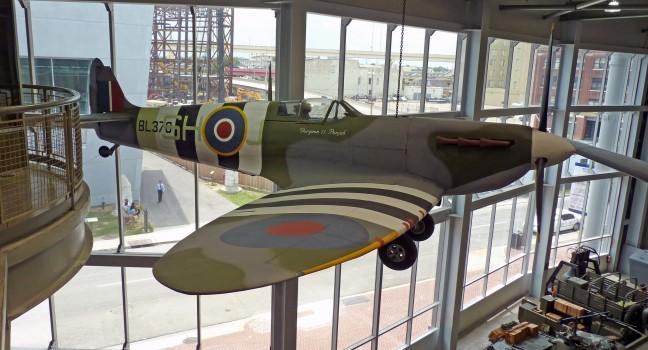
Supermarine Spitfire Mk Vb Fighter at the National World War II Museum, New Orleans
P1060929 by

This vast and still-expanding museum is a moving and well-executed examination of World War II events and its aftermath. Seminal moments are re-created through vintage propaganda from the period, including posters, radio, and film clips; more than 7,500 oral histories of the military personnel involved; a number of short documentary films; and collections of weapons, personal items, and other artifacts from the war. Highlights of the museum include "Final Mission: The USS Tang Experience," which re-creates the experience of being in a submarine, and the 4-D theater experience (across the street from the main exhibits) called "Beyond All Boundaries," produced and narrated by Tom Hanks. Other popular exhibits are the replicas of the Higgins boat troop landing craft, which was invented and manufactured in New Orleans by Andrew Jackson Higgins during WWII, and the U.S. Freedom Pavilion: The Boeing Center, which honors all service branches and includes a restored Boeing B-17. Galleries dedicated to the European and Pacific theaters, as well as the Homefront's role in the war, are among the museum's comprehensive permanent exhibits. The Stage Door Canteen features WWII-era entertainment and an adjoining restaurant serves a "Victory Garden-to-table" menu. Check the website for updates on the museum's ongoing expansion and for current offerings.

945 Magazine St., New Orleans, LA, 70130, USA
504-528–1944
Sight Details
$35; Beyond All Boundaries presentations and showings at Freedom Theater $11 each

Something incorrect in this review?

Nauset Light Beach

Fodor's Choice
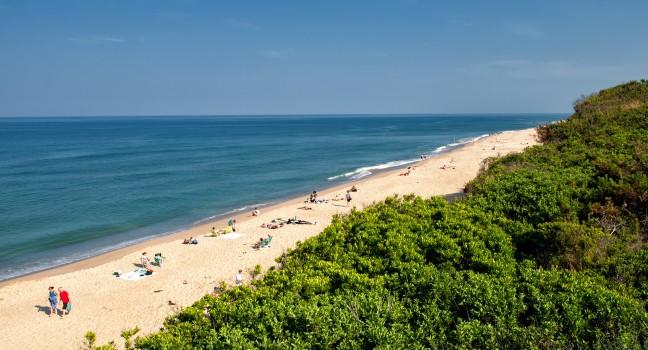
A sunny summer's day on June 18, 2010 at Nauset Light Beach. Cape Cod was the historic landing of Mayflower and is today a major travel destination in Massachusetts.
Rolf_52 / Shutterstock

Adjacent to Coast Guard Beach, this sandy beach is backed by tall dunes, frilly grasses, and heathland. The trail to the Three Sisters lighthouses takes you through a pitch-pine forest. Parking here is extremely limited and fills up quickly in summer; plan to arrive early. Amenities: lifeguards; parking (fee); showers; toilets. Best for: sunrise; surfing; swimming; walking.

The Neon Museum

Downtown Fodor's Choice
Las Vegas, Nevada, USA - In Las Vegas, these old neon signs have been saved from the trash heap and cherished for what they were in the past, a tall order, to be sure, in a city known for tearing down the old to make room for the new.
Solange_Z / iStockphoto

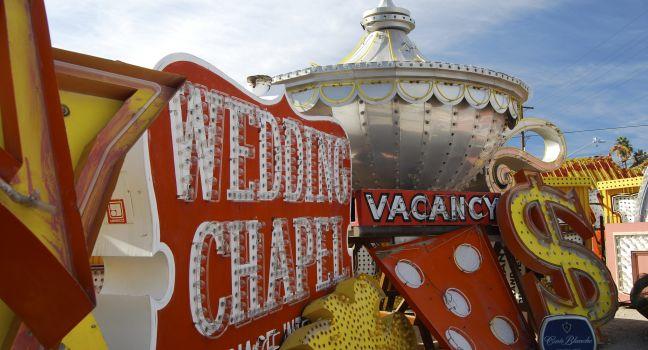
Consider this Downtown museum the afterlife for old neon signs. The facility, which displays more than 150 signs that date back to the 1930s, opened to the public in 2012. The old La Concha motel's historic lobby was renovated and now serves as the museum's entry point. The sign collection includes the original signs from the Stardust, Horseshoe, and other properties. To get up close, visitors must take an educational and informative one-hour guided tour. Daytime tours, especially in summer, can be scorching. For an alternative, try one of the nighttime tours, where you can see four of the signs illuminated the way they were intended to be. In 2018 the museum added Brilliant! Jackpot, a separate experience in the North Gallery where a laser-light show set to music appears to reanimate some of the signs. The result is, well, illuminating.

New Mexico History Museum

The Plaza Fodor's Choice
Main entrance to the New Mexico History Museum
New Mexico History Museum by

This impressive, modern museum anchors a campus that encompasses the Palace of the Governors, the Palace Print Shop & Bindery, the Fray Angélico Chávez History Library, and Photo Archives (an assemblage of more than 1 million images dating from the 1850s). Behind the palace on Lincoln Avenue, the museum thoroughly explores the early history of Indigenous people, Spanish colonization, the Mexican Period, and travel and commerce on the legendary Santa Fe Trail. Inside are changing and permanent exhibits. By appointment, visitors can tour the comprehensive Fray Angélico Chávez History Library and its rare maps, manuscripts, and photographs (more than 120,000 prints and negatives). The Palace Print Shop & Bindery, which prints books, pamphlets, and cards on antique presses, also hosts bookbinding demonstrations, lectures, and slide shows. The Palace of the Governors is a humble one-story neo-Pueblo adobe on the north side of the Plaza, and is the oldest public building in the United States. Its rooms contain period furnishings and exhibits illustrating the building's many functions over the past four centuries. Built at the same time as the Plaza, circa 1610, it was the seat of four regional governments—those of Spain, Mexico, the Confederacy, and the U.S. territory that preceded New Mexico's statehood, which was achieved in 1912. It served as the residence for 100 Spanish, Mexican, and American governors, including Governor Lew Wallace, who wrote his epic Ben Hur in its then drafty rooms, all the while complaining of the dust and mud that fell from its earthen ceiling.

Dozens of Native American vendors gather daily under the portal of the Palace of the Governors to sell pottery, jewelry, bread, and other goods. With few exceptions, the more than 500 artists and craftspeople registered to sell here are Pueblo or Navajo Indians. The merchandise for sale is required to meet strict standards. Prices tend to reflect the high quality of the merchandise but are often significantly less than what you'd pay in a shop. Please remember not to take photographs without permission.

New Mexico Museum of Art

The Plaza Fodor's Choice
Museum of Art in Santa Fe New Mexico with adobe style architecture.
(c) Kingjon | Dreamstime.com

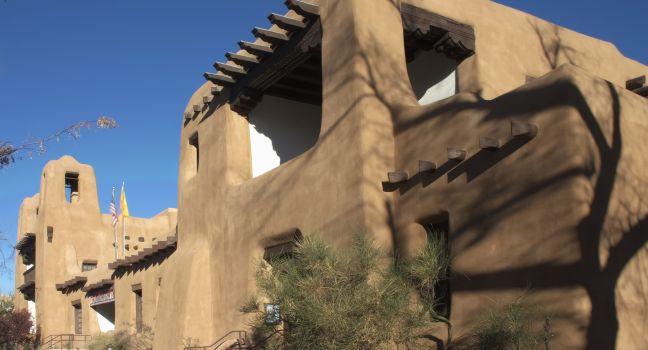
Designed by Isaac Hamilton Rapp in 1917, this museum is one of Santa Fe's earliest Pueblo Revival structures, inspired by the adobe structures at Acoma Pueblo. Split-cedar latillas (branches set in a crosshatch pattern) and hand-hewn vigas form the ceilings. The 20,000-piece permanent collection, of which only a fraction is exhibited at any given time, emphasizes the work of regional and nationally renowned artists, including Georgia O'Keeffe; realist Robert Henri; the Cinco Pintores (five painters) of Santa Fe (including Fremont Ellis and Will Shuster, the creative mind behind Zozóbra); members of the Taos Society of Artists (Ernest L. Blumenschein, Bert G. Phillips, Joseph H. Sharp, and E. Irving Couse, among others); and the works of noted 20th-century photographers of the Southwest, including Laura Gilpin, Ansel Adams, and Dorothea Lange. Rotating exhibits are staged throughout the year. Many excellent examples of Spanish-colonial-style furniture are on display. Other highlights include an interior placita (small plaza) with fountains, WPA murals, and sculpture, and the St. Francis Auditorium, where concerts and lectures are often held.

107 W. Palace Ave., Santa Fe, NM, 87501, USA
505-476–5072
Sight Details
$12
Closed Nov.–Apr. and Mon.

Something incorrect in this review?

New Orleans Museum of Art (NOMA)

Mid-City Fodor's Choice
New Orleans Museum Of Art - NOMA
By Mutante (CC BY-SA 3.0), via Wikimedia Commons

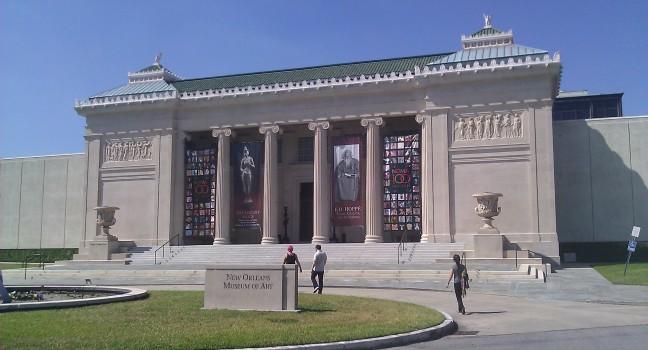
Gracing the main entrance to City Park since 1911, this traditional fine-arts museum draws from classic Greek architecture, with several modern wings that bring additional light and space to the grand old building. NOMA now has 46 galleries housing an outstanding permanent collection. Made up of nearly 40,000 objects, the installations and exhibits represent historical periods from the Italian Renaissance to the best of the contemporary world. A wealth of American and European art—French, in particular—makes up much of the collection, with works by Monet, Renoir, Picasso, Cornell, and Pollock. Louisiana artists are also well represented, and the museum boasts photography, ceramics, and glassworks from cultures around the globe, plus outstanding holdings in African, pre-Columbian, and Asian art.

Henry Moore's handsome Reclining Mother and Child greets visitors at the entrance of the Sydney and Walda Besthoff Sculpture Garden. Most of the garden's 90-some sculptures, representing some of the biggest names in modern art, were donated by avid local collectors Sydney and Walda Besthoff. Meandering trails and bridges carry visitors over bayou lagoons and past a fascinating combination of famed traditional sculpture and contemporary works, including major pieces by Jacques Lipchitz, Barbara Hepworth, and Joel Shapiro. The garden is open daily from 10 am to 5 pm from October through March, and until 6 pm the rest of the year; admission is free.

1 Collins Diboll Circle, New Orleans, LA, 70124, USA
504-658–4100
Sight Details
$20
Closed Mon.

Something incorrect in this review?