10448 Best Sights in USA

Background Illustration for Sights

We've compiled the best of the best in USA - browse our top choices for the top things to see or do during your stay.

Alcatraz

Embarcadero Fodor's choice
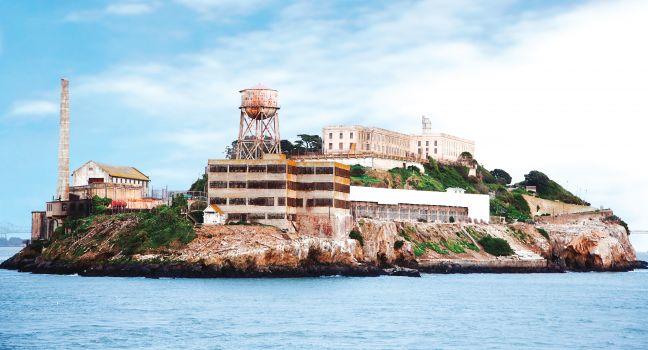
Alcatraz island famous prison in San Francisco.
Andresr | Dreamstime.com

Thousands of visitors come every day to walk in the footsteps of Alcatraz's notorious criminals. The stories of life and death on "the Rock" may sometimes be exaggerated, but it's almost impossible to resist the chance to wander the cell block that tamed the country's toughest gangsters and saw daring escape attempts of tremendous desperation. Fewer than 2,000 inmates ever did time on the Rock, including Al "Scarface" Capone, Robert "The Birdman" Stroud, and George "Machine Gun Kelly."

Some tips for escaping to Alcatraz: (1) Buy your ticket in advance. Visit the website for Alcatraz Cruises to scout out available departure times for the ferry. (2) Dress smart. Bring a jacket to ward off the chill from the boat ride and wear comfortable shoes. (3) Consider going for the evening tour. The evening tour has programs not offered during the day, the bridge-to-bridge view of the city twinkles at night, and your "prison experience" will be amplified as darkness falls. (4) Be mindful of scheduled and limited-capacity talks.

The boat ride to the island is brief (15 minutes) but affords beautiful views of the city, Marin County, and the East Bay. The audio tour (which comes with each ticket and is highly recommended to actually listen to for the best visit experience) includes observations by guards and prisoners about life in one of America's most notorious penal colonies. Additional programs and ranger tours are listed at the dock once you arrive on the island. Plan your schedule to allow at least three hours for the visit and boat rides combined.

Exploratorium

Embarcadero Fodor's choice
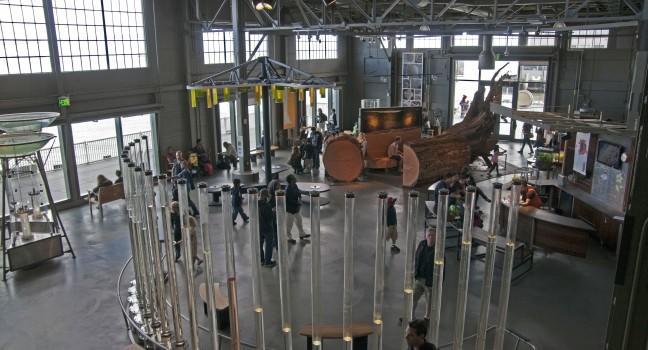
Exploratorium, San Francisco, California, USA
Exploratorium, San Francisco by Yuichi Sakuraba

Walking into this fascinating museum of "science, art, and human perception" is like visiting a mad-scientist's laboratory, but one in which most of the exhibits are supersize and you can play with everything. Signature experiential exhibits include the Tinkering Studio and a glass Bay Observatory building, where the exhibits help visitors better understand what they see outside. Get an Alice-in-Wonderland feeling in the Distorted Room, where you seem to shrink and grow as you walk across the slanted, checkered floor. In the Shadow Box, a powerful flash freezes an image of your shadow on the wall; jumping is a favorite pose. More than 650 other exhibits focus on sea and insect life, ice crystals, electricity, patterns and light, novelties like bicycle-powered jump rope, the weather, and more. Don't miss a walk around the outside of the museum afterward for superb views and a lesson about the bay's sediment and water motion in the Bay Windows presentation.

Ferry Building

Embarcadero Fodor's choice
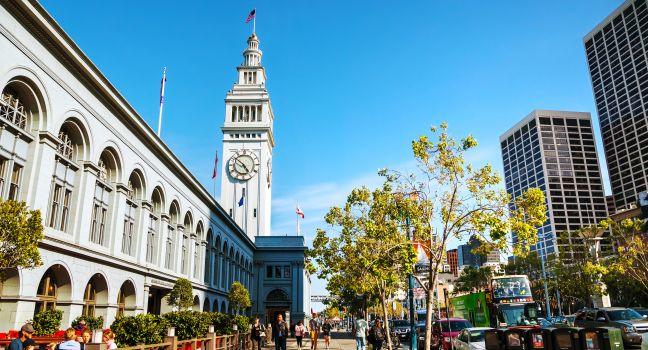
SAN FRANCISCO - APRIL 24: Famous ferry building on April 24, 2014 in San Francisco, California. This 245-foot tall clock tower is the iconic waterfront landmark built in 1898.
Andreykr | Dreamstime.com

The jewel of the Embarcadero, erected in 1898 and now home to an outstanding food marketplace, is topped by a 230-foot clock tower modeled after the campanile of the cathedral in Seville, Spain. On the morning of April 18, 1906, the tower's four clock faces stopped around 5:15 am—moments after the great earthquake struck—and stayed still for 12 months.

Today San Franciscans flock to the street-level marketplace, stocking up on supplies from local favorites such as Acme Bread, Blue Bottle Coffee, El Porteño (empanadas), the gluten-free Mariposa Baking Company, and Humphry Slocombe (ice cream). For sit-down dining, there's the Hog Island Oyster Company and the seasonal Californian duo of Bouli Bar and Boulette's Larder. On the plaza side, the outdoor tables at Gott's Roadside and Fort Point Ferry Building offer great people-watching and excellent casual bites and sips. On Saturday morning the plazas outside the building buzz with an upscale farmers' market. Extending south from the piers north of the building to the Bay Bridge, the waterfront promenade out front is a favorite among joggers and picnickers, with a view of sailboats plying the bay. True to its name, the Ferry Building still serves actual ferries: from its eastern flank they sail to Sausalito, Larkspur, Tiburon, Angel Island, and the East Bay.

Recommended Fodor's Video

The Getty Center

Brentwood Fodor's choice
Modern Architecture Detail in Los Angeles, California.
Nickolay Stanev / Shutterstock

With its curving walls and isolated hilltop perch, the Getty Center resembles a pristine fortified city of its own. You may have been lured there by the beautiful views of Los Angeles—on a clear day stretching all the way to the Pacific Ocean—but the amazing architecture, uncommon gardens, and fascinating art collections will be more than enough to capture and hold your attention. When the sun is out, the complex's rough-cut travertine marble skin seems to soak up the light.

Getting to the center involves a bit of anticipatory lead-up. You'll need to book a free timed-entry ticket in advance. When you arrive, at the base of the hill lies the underground parking structure. From there you either walk or take a smooth, computer-driven tram up the steep slope, checking out the Bel Air estates across the humming 405 freeway. The six pavilions that house the museum surround a central courtyard and are bridged by walkways. From the courtyard, plazas, and walkways, you can survey the city from the San Gabriel Mountains to the ocean.

In a ravine separating the museum and the Getty Research Institute, conceptual artist Robert Irwin created the playful Central Garden in stark contrast to Richard Meier's mathematical architectural geometry. The garden's design is what Hollywood feuds are made of: Meier couldn't control Irwin's vision, and the two men sniped at each other during construction, with Irwin stirring the pot with every loose twist his garden path took. The result is a refreshing garden walk whose focal point is an azalea maze (some insist the Mickey Mouse shape is on purpose) in a reflecting pool.

Inside the pavilions are the galleries for the permanent collections of European paintings, drawings, sculpture, illuminated manuscripts, and decorative arts, as well as world-class temporary exhibitions and photographs gathered internationally. The Getty's collection of French furniture and decorative arts, especially from the early years of Louis XIV (1643–1715) to the end of the reign of Louis XVI (1774–92), is renowned for its quality and condition; you can even see a pair of completely reconstructed salons. In the paintings galleries, a computerized system of louvered skylights allows natural light to filter in, creating a closer approximation of the conditions in which the artists painted. Notable among the paintings are Rembrandt's The Abduction of Europa; Van Gogh's Irises; Monet's Wheatstacks, Snow Effects, and Morning; and James Ensor's Christ's Entry into Brussels.

If you want to start with a quick overview, pick up the brochure in the entrance hall that guides you to collection highlights. There's also an instructive audio tour with commentaries by art historians and other experts. The Getty also presents lectures, films, concerts, art workshops, and special programs for kids, families, and all-around culture lovers. The complex includes an upscale restaurant and downstairs cafeteria with panoramic window views. There are also outdoor coffee carts.

On-site parking is subject to availability and can fill up by midday on holidays and in the summer, so try to come early in the day or after lunch. 

A tram takes you from the street-level entrance to the top of the hill. Public buses (like Metro Rapid Line 734) also serve the center and link to the Expo Rail.

Universal Studios Hollywood

Universal City Fodor's choice
HOLLYWOOD, CALIFORNIA,USA - JUNE 2, 2009: The Simpsons ride at Universal Studios Hollywood, California
Roka / Shutterstock

Universal Studios Hollywood combines the classic theme park experience of roller coasters, costumed characters, and long lines with the magic of movies. It sits above a still-functioning movie studio and all of its rides are centered around blockbusters like Jurassic Park and Transformers. Coming in 2026 is a Fast & Furious–inspired topsy-turvy coaster that spirals down the hillside. There are entire lands dedicated to Harry Potter, The Simpsons, and Despicable Me's Minions. The newest section is the fully immersive, highly interactive Super Nintendo World, which plunges gameboys and girls into the Mushroom Kingdom with Mario and Luigi.

What can't be duplicated at the Orlando branch is the Universal backlot, where movies have been made since 1915. Hop aboard the new electric trams which wind around working soundstages and exterior sets where many popular movies and TV series have been filmed. As they are still being used today, going during the week increases your chances of seeing stars at work. During the studio tour, you'll visit The Good Place, see the airplane wreckage from War of the Worlds, and have a close call with Norman Bates from Psycho as well as drive through 4D motion simulated "rides." 

The park gets a scary makeover in October for Halloween Horror Nights when new mazes full of monsters, murderers, and jump scares pop up. If you can swing it, splurge on the express tickets to drastically reduce wait times.

The tram ride is the best place to begin your visit both for historical context and because the line becomes longer as the day goes on.

Also run by Universal Studios, CityWalk is an adjacent corridor of shops (there's a great place to snag Dodgers gear!), restaurants like Margaritaville, Bubba Gump Shrimp Company, and the Hello Kitty & Friends Cafe, and movie theaters. There's also several quick food options like Pink's Hot Dogs and Voodoo Doughnut. Lots of park visitors end their day here, so make dinner reservations.

Academy Museum of Motion Pictures

Mid-Wilshire Fodor's choice

The Academy Museum of Motion Pictures sits on the corner of Wilshire and Fairfax, with a giant spherical dome that features a 1,000-seat theater and stunning terrace with views of the Hollywood Hills. Inside, the museum has enlightening exhibitions that delve into the history of cinema with interactive exhibits, videos of award-winning storytellers, multiple theaters, and immersive experiences.

Astronomy Programs

Fodor's choice

You’ll find some of the country’s darkest skies—and brightest stars—at Great Basin. Due to its low light pollution, it was even named a Dark Sky Park by the International Dark Sky Association in 2016. As astrotourism has grown, Great Basin has responded by building an amphitheater for these ranger-led stargazing programs. Expect to be dazzled as you get a chance to see the wild blue yonder through a telescope. It’s often crowded, especially during the summer, when the program is held several times a week, so arrive early before the parking lot fills up. The program drops down to once a week in shoulder seasons.

Catalina Island Museum

Fodor's choice

Inside this local art and history interactive museum, visitors can learn about the island's native Chumash people, as well as about Catalina Island's owner and creative developer William Wrigley Jr., his baseball team, his Hollywood celebrity friends, and his love for big band music. The exterior of the Catalina Island Museum is a beautiful Spanish Mission style with art deco enhancements.

Disney California Adventure

Fodor's choice

The sprawling Disney California Adventure, adjacent to Disneyland, pays tribute to the Golden State with multiple theme areas. Admire the art-deco design shops and dining venues along Buena Vista Street and learn about movie magic at Hollywood Land.

Avengers Campus is home for a new generation of superheroes, focusing on the characters of the Marvel Cinematic Universe. Ride on Web-Slingers: A Spider-Man Adventure, where guests of all ages can help wrangle Spider-Bots while wearing 3D glasses and accumulate points. Screams can be heard around the park from the free-falling Guardians of the Galaxy–Mission: BREAKOUT! See your favorite characters from several hit Pixar films when crossing over Pixar Pier. Ride the superfast Incredicoaster, and collect points playing along the interactive Toy Story Midway Mania ride. Stop to win a prize playing games at the carnival area in Pixar Pier.

The 12-acre Cars Land features Radiator Springs Racers, a thrilling trip in six-passenger speedsters through scenes featured in the blockbuster hit. The Single Rider Lane saves time in line. At night the park takes on neon hues as glowing signs light up Route 66 in Cars Land and Pixar Pal-A-Round, a giant Ferris wheel.

Cocktails, craft beers, and premium wines from California are available in the reimagined San Fransokyo Square. Inspired from the movie Big Hero 6, where East meet West offers new dining venues. Be sure to stay for the World of Color–One, a light-and-sound show celebrating Walt Disney's storytelling.

Filoli

Fodor's choice

The Bay Area’s definitive early 20th century mansion and gardens reside in a quiet area along the beautiful Crystal Springs Reservoir at the base of the Santa Cruz Mountains, just a short drive from Menlo Park on I–280. The East Coast has several of these lavish estates from the titans of the Gilded Age with all kinds of Rockefeller and Vanderbilt family homes on view today to the public. However, it’s very rare to find those in Northern California. Part of the National Trust for Historic Preservation, Filoli dates back to 1917 when it was built for the Bourn family based on a fortune from gold mining, along with investing in water and electricity (investing in Silicon Valley was much more humble back then). The estate was purchased by William Roth and Lurline Matson Roth, the latter the daughter of Captain William Matson, who founded the still-important namesake shipping company.

The Roths continued maintaining the impeccable estate, both inside and outside, before handing it over to the public after William’s death in the 1970s. Across 654 acres, the estate features several beautiful gardens, farmland, different ecosystems, and even crosses the San Andreas Fault (the source of many Northern California earthquakes). A 1-mile trail gives a good general overview of the grounds. For most visitors, the enchanting gardens are the highlights, particularly in spring when the daffodils and myriad other flowers are in full bloom. Summer sees the rose garden at its stunning peak. The holiday season is also wonderful when the gardens include festive light displays, but it’s truly special any time of year. The house is quite spectacular, as well, with beautiful terraces facing the gardens, and the interior features 10 bedrooms for the family, 15 bathrooms, and 17 fireplaces. The Georgian Revival–style architecture is very impressive throughout the home, particularly in the grand ballroom with a mural of Ireland's Muckross House, the posh reception room, and the warm, mahogany-paneled library.

Height of Land

Fodor's choice

Height of Land is the highlight of—and the highest point along—Rangeley Lakes National Scenic Byway, with unforgettable views of mountains and lakes. One of Maine's and even New England's best overlooks, it hugs Route 17 atop Spruce Mountain several miles south of Rangeley's Oquossoc village. It's a twisty drive up on forest-lined roads whether you're coming that way or from the south, but however you get here you'll be amply rewarded. Mooselookmeguntic and Upper Richardson lakes sprawl amid the forestland below. On a clear day, you can look west to the White Mountains on the Maine–New Hampshire border. There's off-road parking, interpretive panels, and stone seating. Hit the Appalachian Trail for a day hike—it crosses Height of Land. Rangeley Lake unfolds at a nearby overlook on the opposite side of the road, north of here toward Oquossoc.

Huntington Beach Pier

Fodor's choice

This municipal pier stretches 1,856 feet out to sea, and is a prime vantage point to watch the dozens of surfers in the water below. At the end of the pier you'll find a popular seafood restaurant, Broad Street Oyster Company, serving fresh oysters, fried seafood, lobster rolls, shrimp tacos, and ice-cold beers. Along the pier one can purchase fishing rods, tackle, and bait to fish off the pier.

Lehman Caves

Fodor's choice

While Indigenous people were the first to explore and use the caves, rancher and miner Absalom Lehman is credited with discovering this underground wonder in 1885. The single limestone and marble cavern is 2½ miles long and looks as if it’s covered in melting wax frozen in stony time. Geology fans will identify stalactites, stalagmites, helictites, flowstone, popcorn, and other bizarre mineral formations that cover almost every surface. Lehman Caves is one of the best places to see rare shield formations, created when calcite-rich water is forced from tiny cracks in a cave wall, ceiling, or floor. Year-round the cave maintains a constant, damp temperature of 50°F, so wear a light jacket and nonskid shoes. Go for the full 90-minute tour if you have time; during summer, it's offered several times a day, as is the 60-minute tour. Expect daily tours during the winter. Children under age 5 are not allowed on the 90-minute tours, except during the winter; those under 16 must be accompanied by an adult. Take the 0.3-mile Mountain View Nature Trail beforehand to see the original cave entrance and Rhodes Cabin, where black-and-white photographs of the park's earlier days line the walls.

Tickets are extremely competitive and available up to 30 days in advance at www.recreation.gov. Day-of tickets are sometimes available but never guaranteed.

Los Angeles County Museum of Art (LACMA)

Miracle Mile Fodor's choice

Los Angeles has a truly fabulous museum culture and the ever-changing Los Angeles County Museum of Art boasts the largest collection of art in the western United States. With more than 135,000 pieces from 6,000 years of history across multiple buildings, plan on spending a full day. Highlights include the Urban Light sculpture by Chris Burden (an Instagram favorite), Levitated Mass by Michael Heizer, and prominent works by Frida Kahlo, Wassily Kandinsky, Henri Matisse, and Claude Monet. With an illustrative permanent collection to go along with an ever-rotating array of temporary exhibits, film screenings, educational programs, and more, the museum is a beacon of culture that stands alone in the middle of the city. Temporary exhibitions sometimes require tickets purchased in advance.

Maine Mineral & Gem Museum

Fodor's choice

Space rocks, Maine mineralogy, and western Maine's mineral and gem mining legacy converge at this impressive interactive 15,000-square-foot museum—unexpected for a town Bethel’s size. Surrounding the handsome structure that joined two Main Street buildings is a garden with large rocks, some resembling modern sculpture and all placarded with interesting facts about their origins, etc. Opened in 2019, the two-story museum has 19 exhibits in four galleries. Kids love the simulated mining blast, part of an exhibit on gem discoveries and mica and feldspar mining in the Bethel area. The museum's collection includes 37,940 mineral specimens, many Maine-mined. A replica of a Maine mineral store, once a tourist hot spot, showcases prized specimens. In the Hall of Gems (and the gift shop!), jewelry featuring Maine's famed pink and watermelon tourmaline, and other gems bedazzles. The Space Rocks gallery darkens every half hour for a 3D film that beams about as if a meteorite shower has blown up the walls, revealing Bethel. Strikingly displayed is a famed meteorite collection: the museum has the world's "largest known" pieces of the moon and Mars and more lunar meteorites than other museums combined. Visitors can hold a space rock, and scientists relate interesting facts via life-size videos as though they were in the room. Off the gift shop, the free Discovery Gallery has changing exhibits and drawers with minerals, rocks, and fossils. Check the website for events like the summertime outdoor sluice.

Marin Headlands

Fodor's choice

The stunning headlands stretch from the Golden Gate Bridge to Muir Beach, drawing photographers who perch on the southern heights for spectacular shots of the city and bridge. Equally remarkable are the views north along the coast and out to the ocean, where the Farallon Islands are visible on clear days. Hawk Hill (accessed from Conzelman Road) has a trail with panoramic views and is a great place to watch the fall raptor migration; it's also home to the mission blue butterfly.

The headlands' strategic position at the mouth of San Francisco Bay made them a logical site for military installations from 1890 through the Cold War. Today you can explore the crumbling concrete batteries, where naval guns once protected the area. Main attractions are centered on Forts Barry and Cronkhite, which are separated by Rodeo Lagoon and Rodeo Beach, a dark stretch of sand that attracts sandcastle builders and dog owners.

Moose Alley

Fodor's choice

Bowling is just one reason families, couples, locals, and visitors head here for a night out, or indoor fun on a rainy—or sunny!—day. There are arcade games, billiards, foosball, cornhole, shuffleboard, darts, air hockey, and dancing and live music (check the website), plus 10 bowling lanes. Spirits Bar Grill & Cafe serves breakfast, lunch, and dinner, and folks stop in for ice cream, house-made donuts and bagels, or an espresso, settling in upfront in a curvy lounge seat or at the soda fountain--like counter. Images of fish, moose, loons, and Rangeley Lake are smattered on the dance floor and antler chandeliers cast a mellow glow, but the woodsy decor throughout this large establishment is modern and fun, not overdone. Between the dance floor and bowling lanes, the bar is faced with river stone veneer as are pillars inside and out. Here there's table seating, couches, and around the firepit, roomy armchairs. Order at the counter: food is delivered to your table, seat, lane, or game spot. The delish pub fare (try the chipotle sweet potato fries) is served until close. 

Original Pattern Brewing Co.

Jack London Square Fodor's choice

The love for beer of all varieties is evident in the selection of award-winners at this employee-owned brewery in the Jack London Square area. Original Pattern consistently produces the most satisfying and compelling offerings of any brewery in this beer-loving town. Hazy IPAs are the specialty, but the tap list always has a variety of lighter beers and stouts or porters, too.

Petersen Automotive Museum

Mid-Wilshire Fodor's choice

Car lovers enjoy strolling around more than 300 rare classic automobiles, vintage cars, and iconic motorized vehicles from film and pop culture, including Batmobile, the DeLorean from Back to the Future, and the car from Ghostbusters. Take the 90-minute self-guided tour of the basement-level Vault. The museum itself is a work of art; the eye-catching stainless steel design of curving lines gives it a futuristic look.

Sherman Library and Gardens

Fodor's choice

This botanical garden and library specializes in the history of the Pacific Southwest. You can wander among cactus gardens, rose gardens, a cool fern garden, and a tropical conservatory. There's a garden gift shop, and a restaurant named 698 Dahlia that serves lunch on Wednesday through Sunday.

Stanford University Main Quad

Fodor's choice

The heart of the Stanford University campus is its distinct Richardsonian Romanesque quad. Stanford’s signature look revolves around red-tiled roofs and palm trees. The focal point of the quad is Memorial Church, a striking memorial built by Jane Stanford to her late husband Leland. The interior boasts stunning mosaics and stained-glass windows. There was originally a bell and clock tower, but that was destroyed by the powerful 1906 earthquake, just three years after the church completed construction. Docent-led tours of the church are held Friday mornings at 11.

Temescal

Temescal Fodor's choice

Centering on Telegraph Avenue between 40th and 51st Streets, Temescal (the Aztec term for "sweat house") is a low-pretension, moneyed-hipster hood with young families and middle-aged folks in the mix. Protected bike lanes, bus islands, and a pedestrian plaza add to the vibrancy of this neighborhood. A critical mass of excellent eateries draws diners from around the Bay Area, including the excellent Filipino eats at FOB Kitchen ( 5179 Telegraph Ave.) and Smokin Woods BBQ ( 4307 Telegraph Ave.), as well as standbys like the fantastic fish tacos of Cholita Linda ( 4923 Telegraph Ave.) and the unusually refined café-brewery Rose's Taproom ( 4930 Telegraph Ave.). Old-timey dive bars and smog-check stations share space with public art installations of murals, sculptures, and mosaic trash cans.

Temescal Alley ( Off 49th St.), a tucked-away lane of tiny storefronts, crackles with creative energy. Get an old-fashioned straight-edge shave at Temescal Alley Barber Shop ( 470 49th St., Suite B). Don't miss grabbing a sweet scoop at Curbside Creamery ( 482 49th St.).

Wheeler Peak Scenic Drive

Fodor's choice

When this stunning seasonable road is open, it’s a must for Great Basin visitors. Less than a mile from the visitor center off Route 488, turn onto this paved road that winds its way above 10,000 feet in elevation. You’ll pass pinyon-juniper forest in lower reaches; as you climb, the air cools as much as 20–30 degrees. Along the way, pull off at overlooks for awe-inspiring glimpses of the peaks of the South Snake Range. A short interpretive trail leads to a ditch that once carried water to the historic Osceola mining site. Turn off at Mather Overlook, elevation 9,000 feet, for the best photo ops. Wheeler Overlook is the best place to see Wheeler Peak, as well as fall colors. Allow 1½ hours for the 24-mile round-trip, not including hikes.

Wheeler Peak Summit Trail

Fodor's choice

Begin this full-day, 8.6-mile hike early in the morning to minimize exposure to afternoon storms. Depart and return to Summit Trailhead near the end of Wheeler Peak Scenic Drive. Most of the route follows a ridge up the mountain. Elevation gain is 3,100 feet to 13,063 feet above sea level, so hikers should have good stamina and watch for altitude sickness and hypothermia, as the temperature drops and the air becomes thinner the higher you climb. The trail is especially steep and challenging toward the summit, with lots of loose rock, but the reward is incredible. On a clear day, you can see more than 100 miles in every direction from the top. Difficult.

Balboa Peninsula

Newport's best beaches are on a 3-mile stretch called Balboa Peninsula. The picturesque Newport Harbor is on one side, and sandy, broad beaches on the other. It's one of the most intense surfing and bodysurfing spots in Orange County, at the Wedge, at the south end of the peninsula.  Rip currents and punishing waves mean it's strictly for the pros—but it sure is fun to watch an experienced local ride it.

Bigelow Preserve Public Land

A premier Maine Public Land, this 36,000-acre preserve takes in the 7-peak Bigelow Range (aka Bigelow Mountain and Mount Bigelow), a National Natural Landmark. At 4,150 feet, West Peak is one of 10 Maine summits exceeding 4,000 feet. The Appalachian Trail wends through "the Bigelows," inviting with side trails, too. There are several trailheads for the vast preserve—conveniently located east of Stratton and Eustis villages. Multiuse roads welcome mountain bikers; hunting is allowed. In winter, visitors cross-country ski, snowshoe, and snowmobile. Most of the shoreline of 20,000-acre Flagstaff Lake is within the preserve, which has several boat launches and picnic and swimming areas. Most Maine lakes are natural, but damming created this man-made one in the 1940s.  Maine's Public Lands (aka Public Reserved Lands) offer rugged outdoor recreation and are also managed for wildlife protection and timbering; they aren't staffed like state parks, and facilities are primitive.

Buckstaff Bathhouse

Immerse yourself in Hot Springs’ unique history at the Buckstaff, where you can experience the hydrotherapy treatments that were in vogue at the height of the bathing industry. Built in the Greco-Roman style, with Colorado marble throughout, the Buckstaff opened in 1912. The traditional package includes a whirlpool mineral bath with a personal bath attendant to scrub you down and lead you through a series of stations featuring hot packs, a sitz bath, a steam cabinet, and a cooling needle shower. All this is followed by a 20-minute massage.

Cantor Arts Center at Stanford University

Stanford’s main art museum is a wonderful indoor-outdoor mix, where it’s easy to linger for two or three hours. Outside is the acclaimed Rodin Sculpture Garden, home to the one of the largest collections of the legendary French sculptor’s works in the United States. Inside, beyond the ornate opening steps and grand entry hall are two levels of galleries that mix modern works with rotating exhibitions, indigenous American art, and classical European and American paintings.

Casino Point Dive Park

The crystal clear waters of the Casino Point Dive Park are home to protected marine life. This is where moray eels, bat rays, spiny lobsters, harbor seals, and brilliant orange garibaldi (California's state marine fish) cruise around kelp forests and along the sandy bottom. It's a terrific site for scuba diving, with some shallow areas suitable for snorkeling. Equipment can be rented on-site next to the world-famous Catalina Casino. Water temperature ranges in the mid-60s to low 70s during the summer, with September to mid-October being the warmest.

Gulf Hagas

Part of the Appalachian Trail Corridor, this National Natural Landmark has chasms, cliffs, four major waterfalls, smaller drops, pools, exotic flora, and intriguing rock formations like The Jaws, where outcroppings almost form a land bridge along the gulf or gorge. The West Branch of the Pleasant River drops a few hundred feet as it flows through 3-mile, slate-walled Gulf Hagas east of Greenville. Managed by Maine North Woods and open for public recreation, but not staffed like a park, this remote forest is accessible by gravel logging roads (always yield to logging trucks; roads aren't plowed in winter). A per-person fee is charged during the warm season at entry checkpoints or gates (cash or check only), where you can get trail maps and hiking information.

The difficult Rim Trail and the less challenging Pleasant River Tote Road are approximately 8 to 9 miles, depending on where you start; connector trails create shorter loops. Because of the rim trail's slippery rocks and rugged terrain, hikers are urged to wear sturdy footwear, not sneakers or sandals. Not up for such a rigorous trek? From either parking area you can hike to a premier waterfall on a route that only briefly includes the rim trail. These are good choices for families with young children and anyone lacking the preparation, experience, skill, and time the rim trail demands. From the Gulf Hagas (Lower Gulf) parking area, where most hikers start, it's a 3½–mile round-trip trek to spectacular Screw Auger Falls on the gulf's eastern end. After fording the Pleasant River—usually easily done in summer but dangerous in high water—you'll pass through The Hermitage, a stand of old-growth white pine. Near the falls, there's a stream crossing. From the Head of Gulf (Upper Gulf) parking area, the hike to Stair Falls at the gulf's western end is 3.4 miles round-trip. There's a bridge over the river—no fording required.