98 Best Sights in USA

Background Illustration for Sights

We've compiled the best of the best in USA - browse our top choices for the top things to see or do during your stay.

The Getty Center

Brentwood Fodor's Choice
Modern Architecture Detail in Los Angeles, California.
Nickolay Stanev / Shutterstock

With its curving walls and isolated hilltop perch, the Getty Center resembles a pristine fortified city of its own. You may have been lured there by the beautiful views of Los Angeles—on a clear day stretching all the way to the Pacific Ocean—but the amazing architecture, uncommon gardens, and fascinating art collections will be more than enough to capture and hold your attention. When the sun is out, the complex's rough-cut travertine marble skin seems to soak up the light.

Getting to the center involves a bit of anticipatory lead-up. You'll need to book a free timed-entry ticket in advance. When you arrive, at the base of the hill lies the underground parking structure. From there you either walk or take a smooth, computer-driven tram up the steep slope, checking out the Bel Air estates across the humming 405 freeway. The six pavilions that house the museum surround a central courtyard and are bridged by walkways. From the courtyard, plazas, and walkways, you can survey the city from the San Gabriel Mountains to the ocean.

In a ravine separating the museum and the Getty Research Institute, conceptual artist Robert Irwin created the playful Central Garden in stark contrast to Richard Meier's mathematical architectural geometry. The garden's design is what Hollywood feuds are made of: Meier couldn't control Irwin's vision, and the two men sniped at each other during construction, with Irwin stirring the pot with every loose twist his garden path took. The result is a refreshing garden walk whose focal point is an azalea maze (some insist the Mickey Mouse shape is on purpose) in a reflecting pool.

Inside the pavilions are the galleries for the permanent collections of European paintings, drawings, sculpture, illuminated manuscripts, and decorative arts, as well as world-class temporary exhibitions and photographs gathered internationally. The Getty's collection of French furniture and decorative arts, especially from the early years of Louis XIV (1643–1715) to the end of the reign of Louis XVI (1774–92), is renowned for its quality and condition; you can even see a pair of completely reconstructed salons. In the paintings galleries, a computerized system of louvered skylights allows natural light to filter in, creating a closer approximation of the conditions in which the artists painted. Notable among the paintings are Rembrandt's The Abduction of Europa; Van Gogh's Irises; Monet's Wheatstacks, Snow Effects, and Morning; and James Ensor's Christ's Entry into Brussels.

If you want to start with a quick overview, pick up the brochure in the entrance hall that guides you to collection highlights. There's also an instructive audio tour with commentaries by art historians and other experts. The Getty also presents lectures, films, concerts, art workshops, and special programs for kids, families, and all-around culture lovers. The complex includes an upscale restaurant and downstairs cafeteria with panoramic window views. There are also outdoor coffee carts.

On-site parking is subject to availability and can fill up by midday on holidays and in the summer, so try to come early in the day or after lunch. 

A tram takes you from the street-level entrance to the top of the hill. Public buses (like Metro Rapid Line 734) also serve the center and link to the Expo Rail.

Astronomy Programs

Fodor's Choice

You’ll find some of the country’s darkest skies—and brightest stars—at Great Basin. Due to its low light pollution, it was even named a Dark Sky Park by the International Dark Sky Association in 2016. As astrotourism has grown, Great Basin has responded by building an amphitheater for these ranger-led stargazing programs. Expect to be dazzled as you get a chance to see the wild blue yonder through a telescope. It’s often crowded, especially during the summer, when the program is held several times a week, so arrive early before the parking lot fills up. The program drops down to once a week in shoulder seasons.

Catalina Island Museum

Fodor's Choice

Inside this local art and history interactive museum, visitors can learn about the island's native Chumash people, as well as about Catalina Island's owner and creative developer William Wrigley Jr., his baseball team, his Hollywood celebrity friends, and his love for big band music. The exterior of the Catalina Island Museum is a beautiful Spanish Mission style with art deco enhancements.

Recommended Fodor's Video

Height of Land

Fodor's Choice

Height of Land is the highlight of—and the highest point along—Rangeley Lakes National Scenic Byway, with unforgettable views of mountains and lakes. One of Maine's and even New England's best overlooks, it hugs Route 17 atop Spruce Mountain several miles south of Rangeley's Oquossoc village. It's a twisty drive up on forest-lined roads whether you're coming that way or from the south, but however you get here you'll be amply rewarded. Mooselookmeguntic and Upper Richardson lakes sprawl amid the forestland below. On a clear day, you can look west to the White Mountains on the Maine–New Hampshire border. There's off-road parking, interpretive panels, and stone seating. Hit the Appalachian Trail for a day hike—it crosses Height of Land. Rangeley Lake unfolds at a nearby overlook on the opposite side of the road, north of here toward Oquossoc.

La Brea Tar Pits Museum

Miracle Mile

Show your kids where Ice Age fossils come from by taking them to this fascinating outdoor park and indoor museum. Oil rises and bubbles to the earth's surface, as it is collected in shallow pools, and coagulated into asphalt. In the early 20th century, geologists discovered that all that goo contained the largest collection of Pleistocene (Ice Age) fossils ever found at one location. There are more than 600 fossils of species of birds, mammals, plants, reptiles, and insects. Roughly 100 tons of fossil bones have been removed in excavations during the last 100 years, making this one of the world's most famous fossil sites. You can see most of the pits through chain-link fences, and the Excavator Tour gets you as close as possible to the action.

Taos Pueblo

Fodor's Choice
UNESCO World Heritage Site Taos Pueblo outside of Taos, New Mexico, continuously inhabited for over 1000 years.
photogal / Shutterstock

For nearly 1,000 years, the mud-and-straw adobe walls of Taos Pueblo have sheltered Tiwa-speaking Native Americans. A United Nations World Heritage Site, the multistory Pueblo is the largest of its kind. The pueblo's main buildings, a north house and a south house, are separated by the Rio Pueblo de Taos, a river that originates high in the mountains at the sacred Blue Lake, the primary source of Taos Pueblo’s drinking and irrigation water. These two structures are believed to have been built between 1000 and 1450. The mica-flecked adobe walls are maintained by continuously refinishing them with new plaster and clay washes. Some walls are several feet thick in places. The roofs of each of the five-story structures are supported by large timbers, or vigas, hauled down from the mountain forests, with smaller pieces of pine or aspen latillas placed between the vigas. To finish the roof, it is packed full of dirt.

Taos Pueblo has retained 95,000 acres of its original homeland. Forty-eight thousand acres of this was won back from the U.S. government through Taos Pueblo’s historic legal fight for the return of Blue Lake. Tribal custom allows no electricity or running water in the two houses of the ancient Pueblo, where varying members (roughly 150) of Taos Pueblo live full-time. An additional 1,900 or so live in homes outside of the ancient pueblo. The pueblo also has schools, cemeteries, a health center, farms and fields, buffalo pastures, powwow grounds, and many religious dwellings including traditional kivas and the Catholic Church of San Geronimo.

Although the population is predominantly Catholic, the people of Taos Pueblo also maintain their original religious traditions. The public is invited to certain ceremonial and social dances held throughout the year: highlights include the Feast of Santa Cruz (May 3); Taos Pueblo Pow Wow (mid-July); Santiago and Santa Ana Feast Days (July 25 and 26); San Geronimo Days (September 29 and 30); Procession of the Virgin Mary (December 24); and Deer Dance or Matachines Dance (December 25). While you're at the pueblo, respect all rules and customs, which are posted prominently. There are some restrictions on personal photography. Guided tours are available daily and are the best way to start your visit. Tours are led Taos Pueblo community members and provide insight into both the history and present-day life of the Pueblo.

Top of the Rock

Midtown West Fodor's Choice
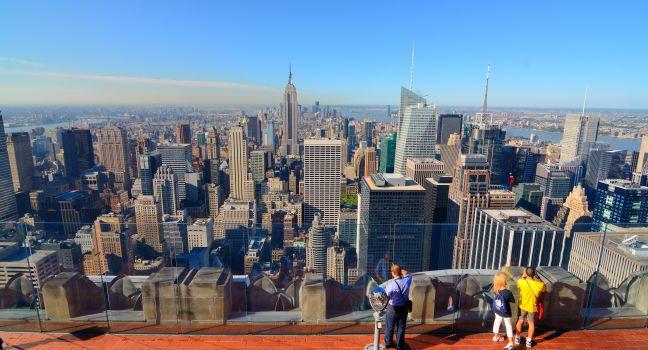
NEW YORK CITY - AUGUST 30: Observers view Midtown from Top of the Rock August 30, 2011 in New York, NY. The GE Building observation deck is one of only two open to the public in Manhattan.; Shutterstock ID 84067600; Project/Title: Fodor's New York City 201
Sean Pavone / Shutterstock

Sky-high views dazzle visitors to the Top of the Rock, Rockefeller Center's famous, multifloor observation deck. Arrive presunset to watch New York's five boroughs (and New Jersey) morph into a dazzling wash of colors, casting magic-hour light on the Empire State and Chrysler Buildings, Central Park to the north, and World Trade Center towers to the south. Indoor exhibits include films of Rockefeller Center's history, a building model, and endless photo ops—including the Beam Experience, where you can re-create the famous 1932 "Lunch atop a Skyscraper" picture; and the Skylift compact, private elevator rising above the deck (each requires separate tickets).

Rapid elevators lift you to the 67th-floor interior viewing area, and then an escalator leads to the outdoor deck on the 69th floor for sightseeing through glass safety panels. Take another elevator or stairs to the 70th floor for a 360-degree, open-air NYC panorama on a deck that stretches nearly 200 feet long. You can opt for a general-admission ticket or the Rock's combo deal with other local attractions (like MoMA); or better still, save money across town by investing in a CityPASS or other NYC sightseeing pass. For Rock Center only, starting at $95, the Express Pass allows sunset entrance and ticket rescheduling (for poor weather or any other reason). Starting at $190, the VIP Pass includes expedited entry, a guided tour, Skylift and Beam Experience tickets, sparkling wine at the Weather Room café, and a gift-shop discount.

Argyle Winery

Fodor's Choice

Since Argyle opened in 1987, it has consistently produced sparkling wines that are crisp on the palate, with an aromatic, lingering finish and bubbles that seem to last forever. The winery also produces Chardonnay, dry Riesling, Pinot Gris, and Pinot Noir. Stop by the sleek tasting room for a four- or six-wine flight, or sign up for the "Sparkling Experience," which includes a property tour and an eight-wine flight served with charcuterie.

Atlanta Botanical Garden

Midtown Fodor's Choice

Occupying 30 acres inside Piedmont Park, the grounds contain acres of display gardens, including a 2-acre interactive children's garden; the Fuqua Conservatory, which has unusual flora from tropical and desert climates; and the award-winning Fuqua Orchid Center. Check out the view from the Canopy Walk, a 600-foot suspension bridge 40 feet above Storza Woods. A variety of special exhibits take place throughout the year.

Atlanta History Center

Buckhead Fodor's Choice

Life in Atlanta and the rest of the South during and after the Civil War is a major focus of this fascinating museum. Displays are provocative, juxtaposing Gone With the Wind romanticism with the grim reality of Ku Klux Klan racism. Located on 33 acres in the heart of Buckhead, this is one of the Southeast's largest history museums, with a research library and archives that annually serve thousands of patrons. Visit the elegant 1928 Swan House mansion and the plantation house that is part of Smith Family Farm. The Kenan Research Center houses an extensive archival collection. Lunch is served at the Swan Coach House, which also has a gallery and a gift shop. The historic Battle of Atlanta is depicted in Cyclorama: The Big Picture and is included in the admission price—just make a reservation to secure your spot.

Centennial Olympic Park

Downtown Fodor's Choice

This 21-acre swath of green was the central venue for the 1996 Summer Olympics. The benches at the Fountain of Rings allow you to enjoy the water and music spectacle—four times a day, tunes are timed to coincide with water displays that shoot sprays 15 feet to 30 feet high. The All Children's Playground is designed to be accessible to kids with disabilities. Nearby is the world's largest aquarium and the Children's Museum. The park also has a café, restrooms, and a playground, and typically offers ice-skating in winter.

Don't miss seeing Centennial Olympic Park at night, when eight 65-foot-tall lighting towers set off the beauty of the park. They represent the markers that led ancient Greeks to public events.

City Museum

Downtown Fodor's Choice

Expect the unexpected at this wildly fun, award-winning museum that's truly a playhouse for adults and kids alike. It's housed in a 100-year-old, 600,000-square-foot warehouse (the former International Shoe Building) that incorporates repurposed architectural and industrial objects to create features like metal walkways (miles of them), slides, caves, tunnels, and secret passages. There's also a rooftop school bus and a Ferris wheel. Oh, and a circus and a train.

Crystal Cove State Park

Fodor's Choice

Midway between Corona del Mar and Laguna Beach is Crystal Cove State Park, a favorite of local beachgoers and wilderness trekkers. It encompasses a 3.2-mile stretch of unspoiled beach and has some of the best tide-pooling in Southern California. Here you can see starfish, crabs, and sea anemones near the rocks. The park's 2,400 acres of backcountry are ideal for hiking and mountain biking, but stay on the trails to preserve the beauty. The Moro Campground offers campsites with picnic tables, including spots designated for RVs and trailers.

Downtown Disney District

Fodor's Choice

The exciting Downtown Disney District is a walking promenade filled with international dining, shopping, and entertainment that connects the resort's hotels and theme parks. More than a dozen establishments include the popular Asian restaurant Din Tai Fung, specializing in Taiwanese soup dumplings, and Parkside Market with four new food and drink venues including Seoul Sister, Sip & Sonder, and GG's Chicken Shop. Go upstairs to Vista Parkside Market for cocktails and elevated bites overlooking Downtown Disney's entertainment stage. Michelin star chef Carlos Gaytán opened three Mexican-inspired eateries: the open-air Centrico patio dining and bar; the upscale multisensory Paseo; and Mexican street food Tiendita. Jazz Kitchen Coastal Grill. Be sure to try their signature seasonal beignets that can be dipped, drizzled, and sprinkled. Enjoy a cold beer at Ballast Point Brewery and a gourmet burger at Black Tap Craft Burgers. Save room for sweet treats at Salt and Straw for gourmet ice cream flavors such as honey lavender and oat milk and cookies, and Sprinkles for decadent frosted cupcakes.

Disney merchandise, souvenirs, and artwork are showcased at the brightly lit World of Disney store and new D Lander shop. Avengers Reserve is for Marvel fans, and The Wonderful World of Sweets is a kaleidoscope of colors, smells and tasty treats. At the LEGO Store there are bigger-than-life LEGO creations, hands-on demonstrations, and space to play with the latest LEGO creations.

Entering is complimentary, however all visitors must pass through a security checkpoint and metal detectors before entering.

Driessen Beach

Mid-Island Fodor's Choice

A good destination for families, Driessen Beach Park has a playground, clean shower and restrooms, and a charming path to the beach that’s part boardwalk, part sandy path, part beach matting. It's often peppered with people flying kites, making it colorful and fun. Amenities: lifeguards (seasonal); parking (metered); showers; toilets. Best for: sunrise; surfing; swimming; walking.

George Washington's Mount Vernon

Fodor's Choice

The former plantation of George Washington and his wife, Martha, Mount Vernon sits on the banks of the Potomac River about 10 miles south of Alexandria. Washington’s great-grandfather, John Washington, was awarded the land grant in 1674 for what would become Mount Vernon. It grew into 5,000 acres with four operating farms by the time the future president inherited it all in 1761. Washington used his wife’s financial wealth and hundreds of enslaved people to transform the main house from an ordinary farm dwelling into what was, for the time, a grand mansion. The red-roof main house is elegant though understated, with quite ornate first-floor rooms, especially the formal large dining room, with a molded ceiling decorated with agricultural motifs.

You can stroll around the estate’s 500 acres and four gardens, visiting workshops, a kitchen, a carriage house, a greenhouse, quarters for enslaved African Americans, and, down the hill, the tomb of George and Martha Washington. There’s also a four-acre, 18th-century farm site with costumed interpreters and a reconstructed 16-sided treading barn as its centerpiece.

Throughout Mount Vernon, you can learn about the more than 300 enslaved people who lived here, and whose labor you see all around you. Relevant tours include “The Enslaved People of Mount Vernon” tour and the "Through My Eyes" tour, both of which explore the lives and experiences of the people who lived here and the role slavery had in the life of Washington and how he built and ran this estate.

Visitors, especially children, tend to enjoy the Museum and Education Center’s 23 galleries and theaters, including hundreds of artifacts, interactive displays, and a 4D theater that brings Washington's story to life. Actors in period dress, General Washington and his wife, welcome visitors at special occasions throughout the year, including President’s Day, Mother’s and Father’s Day, and July 4.

Goose Rocks Beach

Fodor's Choice

Three-mile-long Goose Rocks, a 10-minute drive north of Kennebunkport, has a good long stretch of smooth sand and plenty of shallow pools for exploring. It's a favorite of families with small children. Pick up a $30 daily parking permit at one of two kiosks along the beach: one outside of Goose Rocks Beach General Store at 3 Dyke Road and the other at the Proctor Avenue beach path. Dogs are allowed (on a leash), but only before 9 and after 5 during the summer season. There is one Porta Potty behind the General Store, but otherwise no facilities are available at the beach. Amenities: parking (fee). Best for: swimming; walking.

High Museum of Art

Midtown Fodor's Choice

This museum's permanent collection includes 19th- and 20th-century American works, including many by African American artists. It also has some stellar examples of contemporary and outsider art—don't miss the works by the self-taught artist Rev. Howard Finster. The building itself is a work of art; the American Institute of Architects listed the sleek structure, designed by Richard Meier, among the 10 best works of American architecture of the 1980s. An expansion designed by Renzo Piano doubled the museum's size to 312,000 square feet with three new aluminum-paneled buildings. The roof features a system of 1,000 "light scoops" that filter light into the skyway galleries. The High often partners with other major museums, including the Louvre and New York's Museum of Modern Art.

Jackson Street Bridge

Inman Park Fodor's Choice

Known as the quintessential spot to get that perfect skyline shot of downtown Atlanta, the Jackson Street Bridge is iconic not just because of the view, but because of its appearance in the show The Walking Dead. If you time it just right, you'll get a photo of the sun setting over Downtown as a bonus.

Main Beach Park

Fodor's Choice

Located near multiple dining venues, art galleries, and shops, Main Beach Park is the epicenter of Laguna Beach. Walk along this soft-sand beach to Bird Rock and explore nearby tide pools or just sit on one of the benches and watch people bodysurfing, playing beach volleyball, or shooting hoops around two half-basketball courts. The beach also has a children's play area with climbing equipment. Most of Laguna's hotels are within a short (but hilly) walk. Amenities: lifeguards; showers; toilets. Best for: sunrise, sunset; swimming.

Mesa Arch Trail

Fodor's Choice

If you don't have time for the 2,000 arches in nearby Arches National Park, you should take the easy, ½-mile round-trip walk to the 27-foot-long Mesa Arch. After the overlooks, this is the most popular trail in the park. The arch is above a cliff that drops 800 feet to the canyon bottom. Through the arch, views of Washerwoman Arch and surrounding buttes, spires, and canyons make this a favorite photo opportunity. Easy.

Museum of Science

West End Fodor's Choice

From its perch above the Charles River, the Museum of Science sits half in Cambridge and half in Boston. This unique trait is the first of many at this 70-plus-year-old institution that's focused on science, technology, and hands-on learning. Diverse permanent exhibits explore dinosaurs, the electromagnetic spectrum, modern conservation, math, motion, nanotechnology, the natural world, space travel, a garden walk and insect zoo. The Theater of Electricity hosts explosive daily lightening shows, which can be scary for children under age seven. 

In the Green Wing, "The Hall of Human Life" walks visitors through the inner workings of their own bodies. A barcode bracelet picked up at the entrance tracks personal data gathered at dozens of interactive components and makes comparisons. At "Science in the Park," kids test out physics, motion, and momentum while playing on swings, a seesaw, and other familiar objects.

The Charles Hayden Planetarium, with its sophisticated multimedia system based on a Zeiss planetarium projector, produces exciting programs on astronomical discoveries. Laser light shows, with laser graphics and computer animation, are offered daily. The museum also features the Mugar Omni Theater, a five-story dome screen with 360-degree projection that allows the audience to feel like they're experiencing the action within the IMAX films on-screen.

New England Aquarium

Waterfront Fodor's Choice

As interesting and exciting as it is educational, this aquarium is a must for those who are curious about what lives in and around the sea. The building's glass-and-steel exterior is constructed to mimic fish scales, and seals bark and swim in the outdoor tank. Inside the main facility, more than 30,000 animals of 800 different species frolic in simulated habitats. Visitors can get up close to a variety of species of sharks and rays at the Shark and Ray Touch Tank.

In the semienclosed outdoor space of the New Balance Foundation Marine Mammal Center, visitors can enjoy the antics of northern fur seals and sea lions while gazing out at Boston Harbor. The real showstopper, though, is the four-story, 200,000-gallon ocean-reef tank. Ramps winding around the tank lead to the top level and allow you to view the inhabitants from many vantage points. Up top, the Yawkey Coral Reef Center features a seven-tank exhibit gallery that gives a close-up look at animals that might not be easily seen on the reef. Don't miss the five-times-a-day feedings; each lasts nearly an hour and takes divers 24 feet into the tank.

Add on to the day at the aquarium's IMAX theater, which takes you on virtual journeys from the bottom of the sea to the depths of outer space in 3D films.  Planning to see an IMAX film or go whale-watching in addition to visiting the New England Aquarium? Ask about combo tickets to save some money.

1 Central Wharf, Boston, MA, 02110, USA
617-973–5200
Sight Details
$34; $10 IMAX (combo tickets for the aquarium, IMAX theater, and whale-watches available)
Reservations recommended

Something incorrect in this review?

Ogunquit Museum of American Art

Fodor's Choice

Ogunquit has long been an important site for artists, and this stellar museum—the only one in Maine focused solely on American art—continues that legacy. The collection includes 3,000 early modern and contemporary paintings, sculptures, drawings, and more, including works with ties to Ogunquit's once-famous artist colony. The main gallery offers sweeping views of Perkins Cove. Leave time to stroll around the 3-acre seaside sculpture park in good weather. Visit the website for admission pricing.

Old Town Bluffton

Fodor's Choice

In 1996, Old Town Bluffton was designated a National Register Historic District town thanks to the 80-some historic churches and cottages that still stand there today. Originally inhabited by the Yemassee people, who were driven out by the first English settlers, the town's later population of slaveholders played a key role in South Carolina's secession. By the late 1990s, though, Old Bluffton had become the quirky cousin of Hilton Head, with its well-worn bungalows populated by art galleries and antiques shops. Today, historic homes and houses of worship still flank oak-lined streets dripping with Spanish moss, but now they intermingle with newly constructed tin-roofed buildings designed and laid out to preserve the small-town vibe. Anchored by Promenade Street, the modern section hops with trendy bars, restaurants, and shops. Grab a sandwich to go from the Downtown Deli ( 1223 May River Rd.) and head to the Calhoun Street Public Dock for a picnic looking over the May River. (Instagrammers and photographers should aim for sunset.) While there, check out the beautiful grounds of the historic Church of the Cross ( 110 Calhoun St.). To buy fresh shellfish off the dock, visit Bluffton Oyster Company ( 63 Wharf St.) at the end of Wharf Street.

The Original Farmers Market

Fairfax District Fodor's Choice

Since 1934, the Original Farmers Market continues to sell fresh produce, meats, cheese, and other culinary and gourmet delights. With over 100 purveyors, standouts include Monsieur Marcel, a gourmet French-style market and café; Bob's Coffee & Doughnuts; and actor Danny Trejo's Trejo's Tacos.

Rail Yards Market & Wheels Museum

Barelas Fodor's Choice

Vibrant with growers and maker wares, the sprawling Sunday market here (May from October, 10–2) is a fine excuse to explore this wondrous, light-filled, almost cathedral-like space, said to have been the largest steam locomotive repair facility in the country in its heyday. The early-20th-century Atchison, Topeka & Santa Fe buildings here, built on the Atlantic & Pacific originals from the 1880s, put you at the center of how Downtown (or New Town, as it was then known)—and modern Albuquerque—came to be. The market occupies the 1917 Blacksmith Shop. Nearby, the railyard's 1914 Storehouse building now houses the growing Wheels Museum, which captures local rail history with model train equipment and lots more ( www.wheelsmuseum.org). A spectacularly massive 1944 AT&SF Steam Locomotive (No. 2926) is currently under restoration in the Sawmill neighborhood and may be visited during limited public hours; it may eventually find its home here as well ( www.2926.us).

Tybee Island Marine Science Center

Fodor's Choice

Don't miss the Tybee Island Marine Science Center's interesting exhibit on Coastal Georgia, which houses local wildlife ranging from Ogeechee corn snakes to American alligators. Schedule one of two guided walks along the beach and marshes if you're interested in the flora and fauna of the Lowcountry. There is also a "Turtle Talk," which consists of a classroom discussion and hands-on workshop. Arrive early, as parking near the center can be competitive in the busier months.

Wilson Museum

Fodor's Choice

The 4-acre campus of this museum has multiple historic structures, and a fascinating lot of information to impart. The main building houses anthropologist-geologist John Howard Wilson’s collection of prehistoric artifacts from around the world. The John & Phebe Perkins House is a restored 1763 residence originally built on what is now Court Street. The house fell into disrepair until the 1960s, when the Castine Scientific Society had it taken down piece by piece and reassembled on the grounds here. Inside, you can find Perkins family heirlooms and 18th- and early-19th-century furnishings. On the lower level, exhibits in the Perkins Gallery share stories and objects from 19th-century Castine, Penobscot, and Brooksville. The museum shop here features a curated selection of books for all ages, historical maps and prints, souvenirs, crafts, and educational toys.

The Hutchins Education Center offers year-round programs and seasonal exhibits. The Blacksmith Shop holds demonstrations showing all the tricks of this old-time trade. In addition to displays of small traditional boats, the Wood Shop has woodworking demonstrations and a workshop where boats are often under construction. The Bagaduce Engine Company showcases early firefighting memorabilia, including Castine’s 1917 fire alarm, which still works.

TCL Chinese Theatre

Hollywood
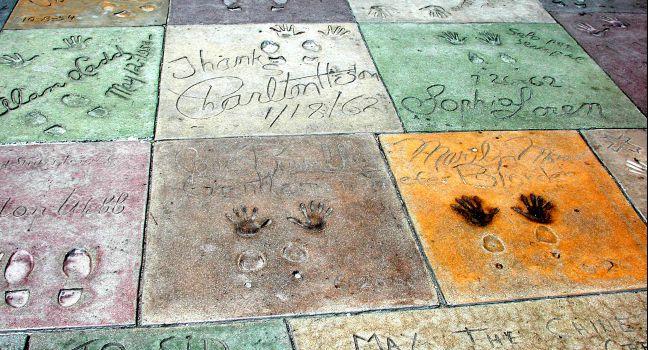
Abstract of Celebrity Hand and Foot Prints Outside of Mann's Chinese Theater in Hollywood, California; Shutterstock ID 320588; Project/Title: City Apps; Downloader: Melanie Marin
Thomas Nord/shutterstock

The stylized Chinese pagodas and temples of the former Grauman's Chinese Theatre have become a shrine both to stardom and the combination of glamour and flamboyance that inspire the phrase "only in Hollywood." Although you have to buy a movie ticket to appreciate the interior trappings, the courtyard is open to the public. The main theater itself is worth visiting, if only to see a film in the same setting as hundreds of celebrities who have attended big premieres here.

And then, of course, outside in front are the oh-so-famous cement hand- and footprints. This tradition is said to have begun at the theater's opening in 1927, with the premiere of Cecil B. DeMille's King of Kings, when actress Norma Talmadge just happened to step in wet cement. Now more than 160 celebrities have contributed imprints for posterity, including some oddball specimens, such as casts of Whoopi Goldberg's dreadlocks.