


205 Best Sights in USA

Reviews Updated by


We've compiled the best of the best in USA - browse our top choices for the top things to see or do during your stay.
Aquinnah Cliffs
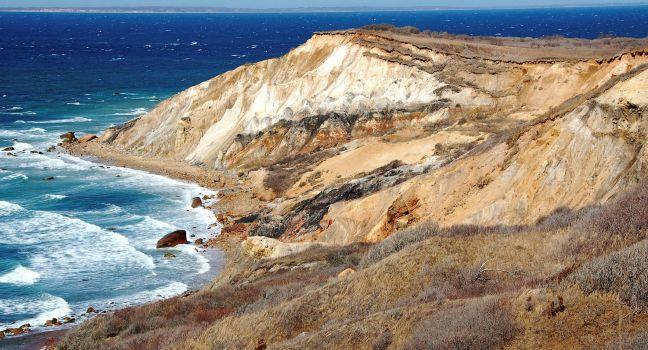
A National Historic Landmark, the spectacular Aquinnah Cliffs are part of the Wampanoag Reservation land. These dramatically striated walls of red clay are the island's major attraction, as evidenced by the tour bus–filled parking lot. Native American crafts and food shops line the short approach to the overlook. Gaze toward the Elizabeth Islands to the northeast across Vineyard Sound and Nomans Land Island, a wildlife preserve, 3 miles off the Vineyard's southern coast.
Heavenly Gondola

Whether you ski or not, you'll appreciate the impressive view of Lake Tahoe from the Heavenly Gondola. Its eight-passenger cars travel from Heavenly Village 2.4 miles up the mountain in 15–20 minutes. When the weather's fine, you can hike around the mountaintop and have lunch at Tamarack Lodge. The thrilling gravity-powered Ridge Rider alpine roller coaster, which zips past boulders and trees, closed in 2023 because of snow damage but was expected to reopen in 2024.
Recommended Fodor's Video
Kerry Park

Oxbow Bend
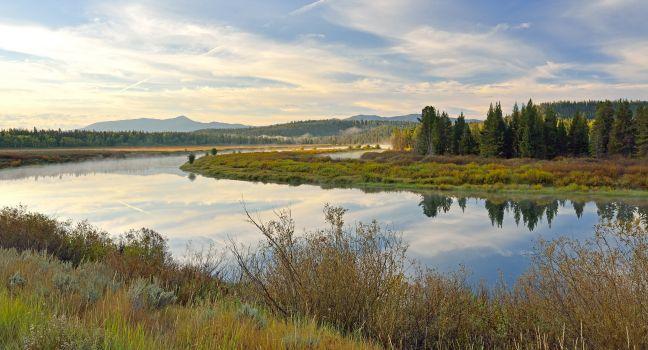
This peaceful spot overlooks a quiet backwater left by the Snake River when it cut a new southern channel. White pelicans stop here on their spring migration (many stay on through summer), sandhill cranes and trumpeter swans visit frequently, osprey nest nearby, and great blue herons nest amid the cottonwoods along the river. Use binoculars to search for bald eagles, moose, beaver, and otter. The Oxbow is known for the reflection of Mt. Moran that marks its calm waters in early morning.
Palm Springs Aerial Tramway

A trip on the world's largest rotating tram car provides a 360-degree view of the desert as it makes the 2½-mile ascent through Chino Canyon and up to an elevation of 8,516 feet in 10 minutes. On clear days, which are common, the view stretches 75 miles from Mt. San Gorgonio in the north to the Salton Sea in the south. In winter, stepping out into the snow at the top, a bit below Mt. San Jacinto's peak, is a treat. In summer, the summit's much cooler temperature is a welcome respite from punishing lower-elevation heat.
Year-round attractions at Mountain Station include observation decks, two restaurants, a cocktail lounge, a gift shop, picnic facilities, a small natural history museum, and two theaters that screen movies on the attraction's construction and on Mount San Jacinto State Park, which is also on the mountain and has 50 miles of hiking trails. In addition, you can take advantage of free guided weekend nature walks, or rent skis and snowshoes at the Adventure Center.
Ride-and-dine packages are available after 4 pm. To avoid long waits, buy tickets online in advance or arrive 30 minutes before the first car leaves in the morning.
Top of the Rock
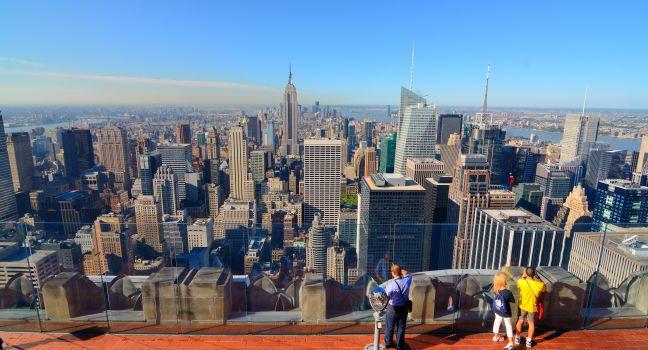
Sky-high views dazzle visitors to the Top of the Rock, Rockefeller Center's famous, multifloor observation deck. Arrive presunset to watch New York's five boroughs (and New Jersey) morph into a dazzling wash of colors, casting magic-hour light on the Empire State and Chrysler Buildings, Central Park to the north, and World Trade Center towers to the south. Indoor exhibits include films of Rockefeller Center's history, a building model, and endless photo ops—including the Beam Experience, where you can re-create the famous 1932 "Lunch atop a Skyscraper" picture; and the Skylift compact, private elevator rising above the deck (each requires separate tickets).
Rapid elevators lift you to the 67th-floor interior viewing area, and then an escalator leads to the outdoor deck on the 69th floor for sightseeing through glass safety panels. Take another elevator or stairs to the 70th floor for a 360-degree, open-air NYC panorama on a deck that stretches nearly 200 feet long. You can opt for a general-admission ticket or the Rock's combo deal with other local attractions (like MoMA); or better still, save money across town by investing in a CityPASS or other NYC sightseeing pass. For Rock Center only, starting at $95, the Express Pass allows sunset entrance and ticket rescheduling (for poor weather or any other reason). Starting at $190, the VIP Pass includes expedited entry, a guided tour, Skylift and Beam Experience tickets, sparkling wine at the Weather Room café, and a gift-shop discount.
Artist Point
The most celebrated viewpoint in Yellowstone, Artist Point frames the 308-foot Lower Falls and the kaleidoscopic canyon walls in a scene immortalized by painter Thomas Moran in 1872. His vivid watercolors of this exact vantage point helped persuade Congress to establish Yellowstone as the first national park. Today, two platforms, one wheelchair accessible, offer some of the most photographed views in the park, especially in morning light when rainbows arc through the mist. Rangers often give short interpretive talks here, and the South Rim Trail begins nearby, leading to other overlooks along the canyon.
Bright Angel Point
Bright Angel Point is one of the most awe-inspiring overlooks on either rim. To get to it, follow the trail that starts on the grounds of the Grand Canyon Lodge and runs along the crest of a point of rocks that juts into the canyon for several hundred yards. The walk is only ½ mile round-trip, but it's an exciting trek accented by sheer drops on each side of the trail. In a few spots where the route is extremely narrow, metal railings ensure visitors' safety. The temptation to clamber out on precarious perches to have your picture taken should be resisted at all costs.
Buck Hill
At 2,855 feet, this is one of the highest points in the park and provides a spectacular 360-degree view of the badlands. Come here for the sunset.
Cabrillo National Monument
Cape Flattery
Part of the joy of visiting this windswept rocky outcropping that marks the northwesternmost point in the contiguous United States is making the picturesque 15-minute drive along winding Cape Loop Drive from Neah Bay. Once you've parked, follow the fairly easy ¾-mile trail, part of it along boardwalks and up and down wooden stairs, through a pristine evergreen forest to a wooden observation platform. From the platform, you can see the 1854 Cape Flattery Lighthouse standing tall on a rocky island half a mile away. Keep an eye out for sea lions, eagles, migratory birds, and whales, which often appear in the rocky cove below. To park on this land that's part of the Makah Reservation, you'll need to buy a Makah Recreation Pass (good for one year and with access to nearby Shi Shi Beach).
The Capital Wheel
Stunning at sunset, the nearly 200-foot ascent on this giant Ferris wheel affords views of Alexandria's Masonic Temple, the Washington Monument, and the U.S. Capitol, lasting approximately 15 minutes. Glass-enclosed gondolas are climate-controlled and wheelchair-accessible. Landlubbers can enjoy drinks and Potomac vistas from the Flight Deck bar at the base of the wheel since admission tickets are not required.
Cataloochee Valley Overlook
This is a great spot to take in the broad expanse of Cataloochee Valley. Cataloochee comes from a Cherokee word meaning "row upon row" or "standing in rows," and indeed you'll see rows of mountain ridges here. The overlook is well marked and has a split-rail fence.
Dantes View
This lookout is 5,450 feet above sea level in the Black Mountains. The view is astounding: in the dry desert air, you can see across most of 160-mile-long Death Valley. Take a 10-minute, mildly strenuous walk from the parking lot toward a series of rocky overlooks, where, with binoculars, you can spot some signature sites. A few interpretive signs point out the highlights below in the valley and across to the Panamint Range. Getting here from Furnace Creek takes about an hour—time well invested.
Diablo Lake Vista Point
This is a must-stop photo op: indeed, countless photos of the gorgeous lake with its turquoise water have been taken from here over the decades.
Father Crowley Vista Point
Pull off Highway 190 in Western Death Valley into the vista point parking lot to gaze at the remnants of eerie volcanic flows down to Rainbow Canyon. Stroll a short distance to catch a sweeping overview of northern Panamint Valley. This is also an excellent site for stargazing.
Glacier Point
If you lack the time, desire, or stamina to hike more than 3,200 feet up to Glacier Point from the Yosemite Valley floor, you can drive here—or take a bus from the valley—for a bird's-eye view. You are likely to encounter a lot of day-trippers on the short, paved trail that leads from the parking lot to the main overlook. Take a moment to veer off a few yards to the Geology Hut, which succinctly explains and illustrates what the valley looked like 10 million, 3 million, and 20,000 years ago.
Goldbelt Tram
One of Southeast's most popular tourist attractions whisks you from the cruise-ship docks 1,800 feet up the side of Mt. Roberts. After the six-minute ride, you can take in a film on the history and culture of the Tlingits, visit the nature center, go for an alpine walk on hiking trails (including the 5-mile round-trip hike to Mt. Roberts's 3,819-foot summit), purchase Native art and peruse the on-site gallery, or enjoy a meal while savoring mountain views. You can also get an up-close view of an "education" eagle in her mew. A local company leads guided wilderness hikes from the summit, and the bar serves locally brewed beers. Plan to spend one to two hours at the top. For a workout, hike up the mountain from town or hike to Father Brown's Cross from the top; each takes about an hour.
Grand Canyon Skywalk
This cantilevered glass terrace is suspended nearly 4,000 feet above the Colorado River and extends 70 feet from the edge of the Grand Canyon. Approximately 10 feet wide, the bridge's deck, made of tempered glass several inches thick, has 5-foot glass railings on each side creating an unobstructed open-air platform. Admission to the skywalk is an add-on to the basic Grand Canyon West admission. Visitors must store personal items, including cameras, cell phones, and video cameras, in free lockers before entering. A professional photographer takes photographs of visitors, which can be purchased from the gift shop.
Halona Blowhole
Below a scenic turnout along the Koko Head shoreline, this oft-photographed lava tube sucks the ocean in and spits it out. Don't get too close, as conditions can get dangerous. Look to your right to see the tiny beach below that was used to film the wave-washed love scene in From Here to Eternity. In winter, this is a good spot to watch whales at play. Offshore, the island of Molokai calls like a distant siren, and, every once in a while, Lanai is visible in blue silhouette. Take your valuables with you, and lock your car, because this popular scenic location is a hot spot for petty thieves.
Hanalei Valley Overlook
Dramatic mountains and a patchwork of neat taro farms bisected by the wide Hanalei River make this one of Hawaii's loveliest views, even with the flood damage it sustained in 2018. The fertile Hanalei Valley has been planted with taro since perhaps AD 700, save for an 80-year-long foray into rice that ended in 1960. (The historic Haraguchi Rice Mill is all that remains of that era.) Many taro farmers lease land within the 900-acre Hanalei National Wildlife Refuge, helping to provide wetland habitat for four species of endangered Hawaiian waterbirds.
Heintooga Picnic Area
Located at more than a mile high and set in a stand of spruce and fir, the picnic area has 41 tables. Nearby is Mile High Overlook, which offers one of the most scenic views of the Smokies and is a wonderful place to enjoy the sunset. For birders, this is a good spot to see golden-crowned kinglets, red-breasted nuthatches, and other species that prefer higher elevations. Nearby are a campground and trailheads for several good hiking trails, including Flat Creek. The disadvantage is that, due to the high elevation (and the risk of snow and ice), the picnic area is open only from late May to mid-October.
Hopi Point
From this elevation of 7,071 feet, you can see a large section of the Colorado River; although it appears as a thin line, the river is nearly 350 feet wide. The overlook extends farther into the canyon than any other point on Hermit Road. The incredible unobstructed views make this a popular place to watch the sunset.
Across the canyon to the north is Shiva Temple. In 1937 Harold Anthony of the American Museum of Natural History led an expedition to the rock formation in the belief that it supported life that had been cut off from the rest of the canyon. Imagine the expedition members' surprise when they found an empty Kodak film box on top of the temple—it had been left behind by Emery Kolb, who felt slighted for not having been invited to join Anthony's tour.
Directly below Hopi Point lies Dana Butte, named for a prominent 19th-century geologist. In 1919 an entrepreneur proposed connecting Hopi Point, Dana Butte, and the Tower of Set across the river with an aerial tramway, a technically feasible plan that fortunately has not been realized.
Inspiration Point
One of the best—though often most crowded—places in the park to watch the sunset, this lofty promontory with sweeping vistas into the Bryce Amphitheater is easily accessed by car—the parking lot is down a short and well-signed spur road near the start of Bryce Point Road. But for a more exciting approach and a bit of fresh air and exercise, consider hiking to this dramatic spot via the relatively easy and flat Rim Trail; from Sunset Point, it's a ¾-mile trek south, and from Bryce Point, it's a 1½-mile hike northwest. From either direction, the views are spectacular for virtually the entire hike.
Klamath River Overlook
This grassy, windswept bluff rises 650 feet above the confluence of the Klamath River and the Pacific. Among RNSP's best spots for spying migratory whales in early winter and late spring (other wildlife year-round), it accesses a section of the Coastal Trail. Warm days are ideal for picnicking at one of the tables.
Kolob Canyons Viewpoint
The big payoff for entering the northwestern Kolob Canyons section of the park off Interstate 15, this spectacular viewpoint lies at the end of 5-mile Kolob Canyons Road. You'll be treated to a beautiful view of Kolob’s “finger” canyons from the several picnic tables spread out beneath the trees. The parking lot has plenty of spaces, a pit toilet, and an overlook with a display pointing out the area's most prominent geological features. Restrooms and drinking water are available at the start of the drive, at the Kolob Canyons Visitor Center.
Mather Point
You'll likely get your first glimpse of the canyon from this viewpoint, one of the most impressive and accessible (next to the main visitor center plaza) on the South Rim. Named for the National Park Service's first director, Stephen Mather, this spot yields extraordinary views of the Grand Canyon, including deep into the inner gorge and numerous buttes: Wotans Throne, Brahma Temple, and Zoroaster Temple, among others.
Mt. Bonnell
Rising to a height of 785 feet, Mt. Bonnell offers the best views of Lake Austin from its location a few miles northwest of downtown and the Barton Creek Greenbelt. Stop by during the day for a glimpse of the sweeping panorama of rolling hills, the Colorado River, the picturesque 360 Pennybacker Bridge, and a great far-off view of the downtown skyline on a clear day. It's a short but steep climb up a flight of stone steps from a strip of informal parking spots just off the road. There is another sloping, crushed gravel trail at the end of the parking spots that also leads to the top. Once you're at the humble summit, you'll find a diverse crowd of first dates, nature and portrait photographers, families, picnickers, and just plain old tourists. The trails are open from 5 am until 10 pm, so visitors can catch stunning sunrises or starry skies.
Museum of Us
Originally known as San Diego Museum of Man, the name was changed in efforts to reflect values of equity, inclusion, and decolonization. If the facade of this building—the landmark California Building—looks familiar, it's because filmmaker Orson Welles used it and its dramatic tower as the principal features of the Xanadu estate in his 1941 classic, Citizen Kane. Closed for 80 years, the tower is now open for public tours. An additional timed ticket and a climb up 125 steps is required, but the effort will be rewarded with spectacular 360-degree views of the coast, Downtown, and the inland mountains. Back inside, exhibits at this highly respected anthropological museum focus on Native Californians, ancient Egyptians, and Maya Peoples. Carved monuments from the Mayan city of Quirigua in Guatemala, cast from the originals in 1914, are particularly impressive. Exhibits might include examples of intricate beadwork from across the Americas, the history of Egyptian mummies, or the lifestyles of the Kumeyaay, indigenous peoples of the present-day San Diego area. Tower tours are timed-entry and can be booked in advance through the website or on arrival at museum.


