
200 Best Sights in USA

Background Illustration for Sights

We've compiled the best of the best in USA - browse our top choices for the top things to see or do during your stay.

Colorado National Monument
Fodor's Choice
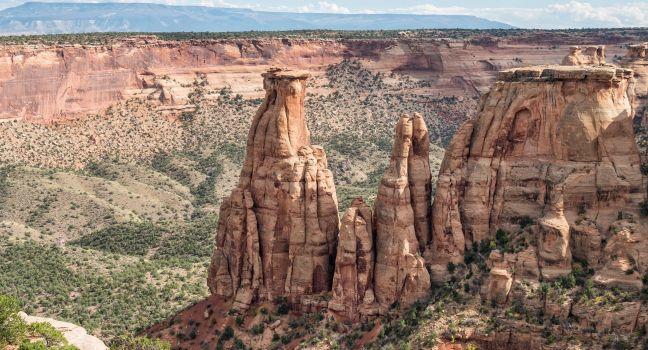
Colorful canyon, Colorado National Monument.
Fernley | Dreamstime.com

Sheer red rock cliffs open to 23 miles of steep canyons and thin monoliths that sprout as high as 450 feet from the floor of Colorado National Monument. This vast tract of rugged, ragged terrain was declared a national monument in 1911 at the urging of an eccentric visionary named John Otto. Now it's popular for rock climbing, horseback riding, cross-country skiing, biking, and camping. Cold Shivers Point is just one of the many dramatic overlooks along Rim Rock Drive, a 23-mile scenic route with breathtaking views. The town of Fruita, at the base of Colorado National Monument, is a haven for mountain bikers and hikers. It makes a great center for exploring the area's canyons—whether from the seat of a bike or the middle of a raft, heading for a leisurely float trip.
Fruita, CO, 81521, USA
970-858–3617
Sight Details
$15 per wk per vehicle. Visitors entering on motorcycle pay $10; bicycle or foot pay $5 for weekly pass

Something incorrect in this review?

Dinosaur National Monument

Fodor's Choice
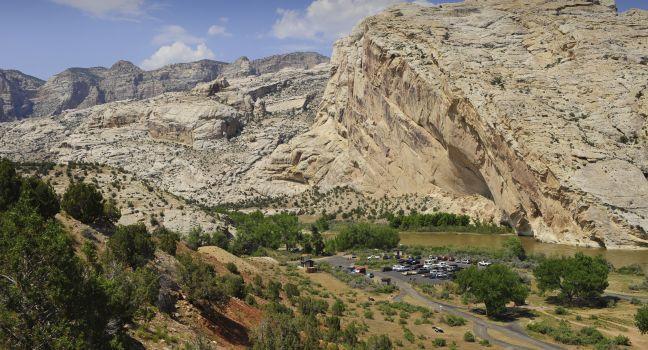
Split Mountain and the Green River in Dinosaur National Monument.
Donald Fink | Dreamstime

Straddling the Colorado–Utah border, Dinosaur National Monument is a must for any dinosaur enthusiast. A two-story hill teeming with fossils—many still in the complete skeletal shapes of the dinosaurs—greets visitors at one of the few places in the world where you can touch a dinosaur bone still embedded in the earth. The Colorado side of the park offers some of the best hiking in the West, along the Harpers Corner and Echo Park Drive routes and the ominous-sounding Canyon of Lodore (where the Green River rapids buffet rafts). The drive is accessible only in summer—even then, four-wheel drive is preferable—and some of the most breathtaking overlooks are well off the beaten path.

Garden of the Gods

Fodor's Choice
Garden of the gods Colorado Springs
Oscity / Shutterstock

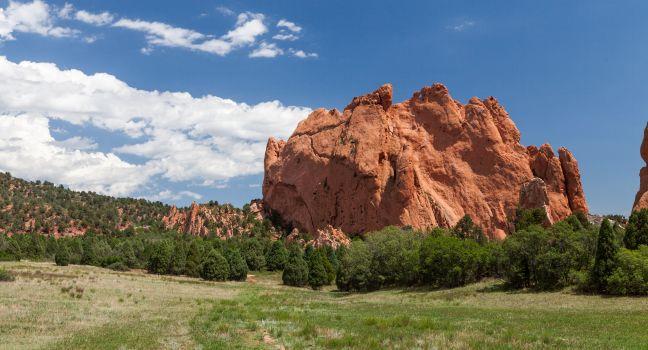
These magnificent, eroded red-sandstone formations—from gnarled jutting spires to sensuously abstract monoliths—were sculpted more than 300 million years ago. Follow the road as it loops past such oddities as the Three Graces, the Siamese Twins, and the Kissing Camels or get an up-close look at the rocks with a guided climbing expedition booked at the visitor center. High Point, near the south entrance, provides camera hounds with the ultimate photo op: a formation known as Balanced Rock and jagged formations that frame Pikes Peak. The visitor center has maps of the trails and several geological, historical, and interactive hands-on displays, as well as a café. It's a short, paved hike into the park from the parking lot.

Recommended Fodor's Video

Maroon Bells

Fodor's Choice
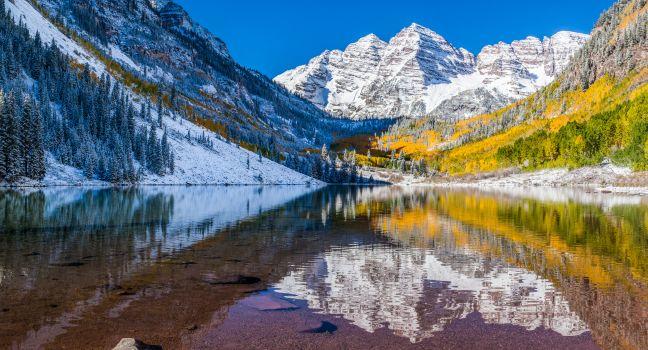
Maroon Bells national park in Falls after snow storm, Aspen, Colorado
kan_khampanya / Shutterstock

The majestic Maroon Bells, twin peaks more than 14,000 feet high, are so colorful, thanks to mineral streaking, that you'd swear they were blanketed with primrose and Indian paintbrush. It's one of the most photographed spots in the country, which is why reservations are required to ensure the view. Before 8 am and after 5 pm in the summer, cars can drive all the way up to Maroon Lake (though vehicles with children in car seats or people with disabilities are allowed to do so at any time). Otherwise, parking is available at the Aspen Highlands garage, where guided bus tours and shuttles leave regularly in summer months.

Tidal Basin

The Mall Fodor's Choice
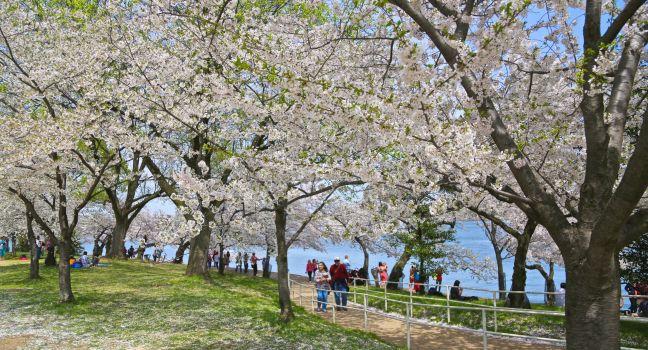
Japanese Cherry Tree Blossoms in bloom at Tidal Basin in Washington D.C.
Debratos | Dreamstime.com

The Tidal Basin, a partially man-made reservoir between the Potomac and the Washington Channel, is part of West Potomac Park, adjacent to the Mall. It's the setting for memorials to Thomas Jefferson, Franklin Delano Roosevelt, Martin Luther King Jr., and George Mason. Two gargoyles on the sides of the Inlet Bridge can be seen as you walk along the sidewalk hugging the basin. The inside walls of the bridge also feature two other sculptures: bronze, human-headed fish that once spouted water from their mouths. Sculptor Constantin Sephralis, who also worked on the National Cathedral, made them in honor of John Fish, the park's chief, who was retiring at the time. Once you cross the bridge, continue along the Tidal Basin to the right. This route is incredibly scenic when the famous cherry trees are in bloom. The trees, a gift from the Japanese during the administration of William Howard Taft, are the Tidal Basin's most iconic feature beyond the memorials.

Badlands Wilderness Area

Fodor's Choice

Covering about a quarter of the park, this 100-square-mile area is part of the country's largest prairie wilderness. About two-thirds of the Sage Creek region is mixed-grass prairie, making it the ideal grazing grounds for bison, pronghorn, and other native animals. The Hay Butte Overlook (2 miles northwest on Sage Creek Rim Road) and the Badlands Wilderness Overlook (1 mile south of the Pinnacles entrance) are the best places to get an overview of the wilderness area. Feel free to park at an overlook and hike your own route into the untamed, unmarked prairie.

Badwater Basin

Fodor's Choice

At 282 feet below sea level, Badwater is the lowest spot of land in North America—and also one of the hottest. Stairs and wheelchair ramps descend from the parking lot to a wooden platform that overlooks a spring-fed pool, a small but remarkably persistent reminder that the valley floor used to contain a lake. Be sure to look across to Telescope Peak, which towers more than 2 miles above the landscape. You can continue past the platform on a broad, white path that peters out after 1 mile. Bring water and a hat since there's no shade whatsoever.

Calf Creek Recreation Area

Fodor's Choice

One of the more easily accessible and rewarding adventures in the national monument, this picturesque canyon rife with oak trees, cacti, and sandstone pictographs is reached via the 6-mile round-trip Lower Calf Creek Falls Trail, which starts at Calf Creek Campground, 15 miles east of Escalante and 12 miles south of Boulder along scenic Highway 12. The big payoff, and it's especially pleasing on warm days, is a 126-foot spring-fed waterfall. The pool at the base is a beautiful spot for a swim or picnic.

Devils Postpile National Monument

Fodor's Choice

Volcanic and glacial forces sculpted this formation of smooth, vertical basalt columns. For a bird's-eye view, take the short, steep trail to the top of a 60-foot cliff. To see the monument's second scenic wonder, Rainbow Falls, hike 2 miles past Devils Postpile. A branch of the San Joaquin River plunges more than 100 feet over a lava ledge here. When the water hits the pool below, sunlight turns the resulting mist into a spray of color. From mid-June to early September, day-use visitors must ride the shuttle bus from the Mammoth Mountain Ski Area to the monument.

Mammoth Lakes, CA, 93546, USA
760-934–2289
Sight Details
$10 per vehicle (allowed when the shuttle isn't running, usually early Sept.–mid-Oct.); $15 per person shuttle

Something incorrect in this review?

Enchanted Rock State Natural Area

Fodor's Choice

Protruding from the earth in the form of a large pink dome, Enchanted Rock looks like something from another planet. This granite formation rises 1,825 feet—the second-largest in the nation, after Georgia's Stone Mountain—and its bald vastness can be seen from miles away. Today the massive batholith is part of the 624-acre Enchanted Rock State Natural Area and one of the most popular destinations in the Hill Country region. Once considered to have spiritual powers by the Tonkawa tribe, Enchanted Rock is traversed day in and day out by those curious about its mysterious occurrence. The park is perfect for day hikers, most of whom can't wait to scale the summit. The rock also yields a number of faces to test the skills of technical rock climbers, plus there are caves for spelunkers to explore. And even if you're not into rock climbing, the area is a perfect spot for camping, picnicking, and hiking, with 11 miles of hiking trails. Arrive early; once parking lots reach capacity, the area is closed to more visitors to protect the resources. Amenities include restrooms, an interpretative center, and campgrounds.

General Sherman Tree

Fodor's Choice

The 274.9-foot-tall General Sherman is one of the world's tallest and oldest sequoias, and it ranks No. 1 in volume, adding the equivalent of a 60-foot-tall tree every year to its approximately 52,500 cubic feet of mass. The tree doesn't grow taller, though—it's dead at the top. A short, wheelchair-accessible trail leads to the tree from Generals Highway, but the main trail (½ mile) winds down from a parking lot off Wolverton Road. The walk back up the main trail is steep, but benches along the way provide rest for the short of breath.

Sequoia National Park, CA, 93262, USA
Sight Details
Shuttle: Giant Forest or Wolverton–Sherman Tree

Something incorrect in this review?

Halawa Valley

Fodor's Choice

The Solatorio ohana (family) leads hikes through the valley, the oldest recorded habitation on Molokai. It is home to two sacrificial temples and many historic sites. Inhabitants grew taro and fished from 650 until the 1960s when an enormous flood wiped out the taro patches and forced old-timers to abandon their traditional lifestyle. Now, a new generation of Hawaiians has begun the challenging task of restoring the taro fields. Much of this work involves rerouting streams to flow through carefully engineered level ponds called loi. Taro plants, with their big, dancing leaves, grow in the submerged mud of the loi, where the water is always cool and flowing. Hawaiians believe that the taro plant is their ancestor and revere it both as sustenance and as a spiritual necessity. The 3.4-mile round-trip valley hike, which goes to Moaula Falls, a 250-foot cascade, is rated intermediate to advanced and includes two moderate river crossings (so your feet will get wet). A $75 fee per adult supports restoration efforts.

Half Dome

Fodor's Choice

Visitors' eyes are continually drawn to this remarkable granite formation that tops out at more than 4,700 feet above the valley floor. Despite its name, the dome is actually about three-quarters intact. You can hike to the top of it on an 8½-mile (one-way) trail whose last 400 feet must be ascended while holding onto a steel cable. Permits, available only by lottery, are required and are checked on the trail. (Call  877/444–6777 or visit  recreation.gov well in advance of your trip for details.) Back down in the valley, see Half Dome reflected in the Merced River by heading to Sentinel Bridge just before sundown. The brilliant orange light on Half Dome is a stunning sight.

Harding Icefield

Fodor's Choice

This is the largest glacial ice field located entirely within the United States. Reached from the Exit Glacier area via a rugged 8.2-mile round-trip hike, it began forming during the Pleistocene Epoch, about 23,000 years ago, and now comprises a number of interconnected glaciers. As it's not possible to see through the ice, it's hard to gauge the depth of it, but radio wave studies have indicated that it's at least 1,500 feet deep in a ridge above Exit Glacier. The surface area is relatively easy to study, however, and research shows that over the past 10 years, the ice field's melt has increased, dropping it 10–12 feet in elevation every year, despite 60 feet of annual snowfall that it receives.

Keahiakawelo (Garden of the Gods)

Fodor's Choice

This preternatural plateau is scattered with boulders of different sizes, shapes, and colors, the products of a million years of wind erosion. Time your visit for sunset, when the rocks begin to glow—from rich red to purple—and the fiery globe sinks to the horizon. Magnificent views of the Pacific Ocean, Molokai, and, on clear days, Oahu, provide the perfect backdrop for photographs.

The ancient Hawaiians shunned Lanai for hundreds of years, believing the island was the inviolable home of spirits. Standing beside the oxide-red rock spires of this strange raw landscape, you might be tempted to believe the same. This lunar savanna still has a decidedly eerie edge, but the shadows disappearing on the horizon are those of mouflon sheep and axis deer, not the fearsome spirits of lore. According to tradition, Kawelo, a Hawaiian priest, kept a perpetual fire burning on an altar here, in sight of the island of Molokai. As long as the fire burned, prosperity was assured for the people of Lanai. Kawelo was killed by a rival priest on Molokai, and the fire went out. "Keahiakawelo" means the "fire of Kawelo." 

Off Polihua Rd., Lanai City, HI, 96763, USA

Something incorrect in this review?

Kelso Dunes

Fodor's Choice

As you enter the Mojave National Preserve, you'll pass miles of open scrub brush, Joshua trees, and beautiful red-black cinder cones before encountering the Kelso Dunes. These golden, fine-sand slopes cover 45 square miles, reaching heights of 500 feet. You can reach them via a 1.5-mile walk from the main parking area, but be prepared for a serious workout. When you reach the top of a dune, kick a little bit of sand down the lee side and listen to the sand "sing" (or vibrate). North of the dunes, in the town of Kelso, is the Mission revival–style Kelso Depot Visitor Center, a striking building that dates from 1923. It's normally open everyday but Tuesday and Wednesday, but it's closed for renovation until 2025; check ahead for updates.

Mojave National Preserve, CA, 92309, USA
760-252–6100
Sight Details
Free
Dunes 8 miles south of the Depot

Something incorrect in this review?

Lassen Peak

Fodor's Choice

When this plug dome volcano erupted in 1915, it spewed a huge mushroom cloud of debris almost 6 miles into the air. You can admire the peak from several points along the park road, and a fabulous panoramic view rewards those who make the strenuous 2½-mile hike to the 10,457-foot summit.

Lassen Park Hwy., Lassen Volcanic National Park, CA, 96063, USA

Something incorrect in this review?

Lava Beds National Monument

Fodor's Choice

Thousands of years of volcanic activity created this rugged landscape, distinguished by cinder cones, lava flows, spatter cones, pit craters, and more than 400 underground lava tube caves. During the Modoc War (1872–73), the indigenous Modoc people, under the leadership of their chief "Captain Jack" Kintpuash, took refuge in a natural lava fortress now known as Captain Jack's Stronghold. They managed to hold off U.S. Army forces, which outnumbered them 20 to 1, for five months.

When exploring this area, wear hard-soled boots and a bump hat. Bring a flashlight with you, although some are available for borrowing at the visitor center, which is in the park's south-central reaches. This is also the departure point for summer activities such as guided walks, cave tours, and campfire programs.  Lava Beds is extremely remote; visit the website for detailed driving instructions and information about winter road closures.

LeConte Glacier

Fodor's Choice

Petersburg's biggest draw lies at the foot of the Stikine Ice Cap. Accessible only by air or water, LeConte Glacier is the continent's southernmost tidewater glacier and one of its most active, often calving off so many icebergs that the tidewater bay at its face is carpeted shore to shore with them.

The Lone Cypress

Fodor's Choice

The most-photographed tree along 17-Mile Drive is the weather-sculpted Lone Cypress, which grows out of a precipitous outcropping above the waves about 1½ miles up the road from Pebble Beach Golf Links. You can't walk out to the tree, but you can stop for a view of it at a small parking area off the road.

Lost River Gorge & Boulder Caves

Fodor's Choice

Parents can enjoy the looks of wonder on their kids' faces as they negotiate wooden boardwalks and stairs leading through a granite gorge formed by the roaring waters of the Lost River. One of the 10 caves they can explore is called the Lemon Squeezer (and it's a tight fit). Visitors can also pan for gems and search for fossils and walk through a fascinating giant man-made birdhouse, venture across a suspension bridge, and climb up into a big tree house. The park offers lantern tours on weekend evenings.

Mammoth Hot Springs Terraces

Fodor's Choice

Multicolor travertine terraces formed by slowly escaping hot mineral water mark this unusual geological formation, one of the most remarkable sights in the park. You can explore the terraces via an elaborate network of boardwalks, the best of which is the Lower Terrace Interpretive Trail. If you head uphill from Liberty Cap, near the lower parking area, in a half-hour you'll pass bright and ornately terraced Minerva Spring, and in an hour you can make your way up to the Main Terrace Overlook and the side trail to Canary Spring. Along the way you might spot elk grazing nearby. Alternatively, you can drive up to the Main Terrace Overlook on Upper Terrace Drive and hike down to the Lower Terrace. Distances are fairly short amid these terraces, but give yourself at least a couple of hours to thoroughly explore them—especially if you enjoy taking lots of pictures.

Mendenhall Glacier

Fodor's Choice

Glaciers are abundant in Southeast Alaska, but only a very few are as accessible as Mendenhall Glacier. Alaska's most-visited drive-up glacier spans 12 miles and is fed by the massive Juneau Icefield. Like many other Alaska glaciers, it is retreating, losing more than 100 feet a year as huge chunks of ice calve into the small lake separating the glacier from the Mendenhall Visitor Center. The center has interactive and traditional exhibits, a theater and bookstore, and panoramic views. Nature trails lead along Mendenhall Lake, to Nugget Falls, and into the mountains overlooking Mendenhall Glacier; the trails are marked by posts and paint stripes delineating the historic location of the glacier, providing a sharp reminder of Mendenhall's hasty retreat. An elevated viewing platform allows visitors to look for spawning sockeye and coho salmon—and the bears that eat them—at Steep Creek, a half mile south of the visitor center along the Moraine Ecology Trail.

Several companies lead bus tours to the glacier; ask at the visitor information center. You can also get within a mile and a half of the glacier on the city bus, which is $2 one-way. For a different perspective, you can travel by helicopter to the surface of the glacier, or hire a guide to take you right up to the edge. Note that because the ice is inherently unstable, the Forest Service doesn't recommend self-guided tours.

Misty Fjords National Monument

Fodor's Choice

Cliff-faced fjords, tall mountains, waterfalls, and islands with spectacular coastal scenery draw visitors to this wilderness area just east of Ketchikan. Most arrive on day trips via floatplane or aboard a catamaran. Both methods have their advantages: air travel reveals Misty Fjord's enormous scope, while trips by sea afford more intimate vistas. You can also kayak here, but it’s a long paddle from Ketchikan. For a more manageable trip, consider having a boat drop you off within the monument. Traveling on these waters can be an almost mystical experience, with the green forests reflected in the many fjords' waters. You may find yourself in the company of a whale, see a bear along the shore fishing for salmon, or even pull in your own salmon. The 15 cabins the Forest Service manages here can be booked through the federal Recreation.gov website ( www.recreation.gov).

Moro Rock

Fodor's Choice

This sight offers panoramic views to those fit and determined enough to mount its 350 or so steps. In a case where the journey rivals the destination, Moro's stone stairway is so impressive in its twisty inventiveness that it's on the National Register of Historic Places. The rock's 6,725-foot summit overlooks the Middle Fork Canyon, sculpted by the Kaweah River and approaching the depth of Arizona's Grand Canyon, although smoggy, hazy air often compromises the view.

Sequoia National Park, CA, 93262, USA
Sight Details
Shuttle: Moro Rock–Crescent Meadow

Something incorrect in this review?

The Narrows

Fodor's Choice

This sinuous, 16-mile crack in the earth where the Virgin River flows over gravel and boulders is one of the world's most stunning gorges. If you hike through it, you'll find yourself surrounded—sometimes nearly boxed in—by smooth walls stretching high into the heavens. Plan to get wet, and be aware that deadly flash floods can occur here, especially in spring and summer. Always check on the weather before you enter, especially in spring when The Narrows has historically been closed for several weeks at a time due to high water levels.

Zion National Park, UT, 84767, USA

Something incorrect in this review?

Open Space Visitor Center

Fodor's Choice

Sandhill cranes make their winter home here or stop for a snack en route to the Bosque del Apache, just south in Socorro. Albuquerque is right in their flyway, and the Open Space Center provides a most hospitable setting for them. The outdoor viewing station opens onto the site’s expansive field, which faces out to the Sandia Mountains; the hush—aside from the occasional flock circling above (look for them from mid-October through February)—is restorative. Complementing the experience inside are changing art and photography exhibits, an interpretative display on the adjacent 14th- to 15th-century Piedras Marcadas Pueblo ruins, and well-informed guides. A native garden interspersed with mosaics and sculptures fills the patio at the center’s entryway; the latter theme is introduced when you make the turn-off from busy Coors Boulevard—Robert Wilson’s large-scale public art installation Flyway is at the northeast corner as you approach. Ongoing family activities, occasional live music, and educational and other special programming are on tap year-round; easy walking trails heading down to the shores of the Rio Grande start just beyond the entrance.

Porcupine Caribou Herd

Fodor's Choice

The Porcupine caribou herd, with nearly 200,000 animals, migrates through Alaska's Arctic and Canada's adjacent Vuntut and Ivvavik National Parks, flowing like a river of animals across the expansive coastal plain, through U-shape valleys and alpine meadows, and over high mountain passes. Their range includes the Northwest Territories and Yukon of Canada, and Arctic Alaska, where many give on the coastal plain of the Arctic Refuge. The herd's numbers appear strong, though the threat of oil and gas drilling and climate change on their birthing and nursing grounds worries many Arctic communities in Alaska and Canada.

Rattlesnake Springs

Fodor's Choice

Enormous old-growth cottonwood trees shade the recreation area at this cool, secluded oasis near Black River. The rare desert wetland harbors butterflies, mammals, and reptiles, as well as 90% of the park's 357 bird species. Because southern New Mexico is in the northernmost region of the Chihuahuan Desert, you're likely to see birds largely unseen anywhere else in the United States outside extreme southern Texas and Arizona. If you see a flash of crimson, you might have spotted a vermilion flycatcher. Wild turkeys also flap around this oasis. Don't let the name scare you; there may be rattlesnakes here, but no more than at any similar site in the Southwest. Restroom facilities are available, and there's a shaded picnic grove with grills and potable water, but camping and overnight parking are not allowed.

Rowena Crest Viewpoint and Tom McCall Nature Preserve

Fodor's Choice

Views from atop Rowena Crest bluff are a knockout, especially during the March and April wildflower season, and there are a couple of fairly short and wonderfully scenic hikes that lead from the bluff parking lot through a pristine nature preserve operated by the Nature Conservancy. The 3½-mile (round-trip) trek up to McCall Point is especially scenic—it affords great views of Mt. Hood.