Get FREE email communications from Fodor's Travel, covering must-see travel destinations, expert
trip planning advice, and travel inspiration to fuel your passion.
We've compiled the best of the best in USA - browse our top choices for the top
things to see or do during your stay.
Sorry! We don't have any recommendations for USA right now.
Sights Filter
Oakland Zoo
Share This
One of the West Coast's leading zoos resides in the rolling hills of southeast Oakland. More than 850 animals from near and far live here, often putting on quite a show for the human visitors. The children's zoo and the California Trail are notable areas, with the latter featuring two of the most iconic animals in the Golden State: California condors and grizzly bears. The zoo has a handful of entertaining rides, but the main non-animal highlight for most guests is the Sky Ride gondola that offers incredible Bay Area views.
Bronx Zoo
Belmont
Fodor's Choice
Share This
littleny / Shutterstock
With 265 acres and more than 11,000 animals representing 700-plus species, this is the largest metropolitan zoo in the United States, opened in 1899. See exotic creatures in natural settings that re-create native habitats; you're often separated from the animals by no more than a moat or wall of glass. Don't miss the Congo Gorilla Forest, a 6½-acre re-creation of a lush African rain forest with western lowland gorillas, as well as mandrills, okapis, and red river hogs. At Tiger Mountain an open-viewing shelter lets you get incredibly close to Siberian tigers. As the big cats nap at midday, visit in the morning or afternoon. Madagascar! is a verdant re-creation of one of the world's most threatened natural habitats, with six species of lemurs and more.
\n
Go on a minisafari via the Wild Asia Monorail, May through October, weather permitting. Here you can view Asian elephants, Indo-Chinese tigers, Indian rhinoceroses, and other species. Try to visit the popular exhibits early to avoid lines later in the day. In winter, some outdoor exhibitions have fewer animals on view, but there's plenty to savor indoors. Some exhibits have an extra charge; to see everything, consider purchasing the Total Experience ticket.
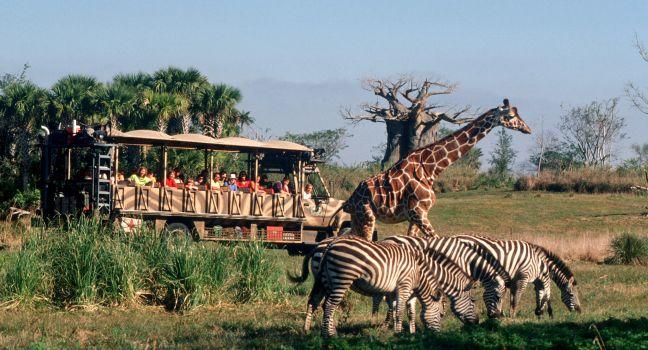
A giant Imagineered baobab tree is the starting point for exploring this animal sanctuary. Although re-creating an African safari in the United States isn't a new idea, with this one, great pains were taken to create an authentic environment, allowing you to observe rhinos, hippos, antelopes, wildebeests, giraffes, zebras, cheetahs, elephants, lions, and the like as if you were seeing them in the wild. Illustrated game-spotting guides are available above the seats in the open-air safari vehicles that lurch and bump over some 110 acres of savanna, forest, rivers, and rocky hills. You'll see most of the Harambe Reserve's 34 species of animals—sometimes so close you feel that you could reach out and touch them. It's easy to suspend disbelief here because the landscape and habitats are so effectively modeled and replenished by Disney horticulturists.
Keep an eye out for animal babies here and on the post-safari Pangani Forest Exploration Trail; the park's breeding programs have been extremely successful, with new additions including elephants, rhinos, okapi, giraffes, and several gorillas. It's a completely different experience at night, and the animals are often much more lively and interesting, so this experience definitely deserves a revisit. If you have to choose, the nighttime experience is probably superior.
Parents should hang on tightly to their small tykes. The ride is very bumpy and should be avoided by expectant guests or those with heart, back, or neck problems. For people with disabilities: Wheelchair accessible, but ECV users must transfer to standard wheelchairs. Equipped for assisted-listening and video-captioning devices. Guests with service animals should check with a host for boarding information.
During the hottest months, come first thing in the morning when animals are most active. Otherwise come at day's end when it cools down a bit or at night. For the best photo ops, ask to be seated in the very last row of seats (you might have to wait for the next vehicle) where you can pivot for an unobstructed view of the animals you just passed.
Recommended Fodor's Video
Lincoln Park Zoo
Lincoln Park
Fodor's Choice
Share This
stevegeer / iStockphoto
At this urban enclave near Lake Michigan, you can watch snow monkeys unwind in the hot springs of the Regenstein Macaque Forest or ogle gorillas and chimpanzees in the sprawling Regenstein Center for African Apes, which has three separate habitats complete with bamboo stands, termite mounds, and 5,000 feet of swinging vines. Brave big cats (separated by a window, of course) outside the Pepper Family Wildlife Center, a 2021 redesign of the zoo’s lion habitat conceived with input from an app that collected data on the star residents’ behavior. Animals both slithery (pythons) and strange (sloths) reside in the glass-domed Regenstein Small Mammal and Reptile House, while the big guys (hippos, giraffes, and black rhinos) are in the Regenstein African Journey.
Bird lovers should make a beeline to the McCormick Bird House, which contains extremely rare species—including the Bali mynah, Guam rail, and Guam Micronesian kingfisher, some of which are extinct in the wild. Families with little ones in tow will also want to see Farm-in-the-Zoo (with its barnyard animals and learning centers), and the Lionel Train Adventure ride. Be sure to leave time for a ride (or two) on the Endangered Species Carousel, featuring a menagerie of 48 rare and endangered animals.
Shutterbugs will want to make a beeline for the Nature Boardwalk at the zoo's southern reaches. In addition to pretty indigenous vegetation, it's home to the Peoples Gas Education Pavilion, a massive honeycomb sculpture that frames the downtown skyline, making for an impressive snapshot.
The Living Desert Zoo and Gardens
Fodor's Choice
Share This
Bob Reynolds / Shutterstock
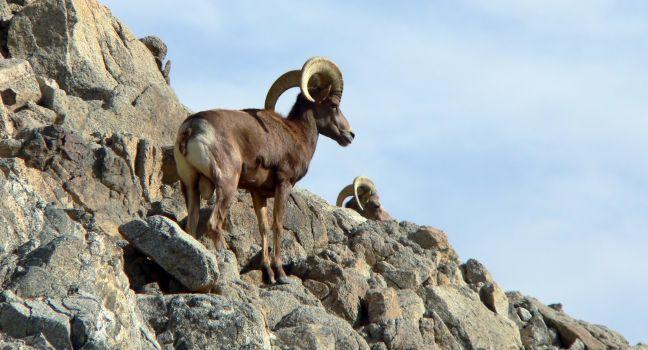
Come eye-to-eye with more than 600 animals including desert dwellers like wolves, coyotes, mountain lions, cheetahs, bighorn sheep, golden eagles, warthogs, naked mole rats, and owls at the Living Desert, which showcases the flora and fauna found in arid landscapes. Easy to challenging trails traverse terrain populated with plants of the Mojave, Colorado, and Sonoran deserts. In the African WaTuTu village, you'll find a traditional marketplace, as well as camels, hyenas, and other animals. Wallabies, emus, and kookaburras inhabit the immersive Australian Adventures area.
Get your bearings with a 30-minute shuttle tour. Pet domesticated creatures, including Nigerian dwarf goats, in a "petting kraal," attend zookeeper talks throughout the day. Crawl and climb all over the Gecko Gulch playground, ride a carousel, and check out a hall that holds ancient Pleistocene animal bones. Time your visit to begin in the early morning to beat the heat and feed the giraffes.
Panaewa Rainforest Zoo and Gardens
Fodor's Choice
Share This
(c) Bonniemarie | Dreamstime.com
Billed as "the only natural tropical rain forest zoo in the United States," this 12-acre county zoo features native Hawaiian species such as the nene goose and the io (hawk), as well as many other rare birds such as the highly endangered Hawaiian crow, or alala. Two Bengal tigers are also part of the collection. The white-faced whistling tree ducks are a highlight, along with monkeys, sloths, and lemurs. There's also a petting zoo on Saturdays from 1:30 to 2:30. Myriad species of lush, unusual tropical plants fill the grounds. To get here, turn left on Mamaki off Highway 11; it's just past the "Kulani 19, Stainback Hwy." sign.
Smithsonian's National Zoo
Upper Northwest
Fodor's Choice
Share This
Condor 36 / Shutterstock
The Smithsonian's National Zoo and Conservation Biology Institute features 1,800 animals representing 360 species, as close as you can get to their native surroundings. Arrive between 11 and 2 (weather permitting), and you can catch orangutans traversing the "O" line, a series of cables and towers near the Great Ape House that allow the primates to swing hand over hand about 50 feet above your head. The famous pandas are leaving at the end of 2023, but there are plenty of other animals that beguile. The multigenerational herd of elephants—part of the zoo's conservation campaign to save this endangered species from extinction—is a perennial favorite. Along the Claws and Paws Pathway, the binturongs (also known as bearcats) smell like buttered popcorn, and petite Pallas's cats hide in plain sight. The zoo was designed by famed landscape architect Frederick Law Olmsted, who also designed New York's Central Park. Try visiting early morning or late afternoon, since many animals sleep midday. Nighttime visits are especially fun during the Christmas holiday as the zoo sparkles with the annual ZooLights event.
Arizona–Sonora Desert Museum
Westside
Fodor's Choice
Share This
The name "museum" is a bit misleading, since this delightful site is actually a zoo, aquarium, and botanical garden featuring the animals, plants, and even fish of the Sonoran Desert. Hummingbirds, coatis, rattlesnakes, scorpions, bighorn sheep, bobcats, and Mexican wolves all busy themselves in ingeniously designed habitats.
An Earth Sciences Center has an artificial limestone cave to climb through and an excellent mineral display. The coyote and javelina (a wild, piglike mammal with an oddly oversize head) exhibits have "invisible" fencing that separates humans from animals, and at the Raptor Free Flight show (October through April, daily at 10 and 2), you can see the powerful birds soar and dive, untethered, inches above your head.
The restaurants are above average, and the gift shop, which carries books, jewelry, and crafts, is outstanding.June through August, the museum stays open until 9 pm every Saturday, which provides a great opportunity to see nocturnal critters.
Brevard Zoo
Fodor's Choice
Share This
At this Association of Zoo and Aquariums–accredited zoo you can stroll along the shaded boardwalks for close-up looks at rhinos, giraffes, cheetahs, alligators, crocodiles, lemurs, jaguars, eagles, river otters, kangaroos, sloths, and exotic birds. During zookeeper chats held throughout the day, staffers feed and highlight various animals. Stop by Paws-On, an interactive learning playground with a petting zone, wildlife detective training academy, and the Indian River Play Lagoon. Hand-feed a giraffe in Expedition Africa or a lorikeet in the aviary. Step up to the Wetlands Outpost, an elevated pavilion that's a gateway to 22 acres of wetlands through which you can paddle kayaks and keep an eye open for the 4,000 species of wildlife that live in these waters and woods. Adventurers seeking a chimp's-eye view can zip line through the zoo on Treetop Trek.
Brookfield Zoo
Fodor's Choice
Share This
There are more than 3,000 animals at this gigantic zoo and highlights include the 7½-acre Great Bear Wilderness exhibit, a sprawling replica of North American woodlands for the zoo's population of grizzlies, polar bears, bison, Mexican gray wolves, and bald eagles. Watch the polar bears from the popular underwater viewing area. Elsewhere, monkeys, otters, birds, and other rainforest fauna cavort in a carefully constructed setting of trees, shrubs, pools, and waterfalls at Tropic World, while at the Living Coast you can venture through passageways to see sharks, rays, and Humboldt penguins.
One of the best educational exhibits is Habitat Africa, where you can explore the dense forest section with animals like the okapi (an animal that looks like a cross between a zebra, giraffe, and horse). In the savanna section, which has a water hole, termite mounds, and characteristic rock formations, you can spy such tiny animals as the 22-inch-tall klipspringer antelope.
The Swamp is about as realistic as you would want an exhibit on swamps to be. It has a springy floor and open habitats with low-flying birds that vividly demonstrate the complex ecosystems. For hands-on family activities, visit the Hamill Family Play Zoo, where kids can play zookeeper, gardener, or veterinarian. Special events—most notably Holiday Magic, which lights up the zoo on select December evenings—are also worth checking out. If you don't want to trek around the 216-acre property, don't worry. You can hop aboard a motorized safari tram ($6) on weekends in warm weather months.
Butterfly World
Fodor's Choice
Share This
More than 80 native and international butterfly species (more than 20,000 butterflies in total) live inside the first butterfly house in the United States and the largest in the world. The 3-acre site inside Coconut Creek's Tradewinds Park has aviaries, observation decks, waterfalls, ponds, and tunnels. There are lots of birds, too: kids love the lorikeet aviary, where birds alight on every limb.
Grizzly and Wolf Discovery Center
Fodor's Choice
Share This
Home to grizzlies and gray wolves, this nonprofit wildlife park provides an up-close look at Yellowstone's largest and most powerful predators. In summer, you can also view birds of prey, and the river otter exhibit is a hit with kids. The comprehensive Bears: Imagination and Reality exhibit compares myths about bears to what science has revealed about them. This is the only facility that formally tests bear-resistant products such as coolers and canisters in cooperation with state and federal agencies.
Jacksonville Zoo and Gardens
Fodor's Choice
Share This
The highly regarded zoo offers the chance to hop on a train and see animals from different regions of the world, from the Land of the Tiger, a 2½-acre Asian attraction featuring Sumatran and Malayan tigers, to the African Plains area, which houses elephants, white rhinos, and highly endangered leopards, in addition to other mammals and birds. The Range of the Jaguar takes you to a 4-acre Central and South American exhibit, with exotic big cats and 20 other native species.
The Reptile House showcases some of the world's most venomous snakes, and the 2½-acre Wild Florida has black bears, bald eagles, white-tailed deer, and other of the state's creatures. Play Park contains a seasonal Splash Ground, a forest play area, two mazes, and Stingray Bay with a 17,500-gallon pool where you can pet and feed the mysterious creatures. The zoo also has a Manatee Critical Care Center. What's more, parking is free.
Point Defiance Zoo & Aquarium
Fodor's Choice
Share This
One of the Northwest's finest collections of regional and international animal species, this winding and hilly site includes tigers, elephants, tapirs, and gibbons in the Asian Forest Sanctuary, where paw-print trails lead between lookouts so even the smallest tots can spot animals. The impressive South Pacific and Pacific Seas aquariums are also fun to explore—they include a glass-walled, floor-to-ceiling shark tank (where eye-to-eye caged shark dives are offered). Other areas house such cold-weather creatures as beluga whales, Arctic foxes, polar bears, and penguins. Engaging zookeeper chats about different animals and up-close feedings are held throughout the day. The fantastic playground area has friendly farm animals running between the slides, and seasonal special events include a Halloween Zoo Boo trick-or-treat night and the famous nightly Zoolights holiday displays around Christmas.
Redwood Sky Walk at Sequoia Park Zoo
Fodor's Choice
Share This
Stroll 100 feet above the forest floor on California's oldest zoo's aerial walkway through old-growth and newer redwoods. Favorite wildlife viewing areas back on the ground include a walk-in aviary. A bear and coyote exhibit was set to open during 2023.
Riverbanks Zoo & Garden
Fodor's Choice
Share This
This world-class zoo contains more than 3,000 animals and birds in natural habitats, including a sea lion exhibit and western lowland gorillas. Walk through landscaped gardens to see elephants, Siberian tigers, koalas, and penguins. The South American primate collection has won international acclaim, and the park is noted for its success in breeding endangered species. The Aquarium Reptile Complex has regional, desert, tropical, and marine specimens. Ride the carousel, and take a tram over the Saluda River to the 70-acre botanical gardens. A forested section with walking trails has spectacular views of the river and passes Civil War ruins. Stop by the Saluda Factory Interpretive Center for more information about the site's history and its connection to the Civil War.
Roger Williams Park, Zoo & Carousel Village
Fodor's Choice
Share This
Plan a full day to take in this regal 435-acre Victorian park where you can picnic, see diverse plant life at the indoor-outdoor Botanical Center, rent a swan-shape paddleboat, ride a Victorian-style carousel, browse a natural history museum, and stargaze in a planetarium. The 40-acre zoo—one of the nation's oldest—has African elephants, Masai giraffes, zebras, red pandas, snow leopards, moon bears, gibbons, tree kangaroos, and harbor seals in natural settings. Howler monkeys, Chilean flamingos, giant river otters, a giant anteater, toucans, and more inhabit the Rainforest exhibit. In October, more than 5,000 creatively carved pumpkins are illuminated for the well-attended Jack-O-Lantern Spectacular, which can be viewed from a walking trail or zip line ride. In Carousel Village, a short walk from the zoo, kids love the classic horses and other creatures on the carousel, pony rides, and train excursions (all individually priced). Food trucks roll up to the village on summer Friday nights.
San Antonio Zoo
Alamo Heights
Fodor's Choice
Share This
One of the city's most popular attractions, the San Antonio Zoo is open year-round. The zoo's stunning, immersive, and interactive entrance welcomes more than one million visitors each year to observe and learn from more than 3,500 animals representing about 700 species with a renewed focus on education and conservation. More than 50 acres is divided into habitats and its native animals: Asian Forest, Wild Australia, the Savanna, and more. Also on display are the Reptile House, Amphibian House, and the Friedrich Aquarium. Africa Live boasts Boom the Nile crocodile and famed hippos Timothy and Uma. It is also the home of The Last Three, the 17-foot tall bronze sculpture of the then-three (now only two) remaining Northern white rhinos on earth. An enhanced Fun Pass in addition to admission fee offers extras such as Zootennial Carousel, Flamingo Mingle, Giraffe Feeding, Zoo Train Ride, and more.
San Diego Zoo
Balboa Park
Fodor's Choice
Share This
Balboa Park's—and perhaps the city's—most famous attraction is its 100-acre zoo. More than 12,000 animals of some 680 diverse species roam in hospitable, expertly crafted habitats that replicate natural environments as closely as possible. Pandas just made their grand return to the zoo after a five-year hiatus and are a popular attraction. The flora in the zoo, including many rare species, is even more dear than the fauna. Walkways wind over bridges and past waterfalls ringed with tropical ferns; elephants in a sandy plateau roam so close you're tempted to pet them.
Exploring the zoo fully requires the stamina of a healthy hiker, but open-air, double-decker buses that run throughout the day let you zip through three-quarters of the exhibits on a guided 35-minute, 3-mile tour. The Skyfari Aerial Tram, which soars 170 feet above the ground, gives a good overview of the zoo's layout and, on clear days, a panorama of the park, Downtown San Diego, the bay, and the ocean, far beyond the San Diego–Coronado Bridge.
Unless you come early, expect to wait for the tour bus, and especially for the top tier—the line can take more than 45 minutes; if you come at midday on a weekend or school holiday, you'll be doing the in-line shuffle for a while. Don't forget the San Diego Zoo Safari Park, the zoo's 1,800-acre extension to the north at Escondido.
San Diego Zoo Safari Park
Fodor's Choice
Share This
A branch of the San Diego Zoo, 35 miles to the north, the 1,800-acre preserve in the San Pasqual Valley is designed to protect endangered species from around the world. Exhibit areas have been carved out of the dry, dusty canyons and mesas to represent the animals' natural habitats in various parts of Africa and Asia. The best way to see these preserves is to take the 25-minute, 2½-mile Africa tram safari, included with admission. More than 3,500 animals of more than 400 species roam or fly above the expansive grounds. Predators are separated from prey by deep moats, but only the elephants, tigers, lions, and cheetahs are kept in enclosures. Good viewpoints are at the Elephant Viewing Patio, African Plains Outlook, and Kilmia Point. The park's newest project is the Tull Family Tiger Trail, a Sumatran tiger habitat where you can get face-to-face (with a glass between) with the gorgeous cats. The 5-acre exhibit features a waterfall and swimming hole, and addresses poaching and other environmental threats to the species. For a more focused view of the park, you can take one of several other safaris that are well worth the additional charge. You can choose from several behind-the-scenes safaris, fly above it all via the zipline safari, or get up close to giraffes and rhinos on a caravan safari.
The park is also a botanical garden featuring cacti and succulents from Baja California, a bonsai collection, a fuchsia display, native plants, and protea. The gift shops are well worth a visit for their limited-edition items, and there are lots of restaurants, snack bars, and some picnic areas. Rental lockers, strollers, and wheelchairs are available.
In summer, when the park stays open late, the trip is especially enjoyable in the early evening, when the heat has subsided and the animals are active and feeding. When the tram travels through the park after dark, sodium-vapor lamps illuminate the active animals. Photographers with zoom lenses can get spectacular shots of zebras, gazelles, and rhinos.
Wildlife Safari
Fodor's Choice
Share This
Come face-to-face with some 600 free-roaming animals at the 615-acre drive-through wildlife park. Inhabitants include alligators, cheetahs, cougars, African elephants, gibbons, lions, giraffes, grizzly bears, Tibetan yaks, Siberian tigers, and many more species. There's also a petting zoo, a miniature train, up-close animal feedings and encounters, and engaging wildlife talks. The admission price includes two same-day drive-throughs. This nonprofit zoological park is a respected research facility with full accreditation from the American Zoo and Aquarium Association, with a mission to conserve and protect endangered species through education and breeding programs. Through its cheetah breeding program, for example, more than 215 of these animals have been born here.
Alaska Zoo
South Anchorage
Share This
Roam the trails and visit with the polar bears, caribou, brown and black bears, seals, tigers, snow leopards, moose, wolves, lynx, and a large array of birds that call the Alaska Zoo home. The zoo provides a wide array of programs included with admission, such as zookeeper talks and toddler story times, that concentrate on promoting the conservation of arctic and subarctic animal species. Throughout the summer for an additional fee you can join daily two-hour tours that include behind-the-scenes stops. The zoo is in the foothills on the edge of town, but a free summer-only shuttle leaves from the Downtown Visitor Center at 4th Avenue and F Street every hour from Thursday through Sunday; online reservations are required to ride.
Alligator Adventure
Share This
Interactive reptile shows, including an alligator-feeding demonstration, are the main attractions at this wildlife park. Boardwalks lead through marshes and swamps on the 15-acre property, where you'll see wildlife of the wetlands, including a rare white albino alligator, the largest known crocodile in captivity, giant Galápagos tortoises, river otters, and all manner of reptiles, including boas, pythons, and anacondas. Unusual plants and exotic birds, as well as mountain lions and ostriches, are also in residence.
Audubon Zoo
Uptown
Share This
Consistently ranked as one of the top zoos in the nation, the Audubon Zoo presents a wide array of animals in exhibits that mimic their natural habitats, including giraffes, lions, and elephants. The Louisiana Swamp exhibit re-creates the natural habitat of alligators, including a rare white alligator (technically a leucistic gator), nutrias (large swamp rodents), and catfish; feeding time is always well attended. Among other highlights are the Reptile Encounter, the Komodo dragon exhibit, and gorilla and flamingo exhibits. Several attractions are available for additional fees, including a train tour that departs every 30 minutes from the swamp exhibit. Cool Zoo, a splash park featuring a 28-foot white-alligator slide, bubbling fountains, and splash zones, has one area set aside for toddlers and young children. Cool Zoo also includes Gator Run, a lazy river with sand beaches, water cannons, and jumping jets. (Cool Zoo is open weekends in May, then opens daily from Memorial Day until early August, when it returns to weekends-only through Labor Day; separate admission is $13 for nonmembers.)
Big Bear Alpine Zoo
Share This
This rescue and rehabilitation center specializes in animals native to the San Bernardino Mountains. Its residents may include black and (non-native) grizzly bears, bald eagles, coyotes, mountain lions, wolves, snow leopards, and bobcats.
Central Florida Zoo and Botanical Gardens
Share This
Sanford has had a zoo since 1923, and there's a certain charm about the place. In addition to 400-plus animals, including giraffes (you can feed them), cheetahs, monkeys, and crocodiles, there's the Seminole Aerial Adventures, with rope bridges and a zipline through the treetops, and the Wharton-Smith Tropical Splash Ground, a mini water playground. Evening events for grown-ups are as popular as summer camps for kids. The Florida black-bear habitat and Florida Trek are delightful, as is the ¼-scale model of an Atlantic Coast Line Railroad streamliner train that travels around the grounds. Burgers, salads, and kids' meals are available
Central Park Zoo
Central Park
Share This
Even a leisurely visit to this small but delightful menagerie takes only about an hour, unless, of course, you fall under the spell of the zoo's adorable animals, be they the ever-friendly penguins, the spry snow leopard, or other furry or feathered residents. More than 130 species are found here, but there's no space for animals like zebras and giraffes to roam. Don't miss the sea lion feedings, possibly the zoo's most popular attraction, daily at 11:30, 1:30, and 3:30, or the penguin feedings at 10:40 and 2:30 daily.
Clustered around the central Sea Lion Pool are separate exhibits for each of the Earth's major environments: penguins and seabirds live at Polar Circle; the highlights of the open-air Temperate Territory are the chattering monkeys; and the Tropic Zone contains the flora and fauna of rain forests. The Tisch Children's Zoo (no additional ticket required) gives kids the opportunity to feed sheep, goats, cows, and pigs. The 4-D theater shows 15-minute-long, family-friendly films that feature sensory effects like wind, mist, bubbles, and scents. Children under 12 are not admitted to the zoo without an adult. All visitors must reserve a date-specific ticket in advance.
Cheyenne Mountain Zoo
Share This
America's only mountain zoo, at 6,700 feet, has nearly 1,000 animals housed amid mossy boulders and ponderosa pines. You can hand-feed the giraffe herd in the zoo's African Rift Valley, ride the chairlift-style, open-air Sky Ride, and check out the animals living in Primate World, Rocky Mountain Wild, or the Asian Highlands.
Connecticut's Beardsley Zoo
Share This
The indoor, walk-through South American rain forest alone justifies a visit to this zoo. It comes alive with dozens of species, some rare and endangered such as keel-billed toucans, broad-snouted caimans, and black-and-gold howler monkeys living in a lush environment of waterfalls, ponds, greenery, and bamboo. The zoo itself has 36 acres of exhibits featuring more than 300 animals: bison, tigers, leopards, timber wolves, sloths, a red panda, bald eagles---and proud peacocks that freely roam the property right along with you. There's also a colorful carousel and a New England farmyard.
Denver Zoo
City Park
Share This
The state's most popular cultural attraction, this easily navigated property's best-known exhibit showcases man-eating Komodo dragons in a lush re-creation of a cavernous riverbank. Another popular exhibit is The Edge, a series of overhead yards and bridges that allow the Amur (Siberian) tigers to roam 12 feet above visitors. The 10-acre Toyota Elephant Passage houses elephants, gibbons, rhinos, clouded leopards, and tapirs, along with other animals from the Asian continent. The Conservation Carousel ($2) rotates in the center of the 80-acre zoo, with handcrafted endangered species as mounts. A 7-acre Primate Panorama houses 31 species of primates in state-of-the-art environments that simulate the animals' natural habitats, while the Pinnacol African Penguin Point habitat showcases the endangered African penguin. Other highlights include a nursery for baby animals; seal shows; the electric Safari Shuttle, which snakes through the property as you are treated to a lesson on the zoo's inhabitants; and the usual lions, tigers, bears, giraffes, and monkeys. The exhibits are spaced far apart along sprawling concrete paths, so build in plenty of time to visit.
Subscribe to Newsletter
Sign up for Travel Tips & News
I want emails from Fodor's Travel with travel information and promotions. I can unsubscribe
any time using the unsubscribe link at the end of all emails.
Thank you for your interest!
Look out for our newsletters with travel tips and special offers.
Sign up for Travel Tips & News
By signing up for the
newsletter, I agree to the Privacy Policy. You must check the box to subscribe
Thank you for your interest!
Look out for our newsletters with travel tips and special offers.