2339 Best Sights in USA

Background Illustration for Sights

We've compiled the best of the best in USA - browse our top choices for the top things to see or do during your stay.

Ala Moana Regional Park

Ala Moana Fodor's Choice
A view of Ala Moana from the park-lands point, situated on the island of Oahu, Hawaii.
(c) Dubphoto | Dreamstime.com

A protective reef makes Ala Moana essentially a ½-mile-wide saltwater swimming pool. Very smooth sand and no waves create a haven for families and stand-up paddleboarders. After Waikiki, this is the most popular beach among visitors, and the free parking area can fill up quickly on sunny weekends. On the Waikiki side is a peninsula called Magic Island, with shady trees and paved sidewalks ideal for jogging. Ala Moana Regional Park also has playing fields, tennis courts, and a couple of small ponds for sailing toy boats. The beach is for everyone, but only in the daytime; after dark, it's a high-crime area, with many unhoused people. Amenities: food and drink; lifeguards; parking (free); showers; toilets. Best for: swimming; walking.

Alki Point and Beach

West Seattle Fodor's Choice
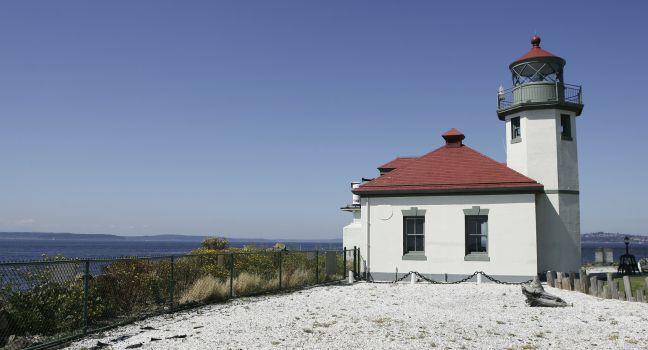
Lighthouse on Alki, Seattle, WA
HansUntch / iStockphoto

In summer, this is as close to California as Seattle gets—and some hardy residents even swim in the cold, salty waters of Puget Sound here (water temperature ranges from 45ºF to 60ºF). This 2½-mile stretch of sand has views of the Seattle skyline and the Olympic Mountains, and the beachfront promenade is especially popular with skaters, joggers, strollers, and cyclists. Year-round, Seattleites come to build sand castles, beachcomb, play volleyball, fly kites, enjoy the views, and people watch; in winter, storm-watchers come to see the crashing waves. Facilities include drinking water, grills, picnic tables, and restrooms; restaurants line the street across from the beach. 

Alki Point is the place where David Denny, John Low, and Lee Terry arrived in September 1851, ready to found a city. The Alki Point Lighthouse dates from 1913. One of 195 Lady Liberty replicas found around the country, Miss Liberty (or Little Liberty) lives near the 2700 block of Alki Avenue SW and is a popular meeting point for beachfront picnics and dates.

To get to the beach from Downtown, take either Interstate 5 south or Highway 99 south to the West Seattle Bridge (keep an eye out, as this exit is easy to miss) and exit onto Harbor Avenue SW, turning right at the stoplight. After Harbor Ave. SW curves south to become Alki Ave. SW, watch for the Alki Flower Houses on the left at 1400 Alki Ave. SW. The pair of 1914 houses, tucked between two high-rise condominium buildings, overflow with vibrant blossoms, inspired by owner Randie Stone's Hawaiian upbringing and nurturing the property's status as a wildlife habitat, while making it a photo-worthy gem. Alki Beach is a three-minute drive south from here.

American Museum of Natural History

Upper West Side Fodor's Choice
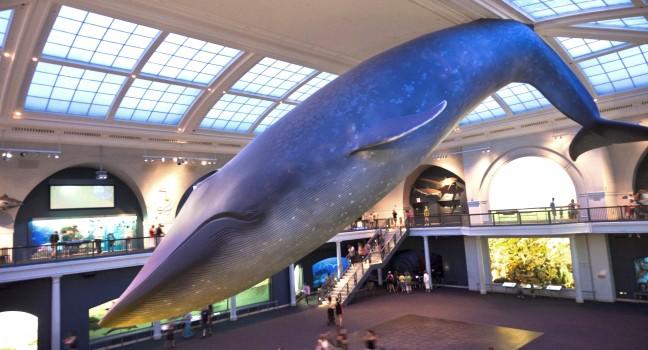
The famous American Museum for National History holds a large collection of prehistoric and human exhibits from all over the world.  Open for public at July 8,2010, New York,  USA.
Jorg Hackemann / Shutterstock

With more than 40 exhibition halls and 34 million artifacts and specimens, the world's largest and most important museum of natural history can easily keep you occupied for more than a day. The dioramas might seem a bit dated but are still fun; dinosaur fossils and exhibits, including a massive T. rex, are highlights for many people, especially kids. A 94-foot model of a blue whale, another museum icon, is suspended from the ceiling in the Milstein Hall of Ocean Life. Attached to the museum is the Rose Center for Earth and Space featuring various exhibits, the Hayden Planetarium, a giant-screen theater, and the Worlds Beyond Earth space show, which takes you on a cosmic journey to the inner reaches of our solar system. Do your bling thing at the dazzling Mignone Halls of Gems and Minerals, displaying giant geodes, diamonds, and sapphires, and explore the revitalized Northwest Coast Hall, where you will find exhibits on the history and creativity of the cultures of the Pacific Northwest. The latest addition to this ever-changing museum is the Richard Gilder Center for Science, Innovation, and Education, which opened in mid-2023 adding an organic, canyonlike atrium with large skylights to create a welcoming new space for discovery; new galleries dedicated to insects; a permanent butterfly vivarium; classrooms; a research library; and a state-of-the-art theater-in-the-round. 

Many family-friendly events, including storytelling and dance performances, are included with admission. Purchase timed entry tickets in advance, and check the website for special programs, including sleepovers for kids.

200 Central Park W, New York, NY, 10024, USA
212-769–5100
Sight Details
$30 includes admission to Rose Center for Earth and Space; $36 includes one ticketed exhibition, giant-screen film, or space show

Something incorrect in this review?

Recommended Fodor's Video

Anaehoomalu Bay

Fodor's Choice
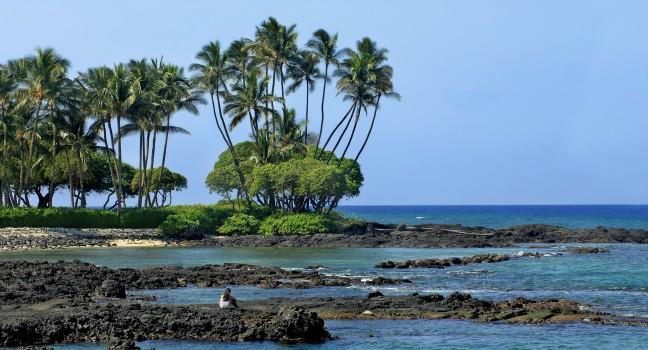
Young woman sits on the lava rocks of Anaehoomalu Bay on the Kohala Coast of the Big Island of Hawaii.  She is watching a green sea turtle that is basking in the sunlight and resting.
Bonita R. Cheshier / Shutterstock

This gorgeous, expansive stretch of white sand, fringed with coconut palms, fronts the Waikoloa Beach Marriott and is a perfect spot for swimming, windsurfing, snorkeling, and diving. Unlike some Kohala Coast beaches near hotel properties, this one is very accessible to the public and offers plenty of free parking. The bay is well protected, so even when the surf is rough or the trade winds are blasting, it's fairly calm here. (Mornings are calmest.) Snorkel gear, kayaks, and body boards are available for rent at the north end.

 Locals will appreciate your efforts to use the proper name (pronounced ā'-nāe-ho'o-mā'lu) rather than simply its nickname, "A-Bay."

Behind the beach are two ancient Hawaiian fishponds, Kuualii and Kahapapa, that once served ancient Hawaiian royalty. A walking trail follows the coastline to the Hilton Waikoloa Village next door, passing by tide pools, ponds, and a turtle sanctuary where sea turtles can often be spotted sunbathing on the sand. Footwear is recommended for the trail. Amenities: food and drink; parking (no fee); showers; toilets; water sports. Best for: snorkeling; sunset; swimming; walking.

69-275 Waikoloa Beach Dr., Waikoloa, HI, 96738, USA
Sight Details
Free

Something incorrect in this review?

Anna Ranch Heritage Center

Fodor's Choice
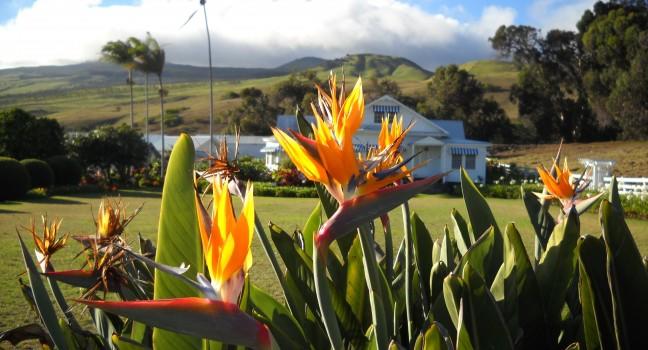
Anna Ranch, Kamuela, Hawaii 189/365. A historic landmark with beautiful gardens.
Anna Ranch, Kamuela, Hawaii 189/365 by Jen R

On the National and State Registers of Historic Places, this stunning heritage property belonged to the "first lady" of Hawaii ranching, Anna Lindsey Perry-Fiske, and now provides a rare opportunity to see a fully restored cattle ranch compound and learn about the life of this fascinating woman. She rounded up and butchered cattle by day and threw lavish parties by night. Wander the picturesque grounds and gardens on a self-guided walk, watch a master saddlemaker and an ironsmith in action, and take a guided tour (by appointment only) of the historic house, where Anna's furniture, gowns, and elaborate pau (parade riding) costumes are on display. The knowledgeable staff shares anecdotes about Anna's life. (Some staff and visitors have even reported strange goings-on in the main house, suggesting that Anna may still be "hanging around.")

65-1480 Kawaihae Rd., Waimea (Hawaii County), HI, 96743, USA
808-885–4426
Sight Details
Grounds and Discovery Trail free, historic home tours $10
Closed Sat.–Mon.

Something incorrect in this review?

Anza-Borrego Desert State Park

Fodor's Choice
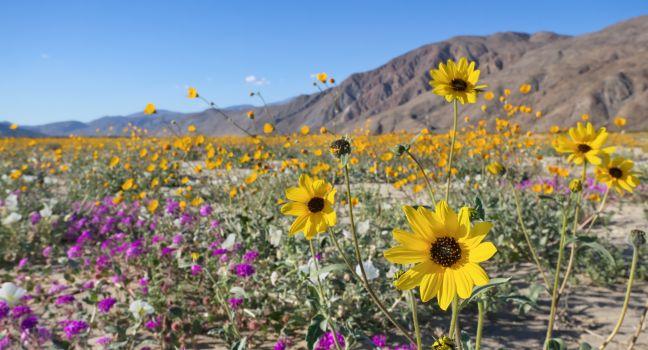
Wildflower blooming in Anza Borrego Desert State Park, California.
sumikophoto / Shutterstock

One of the richest living natural-history museums in the nation, this state park is a vast, nearly uninhabited wilderness where you can step through a field of wildflowers, cool off in a palm-shaded oasis, count zillions of stars in the black night sky, and listen to coyotes howl at dusk. The landscape, largely undisturbed by humans, reveals a rich natural history. There's evidence of a vast inland sea in the piles of oyster beds near Split Mountain and of the power of natural forces such as earthquakes and flash floods. In addition, recent scientific work has confirmed that the Borrego Badlands, with more than 6,000 meters of exposed fossil-bearing sediments, is likely the richest such deposit in North America, telling the story of 7 million years of climate change, upheaval, and prehistoric animals. Evidence has been unearthed of saber-toothed cats, flamingos, zebras, and the largest flying bird in the northern hemisphere beneath the now-parched sand. Today the desert's most treasured inhabitants are the herds of elusive and endangered native bighorn sheep, or borrego, for which the park is named. Among the strange desert plants you may observe are the gnarly elephant trees. As these are endangered, rangers don't encourage visitors to seek out the secluded grove at Fish Creek, but there are a few examples at the visitor center garden. After a wet winter you can see a short-lived but stunning display of cacti, succulents, and desert wildflowers in bloom.

The park is unusually accessible to visitors. Admission to the park is free, and few areas are off-limits. There are two developed campgrounds, but you can camp anywhere; just follow the trails and pitch a tent wherever you like. There are more than 500 miles of dirt roads, two huge wilderness areas, and 110 miles of riding and hiking trails. Many sites can be seen from paved roads, but some require driving on dirt roads, for which rangers recommend you use a four-wheel-drive vehicle. When you do leave the pavement, carry the appropriate supplies: a cell phone (which may be unreliable in some areas), a shovel and other tools, flares, blankets, and plenty of water. The canyons are susceptible to flash flooding, so inquire about weather conditions (even on sunny days) before entering.

Borrego resorts, restaurants, and the state park have Wi-Fi, but the service is spotty at best. If you need to talk to someone in the area, it's best to find a phone with a landline.

Stop by the visitor center to get oriented, to pick up a park map, and to learn about weather, road, and wildlife conditions. Designed to keep cool during the desert's blazing-hot summers, the center is built underground, beneath a demonstration desert garden containing examples of most of the native flora and a little pupfish pond. Displays inside the center illustrate the natural history of the area. Picnic tables are scattered throughout, making this a good place to linger and enjoy the view.

The sites and hikes listed below are arranged by region of the park and distance from the visitor center: in the valley and hills surrounding Borrego Springs, near Tamarisk Campground, along Highway S2, south of Scissors Crossing, and south of Ocotillo Wells.

A 1½-mile trail leads to Borrego Palm Canyon, one of the few native palm groves in North America. The canyon, about 1 mile west of the visitor center, holds a grove of more than 1,000 native fan palms, a stream, and a waterfall. Wildlife is abundant along this route. This moderate hike is the most popular in the park.

With a year-round stream and lush plant life, Coyote Canyon, approximately 4½ miles north of Borrego Springs, is one of the best places to see and photograph spring wildflowers. Portions of the canyon road follow a section of the old Anza Trail. This area is closed between June 15 and September 15 to allow native bighorn sheep undisturbed use of the water. The dirt road that gives access to the canyon may be sandy enough to require a four-wheel-drive vehicle.

The late-afternoon vista of the Borrego badlands from Font's Point, 13 miles east of Borrego Springs, is one of the most breathtaking views in the desert, especially when the setting sun casts a golden glow in high relief on the eroded mountain slopes. The road from the Font's Point turnoff can be rough enough to make using a four-wheel-drive vehicle advisable; inquire about road conditions at the visitor center before starting out. Even if you can't make it out on the paved road, you can see some of the view from the highway.

East of Tamarisk Grove campground (13 miles south of Borrego Springs), the Narrows Earth Trail is a short walk off the road. Along the way you can see evidence of the many geologic processes involved in forming the canyons of the desert, such as a contact zone between two earthquake faults, and sedimentary layers of metamorphic and igneous rock.

The 1.6-mile round-trip Yaqui Well Nature Trail takes you along a path to a desert water hole where birds and wildlife are abundant. It's also a good place to look for wildflowers in spring. At the trailhead across from Tamarisk Campground you can pick up a brochure describing what can be seen along the trail.

Traversing a boulder-strewn trail is the easy, mostly flat Pictograph/Smuggler's Canyon Trail. At the end is a collection of rocks covered with muted red and yellow pictographs painted within the last hundred years or so by Native Americans. Walk about ½ mile beyond the pictures to reach Smuggler's Canyon, where an overlook provides views of the Vallecito Valley. The hike, from 2 to 3 miles round-trip, begins in Blair Valley, 6 miles southeast of Highway 78, off Highway S2, at the Scissors Crossing intersection.

Just a few steps off the paved road, Carrizo Badlands Overlook offers a view of eroded and twisted sedimentary rock that obscures the fossils of the mastodons, saber-tooths, zebras, and camels that roamed this region a million years ago. The route to the overlook through Earthquake Valley and Blair Valley parallels the Southern Emigrant Trail. It's off Highway S2, 40 miles south of Scissors Crossing.

Geology students from all over the world visit the Fish Creek area of Anza-Borrego to explore the canyon through Split Mountain. The narrow gorge with 600-foot walls was formed by an ancient stream. Fossils in this area indicate that a sea once covered the desert floor. From Highway 78 at Ocotillo Wells, take Split Mountain Road south 9 miles.

200 Palm Canyon Dr., Borrego Springs, CA, 92004, USA
760-767–4205
Sight Details
Free; day-use parking in campground areas $10
Park daily dawn–dusk. Visitor Center Oct.–May 1, daily 9–5
Make a campground reservation at: reservecalifornia.com

Something incorrect in this review?

Aquinnah Cliffs

Aquinnah Fodor's Choice
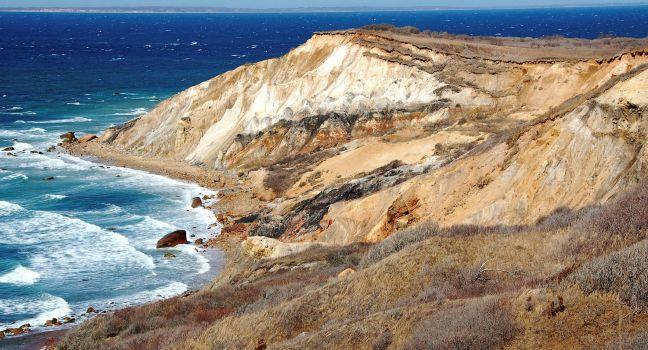
Aquinnah Cliffs at Martha's Vineyard
(c) Mwaits | Dreamstime.com

A National Historic Landmark, the spectacular Aquinnah Cliffs are part of the Wampanoag Reservation land. These dramatically striated walls of red clay are the island's major attraction, as evidenced by the tour bus–filled parking lot. Native American crafts and food shops line the short approach to the overlook. Gaze toward the Elizabeth Islands to the northeast across Vineyard Sound and Nomans Land Island, a wildlife preserve, 3 miles off the Vineyard's southern coast.

State Rd., Martha's Vineyard, MA, 02535, USA

Something incorrect in this review?

Arlington National Cemetery

Fodor's Choice
Arlington Cemetery - Changing of the Guards.
Brandon Vincent / Shutterstock

More than 400,000 Americans who died during wartime, as well as many notable Americans (among them Presidents William Howard Taft and John F. Kennedy, General John Pershing, and Supreme Court Justice Ruth Bader Ginsberg), are interred in these 639 acres across the Potomac River from Washington, established as the nation’s cemetery in 1864. Prior to 1857, the land was a plantation owned by George Washington Parke Custis, grandson of Martha Washington. Enslaved people built Arlington House, which became the country’s first memorial to Custis’s step-grandfather, George Washington; the house and plantation were later passed down to Custis’s daughter, Mary Anna Custis Lee, the wife of Confederate general Robert E. Lee. Arlington was very much a typical working plantation before it was a cemetery, with 196 enslaved individuals living and working on the property when the Lees inherited it. Beginning in May 1864, the former plantation, which had been seized by the U.S. Army in 1861, became a military cemetery.

Today Arlington is the most famous national cemetery in the country, with an average of 27 to 30 funerals held every weekday and another six to eight funerals on Saturday for people who did not require or request military honors. You can visit dozens of notable grave sites, monuments, and even an arboretum. Sections 27 and 23, two of the oldest parts of the cemetery, are a particular must for modern-day visitors. Fifteen-hundred African American soldiers who fought in the Civil War and the ensuing Indian Wars are buried here, as are over 3,800 nonmilitary African Americans (including many who were formerly enslaved); they are buried in graves marked only as “citizen” or “civilian.”

You should also visit the former site of the Freedman’s Village, which existed from 1863 to 1900. The area was originally designed by the government as a short-term refugee camp for runaway enslaved individuals; it quickly became a robust community, complete with schools, hospitals, and churches (interestingly, records indicate no residents of this village are buried at Arlington). Today that area includes Section 4, the location of the Coast Guard Memorial, and others such as Arctic explorers Admiral Robert Peary and Matthew Henson.

Tour-bus services are provided for a fee every 30 minutes (buy tickets in the Welcome Center or at  www.arlingtontours.com). Wheelchairs and strollers are not allowed; handicap-accessible vehicles are available upon request. For a map of the cemetery or help finding a grave, download the cemetery’s app, ANC Explorer, or use the computers at the Welcome Center.

Arlington National Cemetery also offers free educational resources and self-guided walking tours. For more information on Arlington National Cemetery and to find educational resources, visit  https://linktr.ee/arlingtonnatl.
1 Memorial Ave., VA, 22211, USA
877-907–8585-for general information and to locate a grave
Sight Details
Free; parking from $3 per hr; Arlington National Cemetery tours $17.95

Something incorrect in this review?

Art Institute of Chicago

Chicago Loop Fodor's Choice
CHICAGO, ILLINOIS - SEPTEMBER 8: The Modern Wing of the Art Institute of Chicago designed by architect Renzo Piano on September 8, 2012 in Chicago, Illinois.
luca85/Shutterstock

Come for the sterling collection of old masters and impressionists (an entire room is dedicated to Monet); linger over the extraordinary and comprehensive photography collection; take in a number of fine American works; and discover paintings, drawings, sculpture, and design spanning the ancient to the contemporary world.

With its flanking lions and marble lobby, the Michigan Avenue main building was once part of the World's Columbian Exposition. It opened as the Art Institute on December 8, 1893. While the collection is best known for its impressionist and postimpressionist pieces, visitors will find works from a vast range of periods and places, including Greek, Roman, Byzantine, European, Asian, African, and Native American art. Such iconic works as Grant Wood's American Gothic and Edward Hopper's Nighthawks can be found in the American galleries. Chicago favorites like the Thorne Miniature Room and Marc Chagall's stained-glass American Windows are must-sees as well.

After the Renzo Piano–designed Modern Wing opened in 2009, the Art Institute became one of the largest art museums in the country. The 264,000-square-foot building contains the finest 20th- and 21st-century art in many mediums.

111 S. Michigan Ave., Chicago, IL, 60603, USA
312-443–3600
Sight Details
$32
Closed Tues. and Wed.

Something incorrect in this review?

Asian Art Museum

Civic Center Fodor's Choice
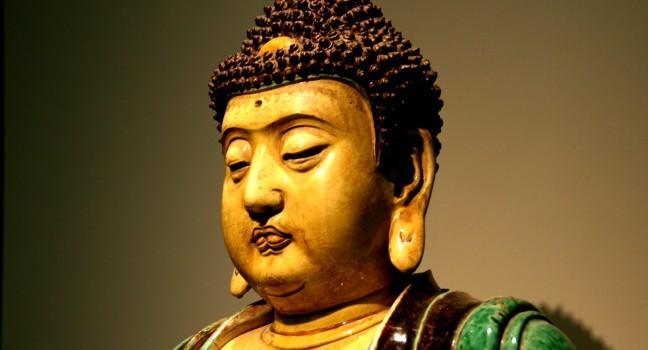
Esocentric Buddha, Asian Art Museum, San Francisco, CA
Esocentric Buddha by

You don't have to be a connoisseur of Asian art to appreciate the expansive museum, whose monumental exterior conceals a light, open, and welcoming space. The fraction of the museum's collection on display (about 2,500 pieces out of 18,000-plus total) is laid out thematically and by region, making it easy to follow historical developments.

Begin on the third floor, where highlights of Buddhist art in Southeast Asia and early China include a large, jewel-encrusted, exquisitely painted 19th-century Burmese Buddha and clothed rod puppets from Java. On the second floor you can find later Chinese works, as well as exquisite pieces from Korea and Japan. The ground floor is devoted to temporary exhibits and the museum's wonderful gift shop. During spring and summer, visit on Thursday evenings for extended programs and sip drinks while a DJ spins tunes.

200 Larkin St., San Francisco, CA, 94102, USA
415-581–3500
Sight Details
$20, free 1st Sun. of month
Closed Tues. and Wed.

Something incorrect in this review?

Assateague Island

Fodor's Choice
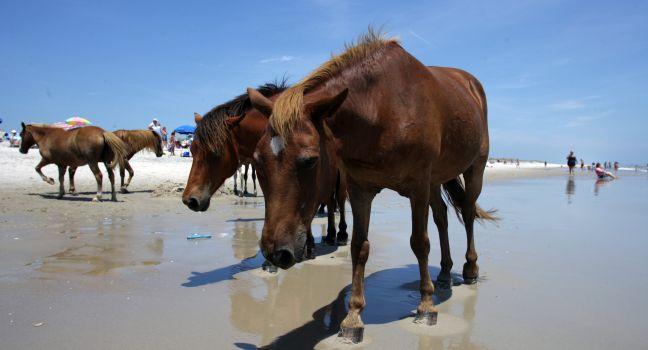
People watch the wild ponies of Assateague Island. Assateague Island is a 37-mile long barrier island located off the eastern coast of Maryland and Virginia, and is home to more than 100 wild equines
Northfoto / Shutterstock

The Assateague Island National Seashore, established in 1962, occupies the northern two-thirds of a 37-mi-long barrier island, encompassing a small portion operated as Assateague State Park. ("Assateague" means "a marshy place across.") Although most famous for the small, shaggy, wild horses (adamantly called "ponies" by the public) that roam freely along the beaches and roads, this stunning island is also worth getting to know for its wildland, wildlife (including the beautiful sika deer), and for simply enjoying a pristine ocean-side environment. In summer the seashore's mild surf is where you can find shorebirds tracing the lapping waves back down the beach. There are three self-guided nature trails behind the dunes that encourage exploration of the island's forests and bay-side marshes.

Driving is permitted the length of—and several miles south of—the state park. Appropriate off-road vehicles with special permits may drive the length of the National Seashore as far as the Maryland-Virginia line. Remember that the animals here are wild, and follow the signs about not feeding or trying to pet the horses (or ponies).

Swimming, biking, hiking, surf fishing, picnicking, and camping are all available on the island. The visitor center at the entrance to the park has aquariums and hands-on exhibits about the seashore's birds and ocean creatures as well as the famous ponies.

7206 National Seashore La., Berlin, MD, 21811, USA
410-641--1441
Sight Details
Visitor center daily 9–5, park daily 24 hrs

Something incorrect in this review?

Auditorium Theatre

South Loop Fodor's Choice
CHICAGO - OCTOBER 14: Empty Auditorium Theatre of Roosevelt University on October 14, 2012 in Chicago, Illinois.
Nagel Photography / Shutterstock

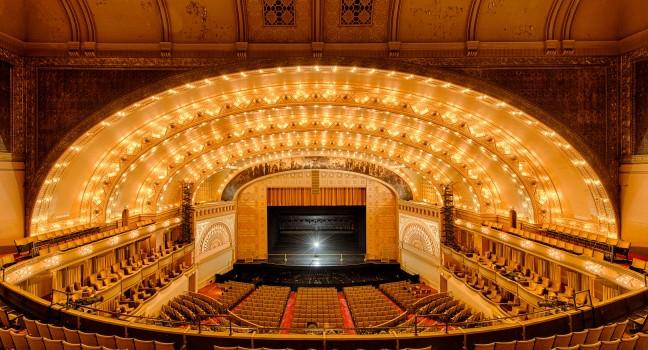
Hunkered down across from Grant Park, this 110,000-ton granite-and-limestone behemoth was an instant star when it debuted in 1899, and it didn't hurt the careers of its designers, Dankmar Adler and Louis H. Sullivan, either. Inside were offices, a 400-room hotel, and a 4,300-seat state-of-the-art theater with electric lighting and an air-cooling system that used 15 tons of ice per day. Adler managed the engineering—the theater's acoustics are renowned—and Sullivan ornamented the space using mosaics, cast iron, art glass, wood, and plaster. During World War II the building was used as a Servicemen's Center. Then Roosevelt University moved in and, thanks to the school's Herculean restoration efforts, the theater is again one of the city's premiere performance venues. Tours are offered most Sundays, Mondays, and Wednesdays.

Audubon Aquarium of the Americas

French Quarter Fodor's Choice
Audubon Aquarium of the Americas
Audubon Aquarium of the Americas by Gary J. Wood

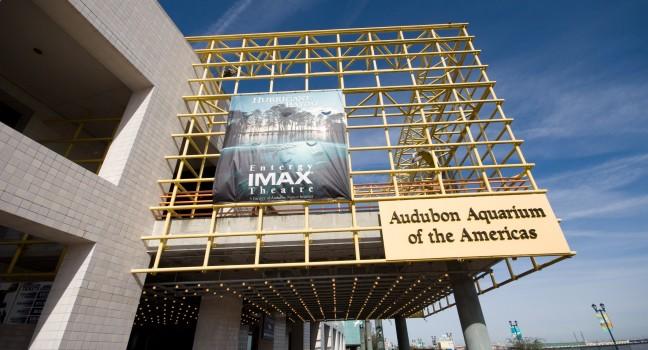
This giant aquatic showplace perched on the Mississippi riverfront has four major exhibit areas: the Amazon Rain Forest, the Mississippi River, the Gulf of Mexico, and the Great Maya Reef gallery, all of which have fish and animals native to their respective environments. The aquarium's spectacular design allows you to feel like you're part of these watery worlds by providing close-up encounters with the inhabitants. The entire facility received a sleek new upgrade in 2023 after a $41 million renovation, and the most stunning addition is the massive "Life in the Gulf" exhibit, where visitors can peer over an open tank to observe the movements of sharks, schools of fish, sting rays, and giant sea turtles. In the Amazon gallery, walk among the lush forest while 25 species of colorful birds fly above, before discovering Amazonian animals like Linnaeus, the two-toed sloth. Woldenberg Riverfront Park, which surrounds the aquarium, is a tranquil spot with a view of the Mississippi. Your aquarium tickets include a visit to the Butterfly Garden and Insectarium within the same building. Advance ticketing is recommended but not required.
Audubon Park

Uptown Fodor's Choice
Villa at Audubon Park in New Orleans.
gibleho / Shutterstock

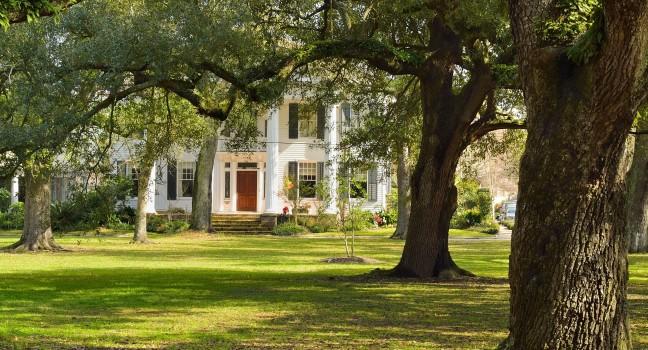
Formerly the plantation of Etienne de Boré, the father of the granulated-sugar industry in Louisiana, this large, lush patch of greenery stretches from St. Charles Avenue across Magazine Street to the river. Designed by John Charles Olmsted, nephew of Frederick Law Olmsted (who laid out New York City's Central Park and Asheville's Biltmore Estate), this park contains the world-class Audubon Zoo; a 1.8-mile track for running, walking, or biking; picnic and play areas; Audubon Park Golf Course; tennis courts; a swimming pool; horse stables; and a river view known by locals as the Fly. Calm lagoons wind through the park, harboring egrets and other indigenous species. The park and zoo were named for the famous ornithologist and painter John James Audubon, who spent many years working in and around New Orleans.
Bahia Honda State Park

Fodor's Choice
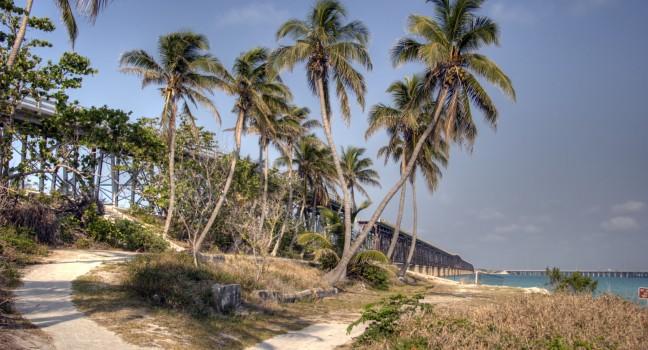
Flagler's railroad going into Key West. This bridge is at the Bahia Honda State Park.
LouLouPhotos/Shutterstock

Most first-time visitors to the region are dismayed by the lack of beaches—but then they discover Bahia Honda Key. The 524-acre park sprawls across both sides of the highway, giving it 2½ miles of fabulous sandy coastline. Beaches include Sandspur and Loggerhead Beaches on the Atlantic side and Calusa Beach, which faces the Gulf of Mexico. The snorkeling isn't bad, either; there's underwater life (soft coral, queen conchs, random little fish) just a few hundred feet offshore. Seasonal ranger-led nature programs take place at or depart from the Sand and Sea Nature Center. There are rental cabins and a campground, snack bar, gift shop, and 19-slip marina, as well as facilities for renting kayaks and arranging snorkeling tours. Get a panoramic view of the island from what's left of the railroad—the Bahia Honda Rail Bridge.

Baltimore Museum of Art

Charles Village Fodor's Choice
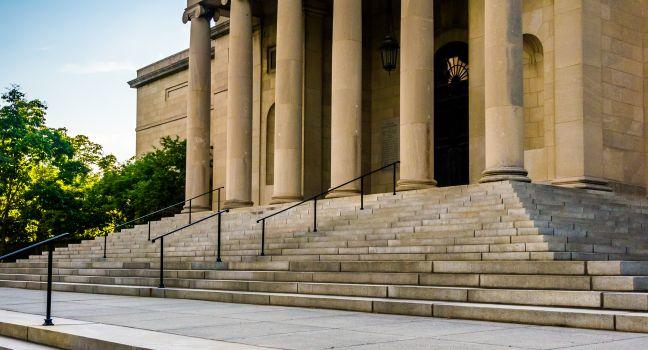
Steps to the Museum of Art in Baltimore, Maryland.
Jon Bilous / Shutterstock

Works by Matisse, Picasso, Cézanne, Gauguin, van Gogh, and Monet are among the 90,000 paintings, sculptures, and decorative arts on exhibit at this impressive museum near Johns Hopkins University. Particular strengths include an encyclopedic collection of Postimpressionist paintings donated to the museum by the Cone sisters, Baltimore natives who were pioneer collectors of early-20th-century art. The museum also owns the world's second-largest collection of Andy Warhol works and many pieces of 18th- and 19th-century American painting and decorative arts. The museum's neoclassical main building was designed by John Russell Pope, the architect of the National Gallery in Washington. A $28-million renovation resulted in a new, interactive exhibition space, a renovated visitor's entrance, and a completely reworked contemporary wing. From Gertrude's, the museum restaurant, you can look out at 20th-century sculpture displayed in two landscaped gardens.

10 Art Museum Dr., Baltimore, MD, 21218, USA
443-573–1700
Sight Details
Free
Closed Mon. and Tues.

Something incorrect in this review?

Big Apple Coaster and Arcade

South Strip Fodor's Choice
Las Vegas, Nevada - 05 August 2008: New York-New York Hotel & Casino; architecture recreates New York City skyline.
Lowe R. Llaguno / Shutterstock

There are two reasons to ride the Coney Island–style coaster: first, as the world's first roller coaster to have a 180-degree twist-and-dive maneuver (like a jet doing a barrel roll), plus a 360-degree somersault, it's a real scream; and second, it whisks you around the amazing replica of the New York City skyline, giving you fabulous views of the Statue of Liberty and Chrysler Building (well, facsimiles, anyway) as you climb to peak heights more than 200 feet above the Strip. Get ready to go 67 mph over a dizzying succession of high-banked turns and camelback hills and finally rocket along a 540-degree spiral before pulling back into the station. The Big Apple Arcade has classics such as Skee-Ball, air hockey, and NBA Fever, up to the latest video games. 

3790 Las Vegas Blvd. S, Las Vegas, NV, 89109, USA
702-740–6616
Sight Details
From $25; combo tickets for the coaster, arcade credits, and a hot dog from $49
Must be 54 inches tall to ride

Something incorrect in this review?

Big Thunder Mountain Railroad

Magic Kingdom Fodor's Choice
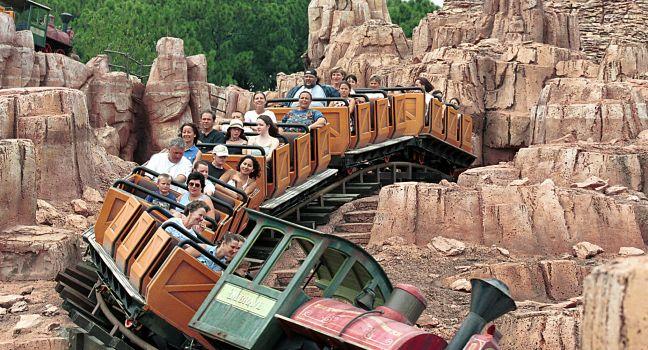
THE WILDEST RIDE IN THE WILDERNESS — Big Thunder Mountain Railroad
© Disney

Set in gold-rush days, this thrilling roller coaster simulates a runaway train. It's a bumpy ride with several good drops (pregnant women and guests wearing back, neck, or leg braces should avoid this one). There are moments when you feel like you're going to fly right off the tracks. Overall, it's more fun than scary, and you'll see kids as young as 7 lining up to ride, though there is a 40-inch height requirement. The train rushes and rattles past 20 Audio-Animatronics figures—mostly critters—as well as $300,000 worth of genuine antique mining equipment, tumbleweeds, a derelict mining town, hot springs, and a flash flood.

The 197-foot mountain landscape is based on the windswept scenery of Arizona's Monument Valley, and, thanks to 650 tons of steel, 4,675 tons of concrete, and 16,000 gallons of paint, it replicates the area's gorges, tunnels, caverns, and dry riverbeds. For people with disabilities: You must be able to step into the ride vehicle and walk short distances. Service animals aren't permitted. To avoid long lines, go first thing in the morning or during a parade. The ride is most exciting at night, when you can't anticipate the curves, and the track's rattling really sounds as if something's about to give.

Frontierland, Walt Disney World, FL, 32830, USA
Sight Details
Duration: 4 mins. Crowds: Absolutely. Audience: Not small kids. Genie+ offered.

Something incorrect in this review?

Bill Baggs Cape Florida State Park

Key Biscayne Fodor's Choice
Cape Florida Lighthouse and Lantern in Bill Baggs State Park in Key Biscayne Florida.
Steve Heap / Shutterstock

Thanks to inviting beaches, sunsets, and a tranquil lighthouse, this park at Key Biscayne's southern tip is worth the drive. In fact, the 1-mile stretch of pure beachfront has been named several times in Dr. Beach's revered America's Top 10 Beaches list. It has 18 picnic pavilions available as daily rentals, two cafés that serve light lunches (including several Cuban specialties), and plenty of space to plant the umbrellas and chairs that you can rent. The walking and bicycle paths provide wonderful views of Miami's dramatic skyline. From the southern end of the park you can see a handful of houses rising over the bay on wooden stilts, the remnants of Stiltsville, built in the 1940s and now protected by the Stiltsville Trust. The nonprofit group was established in 2003 to preserve the structures, which showcase the park's rich history. Bill Baggs also has bicycle rentals, a playground, fishing piers, and guided tours of the Cape Florida Lighthouse, South Florida's oldest structure. The lighthouse was erected in 1845 to replace an earlier one damaged in an 1836 battle with the Seminole tribe. Free tours are offered at the restored cottage and lighthouse Thursday to Monday at 10 am and 1 pm. Be there a half hour beforehand. Amenities: food and drink; lifeguards; parking (no fee); showers; toilets. Best for: solitude; sunset; walking.

Biltmore House and Estate

Fodor's Choice
ASHEVILLE, NORTH CAROLINA OCTOBER 11: The Biltmore House and Gardens, a popular tourist attraction, built by George Vanderbilt in 1895 is America's largest home in Asheville on October 10, 2013.;
Fotoluminate LLC / Shutterstock

Built in the 1890s as the home of George Vanderbilt, this astonishing 250-room, 175,000-square-foot French Renaissance château is America's largest private house and the number one attraction of its kind in North Carolina. Richard Morris Hunt designed it, and Frederick Law Olmsted landscaped the original 125,000-acre estate (now 8,000 acres). It took 1,000 workers five years to complete the gargantuan project. On view are the antiques and art collected by the Vanderbilts, including notable paintings by Renoir and John Singer Sargent, along with 75 acres of gardens, formally landscaped grounds, and hiking and biking trails. You can also see the on-site Biltmore Winery, the most visited winery in America.

Also on the grounds are a deluxe hotel, a more moderately priced hotel, many restaurants, and an equestrian center. Antler Hill Village includes a hotel, shops, restaurants, farm buildings, and crafts demonstrations. Most people tour the house on their own, but guided tours are available. Candlelight tours of the house are offered at Christmastime. Note that there are a lot of stairs to climb, but much of the house is accessible for guests in wheelchairs or with limited mobility. Pricing is complex, varying by month and day of the week, and not inexpensive, but a visit is well worth the cost for its access to the house, gardens, winery, and extensive grounds. If time allows, a bike rental from the Bike Barn in Antler Hill Village allows you to fully explore the pastoral countryside that feels miles from the nearby city. 

Self-guided visits to the interior of the house typically require advance reservations.

Bishop Museum

Kapalama Fodor's Choice
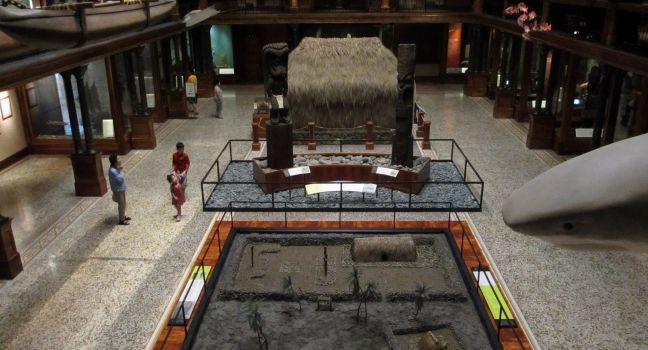
HONOLULU, HI - FEBUARY 25: People explore the Hawaiian Hall Exhibit at the Bishop Musuem taken Febuary 25, 2012 Honolulu, Hawaii.
(c) Brodogg1313 | Dreamstime.com

The state's designated history and culture museum, founded in 1889 by Charles R. Bishop as a memorial to his wife, Princess Bernice Pauahi Bishop, began as a repository for the royal possessions of this last direct descendant of King Kamehameha the Great. Today, its five excellent exhibit halls contain almost 25 million items that tell the history of the Hawaiian Islands and their Pacific neighbors.

Gain understanding of the entire region in the Pacific Hall, and learn about the culture of the Islands through state-of-the-art and often-interactive displays in the Hawaiian Hall. Spectacular artifacts—lustrous feather capes, bone fishhooks, the skeleton of a giant sperm whale, photography and crafts displays, and a well-preserved grass house—are displayed inside a three-story, 19th-century, Victorian-style gallery. The building alone, with its huge turrets and immense stone walls, is worth seeing.

In the 16,500-square-foot science adventure wing, it's hard to miss the three-story simulated volcano where kids (young and young at heart) can make lava burble. A walk through the glowing black light tunnel is another fun feature. Also check out the planetarium, Hawaiian cultural and science demonstrations, special exhibits, and the Shop Pacifica.

Blaine Kern's Mardi Gras World at Kern Studios

Warehouse District Fodor's Choice
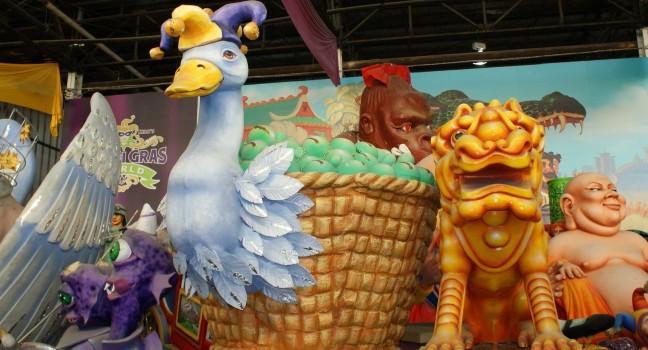
Mardi Gras World - 2011
Mardi Gras World - 2011 by

If you're not in town for the real thing, here's a fun (and family-friendly) backstage look at the history and artistry of Carnival. The massive 400,000-square-foot complex, just upriver from the New Orleans Morial Convention Center, features an enhanced guided tour through a maze of video presentations, decorative sculptures, and favorite megafloats from Mardi Gras parades such as Bacchus, Rex, and Endymion. A gift shop sells masks, beads, and Mardi Gras posters, as well as tickets for the tour, during which participants can sample king cake and coffee, pose for pictures in front of parade floats, and see artists at work, sculpting with papier-mâché and fiberglass. For special events, visitors enter through a plantation alley that is part Cajun swamp-shack village, part antebellum Disneyworld (Kern was a friend of, and inspired by, Walt Disney). A free shuttle is provided with ticket purchase and provides pickups from Canal Street.

Boathouse Row

Fairmount Park Fodor's Choice
Boathouse Row, Fairmount Park, Philadelphia , PA.
(c) Fairiegoodmother | Dreamstime.com

These architecturally varied, quaint-looking 19th-century buildings on the park's east side—a National Historic Landmark and riverside city icons built in Victorian Gothic, Gothic Revival, and Italianate styles—are home to the rowing clubs that make up the Schuylkill Navy ( boathouserow.org), an association of boating clubs organized in 1858. The clubs host various races, including the Dad Vail Regatta (held in New Jersey in 2025 due to work being done on the Schuylkill River) and the Head of the Schuylkill Regatta. You can see the boathouse up close from the path along Kelly Drive, but the view of the 15 buildings from the west side of the Schuylkill (along MLK Drive) is a cherished Philly favorite, especially at night when they're outlined with 6,400 LED lights upgraded in 2024 to allow for more special effects and colors; white is the classic look. The close-up look Lloyd Hall ( 1 Boathouse Row), is a public recreation center with a gymnasium, bicycle rentals in season, a café, and restrooms.

Boston Public Garden

Back Bay Fodor's Choice
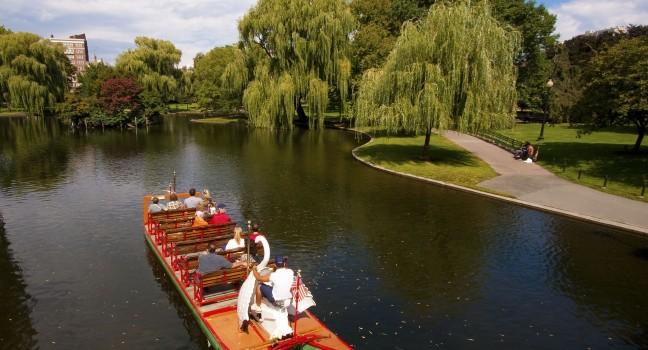
Public Garden in Boston with the famous Swam Boats. Massachusetts - USA.
Marcio Jose Bastos Silva / Shutterstock

America's oldest botanical garden is replete with gorgeous formal plantings, a 4-acre lagoon famous since 1877 for its foot-pedal–powered (by a captain) Swan Boats ( swanboats.com), and the Make Way for Ducklings bronzes sculpted by Nancy Schön, a tribute to the 1941 classic children's story by Robert McCloskey.

Keep in mind that Boston Public Garden and Boston Common are two separate entities with different histories and purposes and a distinct boundary between them at Charles Street. The Common has been public land since Boston was founded in 1630, whereas the Public Garden belongs to a newer Boston, occupying what had been salt marshes on the edge of the Common. By 1837 the tract was covered with an abundance of ornamental plantings donated by a group of private citizens. Near the Swan Boat dock is what has been described as the world's smallest suspension bridge, designed in 1867 to cross the pond at its narrowest point. The beds along the main walkways are replanted every spring. The tulips during the first two weeks of May are especially colorful, and there's a sampling of native and European tree species.

Botanical Building

Balboa Park Fodor's Choice
Botanical Building in Balboa Park.
Steve Minkler / Shutterstock

Open once again following a years long revitalization project, the Botanical Building has updated features like LED lighting, water features, and interior misters. The graceful redwood-lath structure, built for the 1915 Panama–California International Exposition, houses more than 2,000 types of tropical and subtropical plants plus changing seasonal flower displays. Ceiling-high tree ferns shade fragile orchids and feathery bamboo. The rectangular pond outside, filled with lotuses and water lilies that bloom in spring and fall, is popular with photographers.

Bronx Zoo

Belmont Fodor's Choice
BRONX, NY - APRIL 14, 2014:  Landmark Zoo Center Building, formerly Elephant House, at the Bronx Zoo in New York City. This world famous zoo opened in 1899.
littleny / Shutterstock

With 265 acres and more than 11,000 animals representing 700-plus species, this is the largest metropolitan zoo in the United States, opened in 1899. See exotic creatures in natural settings that re-create native habitats; you're often separated from the animals by no more than a moat or wall of glass. Don't miss the Congo Gorilla Forest, a 6½-acre re-creation of a lush African rain forest with western lowland gorillas, as well as mandrills, okapis, and red river hogs. At Tiger Mountain an open-viewing shelter lets you get incredibly close to Siberian tigers. As the big cats nap at midday, visit in the morning or afternoon. Madagascar! is a verdant re-creation of one of the world's most threatened natural habitats, with six species of lemurs and more.

\n

Go on a minisafari via the Wild Asia Monorail, May through October, weather permitting. Here you can view Asian elephants, Indo-Chinese tigers, Indian rhinoceroses, and other species. Try to visit the popular exhibits early to avoid lines later in the day. In winter, some outdoor exhibitions have fewer animals on view, but there's plenty to savor indoors. Some exhibits have an extra charge; to see everything, consider purchasing the Total Experience ticket.

2300 Southern Blvd., Bronx, NY, 10460, USA
718-220–5100
Sight Details
Flex pricing from $31 (depending on date of visit)
No walk-in admission; all guests must purchase date-specific tickets online in advance
Wed. free with advanced reservations made after 5 pm the Mon. before; parking $22

Something incorrect in this review?

Brooklyn Botanic Garden

Fodor's Choice
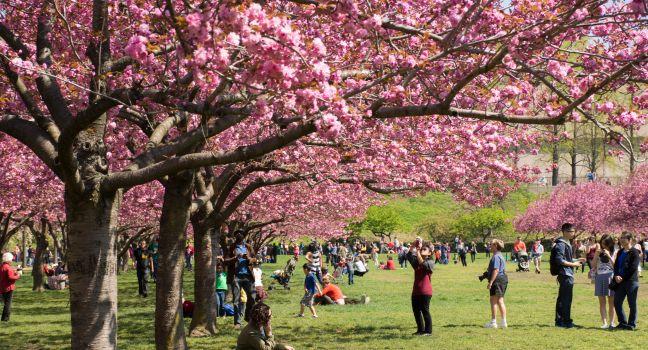
Cherry Blossom trees lined at Brooklyn Botanical garden in New York City on May 3, 2014.
Priyankamadia | Dreamstime.com

A verdant, 52-acre oasis, the BBG charms with its array of “gardens within the garden,” including idyllic the Japanese hill-and-pond, rose, and Shakespeare gardens. Inside the climate-controlled Steinhardt Conservatory, flora thrive in different ecosystems year-round. A variety of free garden tours are available with admission; check the website for seasonal information on the many events held throughout the year, including the bloom at the Cherry Esplanade during cherry blossom season.

990 Washington Ave., New York, NY, 11225, USA
718-623–7200
Sight Details
$22
Closed Mon.

Something incorrect in this review?

Brooklyn Bridge (Entrance)

Fodor's Choice
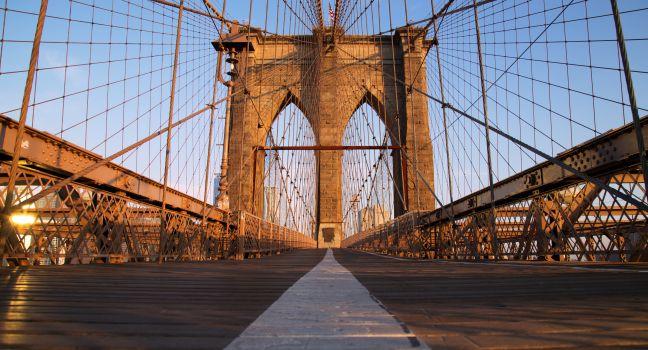
The Brooklyn bridge, New York City, New York. USA.
Revoc9 | Dreamstime.com

“A drive-through cathedral" is how the journalist James Wolcott once described the Brooklyn Bridge—one of New York's noblest and most recognizable landmarks—perhaps rivaling Walt Whitman's comment that it was "the best, most effective medicine my soul has yet partaken." The bridge stretches over the East River, connecting Manhattan and Brooklyn. A walk across its promenade—a boardwalk elevated above the roadway, shared by pedestrians and cyclists—is a quintessential New York experience, and the roughly 40-minute stroll delivers exhilarating views. (Cyclists mainly use a lane on the vehicular level below.) If you start from Lower Manhattan near City Hall, you'll end up near Brooklyn Heights and DUMBO; you can also take the subway to the Brooklyn side and walk back to Manhattan. From midday through early evening, the narrow path gets very congested, especially when the weather is nice. Head here early in the morning to find the magical quiet hours.

Brooklyn Heights Promenade

Brooklyn Heights Fodor's Choice
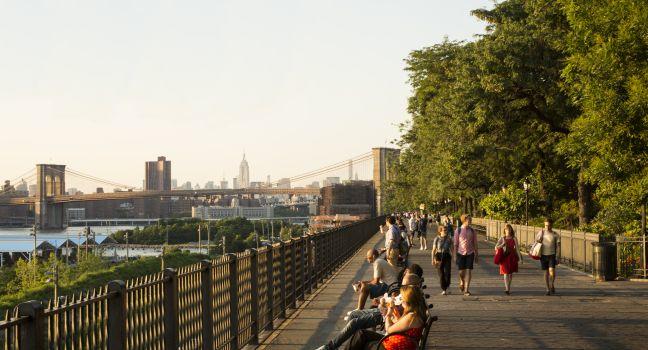
Brooklyn Heights, Brooklyn, New York
Jennifer Arnow

Strolling this esplanade famous for its magnificent Manhattan views, you might find it surprising to learn that its origins were purely functional: the promenade was built as a sound barrier to protect nearby brownstones from highway noise. Find a bench, and take in the skyline, the Statue of Liberty, and the Brooklyn Bridge; in the evening, the lights of Manhattan sparkle across the East River. Below are the Brooklyn–Queens Expressway (BQE) and Brooklyn Bridge Park.

Bryant Park

Midtown West Fodor's Choice
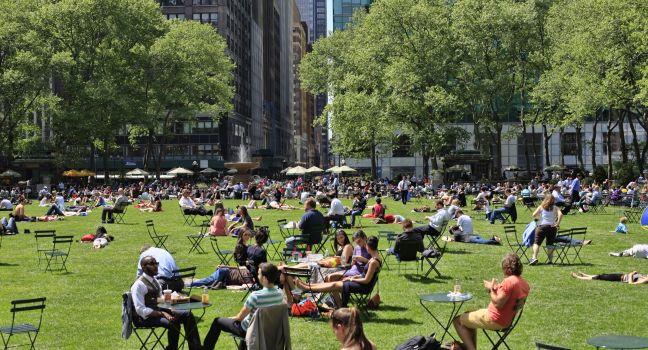
NEW YORK, USA - MAY 16: People enjoying a nice day in Bryant Park on May 16, 2013 in New York City, NY. Bryant Park is a 9,603 acre privately managed park in the center of Manhattan.
(c) Friday | Dreamstime.com

This lovely green space spread out among landmarks and skyscrapers is one of Manhattan's most popular parks. Tall London plane trees line the perimeter of the sunny central lawn, overlooking stone terraces, flower beds, and snack kiosks. The garden tables scattered about fill with lunching office workers and folks enjoying the park's free Wi-Fi. In summer, there are free readings, live jazz, and "Broadway in Bryant Park" musical theater performances. Most popular of all is the summer film festival: locals leave work early to snag a spot on the lawn for the outdoor screenings each Monday at dusk.

At the east side of the park, near a bronze cast of Gertrude Stein, is the stylish Bryant Park Grill, which has a rooftop garden, and the adjacent open-air Bryant Park Café, open seasonally. On the south side of the park is an old-fashioned carousel ($4) where kids can also attend storytellings and magic shows. Come late October, the park rolls out the artificial frozen "pond" (October–March, daily 8 am–10 pm) for free ice-skating (bring your own padlock for the lockers; skate rental starts at $18). Surrounding the ice rink are the Christmas-market stalls of the holiday shops, selling handcrafted goods and local foods.