


67 Best Sights in USA

Background Illustration for Sights

We've compiled the best of the best in USA - browse our top choices for the top things to see or do during your stay.

Arlington National Cemetery
Fodor's Choice
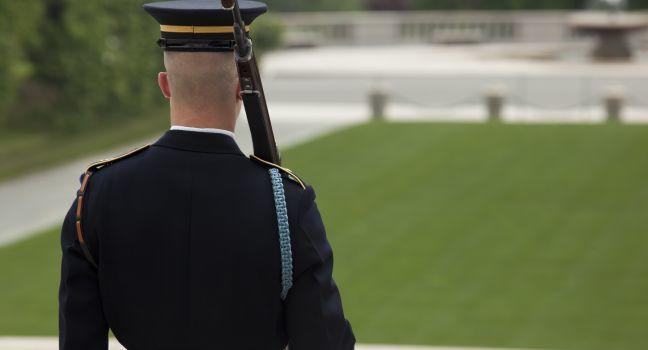
Arlington Cemetery - Changing of the Guards.
Brandon Vincent / Shutterstock

More than 400,000 Americans who died during wartime, as well as many notable Americans (among them Presidents William Howard Taft and John F. Kennedy, General John Pershing, and Supreme Court Justice Ruth Bader Ginsberg), are interred in these 639 acres across the Potomac River from Washington, established as the nation’s cemetery in 1864. Prior to 1857, the land was a plantation owned by George Washington Parke Custis, grandson of Martha Washington. Enslaved people built Arlington House, which became the country’s first memorial to Custis’s step-grandfather, George Washington; the house and plantation were later passed down to Custis’s daughter, Mary Anna Custis Lee, the wife of Confederate general Robert E. Lee. Arlington was very much a typical working plantation before it was a cemetery, with 196 enslaved individuals living and working on the property when the Lees inherited it. Beginning in May 1864, the former plantation, which had been seized by the U.S. Army in 1861, became a military cemetery.

Today Arlington is the most famous national cemetery in the country, with an average of 27 to 30 funerals held every weekday and another six to eight funerals on Saturday for people who did not require or request military honors. You can visit dozens of notable grave sites, monuments, and even an arboretum. Sections 27 and 23, two of the oldest parts of the cemetery, are a particular must for modern-day visitors. Fifteen-hundred African American soldiers who fought in the Civil War and the ensuing Indian Wars are buried here, as are over 3,800 nonmilitary African Americans (including many who were formerly enslaved); they are buried in graves marked only as “citizen” or “civilian.”

You should also visit the former site of the Freedman’s Village, which existed from 1863 to 1900. The area was originally designed by the government as a short-term refugee camp for runaway enslaved individuals; it quickly became a robust community, complete with schools, hospitals, and churches (interestingly, records indicate no residents of this village are buried at Arlington). Today that area includes Section 4, the location of the Coast Guard Memorial, and others such as Arctic explorers Admiral Robert Peary and Matthew Henson.

Tour-bus services are provided for a fee every 30 minutes (buy tickets in the Welcome Center or at  www.arlingtontours.com). Wheelchairs and strollers are not allowed; handicap-accessible vehicles are available upon request. For a map of the cemetery or help finding a grave, download the cemetery’s app, ANC Explorer, or use the computers at the Welcome Center.
Arlington National Cemetery also offers free educational resources and self-guided walking tours. For more information on Arlington National Cemetery and to find educational resources, visit  https://linktr.ee/arlingtonnatl.
1 Memorial Ave., VA, 22211, USA
877-907–8585-for general information and to locate a grave
Sight Details
Free; parking from $3 per hr; Arlington National Cemetery tours $17.95

Something incorrect in this review?

Lafayette Cemetery No. 1

Garden District Fodor's Choice
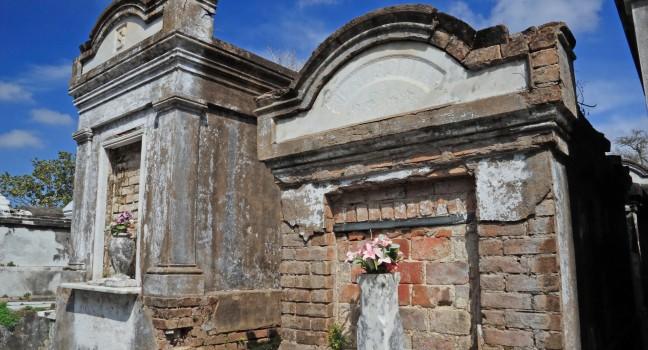
Two tombs in Lafayette Cemetery #1 in the Garden Disctrict in New Orleans, Louisiana.
(c) Lightphoto | Dreamstime.com

New Orleans found itself amid a large influx of Italian, German, Irish, and American immigrants from the North when this magnolia-shaded cemetery opened in 1833. Many who fought or played a role in the Civil War have plots here, indicated by plaques and headstones that detail the site of their death. Several tombs also reflect the toll taken by the yellow fever epidemic, which affected mostly children and newcomers to New Orleans; 2,000 yellow fever victims were buried here in 1852. Movies such as Interview with the Vampire and Double Jeopardy have used this walled cemetery for its eerie beauty. Unfortunately, following delays caused by Hurricane Ida and the pandemic, the cemetery is closed for repairs as of early 2024 with no set date to reopen; but many visitors still flock here to view graves from outside the gates.

Bonaventure Cemetery

Thunderbolt Fodor's Choice

 The largest and most famous of Savannah's municipal cemeteries, Bonaventure spreads over 100 acres and sits on a bluff above the Wilmington River. Once a sprawling plantation, the land became a private cemetery in 1846 and was established as a public cemetery in 1907. An emblematic destination for visitors, the evocative landscape is one of lush natural beauty transposed against an elegant, eerie backdrop of lavish marble headstones, monuments, and mausoleums as well as sweeping oaks and blooming camellia trees. John Muir reportedly camped at Bonaventure in 1867 on his legendary "thousand-mile walk," and local photographer Jack Leigh, novelist and poet Conrad Aiken, and singer-songwriter Johnny Mercer are among those interred here. Great tours of the cemetery are offered by "Bonaventure Don." 

Recommended Fodor's Video

Graceland Cemetery

Lakeview Fodor's Choice

After entering at Clark Street and Irving Park Road, you'll quickly discover that this graveyard has crypts that are almost as strikingly designed as the city skyline. A number of Chicago's most prominent citizens, including city planner Daniel Burnham, railroad magnate George Pullman, and retail icon Marshall Field, are spending eternity here. Architect Louis Sullivan (also a resident) designed some of its more elaborate mausoleums. Free maps, available at the cemetery office, will help you find your way around the pastoral 119-acre property.

Granary Burying Ground

Beacon Hill Fodor's Choice

Boston's cemeteries are among the most historic in America, and the Granary, established in 1660, is no exception. Headstones are elaborately ornamented with skeletons, winged skulls, and other carved Colonial folk art. Samuel Adams, John Hancock, and Paul Revere are among the impressive list of the estimated 5,000 folks interred here; there hasn't been a new burial since 1880. Note the winged hourglasses carved into the stone gateway of the burial ground; they are a 19th-century addition. This is Freedom Trail stop 4.

Green-Wood Cemetery

Fodor's Choice
One of the loveliest places for a stroll in the five boroughs, the 478 acres of Green-Wood Cemetery are also home to more than 560,000 permanent residents. Notables include Jean-Michel Basquiat, Leonard Bernstein, and Horace Greeley, but the elaborate monuments and mausoleums of the nonfamous tend to be more awe-inspiring. Equally impressive are the views that stretch to Brooklyn Harbor and Manhattan. Guided walking and trolley tours, as well as special events, are offered. Keep an eye out for parrots: the bright green monk parakeets have been nesting here since the 1960s when, legend has it, they escaped from a shipment at JFK airport.

Hollywood Forever Cemetery

Hollywood Fodor's Choice

One of the many things that makes this cemetery in the middle of Hollywood so fascinating is that it’s the final resting place of many of the Hollywood greats, from directors like Cecil B. DeMille and actors like Douglas Fairbanks and Judy Garland to musicians like Johnny Ramone. Beyond its famous residents, however, the Hollywood Forever Cemetery is also frequented for its serene grounds peppered with intricately designed tombstones, not to mention the summer and fall outdoor movie screenings that take place under the stars on the Fairbanks Lawn. If you’re looking for both tourist and local experiences while in town, this sight lets you tick off both in one visit.

Hope Cemetery

Fodor's Choice

Montpelier's regional rival, Barre, the "Granite Capital of the World," may lack the polish and pedigree of the state capital, but it's home to this gorgeous cemetery filled with superbly crafted tombstones by master stonecutters. A few embrace the avant-garde, while others take defined shapes like a race car, a biplane, and a soccer ball.

201 Maple Ave., Montpelier, VT, 05641, USA
802-476--6245

Something incorrect in this review?

Jacksonville Cemetery

Fodor's Choice

A trip up the winding road—or, better yet, a hike via the old cart track marked Catholic access—leads to the resting place of the clans (the Britts, the Beekmans, and the Orths) that built Jacksonville. You'll also get a fascinating, if sometimes unattractive, view of the social dynamics of the Old West: older graves (the cemetery is still in use) are strictly segregated, Irish Catholics from Jews from Protestants. A somber granite plinth marks the pauper's field, where those who found themselves on the losing end of gold-rush economics entered eternity anonymously. The cemetery closes at sundown, and guided daytime and sunset strolls are offered about once a month in summer.

St. Louis Cemetery No. 1

Tremé Fodor's Choice

The oldest and most famous of New Orleans's cities of the dead, founded in the late 1700s, is just one block from the French Quarter. Stately rows of crypts are home to many of the city's most legendary figures, including Homer Plessy of the Plessy v. Ferguson 1896 U.S. Supreme Court decision establishing the "Jim Crow" laws ("separate but equal"), and voodoo queen Marie Laveau, whose grave is still a popular pilgrimage among the spiritual, the superstitious, and the curious. Visitors are required to be part of a tour group in order to enter the cemetery (all tours leave from  501 Basin St.); tours are frequent—every 15 minutes—but since group sizes are limited, advance reservations are recommended.

Texas State Cemetery

East Austin Fodor's Choice

Located on 18 acres just a mile east of the Capitol, this beautiful state cemetery (established 1851) is the final resting place for some of the state's most important figures, from former presidents to pop stars: Stephen F. Austin, Buddy Holly, Ann Richards, and James A. Michener are among those lying here in eternal peace. Once inside the gated grounds, you'll also find monuments dedicated to September 11, the Vietnam War, and the War of 1812; you'll also find special headstones for the mothers who have lost sons and daughters in wars and a Purple Heart monument.

Mount Moriah Cemetery

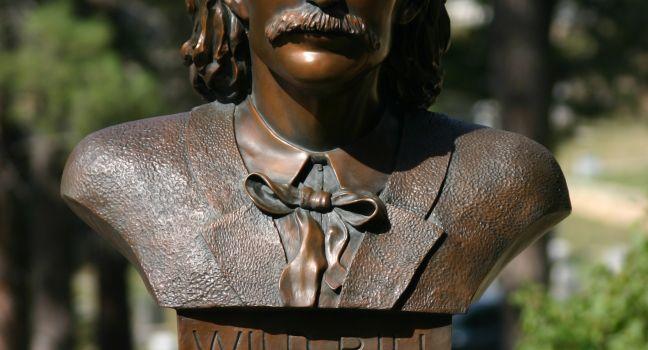
Wild Bill Hickok Grave
Pete Hoffman / Shutterstock

Mount Moriah Cemetery, on a high spot known as Boot Hill, is the final resting place of Wild Bill Hickok, Calamity Jane, and other notable Deadwood residents. The aging landmark was revitalized by extensive restoration work in 2003, including the addition of a visitor center that houses a leather Bible, a stained-glass window, and pulpit chairs from the town's old Methodist churches. From the top of the cemetery, you'll have the best panoramic view of the town.

1 Mount Moriah Dr., Deadwood, SD, 57732, USA
605-578–2082
Sight Details
$2
Memorial Day–Labor Day, daily 7 am–8 pm; Labor Day–end of Sept., daily 9–5

Something incorrect in this review?

Beaufort National Cemetery

Listed on the National Register of Historic Places, Beaufort National Cemetery is the final resting spot of both Union and Confederate soldiers from the Civil War. In 1987, 19 more Union soldiers were interred here after having been discovered buried under the sands of Folly Beach. (These men had been missing in action since 1863.) The site’s peaceful, well-maintained grounds make this a somber spot to commemorate the dead.

Beauvoir: The Jefferson Davis Home and Presidential Library

Severely damaged by hurricane Katrina in 2005, Beauvoir (French for "beautiful view) is "dedicated to preserving and interpreting the legacy of American hero and Confederate President Jefferson Davis, and the Southern soldier." Many of the site's structures have been repaired or restored, and the gardens have been replanted; but conservation efforts of the collections continue in earnest. Guided tours of the home are conducted every half hour, beginning at 9:30 am daily. Self-guided tours of the home and the cemetery are available anytime during operating hours.

2244 Beach Blvd., Biloxi, MS, 39531, USA
228-388–4400
Sight Details
$9
Daily 9–5

Something incorrect in this review?

Blue Sky Mausoleum

In 1928 Darwin Martin commissioned a family mausoleum—a project he dropped after his fortunes were pummeled by the following year's stock-market crash. In 2004, Buffalo's Forest Lawn cemetery (near Delavan Avenue) built the concrete-and-granite Blue Sky Mausoleum from plans owned by the Frank Lloyd Wright Foundation.

1411 Delaware Ave., Buffalo, NY, 14209, USA
716-885–1600
Sight Details
Free

Something incorrect in this review?

Boot Hill

After they were hanged by vigilantes, the outlaws who preyed on miners ended up in graves at Boot Hill cemetery. Have a look at the old markers and take in the hill's view.

High St., Virginia City, MT, 59755, USA
406-843--5247
Sight Details
Free

Something incorrect in this review?

Boothill Cemetery

Behind the Boothill Inn & Suites hotel, lie the graves of H.M. Muggins Taylor, the army scout who carried word of Custer's defeat through 180 miles of hostile territory, Western explorer Yellowstone Kelly, and several outlaws executed in territorial days. A sign tells the story of Crow warriors who blindfolded their horses before riding them off what's now known as Sacrifice Cliff in hopes that the gods would end a smallpox epidemic.

Billings, MT, 59105, USA
406-657–8371

Something incorrect in this review?

Boothill Graveyard

This graveyard, where the victims of the O.K. Corral shoot-out are buried, is on the northwest corner of town, facing U.S. 80. Chinese names in one section of the "bone orchard" bear testament to the laundry and restaurant workers who came from San Francisco during the height of Tombstone's mining fever. One of the more amusing epitaphs at the cemetery, however, is engraved on the headstone of Wells Fargo agent Lester Moore; it poetically lists the cause of his untimely demise: "Here lies Lester Moore, four slugs from a .44, no les [sic], no more." If you're put off by the commercialism of the place—the gift shop sells novelty items in the shape of tombstones—remember that Tombstone itself is the result of crass acquisition.

408 U.S. 80, Tombstone, AZ, 85638, USA
520-457–1450
Sight Details
$6

Something incorrect in this review?

British Cemetery

Ocracoke Village

On May 11, 1942, the HMS Bedfordshire, an armed British trawler on loan to the United States, was torpedoed by a German U-boat and sank with all 37 hands lost off the coast of Ocracoke Island. The men were buried on Ocracoke in a corner of the community graveyard. The wreck was discovered in 1980 and some artifacts were recovered. It's still frequented by divers.

Central Burying Ground

Beacon Hill

The small Central Burying Ground may seem an odd feature for a public park, but remember that in 1756, when the land was set aside, this was a lonely corner of Boston Common. It's the final resting place of Tories and Patriots alike, as well as many British casualties of the Battle of Bunker Hill. The most famous person buried here is Gilbert Stuart, the portraitist best known for his likenesses of George and Martha Washington.

Christ Church Burial Ground

Old City

Weathered gravestones fill the resting place of five signers of the Declaration of Independence and other Colonial patriots. The best known is Benjamin Franklin; he lies alongside his wife, Deborah, and their son, Francis, who died at age four. According to local legend, throwing a penny onto Franklin's grave will bring you good luck. The burial ground is open to the public—except in January and February—for regular visits.

5th and Arch Sts., Philadelphia, PA, 19106, USA
215-922–1695
Sight Details
$10 guided tour; $8 combo church and burial ground self-guided
Closed Jan. and Feb.

Something incorrect in this review?

Colonial Park Cemetery

Historic District

 Stroll the shaded pathways and read some of the old tombstone inscriptions in this park, the final resting place for Savannahians who died between 1750 and 1853. Many of those interred here succumbed during the yellow fever epidemic in 1820. Notice the dramatic entrance gate on the corner of Abercorn and Oglethorpe Streets. Local legend tells that when Sherman's troops set up camp here, they moved some headstones around and altered inscriptions for their own amusement, which partially explains the headstones mounted against the far wall. This spooky spot is a regular stop for ghost tours---though this burial ground only covers a block, there are more than 9,000 people buried here, some beneath the sidewalk and the street.

Common Burying Ground

Among those buried in this graveyard, which dates back to 1665, are several governors, a Declaration of Independence signatory, famous lighthouse keeper Ida Lewis, and Desire Tripp, whose unusual February 1786 gravestone commemorates the amputation of her arm. Many tombstones were made in the stone-carving shop of John Stevens, which opened in 1705 and still operates today. The historic African American section of the cemetery, which contains the graves of slaves and freedmen alike, is known as "God's Little Acre." The Newport Historical Society sometimes offers walking tours.

Farewell St., Newport, RI, 02840, USA
401-846--0813
Sight Details
Free; walking tours from $20

Something incorrect in this review?

Confederate Cemetery

Historic District

This cemetery contains the remains of more than 2,000 soldiers (most of them unknown) as well as the graves of generals Dabney Maury, Seth Barton, Carter Stevenson, Daniel Ruggles, Henry Sibley, and Abner Perrin.

Congressional Cemetery

Capitol Hill

Established in 1807 "for all denominations of people," this cemetery is the final resting place for such notables as U.S. Capitol architect William Thornton, Marine Corps march composer John Philip Sousa, Civil War photographer Mathew Brady, FBI director J. Edgar Hoover, and many members of Congress. Air Force veteran and gay rights activist Leonard Matlovich is also buried here under a tombstone that reads "When I was in the military, they gave me a medal for killing two men, and a discharge for loving one." The cemetery is about a 20-minute walk from the Capitol. You can take a self-guided tour year-round during daylight hours; pick up a map at the gatehouse or download one from the cemetery website. On Saturdays and some Sundays from April through October, you can join a one-hour docent-led tour at 11 am. Check the website for all kinds of themed tours and other events, including film screenings during the summer. 

1801 E St. SE, Washington, DC, 20003, USA
202-543–0539
Sight Details
$5 for tours

Something incorrect in this review?

Copp's Hill Burying Ground

North End

An ancient and melancholy air hovers like a fine mist over this Colonial-era burial ground. The North End graveyard incorporates four cemeteries established between 1660 and 1819. Near the Charter Street gate is the tomb of the Mather family, the dynasty of church divines (Cotton and Increase were the most famous sons) who held sway in Boston during the heyday of the old theocracy. Also buried here is Robert Newman, who crept into the steeple of Old North Church to hang the lanterns warning of the British attack the night of Paul Revere's ride. Look for the tombstone of Captain Daniel Malcolm; it's pockmarked with musket-ball fire from British soldiers, who used the stones for target practice. Across the street is 44 Hull (Boston's historic Skinny House), the city's narrowest house, measuring at just a mere 10 feet wide, which fetched a selling price of $1.5 million in 2021. This is Freedom Trail stop 14.

Cypress Grove Cemetery

Mid-City

This expansive and still-used cemetery was founded by the Fireman's Charitable and Benevolent Association in 1840 to honor the city's volunteer firemen and their families. Over time, as the cemetery expanded, leading architects and craftsmen were called upon to design and build tombs commemorating the lives of many of New Orleans's most prominent citizens. Crafted in marble, granite, and cast iron, tombs at Cypress Grove are among the nation's leading examples of memorial architecture, including entrance pylons and lodges resembling Egyptian ceremonial architecture. Of particular note is the Chinese Soon On Tong Association's tomb, which features a grate in front so that visitors can burn prayers written on paper in it. Admission is free and visitors are encouraged to explore on their own, although outside companies do offer tours.

El Campo Santo Cemetery

Old Town

Now a peaceful stop for visitors to Old Town, the old adobe-wall cemetery established in 1849 was, until 1880, the burial place for many members of Old Town's founding families—as well as for some gamblers and bandits who passed through town. Antonio Garra, a chief who led an uprising of the San Luis Rey Indians, was executed at El Campo Santo in front of the open grave he had been forced to dig for himself. Most of the markers give only approximations of where the people named on them are buried; some of the early settlers laid to rest at El Campo Santo actually reside under San Diego Avenue, thanks to the streetcar line that was built through the graveyard in 1894.

2410 San Diego Ave., San Diego, CA, 92110, USA

Something incorrect in this review?

First Parish in Cambridge and the Old Burying Ground

Harvard Square

Next to the imposing church on the corner of Church Street and Mass Ave. lies the spooky-looking Colonial Old Burying Ground. Known as the most historic cemetery in Cambridge, it was established around 1635 and houses 17th- and 18th-century tombstones of ministers, Continental Congressmen, authors, early Harvard presidents, and Revolutionary War soldiers. The wooden Gothic Revival church, known locally as "First Parish," was built in 1833 by Isaiah Rogers and was given a face-lift in 2023. The congregation dates to two centuries earlier, and has been linked to Harvard since the founding of the college.

Flatbush Reformed Church

The last Dutch director-general of New Netherland, Peter Stuyvesant, ordered a church built at this site in 1654, making this one of the oldest places of worship in New York. The current Federal-style stone building, the third at this location, was completed in 1798 and features Tiffany stained-glass windows. The complex, listed on the National Register of Historic Places, also includes the 1853 Greek Revival and Italianate parsonage and the 1924 church house.
890 Flatbush Ave., Brooklyn, NY, 11226, USA
718-284–5140
Sight Details
Grounds and cemetery: daily 7–3. Sunday services: 11 am.Check with church office (Tues.–Thurs. until 1 pm) to access church midweek.
Check with church office (Tues.–Thurs. until 1 pm) to access church midweek

Something incorrect in this review?