Get FREE email communications from Fodor's Travel, covering must-see travel destinations, expert
trip planning advice, and travel inspiration to fuel your passion.
We've compiled the best of the best in Italy - browse our top choices for the top
things to see or do during your stay.
Sorry! We don't have any recommendations for Italy right now.
Sights Filter
Alpe di Siusi Cable Car
Share This
fritz16 / Shutterstock
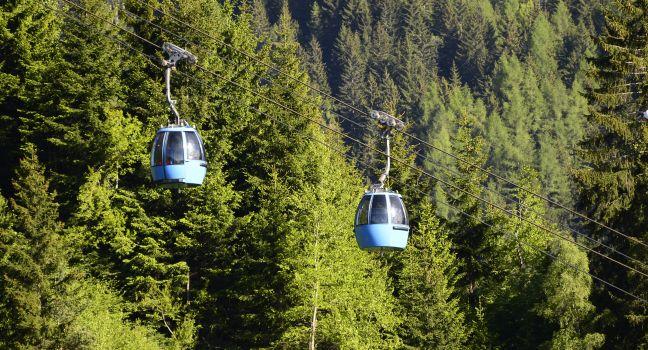
First opened in 1935, the cable car from Ortisei to Alpe di Siusi climbs more than 6,100 feet to the widest plateau in Europe. There are more than 57 square km (22 square miles) of Alpine pastures lined with summertime hiking trails. In the winter, 20 ski lifts and cross-country ski paths keep active visitors happy. There is a restaurant at the top of the Mt. Seuc ski lift, or you can pick up a map at the tourist office in Ortisei listing the mountain huts and restaurants that can be reached on foot. Opening days and times depend on the season and daily weather conditions; check the website or call ahead to avoid disappointment.
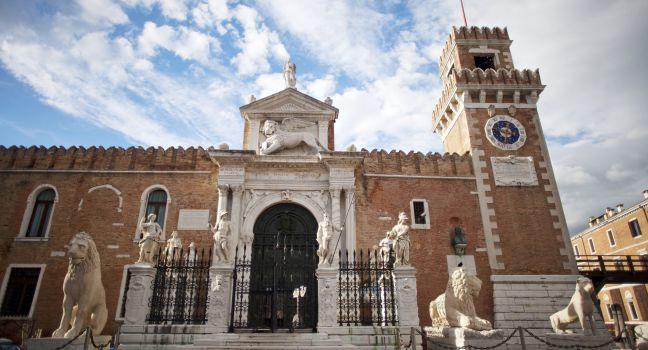
Visible from the street, the Porta Magna (1460), an impressive Renaissance gateway designed by Antonio Gambello, was the first classical structure to be built in Venice. It is guarded by four lions—war booty of Francesco Morosini, who took the Peloponnese from the Turks in 1687. The Arsenale is said to have been founded in 1104 on twin islands. The immense facility that evolved—it was the largest industrial complex in Europe built prior to the Industrial Revolution—was given the old Venetian dialect name arzanà, borrowed from the Arabic darsina'a, meaning "workshop." At the height of its activity, in the early 16th century, it employed as many as 16,000 arsenalotti, workers who were among the most respected shipbuilders in the world. The Arsenale developed a type of pre–Industrial Revolution assembly line, which allowed it to build ships with astounding speed and efficiency. The Arsenale's efficiency was confirmed time and again—whether building 100 ships in 60 days to battle the Turks in Cyprus (1597) or completing one perfectly armed warship, start to finish, while King Henry III of France attended a banquet.
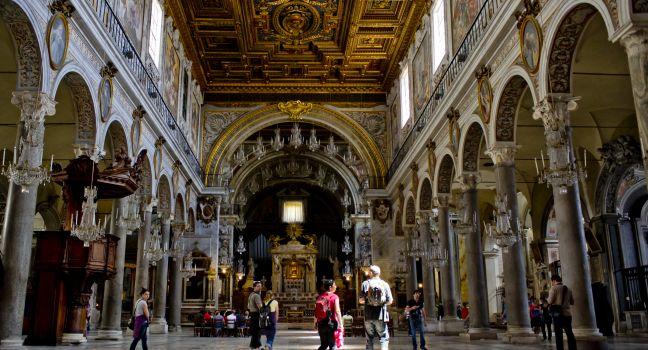
Perched atop 124 steps, on the north slope of the Capitoline Hill, Santa Maria in Aracoeli occupies the site of the temple of Juno Moneta (Admonishing Juno), which also housed the Roman mint. According to legend, it was here that the Sibyl, a prophetess, predicted to Augustus the coming of a Redeemer. Augustus responded by erecting an altar, the Ara Coeli (Altar of Heaven). This was eventually replaced by a Benedictine monastery and then by a church, which was passed in 1250 to the Franciscans, who restored and enlarged it in Romanesque-Gothic style.
Today, the Aracoeli is best known for the Santo Bambino, a much-revered olivewood figure of the Christ Child (a copy of the 15th-century original, which was stolen in 1994). At Christmas, everyone pays homage to the "Bambinello" as children recite poems from a miniature pulpit. In true Roman style, the church interior is a historical hodgepodge, with classical columns and large marble fragments from pagan buildings, as well as a 13th-century cosmatesque pavement. The richly gilded Renaissance ceiling commemorates the naval victory at Lepanto in 1571 over the Turks. The first chapel on the right is noteworthy for Pinturicchio's frescoes of St. Bernardino of Siena (1486).
Recommended Fodor's Video
Biblioteca Nazionale Marciana
Piazza San Marco
Share This
Myroslava/Shutterstoc
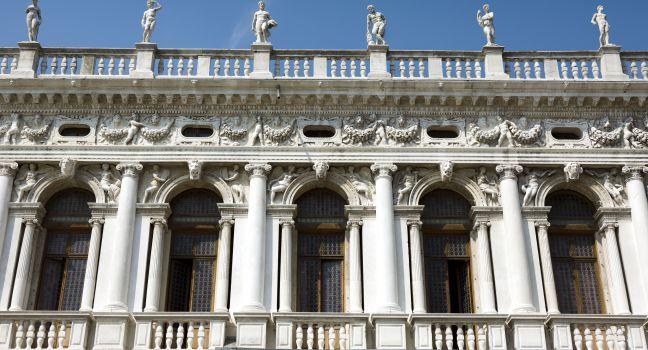
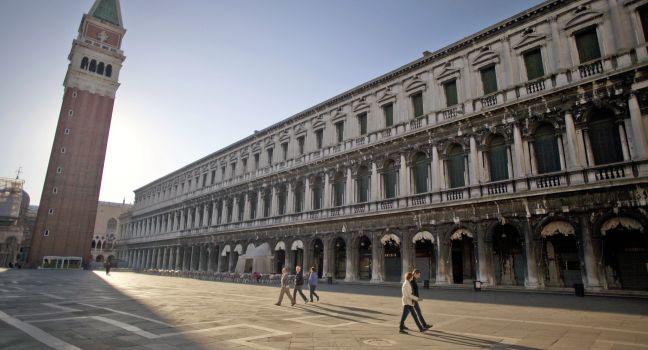
There's a wondrous collection of centuries-old books and illuminated manuscripts at this library, located across the piazzetta (small square) from Palazzo Ducale in two buildings designed by Renaissance architect Sansovino, Libreria Sansoviniana (Sansovinian Library) and the adjacent Zecca (Mint). The complex was begun in 1537, and the Zecca was finished in 1545. Facing the Bacino (San Marco basin), the Zecca along with the Palazzo Ducale form Venice's front door. The Palazzo Ducale, built during a period of Venetian ascendance and self-confident power, is light and decidedly unmenacing. The Zecca, built in a time when the Republic had received some serious defeats and was economically strapped, is purposefully heavy and stresses a fictitious connection with the classical world. The library is, again, much more graceful and was finished according to Sansovino's design only after his death. Palladio was so impressed by the Biblioteca that he called it "beyond envy."
The books can only be viewed by written request and are primarily the domain of scholars. But the Monumental Rooms in the Sansoviniana are worth visiting for the works of Veronese, Tintoretto, and Titian that decorate its walls. You reach the Monumental Rooms, which often host special exhibits, through the Museo Correr.
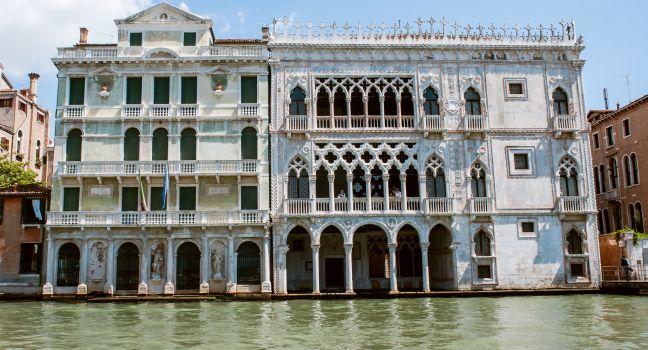
One of the classic postcard sights of Venice, this exquisite Venetian Gothic palace was once literally a "Golden House," when its marble tracery and ornaments were embellished with gold. It was created by Giovanni and Bartolomeo Bon between 1428 and 1430 for the patrician Marino Contarini, who had read about the Roman emperor Nero's golden house in Rome, the Domus Aurea, and wished to imitate it as a present to his wife. Her family owned the land and the Byzantine fondaco (palace--trading house) previously standing on it; you can still see the round Byzantine arches incorporated into the Gothic building's entry porch.
The last proprietor, Baron Giorgio Franchetti, left Ca' d'Oro to the city after having it carefully restored and furnished with antiquities, sculptures, and paintings that today make up the Galleria Franchetti. Besides Andrea Mantegna's St. Sebastian and other Venetian works, the Galleria Franchetti contains the type of fresco that once adorned the exteriors of Venetian buildings (commissioned by those who could not afford a marble facade). One such detached fresco displayed here was made by the young Titian for the facade of the Fondaco dei Tedeschi near the Rialto.
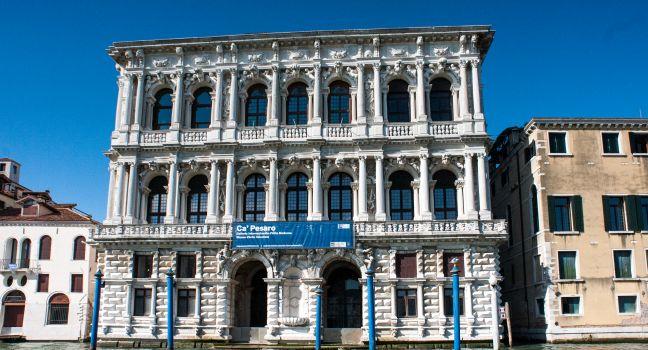
Baldassare Longhena's grand Baroque palace, begun in 1676, is the beautifully restored home of two impressive collections. The Galleria Internazionale d'Arte Moderna has works by 19th- and 20th-century artists, such as Klimt, Kandinsky, Matisse, and Miró. It also has a collection of representative works from the Venice Biennale that amounts to a panorama of 20th-century art. The pride of the Museo Orientale is its collection of Japanese art—and especially armor and weapons—of the Edo period (1603–1868). It also has a small but striking collection of Chinese and Indonesian porcelains and musical instruments.
Construction of Venice's famous brick bell tower (325 feet tall, plus the angel) began in the 9th century; it took on its present form in 1514. During the 15th century, the tower was used as a place of punishment: immoral clerics were suspended in wooden cages from the tower, some forced to subsist on bread and water for as long as a year; others were left to starve. In 1902, the tower unexpectedly collapsed, taking with it Jacopo Sansovino's marble loggia (1537–49) at its base. The largest original bell, called the Marangona, survived. The crushed loggia was promptly reconstructed, and the new tower, rebuilt to the old plan, reopened in 1912. On a clear day the stunning view includes the Lido, the lagoon, and the mainland as far as the Alps, but strangely enough, none of the myriad canals that snake through the city.
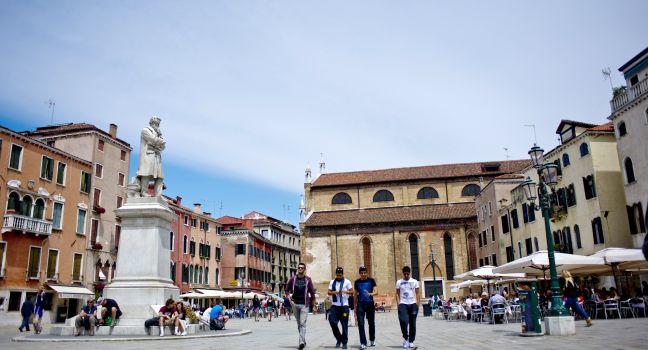
In Venice's most prestigious residential neighborhood, you'll find one of the city's busiest crossroads just over the Accademia Bridge; it's hard to believe this square once hosted bullfights, with bulls or oxen tied to a stake and baited by dogs. For centuries the campo (square) was all grass except for a stone avenue called the liston. It was so popular for strolling that in Venetian dialect "andare al liston" still means "to go for a walk." A sunny meeting spot popular with Venetians and visitors alike, the campo also hosts outdoor fairs during Christmas and Carnevale seasons. Check out the 14th-century Chiesa di Santo Stefano. The pride of the church is its very fine Gothic portal, created in 1442 by Bartolomeo Bon. Inside, you'll see works by Tintoretto.
Capuchin Museum
Quirinale
Share This
Luigi Roscia | Dreamstime.com
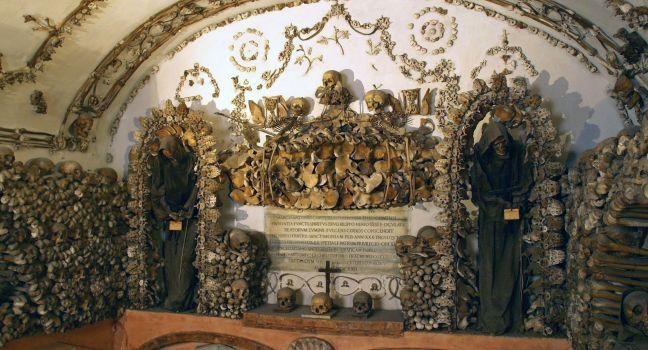
Devoted to teaching visitors about the Capuchin order, this museum is mainly notable for its strangely touching and beautiful crypt under the church of Santa Maria della Concezione. The bones of some 4,000 friars are arranged in odd decorative designs around the shriveled and decayed remains of their kinsmen, a macabre reminder of the impermanence of earthly life. As one sign proclaims: "What you are, we once were. What we are, you someday will be."
Upstairs in the church, the first chapel on the right contains Guido Reni's mid-17th-century Archangel St. Michael Trampling the Devil. The painting caused great scandal after an astute contemporary observer remarked that the face of the devil bore a surprising resemblance to Pope Innocent X, archenemy of Reni's Barberini patrons. Compare the devil with the bust of the pope that you saw in the Palazzo Doria Pamphilj and judge for yourself.
Mausoleo di Cecilia Metella
Via Appia Antica
Share This
Pablo Debat/Shutterstocik
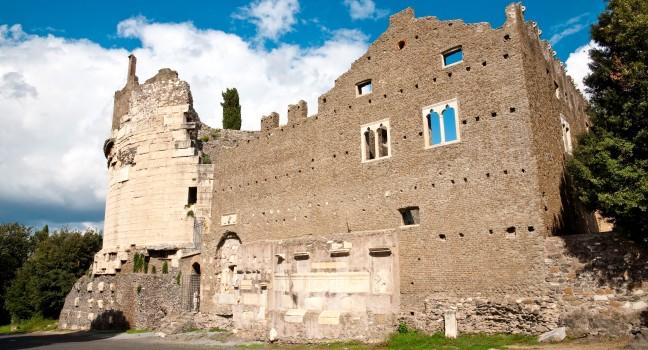
For centuries, sightseers have flocked to this famous landmark, one of the most complete surviving tombs of ancient Rome. Of the many round mausoleums that once lined the Appian Way, this tomb is a smaller version of the Mausoleum of Augustus but impressive nonetheless. It was the burial place of a Roman noblewoman: the wife of the son of Crassus, who was one of Julius Caesar's rivals and known as the richest man in the Roman Empire (infamously entering the English language as "crass").
The original decoration includes a frieze of bulls' skulls near the top. The travertine stone walls were made higher, and the medieval-style crenellations were added when the tomb was transformed into a fortress by the Caetani family in the 14th century. An adjacent chamber houses a small museum with exhibits on the area's geological phases. Entrance to this site also includes access to the splendid Villa dei Quintili.
The impressive boat collection here includes scale models, such as the doges' ceremonial Bucintoro, and full-size boats, such as Peggy Guggenheim's private gondola complete with romantic felze (cabin). There's a range of old galley and military pieces, a section dedicated to Admiral Morosini (who plundered the Arsenale's Porta Magna lions nearby), and a large collection of seashells. A visit to the Paglione delle Nave, a part of the museum, allows you to see a portion of the interior of the Arsenale otherwise closed to visitors.
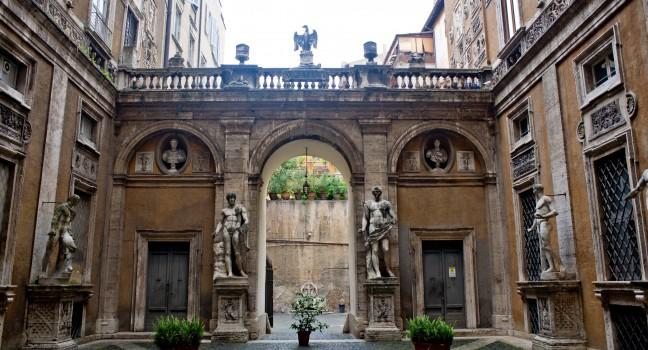
Graceful and opulent, the arcaded, multistory courtyard of this palazzo is a masterpiece of turn-of-the-17th-century style. Designed by Carlo Maderno, it is a veritable panoply of sculpted busts, heroic statues, sculpted reliefs, and Paleo-Christian epigrams, all collected by Marchese Asdrubale Mattei. Inside are various scholarly institutes, including the Centro Studi Americani (Center for American Studies), which also contains a library of American books. Salons in the palace (not usually open to visitors) are decorated with frescoes by Cortona, Lanfranco, and Domenichino.
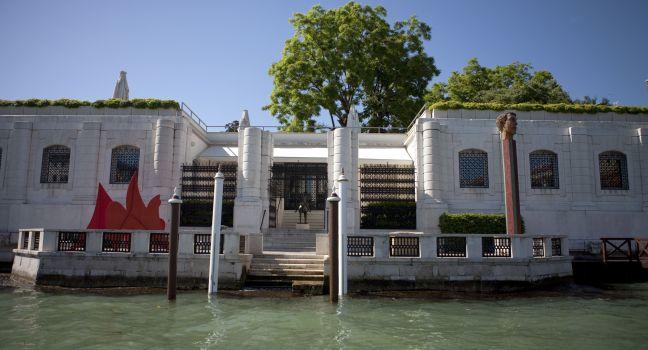
Housed in the incomplete but nevertheless charming Palazzo Venier dei Leoni, this choice selection of 20th-century painting and sculpture represents the taste and extraordinary style of the late heiress Peggy Guggenheim. Through wealth, social connections, and a sharp eye for artistic trends, Guggenheim (1898–1979) became an important art dealer and collector from the 1930s through the 1950s, and her personal collection here includes works by Picasso, Kandinsky, Pollock, Motherwell, and Ernst (her onetime husband). The museum serves beverages, snacks, and light meals in its refreshingly shady and artistically sophisticated garden.
San Carlo alle Quattro Fontane
Quirinale
Share This
Marie-Lan Nguyen [public domain], via Wikimedia Commons
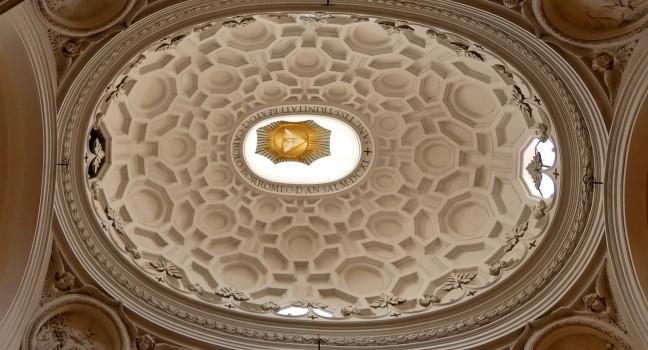
Sometimes known as San Carlino because of its tiny size, this is one of Borromini's masterpieces. In a space no larger than the base of one of the piers of St. Peter's Basilica, he created a church that is an intricate exercise in geometric perfection, with a coffered dome that seems to float above the curves of the walls. Borromini's work is often bizarre, definitely intellectual, and intensely concerned with pure form. In San Carlo, he invented an original treatment of space that creates an effect of rippling movement, especially evident in the double-S curves of the facade. Characteristically, the interior decoration is subdued, in white stucco with no more than a few touches of gilding, so as not to distract from the form. Don't miss the cloister: a tiny, understated Baroque jewel, with a graceful portico and loggia above, echoing the lines of the church.
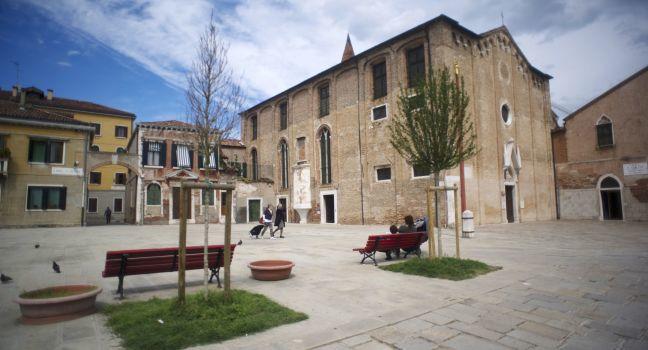
Theories abound on this lovely square's unusual name; one hypothesis is that there was once a laurel tree here and the Venetian dialect has thoroughly transformed the word (lauro in Italian). In any case, today's trees lend it shade and character. Add benches and a fountain (with a drinking bowl for dogs), and the pleasant, oddly shaped campo becomes a welcoming place for friendly conversation and neighborhood kids at play. The church of San Giacomo dall'Orio (another common spelling) was founded in the 9th century on an island still populated (the legend goes) by wolves. The current church dates from 1225.
San Stae
Share This
(c) Maigi | Dreamstime.com
The church of San Stae—the Venetian name for Sant' Eustachio (St. Eustace)—was reconstructed in 1687 by Giovanni Grassi and given a new facade in 1707 by Domenico Rossi. Renowned Venetian painters and sculptors of the early 18th century decorated this church around 1717 with the legacy left by Doge Alvise II Mocenigo, who's buried in the center aisle. San Stae affords a good opportunity to see the early works of Gianbattista Tiepolo, Sebastiano Ricci, and Giovanni Battista Piazzetta, as well as those of the previous generation of Venetian painters, with whom they had studied.
For Tiepolo fans, trekking to the outer reaches of a pleasant residential section of Cannaregio to visit the unassuming Gothic church of Sant'Alvise is well worth the trouble. The little church holds Gianbattista Tiepolo's three panels of the Passion of Christ. He painted these panels, which display a new interest in dramatic intensity, and perhaps the influence of Tintoretto and Titian, for the church during his middle period, between 1737 and 1740.
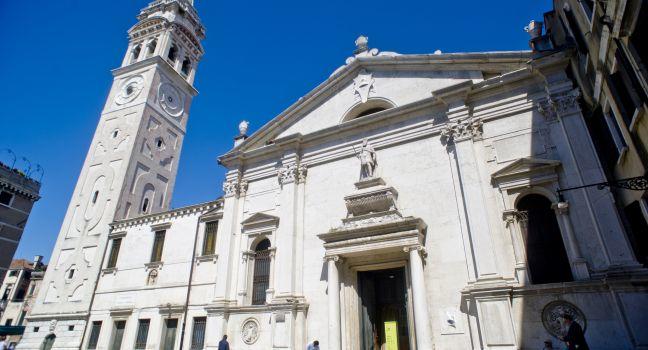
Guided by his vision of a beautiful Madonna, 7th-century St. Magno is said to have followed a small white cloud and built a church where it settled. Gracefully white, the marble building you see today dates from 1492, built by Mauro Codussi on an older foundation. Codussi's harmonious Renaissance design is best understood by visiting the interior; the Renaissance facade facing the canal was added later, in 1542, and the baroque facade facing the campo was added in 1604. Of interest are three fine paintings: Our Lady of Mercy by Bartolomeo Vivarini, Santa Barbara by Palma Vecchio, and Madonna with St. Domenic by Gianbattista Tiepolo. The surrounding square bustles with sidewalk cafés and a produce market on weekday mornings.
Apart from Ravenna, Rome has some of Italy's most opulent mosaics, and this church has the earliest example. Commissioned during the papacy of Innocent I, its early 5th-century apse mosaic, depicting Christ teaching the apostles, sits above a Baroque altarpiece surrounded by a bevy of florid 18th-century paintings. The mosaic is remarkable for its iconography; at the center sits Christ Enthroned, shown as an emperor or as a philosopher holding court, surrounded by his apostles. Each apostle faces the spectator, literally rubbing shoulders with his companion (unlike later hieratic styles in which each figure is isolated) and bears an individualized expression. Above these figures and a landscape symbolizing Heavenly Jerusalem float the signs of the four evangelists in a blue sky flecked with the orange of sunset, made from thousands of tesserae (mosaic tiles).
To either side of Christ, saints Praxedes and Pudentiana hold wreaths over the heads of saints Peter and Paul. These two women were actually daughters of the Roman senator Pudens (probably the one mentioned in 2 Timothy 4:21), whose family befriended both apostles. During the persecutions of Nero, both sisters collected the blood of many martyrs before suffering their fate. Pudentiana transformed her house into a church, but her namesake church was constructed over a 2nd-century bathhouse. Beyond the sheer beauty of the mosaic work, the size, rich detail, and number of figures make this both the last gasp of ancient Roman art and one of the first major works of Early Christian art.
Santi Quattro Coronati
Celio
Share This
Lalupa (CC BY-SA 3.0), via Wikimedia Commons
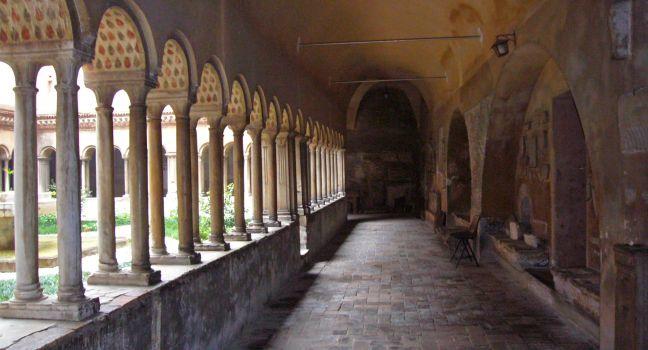
Situated on one of those evocative cul-de-sacs in Rome where history seems to be holding its breath, this quiet citadel has resisted the tides of time and traffic. The church—which is both strongly imbued with the sanctity of the Romanesque era and marvelously redolent of the Middle Ages—dates from the 4th century and honors the Four Crowned Saints: the four brothers Severus, Severianus, Carpophorus, and Victorinus, all Roman officials who were whipped to death for their faith by Emperor Diocletian (284–305).
After its 9th-century reconstruction, the church was twice as large as it is now; the abbey was partially destroyed during the Normans' sack of Rome in 1084 but reconstructed about 30 years later. This explains the inordinate size of the apse in relation to the small nave. Don't miss the cloister, with its well-tended gardens and 12th-century fountain. The entrance is the door in the left nave; ring the bell if it's not open.
There's another medieval gem hidden away off the courtyard at the church entrance: the Chapel of San Silvestro. The chapel has remained, for the most part, as it was when consecrated in 1246. Some of the best-preserved medieval frescoes in Rome decorate the walls, telling the story of the Christian emperor Constantine's recovery from leprosy thanks to Pope Sylvester I. Note, too, the delightful Last Judgment fresco above the door, in which the angel on the left neatly rolls up sky and stars like a backdrop, signaling the end of the world.
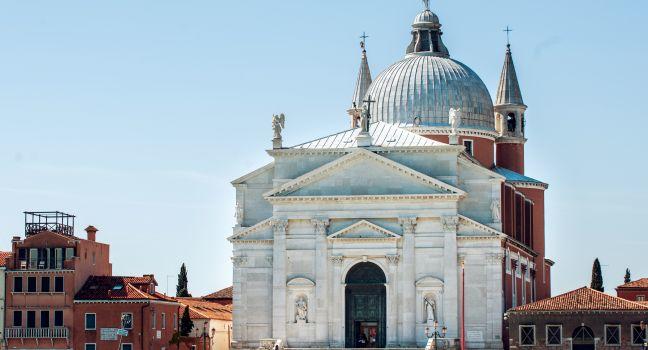
After a plague in 1576 claimed some 50,000 people—nearly one-third of the city's population (including Titian)—Andrea Palladio was asked to design a commemorative church. Giudecca's Capuchin friars offered land and their services, provided the building's design was in keeping with the simplicity of their hermitage. Consecrated in 1592, after Palladio's death, the Redentore (considered Palladio's supreme achievement in ecclesiastical design) is dominated by a dome and a pair of slim, almost minaretlike bell towers. Its deceptively simple, stately facade leads to a bright, airy interior. There aren't any paintings or sculptures of note, but the harmony and elegance of the interior makes a visit worthwhile.
When the order of Santa Maria del Carmelo commissioned Baldassare Longhena to finish the work on the Scuola Grande dei Carmini in the 1670s, their confraternity was one of the largest and wealthiest in Venice. Little expense was spared in the stuccoed ceilings and carved wooden paneling, and the artwork is remarkable. The paintings by Gianbattista Tiepolo that adorn the Baroque ceiling of the Sala Capitolare (Chapter House) are particularly alluring. In what many consider his best work, the artist’s nine canvases vividly transform some rather conventional religious themes into dynamic displays of color and movement.
This scuola was founded in the 13th century, but the actual building is the work of various Venetian Renaissance architects and dates from the 15th century. In the 1480s the architect Pietro Lombardo finished the school's most beautiful and important architectural feature, the outdoor atrium and gateway that separate the complex from the campo adjoining it. Shortly after, in 1498, the architect Mauro Codussi finished work on a double staircase connecting the upper and lower halls. It is illuminated by a mullioned window on the landing between the two flights of stairs, an architectural device much used by Codussi. Carpaccio and Gentile Bellini painted their cycle of the miracle of the holy cross, now in the Accademia museum, originally for the Scuola di San Giovanni.
This enameled clock, completed in 1499, was most likely designed by Venetian Renaissance architect Mauro Codussi. Twin giant figures with tarnished bronze bodies strike the hour each day, while three wise men with an angel walk out and bow to the Virgin Mary on Epiphany (January 6) and during Ascension Week (40 days after Easter). An inscription on the tower reads "Horas non numero nisi serenas" ("I only count happy hours"). Originally, the clock tower had a much lighter, more graceful appearance, and was freestanding. The four lateral bays were added in the early 16th century, while the upper stories and balustrades were completed in 1755. The clock itself was neglected until the 19th century, but after years of painstaking labor, it was reassembled and is fully operational. Guided tours, which start at the Museo Correr's ticket office, are held in English numerous times a week (for adults and children age six and older); book in advance online or by phone.
Abano Terme
Share This
A very popular hot-springs spa town about 12 km (7 miles) southwest of Padua, Abano Terme lies at the foot of the Euganean Hills among hand-tilled vineyards. If a bit of pampering sounds better than traipsing through yet another church or castle, indulge yourself with a soak, a massage, or mud treatments, which are especially recommended for joint aches. A good-value weekday pass (€45) is available at Hotel Antiche Terme Ariston Molino Buja for access to their thermal pools (aristonmolino.it).
Abbadia San Salvatore
Share This
This 1,000-year-old village is worth a stop—skip the nondescript new town and head straight to the centro storico to explore winding stone streets with tiny churches around every corner. The abbey for which the town was named was founded in 743; its current appearance reflects an 11th-century renovation, but the original crypt remains intact. The tourist office in town has hiking-trail maps for Monte Amiata.
Abbazia di San Fruttuoso
Share This
A medieval stronghold built by the Benedictines of Monte Cassino protects a minuscule fishing village that can be reached only on foot or by water—a 20-minute boat ride from Portofino and also reachable from Camogli, Santa Margherita Ligure, and Rapallo. The restored abbey is now the property of a national conservation fund (FAI) and occasionally hosts temporary exhibitions; it also contains the tombs of some illustrious members of the Doria family. Plan on spending a few hours enjoying the abbey and grounds, and perhaps lunching at one of the modest beachfront trattorias nearby (open only in summer). Boatloads of visitors can make this place very crowded very fast; you might appreciate it most off-season.
Abbazia di San Galgano
Share This
The church was built in the 13th century by Cistercian monks, who designed it after churches built by their order in France. But, starting in the 15th century, it fell into ruin, declining gradually over centuries. Grass has grown through the floor, and the roof and windows are gone. What's left of its facade and walls makes a grandiose and desolate picture. In July and August the scene is enlivened by evening concerts arranged by the Accademia Musicale Chigiana in Siena. Contact the tourist information office at the abbey for details.
Abbazia di San Michele
Share This
Within Terra Murata is the Abbazia di San Michele. San Michele (St. Michael) is the island's patron saint and a key figure in its history and traditions. Legend has it that in 1535, when the sultan of Algeria's admiral laid siege to the island, San Michele appeared above the pirate force and put them to flight (the 17th-century painting depicting the scene is in the choir of the abbey's 17th-century church; one of the invaders' anchors can also be viewed). On the wall close to the church's richly coffered ceiling is another depiction of San Michele, attributed to the Tuscan Luigi Garzi (1699). As you walk around the church, note that the floor's marble flagstones have holes, which were, in effect, trapdoors through which bodies could be lowered to the underground crypt. The maze of catacombs (closed indefinitely) lead to a secret chapel. Mass is held every Sunday at 9:30 am, and the cultural association Millennium offers free guided tours by request.
Abbey of San Nilo Grottaferrata
Share This
In Grottaferrata, a busy village a couple of miles from Frascati, the main attraction is a walled citadel founded by St. Nilo, who brought his group of Basilian monks here in 1004, when he was 90. The order is unique in that it's Roman Catholic but observes Greek Orthodox rites. It is the last surviving Byzantine-Greek monastery in Italy and has a distinctive blend of art and architecture.
The fortified abbey with its soaring bell tower, considered a masterpiece of martial architecture, was restructured in the 15th century by Antonio da Sangallo for the future Pope Julius II. The abbey church, inside the second courtyard, has glittering Byzantine mosaics and a revered icon of Mary with child set into a marble tabernacle designed by Bernini. The Farnese chapel, leading from the right nave, contains a series of frescoes by Domenichino.
If you make arrangements in advance, you can visit the library, which is one of the oldest in Italy. The abbey also has a famous laboratory for the restoration of antique books and manuscripts, where Leonardo's Codex Atlanticus was restored in 1962 and more than a thousand precious volumes were saved after the disastrous Florence flood in 1966.
Subscribe to Newsletter
Sign up for Travel Tips & News
I want emails from Fodor's Travel with travel information and promotions. I can unsubscribe
any time using the unsubscribe link at the end of all emails.
Thank you for your interest!
Look out for our newsletters with travel tips and special offers.
Sign up for Travel Tips & News
By signing up for the
newsletter, I agree to the Privacy Policy. You must check the box to subscribe
Thank you for your interest!
Look out for our newsletters with travel tips and special offers.