1473 Best Sights in Italy

Background Illustration for Sights

We've compiled the best of the best in Italy - browse our top choices for the top things to see or do during your stay.

Terme del Foro

Fodor's Choice

These forum baths contained separate sections for men and women. Here you can see most of the architectural aspects of thermae (baths): the apodyterium, or changing room, with partitioned shelves for depositing togas and a low podium to use as seating space while in line to use the facilities; a round frigidarium, or a cool pool; a tepidarium, a semi-heated room; and a calidarium, or heated room with pool. For more attractive mosaics, go around into the women's baths, which had no frigidarium. The heating system in the tepidarium was also different—no hot air piped through or under, only braziers. Note the small overhead cubbies in which bathers stored their belongings.

Toledo Metro Station

Toledo Fodor's Choice

Designed by Catalan architect Oscar Tusquets Blanca and opened in 2012, this is the most impressive of the numerous Stazioni dell'Arte on the city's Metro Linea 1. First archaeological remains and then mosaics by William Kentridge lead to a 165-foot escalator descending below Robert Wilson's glittering oval Crater de Luz. A 560-foot corridor, connecting the station to the Quartieri Spagnoli, is lined with light boxes depicting Razza Umana (Human Race) by Oliviero Toscani. Lauded by both CNN and Britain's Telegraph, it also won a prestigious ITA Tunneling Award in 2015.

Torre Guaceto

Fodor's Choice

The transparent water and chalky sand of this marine reserve extend 19 km (12 miles) along the coast and 6 km (4 miles) inland, where the wetlands are a haven for wildlife. Those seeking a spectacular walk in an unspoiled expanse head to the Spiaggia delle Conchiglie, which consists of tiny white shells. Note: it’s protected and off-limits to bathers. A shuttle bus operates from the main car park. Amenities: food and drink; lifeguards; parking (fee); toilets. Best for: snorkeling; sunrise; sunset; swimming; walking.

Recommended Fodor's Video

Torre Salsa Nature Reserve

Fodor's Choice

The seemingly endless pristine sands of Torre Salsa, overlooked by cliffs of crystal selenite, are one of the best-kept secrets of coastal Sicily. This is in part because they are easily reached only in summer. The rest of the year underground springs make the several dirt tracks to the sands inaccessible, not only by car but also on foot except for those intrepid enough not to be put off by knee-deep mud. If the sea is calm, those prepared to paddle can usually walk along the sands from the beaches at either end: Bovo Marina to the north and Siculiana Marina to the south. Bring plenty to eat and drink, as there are no facilities. If approaching by car in the dry months, the easiest access is via the Pantano entrance towards the northern end of the reserve.

Tre Cime di Lavaredo

Fodor's Choice

Without a doubt, the Three Peaks—Cima Piccola (9,373 feet), Cima Grande (9,839 feet), and Cima Ovest (9,753 feet)—are the symbols of the Dolomite UNESCO World Heritage site. From the town of Misurina, only two of the Tre Cime are visible. In order to get up close and personal, drive or take a bus along the dedicated toll road (usually open June through October; toll of €30). Once at the top, follow Footpath 101 from Rifugio Auronzo to Forcella Laveredo (easy) for about an hour. There are many other footpaths and vie ferrate which allow you to climb the cime and access the base. Rifugi offer hot meals without a reservation, as well as dorm-style lodging, which is best reserved in advance.

Università di Bologna

University area Fodor's Choice

Take a stroll through the streets of the university area: a jumble of buildings, some dating as far back as the 15th century and most to the 17th and 18th. The neighborhood, as befits a college town, is full of bookshops, coffee bars, and inexpensive restaurants. Political slogans and sentiments are scrawled on walls all around the university and tend to be ferociously leftist, sometimes juvenile, and often entertaining. Among the 15 university museums, the most interesting is the Museo di Palazzo Poggi, which displays scientific instruments plus paleontological and botanical artifacts.

Valle dei Templi

Fodor's Choice

The temples of Agrigento, a UNESCO World Heritage site, are considered some of the world's finest and best-preserved Greek temples. Whether you first come upon the Valley in the early morning light, bathed by golden floodlights after sunset, or in January and February when it's awash in the fragrant blossoms of thousands of almond trees, it's easy to see why the poet Pindar celebrated Akragas (Agrigento's Greek name) as "the most beautiful city built by mortals." The temples were originally erected as a showpiece to flaunt the Greek victory over Carthage. They have since withstood a later sack by the Carthaginians, mishandling by the Romans, and neglect by Christians and Muslims.

Although getting to, from, and around the dusty ruins of the Valle dei Templi is pretty easy, this important archaeological zone still deserves at least several hours, and it's pretty easy to spend a whole day at the park. The temples are spread out, but the Valley is all completely walkable and usually toured on foot. However, since there's only one hotel (Villa Athena) that's close enough to walk to the ruins, you'll most likely have to drive to reach the site. The best place to park is at the entrance to the temple area. The site opens at 8:30 am and is divided into western and eastern sections, linked by a bridge. The best way to see them both is to park at the Temple of Juno entrance and walk downhill through the eastern zone, across the footbridge into the western zone, and then return uphill, so that you see everything again from a different angle and in a different light. The best time to go is either first thing in the morning or couple of hours before sunset. However, if you are in Agrigento in high summer you might want to consider a night visit; the gates open shortly before sunset, with the temples floodlit as night falls.

You'll want to see the eight pillars of the Tempio di Ercole (Temple of Hercules) that make up Agrigento's oldest temple complex, dating from the 6th century BC. The Tempio di Giunone (Temple of Juno) at the top of the hill is perhaps the most beautiful of all the temples, partly in ruins and commanding an exquisite view of the Valley (especially at sunset). The low wall of mighty stone blocks in front of it was an altar used to sacrifice animals as an offering to the goddess. Next down the hill is the almost perfectly complete Tempio della Concordia (Temple of Concord), perhaps the best-preserved Greek temple currently in existence, thanks to its conversion into a Christian church in the 6th century, though it was restored to its current form in the 18th century. Below it is the Valley's oldest surviving temple, the Temple of Hercules, with nine of its original 38 columns standing, the rest tumbled around like a child's upended bag of building bricks.

Continuing over the pedestrian bridge, you reach the Tempio di Giove (Temple of Jupiter). It was meant to be the largest temple in the complex; it was never completed, but it would have occupied approximately the size of a soccer field. It was an unusual temple, with half columns backing into a continuous wall and 25-foot-high telamon, or male figures, inserted in the gaps in between. Some telamon have been roughly reassembled horizontally on the ground near the temple. Beyond is the so-called Temple of Castor and Pollux, which is picturesque but actually a folly created in the 19th century from various columns and architectural fragments.

We recommend a guided tour for those wanting to learn more about this fascinating yet complex history. You can book guided tours directly via the website, and there are licensed tour guides at the entrance of the temple offering tours. The ticketing office also rents audio guides in multiple languages for those looking to explore independently. Plan to stay at the park for at least half a day; there are plenty of bathrooms and small cafés throughout the park that offer snacks like arancini and even full-sized pasta dishes.  Save time by booking your tickets in advance online.

Vendicari Nature Reserve

Fodor's Choice

The protected reserve encompasses 15,000 hectares with paths crisscrossing bird- and wildlife-rich lagoons, macchia scrubland, and unspoiled beaches, including Calamosche, Eloro, Marianelli (most pristine and peaceful), and Vendicari with its tonnara (fishery) ruins. There are five entrances, the nearest to Noto being Ingresso Marianelli, some 7 miles southeast of Noto via SP19. There's no reliable public transport here, so you'll need a car.

Via del Ghiaccio

Fodor's Choice

In the 19th and 20th centuries, the twin hill towns of Cammerata and San Giovanni Gemini were famous throughout Sicily for their traveling ice cream and granita makers. The key to this ice-cream industry was the collection and preservation of snow, and a local family of ice-cream makers has restored several of the neviere, circular buildings resembling stone igloos, strewn over the forested slopes above the towns. Snow was shoveled into the neviere, trodden down until it turned to a thick layer of ice, then covered with a mat of rushes and straw before another layer of snow was added on top. Stored like this, the snow would keep frozen for months, and with the giant blocks of ice fetching the equivalent of €3,000, it had to be carefully guarded. The best way to see the neviere, learn how to make Sicilian granita, and visit a small private ice museum, is on a guided tour, which can include a lunch of cold cuts, local cheeses, and grilled meat and vegetables in a pretty, family-run café.

Via Positanesi d'America

Fodor's Choice

Just before the ferry ticket booths to the right of Spiaggia Grande, a tiny road that is the loveliest seaside walkway on the entire coast rises up and borders the cliffs leading to Fornillo Beach. The road is named for the town's large number of 19th-century emigrants to the United States—Positano virtually survived during World War II thanks to the money and packages their descendants sent back home. Halfway up the path lies the Torre Trasìta (Trasìta Tower), the most distinctive of Positano's three coastline defense towers. Now a residence occasionally available for summer rental, the tower was used to spot pirate raids. As you continue along the Via Positanesi d'America, you'll pass a tiny inlet and an emerald cove before Fornillo Beach comes into view.

Villa Adriana

Fodor's Choice

Set below the ancient settlement of Tibur, this astonishingly grand 2nd-century villa was an exclusive retreat, where the marvels of the classical world were reproduced for a ruler's pleasure. Hadrian, who succeeded Trajan as emperor in AD 117, was a man of genius and intellectual curiosity, fascinated by the accomplishments of the Hellenistic world. From AD 125 to 134, architects, laborers, and artists worked on his dreamy villa, recreating some of the monuments and sights that the emperor had seen on his travels in Egypt, Asia Minor, and Greece.

During the Middle Ages, the site was sacked by barbarians and Romans alike, and many of the statues and architectural features ended up in the Vatican Museums. Nonetheless, the colossal remains are impressive: the ruins rise in a garden setting of green lawns framed with oleanders, pines, and cypresses. Not surprisingly, Villa Adriana is a UNESCO World Heritage site, and it's one that has not yielded up all its secrets. Archaeologists recently discovered the site of the Temple of Isis, complete with several sculptures, including one of the falcon-headed god Horus.  A visit to the villa, which sits outside town, takes at least two hours (carry water on hot days); maps dispensed at the ticket office will help you get your bearings.

Villa Barbaro (Villa di Maser)

Fodor's Choice

At the Villa Barbaro (1554) near the town of Maser, you can see the exquisite results of a onetime collaboration between two of the greatest artists of their age: Palladio was the architect, and Paolo Veronese did the interiors. You can easily spend a couple of hours here, so set aside time for lingering in the gorgeous grounds, admiring the honey-hue exterior and ornate statuary, including the dreamlike nymphaeum and pool. A visit is particularly immersive because the superb condition of the grounds and interior creates an uncanny atmosphere: nowhere else in the Veneto do you get such a vivid feeling for the combination of grandeur and leisure with a tangible whiff of a working farm.

Villa Barbaro, a short drive from Asolo, is most accessible by private car; the closest train station is Montebelluna. Buses leave for Maser from the bus station at Treviso, Montebelluna, or Bassano di Grappa. The bus will leave you at a stop about 1½ km (1 mile) from Maser. Hours can vary, so check the website.

Villa Cimbrone

Fodor's Choice

To the south of Ravello's main square, a somewhat hilly 15-minute walk along Via San Francesco brings you to Ravello's showstopper, the Villa Cimbrone, whose dazzling gardens perch 1,500 feet above the sea. This medieval-style fantasy was created in 1905 by England's Lord Grimthorpe and made world-famous in the 1930s when Greta Garbo found sanctuary from the press here. The Gothic castello-palazzo sits amid idyllic gardens that are divided by the grand Avenue of Immensity pathway, leading in turn to the literal high point of any trip to the Amalfi Coast—the Belvedere of Infinity. This grand stone parapet, adorned with stone busts, overlooks the entire Bay of Salerno and frames a panorama that the late writer Gore Vidal, a longtime Ravello resident, described as the most beautiful in the world. The villa itself is now a five-star hotel.

Villa Comunale

Fodor's Choice

The largest public park in Sorrento sits on a cliff top overlooking the entire Bay of Naples. It offers benches, flowers, palms, and people/sunset watching, plus a seamless vista that stretches from Capri to Vesuvius. From here steps lead down to Sorrento's main harbor, the Marina Piccola.

Villa Comunale

Fodor's Choice

Stroll down Via Bagnoli Croce from the main Corso Umberto to the Villa Comunale to enjoy the stunning views from the seaside city's best terrace walkways. Also known as the Parco Duca di Cesarò, the lovely public gardens were designed by Florence Trevelyan Cacciola, a Scottish lady "invited" to leave England following a romantic liaison with the future Edward VII (1841–1910). Arriving in Taormina in 1889, she married a local professor and devoted herself to the gardens, filling them with native Mediterranean and exotic plants, ornamental pavilions, and fountains.

Via Bagnoli Croce, Taormina, 98039, Italy

Something incorrect in this review?

Villa d'Este

Fodor's Choice

One of Italy's UNESCO World Heritage sites, Villa d'Este was created by Cardinal Ippolito d'Este in the 16th century. This villa in the center of Tivoli was the most amazing pleasure garden of its day, and it still stuns modern visitors with its beauty. Cardinal d'Este (1509–72), a devotee of the Renaissance celebration of human ingenuity over nature, was inspired by the excavation of nearby Villa Adriana. He paid architect Pirro Ligorrio an astronomical sum to create an extraordinary garden filled with nymphs and grottoes. In addition, the Aniene River was diverted to water the garden and feed the several hundred fountains that cascade, shoot skyward, imitate birdsong, and simulate rain. Note especially the musical Fontana dell'Organo, whose water dances to an organ tune every two hours starting at 10:30 am.

Romantics will love the night tour of the gardens and floodlit fountains that takes place on Friday and Saturday in summer.  Allow at least an hour for a visit, which involves steep inclines and many stairs. There are vending machines for refreshments by the bookshop.

Villa del Balbianello

Fodor's Choice

The relentlessly picturesque Balbianello may be the most magical house in all of Italy; you probably know it from cameos in the movies Casino Royale and Star Wars Episode II: Attack of the Clones. It sits on its own little promontory, Il Dosso d'Avedo, around the bend from the tiny fishing village of Ossuccio. The villa is composed of loggias, terraces, and palazzini (tiny palaces), all spilling down verdant slopes to the shore, where you'll find an old Franciscan church, a magnificent stone staircase, and a statue of San Carlo Borromeo blessing the waters.

The villa is usually reached from Como and Bellagio by boat, which leaves you at the village of Lenno. From there, marked signs lead you to the villa—it's either accessible by foot via a 25-minute walk or a more challenging 45-minute hike.

Villa di Orfeo

Fodor's Choice

Just outside the walls of the ancient Roman city of Tridentum, this fascinating residence was built during the 1st century AD. The villa’s highlight is a large ceremonial room with a 603-square-foot mosaic of Orpheus playing music to serenade animals. The visit also includes an immersive video that gives you a feel for the villa’s look and location at the time it was built, along with a virtual reconstruction of Tridentum.

Villa Farnesina

Trastevere Fodor's Choice

Money was no object to the extravagant Agostino Chigi, a banker from Siena who financed many papal projects. His munificence is evident in this elegant villa, built for him in about 1511. Agostino entertained the popes and princes of 16th-century Rome, impressing his guests at riverside suppers by having his servants clear the table by casting the precious silver and gold dinnerware into the Tiber (indeed, nets were unfurled a foot or two beneath the water's surface to retrieve the valuable ware).

In the magnificent Loggia of Psyche on the ground floor, Giulio Romano and others created the frescoes from Raphael's designs. Raphael's lovely Galatea is in the adjacent room. On the floor above you can see the trompe-l'oeil effects in the aptly named Hall of Perspectives by Peruzzi. Agostino Chigi's bedroom, next door, was frescoed by Il Sodoma with the Wedding of Alexander and Roxanne, which is considered to be the artist's best work. The palace also houses the Gabinetto Nazionale delle Stampe, a treasure trove of old prints and drawings.

Villa Jovis

Fodor's Choice

Named in honor of the ancient Roman god Jupiter, or Jove, the villa of the emperor Tiberius is riveted to the towering Rocca di Capri like an eagle's nest overlooking the strait separating Capri from Punta Campanella, the tip of the Sorrentine Peninsula. Lying near the easternmost point of the island, Villa Jovis is a powerful reminder of the importance of the island in Roman times. What makes the site even more compelling are the accounts of the latter years of Tiberius's reign from Capri (AD 27–37), written by authors and near-contemporaries Suetonius and Tacitus. This villa was famous for its sybaritic living, thus sounding a leitmotif whose echo can be heard at the luxurious hotels of today.

There are remarkably few discrepancies between the accounts of the two historiographers. Both point to Tiberius's mounting paranoia in Rome, while Tacitus outlines his reason for choosing Capri (Annals, Book IV): "Presumably what attracted him was the isolation of Capreae. Harborless, it has few roadsteads even for small vessels; sentries can control all landings. In winter the climate is mild, since hills on the mainland keep off gales. In summer the island is delightful, since it faces west and has open sea all round. The bay it overlooks was exceptionally lovely, until Vesuvius's eruption transformed the landscape." Capri in Roman times was the site of 12 spacious villas, but Villa Jovis is both the best preserved and must have been the largest, occupying nearly 23,000 square feet.

The entrance to the site lies just beyond the pharos (lighthouse) built under Tiberius and used until the 17th century to warn ships away from the narrows between Capri and the mainland. Pick up a site map at the ticket office, which gives a useful breakdown of the various areas of the villa to be visited. Nearby, you can find Salto di Tiberio (Tiberius's Leap), the place where ancient gossips believed Tiberius had enemies—among them his discarded lovers and even unfortunate cooks—hurled over the precipice into the sea some 1,000 feet below. After taking stock of this now-harmless viewing platform and its information panels, take the upper path past the baths complex around the palace residential quarters to view the heavily restored Chapel of Santa Maria del Soccorso and its large bronze statue of the Madonna, a gift to the island from the Caprese painter Guido Odierna in 1979. The walk around the perimeter of the site gives an idea of the overall layout of the palatial residence, which in places rose to five stories in height. From here descend some steps and then a ramp to the ambulatio (walkway), which offers additional spectacular views and plenty of shade, as well as a triclinium (dining room) halfway along. The center of the site is a complex devoted to cisterns. Unlike in Pompeii, there was no aqueduct up here to provide fresh running water, so the cisterns next to the bath complex were of prime importance. From La Piazzetta allow 45 minutes each way for the walk alone.

TIP Just before Villa Jovis enjoy some spectacular views from the multiterraced Parco Astarita and return to Capri Town via Villa Lysis to wander its beautiful gardens and eclectic Stile Liberty interiors, built in 1905.

Via A. Maiuri, Capri, 80073, Italy
Sight Details
€6, with audio guide
Closed Mon., Jan. and Feb., and weekdays in Mar.

Something incorrect in this review?

Villa La Rotonda

Fodor's Choice

Commissioned in 1556 as a suburban residence for Paolo Almerico, this beautiful Palladian is the purest expression of Palladio's architectural theory and aesthetic. More a villa-temple than a residence, it contradicts the rational utilitarianism of Renaissance architecture and demonstrates the priority Palladio gave to the architectural symbolism of celestial harmony over practical considerations. A visit to view the interior can be difficult to schedule—the villa remains privately owned, and visiting hours are limited to the weekend—but this is a worthwhile stop, if only to see how Palladio's harmonious arrangement of smallish interconnected rooms around a central domed space paid little attention to the practicalities of living. The interior decoration, mainly later baroque stuccowork, contains some allegorical frescoes in the cupola by Palladio's contemporary, Alessandro Maganza.

Even without a peek inside, experiencing the exterior and the grounds, including the newly restored 19th century woodland Boschetto Romantico, is a must for any visit to Vicenza. The villa is a 20-minute walk from town or a cab (€15) or bus ride (No. 8) from Vicenza's Piazza Roma. Private tours are by appointment; see the website for the latest visiting details.

Via della Rotonda, Vicenza, 36100, Italy
0444-321793
Sight Details
€12; €25 with guided tour, in Italian only; €3 Boschetto Romantico
Closed Mon.--Thurs. April--Oct., weekdays Apr. and Nov.
Message to WhatsApp no: 351 7922118

Something incorrect in this review?

Villa Lysis

Capri Town Fodor's Choice

Opened to the public in 2003, this legendary villa was originally known as the Villa Fersen, after Baron Jacques d'Adelsward-Fersen, the builder. Fleeing to the island from a scandal involving Parisian schoolboys, the French aristocrat had this white stucco pile designed by Edouard Chimot in 1903 in shimmering Belle Époque style, replete with gilded-mosaic columns and floors looted from the island's ancient Roman sites. Past the impressive columned entrance, inscribed in stone with "Amori et Dolori Sacrum" (A Shrine to Love and Sorrow), the baron would retire to write poems and paint pictures in his Stile Liberty ("Liberty Style," or Art Nouveau) salons. Sadly all the furnishings are gone, but you can still gasp at the ballroom open to the sea and the large smoking room in the basement, where, in a tiled pool, Fersen committed suicide by ingesting a lethal mix of opium and Champagne in 1923. Outside are magical terraces with views to rival the adjacent Villa Jovis.

Via Lo Capo 33, Capri, 80073, Italy
081-8386111-for Capri municipal office
Sight Details
€1.50
Closed Wed. and Nov.--mid-March

Something incorrect in this review?

Villa Medici

Villa Borghese Fodor's Choice

Originally belonging to Cardinal Ferdinando I de' Medici, who also laid out the immaculate Renaissance garden to set off his sculpture collection, this villa was purchased by Napoléon to create the French Academy of Rome, opened in 1803, where artists could study Italian art and put it toward the (French) national good. You can visit during special exhibitions or take a guided tour to see the gardens and the incredibly picturesque garden facade, which is studded with Mannerist and Rococo sculpted reliefs and overlooks a loggia with a beautiful fountain devoted to Mercury. Some of the historic rooms have been restyled by Fendi and Paris-based designer India Mahdavi.

Viale della Trinità dei Monti, 1, Rome, 00187, Italy
06-6761200
Sight Details
€10, exhibits; €14, includes guided tour of the gardens and historic rooms and exhibit
Closed Tues.

Something incorrect in this review?

Villa Necchi Campiglio

Palestro Fodor's Choice

In 1932, architect Piero Portaluppi designed this sprawling estate in an Art Deco style, with inspiration coming from the decadent cruise ships of the 1920s. Once owned by the Necchi Campiglio industrial family, the tasteful and elegant three-level home and garden—which sits on Via Mozart, one of Milan's most exclusive streets—is a reminder of the refined, modern culture of the nouveaux riches who accrued financial power in Milan during that era. Don't miss the Collezione Guido Sforni on the second floor behind a closed door of one of the bedrooms, where you'll find 21 original drawings by Henri Matisse, Pablo Picasso, and Amedeo Modigliani among other 20th-century artists. There is also a café on the grounds that is open 10 am–6 pm. An audio tour is included with the entrance fee, and can be listened to on a mobile device. Tours in English are available on Saturday at 11:30 am and 2:30 pm with advanced booking.

Villa Romana del Casale

Fodor's Choice

The exceptionally well-preserved Imperial Roman Villa is thought to have been a hunting lodge of the emperor Maximian (3rd–4th century AD) and offers some of the best mosaics of the Roman world, artfully covering more than 12,000 square feet. The excavations were not begun until 1950, and most of the wall decorations and vaulting have been lost, but the shelter over the site hints at the layout of the original building. The mosaics were probably made by North African artisans; they're similar to those in the Tunis Bardo Museum, in Tunisia. The entrance was through a triumphal arch that led into an atrium surrounded by a portico of columns, which line the way to the thermae, or bathhouse. It's colorfully decorated with mosaic nymphs, a Neptune, and enslaved people massaging bathers. The peristyle leads to the main villa, where in the Salone del Circo you look down on mosaics illustrating scenes from the Circus Maximus in Rome. A theme running through many of the mosaics—especially the long hall flanking one entire side of the peristyle courtyard—is the capturing and shipping of wild animals, which may have been a major source of the owner's wealth. Yet the most famous mosaic is the floor depicting 10 girls wearing the ancient equivalent of bikinis, going through what looks like a fairly rigorous set of training exercises.

Villa Rufolo

Fodor's Choice

Directly off Ravello's main piazza is the Villa Rufolo, home to enchanting gardens, many of which frame a stunning vista of the Bay of Salerno. If the master storyteller Boccaccio is to be believed, the villa was built in the 13th century by Landolfo Rufolo, whose immense fortune stemmed from trade with the Moors and the Saracens. Norman and Arab architecture mingle in a welter of color-filled gardens so lush the composer Richard Wagner used them as inspiration for Klingsor's Garden, the home of the Flower Maidens, in his opera Parsifal. Beyond the Arab-Sicilian cloister and the Norman tower lie the two terrace gardens. The lower one, the "Wagner Terrace," is often the site for Ravello Festival concerts, with the orchestra perched on a platform constructed over the precipice. Sir Francis Nevile Reid, a Scotsman, acquired the villa in 1851 and hired Michele Ruggiero, head of the excavations at Pompeii, to restore the villa to its full splendor and replant the gardens with rare cycads, cordylines, and palms. Highlights of the house are its Moorish cloister—an Arabic-Sicilian delight with interlacing lancet arcs and polychromatic palmette decoration—and the 14th-century Torre Maggiore, the so-called Klingsor's Tower, renamed in honor of Richard Wagner's landmark 1880 visit.

Piazza del Duomo, Ravello, 84010, Italy
089-857621
Sight Details
€8, extra charge for concerts

Something incorrect in this review?

Villa San Michele

Fodor's Choice

From Anacapri's Piazza Vittoria, picturesque Via Capodimonte leads to Villa San Michele, the charming former home of Swedish doctor and philanthropist Axel Munthe (1857–1949), and which Henry James called "the most fantastic beauty, poetry, and inutility that one had ever seen clustered together." At the ancient entranceway to Anacapri at the top of the Scala Fenicia, the villa is set around Roman-style courtyards, marble walkways, and atria. Rooms display the doctor's varied collections, which range from bric-a-brac to antiquities. Medieval choir stalls, Renaissance lecterns, and gilded statues of saints are all part of the setting, with some rooms preserving the doctor's personal memorabilia. A spectacular pergola path overlooking the entire Bay of Naples leads from the villa to the famous Sphinx Parapet, where an ancient Egyptian sphinx looks out toward Sorrento: you cannot see its face—on purpose. It is said that if you touch the sphinx's hindquarters with your left hand while making a wish, it will come true. The parapet is connected to the little Chapel of San Michele, on the grounds of one of Tiberius's villas.

Besides hosting summer concerts, the Axel Munthe Foundation carries out ornithological research in the surrounding area and has an ecomuseum that fittingly reflects Munthe's fondness for animals. Here you can learn about various bird species—accompanied by their songs—found on Capri. Munthe bought up the hillside and made it a sanctuary for birds, and today this little realm is still an Eden.

The foundation also organizes weekly guided visits (Thursday afternoon April–October; call to reserve a place) of the ruined Barbarossa castle, almost clinging to the side of the cliff above Villa San Michele. Dating to the late 10th century, when Capri was ruled by the ancient maritime republic of Amalfi, and named after the admiral of the Turkish fleet, Khair-Eddin, or Barbarossa (Redbeard), who stormed and took the castle in 1535, much of the original layout has been changed over the centuries.

Villa Valmarana ai Nani

Fodor's Choice

Inside this 17th- to 18th-century country house, named for the statues of dwarfs adorning the garden, is a series of frescoes executed in 1757 by Gianbattista Tiepolo depicting scenes from classical mythology, the Iliad, Tasso's Jerusalem Delivered, and Ariosto's Orlando furioso (The Frenzy of Orlando). They include his Sacrifice of Iphigenia, a major masterpiece of 18th-century painting. The neighboring foresteria (guesthouse) is also part of the museum; it contains frescoes showing 18th-century life at its most charming and scenes of chinoiserie popular in the 18th century, by Tiepolo's son Giandomenico (1727–1804). The garden dwarfs are probably taken from designs by Giandomenico. You can reach the villa on foot by following the same path that leads to Palladio's Villa La Rotonda.

Vulcano

Fodor's Choice

True to its name, the island of Vulcano has a profusion of fumaroles sending up jets of hot vapor, and although the volcano itself is dormant, emissions have recently reached dangerous levels, occasionally resulting in parts of the island being evacuated. When it is safe, visitors can come to soak in the strong-smelling sulfur springs or to sunbathe and walk on some of the archipelago's best beaches, though the volcanic black sand can be off-putting at first glance. Volcanic conditions permitting, you can climb the volcano and walk right around the crater.

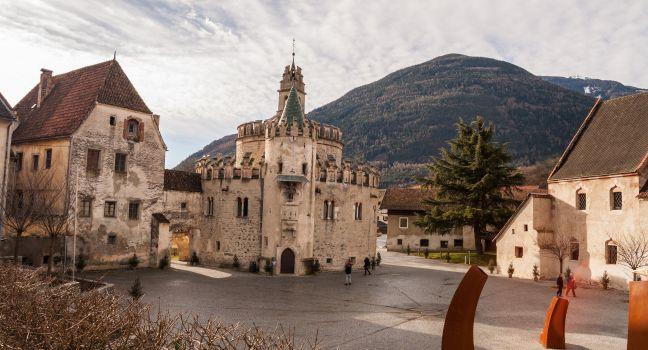
Abbazia di Novacella

Novacella Monastery, Varna, Bolzano, Trentino Alto Adige, Italy
gab90 / Shutterstock

This Augustinian abbey founded in 1142 has been producing wine for at least nine centuries and is most famous for the delicate stone-fruit character of its dry white Sylvaner. As you wander the delightful grounds, note the progression of Romanesque, Gothic, and Baroque building styles. Guided tours of the abbey, in various languages, depart daily except Sunday. Guided tours of the vineyard are also available, in English, by reservation.

Via Abbazia 1, Varna, 39040, Italy
0472-836189
Sight Details
Abbey visit €12 with audioguide, €17 with guided tour; wine tastings with vineyard tour €25
Closed Sun.

Something incorrect in this review?