235 Best Sights in Italy

Background Illustration for Sights

We've compiled the best of the best in Italy - browse our top choices for the top things to see or do during your stay.

Castello del Buonconsiglio

Fodor's Choice
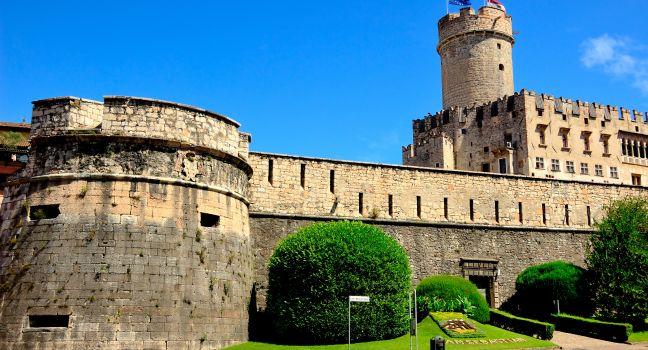
Castello del Buonconsiglio in Italy
Bildagentur Zoonar GmbH / Shutterstock

The position and size of this stronghold of the prince-bishops made it easier to defend than the Palazzo Pretorio. Look for the evolution of architectural styles: the medieval fortifications of the Castelvecchio section (on the far left) were built in the 13th century; the fancier Renaissance Magno Palazzo section (on the far right) wasn't completed until 300 years later. The 13th-century Torre dell'Aquila (Eagle's Tower) is home to the castle's artistic highlight, a 15th-century ciclo dei mesi (cycle of the months). The four-wall fresco is full of charming and detailed scenes of medieval life in both court and countryside.

Via Bernardo Clesio 5, Trento, 38100, Italy
0461-233770
Sight Details
€10; Torre Aquila €2.50
Closed Mon.
Timed visits must be booked online in advance

Something incorrect in this review?

Piazza del Popolo

Piazza del Popolo Fodor's Choice
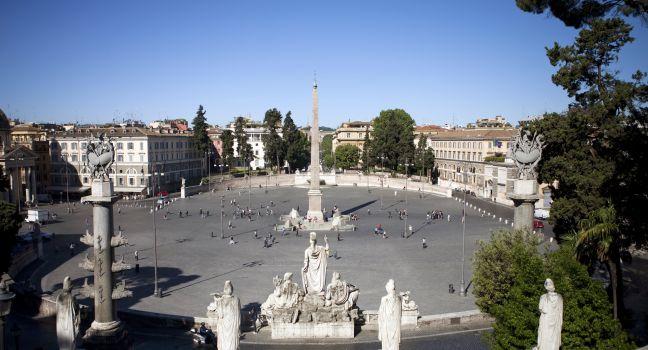
piazza del popolo
© Halie Cousineau/ Fodors Travel

With its obelisk and twin churches, this immense square marks what was, for centuries, Rome's northern entrance, where all roads from the north converged and where visitors, many of them pilgrims, got their first impression of the Eternal City. The desire to make this entrance to Rome something special was a pet project of popes and their architects for more than three centuries. Although it was once crowded with fashionable carriages, the piazza today is a pedestrian zone. At election time, it's the scene of huge political rallies, and on New Year's Eve, Rome stages a mammoth alfresco party here.

Ponte di Rialto

San Marco Fodor's Choice
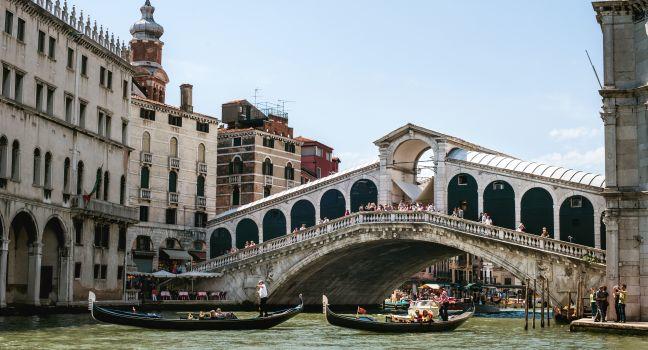
Rialto Bridge, San Marco, Venice, Italy.
© Ross Brinkerhoff / Fodors Travel

The competition to design a stone bridge across the Grand Canal attracted the best architects of the late 16th century, including Michelangelo, Palladio, and Sansovino, but the job went to the less famous (if appropriately named) Antonio da Ponte (1512–95). His pragmatic design, completed in 1591, featured shop space and was high enough for galleys to pass beneath. Putting practicality and economy over aesthetic considerations—unlike the classical plans proposed by his more famous contemporaries—da Ponte's bridge essentially followed the design of its wooden predecessor. But it kept decoration and cost to a minimum at a time when the Republic's coffers were low, due to continual wars against the Turks and competition brought about by the Spanish and Portuguese opening of oceanic trade routes. Along the railing you'll enjoy one of the city's most famous views: the Grand Canal vibrant with boat traffic.

Recommended Fodor's Video

Santa Maria in Cosmedin

Aventino Fodor's Choice
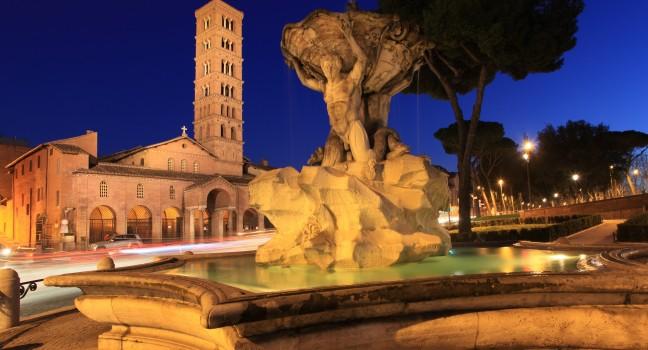
Fountain, Santa Maria in Cosmedin, Rome, Italy
(c) Kpapaioanno | Dreamstime.com

One of Rome's oldest churches—built in the 6th century and restored in the late 19th century—is on the Piazza della Bocca della Verità, originally the location of the Forum Boarium, ancient Rome's cattle market and later the site of public executions. Although the church has a haunting interior and contains the flower-crowned skull of St. Valentine, who is celebrated every February 14th, it plays second fiddle to the renowned artifact installed out in its portico.

The Bocca della Verità (Mouth of Truth) is in reality nothing more than an ancient drain cover, unearthed during the Middle Ages. Legend has it, however, that the teeth will clamp down on a liar's hand if they dare to tell a fib while holding their fingers up to the fearsome mouth. Hordes of tourists line up to take the test every day (kids especially get a kick out of it).

The Spanish Steps

Piazza di Spagna Fodor's Choice
The Spanish Steps, Trinita Dei Monti, Rome, Italy
© Halie Cousineau/ Fodors Travel

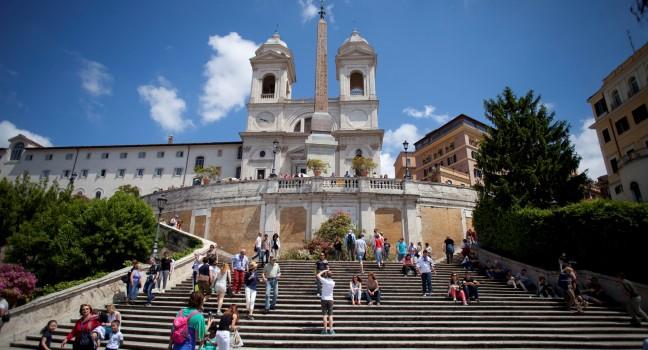
The iconic Spanish Steps (often called simply la scalinata, or "the staircase," by Italians) and the Piazza di Spagna from which they ascend both get their names from the Spanish Embassy to the Vatican on the piazza—even though the staircase was built with French funds by an Italian in 1723. In honor of a diplomatic visit by the King of Spain, the hillside was transformed by architect Francesco de Sanctis with a spectacular piece of urban planning to link the church of Trinità dei Monti at the top with the Via Condotti below.

In an allusion to the church, the staircase is divided by three landings (beautifully lined with potted azaleas from mid-April to mid-May). Bookending the bottom of the steps are beloved holdovers from the 18th century, when the area was known as the "English Ghetto": to the right, the Keats-Shelley House and to the left, Babington's Tea Rooms—both beautifully redolent of the era of the Grand Tour.

For weary sightseers who find the 135 steps too daunting, there is an elevator at Vicolo del Bottino 8, next to the Metro entrance. (Those with mobility problems should be aware that there is still a small flight of stairs after, however, and that the elevator is sporadically closed for repair.) At the bottom of the steps, Pietro Bernini's splendid 17th-century Barcaccia Fountain still spouts drinking water from the ancient aqueduct known as the Acqua Vergine.

Trevi Fountain

Trevi Fodor's Choice
Trevi fountain
© Halie Cousineau/ Fodors Travel

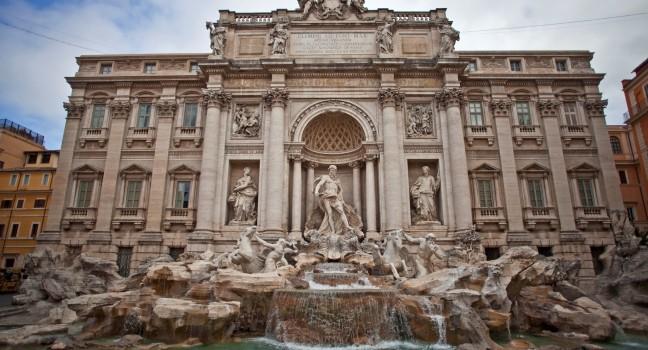
Alive with rushing waters commanded by an imperious sculpture of Oceanus, the Fontana di Trevi has been all about theatrical effects from the start; it is an aquatic marvel in a city filled with them. The fountain's unique drama is largely due to its location: its vast basin is squeezed into the tight confluence of three little streets (the tre vie, which may give the fountain its name), with cascades emerging as if from the wall of Palazzo Poli.

The dream of a fountain emerging full force from a palace was first envisioned by Bernini and Pietro da Cortona from Pope Urban VIII's plan to rebuild an older fountain, which had earlier marked the end point of the Acqua Vergine, an aqueduct created in 18 BC by Agrippa. Three popes later, under Pope Clement XIII, Nicola Salvi finally broke ground with his winning design. Unfortunately, Salvi did not live to see his masterpiece of sculpted seashells, roaring sea beasts, and diva-like mermaids completed; he caught a cold and died while working in the culverts of the aqueduct 11 years before the fountain was finished in 1762.

Everyone knows the famous legend that if you throw a coin into the Trevi Fountain you will ensure a return trip to the Eternal City, but not everyone knows how to do it the right way. You must toss a coin with your right hand over your left shoulder, with your back to the fountain. One coin means you'll return to Rome; two, you'll return and fall in love; three, you'll return, find love, and marry. The fountain grosses some €1,500,000 a year, with every cent going to the Catholic charity Caritas, which is why Fendi was willing to fully fund the Trevi's recent restoration.

Tucked away in a little nearby alley is the Vicus Caprarius ( Vicolo del Puttarello, 25), a small museum where visitors can pay €8 for a guided tour that descends into a subterranean area that gives a glimpse at the water source that keeps the fountain running.

Villa Borghese

Villa Borghese Fodor's Choice
The Garden of Venus, In Villa Borghese, Rome, Italy.
Preisler | Dreamstime.com

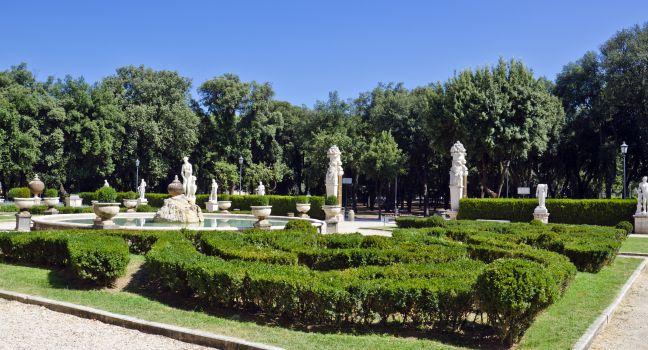
Rome's Central Park, the Villa Borghese was originally laid out as a recreational garden in the early 17th century by Cardinal Scipione Borghese. The word "villa" was used to mean suburban estate, of the type developed by the ancient Romans and adopted by Renaissance nobles. Today's gardens cover a much smaller area—by 1630, the perimeter wall was almost 5 km (3 miles) long. At the end of the 18th century, Scottish painter Jacob More remodeled the gardens into the English style popular at the time. In addition to the gloriously restored Galleria Borghese, the highlights of the park are Piazza di Siena, a graceful amphitheater, and the botanical garden on Via Canonica, where there is a pretty little lake as well as the neoclassical faux–Temple of Aesculapius, the Biopark zoo, Rome's own replica of London's Globe Theatre, and the Villa Giulia museum.

The Carlo Bilotti Museum ( www.museocarlobilotti.it) is particularly attractive for Giorgio de Chirico fans, and there is more modern art in the nearby Galleria Nazionale d'Arte Moderna e Contemporanea. The 63-seat children's movie theater, Cinema dei Piccoli, shows films for adults in the evening. There's also Casa del Cinema, where film buffs can screen films or sit at the sleek, cherry-red, indoor-outdoor caffè (you can find a schedule of events at  www.casadelcinema.it).

Aquarium

Fodor's Choice

Naples was originally named by the Greeks after the Mermaid Parthenope (who slew herself after being rejected by Odysseus, at least in the poet Virgil’s version), so it's only fitting that the city should have established one of Europe's first public aquariums in 1874. Founded by the German scientist Anton Dohrn and housed in a Stile Liberty building designed by Adolf von Hildebrandt, the aquarium quickly became the wonder of Naples for children and art-exhausted adults. At the time—when, not so incidentally, the public imagination was being stirred by Jules Verne’s Captain Nemo and Hans Christian Andersen’s Little Mermaid—technological innovations made it possible to funnel seawater directly from the bay into the aquarium.

Officially named the Stazione Zoologica, the aquarium reopened in 2021 after a major six-year overhaul. Tanks still showcase marine life from the Bay of Naples, as well as tropical fish, but the complex now also includes the Museo Darwin-Dohrn (Da-DoM), a few steps away in the leafy Villa Comunale. The highlight is the skeleton of a sperm whale, which washed up in Ischia in 2018, in a room opening up to the bay. Guided tours are available.

Villa Comunale, Naples, 80121, Italy
081-5833643-aquarium
Sight Details
Aquarium €7, museum €6, both €10. Guided tour €15
Closed Mon.

Something incorrect in this review?

Bar Vitelli

Fodor's Choice

Though the bar first opened in 1962—and the building has been around since the 1400s—this little café didn't gain worldwide popularity until Francis Ford Coppola chose it as the setting of significant scenes in The Godfather. In fact, prior to Coppola, the bar didn't even have an official name. He chose "Bar Vitelli" for his fictional café, had the name painted on the exterior wall, and the name has stuck for decades. Here, Michael Corleone famously asked Apollonia to marry him. And most street scenes where Michael is seen walking up the road were filmed on the building's side. The interior of the café functions as a small museum of the filming that happened in Savoca, with film stills and photos throughout. Outside, small tables sit under fairy lights and an arbor of vines. Be sure to order a lemon granita with a splash of Zibbibo, a sweet dessert wine. And though the rest of Sicily serves granita with brioche, here you'll find lightly sweetened "zuccarata" cookies. 

Bari Vecchia and Via Sparano

Fodor's Choice

By day, you can lose yourself in the maze of white alleyways in Bari Vecchia, the Old Town stretching along the harbor, now humming with restaurants, cafés, and crafts shops. Residents tend to leave their doors wide open, so you can catch a glimpse into the daily routine of southern Italy: matrons hand-rolling orecchiette, their grandchildren home from school for the midday meal, and workers busy patching up centuries-old arches and doorways. Back in the new town, join the evening passeggiata on pedestrian-only Via Sparano, then, when night falls, saunter out among the outdoor bars and restaurants in Piazza Mercantile, past Piazza Ferrarese at the end of Corso Vittorio Emanuele.

Beaches of Gallipoli

Fodor's Choice

Ample swimming and clean, fine-grained sand make Gallipoli's beaches a good choice for families. For a stunning Borgo Antico backdrop there's La Purità. The 5-km (3-mile) mainland strand from the Punta Pizzo nature reserve to the more developed Lido San Giovanni is divided among a series of bathing establishments, providing sun beds, umbrellas, showers, changing facilities, and snack bars. Parco Gondar hosts a fun fair and music events. Water-sports equipment can be bought or rented at the waterfront shops in town. Amenities: food and drink; lifeguards; parking (fee); showers; toilets; water sports. Best for: partiers; snorkeling; sunset; swimming; walking; windsurfing.

Bosco Gabbara

Fodor's Choice

When visitors think of classic Sicilian landscapes, they often think of arid, desertlike lands. However, as you head to the island's center, the views you see may encompass much greener rolling hills, frondous trees, and carpets of wildflowers, confirming the island's biodiversity, especially if you are traveling in the spring. West of Caltanissetta is Bosco Gabbara, a natural reserve known for its hiking trails, which are especially popular among locals during the spring and fall. Pack lunch and snacks because there are no restaurants or stops with food along the trails. You may consider hiring a guide who knows the ins and outs of the area.

Calascibetta and the Byzantine Village

Fodor's Choice

Just a 20-minute drive from Enna, occupying a similarly dramatic crag top, the town of Calascibetta is built atop a honeycomb of caves, most of them hidden from sight as they form the cellars of simple houses. Look closely, however, and you’ll spot some houses built straight into the rock, and keep an eye open if anyone opens a garage door as there may well be a cave inside. An entire network of these caves has been uncovered—and is evocatively floodlit at night—on Via Carcere. Head up to Piazza San Pietro, where there are the ruins of a Norman tower and panoramic views. Follow signs from Calascibetta to the “Villaggio Bizantino,” and you’ll come to a stunning complex of caves overlooking a magnificent valley inhabited (and used as a cemetery) from ancient times until the Byzantine period when some of the caves were turned into tiny churches. The caves continued to be used by shepherds as shelter for themselves and their flocks until relatively recently. Today, the villaggio is run by volunteers, who will organize guided tours and walks in English, and introduce you to some of the local shepherds and cheese makers. It's always open Friday and Saturday, but reach out in advance if you want to visit another day. Not far from the villagio (and clearly signposted from Calascibetta), there is another series of caves (not guarded) at Realmese which you can scramble into and explore alone (but be careful as the rock is slippery). From here, a clearly marked track leads back to the village, a walk of just over 3 miles.

Casa del Maestro, Enna, 94010, Italy
328-3748553
Sight Details
€8

Something incorrect in this review?

Capo Rizzuto—Spiagge Rosse

Fodor's Choice

If practicalities and time allow, make the short trip toward Capo Rizzuto just down the coast for some of the most fabulous bathing and snorkeling in the region. Among its bays and protected marine reserve waters is Spiagge Rosse, whose orange-red sand beach and crystalline waters make it the most alluring on this stretch of coast. Amenities: food and drink; lifeguards; parking (no fee); showers; toilets. Best for: snorkeling; swimming.

Caseari Di Venti

Fodor's Choice

This husband-and-wife team makes artisanal cheese from the rare breed sheep that graze on their fields, and also grows and collects their own saffron to make a distinctive local cheese, Piacentino Ennese, flavored with saffron and studded with black peppercorns. If you want to watch the whole cheese-making process, you will need to book several days ahead and be prepared to rise well before dawn. Otherwise, give them a ring and pop by for a morning bowl of hot ricotta curds with fresh bread. Groups of nine or more can book a lunch or an aperitif.

Castel Trauttmansdorff

Fodor's Choice

This Gothic castle was restored in the 19th century and now serves as a museum that celebrates more than 250 years of tourism in South Tyrol. But the real draw is the expansive garden, where exotic flora is organized by country of origin. The castle is about 2 km (1 mile) southeast of town on the Sentiero di Sissi; you can walk in about 45 minutes from the center of Merano on Sissi's Path, or take Bus No. 4 or 1B from the Merano train station.

Castello di Caccamo

Fodor's Choice

A visit to this fantastic castle, the biggest in Sicily and one of the grandest in all of Italy, is like stepping into the Middle Ages, complete with a well-stocked medieval armory, creepy dungeon prison, and elegant upper-level rooms decorated with detailed woodwork carving and majolica ceramic floors. The castle was the property of the Chiaramontes, once a powerful Sicilian aristocratic family. The views of the Rosamarina artificial lake and valley below are breathtaking.

Castello di Fénis

Fodor's Choice

The best-preserved medieval fortress in Valle d'Aosta, this many-turreted castle was built in the mid-14th century. The 15th-century courtyard surrounded by wooden balconies is elegantly decorated with well-preserved frescoes. Inside you can see the kitchen, with an enormous fireplace that provided central heat in winter; the armory; and the spacious, well-lighted rooms used by the lord and lady of the manor.

Castello di Verrazzano

Fodor's Choice

Tours here take you down to the cellars and through the Renaissance gardens, and end with a wine tasting. You can also have a delicious crostino on a terrace with latticed grape leaves forming a beautiful bower above; the view from the terrace stretches for miles. Lunch and dinner are also available, and all the food pairs beautifully with their wines—which they've been making since 1170.

Chia Beach

Fodor's Choice

Although there is a perfectly serviceable sandy beach right outside the archaeological site of Nora, infinitely more enticing is the series of long expanses of sand 18 km (11 miles) farther south toward the cape of Capo Spartivento, Sardinia's southernmost tip. Amenities: food and drink; lifeguards; parking (fee in summer); toilets. Best for: swimming.

Santa Margherita di Pula, 09010, Italy

Something incorrect in this review?

Col Rodella

Fodor's Choice

An excursion from Campitello di Fassa, about 4 km (2½ miles) west of Canazei, to the vantage point at Col Rodella has unmissable views. A cable car rises some 3,000 feet to a full-circle vista of the Heart of the Dolomites, including the Sasso Lungo and the rest of the Sella range.

Compendio Garibaldino

Fodor's Choice

Pilgrims from around the world converge on the Compendio Garibaldino, a complex on the island of Caprera that contains not only the restored home of Giuseppe Garibaldi (1807–82) but also his tomb. The national hero and military leader who laid the groundwork for the unification of Italy in 1861 lived a simple life as a farmer on Caprera, the island that he eventually owned. Exhibits include a collection of weaponry, numerous items of furniture belonging to the family, Garibaldi's famous red shirt, and the poncho he wore during his South American campaigns. The grounds contain the hero's tomb alongside those of his family, all surrounded by the olive grove that he planted. There are explanatory panels in Italian and English, and visitors can also download an app providing more comprehensive information. A combined ticket takes in the Memoriale Giuseppe Garibaldi, 4 km (2½ miles) away—a multimedia museum, housed within a stern fortress dating from 1895, that chronicles the swashbuckling career of the Italian hero.

To visit the Compendio and Memoriale, take the ferry from Palau to Isola Maddalena, from where a causeway bridge crosses to Caprera. Note that visits to the Compendio Garibaldino must always be booked ahead for a specific time slot. A tour of the house and grounds should take less than an hour. Caprera island is now a nature reserve, its woods and Mediterranean scrub crisscrossed by a network of waymarked trails that offer great opportunities for scenic walks and picnics.

7 km (4½ miles) east of Isola Maddalena, La Maddalena, 07024, Italy
0789-727162-for information
Sight Details
€8; €12 combined ticket includes Memoriale Giuseppe Garibaldi
Closed Sun.
Book tickets by telephone or online

Something incorrect in this review?

Forte di Bard

Fodor's Choice

A few minutes beyond the French-speaking village of Pont St. Martin, you pass through the narrow Gorge de Bard to reach the fortress that has stood guarding the valley entrance for more than eight centuries. Take a series of funiculars up the mountain to see the fort's five fascinating museums: Museo delle Alpi, dedicated to the history and culture of the Valle d'Aosta region; Le Prigioni, an interactive walk through the former prisons; Museo delli Fortificazioni, which looks at defense techniques (fortifications) over the centuries; Museo delle Frontiere, which examines the political, economic, and cultural meaning of borders; and a children's museum, Le Alpi dei Ragazzi. The fort also hosts regularly changing exhibitions featuring contemporary Italian artists. There's also a restaurant with well-prepared local foods, and a hotel if you want to extend your stay.

Via Vittorio Emanuele II, Bard, 11020, Italy
0125-833811
Sight Details
€12 for 2 museums, €24 for all museums and exhibitions
Closed Mon. Sept.–July

Something incorrect in this review?

Forte di Gavi

Fodor's Choice

The origins of this imposing military fortress perched on a rocky hilltop above Gavi are rather murky, but it’s thought to have first been built atop the ruins of a 10th-century castle before being enlarged between the 16th and 18th centuries. The fortress was used as a military prison during both World Wars, and today you can take a 45-minute tour to learn about its history, as well as tour the courtyards, guards’ towers, and other rooms. Tours leave every hour from 8:30 to 4:30 Wednesday to Saturday and from 9:30 to 5:30 on the first Sunday of the month and public holidays. Even if you don't see the inside of the fort, the area around it offers stunning views of the town of Gavi and the Alto Monferrato hills below.

Galleria dell'Accademia

San Marco Fodor's Choice

The collection of Florentine paintings, dating from the 13th to 18th century, is largely unremarkable, but the sculptures by Michelangelo are worth the price of admission. The unfinished Slaves, fighting their way out of their marble prisons, were meant for the tomb of Michelangelo's overly demanding patron, Pope Julius II (1443–1513). But the focal point is the original David, moved here from Piazza della Signoria in 1873. It was commissioned in 1501 by the Opera del Duomo (Cathedral Works Committee), which gave the 26-year-old sculptor a leftover block of marble that had been ruined 40 years earlier by two other sculptors. Michelangelo's success with the block was so dramatic that the city showered him with honors, and the Opera del Duomo voted to build him a house and a studio in which to live and work.

Today, David is beset not by Goliath but by tourists, and seeing the statue at all—much less really studying it—can be a trial. Save yourself a long wait in line by reserving tickets in advance. An iron railing surrounds the sculpture, following a 1991 attack on it by a self-proclaimed hammer-wielding art anarchist who, luckily, inflicted only a few minor nicks on the toes. The statue is not quite what it seems. It is so poised and graceful and alert—so miraculously alive—that it is often considered the definitive sculptural embodiment of High Renaissance perfection. But its true place in the history of art is a bit more complicated.

As Michelangelo well knew, the Renaissance painting and sculpture that preceded his work were deeply concerned with ideal form. Perfection of proportion was the ever-sought Holy Grail; during the Renaissance, ideal proportion was equated with ideal beauty, and ideal beauty was equated with spiritual perfection. But David, despite its supremely calm and dignified pose, departs from these ideals. Michelangelo didn't give the statue perfect proportions. The head is slightly too large for the body, the arms are too large for the torso, and the hands are dramatically large for the arms.

The work was originally commissioned to adorn the exterior of the Duomo and was intended to be seen from below and at a distance. Michelangelo knew exactly what he was doing, calculating that the perspective of the viewer would be such that, in order for the statue to appear proportioned, the upper body, head, and arms would have to be bigger, as they would be farther away. But he also sculpted it to express and embody, as powerfully as possible in a single figure, an entire biblical story. David's hands are big, but so was Goliath, and these are the hands that slew him. Music lovers might want to check out the Museo delgli Instrumenti Musicali, also within the Accademia; its Stradivarius is the main attraction.

Giardino di Boboli

Palazzo Pitti Fodor's Choice

The main entrance to these gardens is from the right side of the courtyard of Palazzo Pitti. The landscaping began to take shape in 1549, when the Pitti family sold the palazzo to Eleanor of Toledo, wife of the Medici grand duke Cosimo I. Stone paths lead to vine-covered pergolas and grand staircases, and a walk here also affords excellent views.

Gran Priorato di Roma dell'Ordine di Malta

Aventino Fodor's Choice

Although the line to peek through the keyhole of a nondescript green door in the Gran Priorato, the walled compound of the Knights of Malta, sometimes snakes around Piazza dei Cavalieri di Malta, the enchanting view is worth the wait. Far across the city, you'll see the dome of St. Peter's Basilica flawlessly framed by the keyhole and tidily trimmed hedges that lie just beyond the locked door. The priory and the square are the work of Giovanni Battista Piranesi, an 18th-century engraver who is more famous for etching Roman views than for orchestrating them, but he fancied himself a bit of an architect and did not disappoint.

Founded in the Holy Land during the Crusades, the Knights of Malta is the world's oldest and most exclusive order of chivalry. The knights amassed huge tracts of land in the Middle East and were based on the Mediterranean island of Malta from 1530 until 1798, when Napoléon expelled them. In 1834, they established themselves in Rome, where ministering to the sick became thelr raison d'être.

Grotta di Nettuno

Fodor's Choice

At the base of a sheer cliff, the pounding sea has carved an entrance to a vast fantastic cavern filled with stunning water pools, stalactites, and stalagmites. The dramatic cave and coves, discovered by fishermen in the 18th century, are popular tourist attractions for their sheer natural beauty. You must visit with a guide; tours start on the hour. It's possible to reach the caves by boat or by land. Between April and November, boat trips depart regularly from the port of Alghero for €17 round-trip (admission to the grotto is extra). To reach the grotto by land, you can descend the 654 dizzying steps of Escala del Cabirol ("Goat Steps"), which are cut into the steep cliff here. By public bus or, in summer, the Beach Bus from Alghero's Via Catalogna, the trip to the top of the stairway takes about 50 minutes. Allow 15 minutes for the descent by foot. Visitors arriving by land must book beforehand by telephone or online at  www.algheroexperience.it.

Himera Archeological Area and Museum

Fodor's Choice

Not far from Termini is the hamlet of Buonfornello, a fascinating archaeological site that includes the remains of the ancient city of Himera, founded by Greek settlers in 648 BC. Hannibal later destroyed ancient Himera in 409 BC, and the surviving population moved to the nearby thermal springs, which later became Termini Imerese. The outdoor archaeological area houses the ruins of many Roman temples and buildings. The more important items recovered from the excavations are housed in the on-site museum and in another rather neglected museum located across the SS113 road. Artifacts include bronze and ceramic vases and intricate artworks made with other precious metals.

Buonfornello, Palermo, 90018, Italy
091-8140128
Sight Details
€5
Closed Mon.

Something incorrect in this review?

Ischia Ponte

Fodor's Choice

Most of the hotels are along the beach in the part of town called Ischia Ponte, which gets its name from the ponte (bridge) built by Alfonso of Aragon in 1438 to link the picturesque castle on a small islet offshore with the town and port. For a while the castle was the home of Vittoria Colonna, poetess, granddaughter of Renaissance Duke Federico da Montefeltro (1422–82), and platonic soulmate of Michelangelo, with whom she carried on a lengthy correspondence. The Castello Aragonese itself is a fascinating place to explore, a citadel with atmospheric corners and various exhibition spaces including the stylish Lo Studio art space/craft shop. There are wonderful views amid battlements, gardens, former places of worship and a Napoleonic prison. Plus there's the panoramic Il Terrazzo café and the lofty Il Monastero hotel-café-restaurant. It's all run by the Mattera family who bought the abandoned fortress from the State in 1912: "25,000 lire for 25 centuries of abandoned history" they say. Expect lots of steps but there's a lift if you prefer to avoid the climb. The surrounding area has countless cafés, shops, and restaurants, and a 1-km (½-mile) fine-sand beach.