14 Best Sights in Italy

Background Illustration for Sights

We've compiled the best of the best in Italy - browse our top choices for the top things to see or do during your stay.

Jewish Ghetto

Cannaregio Fodor's Choice
venice
© Zach Nelson / Fodors Travel

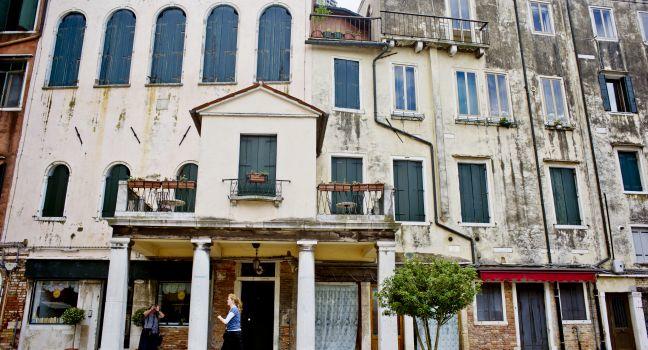
The neighborhood that gave the world the word "ghetto" is today a quiet area surrounding a large campo. It is home to Jewish institutions, several kosher restaurants, a rabbinical school, and five synagogues. Present-day Venetian Jews live all over the city, and the contemporary Jewish life of the Ghetto, with the exception of the Jewish Museum and the synagogues, is an enterprise conducted almost exclusively by American Hasidic Jews of eastern European descent and tradition.

Although Jews may have arrived earlier, the first synagogues weren't built and a cemetery (on the Lido) wasn't founded until the Ashkenazi, or eastern European Jews, came in the late 1300s. Dwindling coffers may have prompted the Republic to sell temporary visas to Jews, who were over the centuries alternately tolerated and expelled. The Rialto commercial district, as mentioned in Shakespeare's The Merchant of Venice, depended on Jewish moneylenders for trade and to help cover ever-increasing war expenses.

In 1516, relentless local opposition forced the Senate to confine Jews to an island in Cannaregio, then on the outer reaches of the city, named for its geto (foundry). The term "ghetto" also may come from the Hebrew "ghet," meaning separation or divorce. Gates at the entrance were locked at night, and boats patrolled the surrounding canals. Jews were allowed only to lend money at low interest, operate pawnshops controlled by the government, trade in textiles, or practice medicine. Jewish doctors were highly respected and could leave the Ghetto at any hour when on duty. Though ostracized, Jews were nonetheless safe in Venice, and in the 16th century, the community grew considerably—primarily with refugees from the Inquisition, which persecuted Jews in Spain, Portugal, and southern and central Italy. The Ghetto was allowed to expand twice, but it still had the city's densest population and consequently ended up with the city's tallest buildings.

Although the gates were pulled down after Napoléon's 1797 arrival, the Ghetto was reinstated during the Austrian occupation. The Jews realized full freedom only in 1866 with the founding of the Italian state. Many Jews fled Italy as a result of Mussolini's 1938 racial laws, so that on the eve of World War II, there were about 1,500 Jews left in the Ghetto. Jews continued to flee, and the remaining 247 were deported by the Nazis; only eight returned.

The area has Europe's highest density of Renaissance-era synagogues, and visiting them is interesting not only culturally, but also aesthetically. Though each is marked by the tastes of its individual builders, Venetian influence is evident throughout. Women's galleries resemble those of theaters from the same era, and some synagogues were decorated by artists who were simultaneously active in local churches; Longhena, the architect of Santa Maria della Salute, renovated the Spanish synagogue in 1635. You can visit some of the historic buildings of the Ghetto on guided tours, which run in English every hour from 10 am to 5 pm (9 am to 3 pm on Friday), every day except Saturday.

Bari Vecchia and Via Sparano

Fodor's Choice

By day, you can lose yourself in the maze of white alleyways in Bari Vecchia, the Old Town stretching along the harbor, now humming with restaurants, cafés, and crafts shops. Residents tend to leave their doors wide open, so you can catch a glimpse into the daily routine of southern Italy: matrons hand-rolling orecchiette, their grandchildren home from school for the midday meal, and workers busy patching up centuries-old arches and doorways. Back in the new town, join the evening passeggiata on pedestrian-only Via Sparano, then, when night falls, saunter out among the outdoor bars and restaurants in Piazza Mercantile, past Piazza Ferrarese at the end of Corso Vittorio Emanuele.

Kasbah

Fodor's Choice

The twisted maze of narrow streets and tiny courtyards at the core of Mazara’s historical center is most interesting if you visit with a local guide. There is no danger, but as the distinction between what is a private courtyard and a public thoroughfare is blurred, it is far more comfortable, as a stranger, to be accompanied by a local (in addition, you will probably get to meet a few of the 4,000-strong Tunisian community who live here). Throughout the Kasbah (and indeed scattered all over the historic center) are a series of ceramic statues, some commissioned from local artists, others by schoolchildren, as an appealing initiative by the local administration. On Via Porta Palermo, students from the local art school were given free rein to decorate the metal doors of abandoned lockups. Tours are at their most evocative just before sunset, when men gather after a day’s work in little social clubs, children play in the street or go to the community play center, and the sound of a recorded muezzin calls the faithful to prayer.

Recommended Fodor's Video

Navigli District

Navigli Fodor's Choice

In medieval times, a network of navigli, or canals, crisscrossed the city. Almost all have been covered over, but two—Naviglio Grande and Naviglio Pavese—are still navigable. The area's chock-full of boutiques, art galleries, cafés, bars, and restaurants, and at night the Navigli serves up a scene about as close as you will get to southern Italian–style street life in Milan. On weekend nights, it is difficult to walk among the youthful crowds thronging the narrow streets along the canals. Check out the antiques fair on the last Sunday of the month from 9 to 6. During the summer months, be sure to put on some mosquito repellent.

Sassi di Matera

Fodor's Choice

Matera's Sassi are piled chaotically atop one another down the sides of a steep ravine. Some date from Paleolithic times, when they were truly just caves. Over time, they were transformed into enclosed houses. In the 1960s, most inhabitants moved into ugly apartment blocks. The 1993 designation as a UNESCO World Heritage site, however, resulted in a cleanup and gentrification, with hotels, bars, and restaurants taking over many structures. From the upper town, the Strada Panoramica walk offers stellar views of the two areas known as Sasso Caveoso and Sasso Barisano.

Centro Storico

Black lava stone from Etna, combined with largely Baroque architecture, give Catania's historic center a very distinctive feel. After Catania's destruction by lava and earthquake at the end of the 17th century, the city was rebuilt and its informal mascot "U Liotru" (an elephant carved out of lava balancing an Egyptian obelisk) was placed outside the cathedral as a kind of talisman. This square also marks the entrance to Catania's famous pescheria (fish market) and is one of the few points in the city where you can see the Amenano River aboveground. Another point of interest is Via Garibaldi, which runs from Piazza del Duomo up toward the impressively huge Porta Garibaldi, a black-and-white triumphal arch built in 1768 to commemorate the marriage of Ferdinando I. Also of note in the center are Castello Ursino, which is now a museum, the Greco-Roman theater off Via Vittorio Emanuele II, the Roman amphitheater in Piazza Stesicoro, and the Monastero dei Benedettini, now a part of the university.

Catania, Italy

Something incorrect in this review?

La Pescheria

A short walk east of Piazza dei Signori is the pescheria (fish market; opened in 1856), set on an island on Cagnan Grande, one of the small canals that flow through town. The picturesque, leafy setting here is completed by the surrounding handsome medieval buildings, including Ca’ dei Carraresi, Ca’ Brittoni, and the former convent of the Monache Camaldolesi. Seek out two beguiling female statues close to Trevisani hearts around these parts: La Sirenetta or Little Mermaid emerges from the Cagnan Grande; and on Vicolo Podestà, Fontana Delle Tette's serene-looking signorina spouts water—and on special occasions, vino rosso and vino bianco—from her breasts.

Vicolo Podestà, Treviso, 31100, Italy

Something incorrect in this review?

Ostuni Old Town

Known as the Città Bianca for its dazzling white buildings and cobbled streets, Ostuni commands stupendous views out over the coast and the surrounding plain. Its unpolluted sea and clean beaches have earned it international Blue Flag recognition since 1994. The surrounding countryside contains a number of interesting 17th- and 18th-century masserie, many of which have been converted into agriturismi.

Pizzofalcone

Pizzofalcone

In the 7th century BC, Pizzofalcone was Naples. The ancient Greeks had settled here because, legend says, the body of the siren Parthenope had washed ashore on the beach at the foot of the Pizzofalcone Hill, then known as Monte Echia. In the 18th century, the hill, mere feet from the bay and the Castel dell'Ovo, became a fashionable address as Naples's wealthy sought to escape the congestion and heat of the city center. The rocky promontory soon became studded with Baroque palaces and Rococo churches.

The leading sights these days are the palazzi along Via Monte di Dio—including Palazzo Serra di Cassano—and the churches of La Nunziatella and Santa Maria degli Angeli. As with other parts of Naples, Pizzofalcone harbors both palaces and slums; unlike other parts, it's off-the-beaten path, so make sure to be aware of your surroundings at all times.

Naples, 80132, Italy

Something incorrect in this review?

Quartiere Latino

While strolling the city, take in this handsomely restored district between Riviera Garibaldi and Piazza Santa Maria Battuti. It's the site of university buildings, upscale apartments, and restaurants and shops.

Treviso, 31100, Italy

Something incorrect in this review?

Ragusa Ibla

The lovely historic center of Ragusa, known as Ibla, was completely rebuilt after the devastating earthquake of 1693. Its tumble of buildings are perched on a hilltop and suspended between a deep ravine and a sloping valley. The tiny squares and narrow lanes make for pleasant meandering, but expect plenty of stairs.

Ragusa, Italy

Something incorrect in this review?

San Pellegrino

One of the best-preserved medieval districts in Italy, San Pellegrino has charming vistas of arches, vaults, towers, exterior staircases, worn wooden doors on great iron hinges, and tiny hanging gardens. You pass many antiques shops and craft workshops, as well as numerous restaurants, as you explore the little squares and byways. The Fontana Grande in the piazza of the same name is the largest and most extravagant of Viterbo's Gothic fountains.

Via San Pellegrino, Viterbo, 01100, Italy

Something incorrect in this review?

Supportico Rua

A tunnel-like passageway also known as Via dei Mercanti, the evocative Supportico Rua was the main thoroughfare of medieval Amalfi, when the main road was a raging torrent. Still the town's most fascinating "street," it is especially wonderful when the light from alleys and windows plays on its white walls. Stretching almost the length of the main street, it ends at a medieval-era contrada, or neighborhood, with a fountain known as Capo di Ciuccio (donkey's head), where mules would refresh themselves after the climb down from the hills.

Amalfi, 84011, Italy

Something incorrect in this review?

Via Toledo

Toledo

Sooner or later you'll wind up at one of the busiest commercial arteries, also known as Via Roma, which is thankfully closed to through traffic—at least along the stretch leading from the Palazzo Reale. Don't avoid dipping into this parade of shops and coffee bars where plump pastries are temptingly arranged.

Via Toledo, Naples, Italy

Something incorrect in this review?