235 Best Sights in Italy

Background Illustration for Sights

We've compiled the best of the best in Italy - browse our top choices for the top things to see or do during your stay.

Passeggiata delle Mura

Fodor's Choice

On nice days, the citizens of Lucca cycle, jog, stroll, or kick a soccer ball in this green, beautiful, and very large circular park. It's neither inside nor outside the city but rather right atop and around the ring of ramparts that defines Lucca. Sunlight streams through two rows of tall plane trees to dapple the passeggiata delle mura (walk on the walls), which is 4 km (2½ miles) long. Ten bulwarks are topped with lawns, many with picnic tables and some with play equipment for children. Be aware at all times of where the edge is—there are no railings, and the drop to the ground outside the city is a precipitous 40 feet.

Pausilypon Archaeological Park

Posillipo Fodor's Choice

Atop Posillipo's hill, this small yet magical complex has a 1st-century villa and two amphitheaters; access is though the Grotta di Seiano, a 2,500-foot tunnel cut though the tufa rock over two millennia ago. Guided tours (in Italian, book ahead) are given at 11 weekdays, 10:30 and 12:15 on weekends and holidays. Evening concerts are often held here in the summer.

Discesa Coroglio 36, Naples, 80124, Italy
081-2403235
Sight Details
Free, or €7 with guide
Closed Mon. Apr.–Sept., closed Mon.–Thurs. Oct.–Mar.

Something incorrect in this review?

Piazza San Marco

San Marco Fodor's Choice

One of the world's most beautiful squares, Piazza San Marco (St. Mark's Square) is the spiritual and artistic heart of Venice, a vast open space bordered by an orderly procession of arcades marching toward the fairy-tale cupolas and marble lacework of the Basilica di San Marco. From midmorning on, it is generally packed with tourists. (If Venetians have business in the piazza, they try to conduct it in the early morning, before the crowds swell.) At night the piazza can be magical, especially in winter, when mists swirl around the lampposts and the campanile.

Facing the basilica, on your left, the long, arcaded building is the Procuratie Vecchie, renovated to its present form in 1514 as offices and residences for the powerful procurators, or magistrates.

On your right is the Procuratie Nuove, built half a century later in a more imposing, classical style. It was originally planned by Venice's great Renaissance architect Jacopo Sansovino (1486–1570), to carry on the look of his Libreria Sansoviniana (Sansovinian Library), but he died before construction on the Nuove had begun. Vincenzo Scamozzi (circa 1552–1616), a pupil of Andrea Palladio (1508–80), completed the design and construction. Still later, the Procuratie Nuove was modified by architect Baldassare Longhena (1598–1682), one of Venice's Baroque masters.

When Napoléon (1769–1821) entered Venice with his troops in 1797, he expressed his admiration for the piazza and promptly gave orders to alter it. His architects demolished a church with a Sansovino facade in order to build the Ala Napoleonica (Napoleonic Wing), or Fabbrica Nuova (New Building), which linked the two 16th-century procuratie and effectively enclosed the piazza.

Piazzetta San Marco is the "little square" leading from Piazza San Marco to the waters of Bacino San Marco (St. Mark's Basin); its molo (landing) once served as the grand entrance to the Republic. Two imposing columns tower above the waterfront. One is topped by the winged lion, a traditional emblem of St. Mark that became the symbol of Venice itself; the other supports St. Theodore, the city's first patron, along with his dragon. (A third column fell off its barge and ended up in the bacino before it could be placed alongside the others.) Although the columns are a glorious vision today, the Republic traditionally executed convicts here—and some superstitious Venetians still avoid walking between them.

Recommended Fodor's Video

Piazza Santa Croce

Santa Croce Fodor's Choice

Originally outside the city's 12th-century walls, this piazza grew with the Franciscans, who used it for public preaching. During the Renaissance, it hosted giostre (jousts), including one sponsored by Lorenzo de' Medici. Lined with many palazzi dating from the 15th and 16th centuries, the square remains one of Florence's loveliest and is a great place to people-watch.

Piazzale Michelangelo

San Niccolò Fodor's Choice

From this lookout you have a marvelous view of Florence and the hills around it, rivaling the vista from the Forte di Belvedere. A copy of Michelangelo's David overlooks outdoor cafés packed with tourists during the day and evening. In May, the Giardino dell'Iris (Iris Garden) off the piazza is abloom with more than 2,500 varieties of the flower. The Giardino delle Rose (Rose Garden) on the terraces below the piazza is also in full bloom in May and June.

Pincio Promenade

Villa Borghese Fodor's Choice

Redolent of the era of Henry James and Edith Wharton, the Pincian gardens have long been a classic setting for a walk. Grand Tourists—and even a pope or two—came here to see and be seen among the beau monde of Rome. Today, the Pincian terrace remains a favorite spot for locals taking a springtime Sunday stroll. The rather formal, early-19th-century style contrasts with the far more elaborate terraced gardens of Lucullus, the Roman gourmand who held legendary banquets here. Today, off-white marble busts of Italian Risorgimento heroes and artists line the pathways. Along with similar busts on the Gianicolo (Janiculum Hill), their noses have been targets of vandalism.

A stretch of ancient walls separates the Pincio from the southwest corner of Villa Borghese. From the balustraded terrace, you can look down at Piazza del Popolo and beyond, surveying much of Rome. Southeast of the Pincian terrace is the Casina Valadier ( www.casinavaladier.it), a magnificently decorated neoclassical building that contains an event space with glorious views.

Piazzale Napoleone I and Viale dell'Obelisco, Rome, 00187, Italy

Something incorrect in this review?

Poetto Beach

Fodor's Choice

Only 5 km (3 miles) southeast of the city center, Poetto Beach is one of the most enticing spots to relax in summer for both locals and tourists. Its clean, shallow, turquoise waters stretch for some 8 km (5 miles), and the beach is lined with cafés, restaurants, snack bars, and parks. Beach chairs and umbrellas are available for rent for around €15. Away from the sea, you can explore the nearby Molentargius lagoon, and admire the pink flamingos that nest in the marshy reeds there.  Poetto is easy to reach on the frequent public transport services: take Bus PF, PQ, or, in summer, Poetto Express or 5ZE, all from Piazza Matteotti. Amenities: food and drink; lifeguards; parking (fee in summer); showers; toilets; water sports. Best for: swimming; walking; windsurfing.

Promenades

Fodor's Choice

A stroll along one of Merano's well-marked, impossibly pleasant promenades may yield even better relaxation than time in its famous spa. Passeggiata Tappeiner (Tappeiner's Promenade) is a 3-km (2-mile) path with panoramic views from the hills north of the Duomo and diverse botanical pleasures along the way. Passeggiata d'Estate (Summer Promenade) runs along the shaded south bank of the Passirio River, and the Passeggiata d'Inverno (Winter Promenade), on the exposed north bank, provides more warmth and the Wandelhalle—a sunny area decorated with idyllic paintings of surrounding villages. The popular Austrian empress Sissi (Elisabeth of Wittelsbach, 1837–98) put Merano on the map as a spa destination; a trail named in her honor, the Sentiero di Sissi (Sissi's Walk), follows a path from Castel Trauttmansdorff to the heart of Merano.

Reggia di Venaria Reale

Fodor's Choice

Extensive Italianate gardens surround this magnificent 16th-century UNESCO-protected hunting lodge built for Carlo Emanuele II of Savoy. Inside, its Great Gallery is worthy of Versailles, and the attached chapel (Capella di Sant'Uberto) and stables were designed in the 1720s by Sicilian architect Filippo Juvarra. The Theatre of History and Magnificence houses a fascinating historical exhibition that tells the story of the House of Savoy. The upper floors are reserved for changing exhibitions.

Piazza della Repubblica 4, Venaria Reale, 10078, Italy
011-4992333
Sight Details
€20
Closed Mon. early June–mid-Apr.

Something incorrect in this review?

Renon (Ritten) Plateau

Fodor's Choice

The earth pyramids of Renon Plateau are a bizarre geological formation where erosion has left a forest of tall, thin, needlelike spires of rock, each topped with a boulder. To get here, take the Soprabolzano cable car from Via Renon, about 300 yards left of the Bolzano train station. At the top, switch to the electric train that takes you to the plateau, which is in Collalbo, just above Bolzano. The cable car takes about 12 minutes and the train takes around 18 minutes. The final 30-minute hike along gentle Trail No. 24 is free.

Via Renon, Collalbo, Italy
0471-356100
Sight Details
Cable car €10 round-trip, electric train €6 round-trip

Something incorrect in this review?

San Vito Lo Capo Beach

Fodor's Choice

There are numerous small, niche swimming spots in the Capo San Vito area, but the grandest and by far the most popular beach of all—and the centerpiece of the whole town—is San Vito Lo Capo's beach, a blissful arc of silky, white sand at the foot of Monte Monaco. Most of its length of nearly 3 km (2 miles) is public and free to use, but sections have been roped off as private lidos, where you'll pay €15–€20 for a full day's use of sunbeds and a parasol, plus access to bars and bathroom facilities. Needless to say, both public and private beaches get intensely crowded in July and August, which is the perfect time to seek out all those other lesser-known beaches in the vicinity. Amenities: food and drink; lifeguards; toilets; water sports. Best for: families; swimming; walking.

Sant'Angelo

Fodor's Choice

On the southern coast, this is a charming village with a narrow path leading to its promontory; the road doesn't reach all the way into town, so it's free of traffic. It's a five-minute boat ride from the beach of Maronti, at the foot of cliffs.

Sant'Angelo Muxara and the Val di Kam Experience

Fodor's Choice

A beautifully kept hill village of neat stone houses and cobbled streets, Sant'Angelo Muxara is where locals have collaborated to give travelers a firsthand look at rural traditions. Programs can be adapted to meet individual needs and interests, but highlights include cheese making and tasting with a local shepherd, making bread or pizza in the wood-fired oven of the village’s ancient bakery, and visiting a herbalist in his remote cabin and learning how to gather edible wild greens. Guided walks can also be organized, led by an archaeological and nature guide, that take in ancient cave dwellings and tombs and the town’s small but very well-presented archaeological museum. Mindful walks with yoga and meditation are also on offer and highly recommended. Email or call in advance to set up a tour.

Piazza Umberto I 31, Sant'Angelo Muxaro, 92020, Italy
338-6762491-WhatsApp
Sight Details
From €140 per person (min. 2 people)

Something incorrect in this review?

Scavi di Ostia Antica

Fodor's Choice

At its peak, the ancient port town at this site was home to a cosmopolitan population of rich businessmen, wily merchants, sailors, slaves, and their respective families. Great warehouses were built here in the 2nd century AD to handle goods that passed through, notably huge shipments of grain from Africa. Indeed, the port did so much business that it necessitated the construction of insulae (apartment buildings) to provide housing for the city's growing population.

The increasing importance of nearby Portus and the inexorable decline of the Roman Empire eventually led to the port's abandonment. In addition, the coastline retreated over the millennia, and a 16th-century flood diverted the course of the Tiber. Tidal mud and windblown sand buried the ancient port town until the 19th century, when it was extensively excavated.

You can wander through the massive archaeological site and explore its curious corners, mosaic floors, fallen columns, and huge Roman amphitheater. The on-site Museo Ostiense has been newly remodeled and displays sculptures, mosaics, and objects of daily use that were found here. There's also an on-site cafeteria.  The recently excavated ports of Tiberius and Claudius are nearby and included in the ticket.

Spiaggia della Mannara

Fodor's Choice

For those seeking sea air, limpid and shallow waters, and fine sand, Sampieri's wonderful beach is a popular destination. There are a few bars, restaurants, and beach clubs at the west end; walking eastwards a pine-forest-and-sand-dune-backed free-access public beach leads to Punta Pisciotto's sculpted volcanic stone cliffs and picturesque ruin, Fornace Penna. This former brick and tile factory built in 1912 is a stunning backdrop in both reality and in the Montalbano TV series, although the fictional inspector's beachside pad in the show is up the coast at Donnalucata. Adventurous walkers and cyclists will enjoy the coastal paths from Sampieri to nearby Marina di Modica, while a westward rocky shoreline trail traces the Covo dei Contrabbandieri to another small beach town, Cava d'Aliga. Sampieri is a 6-mile drive from Scicli along the SP40, or 20 minutes via bus or train (getting to and from Sampieri's train station and beach involves a walk along the busy road without sidewalks, though). Amenities: food and drink; lifeguards; parking (free); showers; toilets. Best for: sunset; surfing; swimming; walking.

Str. Demanio Forestale, Scicli, 97018, Italy

Something incorrect in this review?

Su Nuraxi

Fodor's Choice

The most extensive of the island's 7,000 discovered nuraghi, Su Nuraxi is on the UNESCO World Heritage list. Concentric rings of thick stone walls conceal dark chambers and narrow passages in a central beehive-shape tower. In the ruins of the surrounding village there are benches, ovens, wells, and other Bronze Age remnants. Tours start every 30 minutes and last about an hour. The same ticket includes entry to a museum and exhibition center in Barumini. If you're driving from SS131, don't be misled to other, lesser nuraghi—follow the signs all the way to Barumini.

Tenuta Vannulo—Buffalo Farm and Shop

Fodor's Choice
Foodies, families, and the curious flock to this novel farm attraction that celebrates humane animal husbandry, organic mozzarella di bufala, and other wonderful products. A tour of the ranch run by the Palmieri family—headed by the serene octogenerian Antonio—brings you nose to glistening snout with probably the most pampered buffalo in the world. Some 600 of them wallow in pools, get a mechanical massage, and flap their ears to classical music. The shop/restaurant is the place to taste and take away cheese, ice cream, yogurt, chocolate, and leather products.

Toledo Metro Station

Toledo Fodor's Choice

Designed by Catalan architect Oscar Tusquets Blanca and opened in 2012, this is the most impressive of the numerous Stazioni dell'Arte on the city's Metro Linea 1. First archaeological remains and then mosaics by William Kentridge lead to a 165-foot escalator descending below Robert Wilson's glittering oval Crater de Luz. A 560-foot corridor, connecting the station to the Quartieri Spagnoli, is lined with light boxes depicting Razza Umana (Human Race) by Oliviero Toscani. Lauded by both CNN and Britain's Telegraph, it also won a prestigious ITA Tunneling Award in 2015.

Tre Cime di Lavaredo

Fodor's Choice

Without a doubt, the Three Peaks—Cima Piccola (9,373 feet), Cima Grande (9,839 feet), and Cima Ovest (9,753 feet)—are the symbols of the Dolomite UNESCO World Heritage site. From the town of Misurina, only two of the Tre Cime are visible. In order to get up close and personal, drive or take a bus along the dedicated toll road (usually open June through October; toll of €30). Once at the top, follow Footpath 101 from Rifugio Auronzo to Forcella Laveredo (easy) for about an hour. There are many other footpaths and vie ferrate which allow you to climb the cime and access the base. Rifugi offer hot meals without a reservation, as well as dorm-style lodging, which is best reserved in advance.

Vendicari Nature Reserve

Fodor's Choice

The protected reserve encompasses 15,000 hectares with paths crisscrossing bird- and wildlife-rich lagoons, macchia scrubland, and unspoiled beaches, including Calamosche, Eloro, Marianelli (most pristine and peaceful), and Vendicari with its tonnara (fishery) ruins. There are five entrances, the nearest to Noto being Ingresso Marianelli, some 7 miles southeast of Noto via SP19. There's no reliable public transport here, so you'll need a car.

Via del Ghiaccio

Fodor's Choice

In the 19th and 20th centuries, the twin hill towns of Cammerata and San Giovanni Gemini were famous throughout Sicily for their traveling ice cream and granita makers. The key to this ice-cream industry was the collection and preservation of snow, and a local family of ice-cream makers has restored several of the neviere, circular buildings resembling stone igloos, strewn over the forested slopes above the towns. Snow was shoveled into the neviere, trodden down until it turned to a thick layer of ice, then covered with a mat of rushes and straw before another layer of snow was added on top. Stored like this, the snow would keep frozen for months, and with the giant blocks of ice fetching the equivalent of €3,000, it had to be carefully guarded. The best way to see the neviere, learn how to make Sicilian granita, and visit a small private ice museum, is on a guided tour, which can include a lunch of cold cuts, local cheeses, and grilled meat and vegetables in a pretty, family-run café.

Via Positanesi d'America

Fodor's Choice

Just before the ferry ticket booths to the right of Spiaggia Grande, a tiny road that is the loveliest seaside walkway on the entire coast rises up and borders the cliffs leading to Fornillo Beach. The road is named for the town's large number of 19th-century emigrants to the United States—Positano virtually survived during World War II thanks to the money and packages their descendants sent back home. Halfway up the path lies the Torre Trasìta (Trasìta Tower), the most distinctive of Positano's three coastline defense towers. Now a residence occasionally available for summer rental, the tower was used to spot pirate raids. As you continue along the Via Positanesi d'America, you'll pass a tiny inlet and an emerald cove before Fornillo Beach comes into view.

Villa d'Este

Fodor's Choice

One of Italy's UNESCO World Heritage sites, Villa d'Este was created by Cardinal Ippolito d'Este in the 16th century. This villa in the center of Tivoli was the most amazing pleasure garden of its day, and it still stuns modern visitors with its beauty. Cardinal d'Este (1509–72), a devotee of the Renaissance celebration of human ingenuity over nature, was inspired by the excavation of nearby Villa Adriana. He paid architect Pirro Ligorrio an astronomical sum to create an extraordinary garden filled with nymphs and grottoes. In addition, the Aniene River was diverted to water the garden and feed the several hundred fountains that cascade, shoot skyward, imitate birdsong, and simulate rain. Note especially the musical Fontana dell'Organo, whose water dances to an organ tune every two hours starting at 10:30 am.

Romantics will love the night tour of the gardens and floodlit fountains that takes place on Friday and Saturday in summer.  Allow at least an hour for a visit, which involves steep inclines and many stairs. There are vending machines for refreshments by the bookshop.

Villa di Orfeo

Fodor's Choice

Just outside the walls of the ancient Roman city of Tridentum, this fascinating residence was built during the 1st century AD. The villa’s highlight is a large ceremonial room with a 603-square-foot mosaic of Orpheus playing music to serenade animals. The visit also includes an immersive video that gives you a feel for the villa’s look and location at the time it was built, along with a virtual reconstruction of Tridentum.

Alpe di Siusi Cable Car

Italy, South Tirol, cable car to Alpe di Suisi
fritz16 / Shutterstock

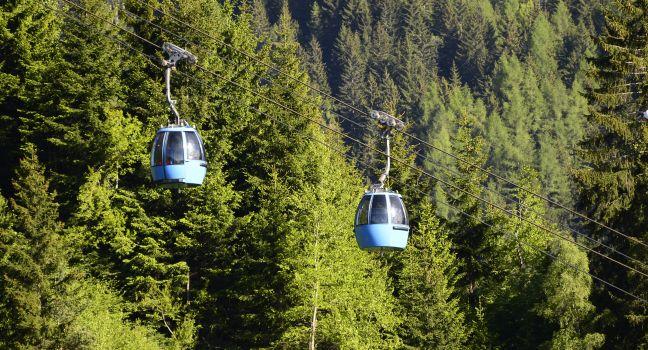
First opened in 1935, the cable car from Ortisei to Alpe di Siusi climbs more than 6,100 feet to the widest plateau in Europe. There are more than 57 square km (22 square miles) of Alpine pastures lined with summertime hiking trails. In the winter, 20 ski lifts and cross-country ski paths keep active visitors happy. There is a restaurant at the top of the Mt. Seuc ski lift, or you can pick up a map at the tourist office in Ortisei listing the mountain huts and restaurants that can be reached on foot. Opening days and times depend on the season and daily weather conditions; check the website or call ahead to avoid disappointment.

Setil Strada 9, Ortisei, 39046, Italy
0471-797897
Sight Details
€35 round-trip
Closed early Nov.–early Dec. and early Apr.–mid-May

Something incorrect in this review?

Museo Storico Navale

Castello
venice
© Ross Brinkerhoff / Fodors Travel

The impressive boat collection here includes scale models, such as the doges' ceremonial Bucintoro, and full-size boats, such as Peggy Guggenheim's private gondola complete with romantic felze (cabin). There's a range of old galley and military pieces, a section dedicated to Admiral Morosini (who plundered the Arsenale's Porta Magna lions nearby), and a large collection of seashells. A visit to the Paglione delle Nave, a part of the museum, allows you to see a portion of the interior of the Arsenale otherwise closed to visitors.

Castello 2148, Venice, 30122, Italy
041-2441399
Sight Details
€10

Something incorrect in this review?

Peggy Guggenheim Collection

Dorsoduro
Peggy Guggenheim Collection
© Halie Cousineau/ Fodors Travel

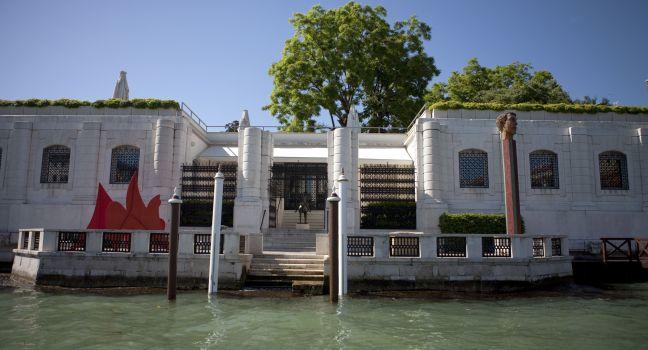
Housed in the incomplete but nevertheless charming Palazzo Venier dei Leoni, this choice selection of 20th-century painting and sculpture represents the taste and extraordinary style of the late heiress Peggy Guggenheim. Through wealth, social connections, and a sharp eye for artistic trends, Guggenheim (1898–1979) became an important art dealer and collector from the 1930s through the 1950s, and her personal collection here includes works by Picasso, Kandinsky, Pollock, Motherwell, and Ernst (her onetime husband). The museum serves beverages, snacks, and light meals in its refreshingly shady and artistically sophisticated garden.

Torre dell'Orologio

San Marco
Tower of St. Marks
© Halie Cousineau/ Fodors Travel

This enameled clock, completed in 1499, was most likely designed by Venetian Renaissance architect Mauro Codussi. Twin giant figures with tarnished bronze bodies strike the hour each day, while three wise men with an angel walk out and bow to the Virgin Mary on Epiphany (January 6) and during Ascension Week (40 days after Easter). An inscription on the tower reads "Horas non numero nisi serenas" ("I only count happy hours"). Originally, the clock tower had a much lighter, more graceful appearance, and was freestanding. The four lateral bays were added in the early 16th century, while the upper stories and balustrades were completed in 1755. The clock itself was neglected until the 19th century, but after years of painstaking labor, it was reassembled and is fully operational. Guided tours, which start at the Museo Correr's ticket office, are held in English numerous times a week (for adults and children age six and older); book in advance online or by phone.

Piazza San Marco, Venice, 30124, Italy
84-8082000-tickets (within Italy)
Sight Details
€14 for 1-hr tour, includes admission to Museo Correr, Museo Archeologico, and Biblioteca Nazionale Marciana. €11 with Museums of San Marco Pass or Museum Pass

Something incorrect in this review?

Acquario Civico di Milano

Sempione

The third-oldest aquarium in Europe, opened in 1906, is known as much for its Art Nouveau architecture as for its small but interesting collection of marine life. You'll find 36 pools that house more than 100 species of fish, including an emphasis on Italian freshwater fish and their habitat, and one tank of species from the Red Sea. 

Viale Gerolamo Gadio 2, Milan, 20100, Italy
02-88465750
Sight Details
€5; free every 1st and 3rd Tues. of month after 2
Closed Mon.

Something incorrect in this review?

Acquario di Genova

Europe's biggest aquarium is a must for children. Fifty tanks of marine species, including sea turtles, dolphins, seals, eels, penguins, jellyfish, and sharks, share space with educational displays, touch pools, and re-creations of marine ecosystems, among them a tank of coral from the Indian Ocean and a wall that replicates a forest in Madagascar. The Aquarium Village complex (additional cost) includes a biosphere with tropical plants and birds, as well as a virtual reality "experience museum," and the Bigo panoramic elevator.  Buy tickets online in advance for the lowest prices. If arriving by car, take the Genova Ovest exit from the autostrada.