25 Best Sights in Italy

Background Illustration for Sights

We've compiled the best of the best in Italy - browse our top choices for the top things to see or do during your stay.

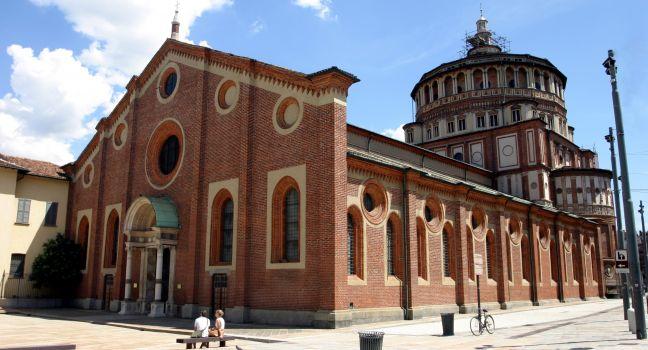
The Last Supper/Il Cenacolo/Santa Maria delle Grazie

Sant'Ambrogio Fodor's Choice
Milan, Italy, Santa Maria delle Grazie, Unesco World Heritage for its masterpiece The Last Supper by Leonardo;
Luca Grandinetti / Shutterstock

Leonardo da Vinci's The Last Supper, housed in this church and former Dominican monastery, has had an almost unbelievable history of bad luck and neglect. Its near destruction in an American bombing raid in August 1943 was only the latest chapter in a series of misadventures, including—if one 19th-century source is to be believed—being whitewashed over by monks. After years of restorers patiently shifting from one square centimeter to another, Leonardo's masterpiece is free of centuries of retouching, grime, and dust. Astonishing clarity and luminosity have been regained, helped by lighting, and a timed entry system where small groups are ushered into climate-controlled rooms with automatic glass doors, to prevent humidity.

Despite Leonardo's carefully preserved preparatory sketches, in which the apostles are clearly labeled by name, there still remains some small debate about a few identities in the final arrangement. There can be no mistaking Judas, however—small and dark, isolated from the terrible confusion that has taken the hearts of the others. Reservations are required to view the work. Viewings are in 15-minute timed-entry slots, and visitors must arrive 30 minutes before. Reservations can be made online. Reserve at least three weeks ahead if you want a Saturday slot, two weeks for a weekday slot. Some city bus tours include a visit in their regular circuit, which may be a good option.

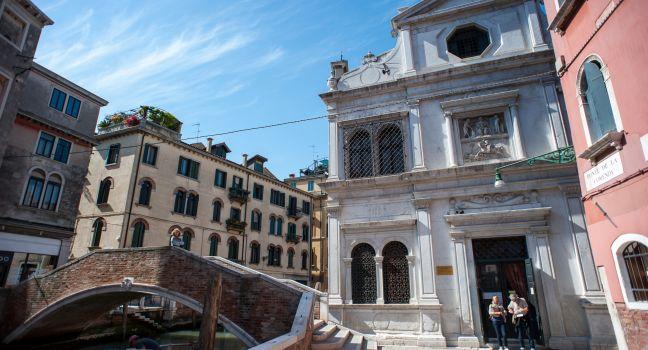
Scuola di San Giorgio degli Schiavoni (Scuola Dalmata)

Castello Fodor's Choice
Scuola di San Giorgio degli Schiavoni, Castello, Venice, Italy.
© Ross Brinkerhoff / Fodors Travel

Founded in 1451 by the Dalmatian community, this small scuola, or confraternity, was, and still is, a social and cultural center for migrants from what is now Croatia. It contains one of Italy's most beautiful rooms, harmoniously decorated between 1502 and 1507 by Vittore Carpaccio. Although Carpaccio generally painted legendary and religious figures against backgrounds of contemporary Venetian architecture, here is perhaps one of the first instances of "Orientalism" in Western painting.  Opening hours are quite flexible. Since this is a must-see site, book in advance so you won't be disappointed.

Arsenale della Repubblica

Fodor's Choice

From the middle of the 11th century, Amalfi's center of shipbuilding, customs houses, and warehouses was the Arsenale, today the only (partially) preserved medieval shipyard in southern Italy. Ships and galleys up to 80 feet long, equipped with up to 120 oars, were built at this largest arsenal of any medieval maritime republic. Two large Gothic halls here now host the Museo della Bussola e del Ducato Marinaro di Amalfi (Museum of the Compass and Maritime Duchy of Amalfi) with exhibitions and artifacts from Amalfi's medieval period, including paintings, ancient coins, banners, and jeweled costumes. The highlight is the original 66-chapter draft of the code of the Tavole Amalfitane, the sea laws and customs of the ancient republic, used throughout the Italian Mediterranean from the 13th to the 16th century. The Tavole established everything from prices for boat hires to procedures to be followed in case of a shipwreck. Long one of the treasures of the Imperial Library of Vienna, the draft was returned to Amalfi after more than 500 years. Ten of the arsenal's original 22 stone piers remain; the others were destroyed by storms and changes in the sea level on this ever-active coast.

Recommended Fodor's Video

Camera di San Paolo e Cella di Santa Caterina

Fodor's Choice

In the former Benedictine covent of San Polo lies a reception room for the erudite abbess Giovanna da Piacenza, who hired Correggio in 1519 to provide its bucolic, cherub-dancing decoration: mythological scenes are depicted in glorious frescoes of the Triumphs of the Goddess Diana, the Three Graces, and the Three Fates. A small room contains a copy of The Last Supper, while La Cella di Santa Caterina mixes frescoes of saintly scenes with fantastical figures, all by Araldi (1460--1528).

Certosa di San Giacomo

Capri Town Fodor's Choice

An eerie atmosphere hangs around neglected corners of this once grand, palatial complex between the Castiglione and Tuoro hills, which was for centuries a Carthusian monastery dedicated to St. James. It was founded between 1371 and 1374, when Queen Giovanna I of Naples gave Count Giacomo Arcucci, her secretary, the land and the means to create it. The count himself then became devoutly religious and retired here until his death. After the monastery was sacked by the pirates Dragut and Barbarossa in the 16th century, it was heavily restored and rebuilt—thanks in part to heavy taxes exacted from the populace. The friars within were detested by many Capresi for refusing to open the gates to minister to the people when plague broke out. The monks were expelled in 1808, and it subsequently served first as a hospice and then as a prison.

You enter the complex via a grandly imposing entryway, which leads to Capri's public library and the spacious church of San Giacomo (built in 1690, reopened after renovations in 2010). After admiring the church's Baroque frescoes, follow the signposts down toward the Parco, which leads down an avenue flanked by pittosporum and magnolia toward the tranquil monastery gardens and some welcome benches with stunning views. Take heed of the signs reminding you to watch your step, as the ground is uneven in places. Beyond a covered road lies the Chiostro Grande (Large Cloister)—originally the site of the monks' cells and for many years the home of a high school. Nearby is the 15th-century Chiostro Piccolo (Small Cloister). Both are often venues for summertime open-air concerts. The Quarto del Priore hosts exhibitions including the 2024-opened Museo Archeologico di Capri, displaying 120 objects and artworks from the epochs of the emperors Augustus and Tiberius, including statuary and frescoes. Perhaps the showstopper here is the collection of large canvases by influential German painter K.W. Diefenbach, who visited Capri in 1899 and stayed until his death in 1913. For years, Diefenbach rivaled the Blue Grotto for sheer picturesqueness—he was given to greeting visitors replete with flowing white beard, monk's cowl, and primitive sandals.

Palazzo Schifanoia

Fodor's Choice

The oldest, most characteristic area of Ferrara is south of the Duomo, stretching between the Corso Giovecca and the city's ramparts. Here various members of the Este family built pleasure palaces, the best known of which is the Palazzo Schifanoia (schifanoia means "carefree" or, literally, "fleeing boredom"). Begun in the late 14th century, the palace was remodeled between 1464 and 1469. Inside is Museo Schifanoia, with its lavish interior—particularly the Salone dei Mesi, which contains an extravagant series of frescoes showing the months of the year and their mythological attributes.

Parco Archeologico e Monumentale di Baia

Fodor's Choice

In antiquity this whole area was the Palatium Baianum (the Palace of Baia), dedicated to otium (leisure) and the residence of emperors from Augustus to as late as Septimius Severus in the 3rd century AD. At the park's ticket office, you should receive a small site map, and information panels in English are posted at strategic intervals. The first terrace, the Villa dell'Ambulatio, is one of the best levels from which to appreciate the site's topography: the whole hillside down to the level of the modern road near the waterfront has been modeled into flat terraces, each sporting different architectural features.

While up on the first terrace look for the depictions of dolphins, swans, and cupids in the balneum (thermal bathing, Room 13), and admire the theatrical motifs in the floor mosaic in Room 14. Below the balneum and inviting further exploration is a nymphaeum shrine, which can be reached from the western side. Make sure you get down to the so-called Temple of Mercury, on the lowest level, which has held much fascination for travelers from the 18th century onward. It has been variously interpreted as a frigidarium and as a natatio (swimming pool) and is the oldest example of a large dome (50 BC–27 BC), predating the cupola of the Pantheon in Rome. (Test the rich, haunting echo in the interior.) In summer the site often provides an unusual backdrop for evening concerts and opera performances.

Via Sella di Baia 22, Baia, 80070, Italy
081-8687592
Sight Details
€5, €10 Phlegraean Circuit ticket also includes Cumae, Museo Archeologico dei Campi Flegrei in Baia, and Anfiteatro Flavio in Pozzuoli
Closed Mon.

Something incorrect in this review?

Villa di Orfeo

Fodor's Choice

Just outside the walls of the ancient Roman city of Tridentum, this fascinating residence was built during the 1st century AD. The villa’s highlight is a large ceremonial room with a 603-square-foot mosaic of Orpheus playing music to serenade animals. The visit also includes an immersive video that gives you a feel for the villa’s look and location at the time it was built, along with a virtual reconstruction of Tridentum.

Scuola Grande dei Carmini

Dorsoduro
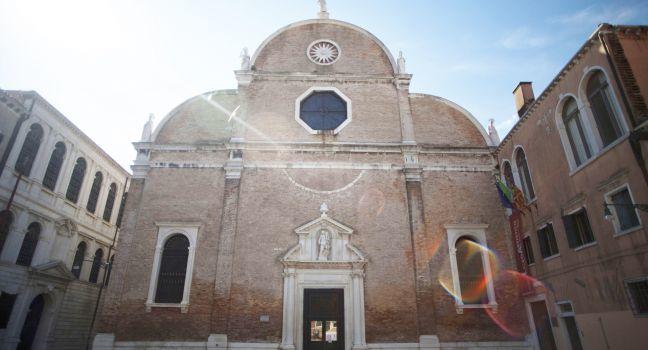
Scuola Grande dei Carmini
© Halie Cousineau/ Fodors Travel

When the order of Santa Maria del Carmelo commissioned Baldassare Longhena to finish the work on the Scuola Grande dei Carmini in the 1670s, their confraternity was one of the largest and wealthiest in Venice. Little expense was spared in the stuccoed ceilings and carved wooden paneling, and the artwork is remarkable. The paintings by Gianbattista Tiepolo that adorn the Baroque ceiling of the Sala Capitolare (Chapter House) are particularly alluring. In what many consider his best work, the artist’s nine canvases vividly transform some rather conventional religious themes into dynamic displays of color and movement.

Arco d'Augusto

Rimini's oldest monument is the Arco d'Augusto, now stranded in the middle of a square just inside the city ramparts. It was erected in 27 BC, making it among the oldest surviving ancient Roman arches.

Largo Giulio Cesare at Corso d'Augusto, Rimini, 47923, Italy

Something incorrect in this review?

Arco di Augusto

At the eastern entrance to town, and commanding a fine view over Aosta and the mountains, stands the Arco di Augusto (Arch of Augustus), built in 25 BC to mark Rome's victory over the Celtic Salassi tribe. (The sloping roof was added in 1716 in an attempt to keep rain from seeping between the stones.)

Piazza Arco d'Augusto, Aosta, Italy
Sight Details
Free

Something incorrect in this review?

Arsenale di Amalfi

Get a feel of the architecture and naval might of the repubblica marinara (maritime republic) of Amalfi at this fascinating museum within the impressive Arsenale shipyard, which was first documented in 1059. As well as a cultural and performance space, the Arsenale contains the Museo della Bussola e del Ducato Marinaro, which largely focuses on the golden age of the Amalfi Republic between 839 and 1139, displaying artifacts such as money, manuscripts, navigational and other nautical instruments, costumes, art, and religious objects.

Largo Cesario Console 3, Amalfi, 84011, Italy
089-8731293
Sight Details
€3

Something incorrect in this review?

Castello Sforzesco

Castello

Wandering the grounds of this tranquil castle and park near the center of Milan is a great respite from the often-hectic city, and the interesting museums inside are an added bonus. Highlights include the Sala delle Asse, a frescoed room attributed to Leonardo da Vinci (1452–1519), and Michelangelo's unfinished Rondanini Pietà, believed to be his last work. The pinacoteca (picture gallery) features 230 paintings from medieval times to the 18th century, and the Museo dei Mobili e delle Sculture Lignee (Furniture Museum) includes a delightful collection of Renaissance treasure chests.

Piazza Castello, Milan, 20121, Italy
02-88463700
Sight Details
Castle free, museums €5 (free every 1st and 3rd Tues. of month after 2, and 1st Sun. of month)
Museums closed Mon.

Something incorrect in this review?

Collegio del Cambio

These elaborate rooms, on the ground floor of the Palazzo dei Priori, served as the meeting hall and chapel of the guild of bankers and money changers. Most of the frescoes were completed by the most important Perugian painter of the Renaissance, Pietro Vannucci, better known as Perugino. He included a remarkably honest self-portrait on one of the pilasters. The iconography includes common religious themes, such as the Nativity and the Transfiguration seen on the end walls. Booking a time for your visit in advance online or by phone is recommended.

Corso Vannucci 25, Perugia, 06100, Italy
075-9372110
Sight Details
€6
Closed Sun. and Mon. afternoon

Something incorrect in this review?

Napoli Sotterranea

Centro Storico

Fascinating 90-minute tours of a portion of Naples's fabled underground city provide an initiation into the complex history of the city center. Efforts to dramatize the experience—amphoras lowered on ropes to draw water from cisterns, candles given to navigate narrow passages, objects shifted to reveal secret passages—combine with enthusiastic English-speaking guides to make this particularly exciting for older children. Be prepared on the underground tour to go up and down many steps and crouch in very narrow corridors.

Palazzo Beneventano

If the other palazzoli in Scicli simply hint at the luxury of the town's golden age, then this is a full-on assault on the senses. The exterior is covered by stone-carved statues, including representations of mythical creatures and enslaved people that serve as an essential reminder of the town's role in the region's slave trade. The private residence's saloni cannot be visited, but there's an interesting contemporary art gallery and small printworks at the street-level Bassi Beneventano ( www.lomagnoartecontemporanea.it).

Via Beneventano 17, Scicli, 97018, Italy

Something incorrect in this review?

Porta Pretoria

This huge gateway, regally guarding the city, is a remarkable relic from the Roman era. The area between the massive inner and outer walls was used as a small parade ground for the changing of the guard.

Risiera di San Sabba

In September 1943 the Nazi occupation established Italy's only concentration camp in this rice-processing factory outside Trieste. In April 1944 a crematorium was put into operation. The Nazis destroyed much of the evidence of their atrocities before their retreat, but a good deal of the horror of the place is still perceivable in the reconstructed museum (1975). The site, an Italian national monument since 1965, receives more than 100,000 visitors per year.

Rocca Paolina

A labyrinth of little streets, alleys, and arches, this underground city was originally part of a fortress built at the behest of Pope Paul III between 1540 and 1543 to confirm papal dominion over the city. Parts of it were destroyed after the end of papal rule, but much still remains. Begin your visit by taking the escalators that descend through the subterranean ruins from Piazza Italia down to Via Masi. In summer, this is the coolest place in the city.

Piazza Italia, Perugia, 06100, Italy
Sight Details
Free

Something incorrect in this review?

Scuola Grande San Giovanni Evangelista

Another of the six "great" scuole, San Giovanni Evangelista, founded in 1261, is only a few steps from the Frari and San Rocco, but undeservedly lacks the popularity of San Rocco despite its impressive Renaissance architecture by two of the greatest architects of the 15th century (Pietro Lombardo and Mauro Codussi). The wealth of paintings by Titian, Palma il Giovane, and Giandomenico Tiepolo favor depictions of St. John's visions of the Apocalypse. The famous paintings of the "Miracles of the Reliquary of the Holy Cross," created by Giovanni Bellini in 1490 for the scuola, are in the Accademia Gallery. The grand staircase was redesigned in 1498 by Mauro Codussi, who employed several visual tricks to make it seem larger than its small space would allow, and the mosaic marble pavement of the Salone (Giorgio Massari, 1752) is a masterpiece of the stoneworker's art. If you don't have time to visit the scuola itself, be sure to stop in its unique semi-enclosed medieval courtyard. The marble wall (Pietro Lombardo, 1481) is surmounted by a cross, eagle, and books, all symbols of St. John. The pavement (1759) echoes the designs seen on Piazza San Marco.

San Polo 2454, 30125, Italy
041-718158-museum
Sight Details
€10
Imperative to consult the website for any closures

Something incorrect in this review?

Squero di San Trovaso

San Trovaso is one of only four squeri, or boatbuilding yards specifically dedicated to gondolas and other Venetian wooden boats, still operating in Venice. (There once were at least 45.) Dating from the 17th century, it is a registered monument where you can really observe and appreciate a unique mode of transportation that still thrives today. If the small wooden buildings seem to resemble an Alpine chalet, it's because Venice's boatbuilders historically came from the nearby mountains. Notice the wooden planks stacked outside to season (a gondola is made of eight different types of wood). Half-hour visits can be booked.

Stanza Segreta di Michelangelo

San Lorenzo

In the summer of 1530, when Michelangelo was in his mid-50s, he went into hiding in San Lorenzo for political reasons. Some experts believe he may have spent those few months under the Cappelle Medicee in this 33x10x8-foot room with a tiny window facing Via del Canto dei Nelli. In 1975, charcoal and red chalk drawings were discovered under a plaster wall here. It wasn't until 2023, though, that the room was opened to the public. For reasons of conservation, access is limited to just 100 people per week, with groups of no more than four at a time allowed in for just 15 minutes. The requisite reservations ( www.b-ticket.com/b-Ticket/uffizi) for these slots tend to sell out months in advance, so plan accordingly.

As you step through an open trapdoor and gingerly walk down a narrow set of stairs, the impact is high, and 15 minutes isn't nearly enough time to fully examine about a dozen human figures as they twist and turn with passion across the arched walls. Scholars attribute some of these works to Michelangelo. In the New Sacristy above, compare them to the artist's sculptures on the tombs, particularly that of Giuliano de Medici, Duke of Nemours, and see what you think.

Piazza di Madonna degli Aldobrandini, 6, Florence, 50123, Italy
055-294883-reservations
Sight Details
€33 (including €3 reservation fee)
Closed Tues. and Sun.
Reservations essential

Something incorrect in this review?

Teatro Giuseppe Verdi

In the center of Busseto is the lovely Teatro Verdi, dedicated, as you might expect, to the works of the hamlet's famous son. Guided tours (in both English and Italian) of the well-preserved, ornate, 19th-century-style theater are offered every half hour. Check with the Busseto tourist office for the performance schedule.

Piazza G. Verdi 10, Busseto, 43011, Italy
0524-92487
Sight Details
Tours €5
Closed Mon.

Something incorrect in this review?

Torre dell'Elefante

Part of Cagliari's imposing Pisan defenses, this medieval fortified tower was built in 1307 by Giovanni Capula as one of the main entrances to the Castello quarter. It is named after the small carving of an elephant visible on one wall. The side facing the old citadel was left entirely open, allowing you to view the series of wooden stairs and landings inside without climbing a step. If you are tempted to climb to the top, you'll be rewarded by a fabulous panorama of the city and its surrounding lagoons. Visits are only possible on guided tours, scheduled at 15 minutes past the hour; under-12s are not permitted for safety reasons. The structure is the twin of Torre San Pancrazio, located near the archaeological museum and currently closed for renovation work.

Villaggio Preistorico di Capo Milazzese

A moderately easy hike across the beach at Zimmari and up a stepped stone path brings you to Punta Milazzese, the rugged headland along the southern coast. There you'll find the remnants of an ancient Bronze Age village that was inhabited between the 13th and 15th centuries BC, with the outlines of the 23 stone huts discovered in 1948 still clearly visible. During the excavation, examples of Mycenaean pottery were discovered and are now on display in Lipari's archaeological museum. A set of steps lead down from the village to Cala Junco below, a rocky cove with clear water that's popular with snorkelers.  

Villaggio Preistorico, Panarea, 98050, Italy

Something incorrect in this review?