1473 Best Sights in Italy

Background Illustration for Sights

We've compiled the best of the best in Italy - browse our top choices for the top things to see or do during your stay.

Necropoli di Pantalica

Fodor's Choice

You'll need to hire a guide to explore the over 5,000 tombs covering the limestone cliffs that make up this Iron and Bronze Age burial site. On a huge plateau over the Anapo River, the necropolis dates to between the 13th and 8th centuries BC. If you decide not to hire a guide, you'll need to drive to get here. There are two main entrances: one near the town of Sortino and the other from the town of Ferla. The entrance by Sortino involves a good walk down the sides of the gorge while the Ferla entrance is more of a gentle stroll along a well-beaten path. Set aside a minimum of two hours for your visit, but it is better to allocate at least half a day; be sure to wear a good pair of walking shoes and bring plenty of water.

Parco Archeologico della Neapolis

Archaeological Zone Fodor's Choice

 Siracusa is most famous for its dramatic set of Greek and Roman ruins, which are considered to be some of the best archaeological sites in all of Italy and should be combined with a stop at the Museo Archeologico. If the park is closed, go up Viale G. Rizzo from Viale Teracati to the belvedere overlooking the ruins, which are floodlit at night.

Before the park's ticket booth is the gigantic Ara di Ierone (Altar of Hieron), which was once used by the Greeks for spectacular sacrifices involving hundreds of animals. The first attraction in the park is the Latomia del Paradiso (Quarry of Paradise), a lush tropical garden full of palm and citrus trees. This series of quarries served as prisons for the defeated Athenians, who were enslaved; the quarries once rang with the sound of their chisels and hammers. At one end is the famous Orecchio di Dionisio (Ear of Dionysius), with an ear-shape entrance and unusual acoustics inside, as you'll hear if you clap your hands. The legend is that Dionysius used to listen in at the top of the quarry to hear what the enslaved people were plotting below.

The Teatro Greco is the chief monument in the Archaeological Park. Indeed it's one of Sicily's greatest classical sites and the most complete Greek theater surviving from antiquity. Climb to the top of the seating area (which could accommodate 15,000) for a fine view: all the seats converge upon a single point—the stage—which has the natural scenery and the sky as its backdrop. Hewn out of the hillside rock in the 5th century BC, the theater saw the premieres of the plays of Aeschylus, and Greek tragedies are still performed here every year in May and June. Above and behind the theater runs the Via dei Sepulcri, in which streams of running water flow through a series of Greek sepulchres.

The well-preserved and striking Anfiteatro Romano (Roman Amphitheater) reveals much about the differences between the Greek and Roman personalities. Where drama in the Greek theater was a kind of religious ritual, the Roman amphitheater emphasized the spectacle of combative sports and the circus. This arena is one of the largest of its kind and was built around the 2nd century AD. The corridor where gladiators and beasts entered the ring is still intact, and the seats (some of which still bear the occupants' names) were hauled in and constructed on the site from huge slabs of limestone.

Ara Pacis Augustae

Piazza di Spagna Fodor's Choice
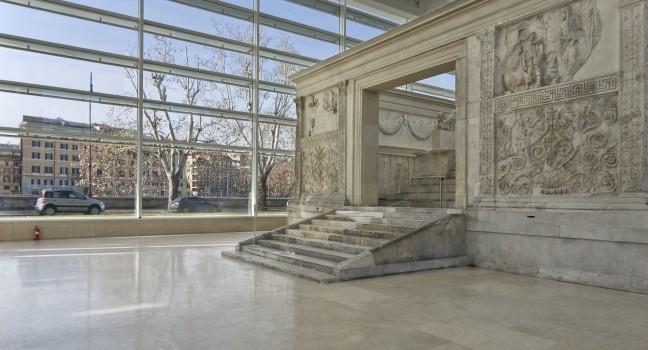
Rome. Ara Pacis from new museum complex.
(c) Archeofoto | Dreamstime.com

This pristine monument sits inside one of Rome's contemporary architectural landmarks: a gleaming, rectangular, glass-and-travertine structure designed by American architect Richard Meier. It overlooks the Tiber on one side and the ruins of the marble-clad Mausoleo di Augusto (Mausoleum of Augustus) on the other and is a serene, luminous oasis right in the center of Rome.

This altar itself dates from 13 BC and was commissioned to celebrate the Pax Romana, the era of peace ushered in by Augustus's military victories. When viewing it, keep in mind that the spectacular reliefs would have been painted in vibrant colors, now long gone. The reliefs on the short sides portray myths associated with Rome's founding and glory; those on the long sides display a procession of the imperial family. Although half of his body is missing, Augustus is identifiable as the first full figure at the procession's head on the south-side frieze; academics still argue over exact identifications of most of the figures. Be sure to check out the small downstairs museum, which hosts rotating exhibits on Italian culture, with themes ranging from design to film.

Lungotevere in Augusta, Rome, 00186, Italy
06-0608
Sight Details
€12, €13 when there is an exhibition
Reservations essential for groups of 11 to 25 persons

Something incorrect in this review?

Recommended Fodor's Video

Arco di Settimio Severo

Campitelli Fodor's Choice
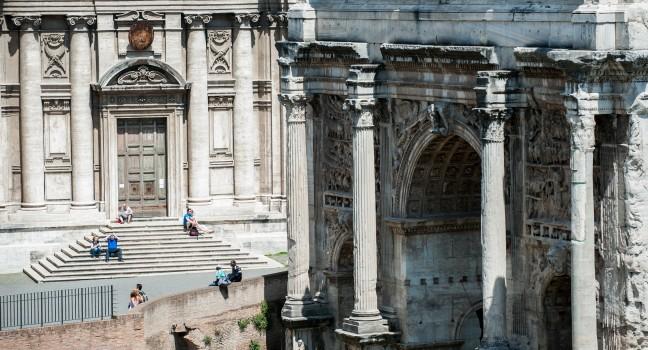
Arco di Settimio Severo, Rome, Italy
© Ross Brinkerhoff / Fodor’s Travel

One of the grandest triumphal arches erected by a Roman emperor, this richly decorated monument was built in AD 203 to celebrate Severus's victory over the Parthians. It was once topped by a bronze statuary group depicting a chariot drawn by four (or perhaps as many as six) life-size horses. Masterpieces of Roman statuary, the stone reliefs on the arch were probably based on huge painted panels depicting the event, a kind of visual report on his foreign campaigns that would have been displayed during the emperor's triumphal parade in Rome to impress his subjects (and, like much statuary then, were originally painted in florid, lifelike colors).

West end of Foro Romano, Rome, 00186, Italy
Sight Details
€18 24-hr ticket required

Something incorrect in this review?

Basilica di San Marco

San Marco Fodor's Choice
Saint Mark's Basilica, San Marco, Venice, Italy.
© Halie Cousineau/ Fodors Travel

The Basilica di San Marco is not only the religious center of a great city, but also an expression of the political, intellectual, and economic aspiration and accomplishments of a place that, for centuries, was at the forefront of European culture. It is a monument not just to the glory of God, but also to the glory of Venice. The basilica was the doges' personal chapel, linking its religious function to the political life of the city, and was endowed with all the riches the Republic's admirals and merchants could carry off from the Orient (as the Byzantine Empire was then known), earning it the nickname “Chiesa d'Oro” (Golden Church). When the present church was begun in the 11th century, rare colored marbles and gold-leaf mosaics were used in its decoration. The 12th and 13th centuries were a period of intense military expansion, and by the early 13th century, the facades began to bear testimony to Venice's conquests, including gilt-bronze ancient Roman horses taken from Constantinople in 1204.

The glory of the basilica is, of course, its medieval mosaic work; about 30% of the mosaics survive in something close to their original form. The earliest date from the late 12th century, but the great majority date from the 13th century. The taking of Constantinople in 1204 was a deciding moment for the mosaic decoration of the basilica. Large amounts of mosaic material were brought in, and a Venetian school of mosaic decoration began to develop. Moreover, a 4th- or 5th-century treasure—the Cotton Genesis, the earliest illustrated Bible—was brought from Constantinople and supplied the designs for the exquisite mosaics of the Creation and the stories of Abraham, Joseph, and Moses that adorn the narthex (entrance hall). They are among the most beautiful and best preserved in all the basilica.

Remember that this is a sacred place: guards may deny admission to people in shorts, sleeveless dresses, and tank tops.

San Marco 328, Venice, 30124, Italy
041-2708311
Sight Details
Basilica €6; Basilica and Pala d'Oro €12; Basilica and museum €15; museum and Loggia dei Cavalli €10; Basilica, Pala d'Oro, museum, and Loggia dei Cavalli €20; bell tower €10
Basilica and Pala d'Oro closed for tourist visits (church services only) Sun. till 2 pm

Something incorrect in this review?

Basilica di San Pietro

Vatican Fodor's Choice
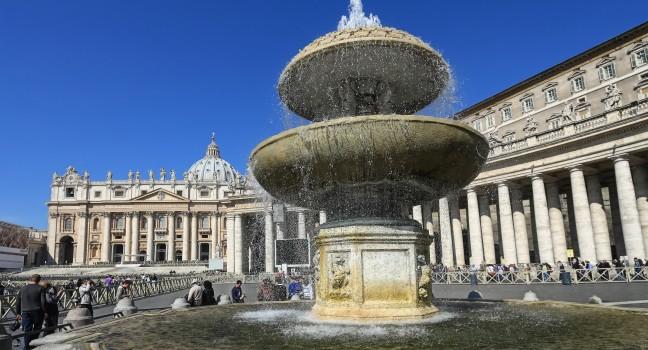
Vatican fountain.
WDG Photo / Shutterstock

The world's largest church, built over the tomb of St. Peter, is the most imposing and breathtaking architectural achievement of the Renaissance (although much of the lavish interior dates to the Baroque period). No fewer than five of Italy's greatest artists—Bramante, Raphael, Peruzzi, Antonio da Sangallo the Younger, and Michelangelo—died while striving to erect this new St. Peter's.

The history of the original St. Peter's goes back to AD 326, when the emperor Constantine completed a basilica over the site of the tomb of St. Peter, the Church's first pope. The original church stood for more than 1,000 years, undergoing a number of restorations and alterations, until, toward the middle of the 15th century, it was on the verge of collapse. In 1452, a reconstruction job began but was abandoned for lack of money.

In 1503, Pope Julius II instructed the architect Bramante to raze all the existing buildings and build a new basilica, one that would surpass even Constantine's for grandeur. It wasn't until 1626 that the new basilica was completed and consecrated.

Highlights include the Loggia delle Benedizioni (Benediction Loggia), the balcony where newly elected popes are proclaimed; Michelangelo's Pietà; and Bernini's great bronze baldacchino, a huge, spiral-columned canopy—at 100,000 pounds, perhaps the largest bronze object in the world—as well as many other Bernini masterpieces. There are also collections of Vatican treasures in the Museo Storico-Artistico e Tesoro and the Grotte Vaticane crypt.

For views of both the dome above and the piazza below, take the elevator or stairs to the roof. Those with more stamina (and without claustrophobia) can then head up more stairs to the apex of the dome.

 The basilica is free to visit, but a security check at the entrance can create very long lines. Arrive before 8:30 or after 5:30 to minimize the wait and avoid the crowds.

Piazza San Pietro, Rome, 00120, Italy
Sight Details
Free
Closed during Papal General Audience (Wed. until 1 pm) and during other ceremonies in piazza

Something incorrect in this review?

Basilica di Santa Maria Assunta

Fodor's Choice
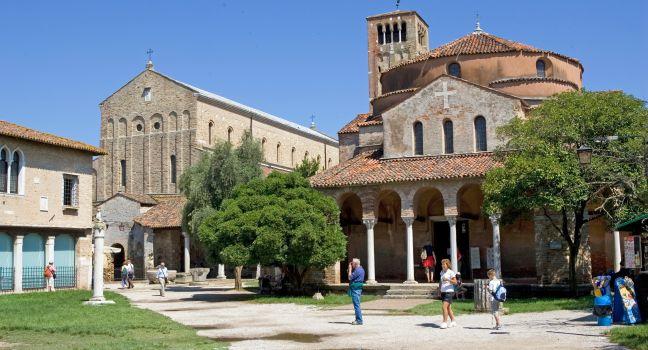
Torcello, Venice Italy, is a quiet and sparsely populated island at the northern end of the Venetian Lagoon. Today's main attraction is the Cathedral of Santa Maria Assunta, founded in 639 and with much 11th and 12th century Byzantine work, including mosai
(c) Antonella865 | Dreamstime.com

The hallowed centerpiece of Torcello, Santa Maria Assunta was built in the 11th century, and the island's wealth at the time is evident in the church's high-quality mosaics. The mosaics show the gradually increasing cultural independence of Venice from Byzantium. The magnificent late-12th-century mosaic of the Last Judgment shows the transition from the stiffer Byzantine style on the left to the more fluid Venetian style on the right. The Virgin in the main apse dates possibly from about 1185 and is of a distinctly Byzantine type, with her right hand pointing to the Christ child held with her left arm. The depictions of the 12 Apostles below her are possibly the oldest mosaics in the church and date from the early 12th century. Note that restoration of the mosaics is ongoing. The adjacent Santa Fosca church, built when the body of the saint arrived in 1011, is still used for religious services.

Torcello, 30175, Italy
041-730119
Sight Details
Santa Maria Assunta €5, Santa Fosca free

Something incorrect in this review?

Ca' Rezzonico

Dorsoduro Fodor's Choice
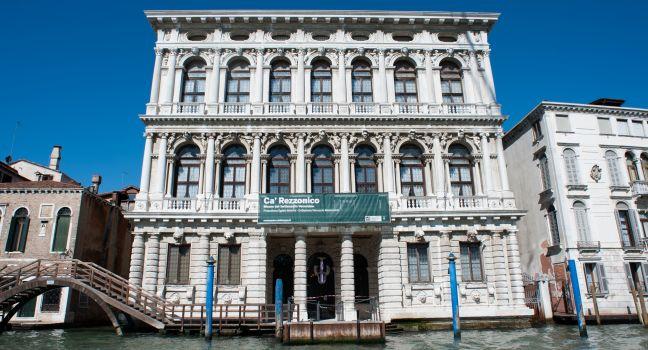
Ca' Rezzonico, Dorsoduro, Venice, Italy
© Ross Brinkerhoff / Fodors Travel

Designed by Baldassare Longhena in the 17th century, this gigantic palace was completed nearly 100 years later by Giorgio Massari and became the last home of English poet Robert Browning (1812–89). Stand on the bridge by the Grand Canal entrance to spot the plaque with Browning's poetic excerpt ("Open my heart and you will see graved inside of it, Italy . . .") on the left side of the palace. The spectacular centerpiece is the eye-popping Grand Ballroom, which has hosted some of the grandest parties in the city's history, from its 18th-century heyday to the 1969 Bal Fantastica (a Save Venice charity event that attracted every notable of the day, from Elizabeth Taylor to Aristotle Onassis).

Today the upper floors of the Ca' Rezzonico are home to the especially delightful Museo del Settecento (Museum of Venice in the 1700s). Its main floor successfully retains the appearance of a magnificent Venetian palazzo, decorated with period furniture and tapestries in gilded salons, as well as Gianbattista Tiepolo ceiling frescoes and oil paintings. Upper floors contain a fine collection of paintings by 18th-century Venetian artists, including the famous Pulcinella frescoes by Tiepolo's son, Giandomenico, moved here from the Villa Tiepolo at Zianigo on the mainland. There's even a restored 18th-century three-room apothecary called "At the Two San Marcos," that once stood in Campo San Stin. It retains its many large jars made of majolica and Murano glass.   

The Campidoglio

Piazza Venezia Fodor's Choice
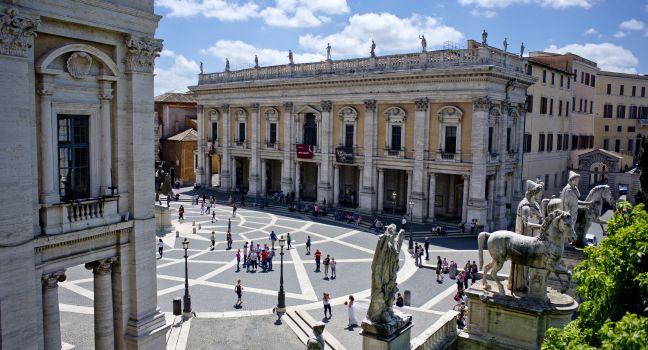
The Campidoglio, Campidoglio, Ancient Rome, Italy.
© Zach Nelson / Fodors Travel

Spectacularly transformed by Michelangelo's late-Renaissance designs, the Campidoglio was once the epicenter of the Roman Empire, the place where the city's first shrines stood, including its most sacred, the Temple of Jupiter. The Capitoline Hill originally consisted of two peaks: the Capitolium and the Arx (where Santa Maria in Aracoeli now stands). The hollow between them was known as the Asylum. Here, prospective settlers once came to seek the protection of Romulus, legendary first king of Rome—hence the term "asylum." Later, during the Republic, in 78 BC, the Tabularium, or Hall of Records, was erected here.

By the Middle Ages, however, the Capitoline had become an unkempt hill strewn with ancient rubble. In preparation for the impending visit of Charles V in 1536, triumphant after the empire's victory over the Moors, his host, Pope Paul III Farnese, decided that the Holy Roman Emperor should follow the route of the emperors, finishing triumphantly at the Campidoglio. The pope was embarrassed by the decrepit goat pasture the hill had become and so commissioned Michelangelo to restore the site to glory. The resulting design added a third palace along with Renaissance-style facades and a grand paved piazza. Newly excavated ancient sculptures, designed to impress the visiting emperor, were installed in the palaces, and the piazza was ornamented with the giant stone figures of the Discouri and the ancient Roman equestrian statue of Emperor Marcus Aurelius. A copy of this extraordinary statue is still the piazza's centerpiece (the 2nd-century original has been housed in the neighbouring Musei Capitolini since 1999).

While there are great views of the Roman Forum from the terrace balconies to either side of the Palazzo Senatorio, the best view is from the 1st century BC Tabularium, now part of the Musei Capitolini. The museum café is on the Terrazza Caffarelli, with a magical view toward Trastevere and St. Peter's, and is accessible without a museum ticket.

Cappella Sistina

Vatican Fodor's Choice
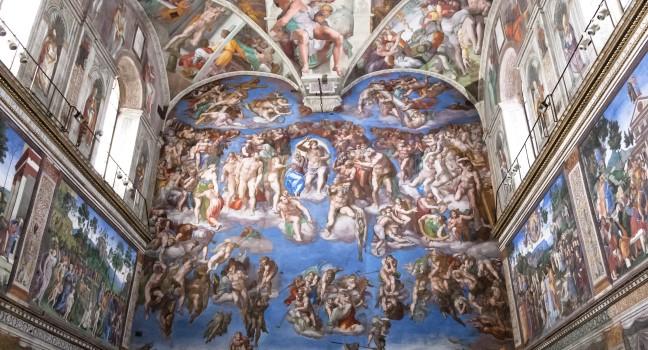
The Last Judgement, Sistine Chapel, Vatican, Rome
(c) Anitasstudio | Dreamstime.com

In 1508, the redoubtable Pope Julius II commissioned Michelangelo to fresco the more than 10,000 square feet of the Sistine Chapel's ceiling. (Sistine, by the way, is simply the adjective form of Sixtus, in reference to Pope Sixtus IV, who commissioned the chapel itself.) The task took four years, and it's said that, for many years afterward, Michelangelo couldn't read anything without holding it over his head. The result, however, was the greatest artwork of the Renaissance. A pair of binoculars helps greatly, as does a small mirror—hold it facing the ceiling and look down to study the reflection.

More than 20 years after his work on the ceiling, Michelangelo was called on again, this time by Pope Paul III, to add to the chapel's decoration by painting the Last Judgment on the wall over the altar. By way of signature on this, his last great fresco, Michelangelo painted his own face on the flayed-off human skin in St. Bartholomew's hand. 

The chapel is entered through the Musei Vaticani, and lines are slightly shorter after 2:30 (reservations are always advisable)—except free Sundays, which are extremely busy and when admissions close at 12:30.

Castello del Buonconsiglio

Fodor's Choice
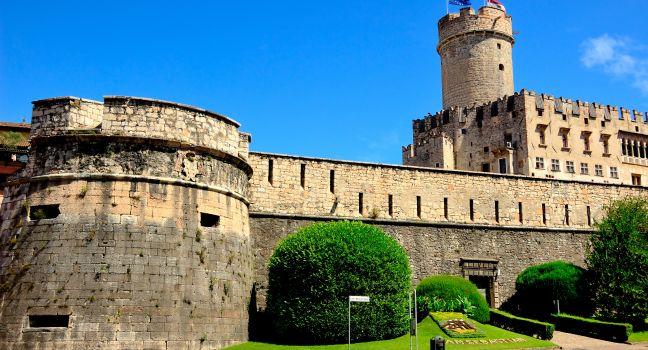
Castello del Buonconsiglio in Italy
Bildagentur Zoonar GmbH / Shutterstock

The position and size of this stronghold of the prince-bishops made it easier to defend than the Palazzo Pretorio. Look for the evolution of architectural styles: the medieval fortifications of the Castelvecchio section (on the far left) were built in the 13th century; the fancier Renaissance Magno Palazzo section (on the far right) wasn't completed until 300 years later. The 13th-century Torre dell'Aquila (Eagle's Tower) is home to the castle's artistic highlight, a 15th-century ciclo dei mesi (cycle of the months). The four-wall fresco is full of charming and detailed scenes of medieval life in both court and countryside.

Via Bernardo Clesio 5, Trento, 38100, Italy
0461-233770
Sight Details
€10; Torre Aquila €2.50
Closed Mon.
Timed visits must be booked online in advance

Something incorrect in this review?

Colosseum

Colosseo Fodor's Choice
Colosseum, Rome, Italy
© Ross Brinkerhoff / Fodor’s Travel

The most spectacular extant edifice of ancient Rome, the Colosseum has a history that is half gore, half glory. Once able to house 50,000 spectators, it was built to impress Romans with its spectacles involving wild animals and fearsome gladiators from the farthest reaches of the empire. Senators had marble seats up front, the vestal virgins took the ringside position, the plebs sat in wooden tiers at the back, and the masses watched from the top tier. Looming over all was the amazing velarium, an ingenious system of sail-like awnings rigged on ropes and maneuvered by sailors from the imperial fleet, who would unfurl them to protect the arena's occupants from sun or rain.

From the second floor, you can get a bird's-eye view of the hypogeum—the subterranean passageways that were the architectural engine rooms that made the slaughter above proceed like clockwork. In a scene prefiguring something from Dante's Inferno, hundreds of beasts would wait to be launched via a series of slave-powered hoists and lifts into the bloodthirsty sand of the arena above.

Designed by order of the emperor Vespasian in AD 72 and completed by his son Titus in AD 80, the arena has a circumference of 573 yards, and its external walls were built with travertine from nearby Tivoli. Its construction was a remarkable feat of engineering, for it stands on marshy terrain reclaimed by draining an artificial lake that formed part of the vast palace of Nero. Originally known as the Flavian amphitheater (Vespasian's and Titus's family name was Flavius), it came to be known as the Colosseum thanks to a colossal gilded bronze statue that once stood nearby.

The legend made famous by the Venerable Bede says that as long as the Colosseum stands, Rome will stand; and when Rome falls, so will the world . . . not that the prophecy deterred medieval and Renaissance princes and popes from using the Colosseum as a quarry. In the 19th century, poets came to view the arena by moonlight; today, mellow golden spotlights make the arena a spectacular sight at night, and evening visits are possible with guided tours from May through October. To enter, book a combination ticket (with the Roman Forum and Palatine Hill) in advance online, though if you have a Roma Pass, you can use it.

Tickets cost €18. Aim for early or late slots to minimize lines, as even the preferential lanes get busy in the middle of the day. Alternatively, you can book a tour online with a company (do your research to make sure it's reputable) that lets you skip the line. Avoid the tours sold on the spot around the Colosseum; although you can skip the lines, the tour guides tend to be dry, the tour groups huge, and the tour itself rushed. To see the arena or the underground, you must purchase a special timed-entry ticket with those features, though the arena is included if you buy the Roman Forum–Palatine complex €24 two-day Full Experience ticket.

Piazza del Colosseo, Rome, 00184, Italy
Sight Details
Requires either the €18 24-hr ticket or the €24 Full Experience ticket (can include the arena, the underground, and/or the attic for no additional fee, but it must be specified during the purchase)

Something incorrect in this review?

Duomo

Duomo Fodor's Choice
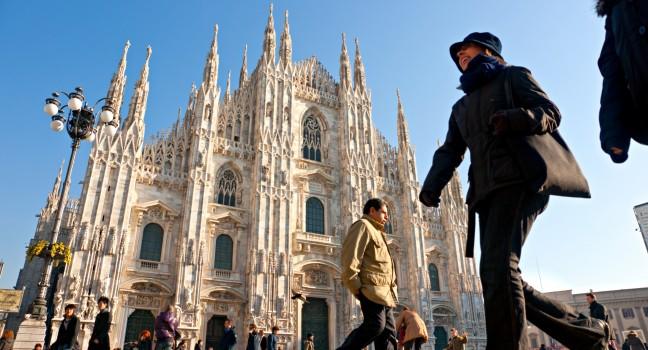
MILAN - DECEMBER 11: Tourists at Piazza Duomo on December 11, 2009 in Milan, Italy. As of 2006, Milan was the 42nd most visited city worldwide, with 1.9 million annual international visitors
Luciano Mortula / Shutterstock

There is no denying that for sheer size and complexity, the Duomo is unrivaled in Italy. It is the second-largest church in the country—the largest being St. Peter's in Rome. This intricate Gothic structure has been fascinating and exasperating visitors and conquerors alike since it was begun by Gian Galeazzo Visconti III (1351–1402), first duke of Milan, in 1386. Consecrated in the 15th or 16th century, it was not completed until just before the coronation of Napoléon as king of Italy in 1809.

The building is adorned with 135 marble spires and 2,245 marble statues. The Duomo's most famous sculpture is the gruesome but anatomically instructive figure of San Bartolomeo (St. Bartholomew), who was flayed alive. As you enter the apse to admire those splendid windows, glance at the sacristy doors to the right and left of the altar. The lunette on the right dates from 1393 and was decorated by Hans von Fernach.

Piazza del Duomo, Milan, 20122, Italy
02-72023375
Sight Details
Cathedral, museum, and archaeological area €14; stairs to roof €14; elevator €16; fast-track skip the line with elevator €26

Something incorrect in this review?

Galleria Borghese

Villa Borghese Fodor's Choice
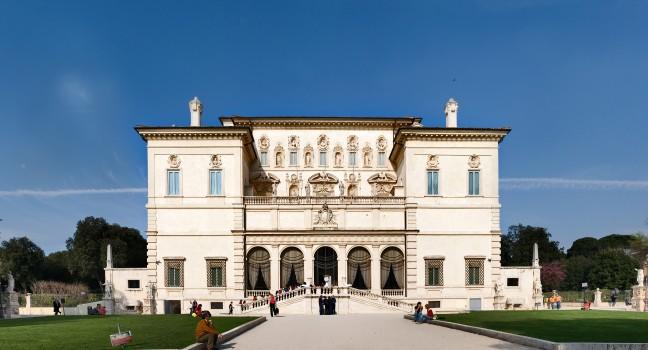
Villa Borghese, Galleria Borghese, Roma, Italy.
Khirman Vladimir / Shutterstock

It's toss-up as to which is more magnificent: the museum or the art that lies within it. The luxury-loving Cardinal Scipione Borghese had the museum custom built in 1612 as a showcase for his collection of both antiquities and more "modern" works, including those he commissioned from the masters Caravaggio and Bernini. Today, it's a monument to Roman interior decoration at its most extravagant.

One of the collection's most famous works is Canova's neoclassical sculpture Pauline Borghese as Venus Victorious. The next three rooms hold three key early Baroque sculptures: Bernini's David; Apollo and Daphne; and The Rape of Persephone. All were done when the artist was in his twenties and all illustrate his extraordinary skill. Apollo and Daphne shows the moment when, to aid her escape from the pursuing Apollo, Daphne is turned into a laurel tree. Leaves and twigs sprout from her fingertips as she stretches agonizingly away from Apollo. In The Rape of Persephone, Pluto has either just plucked Persephone (or Proserpina) from her flower-picking or is in the process of returning to Hades with his prize. Note the realistic way his grip causes dimples in Persephone's flesh. This is the stuff that makes the Baroque exciting—and moving. Other Berninis on view include a large, unfinished figure called Verità, or Truth.

Room 8 contains six paintings by Caravaggio, the hotheaded genius who died at age 37. All of his paintings, even the charming Boy with a Basket of Fruit, have an undercurrent of darkness. The disquieting Sick Bacchus is a self-portrait of the artist who, like the god, had a fondness for wine. David and Goliath, painted in the last year of Caravaggio's life—while he was on the run, murder charges hanging over his head—includes his self-portrait in the head of Goliath. Upstairs, the Pinacoteca (Picture Gallery) boasts paintings by Raphael (including his moving Deposition), Pinturicchio, Perugino, Bellini, and Rubens. Probably the gallery's most famous painting is Titian's allegorical Sacred and Profane Love, a mysterious image with two female figures, one nude, one clothed.  Admission to the Galleria Borghese is by reservation only. Visitors are admitted in two-hour shifts 9–5. Prime-time slots sell out days in advance, so reserve directly (and early) through the museum's website.

Piazzale Scipione Borghese, 5, Rome, 00197, Italy
06-32810-reservations
Sight Details
€15, including €2 reservation fee; increased fee during temporary exhibitions
Closed Mon.
Reservations essential

Something incorrect in this review?

Galleria Vittorio Emanuele II

Duomo Fodor's Choice
Milan. Very big shop.; Shutterstock ID 2375626; Project/Title: Best of Europe; Downloader: Melanie Marin
chaoss / Shutterstock

This spectacular late-19th-century Belle Époque tunnel is essentially one of the planet's earliest and most select shopping malls, with upscale tenants that include Gucci and Prada. This is the city's heart, midway between the Duomo and La Scala. It teems with life, which makes for great people-watching from the tables that spill out from bars and restaurants, where you can enjoy an overpriced coffee. Books, clothing, food, hats, and jewelry are all for sale. Known as Milan's "parlor," the Galleria is often viewed as a barometer of the city's well-being.

Piazza del Duomo, Milan, 20121, Italy

Something incorrect in this review?

Gallerie dell'Accademia

Dorsoduro Fodor's Choice
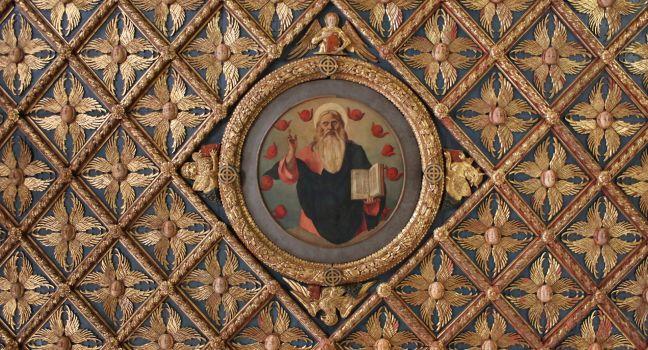
Ceiling of Accademia, Venice
Antoine Motte dit Falisse [CC BY-SA 3.0], via Wikimedia Commons

The largest collection of Venetian paintings in the world hangs in these galleries founded by Napoléon in 1807 on the site of a religious complex he had suppressed. The galleries were carefully and subtly restructured between 1945 and 1959 by the renowned Venetian architect Carlo Scarpa.

Jacopo Bellini is considered the father of the Venetian Renaissance, and in Room 2 you can compare his Madonna and Child with Saints with such later works as Madonna of the Orange Tree by Cima da Conegliano (circa 1459–1517) and Ten Thousand Martyrs of Mt. Ararat by Vittore Carpaccio (circa 1455–1525). Jacopo's more accomplished son Giovanni (circa 1430–1516) attracts your eye not only with his subject matter but also with his rich color. Rooms 4 and 5 have a good selection of his Madonnas. Room 5 contains The Tempest by Giorgione (1477–1510), a revolutionary work that has intrigued viewers and critics for centuries. It is unified not only by physical design elements, as was usual, but more importantly by a mysterious, somewhat threatening atmosphere. In Room 10, Feast in the House of Levi, commissioned as a Last Supper, got Veronese summoned to the Inquisition over its depiction of dogs, jesters, and other extraneous and unsacred figures. The artist responded with the famous retort, "Noi pittori ci prendiamo le stesse libertà dei poeti e dei pazzi" ("We painters permit ourselves the same liberties as poets and madmen"). He resolved the problem by simply changing the title, so that the painting represented a different, less solemn biblical feast. Don't miss the views of 15th- and 16th-century Venice by Carpaccio and Gentile Bellini, Giovanni's brother—you'll easily recognize places you have passed in your walks around the city.

Booking tickets in advance isn't essential but helps during busy seasons. A free map notes art and artists, and the bookshop sells a more informative English-language booklet. In the main galleries, a €6 audio guide saves reading but adds little to each room's excellent annotation.

Dorsoduro 1050, Venice, 30123, Italy
041-5222247
Sight Details
€15; subject to increases for special exhibitions
Closed Mon. afternoon

Something incorrect in this review?

Gesuiti

Cannaregio Fodor's Choice
venice
© Zach Nelson / Fodors Travel

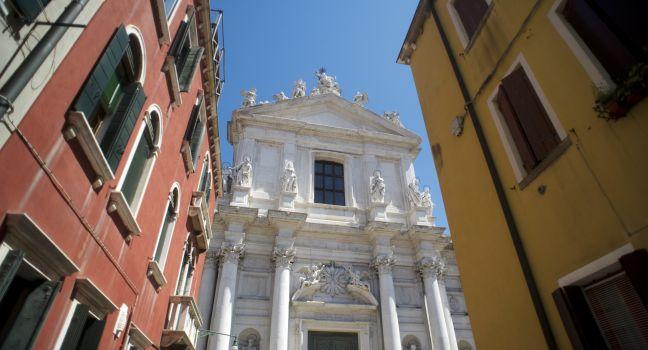
The interior walls of this early-18th-century church (1715–30) resemble brocade drapery, and only touching them will convince skeptics that rather than embroidered cloth, the green-and-white walls are inlaid marble. This trompe-l'oeil decor is typical of the late Baroque's fascination with optical illusion. Toward the end of his life, Titian tended to paint scenes of suffering and sorrow in a nocturnal ambience. A dramatic example of this is on display above the first altar to the left: Titian's daring Martyrdom of St. Lawrence (1578), taken from an earlier church that stood on this site. Tintoretto's Assumption (1555), originally commissioned for the destroyed Crociferi church, demands reverence. The Crociferi's surviving oratory, or prayer hall (Oratorio dei Crociferi), located across from the church, features some of Palma Giovane's best work, painted between 1583 and 1591. The oratory can be visited only with reservations at least three days in advance requested on the website or by email.

Campo dei Gesuiti, Venice, 30131, Italy
041-3096605-oratory
Sight Details
Gesuiti €1; Oratorio dei Crociferi €3 plus €60 per group with guided tour and €40 per group without guided tour
Reservations needed to visit oratory

Something incorrect in this review?

Jewish Ghetto

Cannaregio Fodor's Choice
venice
© Zach Nelson / Fodors Travel

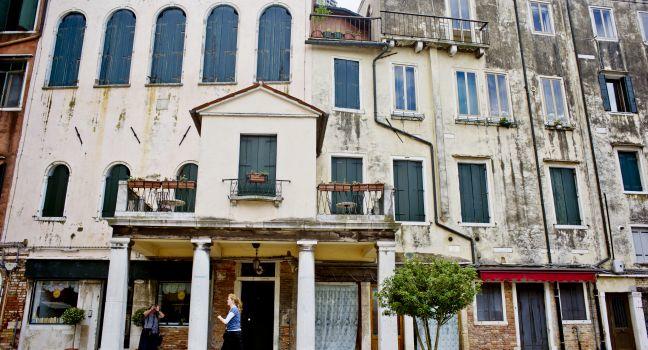
The neighborhood that gave the world the word "ghetto" is today a quiet area surrounding a large campo. It is home to Jewish institutions, several kosher restaurants, a rabbinical school, and five synagogues. Present-day Venetian Jews live all over the city, and the contemporary Jewish life of the Ghetto, with the exception of the Jewish Museum and the synagogues, is an enterprise conducted almost exclusively by American Hasidic Jews of eastern European descent and tradition.

Although Jews may have arrived earlier, the first synagogues weren't built and a cemetery (on the Lido) wasn't founded until the Ashkenazi, or eastern European Jews, came in the late 1300s. Dwindling coffers may have prompted the Republic to sell temporary visas to Jews, who were over the centuries alternately tolerated and expelled. The Rialto commercial district, as mentioned in Shakespeare's The Merchant of Venice, depended on Jewish moneylenders for trade and to help cover ever-increasing war expenses.

In 1516, relentless local opposition forced the Senate to confine Jews to an island in Cannaregio, then on the outer reaches of the city, named for its geto (foundry). The term "ghetto" also may come from the Hebrew "ghet," meaning separation or divorce. Gates at the entrance were locked at night, and boats patrolled the surrounding canals. Jews were allowed only to lend money at low interest, operate pawnshops controlled by the government, trade in textiles, or practice medicine. Jewish doctors were highly respected and could leave the Ghetto at any hour when on duty. Though ostracized, Jews were nonetheless safe in Venice, and in the 16th century, the community grew considerably—primarily with refugees from the Inquisition, which persecuted Jews in Spain, Portugal, and southern and central Italy. The Ghetto was allowed to expand twice, but it still had the city's densest population and consequently ended up with the city's tallest buildings.

Although the gates were pulled down after Napoléon's 1797 arrival, the Ghetto was reinstated during the Austrian occupation. The Jews realized full freedom only in 1866 with the founding of the Italian state. Many Jews fled Italy as a result of Mussolini's 1938 racial laws, so that on the eve of World War II, there were about 1,500 Jews left in the Ghetto. Jews continued to flee, and the remaining 247 were deported by the Nazis; only eight returned.

The area has Europe's highest density of Renaissance-era synagogues, and visiting them is interesting not only culturally, but also aesthetically. Though each is marked by the tastes of its individual builders, Venetian influence is evident throughout. Women's galleries resemble those of theaters from the same era, and some synagogues were decorated by artists who were simultaneously active in local churches; Longhena, the architect of Santa Maria della Salute, renovated the Spanish synagogue in 1635. You can visit some of the historic buildings of the Ghetto on guided tours, which run in English every hour from 10 am to 5 pm (9 am to 3 pm on Friday), every day except Saturday.

The Last Supper/Il Cenacolo/Santa Maria delle Grazie

Sant'Ambrogio Fodor's Choice
Milan, Italy, Santa Maria delle Grazie, Unesco World Heritage for its masterpiece The Last Supper by Leonardo;
Luca Grandinetti / Shutterstock

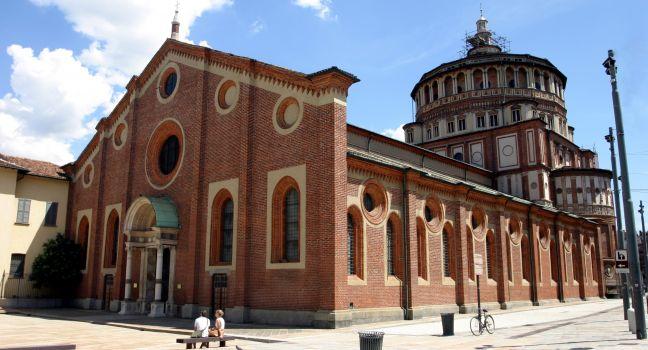
Leonardo da Vinci's The Last Supper, housed in this church and former Dominican monastery, has had an almost unbelievable history of bad luck and neglect. Its near destruction in an American bombing raid in August 1943 was only the latest chapter in a series of misadventures, including—if one 19th-century source is to be believed—being whitewashed over by monks. After years of restorers patiently shifting from one square centimeter to another, Leonardo's masterpiece is free of centuries of retouching, grime, and dust. Astonishing clarity and luminosity have been regained, helped by lighting, and a timed entry system where small groups are ushered into climate-controlled rooms with automatic glass doors, to prevent humidity.

Despite Leonardo's carefully preserved preparatory sketches, in which the apostles are clearly labeled by name, there still remains some small debate about a few identities in the final arrangement. There can be no mistaking Judas, however—small and dark, isolated from the terrible confusion that has taken the hearts of the others. Reservations are required to view the work. Viewings are in 15-minute timed-entry slots, and visitors must arrive 30 minutes before. Reservations can be made online. Reserve at least three weeks ahead if you want a Saturday slot, two weeks for a weekday slot. Some city bus tours include a visit in their regular circuit, which may be a good option.

Madonna dell'Orto

Cannaregio Fodor's Choice
venice
© Zach Nelson / Fodors Travel

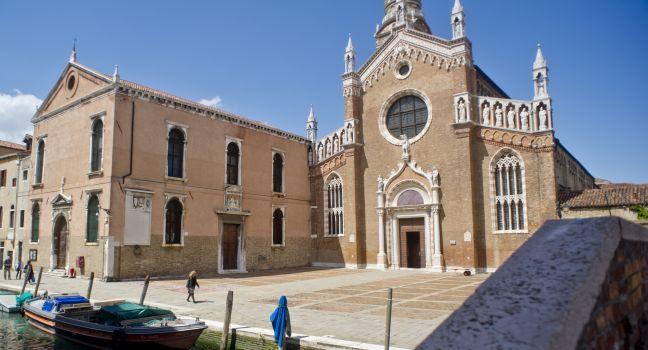
Though built toward the middle of the 14th century, this church takes its character from its beautiful late-Gothic facade, added between 1460 and 1464; it's one of the most beautiful Gothic churches in Venice. Tintoretto lived nearby, and this, his parish church, contains some of his most powerful work. Lining the chancel are two huge (45 feet by 20 feet) canvases, Adoration of the Golden Calf and Last Judgment. In glowing contrast to this awesome spectacle is Tintoretto's Presentation of the Virgin at the Temple and the simple chapel where he and his children, Marietta and Domenico, are buried. Paintings by Domenico, Cima da Conegliano, Palma Giovane, Palma Vecchio, and Titian also hang in the church. A chapel displays a photographic reproduction of a precious Madonna and Child by Giovanni Bellini. The original was stolen one night in 1993. Don't miss the beautifully austere, late-Gothic cloister (1460), which you enter through the small door to the right of the church; it is frequently used for exhibitions but may be open at other times as well.

Campo della Madonna dell'Orto, Venice, 30121, Italy
041-719933-church office
Sight Details
€3.50 (free with Chorus Pass)
Closed Sun.

Something incorrect in this review?

MAXXI—Museo Nazionale delle Arti del XXI Secolo

Flaminio Fodor's Choice
MAXXI, national museum of arts of XXI century by Zaha Hadid architect in Rome, Italy.
(c) Enrysacc | Dreamstime.com

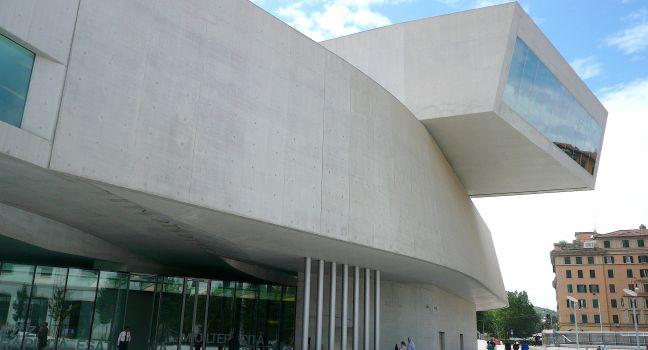
Designed by the late Iraqi-British architect Zaha Hadid, this modern building plays with lots of natural light and has curving and angular lines, big open spaces, glass ceilings, and steel staircases that twist through the air—all meant to question the division between "within" and "without." The MAXXI hosts temporary exhibitions of art, architecture, film, and more. The permanent collection, displayed on a rotating basis, has more than 350 works from modern and contemporary artists, including Andy Warhol, Francesco Clemente, and Gerhard Richter.

Via Guido Reni, 4/A, Rome, 00196, Italy
06-3201954
Sight Details
€15
Closed Mon.

Something incorrect in this review?

Musei Capitolini

Campitelli Fodor's Choice
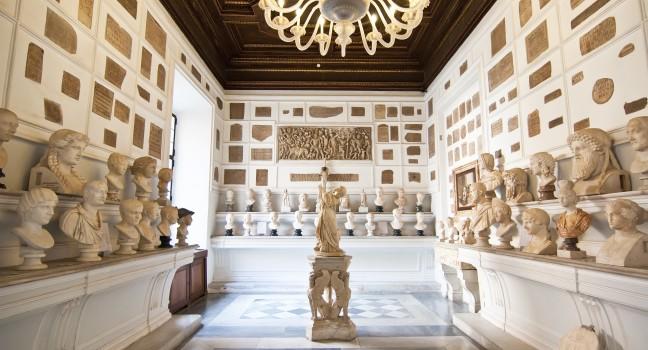
Inside one of the rooms of the Capitoline Museums in Rome, Italy  The museum was opened to the public at the wish of Pope Clement XII in 1734.
Chanclos/Shutterstock

Surpassed in size and richness only by the Musei Vaticani, the world's first public museum—with the greatest hits of Roman art through the ages, from the ancients to the Baroque—is housed in the Palazzo dei Conservatori and the Palazzo Nuovo, which mirror one another across Michelangelo's famous piazza. The collection was begun by Pope Sixtus IV (the man who built the Sistine Chapel) in 1473, when he donated a room of ancient statuary to the people of the city. This core of the collection includes the She Wolf, which is the symbol of Rome, and the piercing gaze of the Capitoline Brutus.

Buy your ticket and enter the Palazzo dei Conservatori, where in the first courtyard, you'll see the giant head, foot, elbow, and imperially raised finger of the fabled seated statue of Constantine, which once dominated the Basilica of Maxentius in the Forum. Upstairs is the resplendent Sala degli Orazi e Curiazi (Hall of the Horatii and Curatii), decorated with a magnificent gilt ceiling, carved wooden doors, and 16th-century frescoes depicting the history of Rome's legendary origins. At each end of the hall are statues of two of the most important popes of the Baroque era, Urban VIII and Innocent X.

The heart of the museum is the modern Exedra of Marcus Aurelius (Esedra di Marco Aurelio), which displays the spectacular original bronze statue of the Roman emperor whose copy dominates the piazza outside. To the right, the room segues into the area of the Temple of Jupiter, with the ruins of part of its vast base rising organically into the museum space. A reconstruction of the temple and the Capitoline Hill from the Bronze Age to the present day makes for a fascinating glimpse through the ages. On the top floor, the museum's pinacoteca, or painting gallery, has some noted Baroque masterpieces, including Caravaggio's The Fortune Teller and St. John the Baptist.

To get to the Palazzo Nuovo section of the museum, take the stairs or elevator to the basement of the Palazzo dei Conservatori, where the corridor uniting the two contains the Epigraphic Collection, a poignant assembly of ancient gravestones. Just over halfway along the corridor, and before going up into the Palazzo Nuovo, be sure to take the staircase to the right to the Tabularium gallery and its unparalleled view over the Forum.

On the stairs inside the Palazzo Nuovo, you'll be immediately dwarfed by Mars in full military rig and lion-topped sandals. Upstairs is the noted Sala degli Imperatori, lined with busts of Roman emperors, and the Sala dei Filosofi, where busts of philosophers sit in judgment—a fascinating who's who of the ancient world. Within these serried ranks are 48 Roman emperors, ranging from Augustus to Theodosius. Nearby are rooms filled with sculptural masterpieces, including the famed Dying Gaul, the Red Faun from Hadrian's Villa, and a Cupid and Psyche.

Piazza del Campidoglio, 1, Rome, 00186, Italy
06-0608
Sight Details
€13 (€15.50 with exhibitions); €13.50 with access to Centrale Montemartini; €4 audio guide

Something incorrect in this review?

Musei Vaticani

Vatican Fodor's Choice
A double spiral staircase in Vatican, Italy.
Fedor Selivanov / Shutterstock

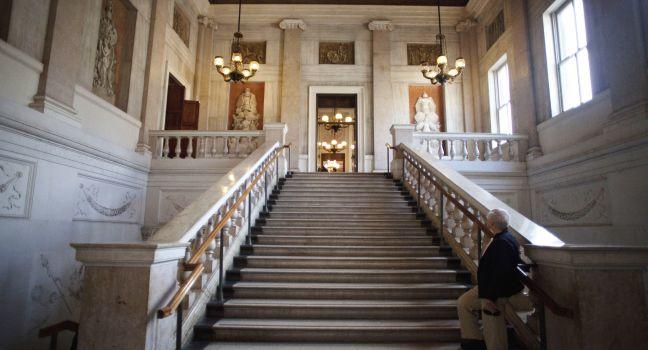
Other than the pope and his papal court, the occupants of the Vatican are some of the most famous artworks in the world. The Vatican Palace, residence of the popes since 1377, consists of an estimated 1,400 rooms, chapels, and galleries. The pope and his household occupy only a small part; most of the rest is given over to the Vatican Library and Museums.

Beyond the glories of the Sistine Chapel, the collection is extraordinarily rich: highlights include the great antique sculptures (including the celebrated Apollo Belvedere in the Octagonal Courtyard and the Belvedere Torso in the Hall of the Muses); the Stanze di Raffaello (Raphael Rooms), with their famous gorgeous frescoes; and the Old Master paintings, such as Leonardo da Vinci's beautiful (though unfinished) St. Jerome in the Wilderness, some of Raphael’s greatest creations, and Caravaggio’s gigantic Deposition in the Pinacoteca ("Picture Gallery").

For those interested in guided visits to the Vatican Museums, tours start at €40, including entrance tickets, and can also be booked online. Other offerings include a regular three-hour guided tour of the Vatican gardens; call or check online to confirm. For more information, call  06/69884676 or go to  www.museivaticani.va. For information on tours, call  06/69883145 or  06/69884676; visually impaired visitors can arrange tactile tours by calling  06/69884947.

Viale Vaticano, Rome, 00165, Italy
06-69883145
Sight Details
€20
Closed Sun. (except the last Sun. of each month) and Roman Catholic holidays

Something incorrect in this review?

Museo Correr

San Marco Fodor's Choice
Museo Correr, San Marco, Venice, Italy.
© Halie Cousineau/ Fodor’s Travel

This museum of Venetian art and history contains an impressive sculpture collection by Antonio Canova and important paintings by Giovanni Bellini, Vittore Carpaccio (Carpaccio's famous painting of the Venetian courtesans is here), and other major local painters in the Neoclassical Rooms and Picture Gallery. The museum's highlights are the 20 sumptuously decorated and meticulously restored Royal Rooms, home to three ruling dynasties from the 19th century to 1920, and where Sissi, the empress of Austria, once stayed; English visits take place at 10:30 am and 3:30 pm daily and can be booked online. Several rooms also convey the city's proud naval history through highly descriptive paintings and numerous maritime objects, including ships' cannons and some surprisingly large iron mast-top navigation lights.

Piazza San Marco 52, Venice, 30124, Italy
041-2405211
Sight Details
Royal Rooms Itinerary Ticket €14, including Museo Correr, Museo Archeologico, and Biblioteca Nazionale Marciana (book online in advance). Museums of San Marco Pass €30 (€25 when booked online at least 30 days in advance), includes Museo Correr, Museo Archeologico, Biblioteca Nazionale Marciana, and Palazzo Ducale. Museum Pass €40, includes all four museums plus seven civic museums. Royal Rooms tour only, €5 with Museums of San Marco Pass or Museum Pass

Something incorrect in this review?

Museo Nazionale Etrusco di Villa Giulia

Villa Borghese Fodor's Choice
Museo Etrusco di villa giulia
(c) Mariocarbone | Dreamstime.com

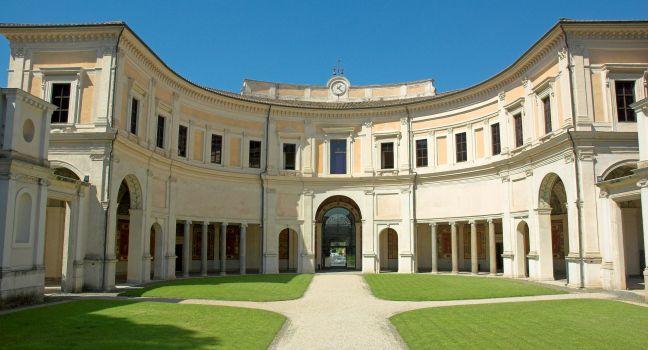
The world's most outstanding collection of Etruscan art and artifacts is housed in Villa Giulia, built around 1551 for Pope Julius III. Among the team called in to plan and construct the villa were Michelangelo and fellow Florentine Vasari. Most of the actual work, however, was done by Vignola and Ammannati. The villa's nymphaeum—or sunken sculpture garden—is a superb example of a refined late-Renaissance setting for princely pleasures.

No one knows precisely where the Etruscans originated, but many scholars maintain they came from Asia Minor, appearing in Italy about 2000 BC and creating a civilization that was a dazzling prelude to that of the ancient Romans. Among the most striking pieces are the terra-cotta statues, such as the Apollo of Veii and the serenely beautiful Sarcophagus of the Spouses. Dating from 530–500 BC, this couple (or Sposi) look at the viewer with almond eyes and archaic smiles, suggesting an openness and joie de vivre rare in Roman art. Other highlights include the cinematic frieze from a later temple (480 BC) in Pyrgi, resembling a sort of Etruscan Elgin marbles in terra-cotta; the displays of Etruscan jewelry; and the beautiful gardens.

Piazzale di Villa Giulia, 9, Rome, 00196, Italy
06-3226571
Sight Details
€12
Closed Mon.

Something incorrect in this review?

Palazzo Altemps

Piazza Navona Fodor's Choice
Bust, Hall, Palazzo Altemps, Rome, Italy
© Ross Brinkerhoff / Fodors Travel

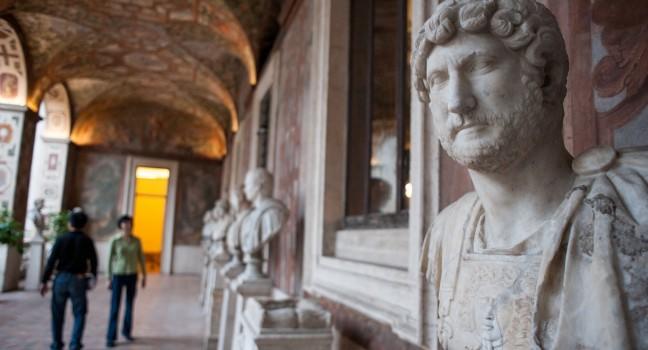
Containing some of the world's finest ancient Roman marbles, Palazzo Altemps is part of the Museo Nazionale Romano. The palace's sober exterior belies a magnificence that appears as soon as you walk into the majestic courtyard, studded with statues and covered in part by a retractable awning. The restored interior hints at the Roman lifestyle of the 16th–18th centuries while showcasing the most illustrious pieces from the Museo Nazionale, including the collection of the Ludovisi noble family.

In the frescoed salons you can see the Galata Suicida, a poignant sculptural work portraying a barbarian warrior who chooses death for himself and his wife rather than humiliation by the enemy. Another highlight is the large Ludovisi sarcophagus, magnificently carved from marble. In a place of honor is the Ludovisi Throne, which shows a goddess emerging from the sea and being helped by her acolytes. For centuries this was heralded as one of the most sublime Greek sculptures, but today at least one authoritative art historian considers it a colossally overrated fake. Look for the framed explanations of the exhibits that detail (in English) how and exactly where Renaissance sculptors, Bernini among them, added missing pieces to the classical works.

In the lavishly frescoed loggia stand busts of the Caesars. In the wing once occupied by early-20th-century poet Gabriele d'Annunzio (who married into the Altemps family), three rooms host the museum's Egyptian collection.

Piazza di Sant'Apollinare, 46, Rome, 00186, Italy
Sight Details
€8; €16 combined ticket includes 3 other Museo Nazionale Romano sites over 1 wk (Crypta Balbi, Palazzo Massimo alle Terme, and Museo delle Terme di Diocleziano)
Closed Mon.

Something incorrect in this review?

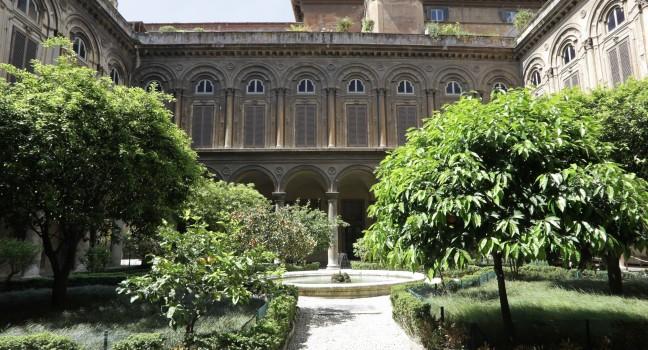
Palazzo Doria Pamphilj

Trevi Fodor's Choice
View of the courtyard of the Palazzo Pamphili in Rome, italy
(c) Kpapaioanno | Dreamstime.com

Like the Palazzo Colonna and the Galleria Borghese, this dazzling 15th-century palace provides a fantastic glimpse of aristocratic Rome. It passed through several hands before becoming the property of the Pamphilj family, who married into the famous seafaring Doria family of Genoa in the 18th century. The family still lives in part of the palace.

The understated beauty of the graceful facade, designed by Gabriele Valvassori in 1730 and best admired from the opposite side of the street, barely hints at the interior's opulent halls and gilded galleries, which are filled with Old Master works. The 550 paintings here include three by Caravaggio: St. John the Baptist, Mary Magdalene, and the breathtaking Rest on the Flight to Egypt. Off the eye-popping Galleria degli Specchi (Gallery of Mirrors)—a smaller version of the one at Versailles—are the famous Velázquez Pope Innocent X, considered by some historians to be the greatest portrait ever painted, and the Bernini bust of the same Pamphilj pope.

A delightful audio guide is included in the ticket price and is narrated by the current heir, Prince Jonathan Doria Pamphilj, who divulges intimate family history. Plan to stay for lunch, or at least pause for a coffee, at the fashionable Caffè Doria, with elegant tables set out in the palace's peaceful cloisters.

Palazzo Farnese

Campo de' Fiori Fodor's Choice
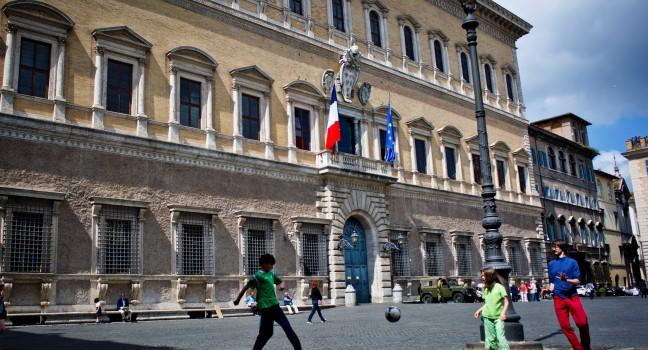
Soccer, Palazzo Farnese, Rome, Italy
© Zach Nelson / Fodors Travel

Rome's most beautiful Renaissance palace is fabled for its Galleria Carracci, whose ceiling is to the Baroque age what the Sistine Chapel ceiling is to the Renaissance. The Farnese family rose to great power and wealth during the Renaissance, in part because of the favor Pope Alexander VI showed to the beautiful Giulia Farnese. The massive palace was begun when, with Alexander's aid, Giulia's brother became cardinal; it was further enlarged on his election as Pope Paul III in 1534.

The uppermost frieze decorations and main window overlooking the piazza are the work of Michelangelo, who also designed part of the courtyard, as well as the graceful arch over Via Giulia at the back. The facade on Piazza Farnese has geometrical brick configurations that have long been thought to hold some occult meaning. When looking up at the palace, try to catch a glimpse of the splendid frescoed ceilings, including the Galleria Carracci vault painted by Annibale Carracci between 1597 and 1604. 

The Carracci gallery depicts the loves of the gods, a supremely pagan theme that the artist painted in a swirling style that announced the birth of the Baroque. Other opulent salons are among the largest in Rome, including the Salon of Hercules, which has an impressive replica of the ancient Farnese Hercules. The French Embassy, which occupies the palace, offers tours (in English) on Monday, Wednesday, and Friday; book at least a few weeks (and up to eight months) in advance through the website and bring a photo ID.

Palazzo Massimo alle Terme

Repubblica Fodor's Choice
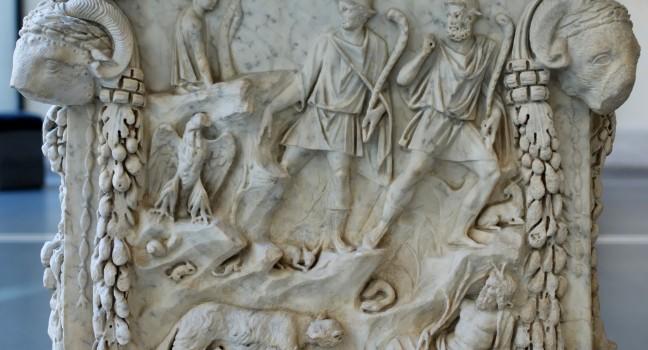
Representation of the lupercal: Romulus and Remus fed by a she-wolf, surrounded by representations of the Tiber and the Palatine. Panel from an alter dedicated to the divine couple of Mars and Venus. Marble, Roman artwork of the end of the reign of Trajan
By Marie-Lan Nguyen (2006) [Public domain], via Wikimedia Commons

The Museo Nazionale Romano, with items ranging from striking classical Roman paintings to marble bric-a-brac, has four locations: Palazzo Altemps, Crypta Balbi, the Museo delle Terme di Diocleziano, and this, the Palazzo Massimo alle Terme—a vast structure containing the great ancient treasures of the archaeological collection and also the coin collection. Highlights include the Dying Niobid, the famous bronze Boxer at Rest, and the Discobolus Lancellotti.

Among the museum's most intriguing attractions, however, are the ancient frescoes on view on the top floor. They're stunningly set up to "recreate" the look of the homes they once decorated, and their colors are remarkably preserved. You'll see stuccoes and wall paintings found in the area of the Villa Farnesina (in Trastevere), as well as those depicting a garden in bloom and an orchard alive with birds that once covered the walls of cool sunken rooms at Empress Livia's villa in Prima Porta, just outside the city.

Largo di Villa Peretti, 2, Rome, 00185, Italy
06-39967700
Sight Details
€8, or €12 for a combined ticket including access to Crypta Balbi, Museo delle Terme di Diocleziano, and Palazzo Altemps (valid for 1 wk)
Closed Mon.

Something incorrect in this review?

Pantheon

Piazza Navona Fodor's Choice
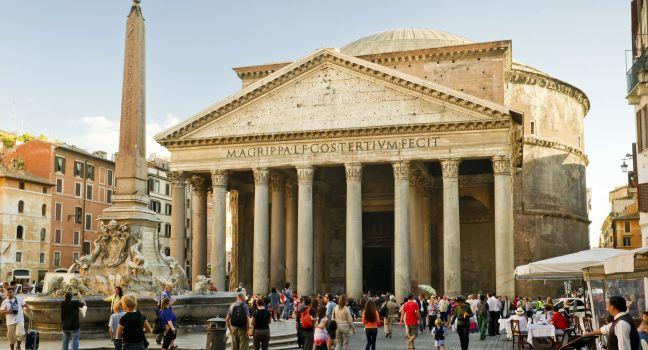
ROME - OCTOBER 2: Tourists visit the Pantheon on October 2, 2012 in Rome, Italy. Pantheon is a famous monument of ancient Roman culture, the temple of all the gods, built in the 2nd century.;
Viacheslav Lopatin/Shutterstock

The city's best-preserved ancient building, this former Roman temple is a marvel of architectural harmony and proportion. It was entirely rebuilt by the emperor Hadrian around AD 120 on the site of a Pantheon (from the Greek: pan, all, and theon, gods) erected in 27 BC by Augustus's right-hand man and son-in-law, Agrippa.

The most striking thing about the Pantheon is not its size, immense though it is, nor even the phenomenal technical difficulties posed by so massive a construction; rather, it's the remarkable unity of the building. The diameter described by the dome is exactly equal to its height. It's the use of such simple mathematical balance that gives classical architecture its characteristic sense of proportion and its nobility. The opening at the apex of the dome, the oculus, is nearly 30 feet in diameter and was intended to symbolize the "all-seeing eye of the heavens." On a practical note, this means when it rains, it rains inside: look out for the drainage holes in the floor.

Although little is known for sure about the Pantheon's origins or purpose, it's worth noting that the five levels of trapezoidal coffers (sunken panels in the ceiling) represent the course of the five then-known planets and their concentric spheres. Ruling over them is the sun, represented symbolically and literally by the 30-foot-wide eye at the top. The heavenly symmetry is further paralleled by the coffers: 28 to each row, the number of lunar cycles. In the center of each would have shone a small bronze star. Down below, the seven large niches were occupied not by saints, but, it's thought, by statues of Mars, Venus, the deified Caesar, and the other "astral deities," including the moon and sun, the "sol invictus." (Academics still argue, however, about which gods were most probably worshipped here.)

One of the reasons the Pantheon is so well preserved is that it was consecrated as a church in AD 608. (It's still a working church today.) No building, church or not, though, escaped some degree of plundering through the turbulent centuries of Rome's history after the fall of the empire. In 655, for example, the gilded bronze covering the dome was stripped. The Pantheon is also one of the city's important burial places. Its most famous tomb is that of Raphael (between the second and third chapels on the left as you enter). Mass takes place on Sunday and on religious holidays at 10:30; it's open to the public, but you are expected to arrive before the beginning and stay until the end. General access usually resumes at about 11:30.

You can buy tickets in person via cash or credit card, or online (which requires registering for an account). If you plan on purchasing tickets in person, coming prepared with both cash and a credit card will allow you to select the faster-moving line that day.  On the first Sunday of every month, visitors can enter for free.