70 Best Sights in Italy

Background Illustration for Sights

We've compiled the best of the best in Italy - browse our top choices for the top things to see or do during your stay.

Ca' Rezzonico

Dorsoduro Fodor's Choice
Ca' Rezzonico, Dorsoduro, Venice, Italy
© Ross Brinkerhoff / Fodors Travel

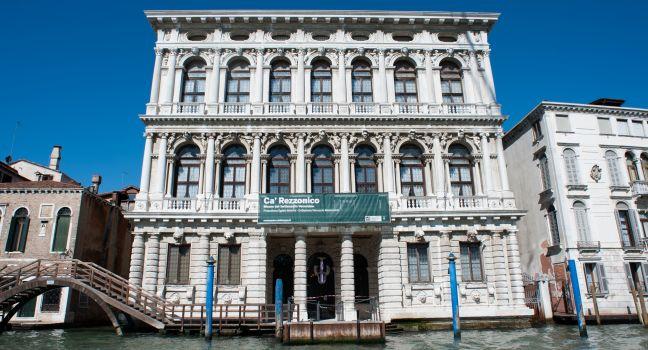
Designed by Baldassare Longhena in the 17th century, this gigantic palace was completed nearly 100 years later by Giorgio Massari and became the last home of English poet Robert Browning (1812–89). Stand on the bridge by the Grand Canal entrance to spot the plaque with Browning's poetic excerpt ("Open my heart and you will see graved inside of it, Italy . . .") on the left side of the palace. The spectacular centerpiece is the eye-popping Grand Ballroom, which has hosted some of the grandest parties in the city's history, from its 18th-century heyday to the 1969 Bal Fantastica (a Save Venice charity event that attracted every notable of the day, from Elizabeth Taylor to Aristotle Onassis).

Today the upper floors of the Ca' Rezzonico are home to the especially delightful Museo del Settecento (Museum of Venice in the 1700s). Its main floor successfully retains the appearance of a magnificent Venetian palazzo, decorated with period furniture and tapestries in gilded salons, as well as Gianbattista Tiepolo ceiling frescoes and oil paintings. Upper floors contain a fine collection of paintings by 18th-century Venetian artists, including the famous Pulcinella frescoes by Tiepolo's son, Giandomenico, moved here from the Villa Tiepolo at Zianigo on the mainland. There's even a restored 18th-century three-room apothecary called "At the Two San Marcos," that once stood in Campo San Stin. It retains its many large jars made of majolica and Murano glass.   
Museo Correr

San Marco Fodor's Choice
Museo Correr, San Marco, Venice, Italy.
© Halie Cousineau/ Fodor’s Travel

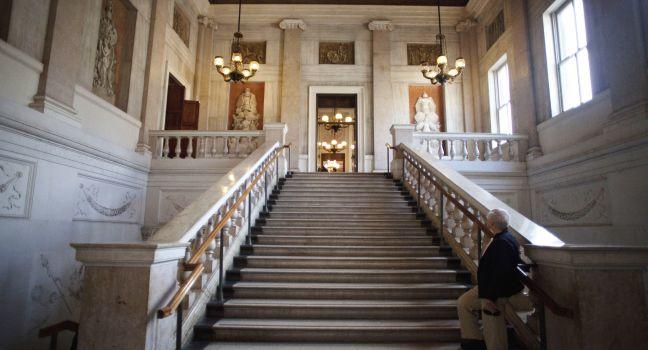
This museum of Venetian art and history contains an impressive sculpture collection by Antonio Canova and important paintings by Giovanni Bellini, Vittore Carpaccio (Carpaccio's famous painting of the Venetian courtesans is here), and other major local painters in the Neoclassical Rooms and Picture Gallery. The museum's highlights are the 20 sumptuously decorated and meticulously restored Royal Rooms, home to three ruling dynasties from the 19th century to 1920, and where Sissi, the empress of Austria, once stayed; English visits take place at 10:30 am and 3:30 pm daily and can be booked online. Several rooms also convey the city's proud naval history through highly descriptive paintings and numerous maritime objects, including ships' cannons and some surprisingly large iron mast-top navigation lights.

Piazza San Marco 52, Venice, 30124, Italy
041-2405211
Sight Details
Royal Rooms Itinerary Ticket €14, including Museo Correr, Museo Archeologico, and Biblioteca Nazionale Marciana (book online in advance). Museums of San Marco Pass €30 (€25 when booked online at least 30 days in advance), includes Museo Correr, Museo Archeologico, Biblioteca Nazionale Marciana, and Palazzo Ducale. Museum Pass €40, includes all four museums plus seven civic museums. Royal Rooms tour only, €5 with Museums of San Marco Pass or Museum Pass

Something incorrect in this review?

Antiquarium Poggio Civitate

Fodor's Choice

An imposing bishop's palace holds this unique museum of Etruscan objects. Although there are many beautiful pieces displayed in an intelligent and well-documented fashion, the almost complete roof and pediment from a 5th-century BC Etruscan house stand out as rare and precious. The so-called Cowboy of Murlo, a large-hatted figure from the same roof, is the star of the collection but anyone interested in ancient Etruscan culture will be well rewarded by a visit here. The museum is named after the nearby site from which most of the artifacts were excavated.

Piazza della Cattedrale 4, Buonconvento, 53016, Italy
0577-814099
Sight Details
€6
Closed Mon. Apr.–Sept. and Mon.–Thurs. Oct.–Mar.

Something incorrect in this review?

Recommended Fodor's Video

C.I.D.M.A.

Fodor's Choice

Housed, perhaps appropriately, in an ex-orphanage in the center of Corleone, the Centro Internazionale di Documentazione sulla Mafia e del Movimento Antimafia, or C.I.D.M.A., chronicles the dark history of the criminal organization that has been identified with Sicily for much of the 20th century and beyond. Most of the story is told through a moving exhibition of black-and-white photographs, almost all taken by Letizia Battaglia, who bravely made it her life's work to record the Mafia's activities in Sicily, in particular the arrests of Mafia operatives and the deaths of their victims. One room holds the vast collection of files used in the Maxi-Trial of Mafia suspects that took place between 1986 and 1992 and led to the murders of the judges Giovanni Falcone and Paolo Borsellino, who are also remembered here. There is space given to the pentito (informant) Tomasso Buscetta, whose testimony resulted in a slew of arrests, but whose entire family was wiped out by vengeful hitmen. It's a sad and sobering experience to hear about such atrocities, and a visit to the center is best undertaken with a guide, without whose explanations you would miss much essential information. Call ahead to book a guided tour (available in English), and to confirm opening times.

Museo Archeologico

Fodor's Choice

Built within the walls of the Pisan castle erected in the early 1300s, Cagliari's archaeological museum is the world's foremost authority on Sardinia's ancient Nuraghic civilization, named after the curious stone towers, or nuraghi, that are unique to the island. Archaeologists date most of these enigmatic structures to about 1300–1200 BC, the same time the ancient Israelites were establishing themselves in Canaan.  Relics from this period are dispersed throughout the museum, notably the bronzetti (bronze statuettes) from Nuraghic towers and tombs, and, on the top floor, the much-celebrated Giganti di Mont'e Prama, giant Nuraghic stone statues representing warriors and boxers, unearthed in the 1970s and only recently restored and displayed to the public. Among the museum's other highlights are, on the first floor, quirky images excavated from a sanctuary dedicated to Bes, the ancient Egyptian deity whose cult reached far across the Mediterranean in the 3rd to 1st centuries BC, and the "Nora Stele", an inscribed stone said to be the earliest written document in Sardinia (and one of the earliest in Europe), which has the first mention of the name Sardinia, dating from between 850 and 725 BC.

The same entry ticket also allows you to visit the Pinacoteca, or art collection (accessed from the top floor), which includes some outstanding examples of religious art from the 15th and 16th centuries—well worth a look.

Museo Archeologico dell'Alto Adige

Fodor's Choice

This museum has gained international fame for Ötzi, its 5,300-year-old iceman, discovered in 1991 and the world's oldest naturally preserved body. In 1998 Italy acquired it from Austria after it was determined that the body lay 100 yards inside Italian territory. The iceman's leathery remains are displayed in a freezer vault, preserved along with his longbow, ax, and clothing. The rest of the museum relies on models and artifacts from nearby archaeological sites, and exhibitions change regularly. An English audio guide leads you not only through Ötzi's Copper Age, but also into the preceding Mesolithic and Neolithic eras, and the Bronze and Iron Ages that followed.

Via Museo 43, Bolzano, 39100, Italy
0471-320100
Sight Details
€13
Closed Mon. Jan.–June and Sept.–Nov.
Online reservations recommended up to 3 days in advance

Something incorrect in this review?

Museo Archeologico di Pithecusae

Fodor's Choice

Lacco Ameno's archaeological importance—it rests below the first Greek settlement on Italian soil on the island, at Monte Vico—is amply reflected by the finds displayed in Ischia's top museum. The museum occupies much of the Villa Arbusto, built by Carlo d'Aquaviva in 1785 on top of a Bronze Age settlement. Inaugurated in 1999, with the directors of both the British Museum and the Louvre in attendance, its eight rooms house a wide range of Greek pottery unearthed at the ancient necropolis site near the Baia di San Montano, much of it dating to the earliest years of the Greek colony (late 8th century BC), including Nestor's Cup, the oldest known kotyle vase in existence. There is also a room dedicated to internationally renowned filmmaker Angelo Rizzoli, who once lived in the villa, as well as a section devoted to dolphins. Villa Arbusto combines musical serate, or evening soirées, in summer months with visits to the antiquities museum.

Corso Angelo Rizzoli 210, Lacco Ameno, 80075, Italy
081-996103
Sight Details
€8, gardens free
Closed Sun.--Tues. afternoon

Something incorrect in this review?

Museo Archeologico Nazionale

Centro Storico Fodor's Choice

Also known as MANN, this legendary museum, located on the northern edge of the Centro Storico district, has experienced something of a rebirth in recent years. Its unrivaled collections include world-renowned archaeological finds that put most other museums to shame, from some of the best mosaics and paintings from Pompeii and Herculaneum to the legendary Farnese collection of ancient sculpture. The core masterpiece collection is almost always open to visitors, while seasonal exhibitions feature intriguing cultural events, collaborations, and contemporary artists. Some of the newer rooms, covering archaeological discoveries in the Greco-Roman settlements and necropolises in and around Naples, have helpful informational panels in English.

Museo Archeologico Nazionale di Reggio Calabria

Fodor's Choice

Though it's located across the strait from Messina in Reggio Calabria, this fantastic museum, set over four floors, is well worth a visit, especially for the Riace Bronzes, a pair of impressive, naked warrior statues that were cast about 460 BC and found in the sea in 1972. You'll also find incredible examples of art from the Paleolithic and Mesolithic periods (including cave art), insights into the daily life and funeral rites of the Hellenistic age, and imposing temple decorations such as the life-size terra-cotta horseman supported by a sphinx. There is plenty of information in English, but in high season entry is by timed ticket only. To get there, take a 30-minute hydrofoil from the Messina port ( €7 round-trip  libertylines.it).

Museo Archeologico Nazionale di Reggio Calabria (MArC)

Fodor's Choice

Reggio Calabria is home to one of southern Italy's most important archaeological museums. Its prize exhibit, of course, is the two ancient Greek statues known as the Bronzi di Riace, which were discovered by an amateur deep-sea diver off Calabria's Ionian Coast in 1972. After a lengthy but necessary conservation effort, these 5th-century-BC statues of two Greek warriors, thought to be the work of either Pheidias or Polykleitos, now take pride of place in their special temperature-controlled room, complete with earthquake-resistant bases. 

Museo Archeologico Regionale Eoliano Luigi Bernabò Brea

Fodor's Choice

This vast, multibuilding museum is terrific, with an intelligently arranged collection of prehistoric finds—some dating as far back as 5000 BC—from various sites in the archipelago, as well as Greek and Roman artifacts, including an outstanding collection of Greek theatrical masks, and even interesting information on volcanoes. Basic descriptions about the exhibits are provided in both English and Italian: panels in each room and captions in the showcases. That said, there is so much to see, and the museum is worth at least a few hours of your time.

Via Castello 2, Lipari, 98055, Italy
090-9880174
Sight Details
€7
Closed Sun. afternoon

Something incorrect in this review?

Museo della Carta

Fodor's Choice

Uphill from town, the Valle dei Mulini (Valley of the Mills) was for centuries Amalfi's center for papermaking, an ancient trade learned from the Arabs, who learned it from the Chinese. Beginning in the 12th century, former flour mills were converted to produce paper made from cotton and linen. The paper industry was a success, and by 1811 more than a dozen mills here, with more along the coast, were humming. Natural waterpower ensured that the handmade paper was cost-effective. Yet, by the late 1800s the industry had moved to Naples and other more geographically accessible areas. Flooding in 1954 closed most of the mills for good, and many have been converted into private housing. The Museo della Carta (Museum of Paper) opened in 1971 in a 15th-century mill. Paper samples, tools of the trade, old machinery, and the audiovisual presentation are all enlightening. You can also participate in a papermaking laboratory.

Via delle Cartiere 23, Amalfi, 84011, Italy
089-8304561
Sight Details
€4.50, €7 with guided tour and papermaking experience
Closed weekdays Jan. and Feb., and Mon. Nov. and Dec.

Something incorrect in this review?

Museo Egizio

Centro Fodor's Choice

The Egyptian Museum's superb collection includes statues of pharaohs and mummies and entire frescoes taken from royal tombs. The striking sculpture gallery, designed by the Oscar-winning production designer Dante Ferretti, is a veritable who's who of ancient Egypt. Look for the magnificent 13th-century-BC statue of Ramses II and the fascinating Tomb of Kha. The latter was found intact with furniture, supplies of food and clothing, and writing instruments.

Museo Etnografico Sardo

Fodor's Choice

Also known as the Museo del Costume, this ethnographic collection is a must for anyone interested in the cultural context of Sardinia's customs and traditions. Among the 8,000 items in the museum's collection, you can view domestic and agricultural implements, splendid jewelry, traditional musical instruments, and dozens of local costumes. Audio guides are available, and guided tours can be booked. The nearby park on Sant'Onofrio Hill affords magnificent views over Nuoro and the surrounding country.

Via A. Mereu 56, Nuoro, 08100, Italy
0784-257035
Sight Details
€5, or €8 with the Museo Deleddiano
Closed Mon. Nov.–mid-Mar.

Something incorrect in this review?

Museo Etrusco Guarnacci

Fodor's Choice

An extraordinary collection of Etruscan relics is made all the more interesting by clear explanations in English. The bulk of the collection is comprised of roughly 700 carved funerary urns. The oldest, dating from the 7th century BC, were made from tufa (volcanic rock). A handful are made of terra-cotta, but most—dating from the 3rd to 1st century BC—are done in alabaster. The urns are grouped by subject, and, taken together, they form a fascinating testimony about Etruscan life and death.

Museo Faggiano

Fodor's Choice

Wannabe restauranteur Luciano Faggiano excavated fascinating discoveries when he bought this building and investigated the blocked toilet back in the year 2000. After initially finding a false floor that led to a Messapian tomb, more digging with the help of family and friends unearthed incredible artifacts including Roman devotional bottles, ancient vases, a ring with Christian symbols, and dusty frescoes. With encouragement and help from the Lecce government and university, an atmospheric homespun museum was born that allows visitors to explore the layers of history beneath the site's seemingly mundane masonry and toilet cisterns. The sprawling roof terrace affords wonderful views over the city. 

Museo Regionale Archeologico Pietro Griffo

Fodor's Choice

Ancient Akragas (the Greek name for Agrigento) was synonymous with decadence and excess, a lifestyle perfectly summed up by the philosopher Plato who remarked that its people "built as if they are going to live forever, and eat as if they will never eat again." This museum is testimony to the fact that the people of Akragas had the means to buy the very best, from the high quality of the red-figured Greek banqueting ware to scenes on some of the magnificent kraters (used for mixing wine and water) that evoke life at an ancient dinner party in vivid detail. Look out as well for the double-walled wine jar, with space between its two walls for snow to chill the wine.  Save time by buying your tickets in advance online.

Museo Whitaker and Mozia Archaeological Site

Fodor's Choice

Joseph Whitaker's former home on Mozia island now holds the Museo Whitaker, displaying a good selection of the finds excavated on the island. As you enter, you'll see useful aerial photographs and models showing the island now and as it might have looked under Carthaginian rule. Most of the exhibits consist of steles, pottery, painted vases, and a scattering of spearheads and jewelry, but the centerpiece is the so-called youth of Motya, an elegantly sinuous life-size statue of a poised young man, one hand resting on his hip, exuding a powerful air of self-assurance. The statue is also known as the "charioteer,"  though there is no evidence that this was his role.

Outside the museum, walk in any direction to take in the dispersed archaeological site. You can't go wrong tracing the perimeter of the island, which will bring you to the Tophet (shrine and burial ground) on the northern shore, and the Cappiddazzu sanctuary, close to where the youth of Mozia was unearthed. There is little above thigh height until you come to such imposing structures as the north gate, the city's main entrance that stood at the end of a causeway (now submerged) that formerly linked it to the Sicilian mainland; the eastern tower; and the remains of the sturdy Carthaginian city walls. There are panels and charts throughout, providing explanations and background on what you're seeing.

Allow at least three hours for a thorough exploration of the museum and island, or longer if you want to bring a picnic lunch or pick up a snack at the café. Sunhats are strongly recommended.

Ca' d'Oro

Cannaregio
Ca' d'Oro, Venice, Italy
© Ross Brinkerhoff / Fodors Travel

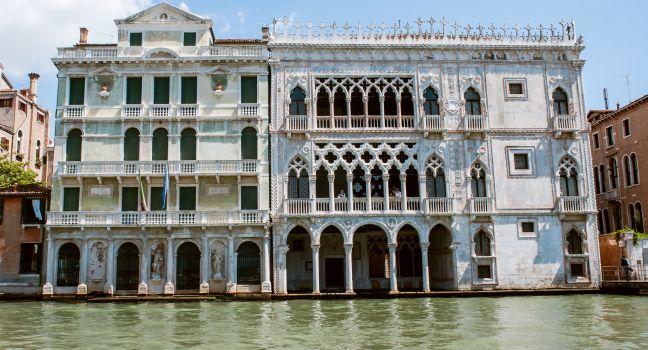
One of the classic postcard sights of Venice, this exquisite Venetian Gothic palace was once literally a "Golden House," when its marble tracery and ornaments were embellished with gold. It was created by Giovanni and Bartolomeo Bon between 1428 and 1430 for the patrician Marino Contarini, who had read about the Roman emperor Nero's golden house in Rome, the Domus Aurea, and wished to imitate it as a present to his wife. Her family owned the land and the Byzantine fondaco (palace--trading house) previously standing on it; you can still see the round Byzantine arches incorporated into the Gothic building's entry porch.

The last proprietor, Baron Giorgio Franchetti, left Ca' d'Oro to the city after having it carefully restored and furnished with antiquities, sculptures, and paintings that today make up the Galleria Franchetti. Besides Andrea Mantegna's St. Sebastian and other Venetian works, the Galleria Franchetti contains the type of fresco that once adorned the exteriors of Venetian buildings (commissioned by those who could not afford a marble facade). One such detached fresco displayed here was made by the young Titian for the facade of the Fondaco dei Tedeschi near the Rialto.

Cannaregio 3933, Venice, 30135, Italy
041-5222349
Sight Details
€8
Closed Mon.

Something incorrect in this review?

Baldassare Romano City Museum

Established in 1873, this museum located directly in front of the Duomo is perfect for lovers of ancient Greek and Roman art. It houses an impressive collection of artifacts recovered from the archaeological area of Himera, including old coins, statues, and many other objects from daily life. The gallery also houses the works of Sicilian artists from the 16th and 17th centuries, some Flemish works, and even a Byzantine triptych. It is an astoundingly random collection that's a testament to the passionate dedication Sicily has always had when it comes to artists and pieces of art. 

Via Marco Aurelio Cicerone, Palermo, 90018, Italy
091-8128550
Sight Details
€3
Closed Mon.

Something incorrect in this review?

Casa Natale di Giuseppe Verdi

An engaging audio-guide itinerary for each of the eight modestly furnished rooms of Verdi's birthplace evokes the atmosphere of his family life here, shared with his seamstress mother and osteria (tavern)-running father. Despite Verdi's worldwide success and fame he never forgot his origins. In 1863 he wrote: "Sono stato, sono e sarò sempre un paesano delle Roncole: "I was, am, and always will be a Roncole peasant." 

Civic Museum of Antonio Collisani

This fascinating museum consists of three sections, one dedicated to geology and another to archaeology, and one to documentary photography. It's a testament to Petralia Sottana's long and fascinating human and geological history. The rocks and fossils in the locally gathered collection date back to 200 million years ago and showcase the geographical evolution of the area. The museum's archaeological collection shows a vast array of prehistoric vases, numerous ancient Greek ceramics, and items from the Bronze Age. A moving collection of photographs documents Madonie life and landscape, beginning with the work of the Palermitano Enzo Sellerio, whose 1973 show began a series of exhibitions, culminating in a 2021 group show. 

Ex Stabilimento Florio delle Tonnare di Favignana e Formica

The entrepreneur Ignazio Florio played a leading part in the regeneration of Favignana's tuna fisheries in the 19th century, a tale told in his company's former fishery, a huge complex located on the outskirts of Favignana town, now converted into a museum. Hour-long guided tours take you through the fascinating history and gruesome methods of bluefin tuna fishing, including the ritualistic and bloody culmination of the fishing process, La Mattanza, or "The Killing." These traditional methods died out with the growth of modern industrial practices and overfishing. Tours must be booked a least a day in advance. There's also a separate section focusing on the Battle of Egadi (241 BC), which saw the defeat of the Carthaginians by a Roman fleet and their subsequent expulsion from Sicily.

Museo Agricolo di Brunnenburg

Overlooking the town, atop Mt. Tappeinerweg, is Castel Fontana, which was the home of poet Ezra Pound from 1958 to 1964. Still in the Pound family, the castle now houses the Museo Agricolo di Brunnenburg, devoted to Tyrolean country life. Among its exhibits are a smithy and a room with Pound memorabilia.

Ezra Pound Strada 3, Tirolo, 39019, Italy
339-1803086-mobile
Sight Details
€8
Closed Fri. and Sat., and early Nov.–mid-Apr.

Something incorrect in this review?

Museo Archeologico

The 13th-century Palazzo Pretorio, on Piazza Garibaldi, is home to this fascinating museum with plenty of Etruscan artifacts. A number of displays reconstruct the nature of daily life for the Etruscans who once inhabited the hills in this area.

Piazza Garibaldi 1, Massa Marittima, 58024, Italy
0566-906366
Sight Details
€4
Closed Mon.–Thurs., Jan.–Feb.; Mon.–Fri., Mar.; Mon. in Apr., Jun. and Sept.; and Mon.–Fri. Oct.–Dec. 20

Something incorrect in this review?

Museo Archeologico

Santissima Annunziata

Of the Etruscan, Egyptian, and Greco-Roman antiquities here, the Etruscan collection is particularly notable—one of the most important in Italy (the other being in Turin). The famous bronze Chimera was discovered without its tail, which is a 16th-century reconstruction by Cellini. If you're traveling with kids, they might particularly enjoy the small mummy collection. Those with a fondness for gardens should visit on Saturday morning, when the tiny but eminently pleasurable garden is open for tours. If you're going to the Uffizi, hang on to your ticket, as admission to this museum is free.

Piazza Santissima Annunziata 9/b, Florence, 50121, Italy
055-23575
Sight Details
€8
Closed 2nd, 3rd, 4th, and 5th Sun. of month

Something incorrect in this review?

Museo Archeologico

The Archaeological Museum in the Convento di San Bernardo, just outside the Anfiteatro Romano, exhibits a fine collection of Etruscan bronzes. The ticket allows admission to the Anfiteatro Romano.

Via Margaritone 10, Arezzo, 52100, Italy
0575-1696258
Sight Details
€9, combined ticket with Anfiteatro Romano

Something incorrect in this review?

Museo Archeologico

Trace the area's history here and learn about the importance of Cividale and Udine in the period following the collapse of the Roman Empire. The collection includes Roman mosaics and epigraphs as well as weapons and exquisite jewelry from 6th-century Lombard warriors, who swept through much of what is now Italy.

Piazza Duomo 13, Cividale del Friuli, 33043, Italy
0432-700700
Sight Details
€6; €15 combined ticket, includes Museo Archeologico, Monastero/Tempietto and Museo Cristiano e Tesoro del Duomo (free with FVG Card)

Something incorrect in this review?

Museo Archeologico and Teatro Romano

The archaeological holdings of this museum in a 15th-century former monastery consist largely of the donated collections of Veronese citizens proud of their city's classical past. You'll find few blockbusters here, but there are some noteworthy pieces (especially among the bronzes), and it is interesting to see what cultured Veronese collected between the 17th and 19th centuries. The museum complex includes the Teatro Romano, Verona's 1st-century theater, which is open to visitors and an atmospheric music venue.

Museo Archeologico Baglio Anselmi

A sense of Marsala's past as a Carthaginian stronghold is captured by the well-preserved Punic warship displayed in this museum, along with some of the amphorae and other artifacts recovered from the wreck. The vessel, which was probably sunk during the great sea battle that ended the First Punic War in 241 BC, was dredged up from the mud near the Egadi Islands in the 1970s. There's also a good display of maritime and archaeological finds, as well as some Roman ruins with mosaics just beyond the museum's doors. A combined ticket allows you to take in the rather sparse archaeological area behind the museum, too.