Get FREE email communications from Fodor's Travel, covering must-see travel destinations, expert
trip planning advice, and travel inspiration to fuel your passion.
We've compiled the best of the best in Paris - browse our top choices for the top
things to see or do during your stay.
Sorry! We don't have any recommendations for Paris right now.
Sights Filter
Musée Rodin
Invalides
Fodor's Choice
Share This
Sculptor Auguste Rodin (1840–1917) briefly made his home and studio in the Hôtel Biron, a magnificent 18th-century mansion that now houses this museum dedicated to his work. He died rich and famous, but many of the works that earned him a place in art history were originally greeted with contempt by the general public, which was unprepared for his powerful brand of sexuality and raw physicality.
Most of Rodin's best-known sculptures are in the gardens. The front one is dominated by The Gates of Hell (circa 1880), which illustrates stories from Dante's Divine Comedy. Rodin worked on the sculpture for more than 30 years, and it served as a "sketch pad" for many of his later works: you can see miniature versions of The Kiss (bottom right), The Thinker (top center), and The Three Shades (top center). The museum also showcases long-neglected models, plasters, and paintings, which offer insight into Rodin’s creative process. Pieces by other artists from his personal collection are on display as well—including paintings by van Gogh, Renoir, and Monet. A room is devoted to works by Camille Claudel (1864–1943), his student and longtime lover, herself a widely acclaimed sculptor. An English audio guide (€6.50) is available for the permanent collection and for temporary exhibitions. Tickets can be purchased online for priority access. If you wish to linger, L'Augustine café serves meals and snacks indoors or outdoors under the garden's linden trees. The fine museum boutique sells quality gifts and objects d'art, such as reproductions of some of the master's most famous sculptures made from the original molds.
Arc de Triomphe
Champs-Élysées
Fodor's Choice
Share This
stocker1970 / Shutterstock
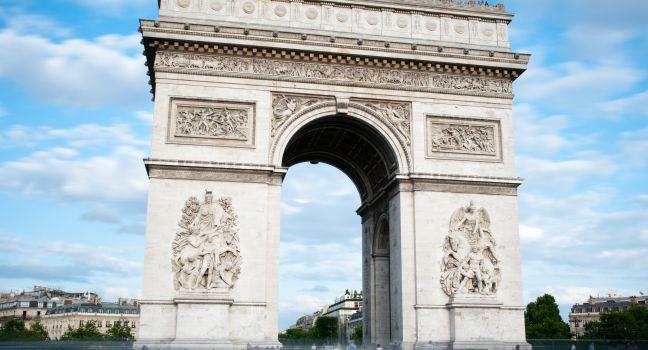
Inspired by Rome's Arch of Titus, this colossal, 164-foot triumphal arch was ordered by Napoléon—who liked to consider himself the heir to Roman emperors—to celebrate his military successes. Unfortunately, Napoléon's strategic and architectural visions were not entirely on the same plane, and the Arc de Triomphe proved something of an embarrassment. Although the emperor wanted the monument completed in time for an 1810 parade in honor of his new bride, Marie-Louise, it was still only a few feet high, and a dummy arch of painted canvas was strung up to save face. Empires come and go, but Napoléon's had been gone for more than 20 years before the Arc was finally finished in 1836. A small museum halfway up recounts its history.
The Arc de Triomphe is notable for magnificent sculptures by François Rude, including the Departure of the Volunteers in 1792, better known as La Marseillaise, to the right of the arch when viewed from the Champs-Élysées. Names of Napoléon's generals are inscribed on the stone facades—the underlined names identify the hallowed figures who fell in battle.
The traffic circle around the Arc is named for Charles de Gaulle, but it's known to Parisians as L'Étoile, or "the Star"—a reference to the streets that fan out from it. Climb the stairs to the top of the arch and you can see the star effect of the 12 radiating avenues and the vista down the Champs-Élysées toward Place de la Concorde and the distant Musée du Louvre.
Ambitious plans to make visiting the Arc de Triomphe a safer and more pedestrian-friendly experience include limiting car traffic in favor of enlarged walkways and creating a wide expanse of trees extending all the way down the Champs-Élysées. It's still unclear exactly when this will happen. France's Unknown Soldier is buried beneath the arch, and a commemorative flame is rekindled every evening at 6:30. That's the most atmospheric time to visit, but, to beat the crowds, come early in the morning or buy your ticket online. Do not attempt to cross the traffic circle surrounding the monument. It's infamous for accidents—including one some years ago that involved the French transport minister. Always use the underground passage from the northeast corner of Avenue des Champs-Élysées.
Basilique du Sacré-Coeur
Montmartre
Fodor's Choice
Share This
Sergey Kelin / Shutterstock
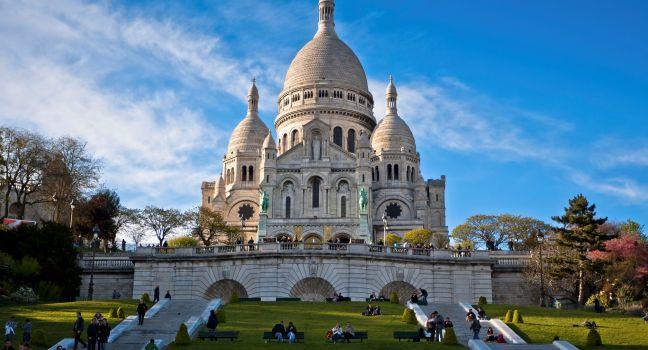
It's hard not to feel as though you're ascending to heaven when you visit Sacred Heart Basilica, the white castle in the sky, perched atop Montmartre. The French government commissioned it in 1873 to symbolize the return of self-confidence after the devastating years of the Commune and Franco-Prussian War, and architect Paul Abadie employed elements from Romanesque and Byzantine styles when designing it—a mélange many critics dismissed as gaudy. Construction lasted until World War I, and the church was finally consecrated in 1919. Many people now come to Sacré-Coeur to admire the superlative view from the top of its 271-foot-high dome. But if you opt to skip the climb up the spiral staircase, the view from the front steps is still ample compensation for the trip.
Inside, expect another visual treat—namely the massive golden mosaic set high above the choir. Created in 1922 by Luc-Olivier Merson, Christ in Majesty depicts Christ with a golden heart and outstretched arms, surrounded by various figures, including the Virgin Mary and Joan of Arc. It remains one of the largest mosaics of its kind. In the basilica's 262-foot-high campanile hangs La Savoyarde, one of the world's heaviest bells, weighing about 19 tons.
The best time to visit Sacré-Coeur is early morning or early evening, and preferably not on a Sunday, when the crowds are thick. If you're coming to worship, there are daily Masses.To avoid the steps, take the funicular, which costs one métro ticket each way.
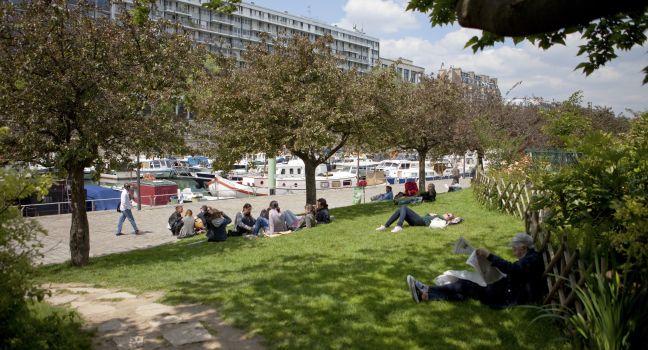
The once-forgotten canal has morphed into one of the city's trendiest places to wander. A good time to come is Sunday afternoon, when the Quai de Valmy is closed to cars and some of the shops are open. Rent a bike at any of the many Vélib' stations, stroll along the banks, or go local and cuddle quayside in the sunshine with someone special.
In 1802 Napoléon ordered the 4.3-km (2.7-mile) canal dug as a source of clean drinking water after cholera and other epidemics swept the city. When it finally opened 23 years later, it extended north from the Seine at Place de la Bastille to the Canal de l'Ourcq, near La Villette. Baron Haussmann later covered a 1.6-km (1-mile) stretch of it, along today's Boulevard Richard Lenoir. It nearly became a highway in the 1970s, before the city's urban planners regained their senses. These days you can take a boat tour from end to end through the canal's nine locks: along the way, the bridges swing or lift open. The drawbridge with four giant pulleys at Rue de Crimée, near La Villette, was a technological marvel when it debuted in 1885. In recent years gentrification has transformed the once-dodgy canal, with artists taking over former industrial spaces and creating studios and galleries. The bar and restaurant scene is hipster central, and small designers have arrived, fleeing expensive rents in the Marais. Canauxrama ( www.canauxrama.com) offers 2½-hour boat cruises through the locks (€25). Embarkation is at each end of the canal: at Bassin de la Villette or Port de l'Arsenal.
Cathédrale Notre-Dame de Paris
Ile de la Cité
Fodor's Choice
Share This
Samot / Shutterstock
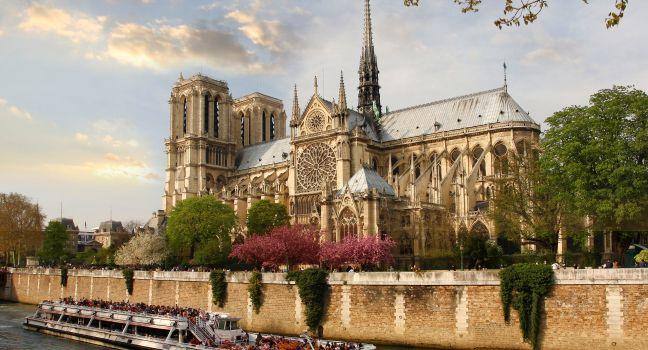
Looming above Place du Parvis, this Gothic sanctuary is the symbolic heart of Paris and, for many, of France itself. After a five-year rebuild following the 2019 fire that nearly destroyed it, the cathedral reopened to rapturous reviews in December 2024. Newly luminous and awash in color, the monument enthralls more than ever. And its history remains unchanged: Napoléon was crowned here, and kings and queens exchanged marriage vows before its altar.
Begun in 1163, completed in 1345, badly damaged during the Revolution, and restored in the 19th century by Eugène Viollet-le-Duc, Notre-Dame may not be the country’s oldest or largest cathedral, but in beauty and architectural harmony it has few peers. The front facade has three main entrances: the Portal of the Virgin (left); the Portal of the Last Judgment (center); and the Portal of St. Anne (right). As you enter the nave, the faith of the early builders permeates the interior: the glow of the windows contrasts with the exterior’s triumphant glory. Look down the nave to the transepts—the arms of the church—where, at the south entrance to the choir, you'll glimpse the haunting 12th-century statue of Notre-Dame de Paris, Our Lady of Paris, for whom the cathedral is named. On the choir’s south side is the Treasury, with its small collection of religious artifacts. On the north side is the north rose window, one of the cathedral's original stained-glass panels; at the center is an image of Mary holding a young Jesus.
The best time to visit is early morning, when the cathedral is brightest and least crowded. Guides are available at the entrance (€10); guided tours in English are also available (check the website for specific times). A separate entrance, to the left of the front facade, provides access to the towers via 422 stone steps. These wind up to the bell tolled by the fictional Quasimodo in Victor Hugo's 1831 Notre-Dame de Paris. The famed gargoyles (technically chimeras since they lack functioning waterspouts) were 19th-century additions.
It is obligatory to reserve a tower visit online; lines to climb the tower are shortest on weekday mornings. Down the stairs in front of the cathedral is the Crypte Archéologique, an archaeological museum offering a fascinating subterranean view of this area from the 1st century, when Paris was a Roman city called Lutetia, through medieval times. By day, the most tranquil place to appreciate the cathedral's architectural elements is Square Jean-XXIII, the lovely garden behind the cathedral. By night, Seine boat rides promise stellar views.
Cimetière du Père-Lachaise
Père Lachaise
Fodor's Choice
Share This
Valerie Potapova/Shutterstock
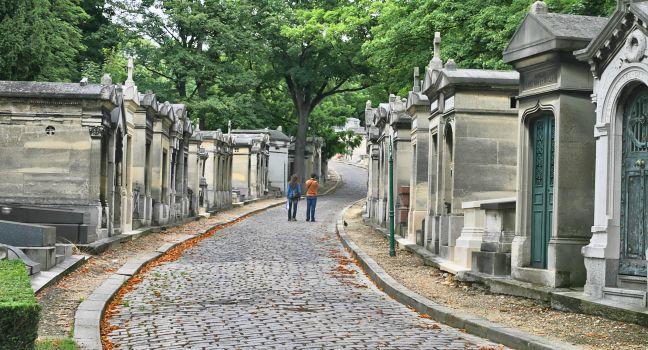
Bring a red rose for "the Little Sparrow" Edith Piaf when you visit the cobblestone avenues and towering trees that make this 118-acre oasis of green perhaps the world's most famous cemetery. Named for Père François de la Chaise, Louis XIV's confessor, Père-Lachaise is more than just a who's who of celebrities. The Paris Commune's final battle took place here on May 28, 1871, when 147 rebels were lined up and shot against the Mur des Fédérés (Federalists' Wall) in the southeast corner. Aside from the sheer aesthetic beauty of the cemetery, the main attraction is what (or who, more accurately) is belowground.
Two of the biggest draws are Jim Morrison's grave (with its own guard to keep Doors fans under control) and the life-size bronze figure of French journalist Victor Noir, whose alleged fertility-enhancing power accounts for the patches of bronze rubbed smooth by hopeful hands. Other significant grave sites include those of 12th-century French philosopher Pierre Abélard and his lover Héloïse; French writers Colette, Honoré de Balzac, and Marcel Proust; American writers Richard Wright, Gertrude Stein, and Alice B. Toklas; Irish writer Oscar Wilde; French actress Sarah Bernhardt; French composer Georges Bizet; Greek American opera singer Maria Callas; Franco-Polish composer Frédéric Chopin; painters of various nationalities including Georges-Pierre Seurat, Camille Pissaro, Jean-Auguste-Dominique Ingres, Jacques-Louis David, Eugène Delacroix, Théodore Géricault, Amedeo Clemente Modigliani, and Max Ernst; French jazz violinist Stephane Grappelli; French civic planner Baron Haussmann; French playwright and actor Molière; and French singer Edith Piaf. (To visit the grave sites of a few other famous French men and women, head south to Cimetière du Montparnasse, north to Cimetière de Montmartre, or west to Passy Cemetery.)
One of the best days to visit is on All Saints' Day (November 1), when Parisians bring flowers to adorn the graves of loved ones or favorite celebrities. Pinpoint grave sites on the website before you come, but buy a map anyway outside the entrances—you'll still get lost, but that's part of the fun.
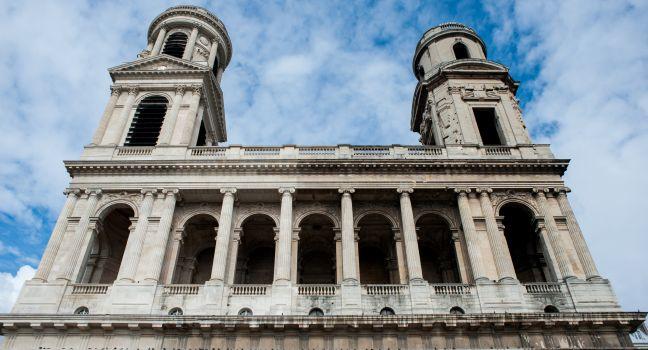
Dubbed the Cathedral of the Rive Gauche, this enormous 17th-century Baroque church has entertained some unlikely christenings—among them those of the Marquis de Sade and Charles Baudelaire—as well as the nuptials of novelist Victor Hugo. More recently, the church played a supporting role in the best-selling novel The Da Vinci Code, and it now draws scores of tourists to its obelisk (part of a gnomon, a device used to determine exact time and the equinoxes, built in the 1730s). Other notable features include the exterior’s asymmetrical towers and two magnificent Delacroix frescoes, which can be seen in a chapel to the right of the entrance. In the square just in front, view Visconti’s magnificent 19th-century fountain—it's especially beautiful at night.
Eiffel Tower
Eiffel Tower
Fodor's Choice
Share This
Perig / Shutterstock
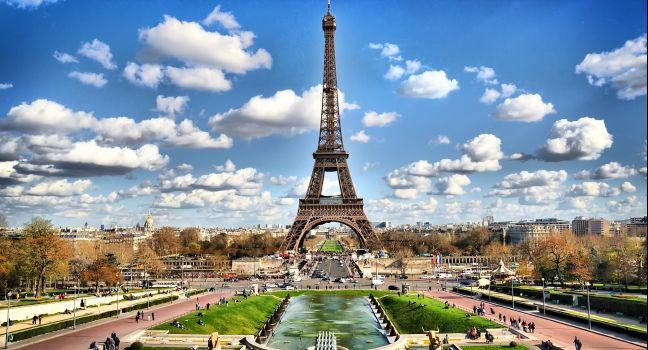
The Eiffel Tower is to Paris what the Statue of Liberty is to New York and what Big Ben is to London: the ultimate civic emblem. French engineer Gustave Eiffel spent two years working to erect this iconic monument for the World Exhibition of 1889. Because its colossal bulk exudes such a feeling of permanence, it's hard to believe that the tower nearly became 7,000 tons of scrap when the concession expired in 1909. Only its potential use as a radio antenna saved the day. Though many prominent Parisians derided it at first, the tower gradually became part of the city's topography. It's most breathtaking at night, when every girder is highlighted in a glittering show of 20,000 golden lights for five minutes every hour on the hour from nightfall until midnight (until 1 am in summer).
More recent enhancements include a renovation of the first level that added a vertigo-inducing "transparent" floor 187 feet above the esplanade as well as a miniturbine plant, four vertical turbine windmills, and eco-friendly solar panels to minimize the tower's carbon footprint over time. You can stride up 704 steps as far as the second level, but only the elevator goes to the top. The view of the flat sweep of Paris at 1,000 feet is sublime—especially if you come in the late evening, after the crowds have dispersed. Beat the crushing lines by reserving your ticket online, or book a skip-the-line guided tour offered by many companies (from €47). Better yet, ride up the private elevator to chef Frédérick Anton's Jules Verne restaurant—with its Michelin star—on the tower's second floor. It's about as dramatic a lunch or dinner spot as you'll find, apart from Madame Brasserie, a chic sit-down bistro helmed by Michelin-starred chef Thierry Marx on the first floor (online reservations for both restaurants are a must). Or you can watch the glimmering lights from the top of the tower over a glass of bubbly or a nonalcoholic drink at the Bar à Champagne. There are also small "buffet" snack shops on the esplanade and the first and second floors.
At the tower's tippy top is Gustave Eiffel's "secret apartment," which he used as his office, including wax mannequins of Eiffel in conversation with Thomas Edison; the blonde woman in the background represents Claire, Eiffel's oldest daughter, with whom he was very close. You'll also hear actual recordings of Eiffel's voice.
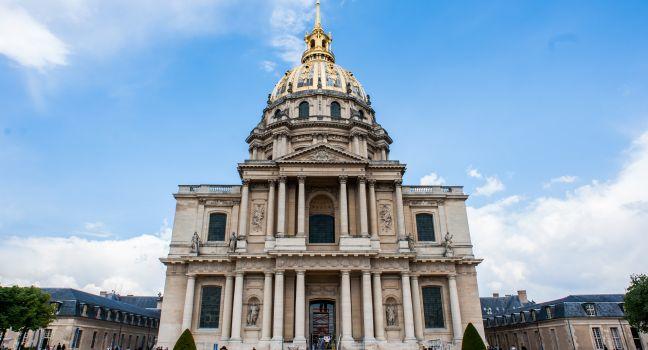
The baroque complex known as Les Invalides (pronounced lehz-ahn-vah-leed) is the eternal home of Napoléon Bonaparte (1769–1821) or, more precisely, his remains, which lie entombed under the golden dome. Louis XIV ordered the facility to be built in 1670 to house disabled soldiers (hence the name), and, at one time, 4,000 military men lived here. Today, a portion still serves as a veterans' residence and hospital. The Musée de l'Armée, containing an exhaustive collection of military artifacts from antique armor to weapons, is also here.
If you see only a single sight, make it the Église du Dome (one of the two churches here) at the back of the complex. Napoléon's tomb was moved here in 1840 from the island of St-Helena, where he died in forced exile. The emperor's body is protected by no fewer than six coffins—one set inside the next, sort of like a Russian nesting doll—which are then encased in a sarcophagus of red quartzite. The bombastic tribute is ringed by statues symbolizing Napoléon's campaigns of conquest. To see more Napoléoniana, check out the collection in the Musée de l'Armée featuring his trademark gray frock coat and huge bicorne hat. Look for the figurines reenacting the famous coronation scene when Napoléon crowns his empress, Josephine. You can see a grander version of this scene by the painter David hanging in the Louvre.
The best entrance is at the southern end, on Place Vauban (Avenue de Tourville); the ticket office is here, as is Napoléon's tomb. There are automatic ticket machines at the main entrance on Place des Invalides.
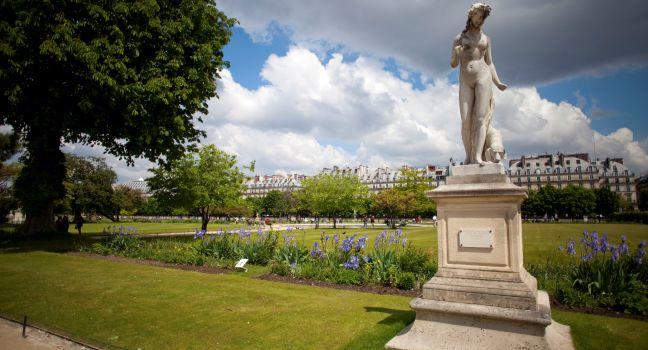
This quintessential French garden, with its verdant lawns, rows of manicured trees, and gravel paths, was designed by André Le Nôtre for Louis XIV. After the king moved his court to Versailles in 1682, the Tuileries became the place for stylish Parisians to stroll. (Ironically, the name derives from the decidedly unstylish factories that once occupied this area: they produced tuiles, or roof tiles, fired in kilns called tuileries.) Monet and Renoir captured the garden with paint and brush. It's no wonder the Impressionists loved it—the gray, austere light of Paris's famously overcast days make the green trees appear even greener.
The garden still serves as a setting for one of the city's loveliest walks. Laid out before you is a vista of must-see monuments, with the Louvre at one end and the Place de la Concorde at the other. The Eiffel Tower looms in the distance on the other side of the Seine, along with the Musée d'Orsay, accessible by a footbridge in the center of the garden.
Begin exploring the garden at the Louvre end, with the Arc du Carrousel, a stone-and-marble arch commissioned by Napoléon to showcase the bronze horses he stole from St. Mark's Cathedral in Venice. The horses were eventually returned and replaced here with a statue of a quadriga, a four-horse chariot. On the Place de la Concorde end, twin buildings bookend the garden. On the Seine side, the former royal greenhouse is now the exceptional Musée de l'Orangerie, home to the largest display of Monet's lovely Water Lilies series, as well as a sizable collection of early 20th-century paintings, including many Impressionist works. On the opposite end is the Jeu de Paume, which hosts some of the city's best photography exhibitions.
Note that the Tuileries is one of the best places in Paris to take kids if they're itching to run around. There's a carousel, trampolines, and, in summer, a funfair. If you're hungry, look for carts serving ice cream from Le Glacier Farmers or sandwiches from Eric Kayser at the eastern end near the Louvre. Within the gated part of the gardens are four cafés with terraces. Pavillon des Tuileries near Place de la Concorde is a good place to stop for late-afternoon tea or an apéritif.
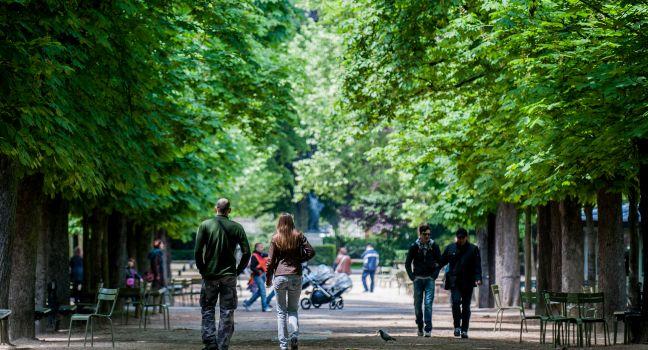
Everything that is charming, unique, and befuddling about Parisian parks can be found in the Luxembourg Garden: groomed trees, ironed-and-pressed walkways, sculpted flower beds, and immaculate emerald lawns meant for admiring, not necessarily for lounging. The tree- and bench-lined paths are a marvelous reprieve from the bustle of the neighborhoods it borders: the Quartier Latin, St-Germain-des-Prés, and Montparnasse. Beautifully austere during the winter months, the garden grows intoxicating as spring brings blooming beds of daffodils, tulips, and hyacinths, and the circular pool teems with wooden sailboats nudged along by children. The park's northern boundary is dominated by the Palais du Luxembourg, which houses the Sénat (Senate), one of two chambers that make up the Parliament. The original inspiration for the gardens came from Marie de Medici, who was nostalgic for the Boboli Gardens of her native Florence; she is commemorated by the recently restored Fontaine de Medicis, a favorite spot in summer for contemplative readers.
Les Marionettes du Théâtre du Luxembourg is a timeless attraction, where, on Wednesday and weekend mornings and afternoons, you can catch classic guignols (marionette shows) for €7.20. The wide-eyed kids might be the real attraction—their expressions of utter surprise, despair, and glee have fascinated the likes of Alfred Eisenstaedt and François Truffaut. The park also has a merry-go-round, swings, and pony rides. The bandstand on the eastern side of the park hosts free concerts on summer afternoons.
As you stroll the paths, you might be surprised by a familiar sight: one of the original (miniature) casts of the Statue of Liberty was installed in the gardens in 1906. There are more than 100 other statues in the gardens, too. Check out the rotating photography exhibits hanging on the perimeter fence near the entrance on Boulevard St-Michel. Attractive refreshment stands sell soft drinks, espresso, crepes, and ice cream, and there's a well-maintained trail around the perimeter that is frequented by joggers. Gendarmes regularly walk the grounds to ensure park rules are enforced; follow guidelines posted on entry gates.
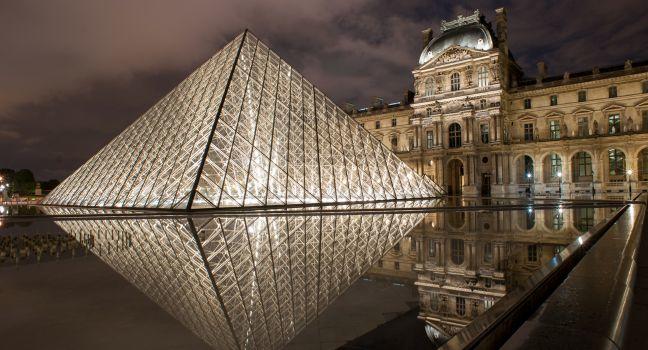
Simply put, the Louvre is the world's greatest art museum—and the largest, with 675,000 square feet of works from all over the world. The Mona Lisa is, of course, a top draw, along with the Venus de Milo and Winged Victory. These and many more of the globe’s most coveted treasures are displayed in three wings—Richelieu, Sully, and Denon—which are arranged like a horseshoe around I. M. Pei's Pyramide. The giant glass pyramid surrounded by a trio of smaller ones opened in 1989 over the new entrance in the Cour Napoléon.
While booking admission tickets online in advance is not required, it's the best way to avoid disappointment: the €22 timed entry guarantees admission, while tickets bought on-site are only sold when space is available—and given a recent decision to limit daily visitors to 30,000 (a third of the previous norm), it's unlikely that spontaneous appearances at the museum will result in a successful visit. Be aware that children under 18 get in for free. Slick Nintendo 3DS multimedia guides (€5), available at the entrance to each wing, offer a self-guided discovery of the museum in a variety of languages, and extended openings (noctournes) on Friday evening allow you to visit the museum until 9:45 pm.
Having been first a fortress and later a royal residence, the Louvre represents a saga that spans nine centuries. Its medieval roots are on display underground in the Sully wing, where vestiges of the foundation and moat remain. Elsewhere in this wing, you can ogle the largest display of Egyptian antiques outside of Cairo, most notably the Great Sphinx of Tanis, one of the largest outside of Egypt (Salle 338). Upstairs is the armless Venus de Milo, a 2nd-century representation of Aphrodite (Salle 345). Highlights of the wing’s collection of French paintings from the 17th century onward include One Odalisque by Jean-August-Dominique Ingres (Salle 702). In the Denon wing, climb the sweeping marble staircase (Escalier Daru) to see the sublime Winged Victory of Samothrace, carved in 305 BC. This wing is also home to the iconic, enigmatic Mona Lisa (Salle des Etats); two other Leonardo da Vinci masterpieces hang in the nearby Grand Galerie. The museum’s 30,000-square-foot Arts of Islam exhibition space is here, too. Topped with an undulating golden roof evoking a flowing veil, its two-level galleries contain one of the largest collections of art from the Islamic world. After admiring it, be sure to visit the Richelieu wing and the Cour Marly, with its quartet of horses carved for Louis XIV and Louis XV. On the ground floor, the centerpiece of the Near East Antiquities Collection is the Lamassu, carved 8th-century winged beasts (Salle 229). The elaborately decorated Royal Apartments of Napoléon III are on the first floor. On the second floor, French and Northern School paintings include Vermeer's The Lacemaker (Salle 837).
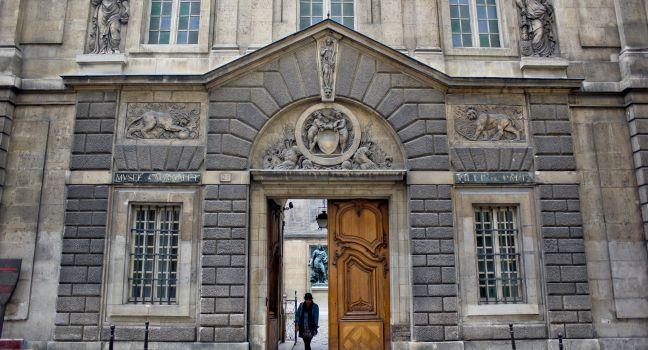
If it has to do with Parisian history, it's here: this fascinating hodgepodge of artifacts and art ranges from prehistoric canoes used by the Parisii tribes to the cork-lined bedroom where Marcel Proust labored over his evocative novels. Thanks to scores of paintings, drawings, photographs, furniture, and scale models, nowhere else in Paris can you get such a precise picture of the city's evolution through the ages. The museum fills more than 100 rooms in two adjacent mansions, the Hôtel Le Peletier de St-Fargeau and the Hôtel Carnavalet. The latter is a Renaissance jewel that was the home of writer Madame de Sévigné from 1677 to 1696. Throughout her long life, she wrote hundreds of frank and funny letters to her daughter in Provence, giving an incomparable view of both public and private life during the time of Louis XIV. The museum offers a glimpse into her world, but its collection covers far more than just the 17th century. The exhibits on the Revolution are especially interesting, with scale models of guillotines and a replica of the Bastille prison carved from one of its stones. Louis XVI's prison cell is reconstructed along with mementos of his life, even medallions containing locks of his family's hair. Other impressive interiors are reconstructed from the Middle Ages through the rococo period and into Art Nouveau—showstoppers include the Fouquet jewelry shop and the Café de Paris's original furnishings. From May through September, the museum's sculpted courtyard garden is home to Fabula café and restaurant, a delightful place for a coffee, snack, or meal in one of the Marais's prettiest gardens (16 rue des Francs-Bourgeois).
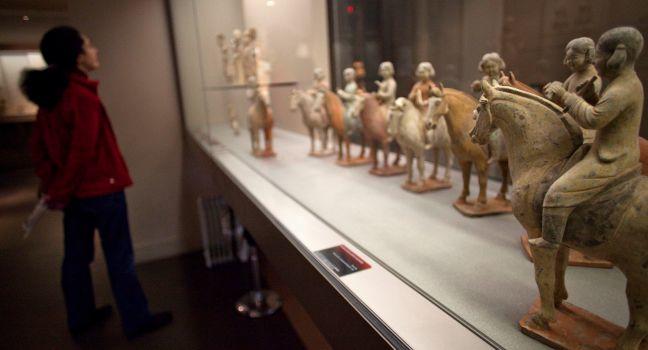
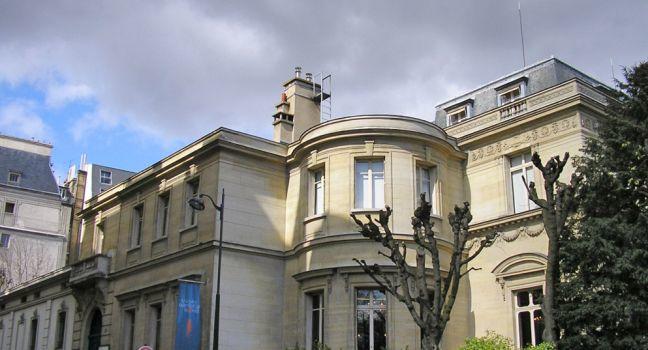
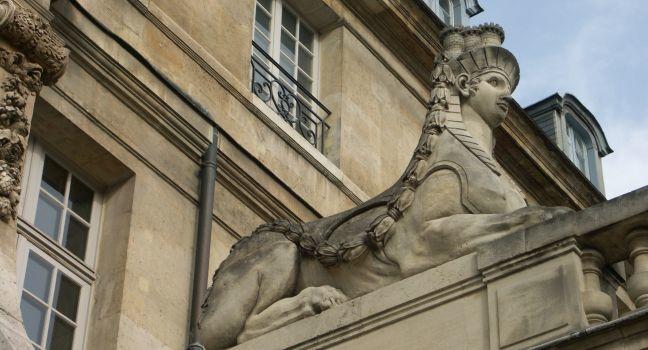
Wealthy Milanese banker and patriot Enrico (Henri) Cernuschi fled to Paris in 1850 after the new Italian government collapsed, only to be arrested during the 1871 Paris Commune. He subsequently decided to wait out the unrest by traveling and collecting Asian art. Upon his return 18 months later, he had a special mansion built on the edge of Parc Monceau to house his treasures, notably a two-story bronze Buddha from Japan. Reopened in 2020 after restoration, France's second-most-important collection of Asian art, after the Musée Guimet, expanded its galleries to include objects never before displayed, widening the collection to include more works from Japan, Korea, and Vietnam. Cernuschi had an eye not only for the bronze pieces he adored but also for Neolithic pottery (8000 BC), mingqi tomb figures (AD 300–900), and an impressive array of terra-cotta figures from various dynasties. A collection highlight is La Tigresse, a bronze wine vessel in the shape of a roaring feline (11th century BC), purchased after Cernuschi's death. Although the museum is free, there is a charge for temporary exhibitions.
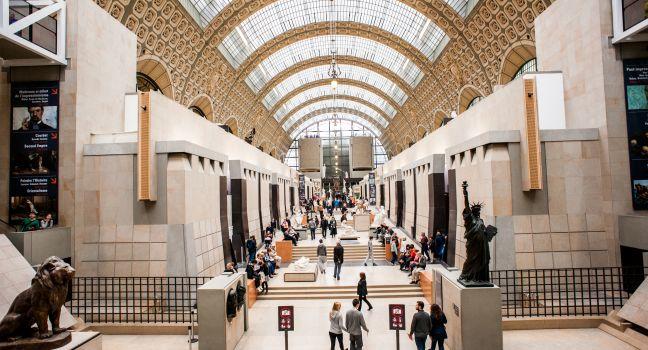
Opened in 1986, this gorgeously renovated Belle Époque train station displays a world-famous collection of Impressionist and Postimpressionist paintings on three floors. To visit the exhibits in a roughly chronological manner, start on the ground floor, take the escalators to the top, and end on the middle floor. If you came to see the biggest names here, head straight for the top floor and work your way down. English audio guides and free color-coded museum maps (both available just past the ticket booths) will help you plot your route.
Galleries off the first floor's main alley feature early works by Manet and Cézanne in addition to pieces by masters such as Delacroix and Ingres. The Pavillon Amont has Courbet's masterpieces L'Enterrement à Ornans and Un Atelier du Peintre. Hanging in Salle 14 is Édouard Manet's Olympia, a painting that pokes fun at the fashion for all things Greek and Roman (his nubile subject is a 19th-century courtesan, not a classical goddess). Impressionism gets going on the top floor, with iconic works by Degas, Pissarro, Sisley, and Renoir. Don't miss Monet's series on the cathedral at Rouen and, of course, samples of his water lilies. Other selections by these artists are housed in galleries on the ground floor. On the middle floor, you'll find an exquisite collection of sculpture as well as Art Nouveau furniture and decorative objects. There are rare surviving works by Hector Guimard (designer of the swooping green Paris métro entrances), plus Lalique and Tiffany glassware. Postimpressionist galleries include work by van Gogh and Gauguin, while Neo-Impressionist galleries highlight Seurat and Signac. The museum also regularly curates large, temporary exhibits of major historic artists.
To avoid the lines here, which are among the worst in Paris, book ahead online or buy a Museum Pass, then go directly to Entrance A2 for tickets with time slots or C1 if you have a museum pass (guards will help direct you). Otherwise, go early. Thursday evening the museum is open until 9:45 pm and is less crowded from 5 pm until closing. Don't miss the views of Sacré-Coeur from the balcony—this is the Paris that inspired the Impressionists. The museum has several restaurants and cafés; Café Cabana's views of the city through the ex-train station's giant clock face are legendary. The Musée d'Orsay is closed Monday, unlike the Louvre, which is closed Tuesday.
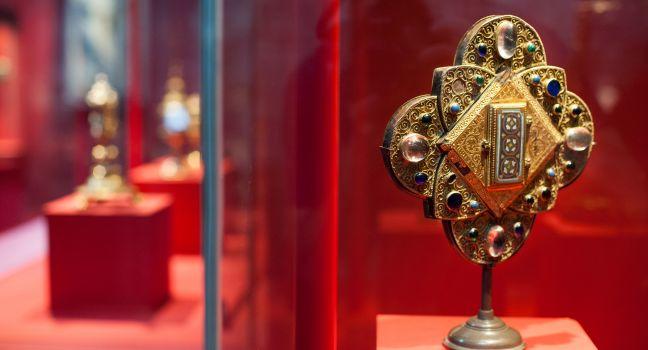
Built on the ruins of Roman baths, the Hôtel de Cluny has been a museum since medievalist Alexandre Du Sommerard established his collection here in 1844. The ornate 15th-century mansion was created for the abbot of Cluny, leader of the mightiest monastery in France. Symbols of the abbot's power surround the building, from the crenellated walls that proclaimed his independence from the king to the carved Burgundian grapes twining up the entrance that symbolize his valuable vineyards. The scallop shells (coquilles St-Jacques) covering the facade are a symbol of religious pilgrimage, another important source of income for the abbot; the well-traveled pilgrimage route to Spain once ran around the corner along Rue St-Jacques. The highlight of the museum's collection is the world-famous La Dame à la Licorne (The Lady and the Unicorn) tapestry series, woven in the 16th century, probably in Belgium, and now presented in refurbished surroundings. The vermillion tapestries are an allegorical representation of the five senses. In each, a unicorn and a lion surround an elegant young woman against an elaborate mille fleurs (literally, "a thousand flowers") background. The enigmatic sixth tapestry is thought to be either a tribute to a sixth sense, perhaps intelligence, or a renouncement of the other senses; "To my only desire" is inscribed at the top. The collection also includes the original sculpted heads of the Kings of Israel and Judah from Notre-Dame, decapitated during the Revolution and discovered in 1977 in the basement of a French bank. The frigidarium is a stunning reminder of the city's cold-water Roman baths; the soaring space, painstakingly renovated, houses temporary exhibits. Also notable is the pocket-size chapel with its elaborate Gothic ceiling. Outside, in Place Paul Painlevé, is a charming medieval-style garden where you can see flora depicted in the unicorn tapestries. The English video guide (€4) is highly recommended. For a different kind of visual and auditory experience, check the event listings; concerts of medieval music are often staged in the evening, Sunday afternoons, and Monday at lunchtime.
Musée Guimet
Challiot
Fodor's Choice
Share This
David Monniaux [CC BY-SA 3.0], via Wikimedia Commons
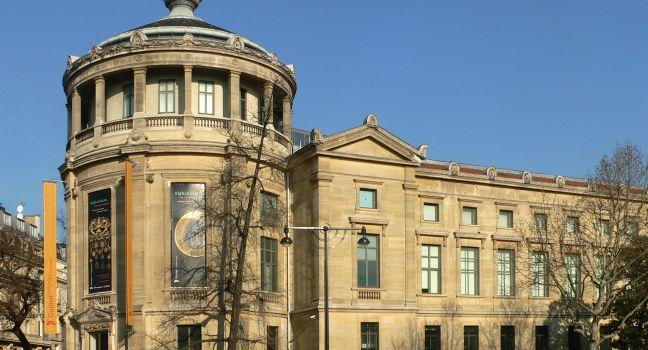
The outstanding Musée Guimet boasts the Western world's biggest collection of Asian art, thanks to the 19th-century wanderings of Lyonnaise industrialist Émile Guimet. Exhibits, enriched by the state's vast holdings, are laid out geographically in airy, light-filled rooms. Just past the entry is the largest assemblage of Khmer sculpture outside Cambodia. The second floor has statuary and masks from Nepal, ritual funerary art from Tibet, and jewelry and fabrics from India. Peek into the library rotunda, where Monsieur Guimet once entertained the city's notables; Mata Hari danced here in 1905, and the museum still hosts an impressive series of musical events. The much-heralded Chinese collection, made up of 20,000-odd objects, covers seven millennia. Recently restored and reopened, the Panthéon Bouddhique, in the Hôtel d'Heidelbach a few steps from the museum, houses Émile Guimet's collection of Japanese and Chinese works of art collected during his travels and arranged as they would appear in Buddhist temples. In the mansion's Japanese garden, authentic tea ceremonies are held in a pavilion built in the traditional Japanese style. Grab a free brochure at the museum entrance, and stop at the Salon des Porcelaines café on the lower level for a ginger milkshake or an Asian-influenced meal. The museum also has a charming bookstore. The Guimet's offshoot, the Musée d'Ennery, is housed in a Belle Époque mansion on Avenue Foch and is noted for its collection of Japanese netsuke, as well as 7,000 works of Chinese and Japanese art.
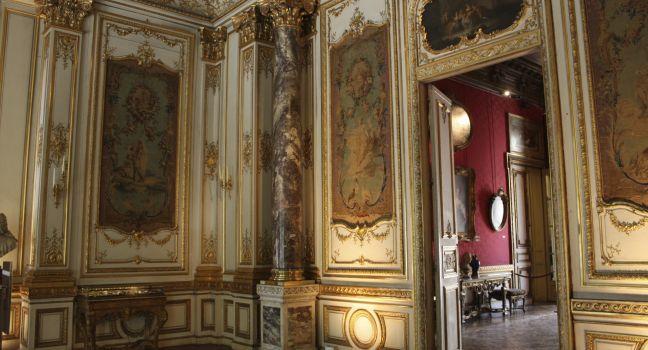
Among the city's best small museums, the opulent Musée Jacquemart-André is home to a huge collection of art and furnishings lovingly assembled in the late 19th century by banking heir Edouard André and his artist wife, Nélie Jacquemart, when this was their home. Their midlife marriage in 1881 raised eyebrows—he was a dashing bachelor and a Protestant, and she, no great beauty, hailed from a modest Catholic family. Still, theirs was a happy union fused by a common passion for art. For six months every year, the couple traveled, most often to Italy, where they hunted down works from the Renaissance, their preferred period, and prominently displayed them in their home. Their collection also includes masterworks by French painters Fragonard, Jacques-Louis David, and François Boucher, plus Dutch masters van Dyck and Rembrandt. The Belle Époque mansion itself is a major attraction. Its elegant ballroom, equipped with collapsible walls operated by then-state-of-the-art hydraulics, could hold 1,000 guests. The winter garden was a wonder of its day, spilling into the fumoir, where André would share cigars with the grands hommes (important men) of the time. You can tour the separate bedrooms—his in dusty pink, hers in pale yellow. The former dining room, now an elegant café, features a ceiling by Tiepolo. Don't forget to pick up the free audio guide in English, and do inquire about the current temporary exhibition, which is always world-class. Plan on a Sunday visit, and enjoy the popular brunch (€32) in the café from 11 am to 2:30 pm. Reservations are not accepted, so come early or late to avoid waiting in line.
This underrated museum has the largest collection of Monet's work anywhere. More than 100 pieces, donated by his son Michel, occupy a specially built basement gallery in an elegant 19th-century mansion, which was once the hunting lodge of the duke de Valmy. You can find such works as the Cathédrale de Rouen series (1892–96) and Impression: Soleil Levant (Impression: Sunrise), 1872, the painting that helped give the Impressionist movement its name. Other exhibits include letters exchanged by Impressionist painters Berthe Morisot and Mary Cassatt. Upstairs, the mansion still feels like a graciously decorated residence. Empire furnishings fill the salons overlooking the Jardin du Ranelagh on one side and the private yard on the other. There's also a captivating room of illuminated medieval manuscripts. To best understand the collection's context, pick up an English-language audio guide (€4) on your way in.
Musée National Picasso-Paris
Marais Quarter
Fodor's Choice
Share This
imagesbytakache/Shutterstock
Home to the world’s largest public collection of Picasso’s inimitable oeuvre, this spectacular museum covers almost 54,000 square feet in two buildings: the splendid 17th-century Hôtel Salé and a sprawling structure in the back garden dedicated to temporary exhibitions. Diego Giacometti’s exclusively designed furnishings in the former are a bonus. The 200,000-plus paintings, sculptures, drawings, documents, and other archival materials (most of them donated to the City of Paris by Picasso or his family members) span the artist's entire career. Although it doesn't include his most recognizable works, it does contain many of the pieces Picasso himself treasured most. The first two floors cover his work from 1895 to 1972. The top floor illustrates his relationship to his favorite artists: landscapes, nudes, portraits, and still life works taken from his private collection detail his "artistic dialogue" with Cézanne, Gauguin, Degas, Rousseau, Matisse, Braque, Renoir, Modigliani, Miró, and others. The basement centers on Picasso’s workshops, with photographs, engravings, paintings, and sculptures that document or evoke key pieces created at the Bateau Lavoir, Château de Boisgeloup, Grands-Augustins, Villa La Californie, and his farmhouse, Notre-Dame-de-Vie, in Mougins. With excellent temporary exhibitions and plenty of multimedia components and activities that cater to kids, this is ideal for children and adult art lovers alike.Buy tickets online well in advance of your planned visit. Also, try to avoid visiting on weekends, when the crowds are largest.
Opéra Garnier
Grands Boulevards
Fodor's Choice
Share This
mary416 / Shutterstock
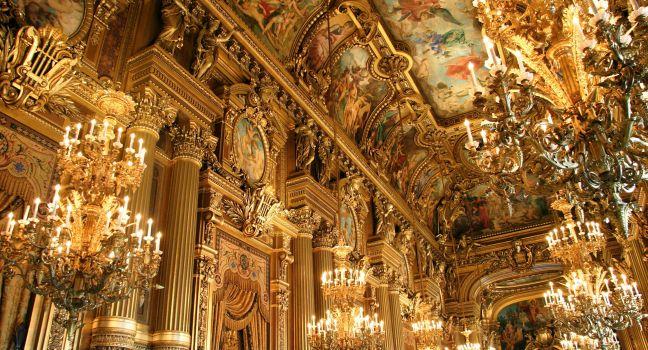
Haunt of the "Phantom of the Opera" and the real-life inspiration for Edgar Degas's paintings of dancers, the gorgeous Opéra Garnier is one of two homes of the National Opera of Paris. The building, the Palais Garnier, was begun in 1860 by then-unknown architect Charles Garnier, who finished his masterwork 15 long years later, way over budget. Festooned with (real) gold leaf, colored marble, paintings, and sculpture from the top artists of the day, the opera house was about as subtle as Versailles and sparked controversy in post-Revolutionary France. The sweeping marble staircase, in particular, drew criticism from a public skeptical of its extravagance. But Garnier, determined to make a landmark that would last forever, spared no expense. The magnificent grand foyer is one of the most exquisite salons in France. In its heyday, the cream of Paris society strolled all 59 yards of the vast hall at intermission, admiring themselves in the towering mirrors. To see the opera house, buy a ticket for an unguided visit, which allows access to most parts of the building, including a peek into the auditorium. There is also a small ballet museum with a few works by Degas and the tutu worn by prima ballerina Anna Pavlova when she danced her epic Dying Swan in 1905. To get to it, pass through the unfinished entrance built for Napoléon III and his carriage (construction was abruptly halted when the emperor abdicated in 1870). On the upper level, you can see a sample of the auditorium's original classical ceiling, which was later replaced with a modern version painted by a septuagenarian Marc Chagall. His trademark willowy figures encircling the dazzling crystal chandelier—today the world's third largest—shocked an unappreciative public upon its debut in 1964. Critics who fret that Chagall's masterpiece clashes with the fussy crimson-and-gilt decor can take some comfort in knowing that the original ceiling is preserved underneath, encased in a plastic dome.
The Opéra Garnier hosts the Paris Ballet and a number of operas each season (others are performed at the Opéra Bastille). Tickets cost anywhere from €12 to €230 and should be reserved as soon as they go on sale—typically a month ahead at the box office, earlier by phone or online; otherwise, you can try your luck at last-minute tickets sold at the box office from 11:30 am on the day of the performance (€10). To learn about the building's history and get a taste of aristocratic life during the Second Empire, choose from three entertaining English-language tours (daily at 10:30 am, 11:30 am, and 5 pm; €23–€26) or take a self-guided tour (€15) and proceed at your own pace. To complete the experience, dine at Coco—an over-the-top Belle Époque folie recalling the glamorous 1920s—or browse through the Palais Garnier gift shop for ballet-inspired wares, fine Bernardaud porcelain depicting the famous Chagall ceiling, honey from the Opéra's own rooftop hives, and an exceptional selection of themed books.
Palais-Royal
Louvre
Fodor's Choice
Share This
(c) Taolmor | Dreamstime.com
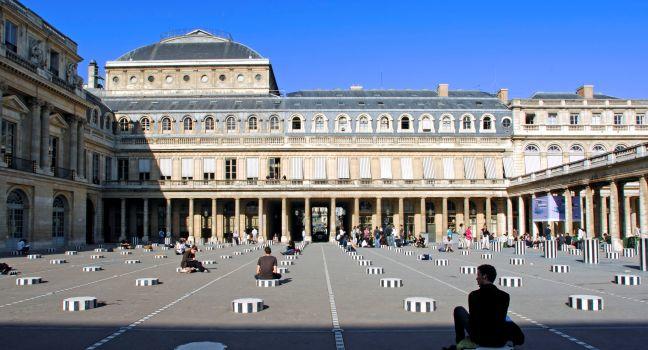
This truly Parisian garden is enclosed within the former home of Cardinal Richelieu (1585–1642). The 400-year-old arcades now house boutiques and one of the city's oldest restaurants, the haute-cuisine Le Grand Véfour, where brass plaques recall former regulars like Napoléon and Victor Hugo. Built in 1629, the palais became royal when Richelieu bequeathed it to Louis XIII. Other famous residents include Jean Cocteau and Colette, who wrote of her pleasurable "country" view of the province à Paris. It was also here, two days before the Bastille was stormed in 1789, that Camille Desmoulins gave an impassioned speech sowing the seeds of revolution. Today, the garden often hosts giant temporary art installations sponsored by another tenant, the Ministry of Culture. The courtyard off Place Colette is outfitted with an eye-catching collection of squat black-and-white columns created in 1986 by artist Daniel Buren.
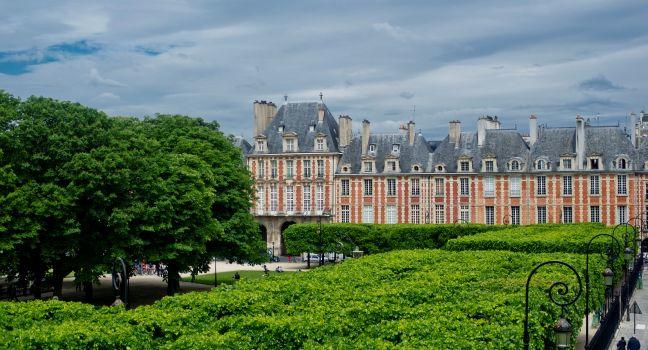
The oldest square in Paris and—dare we say it—the most beautiful, Place des Vosges represents an early stab at urban planning. The precise proportions offer a placid symmetry, but things weren't always so calm here. Four centuries ago, this was the site of the Palais des Tournelles, home to King Henry II and Queen Catherine de Medici. The couple staged regular jousting tournaments, and Henry was fatally lanced in the eye during one of them in 1559. Catherine fled to the Louvre, abandoning her palace and ordering it destroyed. In 1612, the square became Place Royale on the occasion of Louis XIII's engagement to Anne of Austria. Napoléon renamed it Place des Vosges to honor the northeast region of Vosges, the first in the country to pony up taxes to the Revolutionary government. At the base of the 36 redbrick-and-stone houses—nine on each side of the square—is an arcaded, covered walkway lined with art galleries, shops, and cafés. There's also an elementary school, a synagogue (whose barrel roof was designed by Gustav Eiffel), and several chic hotels. The formal, gated garden's perimeter is lined with chestnut trees; inside are a children's play area and a fountain. Aside from hanging out in the park, people come here to visit the house, now a museum, of the man who once lived at No. 6—Victor Hugo, the author of Les Misérables and Notre-Dame de Paris (aka The Hunchback of Notre-Dame). One of the best things about this park is that you're actually allowed to sit—or snooze or snack—on the grass during spring and summer. There is no better spot in the Marais for a picnic: you can pick up fixings at the nearby street market on Thursday and Sunday morning. (It's on Boulevard Richard Lenoir between Rues Amelot and St-Sabin.) The most likely approach to Place des Vosges is from Rue de Francs-Bourgeois, the main shopping street. However, for a grander entrance, walk along Rue St-Antoine until you get to Rue de Birague, which leads directly into the square.
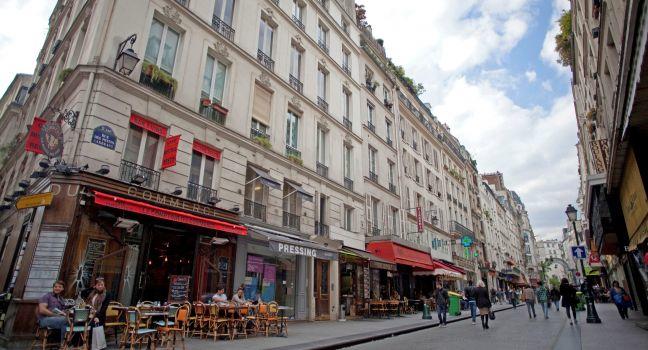
Rue Montorgueil was once the gritty oyster hub of Les Halles; now lined with food shops and cafés, the cobbled street—whose name translates to Mount Pride—is the heart of one of the city's most culinary neighborhoods. History runs deep here. Monet captured the scene in 1878, when Montorgueil was ablaze with tricolor flags during the World's Fair (see the painting in the Musée d'Orsay). Honoré de Balzac and his 19th-century band of scribes frequented Au Rocher de Cancale at No. 78, whose famously crumbling facade has been painstakingly restored with gilt panache. Stohrer at No. 51 has been baking elaborate pastries since 1730.
Indeed, it is pastries that reign over this small street these days, thanks to the arrivals of Fou de Pâtisseries at No. 45 and Jeffrey Cagnes at No. 73. The street extends onto Rue des Petits-Carreaux just before the Sentier métro, home to an outpost of excellent Breton crêperie Breizh Café at No. 14. Cross the boulevard to reach the diminutive Rue du Nil, a foodie haven home to Frenchie restaurant (No. 5) and wine bar (No. 6) as well as Terroirs d'Avenir's locavore shops and Plaq (No. 4), known for bean-to-bar chocolate. Even the area around Rue d'Aboukir, once far scruffier, is now a hipster fave thanks to the arrival of American-style baked goods like Boneshaker's doughnuts (No. 86) and Cookie Love's cookies (No. 84) as well as brunch spots Echo (No. 95) and Maafim (5 rue de Forges).
This winding cobblestone street is one of the city's oldest and was once a Roman road leading south from Lutetia (the Roman name for Paris) to Italy. The upper half is dotted with restaurants and bars that cater to tourists and students; the lower half is the setting of a lively morning market, Tuesday through Sunday. The highlight of le Mouffe, though, is the stretch in between where the shops spill into the street with luscious offerings such as roasting chickens and potatoes, rustic saucisson, pâtés, and pungent cheeses, especially at Androuët (No. 134). If you're here in the morning, Le Mouffetard Café (No. 116) is a good place to stop for a continental breakfast (about €10). If it's apéritif time, head to Place de la Contrescarpe for a cocktail, or enjoy a glass of wine at Cave La Bourgogne (No. 144). Prefer to just do a little noshing? Sample the chocolates at Mococha (No. 89) or the gelato at Gelati d'Alberto (No. 45). Note that most shops are closed on Monday.
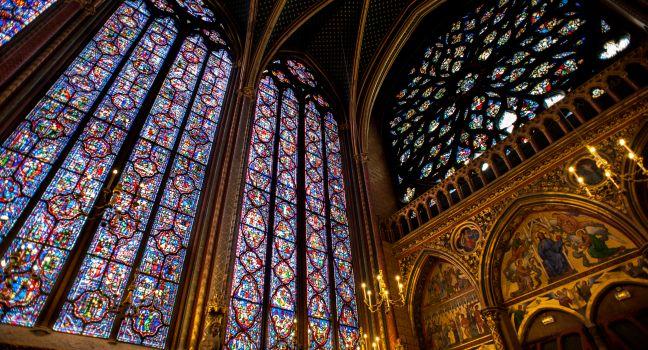
Built by the obsessively pious Louis IX (1214–70), this Gothic jewel is home to the oldest stained-glass windows in Paris. The chapel was constructed over seven years, at phenomenal expense, to house the king's collection of relics acquired from the impoverished emperor of Constantinople. These included Christ's crown of thorns, fragments of the Cross, and drops of Christ's blood—though even in Louis's time these were considered of questionable authenticity.
The narrow spiral staircase by the entrance takes you to the upper chapel where the famed beauty of Sainte-Chapelle comes alive: 6,458 square feet of stained glass are delicately supported by painted stonework that seems to disappear in the colorful light streaming through the windows. Deep reds and blues dominate the background, noticeably different from later, lighter medieval styles such as those of Notre-Dame's rose windows.
The chapel is essentially an enormous magic lantern illuminating 1,130 biblical figures. Besides the dazzling glass, observe the detailed carvings on the columns and the statues of the apostles. The lower chapel is gloomy and plain, but take note of the low, vaulted ceiling decorated with fleurs-de-lis and cleverly arranged Ls for "Louis." Audio guides (€3) are available, or you can download a phone app focusing on the church's stained glass windows.
Sunset is the optimal time to see the rose window; however, to avoid waiting in killer lines, plan your visit for a weekday morning, the earlier the better. Come on a sunny day to appreciate the full effect of the light filtering through all that glorious stained glass. You can buy a joint ticket with the Conciergerie: lines are shorter if you purchase it there or online. The chapel makes a divine setting for classical concerts; check the schedule at www.classictic.com.
Atelier des Lumières
Oberkampf
Fodor's Choice
Share This
An abandoned iron foundry in the hip 11e arrondissement is the soaring backdrop for Culturespace's feast for the eyes and the senses, where visitors are invited to actually step into the midst of some of the great masterpieces of 19th- and 20th-century painting (many found in famous Parisian museums). More than 100 video projectors cast vivid scenes of gorgeously colored artwork on the walls, ceilings, and floors, accompanied by a dynamic soundtrack for total immersion into a 30-minute explosion of color and sound.
Au Printemps
Grands Boulevards
Fodor's Choice
Share This
Encompassing a trio of upscale department stores (Printemps Mode, Printemps Beauté-Maison-Enfant, and Printemps Homme), this vast, venerable retailer has been luring shoppers since 1865 and has lately upped its glamour quotient with elegant storewide restorations—most recently, a spiffed-up, historic grand staircase connecting the main entrances of the Haussmann flagship (Printemps Femme) with the panoramic restaurant Le 7ème Ciel. Besides the clothes, shoes, jewelry, beauty, perfume (the largest selection in Paris), housewares, and everything else, there are appealing dining options here. The top floor of the main building (Printemps Homme) is home to Printemps du Goût, a celebration of French cuisine. Here you can eat in style while taking in spectacular views, either from inside via floor-to-ceiling windows or outside on the wraparound terrace. Noted chefs and food artisans—including master cheesemonger Laurent Dubois, chef pâtissier Nina Métayer, and artisanal crêperie Malo—oversee a gourmet cornucopia. One floor down, Bar Perché "literary café" serves snacks, coffee, and drinks all day in a chic-casual Parisian apartment setting with an outdoor terrace and glorious city views. You can also opt for a leisurely shopping break at Bleu Coupole, on the sixth floor of Printemps Femme under the famous stained-glass cupola, or the magnificent terrace of restaurant Perruche, with 360-degree views over Paris. If you're pressed for time, a two-hour visit with a personal shopper is free and available the day of your visit or by reservation. Shoppers will be pleased to know that Paris's grand department stores are now open Sunday.
Basilique de St-Denis
Fodor's Choice
Share This
Built between 1136 and 1286, St-Denis Basilica is one of the most important Gothic churches in France. It was here, under dynamic prelate Abbé Suger, that Gothic architecture (typified by pointed arches and rib vaults) was said to have made its first appearance. The kings of France soon chose St-Denis as their final resting place, and their richly sculpted tombs—along with what remains of Suger's church—can be seen in the choir area at the east end. The basilica was battered during the Revolution; afterward, however, Louis XVIII reestablished it as the royal burial site by moving the remains of Louis XVI and Marie-Antoinette here to join centuries' worth of monarchical bones. The vast 13th-century nave is a brilliant example of structural logic; its columns, capitals, and vault are a model of architectural harmony. The facade, retaining the rounded arches of the Romanesque that preceded the Gothic period, is set off by a small rose window, reputedly the oldest in France. Check out the extensive archaeological finds, such as a Merovingian queen's grave goods. Occasional guided tours in English are offered (see website for exact times); if you'd rather explore on your own, audioguides are available for €3, as is a free English-language information leaflet.
Bois de Boulogne
Western Paris
Fodor's Choice
Share This
When Parisians want to experience the great outdoors without going too far from home, they head to the Bois de Boulogne. Once a royal hunting ground, the Bois is like a vast tamed forest where romantic lakes and wooded paths are complemented by formal gardens and family-friendly amusements. On nice days, it’s filled with cyclists, rowers, rollerbladers, and joggers. Art lovers also flock here thanks to the Fondation Louis Vuitton, a stunning exhibition space dedicated to contemporary art.
The Parc de Bagatelle is a floral garden with irises, roses, tulips, water lilies, and roaming peacocks, while the Pré Catelan contains one of Paris's largest trees: a copper beech more than 200 years old. Romantic Le Pré Catelan restaurant (three Michelin stars), a Belle Époque classic with an elegant terrace, still draws diners and wedding parties. The Jardin Shakespeare inside the Pré Catelan has a sampling of the flowers, herbs, and trees mentioned in Shakespeare's plays, and it becomes an open-air theater for the bard's works in spring and summer. The Jardin d'Acclimatation is an amusement park that attracts hordes of preschoolers on summer Sundays. Boats or bikes can be rented for a few euros at Lac Inférieur. You can row or take a quick "ferry" to the island restaurant, Le Chalet des Îles. Two popular horse-racing tracks are also in the park: the Hippodrome de Longchamp and the Hippodrome d'Auteuil. Fans of the French Open can visit its home base, Stade Roland-Garros.
The main entrance to the Bois is off Avenue Foch near the Porte Dauphine métro stop on Line 2; it is best for accessing the Pré Catelan and Jardin Shakespeare, both off Route de la Grande-Cascade by the lake. For the Jardin d'Acclimatation and the Fondation Louis Vuitton, off Boulevard des Sablons, take Line 1 to Les Sablons or Porte Maillot, where you can walk or ride the Petit Train to the amusement park, which is next door to the foundation. The foundation also offers a €2 return-trip shuttle from Place de l'Étoile. The Parc de Bagatelle, off Route de Sèvres-à-Neuilly, can be accessed from either Porte Dauphine or Porte Maillot, though it's a bit of a hike. You'll want to leave the park by dusk, as the Bois—potentially dangerous after dark—turns into a distinctly “adult” playground.
Subscribe to Newsletter
Sign up for Travel Tips & News
I want emails from Fodor's Travel with travel information and promotions. I can unsubscribe
any time using the unsubscribe link at the end of all emails.
Thank you for your interest!
Look out for our newsletters with travel tips and special offers.
Sign up for Travel Tips & News
By signing up for the
newsletter, I agree to the Privacy Policy. You must check the box to subscribe
Thank you for your interest!
Look out for our newsletters with travel tips and special offers.