50 Best Sights in Paris, France

Background Illustration for Sights

We've compiled the best of the best in Paris - browse our top choices for the top things to see or do during your stay.

Eiffel Tower

Eiffel Tower Fodor's choice
Eiffel Tower, Paris, France
Perig / Shutterstock

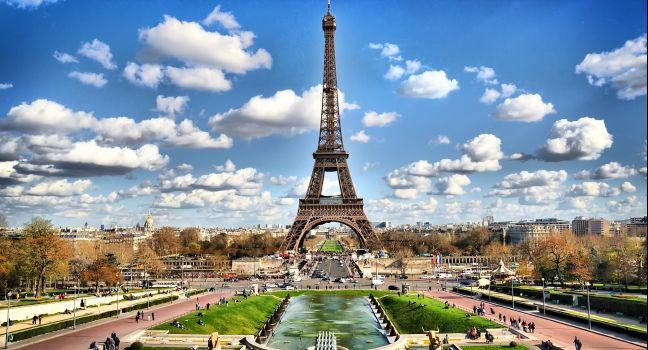
The Eiffel Tower is to Paris what the Statue of Liberty is to New York and what Big Ben is to London: the ultimate civic emblem. French engineer Gustave Eiffel spent two years working to erect this iconic monument for the World Exhibition of 1889. Because its colossal bulk exudes such a feeling of permanence, it's hard to believe that the tower nearly became 7,000 tons of scrap when the concession expired in 1909. Only its potential use as a radio antenna saved the day. Though many prominent Parisians derided it at first, the tower gradually became part of the city's topography. It's most breathtaking at night, when every girder is highlighted in a glittering show of 20,000 golden lights for five minutes every hour on the hour from nightfall until midnight (until 1 am in summer).

More recent enhancements include a renovation of the first level that added a vertigo-inducing "transparent" floor 187 feet above the esplanade as well as a miniturbine plant, four vertical turbine windmills, and eco-friendly solar panels to minimize the tower's carbon footprint over time. You can stride up 704 steps as far as the second level, but only the elevator goes to the top. The view of the flat sweep of Paris at 1,000 feet is sublime—especially if you come in the late evening, after the crowds have dispersed. Beat the crushing lines by reserving your ticket online, or book a skip-the-line guided tour offered by many companies (from €47). Better yet, ride up the private elevator to chef Frédérick Anton's Jules Verne restaurant—with its Michelin star—on the tower's second floor. It's about as dramatic a lunch or dinner spot as you'll find, apart from Madame Brasserie, a chic sit-down bistro helmed by Michelin-starred chef Thierry Marx on the first floor (online reservations for both restaurants are a must). Or you can watch the glimmering lights from the top of the tower over a glass of bubbly or a nonalcoholic drink at the Bar à Champagne. There are also small "buffet" snack shops on the esplanade and the first and second floors. 

At the tower's tippy top is Gustave Eiffel's "secret apartment," which he used as his office, including wax mannequins of Eiffel in conversation with Thomas Edison; the blonde woman in the background represents Claire, Eiffel's oldest daughter, with whom he was very close. You'll also hear actual recordings of Eiffel's voice.
Quai Branly, Paris, 75007, France
08–92–70–12–39-costs €0.35 per min
Sight Details
By elevator from €23; by stairs from €14
Stairs close at 6 pm in off-season (Oct.–June). Closed last 2 wks in Jan. for annual maintenance

Something incorrect in this review?

Jardin des Tuileries

Louvre Fodor's choice
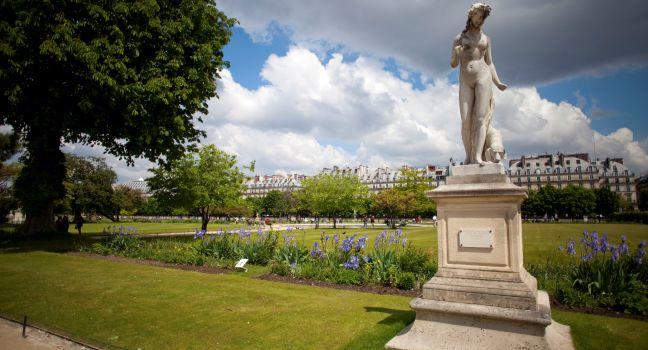
Nymph Leveque Tuileries, Statue, Jardin des Tuileries, Paris, France
© Halie Cousineau/ Fodor’s Travel

This quintessential French garden, with its verdant lawns, rows of manicured trees, and gravel paths, was designed by André Le Nôtre for Louis XIV. After the king moved his court to Versailles in 1682, the Tuileries became the place for stylish Parisians to stroll. (Ironically, the name derives from the decidedly unstylish factories that once occupied this area: they produced tuiles, or roof tiles, fired in kilns called tuileries.) Monet and Renoir captured the garden with paint and brush. It's no wonder the Impressionists loved it—the gray, austere light of Paris's famously overcast days make the green trees appear even greener.

The garden still serves as a setting for one of the city's loveliest walks. Laid out before you is a vista of must-see monuments, with the Louvre at one end and the Place de la Concorde at the other. The Eiffel Tower looms in the distance on the other side of the Seine, along with the Musée d'Orsay, accessible by a footbridge in the center of the garden.

Begin exploring the garden at the Louvre end, with the Arc du Carrousel, a stone-and-marble arch commissioned by Napoléon to showcase the bronze horses he stole from St. Mark's Cathedral in Venice. The horses were eventually returned and replaced here with a statue of a quadriga, a four-horse chariot. On the Place de la Concorde end, twin buildings bookend the garden. On the Seine side, the former royal greenhouse is now the exceptional Musée de l'Orangerie, home to the largest display of Monet's lovely Water Lilies series, as well as a sizable collection of early 20th-century paintings, including many Impressionist works. On the opposite end is the Jeu de Paume, which hosts some of the city's best photography exhibitions.

Note that the Tuileries is one of the best places in Paris to take kids if they're itching to run around. There's a carousel, trampolines, and, in summer, a funfair. If you're hungry, look for carts serving ice cream from Le Glacier Farmers or sandwiches from Eric Kayser at the eastern end near the Louvre. Within the gated part of the gardens are four cafés with terraces. Pavillon des Tuileries near Place de la Concorde is a good place to stop for late-afternoon tea or an apéritif.

Bordered by Quai des Tuileries, Pl. de la Concorde, Rue de Rivoli, and the Louvre, Paris, 75001, France
01–40–20–90–43
Sight Details
Free

Something incorrect in this review?

Jardin du Luxembourg

St-Germain-des-Prés Fodor's choice
Luxembourg Gardens, Jardin Du Luxembourg, Paris, France
© Ross Brinkerhoff / Fodor’s Travel

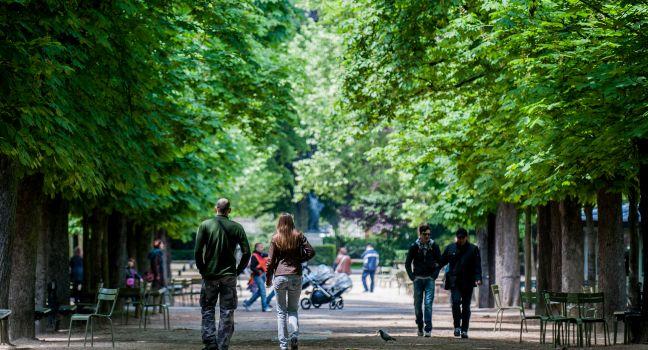
Everything that is charming, unique, and befuddling about Parisian parks can be found in the Luxembourg Garden: groomed trees, ironed-and-pressed walkways, sculpted flower beds, and immaculate emerald lawns meant for admiring, not necessarily for lounging. The tree- and bench-lined paths are a marvelous reprieve from the bustle of the neighborhoods it borders: the Quartier Latin, St-Germain-des-Prés, and Montparnasse. Beautifully austere during the winter months, the garden grows intoxicating as spring brings blooming beds of daffodils, tulips, and hyacinths, and the circular pool teems with wooden sailboats nudged along by children. The park's northern boundary is dominated by the Palais du Luxembourg, which houses the Sénat (Senate), one of two chambers that make up the Parliament. The original inspiration for the gardens came from Marie de Medici, who was nostalgic for the Boboli Gardens of her native Florence; she is commemorated by the recently restored Fontaine de Medicis, a favorite spot in summer for contemplative readers.

Les Marionettes du Théâtre du Luxembourg is a timeless attraction, where, on Wednesday and weekend mornings and afternoons, you can catch classic guignols (marionette shows) for €7.20. The wide-eyed kids might be the real attraction—their expressions of utter surprise, despair, and glee have fascinated the likes of Alfred Eisenstaedt and François Truffaut. The park also has a merry-go-round, swings, and pony rides. The bandstand on the eastern side of the park hosts free concerts on summer afternoons.

As you stroll the paths, you might be surprised by a familiar sight: one of the original (miniature) casts of the Statue of Liberty was installed in the gardens in 1906. There are more than 100 other statues in the gardens, too. Check out the rotating photography exhibits hanging on the perimeter fence near the entrance on Boulevard St-Michel. Attractive refreshment stands sell soft drinks, espresso, crepes, and ice cream, and there's a well-maintained trail around the perimeter that is frequented by joggers. Gendarmes regularly walk the grounds to ensure park rules are enforced; follow guidelines posted on entry gates.

Bordered by Bd. St-Michel and Rues de Vaugirard, de Medicis, Guynemer, Auguste-Comte, and d'Assas, Paris, 75006, France
Sight Details
Free
Closed dusk–dawn

Something incorrect in this review?

Recommended Fodor's Video

Musée d'Orsay

St-Germain-des-Prés Fodor's choice
Galleries, Musee dOrsay, Paris, France
© Ross Brinkerhoff / Fodor’s Travel

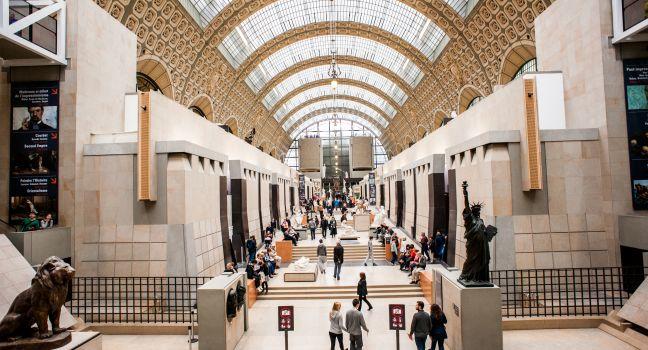
Opened in 1986, this gorgeously renovated Belle Époque train station displays a world-famous collection of Impressionist and Postimpressionist paintings on three floors. To visit the exhibits in a roughly chronological manner, start on the ground floor, take the escalators to the top, and end on the middle floor. If you came to see the biggest names here, head straight for the top floor and work your way down. English audio guides and free color-coded museum maps (both available just past the ticket booths) will help you plot your route.

Galleries off the first floor's main alley feature early works by Manet and Cézanne in addition to pieces by masters such as Delacroix and Ingres. The Pavillon Amont has Courbet's masterpieces L'Enterrement à Ornans and Un Atelier du Peintre. Hanging in Salle 14 is Édouard Manet's Olympia, a painting that pokes fun at the fashion for all things Greek and Roman (his nubile subject is a 19th-century courtesan, not a classical goddess). Impressionism gets going on the top floor, with iconic works by Degas, Pissarro, Sisley, and Renoir. Don't miss Monet's series on the cathedral at Rouen and, of course, samples of his water lilies. Other selections by these artists are housed in galleries on the ground floor. On the middle floor, you'll find an exquisite collection of sculpture as well as Art Nouveau furniture and decorative objects. There are rare surviving works by Hector Guimard (designer of the swooping green Paris métro entrances), plus Lalique and Tiffany glassware. Postimpressionist galleries include work by van Gogh and Gauguin, while Neo-Impressionist galleries highlight Seurat and Signac. The museum also regularly curates large, temporary exhibits of major historic artists.

To avoid the lines here, which are among the worst in Paris, book ahead online or buy a Museum Pass, then go directly to Entrance A2 for tickets with time slots or C1 if you have a museum pass (guards will help direct you). Otherwise, go early. Thursday evening the museum is open until 9:45 pm and is less crowded from 5 pm until closing. Don't miss the views of Sacré-Coeur from the balcony—this is the Paris that inspired the Impressionists. The museum has several restaurants and cafés; Café Cabana's views of the city through the ex-train station's giant clock face are legendary. The Musée d'Orsay is closed Monday, unlike the Louvre, which is closed Tuesday.

1 rue de la Légion d'Honneur, Paris, 75007, France
01–40–49–48–14
Sight Details
€16; €25 combined ticket with Musée Rodin
Closed Mon.

Something incorrect in this review?

Place des Vosges

Marais Quarter Fodor's choice
Place des Vosges, Paris, France
© Zach Nelson / Fodor’s Travel

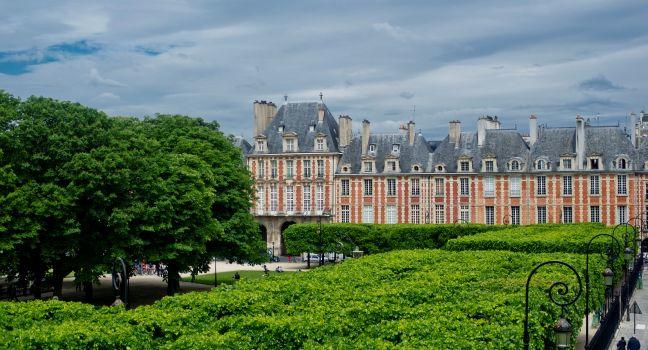
The oldest square in Paris and—dare we say it—the most beautiful, Place des Vosges represents an early stab at urban planning. The precise proportions offer a placid symmetry, but things weren't always so calm here. Four centuries ago, this was the site of the Palais des Tournelles, home to King Henry II and Queen Catherine de Medici. The couple staged regular jousting tournaments, and Henry was fatally lanced in the eye during one of them in 1559. Catherine fled to the Louvre, abandoning her palace and ordering it destroyed. In 1612, the square became Place Royale on the occasion of Louis XIII's engagement to Anne of Austria. Napoléon renamed it Place des Vosges to honor the northeast region of Vosges, the first in the country to pony up taxes to the Revolutionary government. At the base of the 36 redbrick-and-stone houses—nine on each side of the square—is an arcaded, covered walkway lined with art galleries, shops, and cafés. There's also an elementary school, a synagogue (whose barrel roof was designed by Gustav Eiffel), and several chic hotels. The formal, gated garden's perimeter is lined with chestnut trees; inside are a children's play area and a fountain. Aside from hanging out in the park, people come here to visit the house, now a museum, of the man who once lived at No. 6—Victor Hugo, the author of Les Misérables and Notre-Dame de Paris (aka The Hunchback of Notre-Dame).  One of the best things about this park is that you're actually allowed to sit—or snooze or snack—on the grass during spring and summer. There is no better spot in the Marais for a picnic: you can pick up fixings at the nearby street market on Thursday and Sunday morning. (It's on Boulevard Richard Lenoir between Rues Amelot and St-Sabin.) The most likely approach to Place des Vosges is from Rue de Francs-Bourgeois, the main shopping street. However, for a grander entrance, walk along Rue St-Antoine until you get to Rue de Birague, which leads directly into the square.

Off Rue des Francs-Bourgeois, near Rue de Turenne, Paris, 75004, France

Something incorrect in this review?

Bois de Boulogne

Western Paris Fodor's choice

When Parisians want to experience the great outdoors without going too far from home, they head to the Bois de Boulogne. Once a royal hunting ground, the Bois is like a vast tamed forest where romantic lakes and wooded paths are complemented by formal gardens and family-friendly amusements. On nice days, it’s filled with cyclists, rowers, rollerbladers, and joggers. Art lovers also flock here thanks to the Fondation Louis Vuitton, a stunning exhibition space dedicated to contemporary art.

The Parc de Bagatelle is a floral garden with irises, roses, tulips, water lilies, and roaming peacocks, while the Pré Catelan contains one of Paris's largest trees: a copper beech more than 200 years old. Romantic Le Pré Catelan restaurant (three Michelin stars), a Belle Époque classic with an elegant terrace, still draws diners and wedding parties. The Jardin Shakespeare inside the Pré Catelan has a sampling of the flowers, herbs, and trees mentioned in Shakespeare's plays, and it becomes an open-air theater for the bard's works in spring and summer. The Jardin d'Acclimatation is an amusement park that attracts hordes of preschoolers on summer Sundays. Boats or bikes can be rented for a few euros at Lac Inférieur. You can row or take a quick "ferry" to the island restaurant, Le Chalet des Îles. Two popular horse-racing tracks are also in the park: the Hippodrome de Longchamp and the Hippodrome d'Auteuil. Fans of the French Open can visit its home base, Stade Roland-Garros.

The main entrance to the Bois is off Avenue Foch near the Porte Dauphine métro stop on Line 2; it is best for accessing the Pré Catelan and Jardin Shakespeare, both off Route de la Grande-Cascade by the lake. For the Jardin d'Acclimatation and the Fondation Louis Vuitton, off Boulevard des Sablons, take Line 1 to Les Sablons or Porte Maillot, where you can walk or ride the Petit Train to the amusement park, which is next door to the foundation. The foundation also offers a €2 return-trip shuttle from Place de l'Étoile. The Parc de Bagatelle, off Route de Sèvres-à-Neuilly, can be accessed from either Porte Dauphine or Porte Maillot, though it's a bit of a hike. You'll want to leave the park by dusk, as the Bois—potentially dangerous after dark—turns into a distinctly “adult” playground.

Paris, 75016, France
01–40–69–96–00-Fondation Louis Vuitton
Sight Details
Parc de Bagatelle €3 (€6 during exhibitions, free Oct.–Mar.); Jardin Shakespeare free; Jardin d'Acclimatation €7 entry, €63 for 10-ride ticket book; Fondation Louis Vuitton €16

Something incorrect in this review?

Bois de Vincennes

Bois de Vincennes Fodor's choice

Like the Bois de Boulogne to the west, this much-loved retreat on the city's eastern border was landscaped by Napoléon III. Its roots, however, reach back to the 13th century, when Philippe Auguste created a hunting preserve in the shadow of the royal Château de Vincennes, which once ranked as the largest château in Europe. In 1731 Louis XV created a public park here, and the bois (or woods) now features a Japanese garden, La Grande Pagode (a Buddhist temple containing the largest golden statue of the Buddha in Europe), and the exquisite Parc Floral, with acres of flower gardens, a huge kids' park, and summertime jazz and classical concerts. Horse races at the restored Vincennes Hippodrome de Paris are an event for the whole family, but perhaps not the Espace Naturiste, Paris's first area for nudists, opened in 2017. Rowboats are for rent at a pair of lakes: Lac Daumesnil, which has two islands, and Lac des Minimes, which has three. For the kids, there are pony rides, a miniature train, and numerous play areas. Here, too, you'll find the stunning Palais de la Porte Dorée, home to an immigration museum and tropical aquarium. Through late summer, the Parc Floral hosts two beloved music festivals, the Paris Jazz Festival and the Festival Classique au Vert. Grab a picnic and a blanket and enjoy classical music or jazz in the amphitheater or on the lawn in Paris's prettiest park.

Hôtel de la Marine

Champs-Élysées Fodor's choice

This splendid museum is the closest you'll get to Versailles in Paris. It took more than 200 skilled artisans and nearly $160 million to achieve what is hands down Paris’s most ravishing museum to date, allowing the public a glimpse behind the elegant facade of a masterpiece of French 18th-century interior design for the first time in 250 years. No detail was overlooked in the restoration: wallpaper and curtains were painted or sewed by hand using the original 18th-century techniques; the woodwork was painstakingly stripped, restored, and gilded by master craftspeople; and decorative features were created in Paris’s most rarified workshops. 

The mansion is one of two twin structures built in 1758 for Louis XV to mark a new square created in his honor (now Place de la Concorde). Both buildings sat unused before the eastern facade—now the Hôtel de Crillon—was auctioned off to the Duc d’Aumont. The western edifice became the Garde-Meuble de la Couronne, the institution in charge of selecting, maintaining, and storing the king’s furniture. In 1789, it became the headquarters for the navy ministry, which remained in the building for 226 years. The decrees ending slavery and the slave trade in France were signed here in 1794. Visitors can learn about the building's history through state-of-the-art interactive displays in the grand ballroom and loggia, a sprawling balcony facing Place de la Concorde with impressive views of the Assemblée Nationale and the Eiffel Tower. You can take a guided visit (in English) or grab a state-of-the-art headset; well worth it to discover the museum's fascinating history.

The museum also houses the exquisite Al Thani collection, featuring objects and artwork spanning 6,000 years and myriad civilizations, as well as an outpost of the Cordon Bleu cooking school ( www.cordonbleu.edu/paris-hoteldelamarine). The waiting room retains lovely details of the historic mansion while classrooms are equipped with top-of-the-line culinary equipment. At stations designed for two students, participants in these hands-on ateliers glean the secrets of French cuisine from professional chefs; while classes are taught in French, expert interpreters are always present to ensure English-speakers reap the full benefits. Classes start at €33 for a one-hour demonstration, but spring for the €110 two-hour Capitaine or €165 three-hour Amiral for the fullest experience.

Another great pleasure of your visit is lunch, teatime, or a cocktail at the romantic Café Lapérouse (offshoot of the historic Paris restaurant) or Mimosa, across the courtyard, helmed by chef Jean-François Piège, one of the city's star chefs. Both restaurants offer sumptuous interiors and outdoor dining in the interior courtyard or under the pillars overlooking Place de la Concorde.

Jardin des Plantes

Latin Quarter Fodor's choice

Opened in 1640 and once known as the Jardin du Roi (King's Garden), this sprawling patch of greenery is a neighborhood gem. It's home to several gardens and various museums, all housed in 19th-century buildings that blend glass with ornate ironwork. The botanical and rose gardens are impressive, and plant lovers won't want to miss the towering greenhouses (serres in French)—they are filled with one of the world's most extensive collections of tropical and desert flora. If you have kids, take them to the excellent Grande Galerie de l'Évolution or one of the other natural history museums here: the Galerie de Paléontologie, replete with dinosaur and other skeletons, and the recently renovated Galerie de Minéralogie. If the kids prefer fauna, visit the Ménagerie, a small zoo founded in 1794 whose animals once fed Parisians during the 1870 Prussian siege. The star attractions are Nénette, the grande-dame orangutan from Borneo, and her swinging friends in the monkey and ape house. If you need a break, there are three kiosk cafés in the Jardin.

Entrances on Rue Geoffroy-St-Hilaire, Rue Cuvier, Rue de Buffon, and Quai St-Bernard, Paris, 75005, France
01–40–79–56–01
Sight Details
Museums from €7, zoo €13, greenhouses €7, gardens free
Museums and greenhouses closed Tues.

Something incorrect in this review?

Le Centquatre-Paris

La Villette Fodor's choice

Le Centquatre (meaning "104") takes its name from its address in a rough-around-the-edges corner of the 19e arrondissement, near Parc de la Villette. The former site of the city morgue, this soaring art hub is home to an offbeat collection of performance venues, shops, and studios (artists of all genres compete for free studio space, and sometimes you can get a peek of them at work). Contemporary art exhibits, some of which charge a small admission, are presented here, as are all manner of concerts, dance performances, performance art, films, and other events, many of them interactive. On-site you'll also find a restaurant, a café, a bookstore, a vintage shop, and a play area for children. There's much to see and do here for the whole family, so check the website before you visit to confirm what's on.

5 rue Curial, Paris, 75019, France
01–53–35–50–00
Sight Details
Free; prices for exhibits and concerts vary
Closed Mon.

Something incorrect in this review?

Musée de la Chasse et de la Nature

Marais Quarter Fodor's choice

Mark this down as one of Paris's most distinctive—and fascinating—collections around the theme of "humans and nature." The museum, housed in the gorgeous 17th-century Hôtel de Guénégaud, features lavishly appointed rooms stocked with animal- and hunt-theme art and sculpture by the likes of Rubens and Gentileschi, as well as antique weaponry and taxidermy interspersed with contemporary works by artists such as Jeff Koons, Sophie Calle, and Walton Ford. In a tribute to Art Nouveau, the decor incorporates chandeliers and railings curled like antlers. Older kids will appreciate the jaw-dropping Trophy Room's impressive menagerie of beasts, not to mention the huge polar bear stationed outside. There is a lovely multimedia exhibit on the myth of the unicorn, as well as charming interactive displays on antique weaponry and bird calls. Temporary exhibits take place on the first floor, with works scattered throughout the permanent collection. There's also a spacious café.

Musée National de la Marine

Trocadéro Fodor's choice

Located in the west wing of the Palais de Chaillot and one of five national museums dedicated to all things nautical (other locations are in Brest, Port-Louis, Rochefort, and Toulon), the Paris branch is the country’s foremost treasure trove of art and artifacts documenting maritime development pertinent to France over the centuries. The sparkling new design includes impressive special effects, interactive features, and games for adults and kids. Exhibits highlight a notable collection of models of vessels, from 17th-century flagships to modern warships. Kids can climb a step to get a closer look at a model aircraft carrier or a nuclear submarine cut in half to expose their decks. The main gallery displays several figureheads recovered from sunken ships, including a giant Henry IV, miraculously saved from a shipwreck in 1854 during the Crimean War. An enormous representation of Napoléon, in his favored guise as a Roman emperor, was taken from the prow of the frigate Iéna in 1846. There is also a sinister-looking metal diving suit from 1882 and the menu from a 1935 voyage of the SS Normandie cruise ship. The café-restaurant offers snacks and warm meals along with views of the Eiffel Tower, and the shop stocks original sea-themed artworks, chic clothing, and toys. Free English audioguides are available.

Musée Rodin

Invalides Fodor's choice

Sculptor Auguste Rodin (1840–1917) briefly made his home and studio in the Hôtel Biron, a magnificent 18th-century mansion that now houses this museum dedicated to his work. He died rich and famous, but many of the works that earned him a place in art history were originally greeted with contempt by the general public, which was unprepared for his powerful brand of sexuality and raw physicality.

Most of Rodin's best-known sculptures are in the gardens. The front one is dominated by The Gates of Hell (circa 1880), which illustrates stories from Dante's Divine Comedy. Rodin worked on the sculpture for more than 30 years, and it served as a "sketch pad" for many of his later works: you can see miniature versions of The Kiss (bottom right), The Thinker (top center), and The Three Shades (top center). The museum also showcases long-neglected models, plasters, and paintings, which offer insight into Rodin’s creative process. Pieces by other artists from his personal collection are on display as well—including paintings by van Gogh, Renoir, and Monet. A room is devoted to works by Camille Claudel (1864–1943), his student and longtime lover, herself a widely acclaimed sculptor. An English audio guide (€6.50) is available for the permanent collection and for temporary exhibitions.  Tickets can be purchased online for priority access. If you wish to linger, L'Augustine café serves meals and snacks indoors or outdoors under the garden's linden trees. The fine museum boutique sells quality gifts and objects d'art, such as reproductions of some of the master's most famous sculptures made from the original molds.

77 rue de Varenne, Paris, 75007, France
01–44–18–61–10
Sight Details
€14 ; €25 combined ticket with Musée d'Orsay
Closed Mon.

Something incorrect in this review?

Palais de Chaillot

Trocadéro Fodor's choice

Home to four major cultural centers, this honey-colored Art Deco structure on Place du Trocadéro was built in the 1930s to replace a Moorish-style building constructed for the 1878 World's Fair. Its esplanade is also a top draw for camera-toting visitors intent on snapping the perfect shot of the Eiffel Tower. Facing the building from the Place du Trocadéro, to the left are the Cité de l'Architecture et du Patrimoine—billed as the world's largest architectural museum—and the Theâtre National de Chaillot, one of the city's major dance and performance venues, which occasionally stages plays in English. The twin building to the right contains the Musée de l’Homme, a thoroughly modern anthropology museum, and the marvelous Musée National de la Marine, reopened in 2023 after a six-year restoration. Sculptures and fountains adorn the garden leading to the Seine.

Parc Floral de Paris

Bois de Vincennes Fodor's choice

A lake, a butterfly garden, a bonsai pavillion, and seasonal displays of blooms make the Bois de Vincennes's 70-acre floral park a lovely place to spend a warm afternoon. Kids will also enjoy the extensive playgrounds and the marionette (guignol) theater. A café and a sit-down tea salon make dining easy, but picnicking under the trees is highly recommended, especially when the park hosts jazz and classical concerts (most weekends from June through September). In winter months, some attractions may be closed.

Parc Montsouris

Montparnasse Fodor's choice

This 38-acre park on the southern edge of the city is one of Paris's best-kept secrets. Home to an enormous variety of flora and fauna, as well as a small rose garden, one can stroll or jog around the hilly footpaths or lounge and picnic on a number of giant lawns. There are free playgrounds for children and a small lake with ducks and other waterfowl. If you're feeling especially energetic and adventurous, cross Boulevard Jourdan and explore the campus of the unique and historic Cité Internationale Universitaire de Paris. The campus is home to a variety of architectural wonders, both modern and historic, which house visiting professors and students from around the world.

Carrefour de Buci

St-Germain-des-Prés
Carrefour de Buci
© Ross Brinkerhoff / Fodor’s Travel

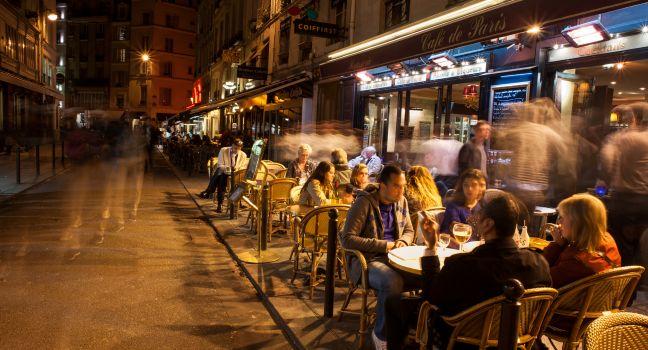
A short walk from the neighborhood's namesake St-Germain church, this lively crossroads (carrefour means "intersection") was once a notorious Rive Gauche landmark. During the French Revolution, the army enrolled its first volunteers here. It was also here that thousands of royalists and priests lost their heads during the 10-month wave of public executions known as the Reign of Terror. There's certainly nothing sinister about the area today, though: popular outdoor cafés brim with tourists and locals alike, and colorful coffee-table books are sold alongside take-out ice cream and other gourmet treats. Devotees of the superb, traditional bakery Carton ( 6 rue de Buci) line up for fresh breads and pastries (try the pain aux raisins, tuiles cookies, and tarte au citron).

Intersection of Rues Mazarine, Dauphine, and de Buci, Paris, France

Something incorrect in this review?

Aquarium de Paris

Trocadéro

Along with 10,000 fish and a giant tank of small sharks, this attractive space beneath the Trocadéro gardens promises nature documentaries in its cinema space, puppet and magic shows, and workshops for children in animation, art, and dance (these are offered in French, but the staff speaks English). Book tickets online to save money and avoid lines.

5 av. Albert de Mun, Paris, 75016, France
01–40–69–23–23
Sight Details
From €22
Last entry 1 hr before closing

Something incorrect in this review?

Arènes de Lutèce

Latin Quarter

This Roman amphitheater, designed as a theater and circus, was almost completely destroyed by barbarians in AD 280. The site was rediscovered in 1869, and you can still see part of the stage and tiered seating. Along with the remains of the baths at Cluny, the arena constitutes rare evidence of the powerful Roman city of Lutetia that flourished on the Rive Gauche in the 3rd century. Today it's a favorite spot for picnicking, pickup soccer, or boules.

Entrances on Rues Monge, de Navarre, and des Arènes, Paris, 75005, France
01–45–35–02–56
Sight Details
Free

Something incorrect in this review?

Avenue des Champs-Élysées

Champs-Élysées

Marcel Proust lovingly described the genteel elegance of the storied Champs-Élysées (pronounced chahnz-el-ee-zay, with an n sound instead of m, and no p) during its Belle Époque heyday, when its cobblestones resounded with the clatter of horses and carriages. Today, despite unrelenting traffic and the intrusion of chain stores and fast-food franchises, the avenue still sparkles. There's always something happening here: stores are open late (and many are open on Sunday, a rarity in Paris); nightclubs remain top destinations; and cafés offer prime people-watching, though you'll pay for the privilege. Ater all, this is Europe's most expensive piece of real estate. Along the 2-km (1¼-mile) stretch, you can find marquee names in French luxury, like Cartier, Guerlain, and Louis Vuitton. Car manufacturers lure international visitors with space-age showrooms. Old stalwarts, meanwhile, are still going strong—including the Lido cabaret and Fouquet's, whose celebrity clientele extends back to James Joyce. The avenue is also the setting for the last leg of the Tour de France bicycle race (the third or fourth Sunday in July), as well as Bastille Day (July 14) and Armistice Day (November 11) ceremonies. The Champs-Élysées, which translates to "Elysian Fields" (the resting place of the blessed in Greek mythology), began life as a cow pasture and in 1666 was transformed into a park by the royal landscape architect André Le Nôtre. Traces of its green origins are visible toward the Concorde, where elegant 19th-century park pavilions house the historic restaurants Ledoyen and Laurent. The celebrated avenue has undergone positive changes in recent years—including a widening of pedestrian walks and the addition of cycling lanes—with more improvements planned for the future.

Paris, France

Something incorrect in this review?

Beaupassage Grenelle

St-Germain-des-Prés

This chic and sleek courtyard is home to a Thierry Marx bakery, Pierre Hermé café, and the very popular Certified Coffee where you'll usually find hipsters working on their laptops. There's also a nice collection of restaurants, a wine bar, outdoor seating, and contemporary artwork. Enjoy a gourmet snack or meal and soak in the modern contrast to the 19th-century limestone buildings on the street that hides this quiet haven of gastronomy. Enter from  83 rue du Bac or  14 bd. Raspail, which features a 79-foot-long cardboard and wood forest by artist Eva Jospin.

14 bd. Raspail, Paris, 75007, France

Something incorrect in this review?

Bercy

Bercy

Tucked away south of the Gare de Lyon in the 12e arrondissement, blocks of stone warehouses that once stored wine are now home to Bercy Village ( 28 rue François Truffaut), a collection of boutiques and eateries that stay open unusually late for Paris. Adjacent to the shops is the tranquil Parc de Bercy, with lawns, ponds, and flower beds crisscrossed by gravel paths, and the Jardin Yitzhak Rabin, a garden named for the late Nobel Peace Prize winner. Nearby, at  51 rue de Bercy, a Cubist building by Frank Gehry houses the Cinémathèque Française, a film buff's paradise, showing classic films, many in English; there are frequent homages to directors and actors, plus a cinema bookshop and museum.

Paris, 75012, France

Something incorrect in this review?

Champ de Mars

Eiffel Tower

Landscaped at the start of the 20th century and restored in the two years leading up to the 2024 Paris Olympic Games, the park is a centerpiece of current mayor Anne Hildago's plan to reduce pollution and increase the city's pedestrian and green spaces. The park's grassy lawns and gardens have already been expanded to 4 acres and dozens of new trees have been planted (many more are to come). Parts of the ambitious project—which extends across the Seine to the gardens, fountains, and green spaces leading to the Trocadéro esplanade—are on hold until city officials, environmentalists, and Parisians can agree on a plan.

Paris, France

Something incorrect in this review?

Choco-Story Paris: Le Musée Gourmand du Chocolat

Eastern Paris

Considering that a daily dose of chocolate is practically obligatory in Paris, it's hard to believe that this spot (opened in 2010) is the city's first museum dedicated to the sweet stuff. Exhibits on three floors tell the story of chocolate from the earliest traces of the "divine nectar" in Mayan and Aztec cultures, through to its introduction in Europe by the Spanish, who added milk and sugar to the spicy, dark brew and launched a Continental craze. There are detailed explanations in English, with many for the kids. While the production of chocolate is a major topic, the museum also has a respectable collection of some 1,000 chocolate-related artifacts, such as terra-cotta Mayan sipping vessels (they blew into straws to create foam) and delicate chocolate pots in fine porcelain that were favored by the French royal court. Frequent chocolate-making demonstrations finish with a free tasting.

28 bd. de Bonne Nouvelle, Paris, 75010, France
01–42–29–68–60
Sight Details
€15; €18 with a cup of hot chocolate

Something incorrect in this review?

Cité des Sciences et de l'Industrie

La Villette

Occupying a colorful three-story industrial space that recalls the Pompidou Center, this ambitious science museum in Parc de la Villette is packed with things to do—all of them accessible to English speakers. Scores of exhibits focus on subjects like space, transportation, and technology. Hands-on workshops keep the kids entertained, and the planetarium is invariably a hit. Temporary exhibitions are always multilingual and usually interactive.

30 av. Corentin-Cariou, Paris, 75019, France
01–40–05–70–00
Sight Details
Permanent and temporary exhibitions and planetarium €13
Closed Mon.

Something incorrect in this review?

Conciergerie

Ile de la Cité

Most of Île de la Cité's medieval structures fell victim to wunderkind urban planner Baron Haussmann's ambitious rebuilding program of the 1860s. Among the rare survivors are the jewel-like Sainte-Chapelle, a vision of shimmering stained glass, and the Conciergerie, the cavernous former prison where Marie-Antoinette and other victims of the French Revolution spent their final days.

Constructed by Philip IV in the late 13th and early 14th centuries, the Conciergerie—which takes its name from the building's concierge or keeper—was part of the original palace of the kings of France before the royals moved into the Louvre around 1364. In 1391, it became a prison. During the French Revolution, Marie-Antoinette languished 76 days here awaiting her date with the guillotine. There is a re-creation of the doomed queen's sad little cell—plus others that are far smaller—complete with wax figures behind bars. In the chapel, stained glass, commissioned after the queen's death by her daughter, is emblazoned with the initials M.A. Outside you can see the small courtyard where women prisoners took meals and washed their clothes in the fountain (men enjoyed no similar respite). Well-done temporary exhibitions on the ground floor aim to please kids and adults alike; themes have included enchanted forests and Gothic castles. There are free guided tours (in French only) most days at 11 and 3. Pick up a free English guide at reception and ask for a "Histopad" (also free), an "augmented reality" tablet that allows you to go back in time and view 30 reconstructions.

2 bd. du Palais, Paris, 75004, France
01–53–40–60–80
Sight Details
€13; €20 with joint ticket to Sainte-Chapelle
Reservation required

Something incorrect in this review?

Fondation Cartier Pour l'Art Contemporain

Montparnasse

There's no shortage of museums in Paris, but this eye-catching gallery may be the city's premier place to view cutting-edge art. Funded by luxury giant Cartier, the foundation is at once an architectural landmark, a traveling corporate collection, and an exhibition space. Architect Jean Nouvel's 1993 building looks rather like a glass house of cards, layered seamlessly between the boulevard and the garden. The foundation regularly hosts Soirées Nomades (Nomadic Nights) featuring lectures, dance, music, film, or fashion on various evenings. Some are in English. Family tours and creative workshops for children ages 6 to 12 are also available as are free guided tours (in French) of exhibits on Tuesday through Friday, depending on space.  There are plans for the Fondation Cartier to move to a new location in the Place du Palais-Royal in the 1e in late 2025.

Grande Galerie de l'Évolution

Latin Quarter

With a parade of taxidermied animals ranging from the tiniest dung beetle to the tallest giraffe, this four-story natural history museum in the Jardin des Plantes will perk up otherwise museum-weary kids. The flagship of three natural history museums in the garden, this restored 1889 building has a ceiling that changes color to suggest storms, twilight, or the hot savanna sun. Other must-sees are the gigantic skeleton of a blue whale and the stuffed royal rhino (he came from the menagerie at Versailles, where he was a pet of Louis XV). Kids ages 6 to 12 enjoy La Galerie d'Enfants (The Children's Gallery): it has bilingual interactive exhibits about the natural world. A lab stocked with microscopes often offers free workshops, and most of the staff speaks some English. Hang on to your ticket—it will get you a discount at the other museums within the Jardin des Plantes.

Institut du Monde Arabe

Latin Quarter

This eye-catching metal-and-glass tower by architect Jean Nouvel cleverly uses metal diaphragms in the shape of square Arabic-style screens to work like a camera lens, opening and closing to control the flow of sunlight. The vast cultural center's layout is a reinterpretation of the traditional enclosed Arab courtyard. Inside, there are various spaces, among them a museum that explores the culture and religion of the 22 Arab League member nations. With the addition of elements from the Louvre's holdings and private donors, the museum's impressive collection includes four floors of Islamic art, artifacts, ceramics, and textiles. There is also a performance space, a sound-and-image center, a library, and a bookstore. Temporary exhibitions usually have information and an audioguide in English. Glass elevators whisk you to the ninth floor, where you can sip mint tea in the rooftop restaurant, Dar Mima—Ziryab, while feasting on one of the best views in Paris (reservations are essential).

1 rue des Fossés-St-Bernard, Paris, 75005, France
01–85–14–79–25-restaurant
Sight Details
€9
Closed Mon.

Something incorrect in this review?

Jardin Atlantique

Montparnasse

Built above the tracks of Gare Montparnasse, this park nestled among tall modern buildings is named for its assortment of trees and plants typically found in coastal regions near the Atlantic Ocean. In the center of the park, what looks like a quirky piece of metallic sculpture is actually a meteorological center, with a battery of flickering lights reflecting temperature, wind speed, and monthly rainfall. It's not really worth a detour, but it's a good green space if you're already nearby.