Get FREE email communications from Fodor's Travel, covering must-see travel destinations, expert
trip planning advice, and travel inspiration to fuel your passion.
We've compiled the best of the best in Paris - browse our top choices for the top
things to see or do during your stay.
Sorry! We don't have any recommendations for Paris right now.
Sights Filter
Basilique du Sacré-Coeur
Montmartre
Fodor's choice
Share This
Sergey Kelin / Shutterstock
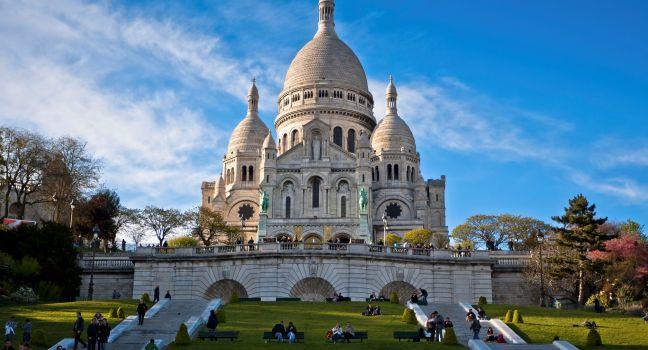
It's hard not to feel as though you're ascending to heaven when you visit Sacred Heart Basilica, the white castle in the sky, perched atop Montmartre. The French government commissioned it in 1873 to symbolize the return of self-confidence after the devastating years of the Commune and Franco-Prussian War, and architect Paul Abadie employed elements from Romanesque and Byzantine styles when designing it—a mélange many critics dismissed as gaudy. Construction lasted until World War I, and the church was finally consecrated in 1919. Many people now come to Sacré-Coeur to admire the superlative view from the top of its 271-foot-high dome. But if you opt to skip the climb up the spiral staircase, the view from the front steps is still ample compensation for the trip.
Inside, expect another visual treat—namely the massive golden mosaic set high above the choir. Created in 1922 by Luc-Olivier Merson, Christ in Majesty depicts Christ with a golden heart and outstretched arms, surrounded by various figures, including the Virgin Mary and Joan of Arc. It remains one of the largest mosaics of its kind. In the basilica's 262-foot-high campanile hangs La Savoyarde, one of the world's heaviest bells, weighing about 19 tons.
The best time to visit Sacré-Coeur is early morning or early evening, and preferably not on a Sunday, when the crowds are thick. If you're coming to worship, there are daily Masses.To avoid the steps, take the funicular, which costs one métro ticket each way.
Cathédrale Notre-Dame de Paris
Ile de la Cité
Fodor's choice
Share This
Samot / Shutterstock
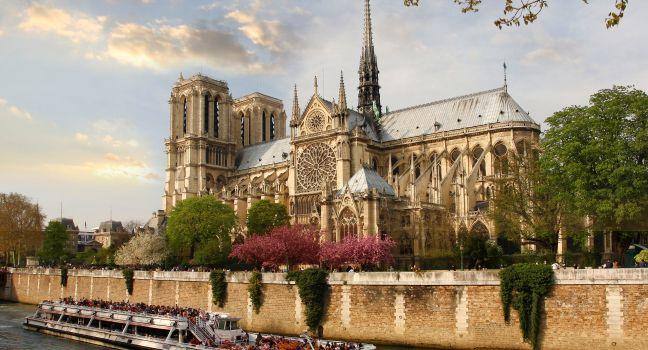
Looming above Place du Parvis, this Gothic sanctuary is the symbolic heart of Paris and, for many, of France itself. After a five-year rebuild following the 2019 fire that nearly destroyed it, the cathedral reopened to rapturous reviews in December 2024. Newly luminous and awash in color, the monument enthralls more than ever. And its history remains unchanged: Napoléon was crowned here, and kings and queens exchanged marriage vows before its altar.
Begun in 1163, completed in 1345, badly damaged during the Revolution, and restored in the 19th century by Eugène Viollet-le-Duc, Notre-Dame may not be the country’s oldest or largest cathedral, but in beauty and architectural harmony it has few peers. The front facade has three main entrances: the Portal of the Virgin (left); the Portal of the Last Judgment (center); and the Portal of St. Anne (right). As you enter the nave, the faith of the early builders permeates the interior: the glow of the windows contrasts with the exterior’s triumphant glory. Look down the nave to the transepts—the arms of the church—where, at the south entrance to the choir, you'll glimpse the haunting 12th-century statue of Notre-Dame de Paris, Our Lady of Paris, for whom the cathedral is named. On the choir’s south side is the Treasury, with its small collection of religious artifacts. On the north side is the north rose window, one of the cathedral's original stained-glass panels; at the center is an image of Mary holding a young Jesus.
The best time to visit is early morning, when the cathedral is brightest and least crowded. Guides are available at the entrance (€10); guided tours in English are also available (check the website for specific times). A separate entrance, to the left of the front facade, provides access to the towers via 422 stone steps. These wind up to the bell tolled by the fictional Quasimodo in Victor Hugo's 1831 Notre-Dame de Paris. The famed gargoyles (technically chimeras since they lack functioning waterspouts) were 19th-century additions.
It is obligatory to reserve a tower visit online; lines to climb the tower are shortest on weekday mornings. Down the stairs in front of the cathedral is the Crypte Archéologique, an archaeological museum offering a fascinating subterranean view of this area from the 1st century, when Paris was a Roman city called Lutetia, through medieval times. By day, the most tranquil place to appreciate the cathedral's architectural elements is Square Jean-XXIII, the lovely garden behind the cathedral. By night, Seine boat rides promise stellar views.
Cimetière du Père-Lachaise
Père Lachaise
Fodor's choice
Share This
Valerie Potapova/Shutterstock
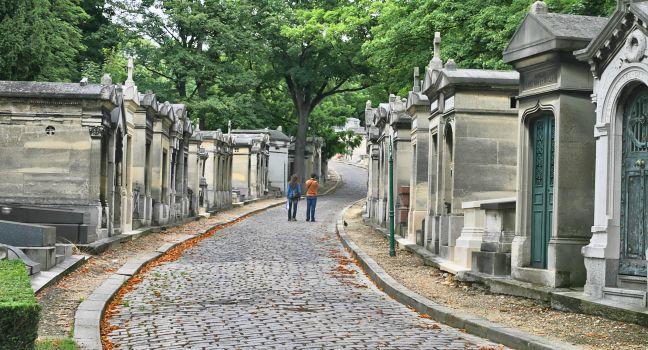
Bring a red rose for "the Little Sparrow" Edith Piaf when you visit the cobblestone avenues and towering trees that make this 118-acre oasis of green perhaps the world's most famous cemetery. Named for Père François de la Chaise, Louis XIV's confessor, Père-Lachaise is more than just a who's who of celebrities. The Paris Commune's final battle took place here on May 28, 1871, when 147 rebels were lined up and shot against the Mur des Fédérés (Federalists' Wall) in the southeast corner. Aside from the sheer aesthetic beauty of the cemetery, the main attraction is what (or who, more accurately) is belowground.
Two of the biggest draws are Jim Morrison's grave (with its own guard to keep Doors fans under control) and the life-size bronze figure of French journalist Victor Noir, whose alleged fertility-enhancing power accounts for the patches of bronze rubbed smooth by hopeful hands. Other significant grave sites include those of 12th-century French philosopher Pierre Abélard and his lover Héloïse; French writers Colette, Honoré de Balzac, and Marcel Proust; American writers Richard Wright, Gertrude Stein, and Alice B. Toklas; Irish writer Oscar Wilde; French actress Sarah Bernhardt; French composer Georges Bizet; Greek American opera singer Maria Callas; Franco-Polish composer Frédéric Chopin; painters of various nationalities including Georges-Pierre Seurat, Camille Pissaro, Jean-Auguste-Dominique Ingres, Jacques-Louis David, Eugène Delacroix, Théodore Géricault, Amedeo Clemente Modigliani, and Max Ernst; French jazz violinist Stephane Grappelli; French civic planner Baron Haussmann; French playwright and actor Molière; and French singer Edith Piaf. (To visit the grave sites of a few other famous French men and women, head south to Cimetière du Montparnasse, north to Cimetière de Montmartre, or west to Passy Cemetery.)
One of the best days to visit is on All Saints' Day (November 1), when Parisians bring flowers to adorn the graves of loved ones or favorite celebrities. Pinpoint grave sites on the website before you come, but buy a map anyway outside the entrances—you'll still get lost, but that's part of the fun.
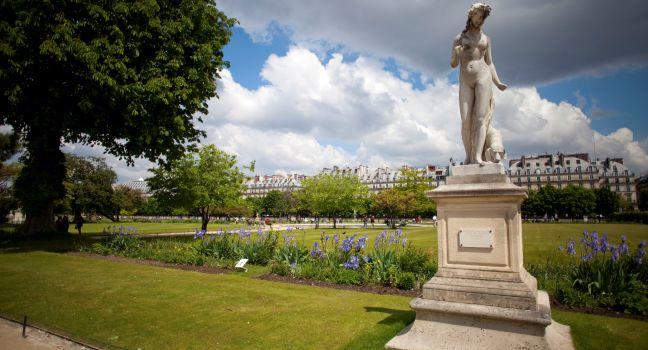
This quintessential French garden, with its verdant lawns, rows of manicured trees, and gravel paths, was designed by André Le Nôtre for Louis XIV. After the king moved his court to Versailles in 1682, the Tuileries became the place for stylish Parisians to stroll. (Ironically, the name derives from the decidedly unstylish factories that once occupied this area: they produced tuiles, or roof tiles, fired in kilns called tuileries.) Monet and Renoir captured the garden with paint and brush. It's no wonder the Impressionists loved it—the gray, austere light of Paris's famously overcast days make the green trees appear even greener.
The garden still serves as a setting for one of the city's loveliest walks. Laid out before you is a vista of must-see monuments, with the Louvre at one end and the Place de la Concorde at the other. The Eiffel Tower looms in the distance on the other side of the Seine, along with the Musée d'Orsay, accessible by a footbridge in the center of the garden.
Begin exploring the garden at the Louvre end, with the Arc du Carrousel, a stone-and-marble arch commissioned by Napoléon to showcase the bronze horses he stole from St. Mark's Cathedral in Venice. The horses were eventually returned and replaced here with a statue of a quadriga, a four-horse chariot. On the Place de la Concorde end, twin buildings bookend the garden. On the Seine side, the former royal greenhouse is now the exceptional Musée de l'Orangerie, home to the largest display of Monet's lovely Water Lilies series, as well as a sizable collection of early 20th-century paintings, including many Impressionist works. On the opposite end is the Jeu de Paume, which hosts some of the city's best photography exhibitions.
Note that the Tuileries is one of the best places in Paris to take kids if they're itching to run around. There's a carousel, trampolines, and, in summer, a funfair. If you're hungry, look for carts serving ice cream from Le Glacier Farmers or sandwiches from Eric Kayser at the eastern end near the Louvre. Within the gated part of the gardens are four cafés with terraces. Pavillon des Tuileries near Place de la Concorde is a good place to stop for late-afternoon tea or an apéritif.
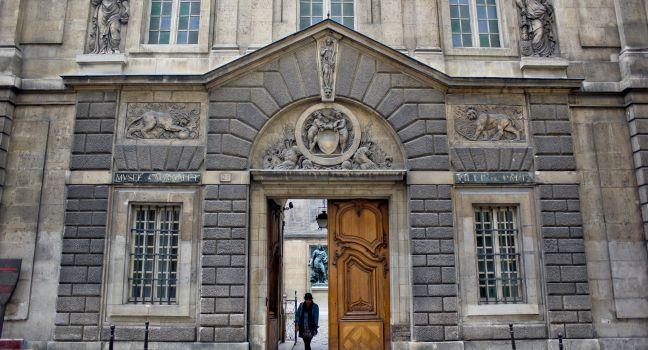
If it has to do with Parisian history, it's here: this fascinating hodgepodge of artifacts and art ranges from prehistoric canoes used by the Parisii tribes to the cork-lined bedroom where Marcel Proust labored over his evocative novels. Thanks to scores of paintings, drawings, photographs, furniture, and scale models, nowhere else in Paris can you get such a precise picture of the city's evolution through the ages. The museum fills more than 100 rooms in two adjacent mansions, the Hôtel Le Peletier de St-Fargeau and the Hôtel Carnavalet. The latter is a Renaissance jewel that was the home of writer Madame de Sévigné from 1677 to 1696. Throughout her long life, she wrote hundreds of frank and funny letters to her daughter in Provence, giving an incomparable view of both public and private life during the time of Louis XIV. The museum offers a glimpse into her world, but its collection covers far more than just the 17th century. The exhibits on the Revolution are especially interesting, with scale models of guillotines and a replica of the Bastille prison carved from one of its stones. Louis XVI's prison cell is reconstructed along with mementos of his life, even medallions containing locks of his family's hair. Other impressive interiors are reconstructed from the Middle Ages through the rococo period and into Art Nouveau—showstoppers include the Fouquet jewelry shop and the Café de Paris's original furnishings. From May through September, the museum's sculpted courtyard garden is home to Fabula café and restaurant, a delightful place for a coffee, snack, or meal in one of the Marais's prettiest gardens (16 rue des Francs-Bourgeois).
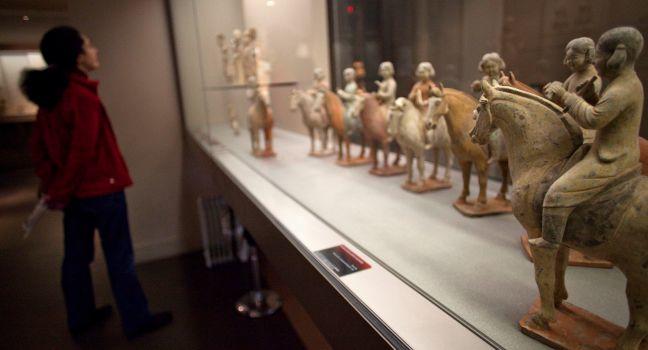
Wealthy Milanese banker and patriot Enrico (Henri) Cernuschi fled to Paris in 1850 after the new Italian government collapsed, only to be arrested during the 1871 Paris Commune. He subsequently decided to wait out the unrest by traveling and collecting Asian art. Upon his return 18 months later, he had a special mansion built on the edge of Parc Monceau to house his treasures, notably a two-story bronze Buddha from Japan. Reopened in 2020 after restoration, France's second-most-important collection of Asian art, after the Musée Guimet, expanded its galleries to include objects never before displayed, widening the collection to include more works from Japan, Korea, and Vietnam. Cernuschi had an eye not only for the bronze pieces he adored but also for Neolithic pottery (8000 BC), mingqi tomb figures (AD 300–900), and an impressive array of terra-cotta figures from various dynasties. A collection highlight is La Tigresse, a bronze wine vessel in the shape of a roaring feline (11th century BC), purchased after Cernuschi's death. Although the museum is free, there is a charge for temporary exhibitions.
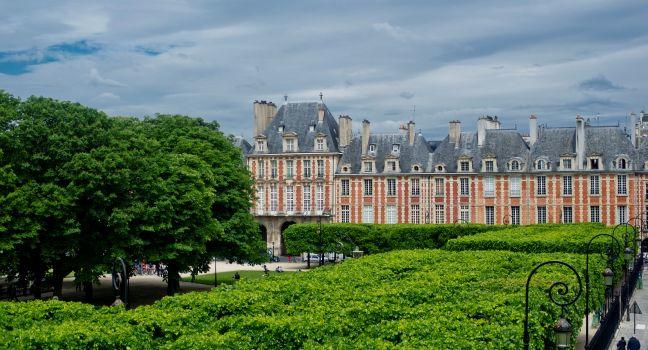
The oldest square in Paris and—dare we say it—the most beautiful, Place des Vosges represents an early stab at urban planning. The precise proportions offer a placid symmetry, but things weren't always so calm here. Four centuries ago, this was the site of the Palais des Tournelles, home to King Henry II and Queen Catherine de Medici. The couple staged regular jousting tournaments, and Henry was fatally lanced in the eye during one of them in 1559. Catherine fled to the Louvre, abandoning her palace and ordering it destroyed. In 1612, the square became Place Royale on the occasion of Louis XIII's engagement to Anne of Austria. Napoléon renamed it Place des Vosges to honor the northeast region of Vosges, the first in the country to pony up taxes to the Revolutionary government. At the base of the 36 redbrick-and-stone houses—nine on each side of the square—is an arcaded, covered walkway lined with art galleries, shops, and cafés. There's also an elementary school, a synagogue (whose barrel roof was designed by Gustav Eiffel), and several chic hotels. The formal, gated garden's perimeter is lined with chestnut trees; inside are a children's play area and a fountain. Aside from hanging out in the park, people come here to visit the house, now a museum, of the man who once lived at No. 6—Victor Hugo, the author of Les Misérables and Notre-Dame de Paris (aka The Hunchback of Notre-Dame). One of the best things about this park is that you're actually allowed to sit—or snooze or snack—on the grass during spring and summer. There is no better spot in the Marais for a picnic: you can pick up fixings at the nearby street market on Thursday and Sunday morning. (It's on Boulevard Richard Lenoir between Rues Amelot and St-Sabin.) The most likely approach to Place des Vosges is from Rue de Francs-Bourgeois, the main shopping street. However, for a grander entrance, walk along Rue St-Antoine until you get to Rue de Birague, which leads directly into the square.
Galerie Vivienne
Grands Boulevards
Fodor's choice
Share This
Considered the grande dame of Paris's 19th-century passages couverts—the world's first shopping malls—this graceful arcade evokes an age of gaslights and horse-drawn carriages. Parisians once came to passages like this one to tread tiled floors instead of muddy streets; to see and be seen browsing boutiques under the glass-and-iron roofs. Today, the Galerie Vivienne still attracts unique retailers selling clothing, accessories, and housewares. La Marelle (No. 25) stocks secondhand designer labels, and wine merchant Legrand Filles et Fils ( 1 rue de la Banque) is the place for an upscale tasting. The Place des Victoires, a few steps away, is one of Paris's most picturesque squares. In the center is a statue of an outsized Louis XIV (1643–1715), the Sun King, who appears almost as large as his horse.
Le Centquatre-Paris
La Villette
Fodor's choice
Share This
Le Centquatre (meaning "104") takes its name from its address in a rough-around-the-edges corner of the 19e arrondissement, near Parc de la Villette. The former site of the city morgue, this soaring art hub is home to an offbeat collection of performance venues, shops, and studios (artists of all genres compete for free studio space, and sometimes you can get a peek of them at work). Contemporary art exhibits, some of which charge a small admission, are presented here, as are all manner of concerts, dance performances, performance art, films, and other events, many of them interactive. On-site you'll also find a restaurant, a café, a bookstore, a vintage shop, and a play area for children. There's much to see and do here for the whole family, so check the website before you visit to confirm what's on.
Mémorial de la Shoah
Marais Quarter
Fodor's choice
Share This
The first installation in this compelling memorial and museum is the deeply moving Wall of Names, tall plinths honoring the 76,000 French Jews deported from France to Nazi concentration camps, of whom only 2,500 survived. Opened in 2005, the center has an archive on the victims, a library, and a gallery hosting temporary exhibitions. The permanent collection includes riveting artifacts and photographs from the camps, along with video testimony from survivors. The children's memorial is particularly poignant and not for the faint of heart—scores of backlit photographs show the faces of many of the 11,000 murdered French children. The crypt, a giant black marble Star of David, contains ashes recovered from the camps and the Warsaw ghetto. You can see the orderly drawers containing small files on Jews kept by the French police. (France officially acknowledged the Vichy government's role only in 1995.) The history of anti-Semitic persecution in the world is revisited, as well as the rebounding state of Jewry today. There is a free guided tour in English the second Sunday of every month at 3.
Musée Zadkine
Montparnasse
Fodor's choice
Share This
The sculptor Ossip Zadkine spent nearly four decades living in this bucolic retreat near the Jardin du Luxembourg, creating graceful, elongated figures known for their clean lines and simplified features. Zadkine, a Russian-Jewish émigré, moved to Paris in 1910 and fell into a circle of avant-garde artists. His early works, influenced by African, Greek, and Roman art, later took a Cubist turn, no doubt under the influence of his friend, the founder of the Cubist movement, Pablo Picasso. This tiny museum displays a substantial portion of the 400 sculptures and 300 drawings bequeathed to the city by his wife, artist Valentine Prax. There are busts in bronze and stone reflecting the range of Zadkine's style, and an airy back room filled with lithe female nudes in polished wood. The charming, leafy garden contains a dozen statues nestled in the trees, including The Destroyed City, a memorial to the Dutch city of Rotterdam, destroyed by the Germans in 1940.
Parc Montsouris
Montparnasse
Fodor's choice
Share This
This 38-acre park on the southern edge of the city is one of Paris's best-kept secrets. Home to an enormous variety of flora and fauna, as well as a small rose garden, one can stroll or jog around the hilly footpaths or lounge and picnic on a number of giant lawns. There are free playgrounds for children and a small lake with ducks and other waterfowl. If you're feeling especially energetic and adventurous, cross Boulevard Jourdan and explore the campus of the unique and historic Cité Internationale Universitaire de Paris. The campus is home to a variety of architectural wonders, both modern and historic, which house visiting professors and students from around the world.
Passy Cemetery
Trocadéro
Fodor's choice
Share This
Visiting graveyards in Paris can become addictive. Less well known than Montparnasse or Père Lachaise, Passy Cemetery, which dates from 1821, is raised high above Place du Trocadéro behind towering walls so that passersby hardly know it's there. Here under the chestnut trees are the tombstones of famous aristocrats and artists, such as composer Claude Debussy, Impressionist painters Édouard Manet and Berthe Morisot, and fashion designer Hubert de Givenchy, all with superb, and eternal, views of the Eiffel Tower.
Castel Béranger
Western Paris
Share This
MOSSOT [CC BY 1.0], via Wikimedia Commons
It's a shame you can't go inside this house, which is considered the city's first Art Nouveau structure. Dreamed up in 1898 by Hector Guimard, the wild combination of materials and the grimacing grillwork led neighbors to call it Castle Dérangé (Deranged). Yet the project catapulted the 27-year-old Guimard into the public eye, leading to his famous métro commission. After ogling the sea-inspired front entrance, go partway down the alley to admire the inventive treatment of the traditional Parisian courtyard, complete with a melting water fountain. A few blocks up the road at No. 60 is the Hotel Mezzara, designed by Guimard in 1911 for textile designer Paul Mezzara. You can trace Guimard's evolution by walking to the subtler Agar complex at the end of the block. Tucked beside the stone entrance at the corner of Rue Jean de la Fontaine and Rue Gros is a tiny café-bar with an Art Nouveau glass front and furnishings.
American Church
Eiffel Tower
Share This
Not to be confused with the American Cathedral across the river at 23 avenue George V, this pretty, neo-Gothic, Protestant church was built between 1927 and 1931. It features a pair of Tiffany stained glass windows—a rare find in Europe. Besides ecumenical services, the church hosts architectural tours, free classical and acoustic concerts, and lectures and workshops on well-being and topics of current interest. You can check event listings and download a self-guided PDF tour at the church website.
Arènes de Lutèce
Latin Quarter
Share This
This Roman amphitheater, designed as a theater and circus, was almost completely destroyed by barbarians in AD 280. The site was rediscovered in 1869, and you can still see part of the stage and tiered seating. Along with the remains of the baths at Cluny, the arena constitutes rare evidence of the powerful Roman city of Lutetia that flourished on the Rive Gauche in the 3rd century. Today it's a favorite spot for picnicking, pickup soccer, or boules.
Bercy
Bercy
Share This
Tucked away south of the Gare de Lyon in the 12e arrondissement, blocks of stone warehouses that once stored wine are now home to Bercy Village ( 28 rue François Truffaut), a collection of boutiques and eateries that stay open unusually late for Paris. Adjacent to the shops is the tranquil Parc de Bercy, with lawns, ponds, and flower beds crisscrossed by gravel paths, and the Jardin Yitzhak Rabin, a garden named for the late Nobel Peace Prize winner. Nearby, at 51 rue de Bercy, a Cubist building by Frank Gehry houses the Cinémathèque Française, a film buff's paradise, showing classic films, many in English; there are frequent homages to directors and actors, plus a cinema bookshop and museum.
Carré Roland Dorgelès
Montmartre
Share This
This unassuming square is a perfect place to take in two of Montmartre's most photographed sights: the pink-and-green Au Lapin Agile cabaret and Clos Montmartre, Paris's only working vineyard. The former, famously painted by Camille Pissarro, still welcomes revelers after more than 160 years; the latter can be visited via guided tours (€39, in French and includes a wine tasting), organized by the nearby Musée de Montmartre (admission included), and during the annual Fête de Jardins (Garden Festival) weekend in September. The stone wall on the northwestern edge of the square borders the peaceful Cimetière St-Vincent, one of the neighborhood's three atmospheric cemeteries.
Champ de Mars
Eiffel Tower
Share This
Landscaped at the start of the 20th century and restored in the two years leading up to the 2024 Paris Olympic Games, the park is a centerpiece of current mayor Anne Hildago's plan to reduce pollution and increase the city's pedestrian and green spaces. The park's grassy lawns and gardens have already been expanded to 4 acres and dozens of new trees have been planted (many more are to come). Parts of the ambitious project—which extends across the Seine to the gardens, fountains, and green spaces leading to the Trocadéro esplanade—are on hold until city officials, environmentalists, and Parisians can agree on a plan.
Cimetière de Montmartre
Montmartre
Share This
Overshadowed by better-known Père-Lachaise, this cemetery is just as picturesque. It's the final resting place of a host of luminaries, including painters Degas and Fragonard; Adolphe Sax, inventor of the saxophone; dancer Vaslav Nijinsky; filmmaker François Truffaut; and composers Hector Berlioz and Jacques Offenbach. The Art Nouveau tomb of novelist Émile Zola (1840–1902) lords over a lawn near the entrance—though Zola's remains were moved to the Panthéon in 1908.
École Nationale des Beaux-Arts
St-Germain-des-Prés
Share This
Occupying three large mansions near the Seine, the national fine arts school—today the breeding ground for painters, sculptors, and architects—was once the site of a convent founded in 1608 by Marguerite de Valois, the first wife of Henri IV. After the Revolution the convent was turned into a museum for works of art salvaged from buildings attacked by the rampaging French mobs. In 1816 the museum was turned into a school. Today its peaceful courtyards host contemporary installations and exhibits. Note that public access to the school is limited, except during temporary exhibitions.
Église de la Madeleine
Champs-Élysées
Share This
With its rows of uncompromising columns, this enormous neoclassical edifice in the center of Place de la Madeleine was consecrated as a church in 1842, nearly 78 years after construction began. Initially planned as a Baroque building, it was later razed and begun anew by an architect who had the Roman Pantheon in mind. Interrupted by the Revolution, the site was razed yet again when Napoléon decided to transform it into a Greek-inspired temple dedicated to the glory of his army. Those plans changed when the army was defeated and the emperor deposed. Other ideas for the building included making it into a train station, a market, and a library. Finally, Louis XVIII decided it should be a church, which it still is today. A recent cleaning has restored the sooty facade's original luminosity (notice the contrast with the building's nether half, still awaiting a cleaning). A continuous program of classical concerts (some of them free) are a joy to attend here under the soaring ceilings.
Église Saint-Germain l'Auxerrois
Louvre
Share This
Founded in AD 500, this grand church across from the Louvre's eastern end is one of the city's oldest. It was destroyed during the Norman siege in 885–886, rebuilt in the 11th century, and subsequently expanded until the current edifice was finished in 1580. The bell, named Marie, dates to 1527. Guided visits in French take place on Thursdays and Saturdays at 2:30 pm.
Église Saint-Merry
Marais Quarter
Share This
This impressive Gothic church in the shadow of the Centre Pompidou was completed in 1550. Notable features include the turret (it contains the oldest bell in Paris, cast in 1331) and an 18th-century pulpit supported on carved palm trees. There are free concerts here Sunday at 4 pm.
Fragonard Musée du Parfum
Grands Boulevards
Share This
More of a showroom than a museum, the small exhibit run by parfumier Fragonard above its boutique on Rue Scribe is heavy on decorative objects associated with perfume, including crystal bottles, gloves, and assorted bibelots. The shop is a good place to find gifts, like body lotion made with royal jelly (from honeybees), myriad soaps, and, of course, perfume. True fragrance aficionados can double their pleasure by visiting the Théâtre Musée des Capucines-Fragonard, another mini-museum nearby (39 bd. des Capucines).
Galerie Véro-Dodat
Louvre
Share This
A lovely 19th-century passage that's been gorgeously restored, the Véro-Dodat has a dozen artsy boutiques selling objets d'art, textiles, furniture, and accessories. The headliner tenant is Christian Louboutin at 19 Rue Jean-Jacques Rousseau, whose red-soled stilettos are favored by Angelina Jolie, Madonna, and other members of the red-carpet set. On the opposite end, at the Rue du Bouloi entrance, star cosmetics maker Terry De Gunzburg has a boutique, By Terry.
Hôtel de Sully
Marais Quarter
Share This
This early Baroque gem, built in 1624, is one of the city's loveliest hôtels particuliers (grand town houses). Like much of the area, it fell into ruin until the 1950s, when it was rescued by the institute for French historic monuments (the Centre des Monuments Nationaux), which is based here. The renovated headquarters aren’t open to the public, but you're welcome to enjoy the equally lovely garden. Stroll through it, past the Orangerie, to find a small passage into nearby Place des Vosges. Sully's best buddy, King Henry IV, would have lived there had he not been assassinated in 1610. An on-site bookstore (with a 17th-century ceiling of exposed wooden beams) sells specialized English-language guides to Paris.
Hôtel de Ville
Marais Quarter
Share This
Overlooking the Seine, City Hall contains the residence and offices of the mayor. The original Renaissance structure was built by François I in 1535–51 and added to by both Henry IV and Louis XIII in the early 17th century. In 1871 it was sacked and burned during the final days of the Paris Commune. Rebuilt in an almost exact replica of the original in 1874, it is one of Paris's most stunning buildings, made all the more dramatic by elaborate nighttime lighting. The adjoining public library stages frequent free exhibits celebrating famous photographers like Doisneau or Atget and their notable subjects, often the city itself. (The entrance is on the side across from the department store BHV.) Alas, the impressive interior of the main administrative building, with its lavish reception halls and staircases, is open only for independent visits during Patrimony Weekend in September. If your French is good, however, free guided tours are given biweekly in summer, weekly in other seasons (call two months ahead for information and reservations). The grand public square out front is always lively, playing host to events and temporary exhibitions. There's a carousel and a beach volleyball court (or similar) in summer, and an ice-skating rink (with skate rental available) in winter.
Hôtel Drouot
Grands Boulevards
Share This
Hidden away in a small antiques district, not far from the Opéra Garnier, is Paris's central auction house, said to be the oldest in the world. You name it, Drouot sells it: vintage clothes, haute-couture gowns, tchotchkes, ornate Chinese lacquered boxes, rare books, art, rugs and tapestries, mid-century modern furniture, old master drawings, wine, and much more. Anyone can attend the sales and viewings, which draw a mix of art dealers, ladies who lunch, and art amateurs hoping to discover an unknown masterpiece. Check the website to see what's on the block or if you're pressed for time, bid online. Don't miss the small galleries and antiques dealers in the Quartier Drouot, a warren of small streets around the auction house, notably on Rues Rossini and de la Grange-Batelière.
Jardin Atlantique
Montparnasse
Share This
Built above the tracks of Gare Montparnasse, this park nestled among tall modern buildings is named for its assortment of trees and plants typically found in coastal regions near the Atlantic Ocean. In the center of the park, what looks like a quirky piece of metallic sculpture is actually a meteorological center, with a battery of flickering lights reflecting temperature, wind speed, and monthly rainfall. It's not really worth a detour, but it's a good green space if you're already nearby.
Subscribe to Newsletter
Sign up for Travel Tips & News
I want emails from Fodor's Travel with travel information and promotions. I can unsubscribe
any time using the unsubscribe link at the end of all emails.
Thank you for your interest!
Look out for our newsletters with travel tips and special offers.
Sign up for Travel Tips & News
By signing up for the
newsletter, I agree to the Privacy Policy. You must check the box to subscribe
Thank you for your interest!
Look out for our newsletters with travel tips and special offers.