
11 Best Sights in Paris, France

Background Illustration for Sights

We've compiled the best of the best in Paris - browse our top choices for the top things to see or do during your stay.

Jardin des Tuileries
Louvre Fodor's choice
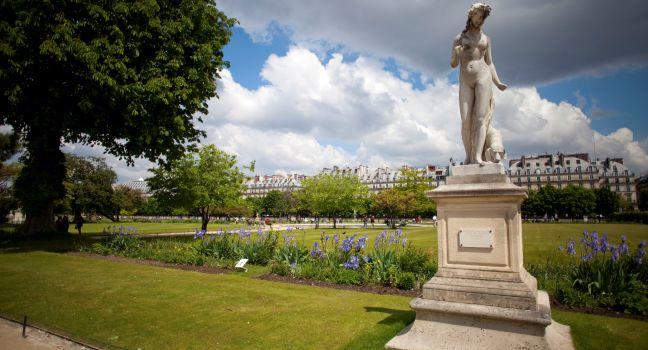
Nymph Leveque Tuileries, Statue, Jardin des Tuileries, Paris, France
© Halie Cousineau/ Fodor’s Travel

This quintessential French garden, with its verdant lawns, rows of manicured trees, and gravel paths, was designed by André Le Nôtre for Louis XIV. After the king moved his court to Versailles in 1682, the Tuileries became the place for stylish Parisians to stroll. (Ironically, the name derives from the decidedly unstylish factories that once occupied this area: they produced tuiles, or roof tiles, fired in kilns called tuileries.) Monet and Renoir captured the garden with paint and brush. It's no wonder the Impressionists loved it—the gray, austere light of Paris's famously overcast days make the green trees appear even greener.

The garden still serves as a setting for one of the city's loveliest walks. Laid out before you is a vista of must-see monuments, with the Louvre at one end and the Place de la Concorde at the other. The Eiffel Tower looms in the distance on the other side of the Seine, along with the Musée d'Orsay, accessible by a footbridge in the center of the garden.

Begin exploring the garden at the Louvre end, with the Arc du Carrousel, a stone-and-marble arch commissioned by Napoléon to showcase the bronze horses he stole from St. Mark's Cathedral in Venice. The horses were eventually returned and replaced here with a statue of a quadriga, a four-horse chariot. On the Place de la Concorde end, twin buildings bookend the garden. On the Seine side, the former royal greenhouse is now the exceptional Musée de l'Orangerie, home to the largest display of Monet's lovely Water Lilies series, as well as a sizable collection of early 20th-century paintings, including many Impressionist works. On the opposite end is the Jeu de Paume, which hosts some of the city's best photography exhibitions.

Note that the Tuileries is one of the best places in Paris to take kids if they're itching to run around. There's a carousel, trampolines, and, in summer, a funfair. If you're hungry, look for carts serving ice cream from Le Glacier Farmers or sandwiches from Eric Kayser at the eastern end near the Louvre. Within the gated part of the gardens are four cafés with terraces. Pavillon des Tuileries near Place de la Concorde is a good place to stop for late-afternoon tea or an apéritif.

Bordered by Quai des Tuileries, Pl. de la Concorde, Rue de Rivoli, and the Louvre, Paris, 75001, France
01–40–20–90–43
Sight Details
Free

Something incorrect in this review?

Bois de Boulogne

Western Paris Fodor's choice

When Parisians want to experience the great outdoors without going too far from home, they head to the Bois de Boulogne. Once a royal hunting ground, the Bois is like a vast tamed forest where romantic lakes and wooded paths are complemented by formal gardens and family-friendly amusements. On nice days, it’s filled with cyclists, rowers, rollerbladers, and joggers. Art lovers also flock here thanks to the Fondation Louis Vuitton, a stunning exhibition space dedicated to contemporary art.

The Parc de Bagatelle is a floral garden with irises, roses, tulips, water lilies, and roaming peacocks, while the Pré Catelan contains one of Paris's largest trees: a copper beech more than 200 years old. Romantic Le Pré Catelan restaurant (three Michelin stars), a Belle Époque classic with an elegant terrace, still draws diners and wedding parties. The Jardin Shakespeare inside the Pré Catelan has a sampling of the flowers, herbs, and trees mentioned in Shakespeare's plays, and it becomes an open-air theater for the bard's works in spring and summer. The Jardin d'Acclimatation is an amusement park that attracts hordes of preschoolers on summer Sundays. Boats or bikes can be rented for a few euros at Lac Inférieur. You can row or take a quick "ferry" to the island restaurant, Le Chalet des Îles. Two popular horse-racing tracks are also in the park: the Hippodrome de Longchamp and the Hippodrome d'Auteuil. Fans of the French Open can visit its home base, Stade Roland-Garros.

The main entrance to the Bois is off Avenue Foch near the Porte Dauphine métro stop on Line 2; it is best for accessing the Pré Catelan and Jardin Shakespeare, both off Route de la Grande-Cascade by the lake. For the Jardin d'Acclimatation and the Fondation Louis Vuitton, off Boulevard des Sablons, take Line 1 to Les Sablons or Porte Maillot, where you can walk or ride the Petit Train to the amusement park, which is next door to the foundation. The foundation also offers a €2 return-trip shuttle from Place de l'Étoile. The Parc de Bagatelle, off Route de Sèvres-à-Neuilly, can be accessed from either Porte Dauphine or Porte Maillot, though it's a bit of a hike. You'll want to leave the park by dusk, as the Bois—potentially dangerous after dark—turns into a distinctly “adult” playground.

Paris, 75016, France
01–40–69–96–00-Fondation Louis Vuitton
Sight Details
Parc de Bagatelle €3 (€6 during exhibitions, free Oct.–Mar.); Jardin Shakespeare free; Jardin d'Acclimatation €7 entry, €63 for 10-ride ticket book; Fondation Louis Vuitton €16

Something incorrect in this review?

Bois de Vincennes

Bois de Vincennes Fodor's choice

Like the Bois de Boulogne to the west, this much-loved retreat on the city's eastern border was landscaped by Napoléon III. Its roots, however, reach back to the 13th century, when Philippe Auguste created a hunting preserve in the shadow of the royal Château de Vincennes, which once ranked as the largest château in Europe. In 1731 Louis XV created a public park here, and the bois (or woods) now features a Japanese garden, La Grande Pagode (a Buddhist temple containing the largest golden statue of the Buddha in Europe), and the exquisite Parc Floral, with acres of flower gardens, a huge kids' park, and summertime jazz and classical concerts. Horse races at the restored Vincennes Hippodrome de Paris are an event for the whole family, but perhaps not the Espace Naturiste, Paris's first area for nudists, opened in 2017. Rowboats are for rent at a pair of lakes: Lac Daumesnil, which has two islands, and Lac des Minimes, which has three. For the kids, there are pony rides, a miniature train, and numerous play areas. Here, too, you'll find the stunning Palais de la Porte Dorée, home to an immigration museum and tropical aquarium. Through late summer, the Parc Floral hosts two beloved music festivals, the Paris Jazz Festival and the Festival Classique au Vert. Grab a picnic and a blanket and enjoy classical music or jazz in the amphitheater or on the lawn in Paris's prettiest park.

Recommended Fodor's Video

Coulée Verte René-Dumont/Promenade Plantée

Bastille Fodor's choice

Once a train line from the Paris suburbs to Bastille, this redbrick viaduct (often referred to as Le Viaduc des Arts) is now one of the park highlights of the unpretentious 12e arrondissement. The rails have been transformed into a 4½-km (3-mile) walkway lined with trees, bamboo, and flower gardens, offering a bird's-eye view of the stately Haussmannian buildings along Avenue Daumesnil. Below, the voûtes (arcades) have been transformed by the city into artisan boutiques, many focused on decor and design. There are also temporary galleries showcasing art and photography. The Promenade, which gained fame as a setting in the 2004 film Before Sunset, was the inspiration for New York's High Line. It ends at the Bastille. From there, you can continue your walk to the Bois de Vincennes. If you're hungry, grab a bite at L'Arrosoir, a cozy café under the viaduct ( 75 av. Daumesnil).

Parc Floral de Paris

Bois de Vincennes Fodor's choice

A lake, a butterfly garden, a bonsai pavillion, and seasonal displays of blooms make the Bois de Vincennes's 70-acre floral park a lovely place to spend a warm afternoon. Kids will also enjoy the extensive playgrounds and the marionette (guignol) theater. A café and a sit-down tea salon make dining easy, but picnicking under the trees is highly recommended, especially when the park hosts jazz and classical concerts (most weekends from June through September). In winter months, some attractions may be closed.

Parc Montsouris

Montparnasse Fodor's choice

This 38-acre park on the southern edge of the city is one of Paris's best-kept secrets. Home to an enormous variety of flora and fauna, as well as a small rose garden, one can stroll or jog around the hilly footpaths or lounge and picnic on a number of giant lawns. There are free playgrounds for children and a small lake with ducks and other waterfowl. If you're feeling especially energetic and adventurous, cross Boulevard Jourdan and explore the campus of the unique and historic Cité Internationale Universitaire de Paris. The campus is home to a variety of architectural wonders, both modern and historic, which house visiting professors and students from around the world.

Champ de Mars

Eiffel Tower

Landscaped at the start of the 20th century and restored in the two years leading up to the 2024 Paris Olympic Games, the park is a centerpiece of current mayor Anne Hildago's plan to reduce pollution and increase the city's pedestrian and green spaces. The park's grassy lawns and gardens have already been expanded to 4 acres and dozens of new trees have been planted (many more are to come). Parts of the ambitious project—which extends across the Seine to the gardens, fountains, and green spaces leading to the Trocadéro esplanade—are on hold until city officials, environmentalists, and Parisians can agree on a plan.

Paris, France

Something incorrect in this review?

Parc de Belleville

La Villette

Lofty Parc de Belleville is Paris’s highest-altitude park and one of its prettiest. Traversed by shaded, winding lanes interspersed with woods, gardens, and sloping, grassy fields, it’s a lovely spot to have a picnic while taking in spectacular panoramic views of Paris. The park is also home to one of the city’s last cultivated vineyards, with vines of Chardonnay and Pinot Meunier that produce a slightly sparkling wine called Piquette. You are welcome to join in the grape harvest during the last week of September.

Parc de la Villette

La Villette

This former abattoir (slaughterhouse) is now an ultramodern, 130-acre park with lawns and play areas, an excellent science museum, a music complex, and a cinema: all in all, it's the perfect place to entertain kids. You could easily spend a whole day here. The park itself was designed in the 1980s by postmodern architecture star Bernard Tschumi, who melded industrial elements, children's games (don't miss the dragon slide), ample green spaces, and funky sculptures along the canal into one vast yet unified playground. Loved by picnickers, the lawns also attract rehearsing samba bands and pickup soccer players. In summer there are outdoor festivals and a free open-air cinema, where people gather at dusk to watch movies on a huge inflatable screen.

In cold weather you can visit an authentic submarine and the Espace Chapiteaux (a circus tent featuring contemporary acrobatic theater performances) before hitting the museums. The hands-on one at the Cité des Sciences et de l'Industrie is a favorite stop for families and a must for science fans; its 3D Omnimax cinema (La Géode) is housed in a giant mirrored ball. Arts-oriented visitors of all ages will marvel at the excellent, instrument-filled Musée de la Musique. The park has even more in store for music lovers in the form of the Philharmonie de Paris, a striking 2,400-seat concert hall designed by Jean Nouvel. All that's left of the slaughterhouse that once stood here is La Grande Halle, a magnificent iron-and-glass building currently used for exhibitions, performances, and trade shows.

211 av. Jean Jaurès, Paris, 75019, France
01–40–03–75–75

Something incorrect in this review?

Parc des Buttes-Chaumont

La Villette

If you're tired of perfectly manicured Parisian parks with lawns that are off-limits to your weary feet, this lovely 61-acre hilltop expanse is for you. Built in 1863 on abandoned gypsum quarries and a former gallows, it was northern Paris's first park, part of Napoléon III's planned greening of the city (the emperor had spent years in exile in London, where he fell in love with the public parks). Today this park in the untouristy 19e arrondissement has grassy fields, shady walkways, waterfalls, and a picturesque lake dotted with swans. Rising from the lake is a rocky cliff you can climb to find a mini Greek-style temple and a commanding view of Sacré-Coeur Basilica. A favorite of families, the park also has pony rides and an open-air puppet theater—Guignol de Paris (€7; shows at 3:15 pm and 4:30 pm Wednesday and Saturday, and at 11:15 am and 4:30 pm on Sunday, year-round)—not far from the entrance at the Buttes-Chaumont métro stop. When you've worked up an appetite, grab a snack at the Rosa Bonheur café ( www.rosabonheur.fr), or reserve a table for weekend lunch at Le Pavillon du Lac restaurant.

Parc Monceau

Grands Boulevards

This exquisitely landscaped, 20-acre park began in 1778 as the Duc de Chartres's private garden. Though some of the land was sold off under the Second Empire (creating the exclusive real estate that now borders the park), the refined atmosphere and some of the fanciful faux ruins have survived. Immaculately dressed children play under the watchful eye of their nannies, while lovers cuddle on the benches. In 1797, André Garnerin, the world's first-recorded parachutist, staged a landing in the park. The rotunda—known as the Chartres Pavilion—is surely the city's grandest public restroom: it started life as a tollhouse.

Entrances on Bd. de Courcelles, Av. Velasquez, Av. Ruysdaël, and Av. van Dyck, Paris, 75008, France

Something incorrect in this review?