
8 Best Sights in Paris, France

Background Illustration for Sights

We've compiled the best of the best in Paris - browse our top choices for the top things to see or do during your stay.

Eiffel Tower

Eiffel Tower Fodor's choice
Eiffel Tower, Paris, France
Perig / Shutterstock

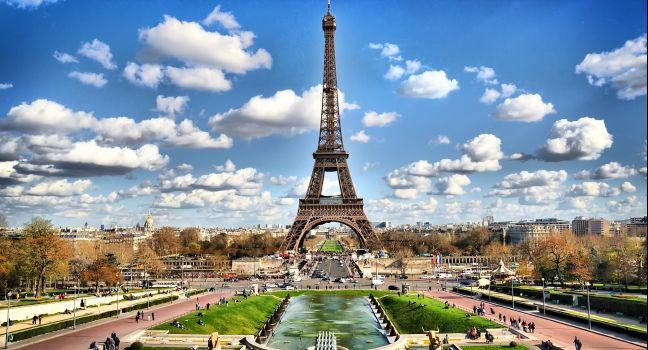
The Eiffel Tower is to Paris what the Statue of Liberty is to New York and what Big Ben is to London: the ultimate civic emblem. French engineer Gustave Eiffel spent two years working to erect this iconic monument for the World Exhibition of 1889. Because its colossal bulk exudes such a feeling of permanence, it's hard to believe that the tower nearly became 7,000 tons of scrap when the concession expired in 1909. Only its potential use as a radio antenna saved the day. Though many prominent Parisians derided it at first, the tower gradually became part of the city's topography. It's most breathtaking at night, when every girder is highlighted in a glittering show of 20,000 golden lights for five minutes every hour on the hour from nightfall until midnight (until 1 am in summer).

More recent enhancements include a renovation of the first level that added a vertigo-inducing "transparent" floor 187 feet above the esplanade as well as a miniturbine plant, four vertical turbine windmills, and eco-friendly solar panels to minimize the tower's carbon footprint over time. You can stride up 704 steps as far as the second level, but only the elevator goes to the top. The view of the flat sweep of Paris at 1,000 feet is sublime—especially if you come in the late evening, after the crowds have dispersed. Beat the crushing lines by reserving your ticket online, or book a skip-the-line guided tour offered by many companies (from €47). Better yet, ride up the private elevator to chef Frédérick Anton's Jules Verne restaurant—with its Michelin star—on the tower's second floor. It's about as dramatic a lunch or dinner spot as you'll find, apart from Madame Brasserie, a chic sit-down bistro helmed by Michelin-starred chef Thierry Marx on the first floor (online reservations for both restaurants are a must). Or you can watch the glimmering lights from the top of the tower over a glass of bubbly or a nonalcoholic drink at the Bar à Champagne. There are also small "buffet" snack shops on the esplanade and the first and second floors. 

At the tower's tippy top is Gustave Eiffel's "secret apartment," which he used as his office, including wax mannequins of Eiffel in conversation with Thomas Edison; the blonde woman in the background represents Claire, Eiffel's oldest daughter, with whom he was very close. You'll also hear actual recordings of Eiffel's voice.

Quai Branly, Paris, 75007, France
08–92–70–12–39-costs €0.35 per min
Sight Details
By elevator from €23; by stairs from €14
Stairs close at 6 pm in off-season (Oct.–June). Closed last 2 wks in Jan. for annual maintenance

Something incorrect in this review?

Grand Palais

Champs-Élysées Fodor's choice

With its curved-glass roof and sinuous Belle Époque ornamentation, you can't miss the Grand Palais, whether you're approaching from the Seine or the Champs-Élysées. This larger structure forms an elegant duo with the Petit Palais across Avenue Winston Churchill. Both buildings, adorned with colorful mosaics and elegant sculpted friezes, were built for the 1900 World's Fair and, like the Eiffel Tower, were not intended to be permanent. After more than 120 years of wear-and-tear, the graceful stone, glass, and cast-iron structure finally closed for a four-year restoration. Though some Olympic events were held here in summer 2024, the structure fully reopened in spring 2025, gleaming and ready for an exciting schedule of art shows and annual events, including Saut Hermès international horse-jumping competition; the Art Paris contemporary art fair; Taste of Paris, featuring culinary creations from France's leading chefs; Grand Palais des Glaces, when the immense nave transforms into an ice skating rink with music and lights; and an exciting program of international art shows.

Palais de Chaillot

Trocadéro Fodor's choice

Home to four major cultural centers, this honey-colored Art Deco structure on Place du Trocadéro was built in the 1930s to replace a Moorish-style building constructed for the 1878 World's Fair. Its esplanade is also a top draw for camera-toting visitors intent on snapping the perfect shot of the Eiffel Tower. Facing the building from the Place du Trocadéro, to the left are the Cité de l'Architecture et du Patrimoine—billed as the world's largest architectural museum—and the Theâtre National de Chaillot, one of the city's major dance and performance venues, which occasionally stages plays in English. The twin building to the right contains the Musée de l’Homme, a thoroughly modern anthropology museum, and the marvelous Musée National de la Marine, reopened in 2023 after a six-year restoration. Sculptures and fountains adorn the garden leading to the Seine.

Recommended Fodor's Video

Panthéon

Latin Quarter Fodor's choice

Rome has St. Peter's, London has St. Paul's, and Paris has the Panthéon, whose enormous dome dominates the Left Bank. Built as the church of Ste-Geneviève, the patron saint of Paris, it was later converted to an all-star mausoleum for some of France's biggest names, including Voltaire, Zola, Dumas, Rousseau, and Hugo. Pierre and Marie Curie were reinterred here together in 1995, and feminist-politician Simone Veil became only the fifth woman in this illustrious group when she was entombed in 2018. Begun in 1764, the building was almost complete when the French Revolution erupted. By then, architect Jacques-German Soufflot had died—supposedly from worrying that the 220-foot-high dome would collapse. He needn't have fretted: the dome was so perfect that Foucault used it in his famous pendulum test to prove the Earth rotates on its axis. Today the crypt, nave, and dome still sparkle (the latter offering great views), and Foucault's pendulum still holds pride of place on the main floor, slowly swinging in its clockwise direction and reminding of us of Earth's eternal spin.

Pl. du Panthéon, Paris, 75005, France
01–44–32–18–00
Sight Details
€13; €16.50 with dome access
Dome closed Nov.–Mar.

Something incorrect in this review?

Conciergerie

Ile de la Cité

Most of Île de la Cité's medieval structures fell victim to wunderkind urban planner Baron Haussmann's ambitious rebuilding program of the 1860s. Among the rare survivors are the jewel-like Sainte-Chapelle, a vision of shimmering stained glass, and the Conciergerie, the cavernous former prison where Marie-Antoinette and other victims of the French Revolution spent their final days.

Constructed by Philip IV in the late 13th and early 14th centuries, the Conciergerie—which takes its name from the building's concierge or keeper—was part of the original palace of the kings of France before the royals moved into the Louvre around 1364. In 1391, it became a prison. During the French Revolution, Marie-Antoinette languished 76 days here awaiting her date with the guillotine. There is a re-creation of the doomed queen's sad little cell—plus others that are far smaller—complete with wax figures behind bars. In the chapel, stained glass, commissioned after the queen's death by her daughter, is emblazoned with the initials M.A. Outside you can see the small courtyard where women prisoners took meals and washed their clothes in the fountain (men enjoyed no similar respite). Well-done temporary exhibitions on the ground floor aim to please kids and adults alike; themes have included enchanted forests and Gothic castles. There are free guided tours (in French only) most days at 11 and 3. Pick up a free English guide at reception and ask for a "Histopad" (also free), an "augmented reality" tablet that allows you to go back in time and view 30 reconstructions.

2 bd. du Palais, Paris, 75004, France
01–53–40–60–80
Sight Details
€13; €20 with joint ticket to Sainte-Chapelle
Reservation required

Something incorrect in this review?

Hôtel de Sully

Marais Quarter

This early Baroque gem, built in 1624, is one of the city's loveliest hôtels particuliers (grand town houses). Like much of the area, it fell into ruin until the 1950s, when it was rescued by the institute for French historic monuments (the Centre des Monuments Nationaux), which is based here. The renovated headquarters aren’t open to the public, but you're welcome to enjoy the equally lovely garden. Stroll through it, past the Orangerie, to find a small passage into nearby Place des Vosges. Sully's best buddy, King Henry IV, would have lived there had he not been assassinated in 1610. An on-site bookstore (with a 17th-century ceiling of exposed wooden beams) sells specialized English-language guides to Paris.

62 rue St-Antoine, Paris, 75004, France
01–44–61–20–00
Sight Details
Free
Bookstore closed Mon.

Something incorrect in this review?

Palais de Justice

Ile de la Cité

This 19th-century, neoclassical courthouse complex occupies the site of the former royal palace of St-Louis that later housed Parliament until the French Revolution. It is recognizable from afar with the tower of Sainte-Chapelle, tucked inside the courtyard, peeking out. Although the new Renzo Piano–designed Palais de Justice in the 17e arrondissement handles the bulk of the caseload, this venerable edifice is now the court of appeals. Black-frocked judges can often be spotted taking a cigarette break on the majestic rear staircase facing Rue du Harlay.

Tour Jean Sans Peur

Grands Boulevards

This fascinating little tower is the only remnant of a sprawling complex built on the edge of the original city walls in 1369. It is named for Jean Sans Peur (John the Fearless), the duke of Burgundy, who gained power in 1407 after ordering the assassination of his rival, the king's brother. In 1409, as civil war raged, he had the tower erected and put his bedroom on a high floor with a bird's-eye view of approaching enemies. Carved into the vaulted second-floor ceiling—a masterwork of medieval architecture—is an ornate sculpture of an oak tree entwined with plants representing the duke's family. Children (and curious adults) will enjoy the climb up to see the restored red-velvet-lined latrine, a state-of-the-art comfort in its time. Kitschy costumed mannequins and medieval-themed exhibits covering subjects from food to furniture to hygiene lend the tower added kid appeal. Be sure to ask for English information at the entry. Note that it's open in the afternoon only.

20 rue Étienne Marcel, Paris, 75002, France
01–40–26–20–28
Sight Details
€6
Closed Mon., Tues., and Thurs.

Something incorrect in this review?