Get FREE email communications from Fodor's Travel, covering must-see travel destinations, expert
trip planning advice, and travel inspiration to fuel your passion.
We've compiled the best of the best in Paris - browse our top choices for the top
things to see or do during your stay.
Sorry! We don't have any recommendations for Paris right now.
Sights Filter
Basilique du Sacré-Coeur
Montmartre
Fodor's choice
Share This
Sergey Kelin / Shutterstock
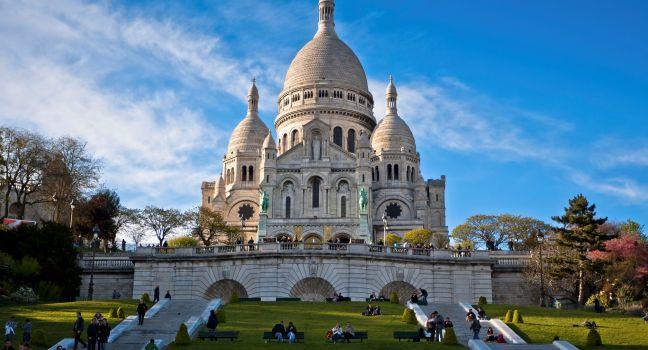
It's hard not to feel as though you're ascending to heaven when you visit Sacred Heart Basilica, the white castle in the sky, perched atop Montmartre. The French government commissioned it in 1873 to symbolize the return of self-confidence after the devastating years of the Commune and Franco-Prussian War, and architect Paul Abadie employed elements from Romanesque and Byzantine styles when designing it—a mélange many critics dismissed as gaudy. Construction lasted until World War I, and the church was finally consecrated in 1919. Many people now come to Sacré-Coeur to admire the superlative view from the top of its 271-foot-high dome. But if you opt to skip the climb up the spiral staircase, the view from the front steps is still ample compensation for the trip.
Inside, expect another visual treat—namely the massive golden mosaic set high above the choir. Created in 1922 by Luc-Olivier Merson, Christ in Majesty depicts Christ with a golden heart and outstretched arms, surrounded by various figures, including the Virgin Mary and Joan of Arc. It remains one of the largest mosaics of its kind. In the basilica's 262-foot-high campanile hangs La Savoyarde, one of the world's heaviest bells, weighing about 19 tons.
The best time to visit Sacré-Coeur is early morning or early evening, and preferably not on a Sunday, when the crowds are thick. If you're coming to worship, there are daily Masses.To avoid the steps, take the funicular, which costs one métro ticket each way.
Cathédrale Notre-Dame de Paris
Ile de la Cité
Fodor's choice
Share This
Samot / Shutterstock
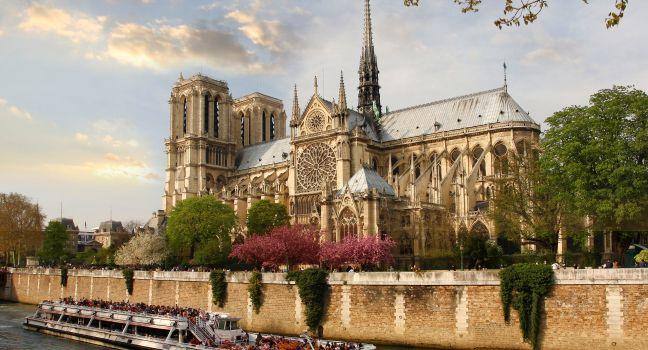
Looming above Place du Parvis, this Gothic sanctuary is the symbolic heart of Paris and, for many, of France itself. After a five-year rebuild following the 2019 fire that nearly destroyed it, the cathedral reopened to rapturous reviews in December 2024. Newly luminous and awash in color, the monument enthralls more than ever. And its history remains unchanged: Napoléon was crowned here, and kings and queens exchanged marriage vows before its altar.
Begun in 1163, completed in 1345, badly damaged during the Revolution, and restored in the 19th century by Eugène Viollet-le-Duc, Notre-Dame may not be the country’s oldest or largest cathedral, but in beauty and architectural harmony it has few peers. The front facade has three main entrances: the Portal of the Virgin (left); the Portal of the Last Judgment (center); and the Portal of St. Anne (right). As you enter the nave, the faith of the early builders permeates the interior: the glow of the windows contrasts with the exterior’s triumphant glory. Look down the nave to the transepts—the arms of the church—where, at the south entrance to the choir, you'll glimpse the haunting 12th-century statue of Notre-Dame de Paris, Our Lady of Paris, for whom the cathedral is named. On the choir’s south side is the Treasury, with its small collection of religious artifacts. On the north side is the north rose window, one of the cathedral's original stained-glass panels; at the center is an image of Mary holding a young Jesus.
The best time to visit is early morning, when the cathedral is brightest and least crowded. Guides are available at the entrance (€10); guided tours in English are also available (check the website for specific times). A separate entrance, to the left of the front facade, provides access to the towers via 422 stone steps. These wind up to the bell tolled by the fictional Quasimodo in Victor Hugo's 1831 Notre-Dame de Paris. The famed gargoyles (technically chimeras since they lack functioning waterspouts) were 19th-century additions.
It is obligatory to reserve a tower visit online; lines to climb the tower are shortest on weekday mornings. Down the stairs in front of the cathedral is the Crypte Archéologique, an archaeological museum offering a fascinating subterranean view of this area from the 1st century, when Paris was a Roman city called Lutetia, through medieval times. By day, the most tranquil place to appreciate the cathedral's architectural elements is Square Jean-XXIII, the lovely garden behind the cathedral. By night, Seine boat rides promise stellar views.
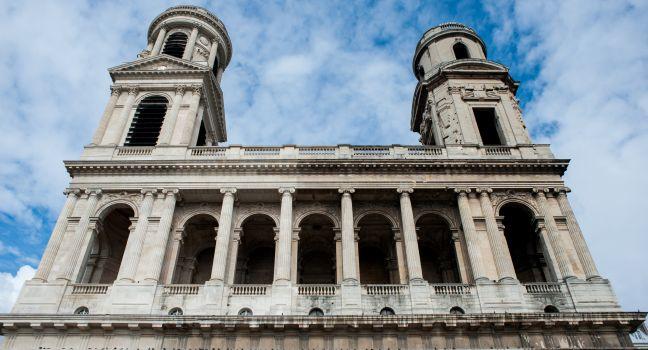
Dubbed the Cathedral of the Rive Gauche, this enormous 17th-century Baroque church has entertained some unlikely christenings—among them those of the Marquis de Sade and Charles Baudelaire—as well as the nuptials of novelist Victor Hugo. More recently, the church played a supporting role in the best-selling novel The Da Vinci Code, and it now draws scores of tourists to its obelisk (part of a gnomon, a device used to determine exact time and the equinoxes, built in the 1730s). Other notable features include the exterior’s asymmetrical towers and two magnificent Delacroix frescoes, which can be seen in a chapel to the right of the entrance. In the square just in front, view Visconti’s magnificent 19th-century fountain—it's especially beautiful at night.
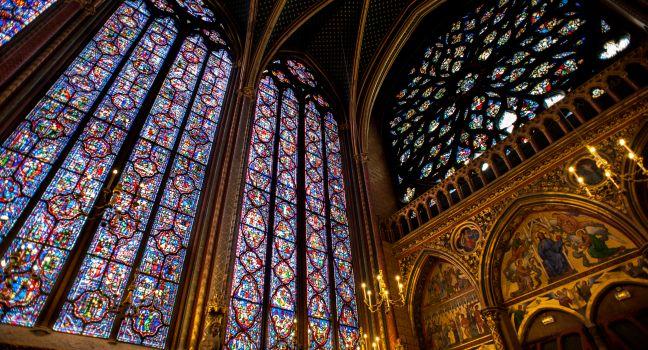
Built by the obsessively pious Louis IX (1214–70), this Gothic jewel is home to the oldest stained-glass windows in Paris. The chapel was constructed over seven years, at phenomenal expense, to house the king's collection of relics acquired from the impoverished emperor of Constantinople. These included Christ's crown of thorns, fragments of the Cross, and drops of Christ's blood—though even in Louis's time these were considered of questionable authenticity.
The narrow spiral staircase by the entrance takes you to the upper chapel where the famed beauty of Sainte-Chapelle comes alive: 6,458 square feet of stained glass are delicately supported by painted stonework that seems to disappear in the colorful light streaming through the windows. Deep reds and blues dominate the background, noticeably different from later, lighter medieval styles such as those of Notre-Dame's rose windows.
The chapel is essentially an enormous magic lantern illuminating 1,130 biblical figures. Besides the dazzling glass, observe the detailed carvings on the columns and the statues of the apostles. The lower chapel is gloomy and plain, but take note of the low, vaulted ceiling decorated with fleurs-de-lis and cleverly arranged Ls for "Louis." Audio guides (€3) are available, or you can download a phone app focusing on the church's stained glass windows.
Sunset is the optimal time to see the rose window; however, to avoid waiting in killer lines, plan your visit for a weekday morning, the earlier the better. Come on a sunny day to appreciate the full effect of the light filtering through all that glorious stained glass. You can buy a joint ticket with the Conciergerie: lines are shorter if you purchase it there or online. The chapel makes a divine setting for classical concerts; check the schedule at www.classictic.com.
Basilique de St-Denis
Fodor's choice
Share This
Built between 1136 and 1286, St-Denis Basilica is one of the most important Gothic churches in France. It was here, under dynamic prelate Abbé Suger, that Gothic architecture (typified by pointed arches and rib vaults) was said to have made its first appearance. The kings of France soon chose St-Denis as their final resting place, and their richly sculpted tombs—along with what remains of Suger's church—can be seen in the choir area at the east end. The basilica was battered during the Revolution; afterward, however, Louis XVIII reestablished it as the royal burial site by moving the remains of Louis XVI and Marie-Antoinette here to join centuries' worth of monarchical bones. The vast 13th-century nave is a brilliant example of structural logic; its columns, capitals, and vault are a model of architectural harmony. The facade, retaining the rounded arches of the Romanesque that preceded the Gothic period, is set off by a small rose window, reputedly the oldest in France. Check out the extensive archaeological finds, such as a Merovingian queen's grave goods. Occasional guided tours in English are offered (see website for exact times); if you'd rather explore on your own, audioguides are available for €3, as is a free English-language information leaflet.
American Church
Eiffel Tower
Share This
Not to be confused with the American Cathedral across the river at 23 avenue George V, this pretty, neo-Gothic, Protestant church was built between 1927 and 1931. It features a pair of Tiffany stained glass windows—a rare find in Europe. Besides ecumenical services, the church hosts architectural tours, free classical and acoustic concerts, and lectures and workshops on well-being and topics of current interest. You can check event listings and download a self-guided PDF tour at the church website.
Cathédrale de la Sainte-Trinité de Paris
Eiffel Tower
Share This
At first glance, the blazing, silvery onion domes of this Russian Orthodox cathedral, an easy walk from the Eiffel Tower and Quai Branly, appear like a mirage of Moscow on the Seine. The ultramodern edifice, designed by French architect Jean-Michel Wilmotte, is worth a quick peek for its graceful icons, mosaics, and colorful frescoes against pristine marble walls.
Chapelle Expiatoire
Grands Boulevards
Share This
Commissioned in 1815, this neoclassical temple marks the original burial site of Louis XVI and Marie-Antoinette. After the deposed monarchs took their turns at the guillotine on Place de la Concorde, their bodies were taken to a nearby mass grave. A loyalist marked their place, and their remains were eventually retrieved by the dead king's brother, Louis XVIII, who moved them to the Basilica of Saint-Denis. He then ordered the monument (which translates to Expiatory, or Atonement, Chapel) built on this spot, in what is now the leafy Square Louis XVI off Boulevard Haussmann. Two massive white-marble sculptures by François Joseph Bosio show the king and queen being succored by angels, while stone tablets below are inscribed with the last missives of the doomed royals, including pleas to God to forgive their Revolutionary enemies.
Église de la Madeleine
Champs-Élysées
Share This
With its rows of uncompromising columns, this enormous neoclassical edifice in the center of Place de la Madeleine was consecrated as a church in 1842, nearly 78 years after construction began. Initially planned as a Baroque building, it was later razed and begun anew by an architect who had the Roman Pantheon in mind. Interrupted by the Revolution, the site was razed yet again when Napoléon decided to transform it into a Greek-inspired temple dedicated to the glory of his army. Those plans changed when the army was defeated and the emperor deposed. Other ideas for the building included making it into a train station, a market, and a library. Finally, Louis XVIII decided it should be a church, which it still is today. A recent cleaning has restored the sooty facade's original luminosity (notice the contrast with the building's nether half, still awaiting a cleaning). A continuous program of classical concerts (some of them free) are a joy to attend here under the soaring ceilings.
Église Saint-Germain l'Auxerrois
Louvre
Share This
Founded in AD 500, this grand church across from the Louvre's eastern end is one of the city's oldest. It was destroyed during the Norman siege in 885–886, rebuilt in the 11th century, and subsequently expanded until the current edifice was finished in 1580. The bell, named Marie, dates to 1527. Guided visits in French take place on Thursdays and Saturdays at 2:30 pm.
Église Saint-Merry
Marais Quarter
Share This
This impressive Gothic church in the shadow of the Centre Pompidou was completed in 1550. Notable features include the turret (it contains the oldest bell in Paris, cast in 1331) and an 18th-century pulpit supported on carved palm trees. There are free concerts here Sunday at 4 pm.
Église St-Germain-des-Prés
St-Germain-des-Prés
Share This
Paris's oldest church was built to shelter a simple shard of wood, said to be a relic of Jesus's cross brought back from Spain in AD 542. Vikings came down the Seine and sacked the sanctuary, and Revolutionaries used it to store gunpowder. Yet the elegant building has defied history's abuses: its 11th-century Romanesque tower continues to be the central symbol of the neighborhood. The colorful 19th-century frescoes in the nave are by Hippolyte Flandrin, a pupil of the classical master Ingres, while the Saint-Benoit chapel contains the tomb of philosopher René Descartes. Step inside for spiritual nourishment, or pause in the square to people-watch—there's usually a street musician tucked against the church wall, out of the wind. The church also stages superb organ concerts and recitals; see the website for details.
Saint Jean L'Evangéliste de Montmartre
Montmartre
Share This
This eye-catching church with a compact Art Nouveau interior was the first modern house of worship built in Paris (1897–1904) and the first to be constructed of reinforced cement. Architect Anatole de Baudot's revolutionary technique defied the accepted rules at the time with its use of unsupported masonry; critics, who failed to stop construction, feared the building would crumble under its own weight. Today the church attracts a steady flow of visitors curious about its unusual Moorish-inspired facade of redbrick and curved arches. Note the tiny clock at the top left of the bell tower and the handsome stained-glass windows. Free concerts and art exhibitions are staged in the church from time to time.
Saint-Eustache
Louvre
Share This
Built as the market neighborhood's answer to Notre-Dame, this massive church is decidedly squeezed into its surroundings. Constructed between 1532 and 1640 with foundations dating from 1200, the church mixes a Gothic exterior (complete with impressive flying buttresses) and a Renaissance interior. On the east end (Rue Montmartre), Dutch master Rubens's Pilgrims of Emmaus (1611) hangs in a small chapel. Two chapels to the left is Keith Haring's The Life of Christ, a triptych in bronze and white-gold patina. It was given to the church after the artist's death in 1990, in recognition of the parish's efforts to help people with AIDS. On the Rue Montmartre side of the church, look for the small door to Saint Agnes's crypt, topped with a stone plaque noting the date, 1213, below a curled fish, an indication the patron made his fortune in fish. There's free entry to the weekly organ concerts.
Saint-Pierre de Montmartre
Montmartre
Share This
Tucked in the shadow of mighty Sacré-Coeur is one of the oldest churches in Paris. Built in 1147 on the site of a 5th-century temple to the god Mars, this small sanctuary with its impressive sculpted metal doors was once part of a substantial Benedictine abbey. Besides the church, all that remains is a small cemetery, now closed (you can see it through the ornate metal door on the left as you enter the courtyard). Renovated multiple times through the ages, Saint-Pierre combines various styles. Interior elements, such as the columns in the nave, are medieval; the facade dates to the 18th century, with renovations in the 19th century; and the stained-glass windows are 20th century. Maurice Utrillo's 1914 painting of the titular saint hangs in the Musée de l'Orangerie. Admission is free; English audioguides are €3.
St-Étienne-du-Mont
Latin Quarter
Share This
This jewel box of a church has been visited by several popes paying tribute to Ste-Geneviève (the patron saint of Paris), who was buried here before Revolutionaries burned her remains. Built on the ruins of a 6th-century abbey founded by Clovis, the first king of the Franks, it has a unique combination of Gothic, Renaissance, and early Baroque elements, which adds a certain warmth that is lacking in other Parisian churches of pure Gothic style. Here you'll find the only rood screen left in the city—an ornate 16th-century masterwork of carved stone spanning the nave like a bridge, with a spiral staircase on either side. Observe the organ (dating from 1631, it is the city's oldest), the ornate wood-carved pulpit, and the marker in the floor near the entrance that commemorates an archbishop of Paris who was stabbed to death here by a defrocked priest in 1857. Occasional guided tours (in French) are free, but a small offering is appreciated; call for exact times.
St-Julien-le-Pauvre
Latin Quarter
Share This
This tiny shrine in the shadow of Notre-Dame is one of the three oldest churches in Paris. Founded in 1045, it became a meeting place for university students in the 12th century and was Dante's church of choice when he was in town writing his Divine Comedy. Today's structure dates mostly from the 1600s, but keep an eye out for older pillars, which crawl with carvings of demons. You can maximize your time inside by attending one of the classical or gospel concerts frequently held here. Alternately, go outside and simply perch on a bench in the lovely garden and gaze across the Seine at the newly restored Notre Dame.
St-Louis-en-L'Île
Île Saint-Louis
Share This
You can't miss the unusual lacy spire of this church as you approach Île St-Louis; it's the only church on the island and there are no other steeples to compete with it. It was built from 1664 to 1726 according to the Baroque designs of architect François Le Vau, brother of the more famous Louis, who designed several mansions nearby—as well as the Palace of Versailles. Saint-Louis's interior was essentially stripped during the Revolution, as were so many French churches, but look for the odd outdoor iron clock, which dates from 1741. Check the church website for upcoming classical music events.
St-Paul–St-Louis
Marais Quarter
Share This
The leading Baroque church in the Marais, its dome rising 180 feet above the crossing, was begun in 1627 by the Jesuits, who modeled it after their Gesù church in Rome. Recently cleaned on the outside but dark and brooding inside, it contains Delacroix's Christ on the Mount of Olives in the transept and a shell-shape holy-water font at the entrance. The font was donated by Victor Hugo, who lived in nearby Place des Vosges. Hugo's beloved daughter, Léopoldine, was married here in 1843, though she met a tragic end less than seven months later, when she fell into the Seine and drowned, along with her husband Charles, who tried to save her.
Subscribe to Newsletter
Sign up for Travel Tips & News
I want emails from Fodor's Travel with travel information and promotions. I can unsubscribe
any time using the unsubscribe link at the end of all emails.
Thank you for your interest!
Look out for our newsletters with travel tips and special offers.
Sign up for Travel Tips & News
By signing up for the
newsletter, I agree to the Privacy Policy. You must check the box to subscribe
Thank you for your interest!
Look out for our newsletters with travel tips and special offers.