



Arc de Triomphe
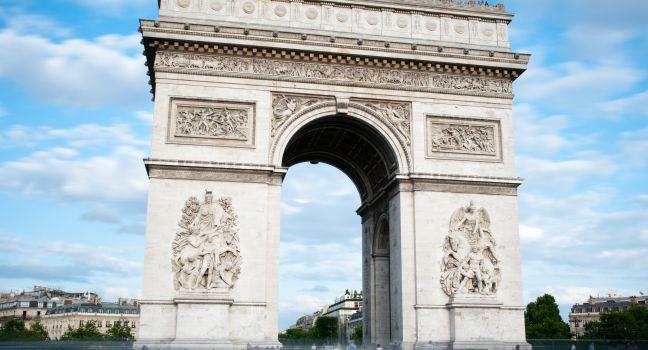
Inspired by Rome's Arch of Titus, this colossal, 164-foot triumphal arch was ordered by Napoléon—who liked to consider himself the heir to Roman emperors—to celebrate his military successes. Unfortunately, Napoléon's strategic and architectural visions were not entirely on the same plane, and the Arc de Triomphe proved something of an embarrassment. Although the emperor wanted the monument completed in time for an 1810 parade in honor of his new bride, Marie-Louise, it was still only a few feet high, and a dummy arch of painted canvas was strung up to save face. Empires come and go, but Napoléon's had been gone for more than 20 years before the Arc was finally finished in 1836. A small museum halfway up recounts its history.
The Arc de Triomphe is notable for magnificent sculptures by François Rude, including the Departure of the Volunteers in 1792, better known as La Marseillaise, to the right of the arch when viewed from the Champs-Élysées. Names of Napoléon's generals are inscribed on the stone facades—the underlined names identify the hallowed figures who fell in battle.
The traffic circle around the Arc is named for Charles de Gaulle, but it's known to Parisians as L'Étoile, or "the Star"—a reference to the streets that fan out from it. Climb the stairs to the top of the arch and you can see the star effect of the 12 radiating avenues and the vista down the Champs-Élysées toward Place de la Concorde and the distant Musée du Louvre.
Ambitious plans to make visiting the Arc de Triomphe a safer and more pedestrian-friendly experience include limiting car traffic in favor of enlarged walkways and creating a wide expanse of trees extending all the way down the Champs-Élysées. It's still unclear exactly when this will happen. France's Unknown Soldier is buried beneath the arch, and a commemorative flame is rekindled every evening at 6:30. That's the most atmospheric time to visit, but, to beat the crowds, come early in the morning or buy your ticket online. Do not attempt to cross the traffic circle surrounding the monument. It's infamous for accidents—including one some years ago that involved the French transport minister. Always use the underground passage from the northeast corner of Avenue des Champs-Élysées.


