2155 Best Sights in USA

Background Illustration for Sights

We've compiled the best of the best in USA - browse our top choices for the top things to see or do during your stay.

Poipu Beach Park

Fodor's Choice
poipu beach park on the island of Kauai, Hawaii.
cleanfotos / Shutterstock

At the most popular beach on the South Shore, the snorkeling and swimming are good during calm seas; when the surf's up, the bodyboarding and surfing are good, too. Frequent sunshine, grassy lawns, play equipment, and easy access add to the appeal, especially with families. The endangered Hawaiian monk seal often makes an appearance, and if you stop by just after sunset, you're likely to witness record numbers of protected green sea turtles coming ashore to sleep. (Please stay at least 10 feet away and do not photograph with flash.) Take a walk west on a path fronting numerous resorts. Note that at the time of writing, this beach is one of a few on Kauai that may institute a parking fee for nonresidents. Amenities: food and drink; lifeguards; parking (no fee); showers; toilets. Best for: snorkeling; sunbathing; swimming.

Hoone Rd., HI, 96756, USA
808-742–7444
Sight Details
Free

Something incorrect in this review?

Portland Farmers Market

Fodor's Choice
PORTLAND, OR - JULY 24  - Geographical distance signage on display outside Farmers Market on July 24, 2011 in Portland, OR.
Tom Myers / Shutterstock

On Saturdays year-round, local farmers, bakers, chefs, and entertainers converge at the South Park Blocks near the PSU campus for Oregon's largest open-air farmers' market—it's one of the most impressive in the country. It's a great place to sample the regional bounty and to witness the local-food obsession that's revolutionized Portland's culinary scene. There's plenty of food you can eat on the spot, plus nonperishable local items (wine, hazelnuts, chocolates, vinegars) you can take home with you. There's a smaller Wednesday market, May through November, on a different section of the Park Blocks (between S.W. Salmon and S.W. Main). At other times the Portland Farmers Market is held in different locations around town, and dozens of other farmers' markets take place throughout metro Portland.

Punaluu Black Sand Beach Park

Fodor's Choice
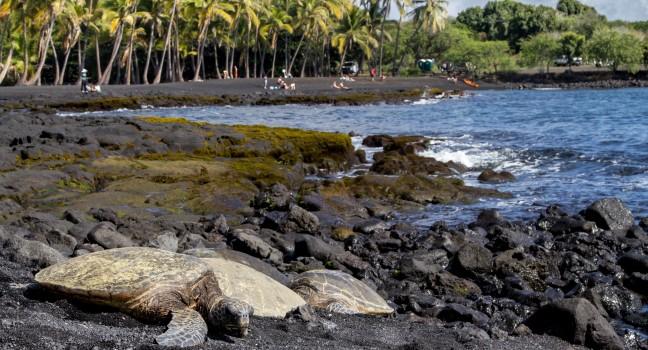
Turtles on Black Sand Beach on the Big Island in Hawaii.
David Lousick / Shutterstock

A must-do on a south-southeast-bound trip to the volcano, this easily accessible black-sand beach is backed by low dunes, brackish ponds, and tall coco palms. The shoreline is jagged, reefed, and rocky. Most days, large groups of sea turtles nap on the sand—a stunning sight. Resist the urge to get too close or disturb them; they're protected by federal and state law, and fines for harassment can be hefty. Removing black sand is also prohibited.  Extremely strong rip currents prevail, so only experienced ocean swimmers should consider getting in the water here. A popular stop for locals and tour buses alike, this beach park can get busy; the north parking lot is usually quieter. Shade from palm trees provides an escape from the sun, and at the northern end of the beach lie the ruins of Kaneeleele Heiau, an old Hawaiian temple. Amenities: parking (no fee); showers; toilets. Best for: walking.

Hwy. 11, HI, 96772, USA
808-961–8311
Sight Details
Free

Something incorrect in this review?

Recommended Fodor's Video

Puukohola Heiau National Historic Site

Fodor's Choice
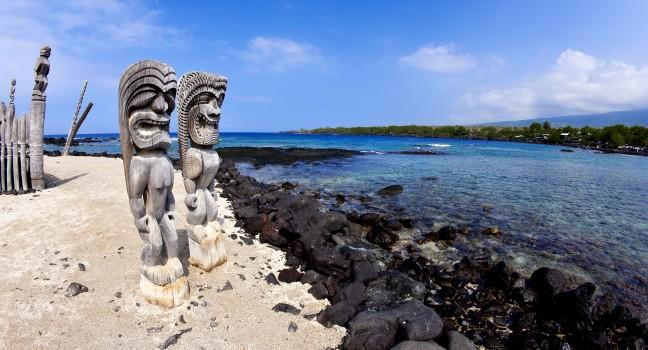
The Ki’i guard the Temple of Hale o Keawe at Place of Refuge in Kona Hawaii.
Ocean Image Photography / Shutterstock

Quite simply, this is one of the most historic and commanding sites in all of Hawaii: here, in 1810, on top of Puukohola (Hill of the Whale), Kamehameha the Great built the war heiau, or temple, that would serve to unify the Hawaiian Islands, ending 500 years of warring chiefdoms. The oceanfront, fortresslike site is foreboding and impressive. A paved ½-mile looped trail runs from the visitor center to the main temple sites. An even older temple, dedicated to the shark gods, lies submerged just offshore, where sharks can be spotted swimming, usually first thing in the morning. A museum displays ancient Hawaiian weapons, including clubs, spears, a replica of a bronze cannon that warriors dragged into battle on a Hawaiian sled, and three original paintings by artist Herb Kane. This underrated park is often very uncrowded. Rangers are available to answer questions, or you can take a free audio tour on your smartphone. Plan about an hour to see everything.

Rittenhouse Square

Rittenhouse Square Fodor's Choice
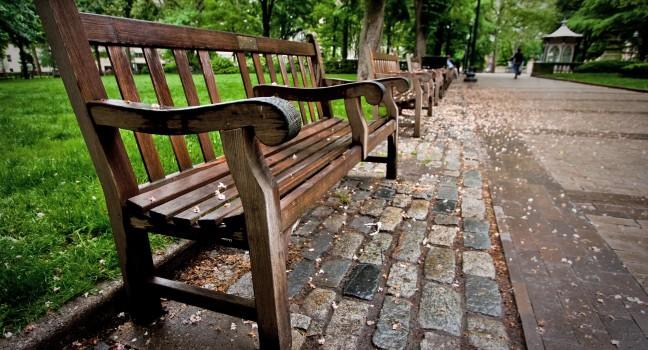
A bench in the Rittenhouse Square park in Philadelphia, Pennsylvania.
Aneta Waberska / Shutterstock

Once grazing ground for cows and sheep, Philadelphia's most elegant square is reminiscent of a Parisian park. One of William Penn's original five city squares, the park was named in 1825 to honor David Rittenhouse, 18th-century astronomer, clockmaker, and the first director of the United States Mint. Many of Philadelphia's celebrities have lived here. Extra paths were made for Dr. William White, a leader in beautifying the square, so he could walk directly from his home to the exclusive Rittenhouse Club across the square and lunch with author Henry James. Until 1950, town houses bordered the square, but they have now been replaced on three sides by luxury apartment buildings and hotels. Some great houses remain, including the former residence of Henry P. McIlhenny on the southwest corner. If you want to join the office workers who have lunch-hour picnics in the park, you can find many eateries along Walnut, Sansom, and Chestnut streets east of the square. Or you can dine alfresco at one of several upscale open-air cafés across from the square on 18th Street between Locust and Walnut. The term "Rittenhouse Row" describes the greater Rittenhouse Square area, bordered by Pine, Market, 21st, and Broad streets.

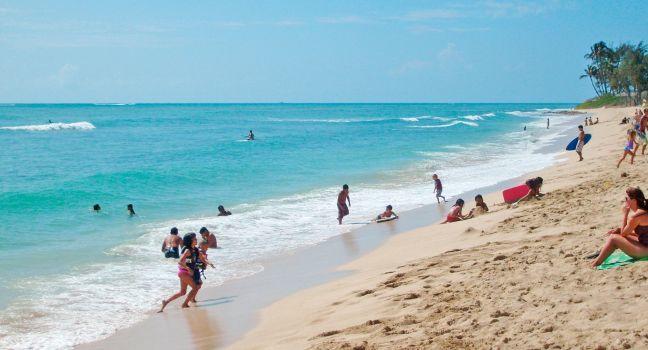
Sandy Beach Park

Fodor's Choice
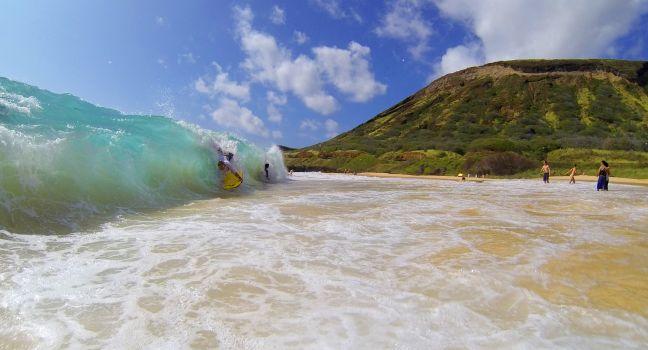
Body boarding waves at Sandy Beach Hawaii.
(c) Phillipgray | Dreamstime.com

Very popular with locals, this broad, sloping beach is covered with sunbathers who come to soak up the rays and watch "The Show"—a shore break that's like no other in the Islands. Monster ocean swells rolling into the beach combined with the sudden rise in the ocean floor cause waves to jack up and crash magnificently. Expert surfers and bodyboarders young and old brave the dangers to enjoy some of the biggest barrels around.  Use extreme caution when swimming here. The stretch is nicknamed Break-Neck Beach for a reason: many neck and back injuries are sustained here each year. Amenities: lifeguards; parking (no fee); showers; toilets. Best for: walking.

7850 Kalanianaole Hwy., Hawaii Kai, HI, 96825, USA

Something incorrect in this review?

The Seaport

Financial District Fodor's Choice
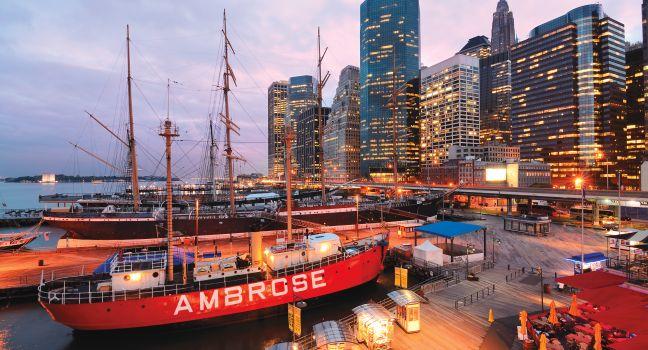
South Street Seaport in New York, NY. The port is a designated historic district containing the largest concentration of 19th century landmarks in the city.
Sepavo | Dreamstime.com

Had this charming cobblestone neighborhood not been declared a historic district in 1977, the city's largest concentration of early-19th-century commercial buildings would have been destroyed. Thankfully, they survived, and in recent years have come to enjoy new life. The landmarked "South Street Seaport Historic District" has undergone a thorough makeover as a diverse shopping and dining destination, with seasonal markets, art installations, IPIC Theater (a luxury cinema with dining), and live entertainment—plus a simplified moniker as The Seaport.

At the intersection of Fulton and Water Streets, the main Seaport gateway, is the Titanic Memorial Lighthouse, a small white lighthouse that commemorates the sinking of the RMS Titanic in 1912. Beyond the lighthouse, Fulton Street turns into a cobblestone pedestrian mall. On the south side of Fulton is The Seaport's architectural centerpiece, Schermerhorn Row, a redbrick terrace of Georgian- and Federal-style warehouses and countinghouses built from 1810 to 1812. Cross South Street to Pier 16, where historic 19th- and 20th-century ships are docked. Pier 16 also is the departure point for various seasonal cruises. (Ship tours are included in the admission to the South Street Seaport Museum).

Across South Street along the East River are Pier 17 and the renovated Tin Building. Previously the longtime site of the Fulton Fish Market, in 2022, the latter reopened as the Tin Building by renowned chef Jean-Georges Vongerichten, a high-end dining destination and specialty food market ( tinbuilding.com). In 2018, the Pier 17 building became a multilevel office complex with several restaurants and bars at street level, and a 60,000-square-foot rooftop that's programmed with concerts and seasonal pop-ups ( rooftopatpier17.com). But the real highlight is the wraparound public wharf that's open year-round, with seating and stunning views of the harbor and Brooklyn Bridge.

The Seattle Public Library

Downtown Fodor's Choice
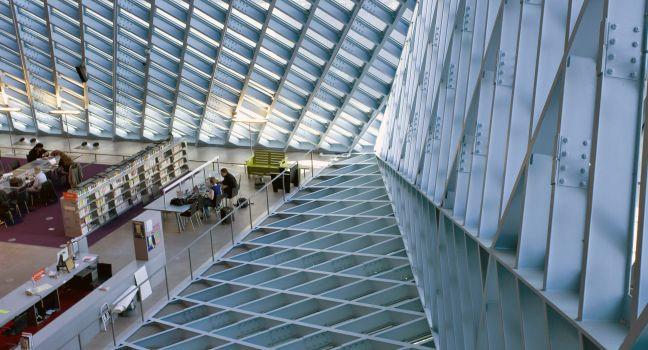
It is the main lobby of Seattle Central library. The unique glass walls and roofs are for good natural daylight. It is a very environmental building.
(c) Jackbluee | Dreamstime.com

The hub of Seattle's 26-branch library system is a stunning jewel of a building that stands out against the concrete jungle of Downtown. Designed by renowned Dutch architect Rem Koolhaas and Joshua Ramus, this 11-story structure houses more than a million books, a language center, terrific areas for kids and teens, hundreds of computers, an auditorium, a "mixing chamber" floor of information desks, and a café. The building's floor plan is anything but simple; stand outside the beveled glass-and-metal facade of the building and you can see the library's floors zigzagging upward. Tours are self-guided via a laminated sheet you can pick up at the information desk; there's also a number you can call on your cell phone for an audio tour. The reading room on the 10th floor has unbeatable views of the city and the water. Readings and free film screenings happen on a regular basis.

Smithsonian National Air and Space Museum

The Mall Fodor's Choice
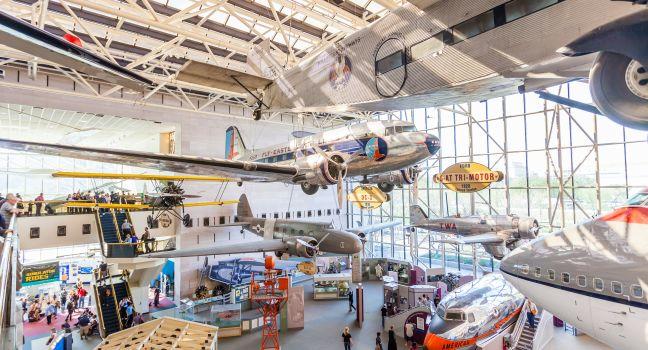
WASHINGTON DC - APRIL 10: National Air and Space museum in Washington on April 10, 2014. It holds the largest collection of historic aircraft and spacecraft in the world. Open for public at July 14, 2010.
F11photo | Dreamstime.com

This is one of the country's most visited museums. Between its two buildings, it attracts 6 to 8 million people annually to the world's largest collection of historic aircraft and spacecraft. More than 20 galleries tell the story of aviation—from the earliest human attempts at flight to supersonic jets and spacecraft. The museum reopened in late 2022 after undergoing a series of renovations, and more are currently in the works. The renovated museum features hundreds of new artifacts to the building, such as the WR-3 air racer built by Neal Loving, the first African American certified to race airplanes; a T-38 flown by Jackie Cochran, the first woman to break the sound barrier; and Sean Tucker's custom-built aerobatic biplane, and the Aviation Specialties Unlimited Challenger III.

Buy IMAX theater and planetarium tickets up to two weeks in advance or as soon as you arrive (times and prices vary); then tour the museum. Museum tickets are free, but visitors must reserve tickets in advance for every member of their group, regardless of age.

The three-story museum store is the largest (and one of the best) in all the Smithsonian museums. You'll find souvenirs, clothing, books and movies, kites, and many collector items. It is closed during construction, but two satellite stores are available.

Smithsonian's National Zoo

Upper Northwest Fodor's Choice
Panda relaxing and eating fresh bamboo.
Condor 36 / Shutterstock

The Smithsonian's National Zoo and Conservation Biology Institute features 1,800 animals representing 360 species, as close as you can get to their native surroundings. Arrive between 11 and 2 (weather permitting), and you can catch orangutans traversing the "O" line, a series of cables and towers near the Great Ape House that allow the primates to swing hand over hand about 50 feet above your head. The famous pandas are leaving at the end of 2023, but there are plenty of other animals that beguile. The multigenerational herd of elephants—part of the zoo's conservation campaign to save this endangered species from extinction—is a perennial favorite. Along the Claws and Paws Pathway, the binturongs (also known as bearcats) smell like buttered popcorn, and petite Pallas's cats hide in plain sight. The zoo was designed by famed landscape architect Frederick Law Olmsted, who also designed New York's Central Park. Try visiting early morning or late afternoon, since many animals sleep midday. Nighttime visits are especially fun during the Christmas holiday as the zoo sparkles with the annual ZooLights event.

3001 Connecticut Ave. NW, Washington, DC, 20008, USA
202-633--2614
Sight Details
Free
Entry passes must be reserved on the website. Visitors who wish to drive to the zoo must obtain a paid parking pass, also available at the website.

Something incorrect in this review?

Snug Harbor Cultural Center and Botanical Garden

Livingston Fodor's Choice
Snug Harbor was established in the 19th century as a hospice for sailors. It is now a public park.
(c) Sangaku | Dreamstime.com

One of the largest ongoing adaptive reuse projects in America, Snug Harbor Cultural Center and Botanical Garden’s 83-acre campus—with 3 museums, 26 buildings, 9 gardens, 10 acres of wetlands, and a 2-acre farm—is an ideal place to enjoy nature, history, and the arts. Its on-site attractions are managed and, if applicable, ticketed independently of each other (although some are a part of an encompassing Discovery Pass). Events, performances, and cultural celebrations occur regularly throughout campus.

\n

The Newhouse Center for Contemporary Art is Staten Island's oldest contemporary art gallery, exhibiting vibrant, dynamic displays of local and international artwork, all housed in Snug Harbor’s landmarked Greek Revival building. Next door, the Noble Maritime Collection maintains historic collections specific to Staten Island's maritime past. Enjoy the Staten Island Children's Museum with kids, or visit the Staten Island Museum, with exhibits on art, history, and science—including a partial life-size replica of a mastodon. Among the unique botanical gardens is the Ming Dynasty--inspired New York Chinese Scholar's Garden, one of the first classical outdoor scholar’s gardens in North America, fabricated in Suzhou and constructed on-site.

1000 Richmond Terr., Staten Island, NY, 10301, USA
718-425–3504
Sight Details
Grounds and Botanical Gardens free; Newhouse Center $5, Noble Maritime Collection, pay what you wish, Staten Island Museum $8, Chinese Scholar's Garden $5—but all a part of the $20 Discovery Pass; Staten Island Children's Museum $8
Newhouse Center closed Jan.–Mar.; Mon.–Thurs. (Apr.–Dec.); Noble Maritime Collection closed Mon. and Tues.; Staten Island Museum closed Mon. and Tues. (Apr.–Dec.), Mon.–Thurs. (Jan.–Mar.); Chinese Scholar’s Garden closed Jan.–Mar.; Children's Museum closed Mon. and Tues.

Something incorrect in this review?

Staten Island Ferry

Financial District Fodor's Choice
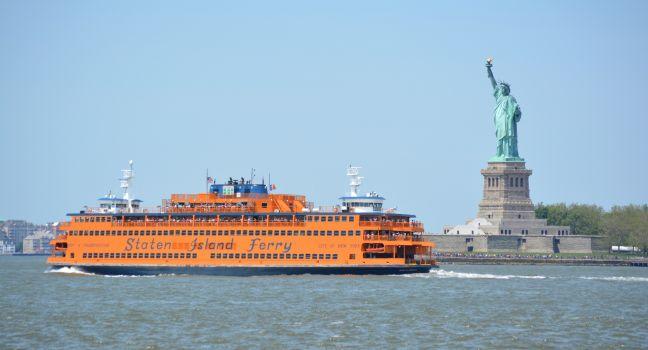
NEW YORK CITY, USA - May 26, 2014: Staten Island Ferry passing the Statue of Liberty in  New York Harbor. ; Shutterstock ID 195164825; Project/Title: 25; Downloader: Fodors Travel
Christopher Penler / Shutterstock

Some 70,000 people ride the free ferry daily to Staten Island, one of the city's five boroughs, and you, too, can join them for the city's most scenic commute. Without paying a cent, you get phenomenal views of the Lower Manhattan skyline, the Statue of Liberty, Ellis Island, and Governors Island during the 25-minute cruise across New York Harbor. You also pass tugboats, freighters, and cruise ships—a reminder that this is very much still a working harbor. The ferry sails every 15–30 minutes (24 hours a day, 365 days a year) from Whitehall Terminal at Whitehall and South Streets, on the east side of Battery Park. You must disembark once you reach the opposite terminal, but you can loop around and reboard if you don't plan to stay. A small concession stand on each ferry sells a few snacks and beverages (including beer). If you're sightseeing, avoid the packed morning and afternoon rush hours.

Supreme Court of the United States

Capitol Hill Fodor's Choice
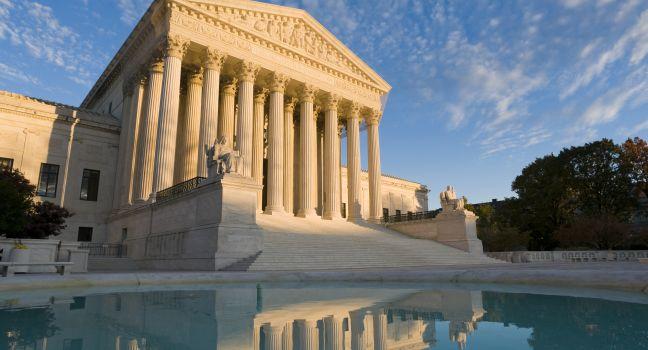
The front of the US Supreme Court in Washington, DC, at dusk.
Gary Blakeley / Shutterstock

It wasn't until 1935 that the Supreme Court got its own building: a white-marble temple with twin rows of Corinthian columns designed by Cass Gilbert. Before then, the justices had been moved around to various rooms in the Capitol; for a while they even met in a tavern. William Howard Taft, the only man to serve as both president and chief justice, was instrumental in getting the court a home of its own, though he died before the building was completed. Today, you can sit in the gallery and see the court in action.

The court convenes on the first Monday in October and hears cases until April (though court typically is in session through June). There are usually two arguments a day, beginning at 10 in the morning, Monday through Wednesday, in two-week intervals. For the most contentious cases, viewers have been known to queue up days before. Oral arguments typically conclude in April, and for the remainder of the term, the court releases orders and opinions.

The court displays its calendar of cases a month in advance on its website. You can't bring your overcoat or electronics such as cameras and cell phones into the courtroom, but you can store them in a locker. Entry to visit the resolving exhibits inside is suspended at the time of publication.

Telegraph Hill and the Filbert Steps

Fodor's Choice
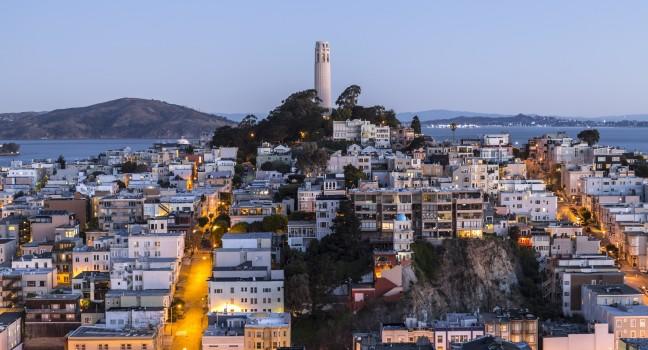
Aerial dusk view of Coit tower in downtown San Francisco, California
trekandshoot / Shutterstock

Residents here have some of the city's best views, as well as the most difficult ascents to their aeries. The hill rises from the east end of Lombard Street to a height of 284 feet and is capped by Coit Tower. If you brave the slope, though, you'll be rewarded with a "secret treasure" San Francisco moment. Filbert Street starts up the hill, then becomes the Filbert Steps when the going gets too steep. You can cut between the Filbert Steps and another flight, the Greenwich Steps, on up to the hilltop. As you climb, you pass some of the city's oldest houses and are surrounded by beautiful, flowering private gardens. In some places the trees grow over the stairs, so it feels like you're walking through a green tunnel; elsewhere, you'll have wide-open views of the bay. The cypress trees that grow on the hill are a favorite roost of local avian celebrities, the wild parrots of Telegraph Hill; you'll hear the cries of the cherry-headed conures if they're nearby. The name comes from the hill's status as the first Morse code signal station back in 1853.

Thomas Jefferson Memorial

The Mall Fodor's Choice
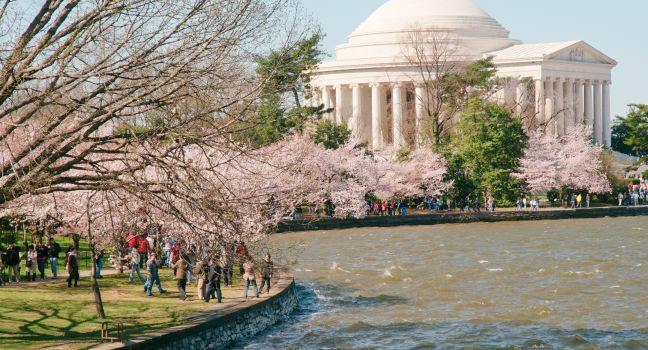
Jefferson Memorial and the Tidal Basin during the National Cherry Blossom Festival; Shutterstock ID 69195697; Project/Title: Fodors; Downloader: Melanie Marin
Zack Frank / Shutterstock

In the 1930s, Congress decided to build a monument to Thomas Jefferson as prominent as the Washington and Lincoln memorials. Workers scooped and moved tons of the river bottom to create dry land for the spot due south of the White House. Jefferson had always admired the Pantheon in Rome, so the memorial's architect, John Russell Pope, drew on it for inspiration. His finished work was dedicated on April 13, 1943, the bicentennial of Jefferson's birth. The bronze statue of Jefferson stands on a 6-foot granite pedestal. Surrounding the statue are his writings about freedom, which have since come under scrutiny for their inherent hypocrisy, as Jefferson owned many enslaved people in his lifetime. The Smithsonian National Museum of African American History and Culture delves into Jefferson's transgressions in its Monticello exhibit Paradox of Liberty.

Union Square Park and Greenmarket

Fodor's Choice
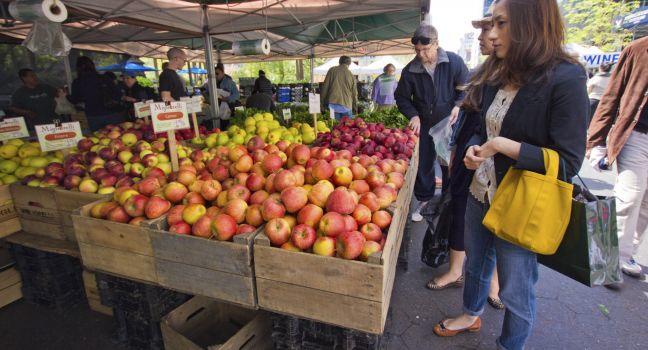
NEW YORK CITY - APR. 20: Woman selects produce at Union Square Greenmarket in NYC on Apr 20, 2012. This world famous farmers' market began in 1976 and has grown to 140 farmers during peak season.; Shutterstock ID 100566316; Project/Title: Weekend Getaways;
littleny/Shutterstock

A park, farmers' market, meeting place, and the site of rallies and demonstrations, this pocket of green space and surrounding public square sit in the center of a bustling residential and commercial neighborhood. The name "Union" originally signified that two main roads—Broadway and 4th Avenue—crossed here. It took on a different meaning in the late 19th and early 20th centuries, when the square became a rallying spot for labor protests; many unions, as well as fringe political parties, moved their headquarters nearby.

Union Square is at its best on Monday, Wednesday, Friday, and Saturday (8–6), when the largest of the city's greenmarkets draws farmers and food purveyors from the tristate area selling fruit and vegetables, plants, fresh-baked pies and breads, cheeses, cider, fish, and meat. Between Thanksgiving and Christmas, artisans sell gift items and food at the large Union Square Holiday Market ( www.usqholiday.nyc).

New York University dormitories, theaters, and cavernous commercial spaces occupy the restored 19th-century commercial buildings that surround the park, along with some chain stores and restaurants. Statues in the park include those of George Washington, Abraham Lincoln, Mahatma Gandhi (often wreathed in flowers), and the Marquis de Lafayette (sculpted by Frédéric-Auguste Bartholdi, designer of the Statue of Liberty).

United States Capitol

Capitol Hill Fodor's Choice
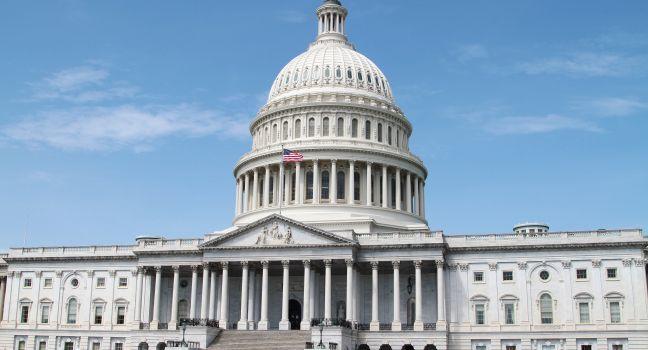
The US United States Capitol building for Democrat Republican Government Senate and House congress parties under a summer blue sky with white clouds.
Splosh | Dreamstime.com

Beneath the Capitol's magnificent dome, the day-to-day business of American democracy takes place: senators and representatives debate, coax, cajole, and ultimately determine the law of the land. For many visitors, the Capitol is the most exhilarating experience Washington has to offer. It wins them over with a three-pronged appeal: it's the city's most impressive work of architecture; it has on display documents, art, and artifacts from 400 years of American history; and its legislative chambers are open to the public, allowing you to actually see your lawmakers at work.

Before heading to the Capitol, pay a little attention to the grounds, landscaped in the late 19th century by Frederick Law Olmsted, famed for New York City's Central Park. On these 274 acres are both the city's tamest squirrels and the highest concentration of TV news correspondents, jockeying for a good position in front of the Capitol for their "stand-ups." A few hundred feet northeast of the Capitol are two cast-iron car shelters, left from the days when horse-drawn trolleys served the Hill. Olmsted's six red-granite lamps directly east of the Capitol are worth a look, too. A small, hexagonal brick structure with shaded benches, a fountain, and a small grotto, called the Summerhouse, is a wonderful place to escape the summer heat.

The design of the building was the result of a competition held in 1792; the winner was William Thornton, a physician and amateur architect from the West Indies. With its central rotunda and dome, Thornton's Capitol is reminiscent of Rome's Pantheon. This similarity must have delighted the nation's founders, who sought inspiration from the principles of the Republic of Rome.

The cornerstone was laid by George Washington in a Masonic ceremony on September 18, 1793, and, in November 1800, both the Senate and the House of Representatives moved down from Philadelphia to occupy the first completed section: the boxlike portion between the central rotunda and today's north wing. (Efforts to find the cornerstone Washington laid have been unsuccessful; a 1991 search was conducted using a metal detector to locate the engraved plate—it was not found. The location may be under the southeast corner of what is today National Statuary Hall.) By 1807, the House wing had been completed, just to the south of what's now the domed center, and a covered wooden walkway joined the two wings.

The "Congress House" grew slowly and suffered a grave setback on August 24, 1814, when British troops led by Sir Alexander Cockburn marched on Washington and set fire to the Capitol, the White House, and numerous other government buildings. (Cockburn reportedly stood on the House speaker's chair and asked his men, "Shall this harbor of Yankee democracy be burned?" The question was rhetorical; the building was torched.) The wooden walkway was destroyed, and the two wings gutted, but the exterior structure was left standing thanks to Architect Benjamin Henry Latrobe's use of fireproof building materials. Congress debated moving the Capitol to another location, but in 1815 it authorized President Madison to borrow from local banks to rebuild, on their existing sites, the Capitol, White House, and cabinet quarters. Latrobe supervised the rebuilding of the original Capitol, adding American touches such as the corncob-and-tobacco-leaf capitals to columns in the east entrance of the Senate wing. He was followed by Boston-born Charles Bulfinch, and, in 1826, the Capitol, its low wooden dome sheathed in copper, was finished.

North and south wings were added in the 1850s and 1860s to accommodate a growing government trying to keep pace with a growing country. The elongated edifice extended farther north and south than Thornton had planned, and, in 1855, to keep the scale correct, work began on a taller, cast-iron dome. President Lincoln was criticized for continuing this expensive project while the country was in the throes of the Civil War, but he called the construction "a sign we intend the Union shall go on." This twin-shell dome, a marvel of 19th-century engineering, rises 288 feet above the ground and weighs 4,500 tons. It expands and contracts up to 4½ inches a day, depending on the outside temperature. The allegorical figure atop the dome, often mistaken for Pocahontas, is called Freedom. Sculptor Thomas Crawford had first planned for the 19½-foot-tall bronze statue to wear the cloth liberty cap of a freed Roman slave, but Southern lawmakers, led by Jefferson Davis (who was Secretary of War and in charge of the Capitol construction), objected. An "American" headdress composed of a star-encircled helmet surmounted with an eagle's head and feathers was substituted. A light just below the statue burns whenever Congress is in session at night.

The Capitol has continued to grow. Between 1959 and 1962, the east front was extended 32 feet, creating 90 new rooms. Preservationists have fought to keep the west front from being extended because it's the last remaining section of the Capitol's original facade. A compromise was reached in 1983, when it was agreed that the facade's crumbling sandstone blocks would simply be replaced with stronger limestone.

Free gallery passes to watch the House or Senate in session can be obtained only from your representative's or senator's office; both chambers are open to the public when either body is in session. In addition, the House Gallery is open 9 am to 4:15 pm weekdays when the House is not in session. International visitors may request gallery passes from the House or Senate appointment desks on the upper level of the visitor center. Your representative's or senator's office may also arrange for a staff member to give you a tour of the Capitol or set you up with a time for a Capitol Guide Service Tour. When they're in session, some members even have time set aside to meet with constituents. You can link to the home page of your representative or senators at  www.house.gov and  www.senate.gov.

Free reservations are required to visit the Capitol. They can be made through either the Capitol Visitor Center website or through the office of your representative or senators. Only those with tour reservations may enter the Capitol Visitor Center; allow time to go through security. Bags can be no larger than 18 inches wide, 14 inches high, and 8½ inches deep, and other possessions you can bring into the building are strictly limited. (The full list of prohibited items is posted at  www.visitthecapitol.gov.) There are no facilities for leaving personal belongings, but you can check your coat. If you're planning a visit, check the status of tours and access; security measures may change. Note that only those with tour reservations may enter the Capitol Visitor Center.

United States Holocaust Memorial Museum

The Mall Fodor's Choice
The Holocaust museum in Washington DC.
Afagundes | Dreamstime.com

This museum asks you to consider how the Holocaust was made possible by the choices of individuals, institutions, and governments and what lessons they hold for us today. The permanent exhibition, The Holocaust, tells the stories of the millions of Jews, Romani, Jehovah's Witnesses, homosexuals, political prisoners, the mentally ill, and others killed by the Nazis between 1933 and 1945. The exhibitions are detailed and sometimes graphic but powerful.

Upon arrival, you are issued an "identity card" containing biographical information on a real person from the Holocaust. As you move through the museum, you read sequential updates on your card. In the early exhibits, Hitler's rise to power and the spread of European anti-Semitism are thoroughly documented with films of Nazi rallies, posters, newspaper articles, and recordings of Hitler's speeches, immersing you in the world that led to the Holocaust. Exhibits include footage of scientific experiments done on Jews, artifacts such as a freight car like those used to transport Jews to concentration camps, and oral testimonies from Auschwitz survivors. Rotating exhibitions highlight how genocide is still a real worldwide issue, featuring the stories of current survivors.

After this powerful experience, the Hall of Remembrance, filled with candles, provides a much-needed space for quiet reflection.

Tickets are required for entry into the museum. For up-to-date information about hours, tickets, and exhibitions, visit their website.

100 Raoul Wallenberg Pl. SW, Washington, DC, 20238, USA
202-488–0400
Sight Details
Free; $1 per ticket service fee for advance online reservations
Closed Sun.
Must reserve in advance

Something incorrect in this review?

Valley Forge National Historical Park

Fodor's Choice
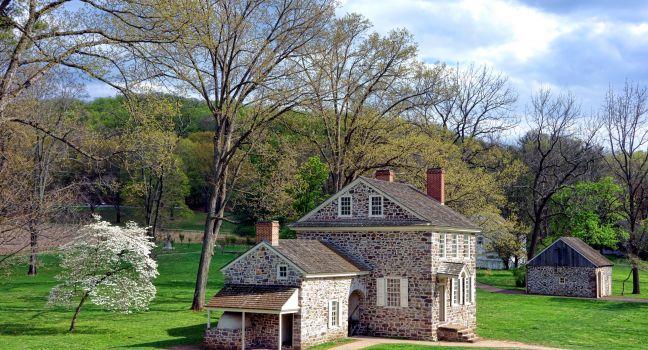
George Washington Headquarters of the American Revolutionary War Continental Army encampment in Isaac Potts field stone house scenic site at Valley Forge National Historical Park near Philadelphia in Pennsylvania.
(c) Olivierl | Dreamstime.com

The 3,500-acre park is the location of the 1777–78 winter encampment of General George Washington and the Continental Army, where winter tested and proved the army's perseverance. Begin at the excellent Valley Forge Visitor Center for touring information and to explore displays of historical objects and immersive modern exhibits about the encampment and the men and women of all kinds who spent the winter here. The center also has an area with regional visitor information, an orientation film, and the Encampment Store. Take a nine-stop, 10-mile driving tour (free cell phone guide) or buy the audio guide ($8.95); or take a narrated trolley tour (limited times other than summer; reserve ahead) for $22. Call ahead if you want to hire a private tour guide. Stops include reconstructed log huts of the Muhlenberg Brigade and the National Memorial Arch, which pay tribute to the soldiers, and Washington's headquarters.

\n

In 1777 the army had just lost the nearby battles of Brandywine, White Horse, and Germantown, but Washington and his troops were actually encouraged (although exhausted), because they had fought the British well. While the British occupied Philadelphia, Washington's soldiers endured horrid conditions—blizzards, inadequate food and clothing, and disease. Although no battle was fought at Valley Forge, 2,000 soldiers (of about 12,000) died here. The troops did win the war of will, regaining strength under the leadership of Prussian drillmaster Friedrich von Steuben. In June 1778 Washington led his troops away from Valley Forge in search of the British.

\n

The park contains more than 35 miles of jogging and bicycling paths (bike rentals available in summer; call ahead) and hiking trails, and you can picnic in designated areas. A leisurely visit takes about half a day.

Venice Beach Boardwalk

Fodor's Choice
VENICE,CA - DECEMBER 18, 2013: Ocean Front Walk of Venice Beach in Venice, US. This boardwalk is 2.5 kilometer long
oneinchpunch / Shutterstock

The surf and sand of Venice are fine, but the main attraction here is the boardwalk scene, which is a cosmos all its own. Go on weekend afternoons for the best people-watching experience; you'll see everything from Baywatch wannabes to break-dancers to TikTok influencers to would-be messiahs. You can also swim, fish, surf, and skateboard, or have a go at racquetball, handball, shuffleboard, and basketball (the boardwalk is the site of hotly contested pickup games). Or you can rent a bike or in-line skates and hit the Strand bike path, then poke around the gloriously tacky tourist and souvenir shops before pulling up a seat at a sidewalk café and watching the action unfold.

Vietnam Veterans Memorial

The Mall Fodor's Choice
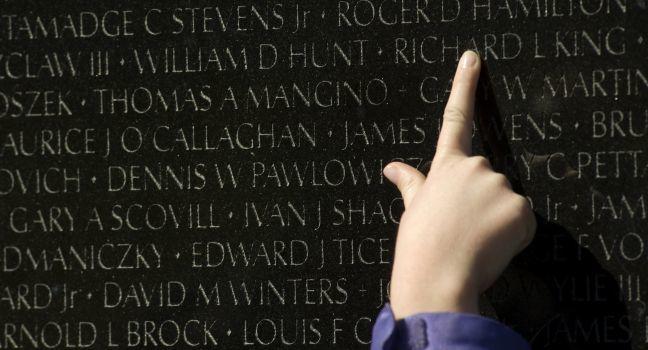
a finger points out a name inscribed at the Vietnam Veterans Memorial in Washington, DC; Shutterstock ID 10795432; Project/Title: Fodors; Downloader: Melanie Marin
John Keith / Shutterstock

"The Wall," as it's commonly called, is one of the most visited sites in Washington, D.C. The names of more than 58,000 Americans who died in the Vietnam War are etched in its black granite panels, creating a powerful memorial. Jan Scruggs, a corporal who served in Vietnam, conceived the memorial, and Maya Lin, a then-21-year-old architecture student at Yale, designed the landmark.

Thousands of offerings are left on the wall each year; many people leave flowers, and others leave soldiers' uniform items or letters of thanks.

In 1984, Frederick Hart's statue of three soldiers and a flagpole was erected to the south of the wall, with the goal of winning over veterans who considered the memorial a "black gash of shame." In 2004, a plaque was added to honor veterans who died after the war as a direct result of injuries in Vietnam, but who fall outside Department of Defense guidelines for remembrance at the wall.

The Vietnam Women's Memorial was dedicated in 1993. Glenna Goodacre's bronze sculpture depicts two women caring for a wounded soldier while a third kneels nearby; eight trees around the plaza commemorate the eight women in the military who died in Vietnam.
Names on the wall are ordered by the date of death. To find a name, consult the alphabetical lists at either end of the wall. You can get assistance locating a name at the white kiosk with the brown roof near the entrance. At the wall, rangers and volunteers wearing yellow caps can look up the names and supply you with paper and pencils for making rubbings. Every name on the memorial is preceded (on the west wall) or followed (on the east wall) by a symbol designating status. A diamond indicates "KIA." A plus sign (found by a small percentage of names) indicates "MIA."

23rd St. NW and Constitution Ave. NW, Washington, DC, 20024, USA
202-426–6841
Sight Details
Free

Something incorrect in this review?

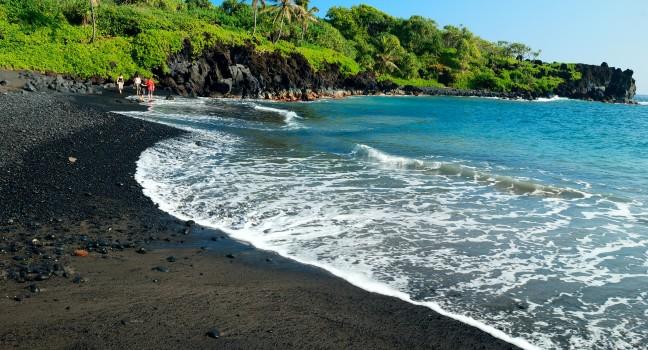
Waianapanapa State Park

Fodor's Choice
Waianapanapa State Park
(c) Rrxxuu | Dreamstime.com

The dramatic landscapes at this oceanside state park are bound to leave a lasting impression. It has one of Maui's few black-sand beaches, as well as freshwater caves for adventurous swimmers to explore. To the left you'll find the volcanic sand beach, picnic tables, and cave pools; to the right is an ancient trail that snakes along the ocean past blowholes, sea arches, and archaeological sites. Bird lovers could linger for hours watching the comings and goings of seabirds on the ocean outcroppings. The tide pools here turn red several times a year. Scientists say it's explained by the arrival of small shrimp, but legend claims the color represents the blood of Popoalaea, said to have been murdered in one of the caves by her husband, Chief Kakae. 

There is a private cemetery on the grounds of the park, so be mindful to keep out of this area. Reservations are required for all out-of-state visitors, so you'll need to plan your day carefully to make your reservation time. With a permit, you can stay in a state-run cabin or campsite for a steal. It's wise to reserve as early as possible, as these spots book up quickly.

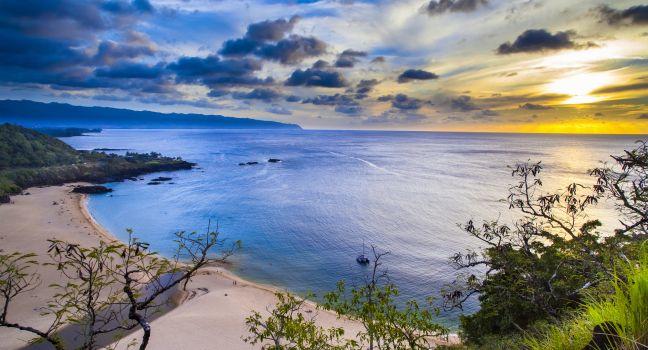
Waimea Bay Beach Park

Fodor's Choice
Sunset from above Waimea Bay on Oahu, Hawaii's North Shore.
Shane Myers Photography / Shutterstock

Made popular in that old Beach Boys song "Surfin' U.S.A.," this is a slice of big-wave (25 to 30 feet) heaven in winter. Summer is the time to swim and snorkel in the calm waters, and the beach is good for families then. The shore break is great for novice bodysurfers. Due to the beach's popularity, its postage-stamp parking lot is often full, but it's also possible to park along the side of the road and walk in. Amenities: lifeguards; parking (no fee); showers; toilets. Best for: snorkeling; surfing; swimming.
61-31 Kamehameha Hwy., Pupukea, HI, 96712, USA

Something incorrect in this review?

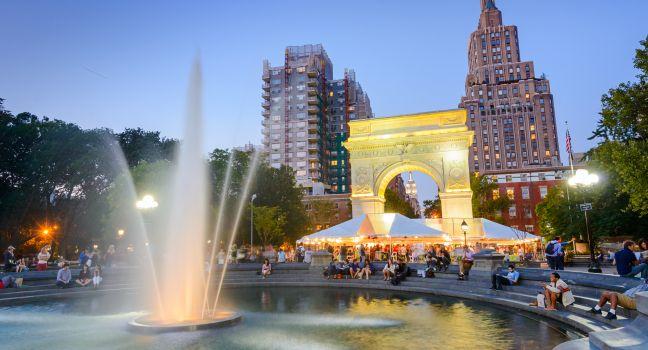
Washington Square Park

Greenwich Village Fodor's Choice
NEW YORK CITY - SEPTEMBER 12, 2012: Crowds gather at Washington Square Park. The historic park is popular in the summer.
(c) Sepavo | Dreamstime.com

NYU students, street musicians, skateboarders, chess players, and those just watching the grand opera of it all generate a maelstrom of activity in this physical and spiritual heart of Greenwich Village. The 9¾-acre park with its gorgeous central fountain had inauspicious beginnings as a cemetery, principally for yellow-fever victims—an estimated 10,000–22,000 bodies lie below (a headstone was even unearthed in 2009). In the early 1800s, the park was a parade ground and the site of public executions; the notorious Hanging Elm still stands at the northwest corner of the square. 

The triumphal European-style Washington Arch at the square's northern flank marks the start of 5th Avenue. The original wood-and-papier-mâché arch, situated a half block north, was erected in 1889 to commemorate the 100th anniversary of George Washington's presidential inauguration. The arch was reproduced in Tuckahoe marble in 1892, and the statues—Washington as General Accompanied by Fame and Valor on one side, and Washington as Statesman Accompanied by Wisdom and Justice on the other—were added in 1916 and 1918, respectively.

5th Ave. between Waverly Pl. and 4th St., New York, NY, 10003, USA

Something incorrect in this review?

White Plains Beach

Fodor's Choice
White Plains beach
S6300128 by b b

Concealed from the public eye for many years as part of the former Barbers Point Naval Air Station, this beach is reminiscent of Waikiki but without the condos and the crowds. It is a long, sloping stretch with numerous surf breaks, but the beach is also mild enough at the shore for older children to play freely. It has views of Pearl Harbor and, over that, Diamond Head. Although the sand lives up to its name, the real impact of this beach comes from its history as part of a military property for the better part of a century. Expansive parking, great restroom facilities, and numerous tree-covered barbecue areas make it a great day-trip spot. As a bonus, a Hawaiian monk seal takes up residence here several months out of the year (seals are rare in the Islands). Amenities: lifeguards; parking (no fee); showers; toilets. Best for: surfing; swimming.

Essex Rd. and Tripoli Rd., Kapolei, HI, 96707, USA

Something incorrect in this review?

Wissahickon Valley Park (Valley Green)

Chestnut Hill Fodor's Choice
Wissahickon Park, Philadelphia, Pa
DSC_7800 by Jared Rubinsky

There are many great sections of Fairmount Park, but the 1,800 acres around Valley Green known as Wissahickon Valley Park may be the most stunning. Miles and miles of trails running along and above the river lead to covered bridges, a statue of a Lenape chief (rife with inaccuracies but created with good intentions), caves used by a 17th-century free-love cult, large boulders that drip water, and mallards quacking for bread bits. Forbidden Drive, on which cars are forbidden, runs from Northwestern Avenue (the westernmost part of Chestnut Hill) all the way to Lincoln Drive, where it connects to a bike and walking path that leads one way to Historic Rittenhouse Town (where you can also park and enter) and the other way to Manayunk and Kelly Drive, with additional bike/walking paths that take you to the city or out along the Schuylkill to Valley Forge. There are also many miles of surprisingly difficult mountain-bike trails. The Valley Green Inn is a very attractive restaurant with decent food at Forbidden Drive and Valley Green Road. Other recommended spots to hike to include Hudson and Andorra Meadows, Thomas Mill Covered Bridge, and Toleration Statue.

Valley Green Rd., Philadelphia, PA, 19118, USA
215-247–0417
Sight Details
Free

Something incorrect in this review?

World War II Memorial

The Mall Fodor's Choice
The National World War II Memorial, Washington, DC; Shutterstock ID 132698252; Project/Title: Photo Database top 200
AppalachianViews/Shutterstock

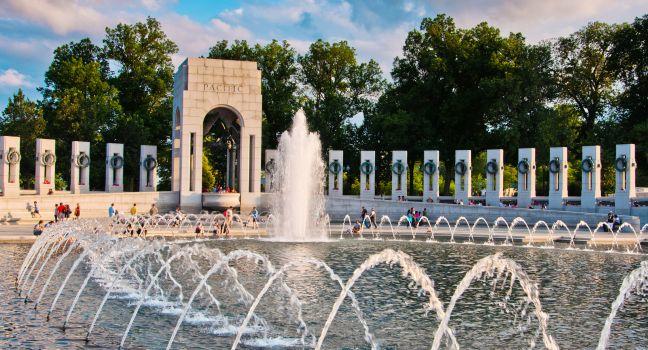
This symmetrically designed monument, in a parklike setting between the Washington Monument and Lincoln Memorial, honors the 16 million Americans who served in the armed forces, the more than 400,000 who died, and all who supported the war effort at home. An imposing circle of 56 granite pillars, each bearing a bronze wreath, represents the United States and its territories of 1941–45. Four bronze eagles, a bronze garland, and two 43-foot-tall arches inscribed with "Atlantic" and "Pacific," representing victory on both fronts, surround the large circular plaza. The roar of the water comes from the Rainbow Pool, here since the 1920s and renovated to form the memorial's centerpiece. There are also two fountains and two waterfalls. The Field of Stars, a wall of more than 4,000 gold stars, commemorates more than 400,000 Americans who lost their lives in the war. Bas-relief panels depict women in the military, medics, the bond drive, and V-J Day, all telling the story of how World War II affected Americans daily.

17th St. SW and Home Front Dr. SW, Washington, DC, 20024, USA
202-426–6841
Sight Details
Free

Something incorrect in this review?

The 606

Fodor's Choice

Similar to New York City’s High Line, this abandoned elevated rail line—open since 2015—is now a fun place to walk or bike and take in art all at once. Edgy, splashy and bright murals are depicted along the 2.7-mile route. The route runs through Wicker Park, Humboldt Park, Bucktown, and Logan Square, making it an appealing way to neighborhood hop without getting snarled in the traffic below. Take along some water and sunscreen; on summer days the more exposed stretches of the trail get rather sunbaked. 

Acorn Street

Beacon Hill Fodor's Choice

Often called the city's most photographed passageway, Acorn Street offers its visitors an iconic image of "historic Boston." Short, steep, and narrow, the cobblestone street may be Boston's roughest ride, so leave your car behind. Brick row houses—once the homes of 19th-century artisans and tradespeople—line one side and, on the other, doors lead to Mt. Vernon's hidden gardens. Find American flags, creative door knockers, window boxes, and gas lights aplenty.

Afropunk Fest

Fort Greene Fodor's Choice
This annual multicultural fete brings artists like Macy Gray, D'Angelo, Big Freedia, and Chuck D to an urban park near the Brooklyn Navy Yard, at the far north end of Fort Greene. The fashion scene is as fabulous as the music. Local food trucks provide sustenance and a thrift market keep fans occupied between sets.