60 Best Sights in USA

Background Illustration for Sights

We've compiled the best of the best in USA - browse our top choices for the top things to see or do during your stay.

Sunset Boulevard

West Hollywood

Sunset Boulevard is a sexy and seductive drive with bigger than life celebrity billboards, architecturally unique hotels, a variety of casual to upscale restaurants, and fashionable boutiques. The cocktail bars charge a premium, but the iconic Hollywood sign and Los Angeles views justify the price.

University Avenue

Downtown Palo Alto’s main street is a continuation of Stanford’s Palm Drive after the university stretch reaches the Caltrain station. Shops, restaurants, and an always-popular Apple Store (it’s no different than other stores but considered special since Steve Jobs lived nearby) line the blocks of the street until it becomes residential.

The crown jewel is the Stanford Theatre ( 221 University Ave.), a magnificent ode to classic Hollywood. Across the street is Lytton Plaza, a spacious, eclectic gathering place where surely somebody will be putting on an impromptu concert or protest. Toward the eastern end of the downtown area is what previously was another Hollywood Golden Age cinema, the Varsity Theatre. Its classic Colonial Spanish and Mission Revival–influenced architecture is still stunning and, in typical 2025 fashion, has a Blue Bottle Coffee café ( 456 University Ave.).

There are dining highlights up and down University Avenue, led by contemporary Vietnamese stalwart Tamarine ( 546 University Ave.) and the silky hummus specialty at Oren’s Hummus ( 261 University Ave.). The quieter side streets off University Avenue also feature several standout restaurants including Ramen Nagi ( 541 Bryant St.), the Georgian cooking of Bevri ( 530 Bryant St.), craft cocktails with excellent French bistro fare at Zola and BarZola ( 565 and 585 Bryant St.), outstanding seasonal contemporary cooking and a unique martini rendition at Ethel's Fancy ( 550 Waverley St.), contemporary Indian cuisine in lavish surroundings at Ettan ( 518 Bryant St.), and Taverna’s ( 800 Emerson St.) excellent modern and rustic Greek dishes.

University Ave., Palo Alto, CA, 94301, USA

Something incorrect in this review?

Lombard Street

Russian Hill Fodor's Choice
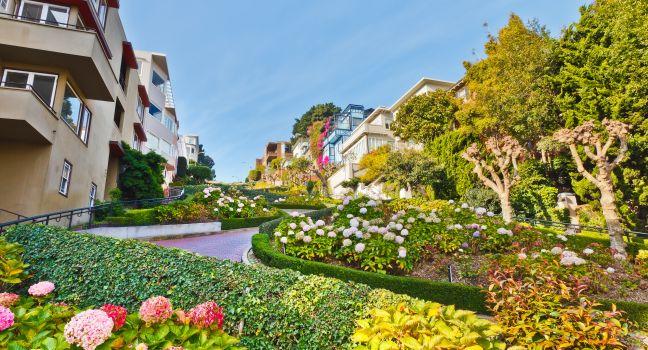
Lombard Street in San Francisco
S.Borisov / Shutterstock

The block-long "Crookedest Street in the World" makes eight switchbacks down the east face of Russian Hill between Hyde and Leavenworth Streets. Join the line of cars waiting to drive down the steep hill, or avoid the whole mess and walk down the steps on either side of Lombard. You take in super views of North Beach and Coit Tower either way—though if you're the one behind the wheel, you'd better keep your eye on the road lest you become yet another of the many folks who ram the garden barriers.  Can't stand the traffic? Thrill seekers of a different stripe may want to head two blocks south of Lombard to Filbert Street. At a gradient of 31.5%, the hair-raising descent between Hyde and Leavenworth streets is one of the city's steepest. Go slowly!

Lombard St. between Hyde and Leavenworth Sts., San Francisco, CA, 94109, USA

Something incorrect in this review?

Recommended Fodor's Video

Macondray Lane

Russian Hill Fodor's Choice
Macondray Lane, San Francisco, California, USA
Macondray Lane by Jeremy Rover

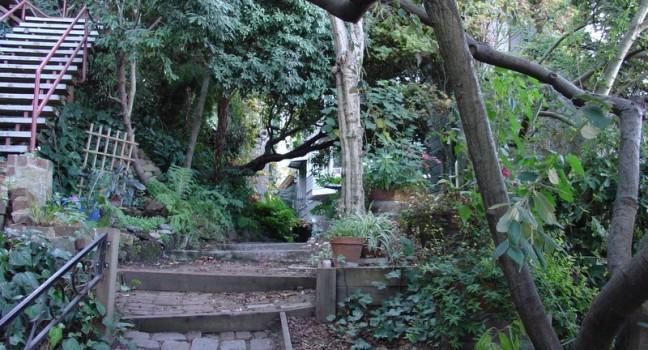
San Francisco has no shortage of impressive, grand homes, but Macondray Lane is the quintessential hidden garden. Enter under a lovely wooden trellis and proceed down a quiet, cobbled pedestrian lane lined with Edwardian cottages and flowering plants and trees. A flight of steep wooden stairs at the end of the lane leads to Taylor Street—on the way down you can't miss the bay views. If you've read any of Armistead Maupin's Tales of the City books, you may find the lane vaguely familiar; it's the thinly disguised setting for parts of the series.

San Francisco, CA, 94133, USA

Something incorrect in this review?

Rodeo Drive

Fodor's Choice
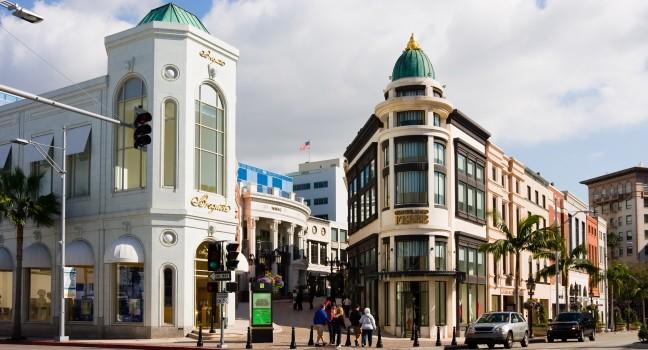
BEVERLY HILLS - FEBRUARY 8: Rodeo Drive of Beverly Hills is a shopping district famous for designer label and haute couture fashion on February 8, 2010 in Beverly Hills
Andrew Zarivny / Shutterstock

The ultimate shopping indulgence, Rodeo Drive is one of L.A.’s bona fide tourist attractions. The art of window-shopping (and reenacting your Pretty Woman fantasies) is prime among the retail elite: Tiffany & Co., Gucci, Jimmy Choo, Valentino, Harry Winston, Prada—you get the picture. Near the southern end of Rodeo Drive is Via Rodeo, a curvy cobblestone street designed to resemble a European shopping area and the perfect backdrop to pose for your Instagram feed. To give your feet a rest, free trolley tours depart from the southeast corner of Rodeo Drive and Dayton Way from 11:30 to 4:30.

Acorn Street

Beacon Hill Fodor's Choice

Often called the city's most photographed passageway, Acorn Street offers its visitors an iconic image of "historic Boston." Short, steep, and narrow, the cobblestone street may be Boston's roughest ride, so leave your car behind. Brick row houses—once the homes of 19th-century artisans and tradespeople—line one side and, on the other, doors lead to Mt. Vernon's hidden gardens. Find American flags, creative door knockers, window boxes, and gas lights aplenty.

Benefit Street

Fodor's Choice

The city's wealthiest lived along this Colonial thoroughfare during the 18th and early 19th centuries—and most of the original wood-frame structures have been beautifully restored as homes for today's families. Benefit Street passes by the campuses of Brown University and the Rhode Island School of Design. Of particular interest are the 1707 Stephen Hopkins House on the corner of Benefit Street and Hopkins Street, a former governor's home; the Providence Athenaeum at 251 Benefit St., a onetime haunt of Edgar Allan Poe; and the John Brown House museum on the Brown University campus.

Charles Street

Beacon Hill Fodor's Choice

In keeping with the historic character of the area, Charles Street is void of neon signs, but you will see bricks aplenty in Beacon Hill's most popular—and only—commercial development. Spend the day shopping at locally owned clothing, antiques, and gift boutiques. Make sure to stop for lunch at one of the local cafés or the legendary Sevens bar. Charles Street sparkles at dusk from gas-fueled street lamps, making it a romantic place for an evening stroll.

Commercial Street

Fodor's Choice

Take a casual stroll by the many architectural styles—Greek Revival, Victorian, Second Empire, and Gothic, to name a few—used in the design of the impressive houses for wealthy sea captains and merchants. The center of town is where you'll find the crowds and the best people-watching, especially if you try to find an empty spot on the benches in front of the exquisite Town Hall. The East End has a number of nationally renowned galleries; the West End has a number of small inns with neat lawns and elaborate gardens. There is one-way vehicle traffic on this street, though pedestrians dominate the pavement, particularly in July and August. Commercial Street runs parallel to the water, so there is always a patch of sand close at hand, should you need a break from the crowds.

Historic 25th Street

Fodor's Choice

The centerpiece of downtown Ogden's highly successful renaissance, this broad, lively street with restaurants, bars, and shops set inside handsomely restored 19th-century buildings is a great spot for a stroll any time of day. Historical markers tell the story of the pubs, brothels, and gambling houses that thrived here a century ago, an anomaly in heavily Mormon Utah. The three-block stretch from Union Station to Washington Boulevard is especially vibrant, but the action continues a couple of blocks north to 23rd Street, where you'll find the Salomon Center (an indoor complex of gyms and fitness enterprises that includes a bowling alley, surfing and wakeboarding park, climbing wall, and indoor wind tunnel) and a big multiscreen movie theater at the corner of Kiesel Avenue. As you venture east, beyond Grant Avenue and between 24th and 26th Streets, you'll encounter the rapidly emerging Nine Rails Creative District, a hub of galleries, start-up businesses, and creative endeavors that's anchored around the multiuse Monarch Building ( 455 25th St.), with its art studios and murals.

Las Olas Boulevard

Downtown Fodor's Choice

What Lincoln Road is to South Beach, Las Olas Boulevard is to Fort Lauderdale. Regarded as the heart and soul of Broward County, Las Olas has historically been the premier street for restaurants, art galleries, museums, shopping, dining, and strolling. Lined with high-rises in the downtown area and original boutiques and ethnic eateries along 10 blocks of the main stretch, it's also home to beautiful mansions and traditional Florida homes along the Intracoastal Waterway to the east, which typify the modern-day aesthetic of Fort Lauderdale. The ocean appears beyond the residential swath, and that's where you see that the name "Las Olas" (Spanish for "The Waves") begins to make more sense. It's a pedestrian-friendly thoroughfare, but it's not closed to vehicular traffic at any point.

Ocean Avenue

Fodor's Choice

Downtown Carmel's chief lure is shopping, especially along its main street, Ocean Avenue, between Junipero Avenue and Camino Real. The architecture here is a mishmash of ersatz Tudor, Mediterranean, and other styles.

Palm Drive and the Oval

Fodor's Choice

Few streets in the Bay Area can match the dramatic scenery of Stanford’s entrance from downtown Palo Alto. For about ⅔ mile, palm trees line the street, which runs in a direct straight line towards Memorial Church. The Santa Cruz Mountains emerge on the horizon, and it all looks as if it was framed intentionally for postcards. Palm Drive runs into a giant grass area called the Oval, named for its distinct shape, which revolves around flower plantings shaped as an "S" for Stanford. On sunny days, Stanford students are always out in force studying on the grass or playing Frisbee. It can appear like a university admissions brochure in real life.

Sylvan Terrace

Washington Heights Fodor's Choice

Walk up a small and unassuming staircase from St. Nicholas Avenue in Washington Heights, and Sylvan Terrace appears as if you have magically stepped back in time to 19th-century New York City or onto a film set. The one-block cobblestone street lined on both sides with charmingly restored wooden town houses built in 1882 is one of New York City's greatest "secret streets" and hidden gems. Before the rows of town houses were built, the street served as a carriage drive to the 1765-built Morris-Jumel Mansion, the oldest house in New York City. The quaint town houses are occupied (and rarely come on the market, sorry) but are still worth visiting, especially when paired with a visit to the Morris-Jumel Mansion. A view of the mansion, framed by the charming yellow houses with ornate brown details and usually unobstructed by tourists, can be seen when looking eastward.

Sylvan Terrace, New York, NY, 10032, USA

Something incorrect in this review?

4th Avenue

University

Students and counterculturists favor the ½-mile strip of 4th Avenue between University Boulevard and 8th Street, where vintage-clothing stores rub shoulders with eclectic gift shops and eateries. After dark, 4th Avenue bars pulse with live and recorded music.

Tucson, AZ, 85705, USA
520-624–5004

Something incorrect in this review?

Ark Row

The historic second block of Main Street is known as Ark Row and has a tree-shaded walk lined with antiques shops, restaurants, and specialty stores. The quaint stretch gets its name from the 19th-century ark houseboats that floated in Belvedere Cove before being beached and transformed into stores.

Main St. south of Juanita La., Tiburon, CA, 94920, USA

Something incorrect in this review?

Avenue of the Arts

Center City East

Broad Street, the city's main north–south thoroughfare, has been reinvented as a performing arts district. Although most of the cultural institutions are situated along South Broad Street from City Hall to Spruce Street, the avenue's cultural, education, and arts organizations reach as far south as Washington Avenue in South Philadelphia and as far north as Dauphin Street in North Philadelphia. The main venue is the Kimmel Center for the Performing Arts, at Broad and Spruce streets, which includes a 2,500-seat concert hall designed for the Philadelphia Orchestra. The newest addition is the Suzanne Roberts Theatre, a 365-seat facility that is home to the Philadelphia Theatre Company.

408 S. Broad St., Philadelphia, PA, USA
215-731–9668

Something incorrect in this review?

Banyan Drive

More than 50 enormous banyan trees with aerial roots dangling from their limbs were planted along the road, mostly during the 1930s but also after World War II, by visiting celebrities. Names such as Amelia Earhart, Babe Ruth, and Franklin Delano Roosevelt appear on plaques affixed to the trees. A scenic loop beginning at the Grand Naniloa Hotel Hilo ( 93 Banyan Dr.) makes a nice walk, especially in the evening when thousands of mynah birds roost in the trees.

Hilo, HI, 96720, USA

Something incorrect in this review?

Beacon Street

Beacon Hill

Some New Englanders believe that wealth is a burden to be borne with a minimum of display. Happily, the early residents of Beacon Street were not among them. They erected many fine architectural statements, from the magnificent State House to grand patrician mansions. Here are some of the most important buildings of Charles Bulfinch, the ultimate designer of the Federal style in America. See dozens of bowfront row houses, the Somerset Club, and the William Hickling Prescott mansion.

Beacon St., Boston, MA, 02108, USA

Something incorrect in this review?

Bleecker Street

Greenwich Village

Walking the stretch of Bleecker Street between 7th Avenue and Broadway provides a smattering of just about everything synonymous with Greenwich Village these days: NYU buildings, record stores, Italian cafés and food shops, pizza and takeout joints, bars and nightclubs, and funky boutiques. A lazy afternoon here may consist of sampling some of the city's best pizza, grabbing an espresso, and soaking up the downtown fashion scene. Foodies love the blocks between 6th and 7th Avenues for the specialty purveyors like Murray's Cheese (No. 254). At the intersection of Bleecker and Carmine Streets is Our Lady of Pompeii Church, where Mother Cabrini, a naturalized Italian immigrant who became the first American citizen to be canonized, often prayed. West of 7th Avenue, the shops get more upscale, with fashion and home-furnishings boutiques featuring antiques, eyeglasses, handbags, shoes, and designer clothing.

New York, NY, USA

Something incorrect in this review?

Bourbon Street

French Quarter

Ignore your better judgment and take a stroll down Bourbon Street past the bars, restaurants, music clubs, adult stores, and novelty shops that have given this strip its reputation as the playground of the south. The bars of Bourbon Street were among the first businesses of the city to reopen after Katrina; catering to off-duty relief workers, they provided their own form of relief. Today, the spirit of unbridled revelry here is as alive as ever. The noise, raucous crowds, and bawdy sights are not family fare, however; if you go with children, do so before sundown. St. Ann Street marks the beginning of a short strip of gay bars, some of which figure in the long history of LGBTQ+ culture in New Orleans. Although Bourbon Street is usually well patrolled, it is wise to stay alert to your surroundings. The street is blocked to create a pedestrian mall at night; crowds often get shoulder-to-shoulder, especially during major sports events, on New Year's Eve, and during Mardi Gras.

New Orleans, LA, USA

Something incorrect in this review?

Boylston Street

Back Bay

Less posh than Newbury Street, this broad thoroughfare is the southern commercial spine of the Back Bay, lined with big-name restaurants and shops, and where you'll find the Boston Marathon finish line. Also located here is the Boston Marathon Bombing Memorial, composed of light spires and stone pillars, which pays homage to the Boston Marathon bombing victims at the sites where they were killed on April 15, 2013.

Boston, MA, 02116, USA

Something incorrect in this review?

Brighton Beach Avenue

Brighton Beach

Along this main drag you'll find a Russian caviar boutique amid the Cyrillic shop signs advertising everything from pickled mushrooms to Armani handbags. Local bakeries sell sweet honey cake, cheese-stuffed vatrushki danishes, and chocolatey rugelach from sidewalk tables. Vostochny Bazaar ( 1007 Brighton Beach Ave.) has aisles of freshly prepared to-go food that will entice anyone.

Brighton Beach Ave., Brooklyn, NY, 11235, USA

Something incorrect in this review?

California Avenue

Palo Alto’s “second downtown” actually was its own town named Mayfield until it joined the neighboring city in 1925. Back then, the main difference between the towns was that Palo Alto was dry and Mayfield was predominantly saloons. Things are quite different a century later; the old Mayfield’s main thoroughfare, California Avenue, is now a favorite dining and shopping destination for the nearby Page Mill Road tech workers and Stanford students.

Térun’s ( 448 California Ave.) Neapolitan pizzas are among the best on the Peninsula, while the Latin cuisine and rum cocktails at La Bodeguita del Medio ( 463 California Ave.), named for Ernest Hemingway’s favorite bar in Havana, have a devoted following. Bistro Elan ( 2363 Birch St.) and Protégé ( 250 California Ave.) are the two fine-dining standard bearers on the street, while Sekoya ( 417 California Ave.) is the destination to know for exciting cocktails and contemporary Californian cooking. Mediterranean Wraps’ ( 443 California Ave.) lamb and beef shawarma plates and falafel wraps are a popular choice for the lunchtime crowds. A trio of coffee shops are the morning (and, to be realistic with all of the nearby offices, the afternoon) heart of the corridor, with Backyard Brew ( 444 California Ave.) serving excellent coffees in a hidden garden setting; California Cafe ( 320 California Ave.) offering perfect cortados in a modern space; and the quirky Zombie Runner ( 344 California Ave.) producing a terrific chai tea in addition to coffee from beans roasted by the café (it was previously a running shoe store with a small coffee kiosk, then fully switched and no longer sells shoes). California Avenue really shines every Sunday morning when it hosts what most residents consider the Peninsula’s most impressive farmers' market. And every day of the week, there’s a fun European vibe because it’s now permanently pedestrian-only to expand restaurants' outdoor seating options.

California Ave., Palo Alto, CA, 94306, USA

Something incorrect in this review?

Canal Street

French Quarter

At 170 feet wide, Canal Street is often called the widest street (as opposed to avenue or boulevard) in the United States, and it's certainly one of the liveliest—particularly during Carnival parades. It was once slated for conversion into a canal linking the Mississippi River to Lake Pontchartrain; plans changed, but the name remains. In the early 1800s, after the Louisiana Purchase, the French Creoles residing in the French Quarter segregated themselves from the Americans who settled upriver. What is now Canal Street—specifically the central median running down Canal Street—was neutral ground between them. Today, animosities between these two groups are history, but the term "neutral ground" has survived as the name for all medians throughout the city.

Some of the grand buildings that once lined Canal Street remain, many of them former department stores that now serve as hotels, restaurants, or souvenir shops. The Werlein Building ( No. 605), once a multilevel music store, is now the Palace Café restaurant. The former home of Maison Blanche ( No. 921), once the most elegant of downtown department stores, is now a Ritz-Carlton hotel. One building still serving its original purpose is Adler's ( No. 722), the city's most elite jewelry and gift store. For the most part, these buildings have been faithfully restored, so you can still appreciate the grandeur that once reigned on this fabled strip.

Cannery Row

When John Steinbeck published the novel Cannery Row in 1945, he immortalized a place of rough-edged working people. The waterfront street, edging a mile of gorgeous coastline, once was crowded with sardine canneries processing, at their peak, nearly 200,000 tons of the smelly silver fish a year. During the mid-1940s, however, the sardines disappeared from the bay, causing the canneries to close. Through the years the old tin-roof canneries have been converted into restaurants, art galleries, and malls with shops selling T-shirts, fudge, and plastic sea otters. Recent tourist development along the row has been more tasteful, however, and includes stylish inns and hotels, wine tasting rooms, and upscale specialty shops.

Between Reeside and David Aves., Monterey, CA, 93940, USA

Something incorrect in this review?

Castro Street

The heart of Downtown Mountain View, this constantly bustling street runs from the Caltrain station (where a few blocks are pedestrian-only for outdoor dining because of the COVID-19 pandemic) to the City Hall complex that includes the Mountain View Center for the Performing Arts. Fast-casual restaurants and ramen shops tend to be the main destinations during the daytime, while the bar scene in the evening is livelier than in any other city between San Jose and San Francisco.

A pair of excellent coffee shops anchor the ends of Castro Street: Red Rock Coffee ( 201 Castro St.) and 1 Oz Coffee ( 650 Castro St.). Once you’re caffeinated, make sure to try downtown’s two premier French bakery/pastry shops: Alexander’s Patisserie ( 209 Castro St.) and Maison Alyzée ( 212 Castro St.). Doppio Zero ( 160 Castro St.) is the best restaurant of the crowd directly on the street, serving superb Neapolitan pizzas with an irresistible soft, lightly charred crust. Just off Castro Street is longtime fine-dining icon Chez TJ ( 938 Villa St.), where the careers of many top Bay Area chefs began.

Mountain View, CA, 94041, USA
650-968--8378

Something incorrect in this review?

Chicago Arts District

Pilsen

Since the late 1960s, Halsted Street near 18th Street has lured a large number of artists, who live and work in the mixed-use community known as the Chicago Arts District. The street-level galleries and studios have put Pilsen on the map as an art destination, and innovative spaces abound. The best time to visit is on the second Friday of each month, from 6 to 9 pm, when artists open their doors to the public. Expect visual art displays, interpretive dance, installations, music, and performance art. Most studios also have regular weekend hours or are open by appointment.

South Halsted St., Chicago, IL, 60608, USA
312-738–8000

Something incorrect in this review?

Creek Street

This was once Ketchikan's red-light district. During Prohibition, Creek Street was home to numerous speakeasies, and in the early 1900s more than 30 houses of prostitution operated here. Today the small, colorful houses, built on stilts over the creek waters, have been restored as interesting shops. When the fish are running, the Creek Street footbridge makes a stellar viewing platform for salmon and trout, as well as the sea lions and other animals that eat them.

Delancey Place

Rittenhouse Square

Cypress Street, north of Delancey Place, and Panama Street (especially the 1900 block, one block south of Delancey) are two of the many intimate streets lined with trees and town houses characteristic of the area. At No. 2010 is the Rosenbach Museum and Library.

Philadelphia, PA, USA

Something incorrect in this review?