
2155 Best Sights in USA

Background Illustration for Sights

We've compiled the best of the best in USA - browse our top choices for the top things to see or do during your stay.

Haena Beach Park

Fodor's Choice
tropical exotic secluded beach in haena kauai hawaii.
tropicdreams / Shutterstock

This drive-up beach park favored by campers year-round has a wide bay named Makua bordered by two large reef systems, creating favorable waves for skilled surfers during peak winter conditions. Entering the water can be dangerous in winter when the big swells roll in. In July and August, waters at this same beach are usually as calm as a lake, and throughout summer this is a premier snorkeling site. It's not unusual to find a food vendor parked here, selling sandwiches and drinks out of a converted bread van. Adjacent to this beach is Tunnels Beach.  This is not the same beach as Kee Beach, which is located in Haena State Park.

Parking is extremely limited (the lot typically fills up by 8:30 am), and all vehicles illegally parked outside of designated parking zones are subject to fines and towing. You can also park your car in the shuttle parking lot in Waipa, west of Hanalei Town, and board the North Shore Shuttle for a ride to the beach park ($40 round-trip with seven stops); see  gohaena.com for details and reservations. Amenities: food and drink; lifeguards; parking (no fee); showers; toilets. Best for: snorkeling; surfing; walking.

Rte. 560, Haena, HI, 96714, USA
Sight Details
Free

Something incorrect in this review?

Hanalei Bay

Fodor's Choice
Rising sun illuminates the peaks of Na Pali mountains over the calm bay and Hanalei Pier in long exposure photo.
Steve Heap / Shutterstock

This 2-mile crescent beach cradles a wide bay in a setting that is quintessential Hawaii: the sea is on one side, and behind you are the mountains, often ribboned with waterfalls and changing color in the shifting light. In winter, Hanalei Bay boasts some of the biggest onshore surf breaks in the state, attracting world-class surfers, and the beach is plenty wide enough for sunbathing and strolling. In summer, the bay is transformed—calm waters lap the beach, sailboats moor in the bay, and outrigger-canoe paddlers ply the sea. Pack the cooler, haul out the beach umbrellas, and don't forget the beach toys because Hanalei Bay is worth scheduling for an entire day, maybe two. Several county beach parks—some with pavilions, and all with ample facilities—can be found along the bay: Black Pot (east bay, between the pier and the river mouth, named for the large cookpot used for traditional communal gatherings here), Hanalei Pavilion (west of Black Pot), and Waioli (west of Hanalei Pavilion, with three parking lots accessed off Weke Road). Amenities: lifeguards; parking (no fee); showers; toilets. Best for: sunset; surfing; swimming; walking.
Weke Rd., Hanalei, HI, 96714, USA
Sight Details
Free

Something incorrect in this review?

The High Line

Chelsea Fodor's Choice
NEW YORK CITY - JUN 3: High Line Park in NYC seen on June 3rd, 2012.The High Line is a public park built on an historic freight rail line elevated above the streets on Manhattans West Side.; Shutterstock ID 105076949; Project/Title: Summer Plans for Kids;
Stuart Monk/Shutterstock

Once a railroad track carrying freight trains, this elevated space has been transformed into one of the city’s top attractions—a 1½-mile landscaped “walking park,” with curving walkways, picnic tables and benches, public art installations, and views of the Hudson River and the Manhattan skyline. Running from Gansevoort Street in the Meatpacking District (at the Whitney Museum of American Art) to West 34th Street and Hudson Yards, the High Line somehow manages to host about 5 million visitors a year and still feel like a wonderful retreat. That said, the crowds can seem overwhelming when the weather is nice, so visit as early in the morning as possible and avoid the lunchtime and weekend mass of humanity.

One of the main draws of the High Line is the landscaping, which is both wild and cultivated at the same time, and dotted with public art. Chelsea Market Passage, between 15th and 16th Streets, is accented with Spencer Finch’s stained-glass art and is home to public art displays, video programs, music performances, and sit-down events. A feature that illustrates the High Line’s greatest achievement—the ability to see the city with fresh eyes—is the 10th Avenue Square (between 16th and 17th Streets). This viewing window with stadium seating and large picture windows frames the city below as art, encouraging viewers to linger.

To fully appreciate the High Line, walk a length in one direction (preferably from Gansevoort Street uptown so that you can end with panoramic city and river views) and then make the return journey at street level, taking in the Chelsea neighborhood below. Nearby Chelsea Market and Market 57 are convenient places to pick up fixings for a picnic lunch.

Recommended Fodor's Video

Hirshhorn Museum and Sculpture Garden

The Mall Fodor's Choice
Hirschhorn Museum with Fountain; Shutterstock ID 143097391; Project/Title: 15 Art Museums Showcasing the Art of America's Greatest Collectors; Downloader: Fodor's Travel
Vidu Gunaratna/Shutterstock

Conceived as the nation's museum of modern and contemporary art, the Hirshhorn is home to nearly 12,000 works by masters who include Alexander Calder, Andy Warhol, and Louise Bourgeois, as well as contemporary superstars Anish Kapoor and Yinka Shonibare. The art is displayed in a circular poured-concrete building designed by Gordon Bunshaft, dubbed the "Doughnut on the Mall" when it was built in 1974. The museum's founder, Joseph H. Hirshhorn, a Latvian immigrant who made his fortune in uranium mines, bequeathed most of the initial collection.

The sculpture collection has masterpieces by Henry Moore, Alberto Giacometti, and Constantin Brancusi. Outside, sculptures dot a grass-and-granite garden. Among them is Yoko Ono's Wish Tree for Washington, DC. On the plaza stands a 32-foot-tall yellow cartoon sculpture by pop-art iconographer Roy Lichtenstein that has become a beloved local landmark.

The third level's outer ring is the place to see thought-provoking conceptual art from the museum's permanent collection. Inside the third level, you can see dramatic postwar art from the museum's permanent collection, displayed thematically, with works by artists such as Joseph Cornell, Isa Genzken, Alighiero e Boetti, and Sol LeWitt. Check out Cornell's Untitled (Aviary with Yellow Birds) and Yoko Ono's Sky TV for Washington, DC. Large-scale text works by conceptual artist Lawrence Weiner round out the space.

The second level houses exhibits that rotate about three times a year, curated by museum staff and devoted to particular artists or themes. The lower level houses recent and experimental works from the permanent collection, while the sculpture garden makes an inspiring spot for a picnic. Dolcezza, a popular local coffee and gelato brand, set up a small café at the museum, perfect for a coffee break.

Independence Ave. and 7th St. SW, Washington, DC, 20013, USA
202-633–4674
Sight Details
Free
Reservations may be required for certain exhibitions

Something incorrect in this review?

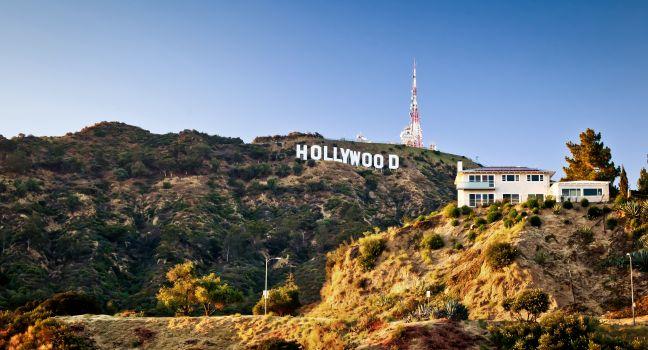
Hollywood Sign

Hollywood Fodor's Choice
LOS ANGELES, USA - JULY 18: View of Hollywood sign on July 18, 2011 in Los Angeles, California. Sign is located in the Hollywood hills area of Mount Lee, built in 1923.
Bayda127 | Dreamstime.com

With letters 50 feet tall, Hollywood's trademark sign can be spotted from miles away. The icon, which originally read "Hollywoodland," was erected in the Hollywood Hills in 1923 to advertise a new housing development and was outfitted with 4,000 light bulbs. In 1949 the "land" portion of the sign was taken down. By 1973 the sign had earned landmark status, but because the letters were made of wood, its longevity came into question. A makeover project was launched and the letters were auctioned off (rocker Alice Cooper bought an "O" and singing cowboy Gene Autry sponsored an "L") to make way for a new sign made of steel. Inevitably, the sign has drawn pranksters who have altered it over the years, albeit temporarily, to spell out "Hollyweed" (in the 1970s, to push for more lenient marijuana laws), "Go Navy" (before a Rose Bowl game), and "Perotwood" (during businessman Ross Perot's 1992 presidential bid). A fence and surveillance equipment have since been installed to deter intruders, but another vandal managed to pull the "Hollyweed" prank once again in 2017 after Californians voted to make recreational use of marijuana legal statewide. And while it's still very illegal to get anywhere near the sign, several area hikes will get you as close as possible for some photo ops; you can hike just over six miles up behind the sign via the Brush Canyon trail for epic views, especially at sunset.  Use caution if driving in the hills below the sign on residential streets; many cars speed around the blind corners. Some streets have restricted parking to deter visitors.

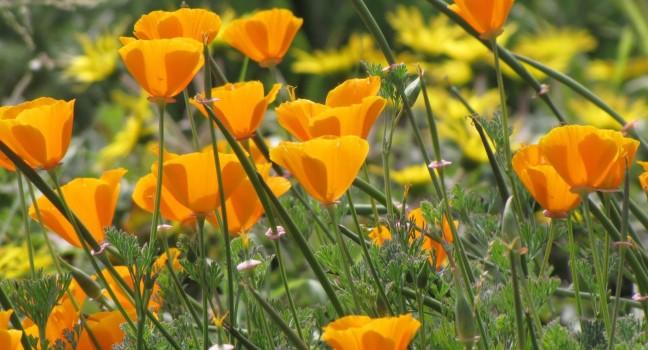
Ina Coolbrith Park

Russian Hill Fodor's Choice
California Poppies. In Ina Coolbrith Park in San Francisco
California Poppies by Karen Brockney

If you make it all the way up here, you may have the place all to yourself, or at least feel like you do. The park's terraces are carved from a hill so steep that it's difficult to see if anyone else is there or not. Locals love this park because it feels like a secret—one of the city's magical hidden gardens, with a meditative setting and spectacular views of the bay peeking out from among the trees. A poet, Oakland librarian, and niece of Mormon prophet Joseph Smith, Ina Coolbrith introduced Jack London and Isadora Duncan to the world of books. For years she entertained literary greats in her Macondray Lane home near the park. In 1915 she was named poet laureate of California.

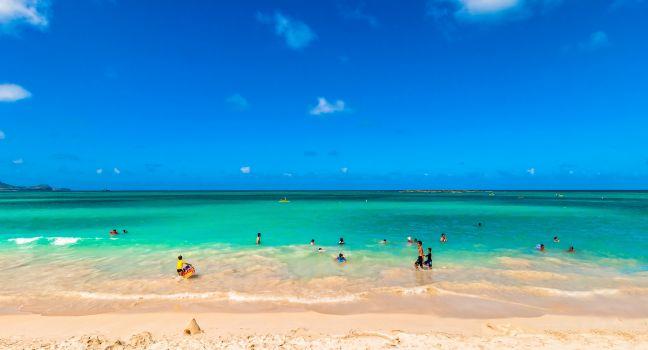
Kailua Beach Park

Fodor's Choice
KAILUA, HAWAII - AUGUST 26: tourists and locals in tropical Kailua Beach, on August 26, 2013 in Kailua, Oahu, Hawaii. Kailua is one of the most popular tourist destinations in Oahu.
Eddygaleotti | Dreamstime.com

A cobalt-blue sea and a wide, continuous arc of powdery sand make this one of the island's best beaches, as illustrated by the crowds of local families who spend their weekend days here. The water is calm, a line of palms and ironwoods provides shade on the sand, and a huge park has picnic pavilions where you can escape the heat. This is also the "it" spot for windsurfing or kiteboarding, and you can rent kayaks nearby at Kailua Beach Adventures ( 130 Kailua Rd.) for day trips to the Mokulua Islands. Amenities: lifeguards; parking (no fee); showers; toilets; water sports. Best for: swimming; walking; windsurfing.

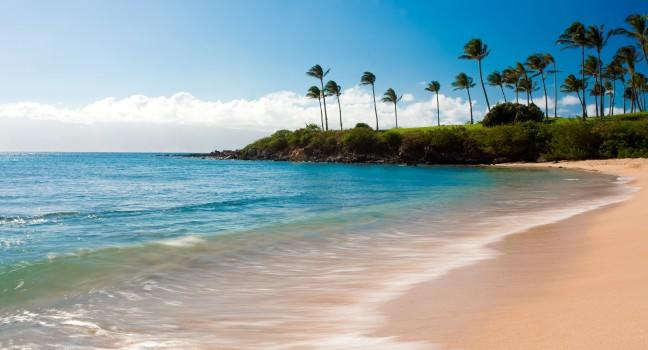
Kapalua Bay Beach

Fodor's Choice
long exposure photo of kapalua bay and palm trees.
idreamphoto / Shutterstock

Over the years, Kapalua has been recognized as one of the world's best beaches, and for good reason: it fronts a pristine bay that is good for snorkeling, swimming, and general lazing. Just north of Napili Bay, this lovely sheltered shore often remains calm late into the afternoon, although currents may be strong offshore. Snorkeling is easy here, and there are lots of colorful reef fish. This popular area is bordered by the Kapalua Resort, so don't expect to have the beach to yourself. Walk through the tunnel from the parking lot at the end of Kapalua Place to get here. Amenities: parking (no fee); showers; toilets. Best for: snorkeling; sunset; swimming.

Kaunaoa Beach

Fodor's Choice
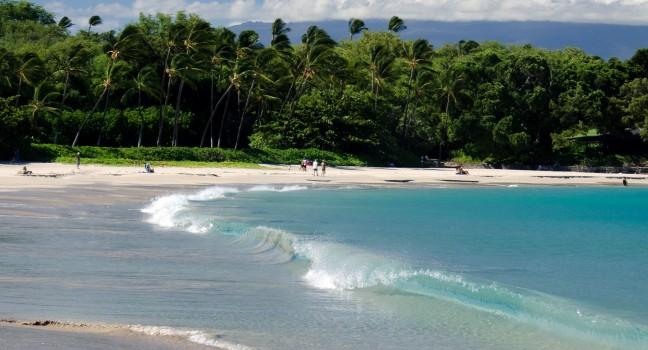
Short surf wave at Mauna Kea beach, Big Island, Hawaii.
(c) Dmitriko | Dreamstime.com

Hands down one of the most beautiful beaches on the island, if not the whole state, Kaunaoa features a short crescent of pure white sand framed by coconut palms. The beach, which fronts the Mauna Kea Beach Hotel, slopes very gradually, and there's great snorkeling along the rocks. Classic Hawaii postcard views abound, especially in winter, when snow tops Maunakea to the east. When conditions permit, waves are good for body and board surfing also. Currents can be strong in winter, so be careful. Get a cocktail at the beach cabana and enjoy the sunset. Public parking is limited to a few spaces, so arrive before 10 am or after 4 pm. If the lot is full, head to nearby Hapuna Beach, where there's a huge parking lot ($10 per vehicle). Try this spot again another day—it's worth it!Amenities: parking (no fee); showers; toilets; water sports. Best for: snorkeling; sunset; swimming; walking.
62-100 Mauna Kea Beach Dr., Mauna Kea, HI, 96743, USA
Sight Details
Free

Something incorrect in this review?

Kealakekua Bay State Historical Park

Fodor's Choice
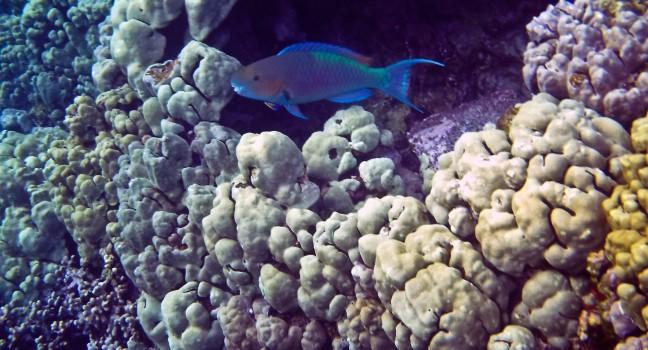
A parrotfish navigates the coral in Hawaii's Kealakekua Bay.
(c) Cecoffman | Dreamstime.com

One of the most beautiful spots in the state, this underwater marine reserve has dramatic cliffs that surround super deep, crystal clear, turquoise water chock-full of stunning coral pinnacles and tropical fish. The federally protected dolphins that frequent the sanctuary should not be disturbed, as they use the bay to sleep and escape predators. There's very little sand at west-facing Napoopoo Beach, but this is a nice place to enter the water and swim (when the water is calm) as it's well protected from currents. There are no lifeguards, but there are bathrooms, a pavilion, shower, and limited parking. The Captain James Cook Monument, marking where the explorer died, is at the northern edge of the bay. Stay at least 300 feet from the shoreline along the cliffs, which have become unstable during recent earthquakes. A limited number of tour operators offer snorkeling and kayaking tours nearby.

Kekaha Kai State Park -- Mahaiula Side

Fodor's Choice
Kekaha Kai State Park.
SYLVIO MICHEL / Shutterstock

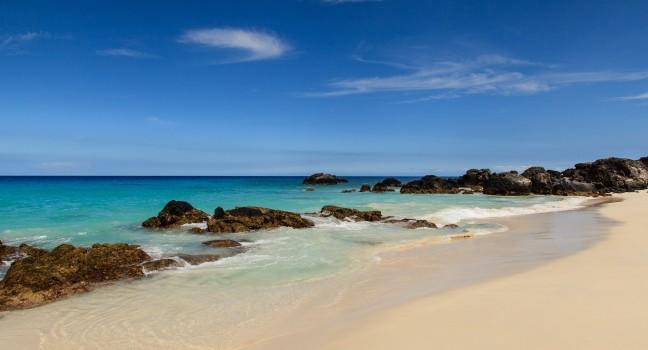
It's slow going down a 1.8-mile, bumpy but partially paved road off Highway 19 to this beach park, but the lovely beaches are worth it when you reach the end. Very low-profile rentals may have some trouble making the drive. This state park encompasses three beaches: from south to north, Mahaiula, Makalawena, and Kua Bay, which has its own entrance. Mahaiula and Makalawena are classically beautiful expanses of white sand with dunes. Makalawena has great swimming and body boarding. ( Makalawena, sandwiched between the two state parks, is private property and falls under the jurisdiction of Kamehameha Schools Bishop Estates.) Watch out for rough surf and strong currents, especially in winter. From Makalawena, a 4½-mile trail leads to Kua Bay. If you're game, work your way on foot to the top of Puu Kuili, a 342-foot-high cinder cone with a fantastic coastline view. But be prepared for the heat and bring water, as there are no services of any kind in the park. Gates at the highway entrance close promptly at 7, so you must leave the lot by about 6:30. Amenities: toilets. Best for: swimming.

Library of Congress

Capitol Hill Fodor's Choice
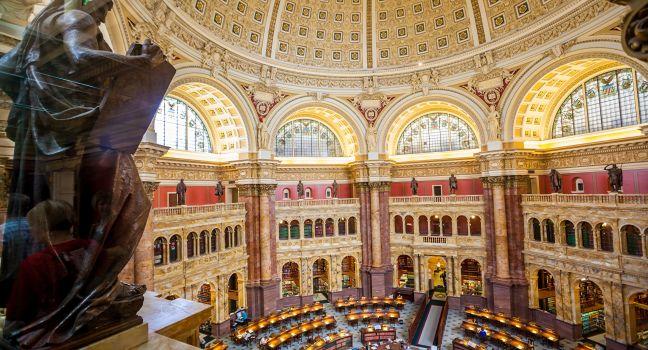
Main Hall of the Library of Congress ceiling, Washington, DC.
F11photo | Dreamstime.com

Founded in 1800, the largest library in the world has more than 173 million items on approximately 838 miles of bookshelves. Only 51 million of its holdings are books—the library also has 3.6 million recordings, 14 million photographs, 5.5 million maps, 8.1 million pieces of sheet music, and 70 million manuscripts. Also here is the Congressional Research Service, which, as the name implies, works on special projects for senators and representatives.

Opened in 1897, the copper-domed Thomas Jefferson Building is the oldest of the three buildings that make up the library. The dome, topped with the gilt "Flame of Knowledge," is ornate and decorative, with busts of Dante, Goethe, and Nathaniel Hawthorne perched above its entryway. The Court of Neptune, Roland Hinton Perry's fountain at the front steps, rivals some of Rome's best fountains.

The Jefferson Building opens into the Great Hall, richly adorned with mosaics, paintings, and curving marble stairways. The octagonal Main Reading Room, its central desk surrounded by mahogany readers' tables under a 160-foot-high domed ceiling, inspires researchers and readers alike. Computer terminals have replaced card catalogs, but books are still retrieved and dispersed the same way: readers (16 years or older) open a free reader identification card issued by the library, hand request slips to librarians and wait for their materials to be delivered. Researchers aren't allowed in the stacks, and only members of Congress and other special borrowers can check books out. Items from the library's collection—which includes one of only three perfect Gutenberg Bibles in the world—are on display in the Jefferson Building's second-floor Southwest Gallery and Pavilion. Free timed-entry passes are required for entry.

 The Library puts on some amazing exhibits from its vast collection, including musical instruments, early maps, and baseball cards! 

10 1st St. SE, Washington, DC, 20003, USA
202-707–9779
Sight Details
Free
Closed Sun. and Mon.

Something incorrect in this review?

Lincoln Memorial

The Mall Fodor's Choice
Abraham Lincoln monument in Washington, DC; Shutterstock ID 95672686; Project/Title: cover spines and back images; Downloader: min yoon
Timothy Michael Morgan/Shutterstock

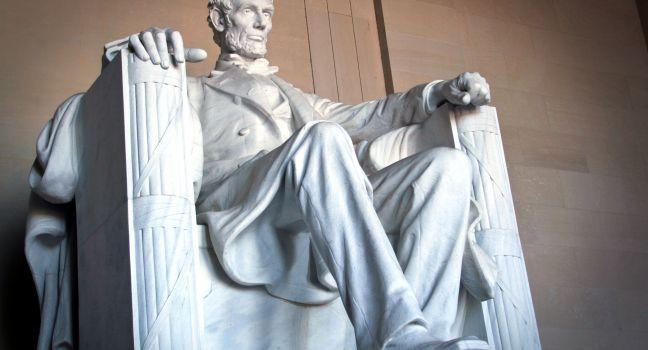
Daniel Chester French's statue of the seated president gazing out over the Reflecting Pool may be the most iconic on the Mall. The 19-foot-high sculpture is made of 28 pieces of Georgia marble. The surrounding white Colorado-marble memorial was designed by Henry Bacon and completed in 1922. The 36 Doric columns represent the 36 states in the Union at the time of Lincoln's death; their names appear on the frieze above the columns. Over the frieze are the names of the 48 states in existence when the memorial was dedicated. At night the memorial is illuminated, creating a striking play of light and shadow across Lincoln's face. Photography enthusiasts will find great light during dawn and dusk. Given the afternoon crowds, sunrise may be a great bet. 
Two of Lincoln's great speeches—the second inaugural address and the Gettysburg Address—are carved on the north and south walls. Above each is a Jules Guerin mural: the south wall has an angel of truth freeing an enslaved person; the unity of North and South is opposite.
The memorial's powerful symbolism makes it a popular gathering place. In its shadow, Americans marched for integrated schools in 1958, rallied for an end to the Vietnam War in 1967, and laid wreaths in a ceremony honoring the Iranian hostages in 1979. It may be best known, though, as the site of Martin Luther King Jr.'s "I Have a Dream" speech.

Lincoln Park

Richmond Fodor's Choice
Men are golfing in Lincoln park, San Francisco.
(c) Russiangal | Dreamstime.com

Lincoln Park is a wild 275-acre park with windswept cliffs and panoramic views. The Coastal Trail, the park's most dramatic, leads out to Lands End; pick it up west of the Legion of Honor (at the end of El Camino del Mar) or from the parking lot at Point Lobos and El Camino del Mar. Time your hike to hit Mile Rock at low tide, and you might catch a glimpse of two wrecked ships peeking up from their watery graves.

Be careful if you hike here; landslides are frequent, and people have fallen into the sea by standing too close to the edge of a crumbling bluff top.

Lincoln Park's 18-hole golf course ( www.lincolnparkgolfcourse.com) is on land that in the 19th century was the Golden Gate Cemetery. (When digging has to be done in the park, human bones still occasionally surface.) Next door on 33rd Avenue and California Street are the dazzling mosaic Lincoln Park Steps, which rival the 16th Avenue Steps and the Hidden Garden Steps in the Sunset District. They provide a delightful backdrop for contemplation or an Instagram photo op.

Lombard Street

Russian Hill Fodor's Choice
Lombard Street in San Francisco
S.Borisov / Shutterstock

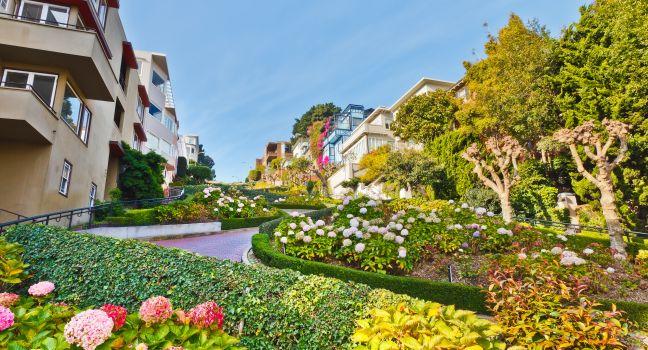
The block-long "Crookedest Street in the World" makes eight switchbacks down the east face of Russian Hill between Hyde and Leavenworth Streets. Join the line of cars waiting to drive down the steep hill, or avoid the whole mess and walk down the steps on either side of Lombard. You take in super views of North Beach and Coit Tower either way—though if you're the one behind the wheel, you'd better keep your eye on the road lest you become yet another of the many folks who ram the garden barriers.  Can't stand the traffic? Thrill seekers of a different stripe may want to head two blocks south of Lombard to Filbert Street. At a gradient of 31.5%, the hair-raising descent between Hyde and Leavenworth streets is one of the city's steepest. Go slowly!

Lombard St. between Hyde and Leavenworth Sts., San Francisco, CA, 94109, USA

Something incorrect in this review?

Macondray Lane

Russian Hill Fodor's Choice
Macondray Lane, San Francisco, California, USA
Macondray Lane by Jeremy Rover

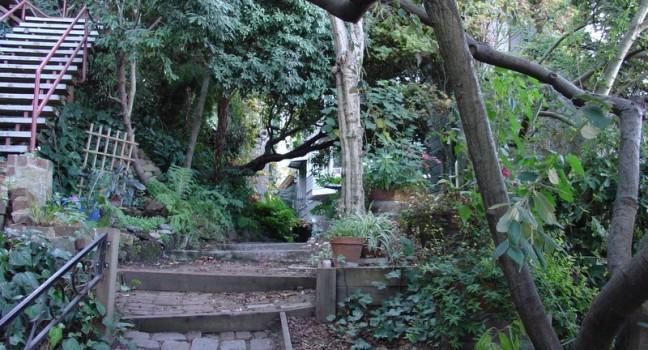
San Francisco has no shortage of impressive, grand homes, but Macondray Lane is the quintessential hidden garden. Enter under a lovely wooden trellis and proceed down a quiet, cobbled pedestrian lane lined with Edwardian cottages and flowering plants and trees. A flight of steep wooden stairs at the end of the lane leads to Taylor Street—on the way down you can't miss the bay views. If you've read any of Armistead Maupin's Tales of the City books, you may find the lane vaguely familiar; it's the thinly disguised setting for parts of the series.

San Francisco, CA, 94133, USA

Something incorrect in this review?

Magnificent Mile

Near North Side Fodor's Choice
Michigan Avenue Bridge and Magnificent Mile in Chicago, IL, USA.
(c) Dibrova | Dreamstime.com

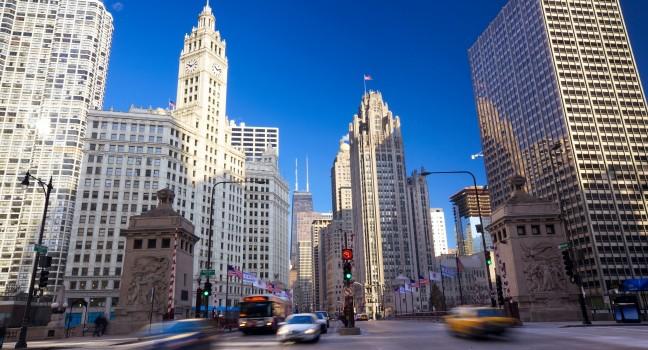
Michigan Avenue, or Mag Mile as some call it, is a potpourri of historic buildings, upscale boutiques, department stores, and posh hotels. (It is also the city's most popular place for people-watching.) Among its jewels are the Tribune Tower, the Wrigley Building, 875 North Michigan Avenue (formerly the John Hancock Center), the Drake Hotel, and the Historic Water Tower.

Martin Luther King Jr. National Memorial

The Mall Fodor's Choice
Washington DC, USA - October 17, 2014: The Martin Luther King Jr. Memorial located on the National Mall on the Tidal Basin in Washington DC is America's 395th National Park.
(c) Kropic | Dreamstime.com

One of the most iconic American figures, Martin Luther King Jr., stands among the presidents on the National Mall. For his dedication on October 16, 2011, President Barack Obama said, "This is a day that would not be denied." The memorial opened on August 22, 2011, 15 years after Congress approved it in 1996 and 82 years after the famed civil rights leader was born in 1929. Located strategically between the Lincoln and Jefferson memorials and adjacent to the FDR Memorial, the crescent-shaped King Memorial sits on a 4-acre site on the curved bank of the Tidal Basin. There are two main ways to enter the memorial. From West Basin Drive, walk through a center walkway cut out of a huge boulder, the Mountain of Despair. From the Tidal Basin entrance, a 28-foot-tall granite structure shows a likeness of King looking out toward Jefferson's statue. 
King's words explain the symbolism of the mountain and stone: "With this faith, we will be able to hew out of the mountain of despair a stone of hope." Chinese sculptor Lei Yixin carved the centerpiece stone; his design won the commission among more than 900 entries in an international competition. Fittingly, Yixin first read about King's "I Have a Dream" speech at age 10 while visiting the Lincoln Memorial.
The themes of democracy, justice, hope, and love are reflected through quotes on the south and north walls and the Stone of Hope. The quotes reflect King's speeches, sermons, and writings from 1955 through 1968. Waterfalls in the memorial reflect King's use of the biblical quote: "Let justice roll down like waters and righteousness like a mighty stream."

Millennium Park

Chicago Loop Fodor's Choice
CHICAGO, ILLINOIS AUGUST 21: The popular Jay Pritzker Pavilion in Millennium Park on a beautiful summer day in downtown on August 21, 2011 in Chicago.
Fotoluminate LLC / Shutterstock

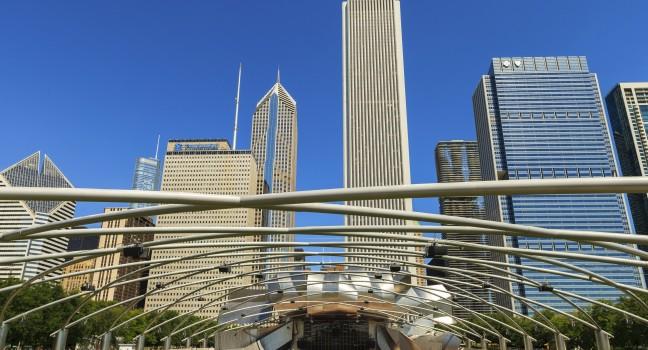
With Anish Kapoor's giant, polished-steel Cloud Gate sculpture (affectionately known as "The Bean"), the fun fountains, and a Disney-esque music pavilion, this park quickly stole the hearts of Chicagoans and visitors alike when it opened in 2004. The showstopper is Frank Gehry's stunning Jay Pritzker Pavilion. Dramatic ribbons of stainless steel stretching 40 feet into the sky look like petals wrapping the music stage. The 1,525-seat Harris Theater for Music and Dance provides an indoor alternative for fans of the performing arts.

In the park's southwest corner, the Crown Fountain features dozens of Chicagoans' faces rotating through on two 50-foot-high glass block–tower fountains. When a face purses its lips, water shoots out its "mouth." Kids love it, and adults feel like kids watching it. More conventional park perks include the lovely Lurie Garden (a four-season delight) and the seasonal McCormick Tribune Ice Rink, which opens for public skating each winter.

Mission Dolores Park

Fodor's Choice
Dolores Park in San Francisco, looking northeast toward downtown.
(c) Rahurlburt | Dreamstime.com

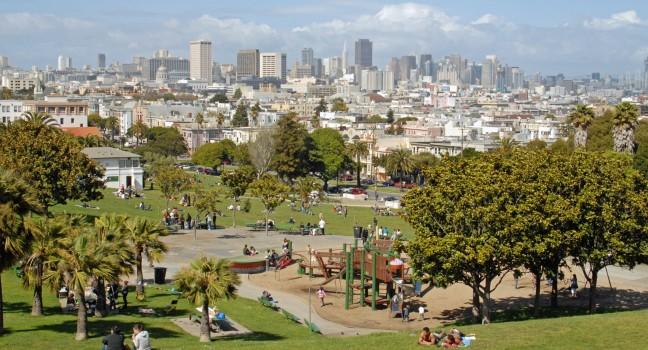
A two-square-block microcosm of life in the district, Mission Dolores Park is one of San Francisco's liveliest green spaces: dog lovers and their pampered pups congregate, kids play at the extravagant playground, and hipsters hold court, drinking beer and rosé cans on sunny days. (Fair warning: if it's over 70°F, the place can get packed like traffic at rush hour for picnic-blanket space.) During the summer, Dolores Park hosts movie nights, performances by the San Francisco Mime Troupe, and pop-up events and impromptu parties. Spend a warm day here—maybe sitting at the top of the park with a view of the city and the Bay Bridge—surrounded by locals and that laid-back, still-abundant San Francisco energy, and you may well find yourself plotting your move to the city. The best views are in the southwest corner, near the historic Golden Fire Hydrant that saved the neighborhood after the 1906 earthquake.

Mokuaikaua Church

Fodor's Choice
Mokuaikaua Church in Kona is the oldest Christian church in the Hawaiian Islands.
(c) Demerzel21 | Dreamstime.com

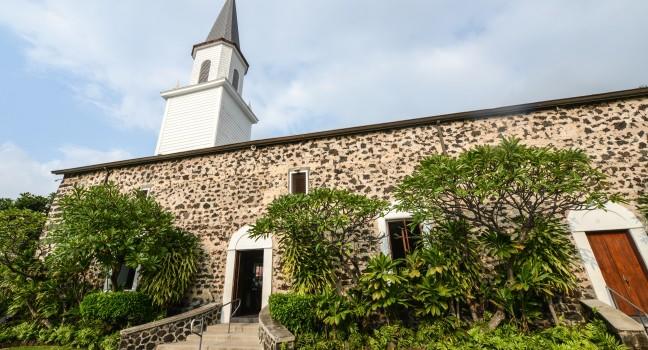
Site of the first Christian church in the Hawaiian Islands, this solid lava-rock structure, completed in 1837, is mortared with burned lime, coral, and kukui (candlenut) oil and topped by an impressive 112-foot steeple. The ceiling and interior were crafted of timbers harvested from a forest on Hualalai and are held together with wooden pegs, not nails. Inside, behind a panel of gleaming koa wood, rests a model of the brig Thaddeus as well as a koa-wood table crafted by Henry Boshard, pastor for 43 years. The sanctuary is still undergoing renovations, but if you attend Sunday services, they are glad to give you a tour.

Napili Beach

Fodor's Choice
Maui beach, Napili Bay moss covered rocks, ocean view.
(c) Love2pic | Dreamstime.com

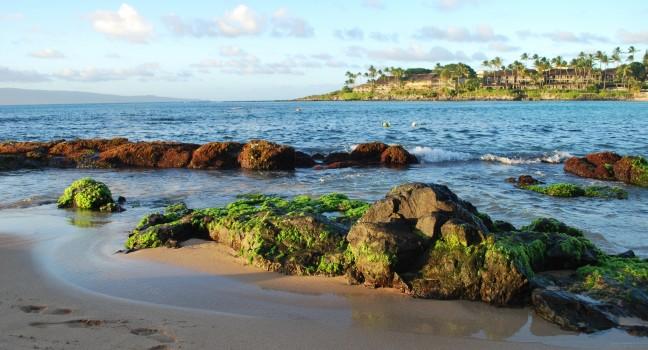
Surrounded by sleepy condos, this round bay is a turtle-filled pool lined with a sparkling white crescent of sand. Sunbathers love this beach, which is also a terrific sunset spot. The shore break is steep but gentle, so it's great for bodyboarding and bodysurfing. It's easy to keep an eye on kids here as the entire bay is visible from everywhere. The beach is right outside the Napili Kai Beach Resort, a popular local-style resort for honeymooners and families, only a few miles south of Kapalua. Amenities: showers; toilets. Best for: sunset; surfing; swimming; snorkeling.

5900 Lower Honoapiilani Hwy., Napili, HI, 96761, USA

Something incorrect in this review?

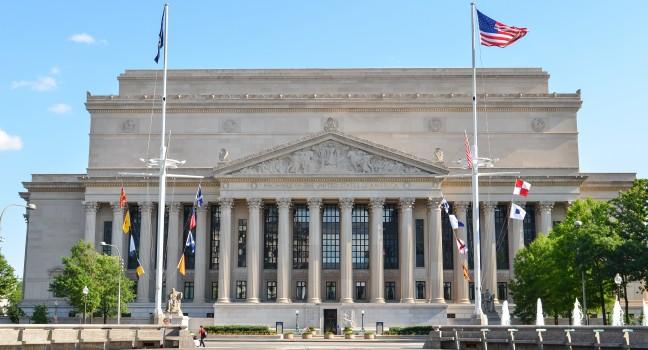
National Archives Museum

Fodor's Choice
Archives of the United States Building in Washington DC.
Orhan Cam / Shutterstock

Monument, museum, and the nation's memory, the National Archives, headquartered in a grand marble edifice on Constitution Avenue, preserves more than 13 billion paper records dating from as far back as 1774, more than 40 million photographs, and billions of recent electronic records. The National Archives and Records Administration is charged with preserving and archiving the most historically significant U.S. government records at its centers nationwide and in presidential libraries. Admission is free, but reservations are recommended during the busy summer months and cost a nonrefundable $1. Head to recreation.gov at least six weeks in advance of your visit.

Charters of Freedom—the Declaration of Independence, the Constitution, and the Bill of Rights—are the star attractions. They are housed in the archives' cathedral-like rotunda, each on a marble platform and surrounded by argon gas within cases that have gold-plated titanium frames and bulletproof protective glass.

On display at the entrance to the David M. Rubenstein Gallery's Records of Rights exhibit is a 1297 Magna Carta, the document of English common law whose language inspired the Constitution. This Magna Carta, one of four remaining originals, sets the stage for interactive exhibits that trace the civil rights struggles of African Americans, women, and immigrants. Highlights include the discharge papers of an enslaved person who fought in the Revolutionary War to gain his freedom; the mark-up copy of the 1964 Civil Rights Act; and letters to the president from children who questioned segregation.

The Public Vaults convey the sense of going deep into the stacks. You can find records that give a glimpse into federal investigations, from the Lincoln assassination to Watergate. Watch films of flying saucers, used as evidence in congressional UFO hearings, and listen to the Nuremberg trials or Congress debating Prohibition. Reservations to visit the archives are highly recommended; those for guided tours or timed-visit entries should be made at least six weeks in advance.

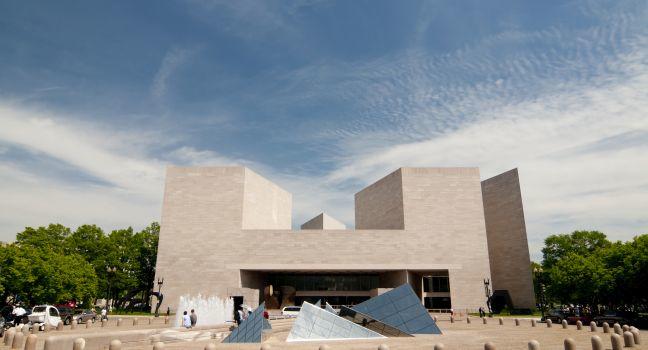
National Gallery of Art, East Building

The Mall Fodor's Choice
The Dramatic Facade of the East Building of the US National Gallery of Art in Washington DC.
Jwblinn | Dreamstime.com

The East Building opened in 1978 in response to the changing needs of the National Gallery, mainly to house a growing collection of modern and contemporary art. The building itself is a modern masterpiece. The site's trapezoidal shape prompted architect I.M. Pei's dramatic approach: two interlocking spaces shaped like triangles provide room for a library, galleries, auditoriums, and administrative offices. Inside the ax-blade-like southwest corner, a colorful, 76-foot-long Alexander Calder mobile dominates the sunlight atrium. Visitors can view a dynamic 500-piece collection of photography, paintings, sculpture, works on paper, and media arts in thought-provoking chronological, thematic, and stylistic arrangements.

Highlights include galleries devoted to Mark Rothko's giant, glowing canvases; Barnett Newman's 14 stark black, gray, and white canvas paintings from The Stations of the Cross, 1958–1966; and several colorful and whimsical Alexander Calder mobiles and sculptures. You can't miss Katharina Fritsch's Hahn/Cock, 2013, a tall blue rooster that appears to stand guard over the street and federal buildings from the roof terrace, which also offers views of the Capitol. The upper-level gallery showcases modern art from 1910 to 1980, including masterpieces by Constantin Brancusi, Marcel Duchamp, Sam Gilliam, Henri Matisse, Joan Miró, Piet Mondrian, Jackson Pollock, and Andy Warhol. Ground-level galleries are devoted to American art from 1900 to 1950, including pieces by George Bellows, Edward Hopper, Georgia O'Keeffe, Charles Sheeler, and Alfred Stieglitz. The concourse level is reserved for rotating special exhibitions.

The East Building Shop is on the concourse level, and the Terrace Café looks out over the atrium from the upper level. You can access an audio tour on your mobile device, and docent-led tours are available most days. Check the website for times and themes.

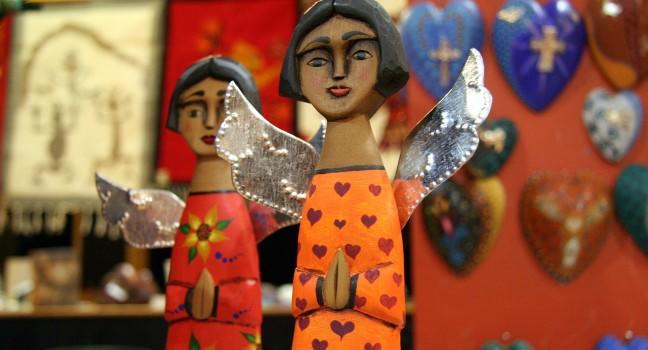
National Museum of Mexican Art

Pilsen Fodor's Choice
Wood carving artwork by Artist Jacobo Angeles Ojeda.
Wood carving artwork by Artist Jacobo Angeles Ojeda by Gozamos

The largest Latino cultural museum in the country (and the first Latino one accredited by the American Alliance of Museums) is definitely worth a look. Its galleries house impressive displays of contemporary, traditional, and Mesoamerican art from both sides of the border, as well as vivid exhibits that trace immigration woes and political struggles. The 20,000-piece permanent collection includes pre-Cuauhtemoc artifacts, textiles, folk art, paintings, prints, and drawings. Every fall the giant Day of the Dead exhibit stuns Chicagoans with its altars from artists across the U.S. and Mexico.

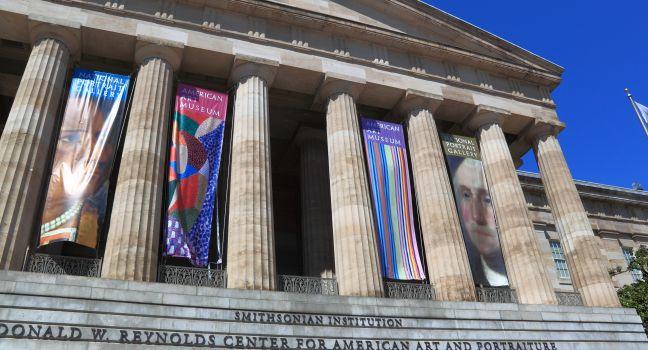
National Portrait Gallery

Downtown Fodor's Choice
Smithsonian Institutions Donald W. Reynolds Center for American Art and Portraiture at Washington DC, United States.
(c) Luckydoor | Dreamstime.com

The intersection of art, biography, and history is illustrated here through images of people who have shaped U.S. history. There are prints, paintings, photos, and sculptures of subjects from George Washington to Madonna.

This museum shares the National Historic Landmark building Old Patent Office with the Smithsonian American Art Museum. Built between 1836 and 1863 and praised by Walt Whitman as the "noblest of Washington buildings," it is deemed one of the country's best examples of Greek Revival architecture.

America's Presidents gallery, offering insights into the leaders---from George Washington until the present---is one of the most popular exhibitions. In this gallery, you'll see the only complete collection of presidential portraits outside the White House. Highlights include Gilbert Stuart's 1796 "Landsdowne" portrait of George Washington, Alexander Gardner's "cracked-plate" image of Abraham Lincoln from Lincoln's last formal portrait session before his assassination in 1865, a sculpture of Andrew Jackson on a horse, and political cartoonist Pat Oliphant's sculpture of George H.W. Bush playing horseshoes.

From portraits of World War II generals Eisenhower and Patton to Andy Warhol's Time magazine cover of Michael Jackson, the third-floor gallery, Twentieth-Century Americans, offers a vibrant tour of the people who shaped the country and culture of today. If seeing former first lady Michelle Obama is on your list, get to the gallery early, as this is a sought-after portrait. 

There are free docent-led tours Saturdays and Sundays at noon and 2:30 pm. Check the website to confirm the times. At the Lunder Conservation Center on the third and fourth floors, you can watch conservators at work.

Olympic Sculpture Park

Belltown Fodor's Choice
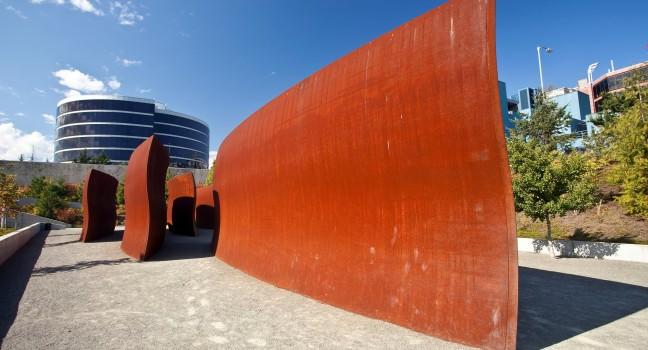
Olympic Sculpture Park is a public park in Seattle, Washington. "Wake" by Richard Serra
Mariusz S. Jurgielewicz / Shutterstock

An outdoor branch of the Seattle Art Museum is a favorite destination for picnics, strolls, and quiet contemplation. Nestled at the edge of Belltown with views of Elliott Bay, the gently sloping green space features native plants, chairs overlooking the water, and walking paths that wind past larger-than-life public artwork. On sunny days, the park frames an astounding panorama of the Olympic Mountains, but even the grayest afternoon casts a favorable light on the site's sculptures. The grounds are home to works by such artists as Richard Serra, Louise Bourgeois, and Alexander Calder, whose bright-red steel Eagle sculpture is a local favorite (and a nod to the bald eagles that sometimes soar above). Echo, a 46-foot-tall elongated girl’s face by Spanish artist Jaume Plensa, is a beautiful and bold presence on the waterfront.

Palace of Fine Arts

Marina Fodor's Choice
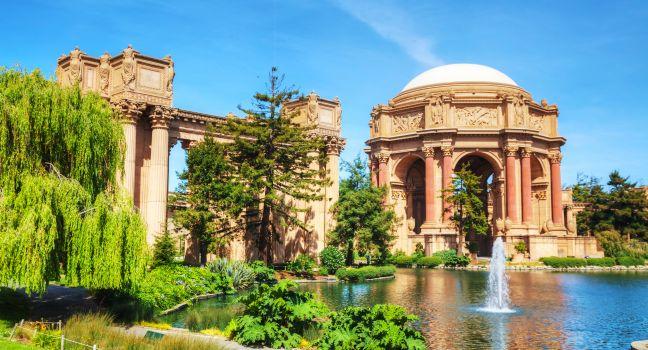
The Palace of Fine Arts in San Francisco, California.
Andreykr | Dreamstime.com

This stunning, rosy rococo palace on a lagoon seems to be from another world—it's the sole survivor of the many tinted-plaster structures (a temporary neoclassical city of sorts) built for the 1915 Panama-Pacific International Exposition, the world's fair that celebrated San Francisco's recovery from the 1906 earthquake and fire. The expo buildings originally extended about a mile along the shore. Bernard Maybeck designed this faux-Roman classic beauty, which was reconstructed in concrete and reopened in 1967.

The pseudo-Latin language adorning the Palace's exterior urns continues to stump scholars. The massive columns (each topped with four "weeping maidens"), great rotunda, and swan-filled lagoon have been used in countless fashion layouts, films, and wedding photo shoots. Other than its use for major events and exhibitions inside the building, it's really an outdoor architecture attraction that's perfect for an hour of strolling and relaxing. After admiring the lagoon, look across the street to the house at 3460 Baker Street. If the statues out front look familiar, they should—they're original casts of the "garland ladies" you can see in the Palace's colonnade.

Panaewa Rainforest Zoo and Gardens

Fodor's Choice
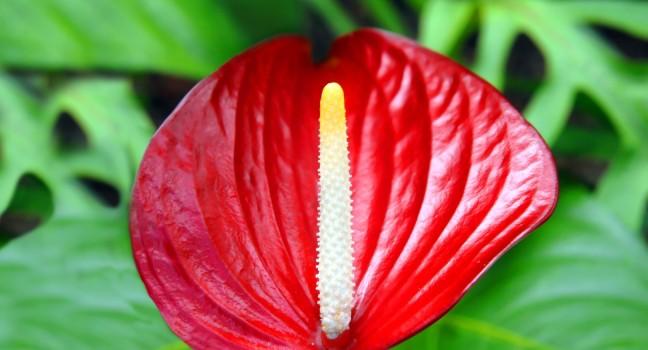
Vivid red, waxy leaves, and tall erect white and yellow spadex, this Anthurium thrives in the shade of ferns on the Big Island of Hawaii at the Panaewa Rain Forest Zoo.
(c) Bonniemarie | Dreamstime.com

Billed as "the only natural tropical rain forest zoo in the United States," this 12-acre county zoo features native Hawaiian species such as the nene goose and the io (hawk), as well as many other rare birds such as the highly endangered Hawaiian crow, or alala. Two Bengal tigers are also part of the collection. The white-faced whistling tree ducks are a highlight, along with monkeys, sloths, and lemurs. There's also a petting zoo on Saturdays from 1:30 to 2:30. Myriad species of lush, unusual tropical plants fill the grounds. To get here, turn left on Mamaki off Highway 11; it's just past the "Kulani 19, Stainback Hwy." sign.

800 Stainback Hwy., Hilo, HI, 96749, USA
808-959–7224
Sight Details
Free, donations encouraged

Something incorrect in this review?

Pearl Harbor Visitor Center

Fodor's Choice