
19 Best Sights in USA

Background Illustration for Sights

We've compiled the best of the best in USA - browse our top choices for the top things to see or do during your stay.

16th Street Mall

LoDo Fodor's Choice
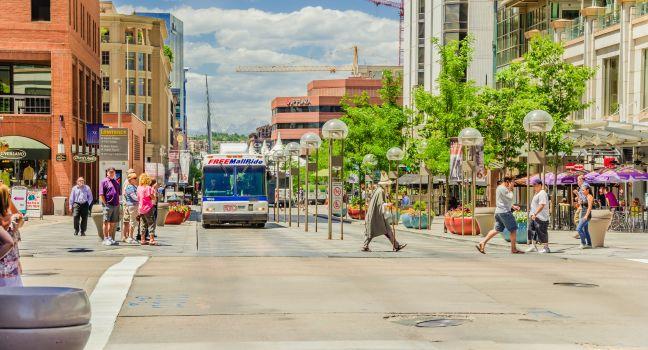
DENVER - JUNE 25. View of 16th Street Pedestrial Mall of red-and-grey Granite that Runs Through the Center of Downtown. Free Shuttle Buses Cruise the mile-long Mall. Denver, Co, June 25, 2013
Albert Pego / Shutterstock

Outdoor cafés and tempting shops line this pedestrian-only 18-block, 1¼-mile thoroughfare, shaded by red-oak and locust trees. The mall's businesses run the entire socioeconomic range. There are popular meeting spots for business types at places like the Yard House in the Sheraton Hotel; a front-row view of the many street performers and goings-on from restaurants' sidewalk patios; and plenty of fast-food chains. Although some Denverites swear by the higher-end Cherry Creek Shopping District, the 16th Street Mall covers every retail area and is a more affordable, diverse experience. You can find Denver's best people-watching here. Catch one of the free shuttle buses at any corner that run the length of downtown. Pay attention when you're wandering across the street, as the walking area and bus lanes are the same color and are hard to distinguish.
Magnificent Mile

Near North Side Fodor's Choice
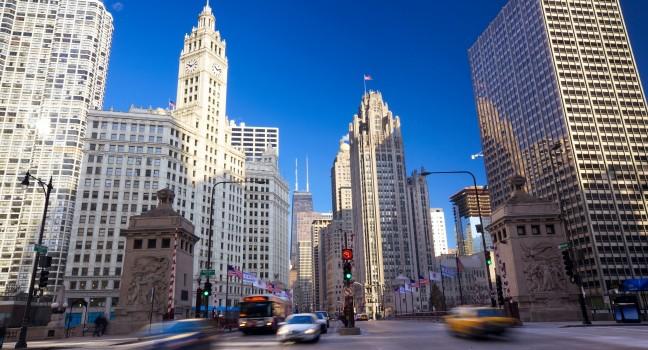
Michigan Avenue Bridge and Magnificent Mile in Chicago, IL, USA.
(c) Dibrova | Dreamstime.com

Michigan Avenue, or Mag Mile as some call it, is a potpourri of historic buildings, upscale boutiques, department stores, and posh hotels. (It is also the city's most popular place for people-watching.) Among its jewels are the Tribune Tower, the Wrigley Building, 875 North Michigan Avenue (formerly the John Hancock Center), the Drake Hotel, and the Historic Water Tower.

Rittenhouse Row

Rittenhouse Square Fodor's Choice

Shop-'til-you-droppers make a beeline for Rittenhouse Row, the area between Broad and 21st streets and Spruce and Market streets. Lately chains like J.Crew, Aritzia, and Lululemon have been taking over Walnut Street between Rittenhouse Square and Broad Street, but this is still the greatest concentration of chic stores, tony boutiques, and jewelers you'll find in the city.

Recommended Fodor's Video

New York Stock Exchange (NYSE)

Financial District
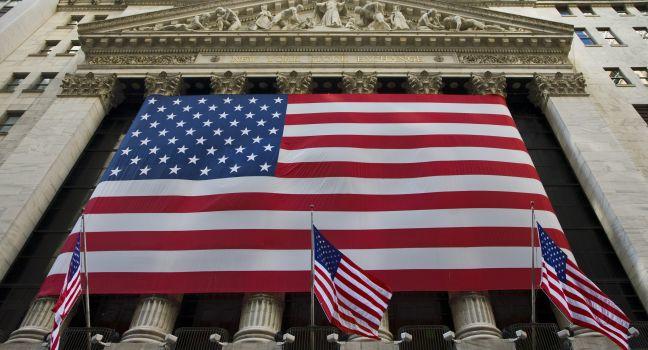
New York Stock Exchange; Shutterstock ID 10605424; Project/Title: Fodors; Downloader: Melanie Marin
Donald R. Swartz / Shutterstock

Unfortunately, you can't tour the stock exchange anymore—though the pace on the floor is much less frenetic than it used to be, now that technology has changed how the trading floor works. The building itself, though, at the intersection of Wall and Broad Streets, is still worth ogling. The neoclassical structure, designed by architect George B. Post, opened on April 22, 1903. It has six Corinthian columns supporting a pediment with a sculpture titled Integrity Protecting the Works of Man, featuring a tribute to the Gilded Age's sources of American prosperity: Agriculture and Mining to the left of Integrity; Science, Industry, and Invention to the right. Don't miss a peek at The Fearless Girl, the 4-foot-tall bronze statue by Kristen Visbal who faces down the NYSE in a show of support for gender equality (though there's often talk of relocating The Fearless Girl). As an interesting aside, the NYSE was one of the world's first air-conditioned buildings.

Bricktown Downtown OKC Entertainment District

What was once a massive railroad graveyard, where abandoned warehouses stood like giant tombstones, is now the crossroads for dining, shopping, headline entertainment, nightlife, and professional sports in Oklahoma City. A canal-side walkway, framed with turn-of-the-century charm, winds through an area revitalized with the can-do spirit of Oklahoma. You can shop in tiny boutiques or destination outlets like Bass Pro Outdoor World; visit a quirky spot like the American Banjo Museum; choose from dozens of restaurants to satisfy your appetite; take in a professional NBA game; and tap your toes to live music. And if you're having so much fun that you don't want to go home, there are nine hotels within walking distance.

Brookside Dining and Shopping District

Historic Brookside is a laid-back, easy-to-navigate collection of unique restaurants, art studios and galleries, boutiques, and entertainment and nightlife venues, woven among specialty services, churches, and residences. Once a settlement area for the Creek Nation displaced from Alabama in 1834, it became home to Brookside Drug a century later. By the 1940s new residential and commercial development sprouted—elegant homes, churches, businesses, and wholesome entertainment—and these characteristics have endured. Some of the Streamline-style art-deco buildings survive, including the City Veterinary Hospital and KJRH-TV (formerly the Brookside Broadcast Center). Others have been retrofitted for new uses: the former Brook Theater is now The Brook restaurant and bar; Dunwell Cleaners, a family business for four generations, is now a popular sushi restaurant; and Holmes Elemenary School is now the Brookside Center.

City Market

Historic District

Although the 1870s City Market was razed years ago, its atmosphere and character are still evident. Adjacent to Ellis Square, the area is a lively destination because of its galleries, boutiques, street performers, and open-air cafés. Local favorites include Byrd Cookie Company, a popular Savannah-based bakery with great edible souvenirs, and Pie Society, offering specialty British meat pies. City Market is also a good spot to purchase trolley tickets, take a ride in a horse-drawn carriage, or dive into history at the American Prohibition Museum.

Comcast Technology Center

Center City West
With a height of 1,121 feet—that's 60 floors—Philadelphia's new tallest building is home to restaurants like Vernick Fish and Jean-Georges Philadelphia, a coffee shop, bars, the soaring Four Seasons Hotel Philadelphia, and sweeping views of the entire city.

Division Street

Ukrainian Village

Serving as the border that separates Wicker Park from Ukrainian Village to its south, Division Street has become a shopping and dining destination in its own right. Bars, boutiques, and trendy restaurants line the once-gritty thoroughfare, which lent its name to journalist Studs Terkel's 1967 book about urban life. To start your exploration, head west on the stretch of Division between Ashland and Leavitt avenues.

Chicago, IL, 60622, USA

Something incorrect in this review?

Fulton Market

West Loop

A bustling center for food processing and distribution as recently as the 2000s, this former industrial district transformed into an upscale stretch of gleaming corporate offices, luxury condos, and Michelin-star restaurants with remarkable speed. The last of the seafood, produce, and meatpacking plants were gone by the end of the 2010s; Fulton Market is now a full-on dining and nightlife destination.

Chicago, IL, 60607, USA

Something incorrect in this review?

New Harbor

Shoreham

The Great Salt Pond has a culture all its own, centered on three marinas, several inns, a resort hotel, and restaurants clustered along its southern shore. The smaller of Block Island's two commercial areas is about a 20-minute walk from Old Harbor. Up to 2,000 boats create a forest of masts on summer weekends, drawn by sail races and fishing tournaments. Over on the quiet north and east shores, clammers and windsurfers claim the tidal flats. The Montauk ferry docks at Champlin's, the largest of the marinas.

Great Salt Pond, Block Island, RI, 02807, USA

Something incorrect in this review?

Printers Alley

Downtown

If you don’t know where to find it, you’ll almost miss it. Printers Alley is a historic Nashville landmark reminiscent of a London side street that stretches between Church and Union Streets parallel to 3rd and 4th Avenues. It's full of watering holes, karaoke bars, and a jazz club, but you can have just as much fun chatting outside with the locals as you will entering any of its infamous haunts. The historic sign will let you know you’ve made it to the right place.

Southport Avenue

Wrigleyville

The Southport Corridor, as this stretch of pavement is known, is lined with independent shops and high-end boutique chains to serve the area's well-dressed urban professionals with money to burn. Those stores are peppered amongst neighborhood pizza joints and classic taverns, bookended by music venue Schubas Tavern to the south and the historic independent movie theater The Music Box at the north. 

Third Street Promenade and Santa Monica Place

Santa Monica

Stretch your legs along this pedestrian-only, three-block stretch of 3rd Street, close to the Pacific, lined with jacaranda trees, ivy-topiary dinosaur fountains, strings of lights, and branches of many major U.S. retail chains; indeed, it always seems to house the most-coveted brands for each generation of teens. Pickleball enthusiasts (or newbies) will love Pickle Pop, where you can play and equip yourself to your heart's content. Outdoor cafés, street vendors, movie theaters, and a rich nightlife make this a main gathering spot for locals, visitors, street artists and musicians, and performance artists, though it has yet to return to its pre-2020 level of bustle. Plan a night just to take it all in or take an afternoon for a long people-watching stroll. There's plenty of parking in city structures on the streets flanking the promenade. Santa Monica Place, at the south end of the promenade, is a sleek outdoor mall and foodie haven. Its three stories are home to Nordstrom, Louis Vuitton, Coach, and other upscale retailers. Don't miss the ocean views from the rooftop food court.

Times Square

Midtown West

This is the most energetic part of New York City, a cacophony of flashing lights and shoulder-to-shoulder crowds that many New Yorkers studiously avoid. Originally named after the New York Times (whose headquarters has since relocated to 8th Avenue), the area has seen many changes since the first subway line, which included a 42nd Street station, opened in 1904. The area was once a bastion of the city's unseemly side, but today it's a vibrant, family-friendly destination, with pedestrian-only plazas that line Broadway with tables, chairs, and granite benches. There’s no longer a visitor center here, since the Official NYC Information Center is down at 151 West 34th Street in Herald Square, with maps, brochures, coupons, and a bilingual staff.

The focus of the entertainment might have shifted over the years, but live shows are still the heart of Midtown's theater scene, and there are 40 Broadway theaters nearby. (A few of the most historic theaters are spotlighted in this chapter's introduction.) Learn about Broadway's history and architecture on a two-hour Times Square walking tour by Manhattan Walking Tours ( $50  Daily at 10:30 am  www.manhattanwalkingtour.com) or join the two-hour guided Inside Broadway tour ( $39  Daily at 4 pm  www.insidebroadwaytours.com) that leaves from the George M. Cohan statue at West 46th Street and Broadway.

Tiverton Four Corners

Historic Tiverton Four Corners has been a part of Tiverton's history since 1629 when Governor Bradford of the Plymouth Colony purchased the area (then called Pocasset) from the Wampanoag tribe. The "four corners" intersection follows the original Native American trails. Today, the Four Corners Arts Center, in the circa 1800 Soule-Seabury House, hosts an annual antiques show, as well as art festivals and exhibits, concerts and movement classes, and other special events. A sculpture park behind the arts center is free and open to the public. Gray's Ice Cream and the Groundswell Cafe & Bakery also are located here.

Village at Palisades Tahoe

The centerpiece of Olympic Valley is a pedestrian mall at the base of several four-story ersatz Bavarian stone-and-timber buildings, where you'll find restaurants, high-end condo rentals, boutiques, and cafés.

West Hollywood Design District

West Hollywood

More than 200 art galleries, antiques shops, fashion outlets, and interior design stores are found here near 30 restaurants, including the famous paparazzi magnet, the Ivy. All are clustered within walking distance of each other—rare for L.A.

Old Oakland

The restored Victorian storefronts that line the four historic blocks of Oakland's original downtown now contain restaurants, cafés, offices, shops, galleries, and a Friday morning farmer's market. Architectural consistency distinguishes the area from surrounding streets, giving it a distinct neighborhood feel. Old World–inspired Caffè 817 (817 Washington St.) serves poached eggs and polenta, fresh-pressed panini, and bowls of café latte in an artsy atmosphere. Stop in for a deli sandwich at Ratto's International Market (827 Washington St.), an Italian grocery that's been in business for more than a century, or head over to the renovated Swan's Market (538 9th St.), where you can choose from an array of high-caliber multicultural eateries that offer takeout. Pacific Coast Brewing Company (902 Washington St.) pours a mean microbrew, while The Trappist (460 8th St.) wins loyalty for its exhaustive selection of Belgian ales. Various pop-up boutiques and permanent shops throughout the neighborhood are reinvigorating the storefront scene.