Get FREE email communications from Fodor's Travel, covering must-see travel destinations, expert
trip planning advice, and travel inspiration to fuel your passion.
We've compiled the best of the best in USA - browse our top choices for the top
things to see or do during your stay.
Sorry! We don't have any recommendations for USA right now.
Sights Filter
Korean War Veterans Memorial
The Mall
Share This
Graham De'ath / Shutterstock
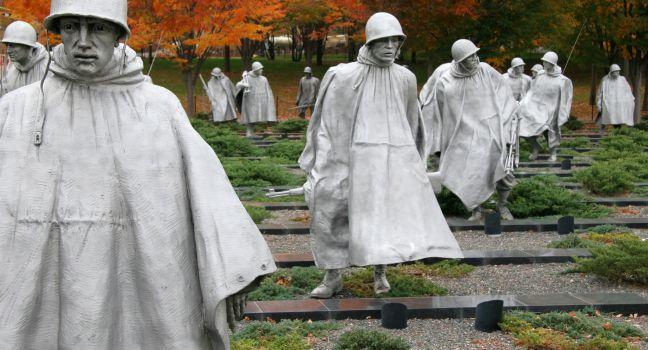
At the west end of the National Mall, this memorial to the 5.8 million United States men and women who served in the Korean War (1950–53) highlights the cost of freedom. Often referred to as the "forgotten war," nearly 37,000 Americans died on the Korean peninsula, 8,000 were missing in action, and more than 103,000 were wounded. The privately funded memorial was dedicated on July 27, 1995, the 42nd anniversary of the Korean War Armistice.
In the Field of Service, 19 oversize stainless-steel soldiers trudge through rugged terrain toward an American flag; look beneath the helmets to see their weary faces. The reflection in the black granite wall to their right doubles their number to 38, symbolic of the 38th parallel, the latitude established as the border between North and South Korea in 1953, as well as the 38 months of the war.
Unlike many memorials, this one contains few words. The 164-foot-long granite wall etched with the faces of 2,400 unnamed servicemen and servicewomen says, "Freedom is not free." The plaque at the flagpole base reads, "Our nation honors her sons and daughters who answered the call to defend a country they never knew and a people they never met." The only other words are the names of 22 countries that volunteered forces or medical support, including Great Britain, France, Greece, and Turkey. The adjacent circular Pool of Remembrance honors all who were killed, captured, wounded, or lost in action; it's a quiet spot for contemplation.
Lake Powell
Share This
COLOMBO NICOLA / Shutterstock
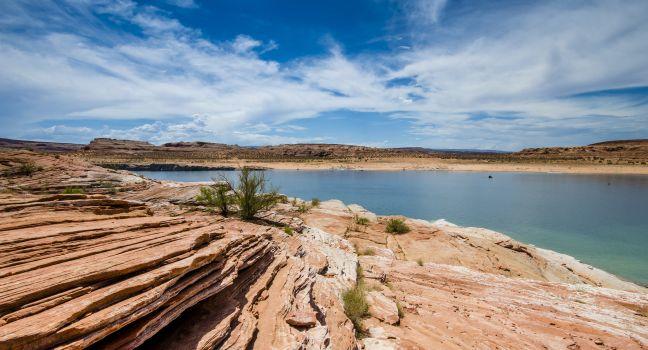
With a shoreline longer than America's Pacific coast, Lake Powell is the heart of the huge 1.25-millon-acre Glen Canyon National Recreation Area. Created by the Glen Canyon Dam—a 710-foot wall of concrete in the Colorado River—Lake Powell took 17 years to fill. The second-largest man-made lake in the nation, it extends through terrain so rugged that it was the last major area of the country to be mapped. Red cliffs ring the lake and twist off into 96 major canyons and countless inlets with huge, red-sandstone buttes randomly jutting from the sapphire waters.
The most popular thing to do at Lake Powell is to rent a houseboat and chug leisurely across the lake, exploring coves and inlets. Like many tourist spots in the region, the lake's busiest times are in the summer, with peak visitation on holiday weekends. Book far in advance for those dates. It's also important to check with the National Park Service for current water levels, closures, and other weather-related conditions.
Southwest of Bullfrog, Rainbow Bridge National Monument is the largest natural bridge in the world, and its 290-foot-high, 275-foot-wide span is a breathtaking sight. Unfortunately, accessing this wonder is difficult. You can either hike a 14-mile trail from the Navajo Nation or boat in, though the National Park Service had to pull its dock back from the water in 2021 due to low water levels and damage from storms, with no estimate for restoring its original location. Small boats and vessels still have access to the shoreline but getting to the trail requires wading through water and mud. No special permit is needed to boat into the monument, but hiking in from the Navajo Nation requires a permit issued by the Navajo Nation Parks and Recreation Department ( www.navajonationparks.org). The main visitor center for Lake Powell is Arizona's Wahweap Marina, with a campground, general store, restaurants, swimming pools, boat docks, and houseboat rentals.
Lanikai Beach
Share This
tomas del amo/Shutterstock
Think of the beaches you see in commercials: peaceful jade-green waters, powder-soft white sand, families and dogs frolicking, and offshore islands in the distance. It's an ideal spot for stretching out with a book. Though the beach hides behind multimillion-dollar houses, by state law there is public access every 400 yards. Street parking is available but very difficult to find (and prohibited on holiday weekends). Consider parking at Kailua Beach Park and walking along the paved pathway into Lanikai. Just don't block the boat ramp stalls. There are no shower or bathroom facilities here—but you'll find both at Kailua Beach Park.Look for walled or fenced pathways every 400 yards, leading to the beach. Do not park in the marked bike/jogging lane.Amenities: none. Best for: sunrise; swimming; walking.
Recommended Fodor's Video
Looking Glass Falls
Share This
jo Crebbin / Shutterstock
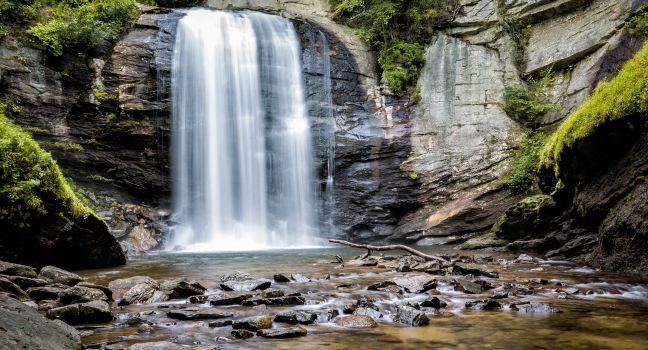
Getting to this waterfall is easy, as it's right beside the road in Pisgah National Forest, though parking is limited. Water cascades 60 feet into a clear pool, where you can wade or take a swim. There's a parking area and a sometimes slippery walkway down to the falls.
Makapuu Beach Park
Share This
Leigh Anne Meeks / Shutterstock
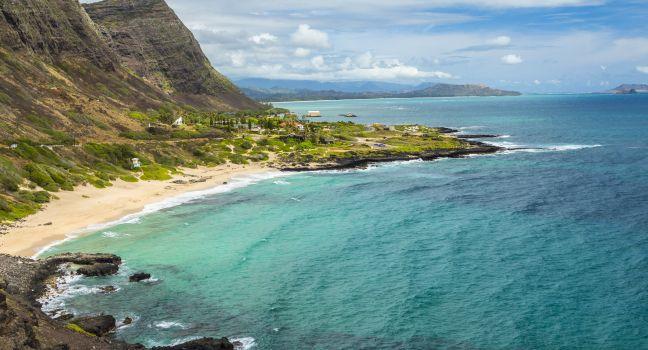
A magnificent beach protected by Makapuu Point welcomes you to the windward side. Hang gliders circle above, and the water is filled with bodyboarders. Just off the coast you can see Bird Island, a sanctuary for aquatic fowl, jutting out of the blue. The currents can be heavy, so check with a lifeguard if you're unsure of safety. Before you leave, take the prettiest (and coldest) outdoor shower available on the island. Being surrounded by tropical flowers and foliage while you rinse off that sand will be a memory you will cherish from this side of the rock. Amenities: lifeguards; parking (no fee); showers; toilets. Best for: sunrise; walking.
Musée Mécanique
Fisherman's Wharf
Share This
By Piotrus [CC-BY-SA-3.0-2.5-2.0-1.0], via Wikimedia Commons
Once a staple at Playland at the Beach, San Francisco's early-20th-century amusement park, the antique mechanical contrivances at this time-warp arcade—including peep shows and nickelodeons—make it one of the most worthwhile attractions at the Wharf. Some favorites are the giant and rather creepy "Laffing Sal"; an arm-wrestling machine; (supposedly) the world's only steam-powered motorcycle; various retro pinball machines; and mechanical fortune-telling figures. This is a truly fun and somewhat surreal experience. Admission is free, but you'll need quarters to bring the machines to life.
National Law Enforcement Officers Memorial
Penn Quarter
Share This
(c) Olivierl | Dreamstime.com
These 3-foot-high walls bear the names of more than 21,000 American police officers killed in the line of duty since 1791. On the third line of Panel 13W are the names of six officers killed by William Bonney, better known as Billy the Kid. J.D. Tippit, the Dallas policeman killed by Lee Harvey Oswald, is honored on the ninth line of Panel 63E. Other names include the 72 officers who died due to the events of 9/11. Directories here allow you to look up officers by name, date of death, state, and department. Call to arrange for a free tour. A National Law Enforcement Museum is in the works; until then, a small visitor center (400 7th St.) has a computer for looking up names, a display on the history of law enforcement, and a small gift shop.
New York Public Library Main Branch
Midtown West
Share This
Jorg Hackemann/Shutterstock
The "Library with the Lions," open since 1911, is a masterpiece of Beaux-Arts and one of the world's great research institutions, with a repository for millions of items including books, manuscripts, photographs, maps, periodicals, and more. Dubbed the Stephen A. Schwarzman Building since 2008, the flagship recently underwent a renovation that created more public space for visitors to enjoy, including a new 40th Street entrance, improved infrastructure, and expanded exhibition spaces. Within Gottesman Hall, the free, permanent Polonsky Exhibition of the New York Public Library's Treasures features more than 250 rare and unique items (check the website for details and to see listings for rotating exhibits).
The library's bronze front doors on 5th Avenue open into Astor Hall, which leads to special exhibit galleries and, to the left, a stunning periodicals room. Ascend the double staircase to a second-floor balconied corridor overlooking the hall, with panels highlighting the library's development. Continue up to behold the magisterial Rose Main Reading Room, where natural light pours through the massive windows (the room is open to anyone for quiet study; those just viewing the room must be on a tour). Third-floor galleries show rotating exhibits on print and photography. Free hour-long tours leave Monday–Saturday at 11 and 2, with a reservation.
Across 5th Avenue from the main branch is the central circulating branch known as the Stavros Niarchos Foundation Library (455 5th Ave.), which completed a major renovation in 2021. There, visitors can see the famous lions built from LEGOs, view an imaginative ceiling installation, and spend time on the free roof terrace overlooking the main branch; and yes, NYPL members can even check out books.
New York Stock Exchange (NYSE)
Financial District
Share This
Donald R. Swartz / Shutterstock
Unfortunately, you can't tour the stock exchange anymore—though the pace on the floor is much less frenetic than it used to be, now that technology has changed how the trading floor works. The building itself, though, at the intersection of Wall and Broad Streets, is still worth ogling. The neoclassical structure, designed by architect George B. Post, opened on April 22, 1903. It has six Corinthian columns supporting a pediment with a sculpture titled Integrity Protecting the Works of Man, featuring a tribute to the Gilded Age's sources of American prosperity: Agriculture and Mining to the left of Integrity; Science, Industry, and Invention to the right. Don't miss a peek at The Fearless Girl, the 4-foot-tall bronze statue by Kristen Visbal who faces down the NYSE in a show of support for gender equality (though there's often talk of relocating The Fearless Girl). As an interesting aside, the NYSE was one of the world's first air-conditioned buildings.
Oconaluftee Valley Overlook
Share This
MarkVanDykePhotography / Shutterstock
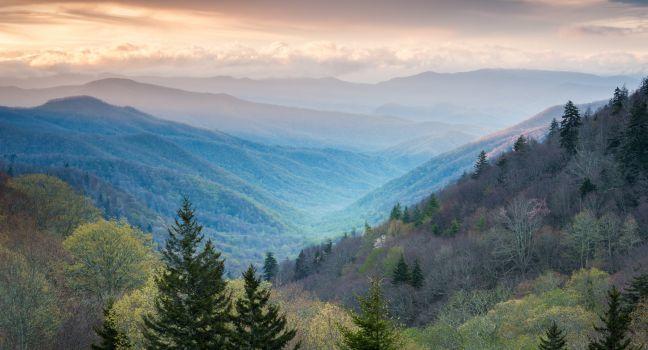
From atop the Thomas Divide, just a little below the crest of the Smokies, you can look down at winding Newfound Gap Road. This is also a good spot to view the sunrise.
Palm Springs Walk of Stars
Share This
Dreamframer / Shutterstock
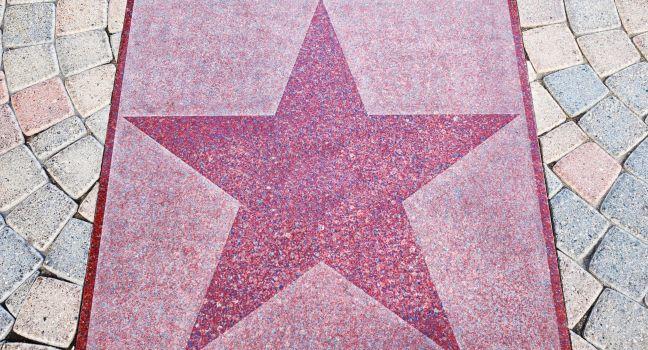
More than 400 bronze stars are embedded in the sidewalks (à la Hollywood Walk of Fame) around downtown to honor celebrities with a Palm Springs connection. The Chairman of the Board, Elvis, Bob Hope, Marilyn Monroe, Dinah Shore, Ginger Rogers, Liz Taylor, and Liberace are among those who have received their due. Started on Palm Canyon Drive in 1992, stars have spread to Museum Way and Tahquitz Canyon Way.
Peak to Peak Scenic and Historic Byway
Share This
Maomaotou | Dreamstime.com
The byway (Routes 119, 72, and 7), a 55-mile stretch that winds from Central City north through Nederland to Estes Park, is not the quickest route to the eastern gateway to Rocky Mountain National Park, but it's certainly the most scenic. You'll pass through the old mining towns of Ward and Allenspark and enjoy spectacular mountain vistas. Mt. Meeker and Longs Peak rise magnificently behind every bend in the road. The descent into Estes Park provides grand vistas of snow-covered mountains and green valleys.
Pier 39
Fisherman's Wharf
Share This
(c) Walleyelj | Dreamstime.com
The city's most popular waterfront attraction draws millions of visitors each year, who come to browse through its shops and concessions hawking every conceivable form of souvenir. The pier can be quite crowded, and the numerous street performers may leave you feeling more harassed than entertained. Arriving early in the morning ensures you a front-row view of the sea lions that bask here, but be aware that most stores don't open until 9:30 or 10 (later in winter).
Follow the sound of barking to the northwest side of the pier to view the sea lions flopping about the floating docks. Pier 39's biggest celebrities reside here pretty much year-round (though the population is generally lowest in early summer), enjoying the nearby food in the bay and the ability to easily rotate between sleeping on the docks and going for a swim.
At the Aquarium of the Bay (www.aquariumofthebay.org), guests of all ages enjoy strolling through a space surrounded on three sides by water that is filled with local San Francisco Bay marine life, from the orange garibaldi (the state marine fish) to sharks. Aquatic animals from elsewhere in the Northern California watershed also make an appearance, including white sturgeon and river otters.
Rockefeller Center
Midtown West
Share This
ruigsantos/Shutterstock
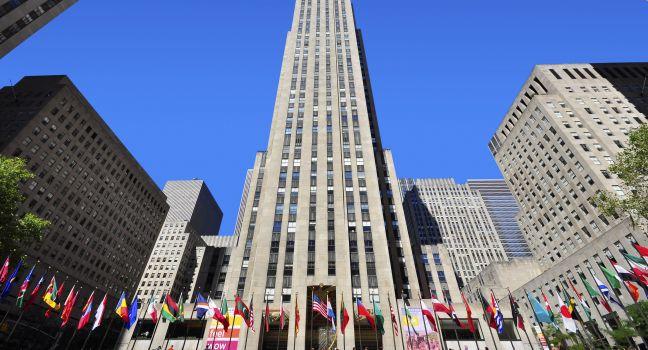
Comprising more than 100 shops and 50 eateries, the Rockefeller Center complex runs from 47th to 52nd Street between 5th and 6th Avenues; special events dominate the central plazas in spring and summer. In December an enormous, twinkling tree towers above the ice-skating rink, causing crowds of visitors from across the country and the globe to shuffle through with cameras flashing.
\n
The world's most famous ice-skating rink occupies Rockefeller Center's sunken lower plaza from October through mid-April and converts to a roller-skating rink in summer. A gold-leaf statue of the Greek hero Prometheus hovers above. The lower plaza also provides access to the marble-lined concourse underneath Rockefeller Center, which houses restaurants, a post office, and clean public restrooms.
\n
Rising from the lower plaza's west side is the 70-story Art Deco GE building. Here John D. Rockefeller Jr. commissioned and then destroyed a mural by Diego Rivera. He replaced it with the monumental American Progress by José María Sert, still on view in the lobby, flanked by additional murals by Sert and English artist Frank Brangwyn. Up on the 65th floor is the landmark Rainbow Room, a glittering big-band ballroom dating from 1934. Higher up, Top of the Rock has what many consider the finest panoramas of the city. Rockefeller Center guided walking tours are available several times daily (tickets start at $27), with the option to add a visit to the observation deck.
San Miguel Mission
The Plaza
Share This
pmphoto / Shutterstock
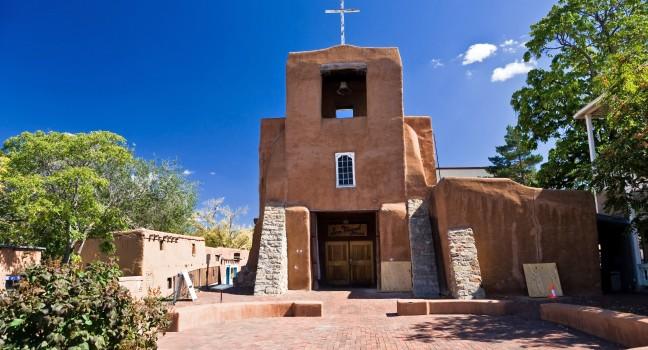
Believed to be the oldest church still in use in the United States, this simple earth-hewn adobe structure was built around 1610 by the Tlaxcalan Indians of Mexico, who came to New Mexico as servants of the Spanish. Badly damaged in the 1680 Pueblo Revolt, the structure was restored and enlarged in 1710. On display in the chapel are priceless statues and paintings and the San José Bell, weighing nearly 800 pounds, which is believed to have been cast in Spain in 1356. In winter the church sometimes closes before its official closing hour. Latin mass is held daily at 2 pm, and new mass is on Sunday at 5 pm.
Smithsonian Castle Information Center
The Mall
Share This
Jiawangkun | Dreamstime.com
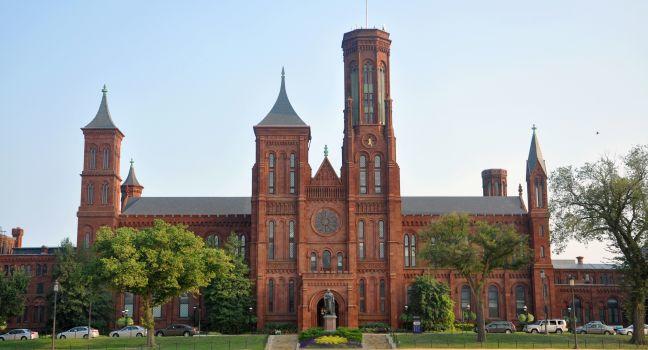
The original home of the Smithsonian Institution is an excellent first stop on the Mall to help you get your bearings and plan your exploration of the museums. Built of red sandstone, this Medieval Revival–style building, better known as the "Castle," was designed by James Renwick Jr., the architect of St. Patrick's Cathedral in New York City. Although British scientist and founder James Smithson never visited America, his will stipulated that, should his nephew, Henry James Hungerford, die without an heir, Smithson's entire fortune would go to the United States, "to found at Washington, under the name of the Smithsonian Institution, an establishment for the increase and diffusion of knowledge." The museums on the Mall are the Smithsonian's most visible example of this ideal, but the organization also sponsors traveling exhibitions and maintains research posts in the Chesapeake Bay area and the tropics of Panama.
A 10-minute video gives an overview of the museums and the National Zoo, and The Smithsonian Institution: America's Treasure Chest exhibition features objects representing all the museums, revealing the breadth and depth of the collections. James Smithson's crypt is in a small chapel-like room here. The Castle also has Views from the Tall Tower—an exhibit demonstrating how the Washington skyline has changed since 1863—a good café, brochures in several languages, and a museum store. Kids appreciate the historic carousel at the north entrance; at the south entrance, you'll find the beautifully manicured Haupt Garden and copper-domed kiosk called the S. Dillon Ripley Center, which houses the Discovery Theater (delightful and affordable live, family-oriented shows on selected weekday mornings—usually geared for kids 2–12—are held here).
Tom McCall Waterfront Park
Share This
photo.ua / Shutterstock
Named for a former governor revered for his statewide land-use planning initiatives, this park stretches north along the Willamette River for about a mile from near the historic Hawthorne Bridge to Steel Bridge. Broad and grassy, Waterfront Park affords a fine ground-level view of Downtown Portland's bridges and skyline. Once an expressway, it's now the site for many annual celebrations, among them the Rose Festival, classical and blues concerts, Portland Pride, Cinco de Mayo, and the Oregon Brewers Festival. The arching jets of water at the Salmon Street Fountain change configuration every few hours, and are a favorite cooling-off spot during the dog days of summer.Both the Hawthorne Bridge and Steel Bridge offer dedicated pedestrian lanes, allowing joggers, cyclists, and strollers to make a full loop along both banks of the river, via Vera Katz Eastside Esplanade.
U.S. Mint
Civic Center
Share This
Henryk Sadura / Shutterstock
Tour this facility to catch a glimpse of the coin-making process, as presses spit out thousands of coins a minute. There are also exhibits on the history of money and a restored version of Denver's original mint prior to numerous expansions. More than 14 billion coins are minted yearly, and the nation's second-largest hoard of gold is stashed away here. To schedule a 45-minute tour and prepare for your visit (there are strict security guidelines), visit the Mint's website. Reservations are required for all tours, which are guided (Monday to Thursday from 8 to 2), free, and available to visitors age seven and older. The gift shop, which sells authentic coins and currency, is in the Tremont Center, across Colfax Avenue from the Mint.
Wave Organ
Marina
Share This
Pius99 | Dreamstime.com
Conceived by environmental artist Peter Richards and fashioned by master stonecutter George Gonzales, this unusual wave-activated acoustic sculpture at the entrance of a harbor gives off subtle harmonic sounds produced by seawater as it passes through 25 tubes. The sound is loudest at high tide. The granite and marble used for walkways, benches, and alcoves that are part of the piece were salvaged from a gold rush–era cemetery.
The White House
Foggy Bottom
Share This
(c) Orhan Cam | Dreamstime.com
America's most famous house was designed in 1792 by Irish architect James Hoban. It was known officially as the Executive Mansion until 1902, when President Theodore Roosevelt renamed it the White House, long its informal name. The house has undergone many structural changes: Andrew Jackson installed running water; James Garfield put in the first elevator; Harry Truman had the entire structure gutted and restored, adding a second-story porch to the south portico; and Richard Nixon installed a one-lane bowling alley in 1969.
To see the White House you need to contact your U.S. representative or senator (or embassy if you aren't a U.S. citizen). Requests can be made up to three months in advance (especially for spring, summer, or December tour requests) and no less than 21 days in advance. You'll be asked for the names, birth dates, and Social Security numbers of everyone in your group. On the morning of your tour, call the White House Visitors Office information line for any updates; tours are subject to last-minute cancellations. Arrive 15 minutes early. Your group will be asked to line up in alphabetical order. Everyone 18 years and older must present government-issued photo ID, and no purses, backpacks, or bags are allowed on the tour (and no storage lockers are provided so leave them in your hotel room). There are no public restrooms, and you're allowed to take photos only with a smartphone or small compact camera. The security process will probably last as long as the tour itself, 20–25 minutes.
The self-guided tour includes rooms on the ground floor (including the White House Family Theater), but the State Floor has the highlights. The East Room is the largest room in the White House, the site of ceremonies and press conferences; this is also where Theodore Roosevelt's children roller-skated and one of Abraham Lincoln's sons harnessed a pet goat to a chair and went for a ride. The portrait of George Washington that Dolley Madison saved from torch-carrying British soldiers in 1814 hangs in the room, and the White House Christmas tree stands here every winter. The only president to get married in the White House, Grover Cleveland, was wed in the Blue Room. Esther, the second daughter of President Cleveland and First Lady Frances, holds the distinction of being the only child born in the White House. The Red Room, decorated in early-19th-century American Empire style, has been a favorite of first ladies. Mary Todd Lincoln had her coffee and read the morning paper here. In 1961, First Lady Jacqueline Kennedy undertook an extensive restoration of the White House to preserve and showcase the historical and architectural significance of the home and its contents. The East Garden, which now bears her name, honors her contributions. Michelle Obama installed a vegetable-and-herb garden to promote healthy eating, as well as an apiary and pollinator garden for bees and other insects.
Your tour of the White House will be enhanced by visiting the White House Visitor Center at 1450 Pennsylvania Avenue NW, featuring displays, photos, and a 30-minute video about the White House.
12th Street
Share This
A National Historic District, Golden's 12th Street has a row of handsome 1860s brick buildings.
150 North Michigan Avenue
Chicago Loop
Share This
Some wags have pointed out that this building, with its diamond-shaped top, looks like a giant pencil sharpener. Built in 1984 as the Smurfit-Stone Building and later known as the Crain Communications Building, it has a slanted top that carves through the top 10 of its floors. In the plaza is Yaacov Agam's Communication X9, a painted, folded aluminum sculpture that was restored (to some controversy) and reinstalled in 2008. You'll see different patterns in the sculpture depending on your vantage point.
16th Avenue Tiled Steps
Sunset
Share This
A community-based project dedicated in 2005, these 163 tiled steps have beautiful designs showing fish, shells, animals, starry skies, and other scenes. The steps are in a residential neighborhood, so enjoy the steps and the city views from the top quietly.
1879 Avery House
Share This
The stately sandstone Avery House was built in 1879 by Franklin Avery, who set the tone for Old Town's broad streets when he surveyed the city in 1873. You can tour the inside on weekends. The Avery House is just one of 36 sites on the Poudre Landmark Foundation's historic walking-tour map, which includes several self-guided options.
190 South LaSalle Street
Chicago Loop
Share This
This 40-story postmodern office building, resembling a supersized château, was designed by John Burgee and Philip Johnson in the mid-1980s. The grand, gold-leaf vaulted lobby is spectacular.
224 South Michigan Avenue
Chicago Loop
Share This
This structure, designed in 1904 by Daniel Burnham, who later moved his office here, was once known as the Railway Exchange Building and the Santa Fe Building, for a "Santa Fe" sign on its roof that has since been removed. The Chicago Architecture Foundation uses the building's atrium for rotating exhibits about the changing landscape of Chicago and other cities. The organization also offers a variety of tours via foot, bus, and boat.
23rd Regiment Armory
Crown Heights
Share This
At Atlantic and Bedford, the 23rd Regiment Armory is one of Brooklyn’s most imposing and important landmarks: an almost full-block Romanesque Revival building by architects Fowler & Hough that dates back to 1895. The building—much of it restored, from the crenelated towers to the arched windows—now serves as a homeless shelter, which means that the nearby blocks can feel a bit dodgy. During the day it’s safe, though, with people milling about—just be smart.
29 Palms Art Gallery
Share This
Going strong since 1951 and headquartered in a 1936 adobe abode built by pulp western author and screenwriter Tom Hopkins, this nonprofit organization and gallery hosts exhibitions by local painters, sculptors, and jewelry makers who are inspired by the desert landscape. If you find yourself inspired, sign up for one of the many youth and adult art workshops. There's a small gift shop.
4th Marine Division Memorial Park
Share This
Up Kokomo Road in Haiku you'll find a large puu (volcanic cinder cone) capped with a grove of columnar pines and the 4th Marine Division Memorial Park. During World War II, American GIs trained here for battles on Iwo Jima and Saipan. Locals nicknamed the cinder cone "Giggle Hill" because it was a popular hangout for Maui women and their favorite servicemen. The park includes an impressive playground, picnic tables, and lots of wide-open space.
56 Bogart (The BogArt)
Bushwick
Share This
Many Bushwick galleries showcase edgy and experimental work, but visiting this converted warehouse is an easy way to see a lot of art in one place. The BogArt houses a few galleries, including standouts M. David & Go and the Amos Eno Gallery, plus large loft studios, often with open studio viewing sessions. Gallery hours vary, but the best time to visit is on Friday and weekends, when most places are open.
Subscribe to Newsletter
Sign up for Travel Tips & News
I want emails from Fodor's Travel with travel information and promotions. I can unsubscribe
any time using the unsubscribe link at the end of all emails.
Thank you for your interest!
Look out for our newsletters with travel tips and special offers.
Sign up for Travel Tips & News
By signing up for the
newsletter, I agree to the Privacy Policy. You must check the box to subscribe
Thank you for your interest!
Look out for our newsletters with travel tips and special offers.