81 Best Sights in Amsterdam, Netherlands

Background Illustration for Sights

We've compiled the best of the best in Amsterdam - browse our top choices for the top things to see or do during your stay.

Museum Rembrandthuis
Nieuwmarkt
Rembrandt House Museum, Amsterdam
Rembrandt House Museum by Eugene Phoen

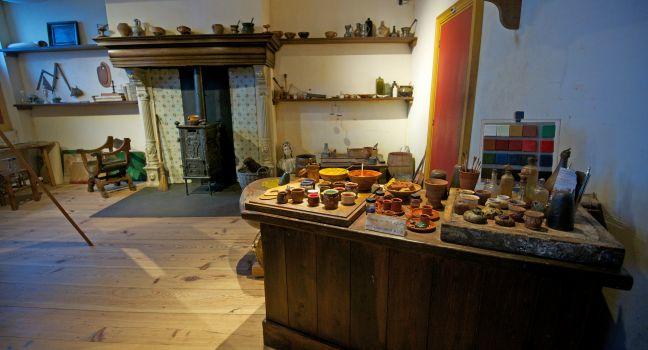
This is the house that Rembrandt, flush with success, bought for 13,000 guilders (a princely sum) in 1639, and where he lived and worked until 1656, when he declared bankruptcy. The house interior has been restored with elegant contemporaneous furnishings and artwork in the reception rooms—a collection of rarities that match as closely as possible the descriptions in the inventories made when Rembrandt was forced to sell everything—but it doesn't convey much of the humanity of Rembrandt himself. When he left here, he was not only out of money but also out of favor with the city after relationships with servant girls following the death of his wife, Saskia. The little etching studio is perhaps the most atmospheric. Littered with tools of the trade, a printing press, and a line hung with drying prints (there are demonstrations), it's easy to imagine Rembrandt finding respite here, experimenting with form and technique, away from uncomfortable schmoozing for commissions (and loans) in the grander salon. The museum owns a huge collection of etchings (260 of the 290 he made), and a changing selection is on permanent display. His magisterial prints Hundred Guilder and Three Crosses show that Rembrandt was almost more revolutionary in his prints than in his paintings, so this collection deserves respectful homage, if not downright devotion, by printmakers today.
Jodenbreestraat 4, Amsterdam, 1011 NK, Netherlands
020-520–0400
Sight Details
€18

Something incorrect in this review?

Ons' Lieve Heer op Solder

Red Light District
Ons' Lieve Heer op Solder, Amsterdam, Holland
© Halie Cousineau / Fodors Travel

With its elegant gray-and-white facade and spout gable—the block atop the building that looks like a funnel, which used to signify a warehouse or trade house rather than a residential property—this building appears to be another lovely 17th-century canal house, and on the lower floors it is. But tucked away in the attic is a clandestine place of Catholic worship, a schuilkerk (hidden church), one of the very few to survive. Catholic masses were officially forbidden from 1578, but the Protestant authorities in Amsterdam turned a blind eye, provided the churches were not recognizable as such from the outside. Restored to its 19th-century appearance, the chapel itself is a triumph of Dutch taste, with a magnificent old rose color scheme and marbled wood columns to match, a gorgeous green altar, and the Baptism of Christ in the Jordan (1716) painting by Jacob de Wit presiding over all.

The grandeur continues throughout the house, which was renovated by merchant Jan Hartman between 1661 and 1663. The kitchen and chaplain bedroom remain furnished in the style of the age, and the day room looks as if it were plucked from a Vermeer painting. With its copper chandelier and marble Solomonic columns, it's one of the most impressive 17th-century rooms left in Amsterdam. The new part of the museum, on the other side of the alley, hosts temporary exhibitions.

Oudezijds Voorburgwal 38--40, Amsterdam, 1012 GD, Netherlands
020-624–6604
Sight Details
€17
Closed Sun. morning

Something incorrect in this review?

Allard Pierson Museum

Red Light District

Once the repository of the nation's gold supply, this former National Bank with its stern Neoclassical facade is now home to archaeological treasures from the collection of the University of Amsterdam. The museum traces the early development of Western civilization, from the Egyptians to the Romans, and of the Near Eastern cultures (Anatolia, Persia, Palestine) in a series of well-documented displays. The building, which underwent a renovation in 2019, is also connected to the University of Amsterdam's Bijzondere Collecties (Special Collections) showcase with interesting exhibitions.

Oude Turfmarkt 127, Amsterdam, 1012 GC, Netherlands
020-525–5501
Sight Details
€15
Closed Mon.

Something incorrect in this review?

Recommended Fodor's Video

Amsterdam Centraal Station

Medieval Center

The main train station of the Dutch capital---there are 11 others---was designed as an architectural statement by P. J. H. Cuypers, who was also famously associated with Amsterdam's Rijksmuseum. Although it has many Gothic motifs (including a unique weather vane disguised as a clock in its left tower), it's now considered a landmark of Dutch Neo-Renaissance style. Its construction required the creation of three artificial islands and over 8,600 wooden piles to support it. Completed in 1889, it represented a psychological break with the city's seafaring past, as its erection slowly blocked the view to the IJ River. Another controversy arose from its Gothic detailing, which was considered by uptight Protestants as a tad too Catholic—like Cuypers himself—and earned it the nickname "the French Convent." (Similarly, the Rijksmuseum became "the Bishop's Castle.") If you're visiting the 1e Klas restaurant on Platform 2b, wander down to look at the magnificent golden gate of the Royal Waiting Room. You can't go in unless it's Open Monuments Day (second weekend in September), but if you scan the QR code at the entrance with your smart phone you can get a 360-degree virtual tour—or simply peer through the glass. Amsterdam's main bus station, as well as a host of shops and restaurants, are on the IJ side, in an extension completed in 2017.

Amsterdamse Bos

Beyond Oud-Zuid, straddling Amsterdam and Amstelveen, the largest of Amsterdam's parks covers 1,000 hectares (almost 2,500 acres) and incorporates 200 km (124 miles) of foot, bike, and bridle paths traversed by 116 bridges—67 of which designed in the early-20th-century Amsterdam School style, with characteristic redbrick and sculpted-stone detailing. There are wide recreational fields, a boating lake, the impressive Olympic Bosbaan rowing course (overlooked by the terraces of grand café De Bosbaan), and numerous playgrounds and wonderful water-play areas for toddlers.

One popular family attraction is the Geitenboerderij "De Ridammerhoeve" goat farm ( Nieuwe Meerlaan 4, follow blue signs past Boerderij Meerzicht  020/645–5034  www.geitenboerderij.nl) with a playground and lunchroom, a sunny terrace, and lots of chickens hopping about between the goats. Your kids can bottle-feed the four-legged kind and cuddle bleating babies in the barn.

For public transport to the Amsterdamse Bos, there are various options: visit  9292.nl for up-to-date information or call  0900–9292. You can also rent bikes ( 020/644–5473) year-round at the entrance of the Amsterdamse Bos opposite the visitor center; maps, suggested routes, and signposting are plentiful throughout the park.

If you didn't pack your own lunch, Boerderij Meerzicht is a traditional Dutch pancake house, with a small deer zoo and playground for kids ( Koenenkade 56  020/679–2744  www.boerderijmeerzicht.nl).

ARCAM

The Architecture Centre Amsterdam is dedicated to the city's architecture, urban design, and landscape architecture, and hosts exhibitions, lectures, and tours. They publish a wide range of maps and guides both in print and online, including ARCAM's Architecture Guide, which contains information on more than 600 Amsterdam buildings. Its swoopy silver building has become an architectural icon.

Prins Hendrikkade 600, 1011 VX, Netherlands
020-620–4878
Sight Details
€4
Closed Mon.

Something incorrect in this review?

ARTIS Amsterdam Royal Zoo

The name of this zoo, which was the first of its kind in the Netherlands, is short for Natura Artis Magistra (Nature Is the Teacher of the Arts). Founded in 1838, the park has more than 900 species of animals, more than 200 species of trees, a butterfly pavilion, an insectarium, and beautiful 19th-century architecture, of which the aquarium (closed for renovations until 2025) is a fine example. The Micropia, the world's first museum dedicated to microbes, has lots of interactive exhibits. It provides insights into the importance played by micro-organisms like bacteria, algae, and viruses and their essential role in life on earth (not only as bringers of diseases like COVID). ARTIS-Groote Museum, which reopened in 2022 after a 75-year absence and a major renovation, aims to answer all the big questions about life on earth. 

Plantage Kerklaan 38–40, 1018 CZ, Netherlands
Sight Details
€28 (zoo only), from €31 for combi-ticket

Something incorrect in this review?

Beurs van Berlage

Medieval Center

The old stock-exchange building is revered as Amsterdam's first modern building and the country's most important piece of 20th-century architecture. Built between 1898 and 1903 by H. P. Berlage, its design became a template for the style of a new century. The new Beurs, with its simple lines and the influence it had on the Amsterdam School architects who followed Berlage, earned him the reputation of being the "Father of Modern Dutch Architecture."

A staunch socialist, Berlage designed the building as a "public palace," a function it truly fulfills today with room for conferences, collaborative workspaces, exhibitions, and events. Or just stop by Bistro Berlage for coffee, lunch, or dinner. There was a major redesign of this former Grand Café in 2017, but you can still admire the stunning symbolist mosaics by Jan Toorop inside. Weather permitting, the new Beursplein terrace is a pleasant place to watch the world go by.

Cobra Museum of Modern Art

Just south of Amsterdam, in the town of Amstelveen, this wonderful museum is worth a detour. Hundreds of the avant-garde CoBrA movement's artworks (1948–51) are on permanent display here, including paintings, sculptures, and ceramics by Karel Appel, CoBrA's biggest name. The movement proved to be a milestone in the development of European abstract expressionism, and its name is an acronym created from the initials of the members' hometowns of Copenhagen, Brussels, and Amsterdam. In addition to its own collection, the museum organizes temporary modern art exhibitions. For public transport to the museum visit  9292-ov.nl for up-to-date information.

Sandbergplein 1, 1181 ZX, Netherlands
020-547–5050
Sight Details
€24

Something incorrect in this review?

Dam

Medieval Center

Home to Het Koninklijk Paleis and De Nieuwe Kerk, Dam Square (or just "Dam") is Amsterdam's main square. It traces its roots to the 13th century and the dam built over the Amstel River (hence the city's name, a bastardization of the earlier Aemstelredam). The waters of the Damrak (the continuation of the Amstel) once reached right up to the Dam, with ships and barges sailing to the weigh house. Folks came here to trade, talk, protest---and be executed. In the 17th century, the square was hemmed in by houses and packed with markets. For a taste of that atmosphere, head into the warren of alleys behind the Nieuwe Kerk, with a 1619 proeflokaal (jenever [Dutch gin] tasting house) called De Drie Fleschjes (The Three Small Bottles) on Gravenstraat. In the 19th century, the Damrak was filled in to form the street leading to Centraal Station, and King Louis, Napoléon's brother, demolished the old weigh house in 1808 because it spoiled the view from his bedroom window in the Royal Palace. Today, the Dam is a teeming magnet for celebrations, fairs, street performers, and protests.

Dam, Amsterdam, 1012 AA, Netherlands
Sight Details
Free

Something incorrect in this review?

Damrak

Medieval Center

This unavoidable street leading up to Centraal Station is still lined with a tawdry assortment of shops, hotels, and tourist traps, but it's slowly improving as part of the city's clean-up efforts. Behind the neon signs some examples of lovely Dutch architecture have emerged after decades of hiding. Damrak and its extension, Rokin, were once the Amstel River, bustling with activity, the piers loaded with fish and other cargo en route to the weigh house at the Dam. They were filled in 1845 and 1883, respectively, and now the only open water that remains is a patch in front of the station that provides mooring for tour boats. Damrak now boasts several renovated buildings, and an underground parking lot for bikes has created space on Beursplein for trees and terraces. The new Beurspassage—a passageway linking Nieuwendijk and Damrak—is a particular highlight thanks to a 4,843-square-foot artwork (the largest in the city) called "Amsterdam Oersoep" or Amsterdam primordial soup. It is an homage to Amsterdam’s canals, featuring glass mosaic, tile, terrazzo, and gold chandeliers composed of bicycle parts.

Damrak, Amsterdam, 1012, Netherlands
Sight Details
Free

Something incorrect in this review?

De Waag

Nieuwmarkt

Built in 1488, the Waag functioned as a city gate, Sint Antoniespoort, until 1617. It would be closed at exactly 9:30 pm to keep out not only bandits but also the poor and diseased who squatted outside the city's walls. When Amsterdam expanded, the structure began a second life as a weigh house for incoming goods. The top floor of the building accommodated the municipal militia and several guilds, including the stonemasons, who did the evocative decorations that grace each of the seven towers' entrances. One tower housed a teaching hospital for the Surgeons' Guild. The Theatrum Anatomicum (Anatomy Theater), with its cupola tower covered in painted coats of arms, was the first place in the Netherlands to host public autopsies; for obvious reasons, these took place only in the winter. The building is now occupied by Restaurant-Café In De Waag and the Waag Society (Institute for Art, Science, and Technology).

Nieuwmarkt 4, Amsterdam, 1012 CR, Netherlands
020-422–7772-Restaurant-Café In De Waag
Sight Details
Free

Something incorrect in this review?

Dutch Holocaust Memorial of Names

Unveiled in 2021, 76 years after the end of World War II, the Dutch Holocaust Memorial of Names is the first memorial site in the Netherlands to display all the names of the Dutch victims of the Shoah, including their dates of birth and age at death. Designed by the Polish-Jewish-American architect Daniel Libeskind, the monument is made up of four reflective stainless steel Hebrew letters that translate to "in memoriam," and below it, 102,000 bricks with the names of murdered Jewish, Sinti, and Roma people. Situated in the heart of the Jewish Quarter, it is a touching remembrance.

Embassy of the Free Mind

Busts of the Greek deities of Apollo, Ceres, Mercury, Minerva, Bacchus, and Diana welcome visitors to this magnificent example of Dutch Renaissance architecture known as Huis met de Hoofden (The House with the Heads). It is one of only three houses in Amsterdam with a side house, and a forerunner of the double house. The Bartolotti House ( Herengracht 170–172) and De Dolfijn ( The Dolphin, Singel 140–142) are the other notable examples. This 1622 mansion is attributed to father and son architects Hendrick and Pieter de Keyser. In 2007 the mansion was bought by Joost R. Ritman, owner of a world-famous collection of spirituality literature, the Hermetic Philosophy Library. In 2017, the Ritman Library was moved to Het Huis met de Hoofden, creating a museum, library, and platform for free thinking inspired by the philosophy of the collection. The Embassy of the Free Mind is focused on Western philosophical and spiritual traditions and their connections to concepts such as free speech and contrarian thinking.

Keizersgracht 123, 1015 CJ, Netherlands
020-625–8079
Sight Details
€15
Closed Mon. and Tues.

Something incorrect in this review?

Felix Meritis Cultural Center

Following a three-year renovation, the restored home of the former Felix Meritus Society (Latin for "happiness through achievement") reopened in March 2020. Situated in a typical building of the Enlightenment—its Neoclassical architecture arose one year before the French Revolution, 1788—it once housed a society dedicated to the study and promotion of economics, science, painting, music, and literature. The building has an observatory and concert hall (Robert and Clara Schumann performed here twice). After the dissolution of the society in 1888, it was owned by printers, occupied by the Communist Party, and then became a venue for performing arts under the name Shaffy Theater. It's now a cultural center for "curious minds" with plays, films, readings, and debates; see the website for the latest events.

Keizersgracht 324, 1016 EZ, Netherlands
020-627–9477
Sight Details
Varies by event

Something incorrect in this review?

Haarlemmerpoort

This Neoclassical ceremonial gateway was built in 1840 as an excise post to replace one of the former city gates, which had to be demolished. It has been variously used as a police station, fire station, and public works office; in 1986 it was restored and converted into apartments. It's a useful landmark to find your way to the Westerpark.

Haarlemmerplein 50, 1013 KH, Netherlands

Something incorrect in this review?

Hash Marihuana & Hemp Museum

Red Light District

You might think that more effort could have gone into the name of this institution—lateral thinking being one of the positive effects of its subject. Regardless, here's your chance to embrace the 10,000-year history of cannabis use.

Oudezijds Achterburgwal 148, Amsterdam, 1012 DV, Netherlands
020-624–8926
Sight Details
€9 including free audiotour

Something incorrect in this review?

Het Spui

Medieval Center

This beautiful and seemingly tranquil tree-lined square hides a lively and radical past---in the 1960s, the Provo counterculture movement held weekly gatherings around the statue in the center of the square. Journalists and bookworms have long favored its many cafés, and the Atheneum News Center (No. 14–16) and its adjoining bookstore are the city's best places to peruse an international array of literature, magazines, and newspapers. More cultural browsing can be enjoyed at the Spui's book market on Friday and at its art market on Sunday.

Spui, Amsterdam, 1012 XM, Netherlands
Sight Details
Free

Something incorrect in this review?

Homomonument

The world's first memorial to persecuted gays and lesbians was designed by Karin Daan and unveiled here in 1987. Three huge triangles of pinkish granite—representing past, present, and future—form a larger triangle. On May 4 (Remembrance Day), there are services here commemorating all homosexual victims in history, with an emphasis on the victims of World War II, when thousands were killed (the 50,000 sentenced were all forced to wear pink triangles stitched to their clothing). Flowers are laid daily for lost friends, especially on the descending triangle that forms a dock of sorts into Keizersgracht. The points of the triangles point to the Anne Frank House, the National Monument on Dam Square, and the COC Center, the gay-and-lesbian organization founded in 1946 (discreetly called the Center of Culture and Leisure Activities). Near the Homomonument is the kiosk housing Pink Point, the best source of information on gay and lesbian Amsterdam.

Westermarkt, 1016 GW, Netherlands
062-474–3350
Sight Details
Free

Something incorrect in this review?

Huis De Pinto

Nieuwmarkt

Jewish financier, economist, and scholar Isaac de Pinto was a significant investor in the Dutch East Indies Company and bought this house in 1651. It was grandly renovated in the style of Dutch Classicism by his son, together with architect Elias Bouwman, in the 1680s. In the 1960s it was almost demolished so that the street could be widened, but activists saved the building. The restored interior features recent additions, such as beautiful painted ceilings and by the entrance, a little cherub reading a book, a reference to the building's current manifestation as a literary and cultural center. The reading room is a peaceful place to while away a few hours on a rainy day (or swap a book in the book exchange library) and ''coffee concerts,'' book presentations, and other cultural events are regularly held here.

Sint Antoniesbreestraat 69, Amsterdam, 1011 HB, Netherlands
020-370–0210
Sight Details
Free
Closed Sun.

Something incorrect in this review?

Huis Marseille

This cutting-edge contemporary photography museum is housed in 14 exhibition rooms of a gorgeous 17th-century canal house and its neighbor. Originally owned by a merchant who earned his wealth from a ship that sailed from Marseille, there's still a gable stone that depicts a map of the French port for which the house was named. The widest possible range of genres is covered by new shows every three months. There are also thousands of photography books in the library.

Keizersgracht 401, 1016 EK, Netherlands
020-531–8989
Sight Details
€13
Closed the wk before exhibition opening

Something incorrect in this review?

Joods Historisch Museum

Nieuwmarkt

Four Ashkenazi synagogues (or shuls, in Yiddish), dating to the 17th and 18th centuries, were combined with glass-and-steel constructions in 1987 to create this warm and impressive museum commemorating four centuries in the history of the Jewish people in Amsterdam and the Netherlands. Back in the 17th century, Ashkenazi Jews fled the pogroms in Central and Eastern Europe. Sephardic Jews had already settled here---and each community built its own synagogues. There are four of them in this complex: the Neie Sjoel (New Synagogue, 1752) shows the history of Jews in the Netherlands from 1900 until today; the Grote Sjoel (Great Synagogue, 1671) presents the tenets of Judaism as well as the history of Jews in the Netherlands before 1900; the Obbene Sjoel (Upstairs Synagogue, 1685) is home to the children's museum; and the Dritt Sjoel (Third Synagogue, 1700/1778) houses the museum's offices. The museum is also home to one of the city's few kosher cafés. Whether you tour the collections or regular exhibitions, check out the excellent tours of the Jewish Quarter conducted by this museum.

Nieuwe Amstelstraat 1, Amsterdam, 1011 PL, Netherlands
020-531–0310
Sight Details
€17 Jewish Cultural Quarter ticket, includes Jewish Historical Museum; Children’s Museum; Portuguese Synagogue; National Holocaust Museum (closed for renovation); Hollandsche Schouwburg (closed for renovation)

Something incorrect in this review?

Moco Museum

Moco Museum was founded in 2016 by collectors Kim and Lionel Logchies as an independent museum focused on modern, contemporary, and street art by big names like Andy Warhol, Jean-Michel Basquiat, Banksy, Keith Haring, THE KID, Yayoi Kusama, Damien Hirst, Tracey Emin, and others. The founders’ goal was to create a museum that would make art more accessible to a broader (and younger) audience. Situated in the historic Villa Alsberg with its fin de siècle features designed by Eduard Cuypers (the nephew of the Rijksmuseum’s famous architect Pierre Cuypers), the museum has quickly established a reputation for its innovative approach to showcasing iconic paintings, street art pieces and sculptures that question the world around us, challenge the norm and broaden perspectives.

Honthorststraat 20, 1071 DE, Netherlands
Sight Details
€22

Something incorrect in this review?

Mozes en Aäronkerk

Nieuwmarkt

Landmarking the eastern corner of the Waterlooplein, this structure once had a warehouse facade to disguise its function as a clandestine Catholic church. If this church could speak, it would name-drop the great philosopher Spinoza (it was built on the location of his birth house) and Franz Liszt (it hosted a recital of his Graner Messe, attended by the Hungarian composer himself). Originally built in the 1640s, it was rebuilt in 1841 by architect T. F. Suys, then refurbished in 1969. The church's popular name (Moses and Aaron) refers to the figures adorning two gable stones of the original edifice, now seen in the rear wall. In a rare move in a rapidly secularizing country where churches are sometimes turned into carpet stores or bowling alleys, the Mozes en Aäronkerk was reconsecrated in 2014, after a hiatus of 34 years. It's used today by the Catholic Community of Sant'Egidio.

Waterlooplein 205, Amsterdam, 1011 PG, Netherlands
020-233–1522
Sight Details
Free
Closed outside of church services

Something incorrect in this review?

Multatuli Huis

This museum honors the beliefs and work (and continues the legacy) of Eduard Douwes Dekker (1820–87), aka Multatuli (from the Latin, meaning "I have suffered greatly"), who famously wrote Max Havelaar, or the Coffee Auctions of the Dutch Trading Company, a book that uncovered the evils of Dutch colonialism. Born in this very house as the son of a sea captain, Dekker accompanied his father to the Dutch East Indies (modern-day Indonesia) and joined the Dutch civil service there. After becoming disenchanted and spending years wandering in poverty, he wrote and published his magnum opus in 1860, denouncing and exposing the colonial landowners' narrow minds and inhumane practices. Today, Dutch intellectuals and progressive thinkers respect him mightily.

Korsjespoortsteeg 20, 1015 AR, Netherlands
020-638–1938
Sight Details
€7
Closed Mon.–Thurs.

Something incorrect in this review?

Munttoren

This tower received its current name in 1672, when French troops occupied much of the surrounding republic, and Amsterdam was given the right to mint its own coins here for a brief one-year period. The spire was added by Hendrick de Keyser in 1620, and the weather vane on top in the shape of a gilded ox is a reference to the calves market close by: Kalverstraat. The guardhouse, which now houses a rather touristy Dutch porcelain shop, has a gable stone above its entrance that portrays two men and a dog in a boat. This is a symbolic representation of the city, in which warrior and merchant are bound together by loyalty—that would be the dog—and sailing toward the future.

Muntplein, 1012 WR, Netherlands
Sight Details
Free

Something incorrect in this review?

Museum 't Kromhout

Founded in 1757 by Doede Jansen Kromhout, a carpenter, this is one of Amsterdam's oldest functioning shipyards. Almost 300 ships were built here during its heyday in the late 19th century. In the early 20th century, 't Kromhout was producing the diesel engines used by Dutch canal boats. Boats and engines are still restored here, and the museum has a collection of historical ships' engines on display.

Hoogte Kadijk 147, 1018 BJ, Netherlands
020-627–6777
Sight Details
€10
Closed Mon. and Wed.–Sun., except 3rd Sun. of month

Something incorrect in this review?

National Monument

Medieval Center

The National Monument, a towering white travertine obelisk, was erected in 1956 as a memorial to those who died in World War II. Designed by architect J. J. P. Oud, who thought that De Stijl minimalism was in keeping with the monument's message, it's the focal point for Remembrance Day (May 4), when Dutch losses in wars and peacekeeping missions around the world are commemorated. The monument contains 12 urns: 11 are filled with earth from all the Dutch provinces, and the 12th was meant to contain earth from the former colonies (Indonesia, Suriname, and the Antilles) but was never filled. Oud designed the steps to be used as seating, and today it's still a favored rest spot and a great place to watch the world go by.

Dam, Amsterdam, 1012 JL, Netherlands
Sight Details
Free

Something incorrect in this review?

Nes

Red Light District

While it's one of the oldest streets in Amsterdam, the Nes may not one of the prettiest, but it's filled with plenty of theaters and restaurants. For two centuries, it was packed with monasteries and convents, until the Alteration (or Protestant changeover) in 1578, which kick-started Amsterdam's march toward the Golden Age. Adjacent to the southern end of the Nes is Gebed Zonder End, the "Prayer Without End" alleyway, which got its name because it was said you could always hear prayers from behind the walls of the convents that used to line the alley. The Frascati Theater (No. 63) began life as a coffeehouse in 1810, but it wasn't until the 1850s that the street really blossomed with cafés filled with dance, song, operetta performances, and vaudeville, the stars of which often represented the less uptight segment of the Jewish community.

Between Langebrugsteeg and Dam, Amsterdam, 1012, Netherlands

Something incorrect in this review?

Nieuwe Kerk

Medieval Center

Nieuwe Kerk (New Church) is a soaring late-Gothic structure whose tower was never completed because the authorities blew all their money on the city hall (now the Royal Palace) next door. Check out the magnificently sculpted oak pulpit by Albert Vinckenbrinck, constructed after the Great Fire of 1645. It took him 15 years to complete, although there is now a bit missing: the scales from a Lady of Justice were an impulsively generous gift to the Canadians, who helped to liberate Amsterdam. Other features include the unmarked grave of the poet and playwright Van den Vondel (the "Dutch Shakespeare") and Rombout Verhulst's extravagantly sculpted eulogy to naval hero Admiral Michiel de Ruyter (you can peer through a glass to see his actual coffin in the crypt).

Dam, Amsterdam, 1012 NP, Netherlands
020-626–8168
Sight Details
€16 (varies by exhibition)
Sometimes closed due to official state functions next door (check website)

Something incorrect in this review?