6 Best Sights in Amsterdam, Netherlands

Background Illustration for Sights

We've compiled the best of the best in Amsterdam - browse our top choices for the top things to see or do during your stay.

Ons' Lieve Heer op Solder
Red Light District
Ons' Lieve Heer op Solder, Amsterdam, Holland
© Halie Cousineau / Fodors Travel

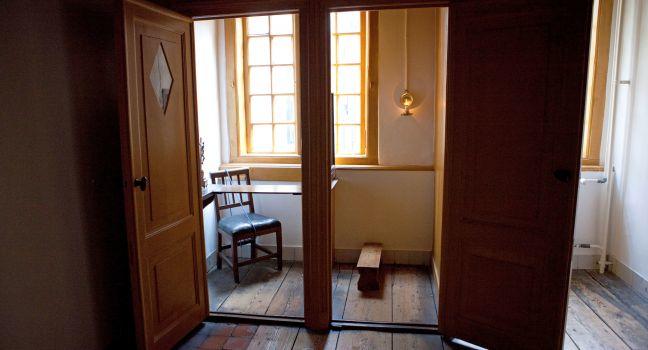
With its elegant gray-and-white facade and spout gable—the block atop the building that looks like a funnel, which used to signify a warehouse or trade house rather than a residential property—this building appears to be another lovely 17th-century canal house, and on the lower floors it is. But tucked away in the attic is a clandestine place of Catholic worship, a schuilkerk (hidden church), one of the very few to survive. Catholic masses were officially forbidden from 1578, but the Protestant authorities in Amsterdam turned a blind eye, provided the churches were not recognizable as such from the outside. Restored to its 19th-century appearance, the chapel itself is a triumph of Dutch taste, with a magnificent old rose color scheme and marbled wood columns to match, a gorgeous green altar, and the Baptism of Christ in the Jordan (1716) painting by Jacob de Wit presiding over all.

The grandeur continues throughout the house, which was renovated by merchant Jan Hartman between 1661 and 1663. The kitchen and chaplain bedroom remain furnished in the style of the age, and the day room looks as if it were plucked from a Vermeer painting. With its copper chandelier and marble Solomonic columns, it's one of the most impressive 17th-century rooms left in Amsterdam. The new part of the museum, on the other side of the alley, hosts temporary exhibitions.

Oudezijds Voorburgwal 38--40, Amsterdam, 1012 GD, Netherlands
020-624–6604
Sight Details
€17
Closed Sun. morning

Something incorrect in this review?

Allard Pierson Museum

Red Light District

Once the repository of the nation's gold supply, this former National Bank with its stern Neoclassical facade is now home to archaeological treasures from the collection of the University of Amsterdam. The museum traces the early development of Western civilization, from the Egyptians to the Romans, and of the Near Eastern cultures (Anatolia, Persia, Palestine) in a series of well-documented displays. The building, which underwent a renovation in 2019, is also connected to the University of Amsterdam's Bijzondere Collecties (Special Collections) showcase with interesting exhibitions.

Oude Turfmarkt 127, Amsterdam, 1012 GC, Netherlands
020-525–5501
Sight Details
€15
Closed Mon.

Something incorrect in this review?

Hash Marihuana & Hemp Museum

Red Light District

You might think that more effort could have gone into the name of this institution—lateral thinking being one of the positive effects of its subject. Regardless, here's your chance to embrace the 10,000-year history of cannabis use.

Oudezijds Achterburgwal 148, Amsterdam, 1012 DV, Netherlands
020-624–8926
Sight Details
€9 including free audiotour

Something incorrect in this review?

Recommended Fodor's Video

Joods Historisch Museum

Nieuwmarkt

Four Ashkenazi synagogues (or shuls, in Yiddish), dating to the 17th and 18th centuries, were combined with glass-and-steel constructions in 1987 to create this warm and impressive museum commemorating four centuries in the history of the Jewish people in Amsterdam and the Netherlands. Back in the 17th century, Ashkenazi Jews fled the pogroms in Central and Eastern Europe. Sephardic Jews had already settled here---and each community built its own synagogues. There are four of them in this complex: the Neie Sjoel (New Synagogue, 1752) shows the history of Jews in the Netherlands from 1900 until today; the Grote Sjoel (Great Synagogue, 1671) presents the tenets of Judaism as well as the history of Jews in the Netherlands before 1900; the Obbene Sjoel (Upstairs Synagogue, 1685) is home to the children's museum; and the Dritt Sjoel (Third Synagogue, 1700/1778) houses the museum's offices. The museum is also home to one of the city's few kosher cafés. Whether you tour the collections or regular exhibitions, check out the excellent tours of the Jewish Quarter conducted by this museum.

Nieuwe Amstelstraat 1, Amsterdam, 1011 PL, Netherlands
020-531–0310
Sight Details
€17 Jewish Cultural Quarter ticket, includes Jewish Historical Museum; Children’s Museum; Portuguese Synagogue; National Holocaust Museum (closed for renovation); Hollandsche Schouwburg (closed for renovation)

Something incorrect in this review?

Multatuli Huis

This museum honors the beliefs and work (and continues the legacy) of Eduard Douwes Dekker (1820–87), aka Multatuli (from the Latin, meaning "I have suffered greatly"), who famously wrote Max Havelaar, or the Coffee Auctions of the Dutch Trading Company, a book that uncovered the evils of Dutch colonialism. Born in this very house as the son of a sea captain, Dekker accompanied his father to the Dutch East Indies (modern-day Indonesia) and joined the Dutch civil service there. After becoming disenchanted and spending years wandering in poverty, he wrote and published his magnum opus in 1860, denouncing and exposing the colonial landowners' narrow minds and inhumane practices. Today, Dutch intellectuals and progressive thinkers respect him mightily.

Korsjespoortsteeg 20, 1015 AR, Netherlands
020-638–1938
Sight Details
€7
Closed Mon.–Thurs.

Something incorrect in this review?

Verzetsmuseum

From May 14, 1940, to May 5, 1945, the Netherlands was occupied by Nazi Germany, and this museum looks at the population's response—who resisted and how. All forms of resistance are covered: strikes, forging documents, hiding and escape (such as the Dutch-Paris line), armed resistance, and espionage. Personal documents, touching personal stories, and sound fragments offer a rich context that not only conveys what occupied life really felt like but also challenges visitors to consider their own behavior and choices today. The Resistance Museum Junior focuses on the stories of four eyewitnesses: Eva, Henk, Jan, and Nelly, who were between 9 and 14 years old during the war (the same age group as the target audience). The children's museum gives the concept of "resistance" a positive twist, using examples from World War II to make kids aware of the importance of mutual respect, freedom, the fragility of democracy, and their own responsibility in dealing with discrimination and persecution. Displays also show how some of today's main Dutch newspapers and magazines, like Het Parool (The Password) and Vrij Nederland (Free Netherlands), began as illegal underground newsletters.