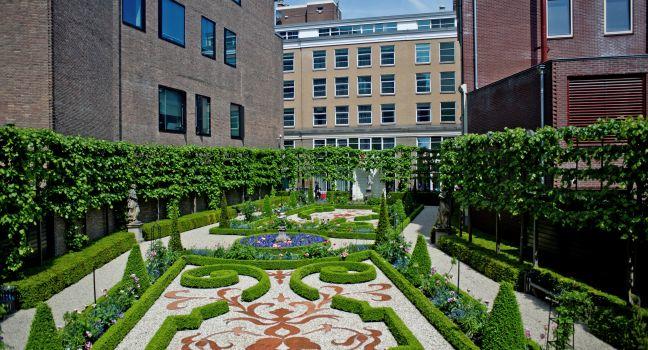
Anne Frankhuis
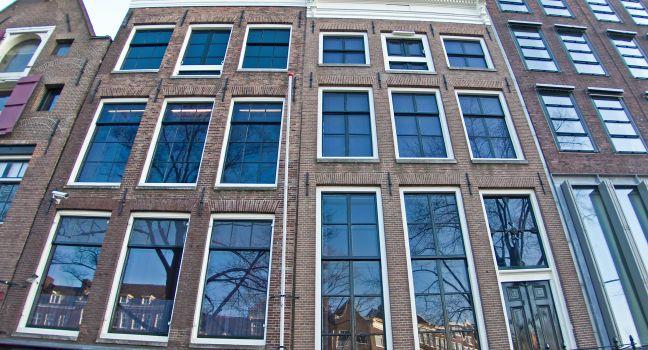
In the pages of The Diary of Anne Frank (published posthumously in 1947 by her father, Otto, as The Annex—the title she had chosen), the young Anne recorded two increasingly fraught years living in secret, in a warren of rooms at the back of this 1635 canal house, hidden from the Nazis. Anne was born in Germany in 1929; when she was four, her family moved to the Netherlands to escape growing anti-Jewish sentiment. They made a life in their adopted city until the threat of war in Europe increased. After repeated attempts to emigrate to England, Australia, Chile, and the United States failed and the war reached the Netherlands in 1940, Anne's father Frank took his wife and daughters into hiding in July 1942, the day after Anne's sister Margot received the call to report for a German work camp. A week later they were joined by the Van Pels family: Auguste, Hermann, and their son, Peter. Four months later, dentist Fritz Pfeffer moved in.
The five adults and three children sought refuge in the attic of the rear annex, or achterhuis, of Otto's pectin business in the center of Amsterdam. The entrance to the flat was hidden behind a hinged bookcase. Here, like many onderduikers ("people in hiding") throughout Amsterdam, Anne dreamed her dreams, wrote her diary, and pinned up movie-star pictures to her wall (still on view). Five of Otto's trusted employees provided them with food and supplies. In her diary, Anne chronicles the day-to-day life in the house: her longing for a best friend, her crush on Peter, her frustration with her mother, her love for her father, and her annoyance with the petty dentist, who was called Dussel in her diary. In August 1944, the Franks were betrayed, and the Gestapo invaded their hideaway. All the members of the annex were transported to camps. Anne and Margot died of typhoid in Bergen-Belsen a few months before the liberation. Otto Frank was the only survivor of the annex. Miep Gies, one of the friends who helped with the hiding, found Anne's diary after the raid and kept it through the war. Now, millions of people read its tale of humanity's struggle with fascism. A major renovation was completed in 2018 to provide more historical context. Every Tuesday at 10am CEST all tickets become available for a visit six weeks later.
Because of crowds, you must now buy a timed ticket online (through the official website only) before you visit---every Tuesday at 10 am (local Amsterdam time) all tickets become available for a visit six weeks later.