35 Best Sights in Amsterdam, Netherlands

Background Illustration for Sights

We've compiled the best of the best in Amsterdam - browse our top choices for the top things to see or do during your stay.

Brouwersgracht

Jordaan Fodor's choice
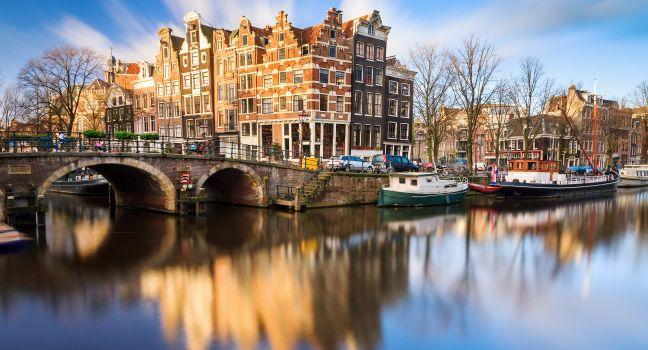
Beautiful image of the UNESCO world heritage canals the 'Brouwersgracht' en 'Prinsengracht (Prince's canal)' in Amsterdam, the Netherlands; Shutterstock ID 192787925; Project/Title: 20 Best Places to Celebrate New Years Eve; Downloader: Fodor's Travel
Dennis van de Water / Shutterstock

Regularly voted Amsterdam's most beautiful street, this wonderful canal at the northern border of the Jordaan is lined with residences and former warehouses for the brewers, fish processors, and tanneries who operated here in the 17th century when Amsterdam was the "warehouse of the world." On top of the old canal, mansions dotting the Brouwersgracht are symbols referring to the breweries that used this waterway to transport their goods to thirsty drinkers hundreds of years ago. Although most of the buildings have been converted into luxury apartments, an old-world charm still reigns. Of particular note are buildings at Nos. 204–212, with their trapezium gables. At No. 162, there are two dried fish above the door; this decoration on a metal screen was the forerunner of the gable stone to denote occupation. The canal provides long views down the grand canals that are perfect for photo ops.
Magere Brug

Fodor's choice
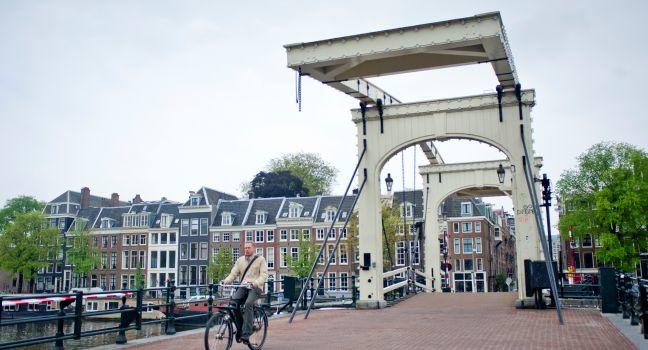
Bridge, Magere Brug, Amsterdam, Holland
© Zach Nelson / Fodors Travel

Of Amsterdam's 60-plus drawbridges, this is the most famous, and it provides gorgeous views of the Amstel and surrounding area. It's said to have been first built in the 1660s, around the time of the construction of the Eastern Canal Ring. While there are many theories about the origins of its name, the most colorful tells a tale of two sisters living on opposite sides of the Amstel who wanted an efficient way of sharing that grandest of Dutch traditions: the gezellige (socially cozy) midmorning coffee break. Whether "mager" referred to their surname, slim physiques, or possibly even their miserliness, we'll never know. Walk by at night when it's spectacularly lighted. Many replacements to the narrow original bridge have come and gone; the current one dates from 1931 but bears a close resemblance to the 19th-century design.

Between Kerkstraat and Nieuwe Kerkstraat, 1018 EK, Netherlands

Something incorrect in this review?

Westerpark

Fodor's choice
Reflections on a canal in Westerpark, Amsterdam.
luismonteiro / Shutterstock

Just beyond the Jordaan and across from the main canal that borders the Western Islands is one of contemporary Amsterdam's most cherished spaces. It's a park first and foremost, with lawns, playgrounds, water fountains, a fabulous designer paddling pool, a barbecue area, and a couple of tennis courts. The sprawling terrain of the city's old Western gasworks has been turned into the Westergasfabriek: cafés, galleries, clubs, shops, and an art-house cinema occupy the former industrial landscape that has been lovingly detoxed, replanted, and refurbished building by building. There's even a bit of natural wilderness (or at least the organized Dutch brand of "wilderness") behind the park, with a community farm, a petting zoo, a natural playground for kids, and some polder areas with footpaths between them. The lovely late-19th-century Sint Barbara cemetery is here, too.

Recommended Fodor's Video

Begijnhof

Medieval Center Fodor's choice

This tree-filled courtyard is a residential hideaway where women of the Beguine order lived a chaste, spiritual life from the 14th century onward. Number 34 is the oldest house in Amsterdam—one of two remaining wooden houses in the city following 15th-century fires that consumed three-quarters of the city. The small Engelse Hervormde Kerk (English Reformed Church) dates to the 14th century, when it was a place of worship for the Begijnen. After the Alteration of 1578 the church was relinquished to Protestants. When senior Begijn Cornelia Arents died in 1654, she said she'd rather be buried in the gutter than in the (now Protestant) church. Her wish was granted; look for the granite slab and plaque on the wall between the church and lawn.

Begijnhof 30, Amsterdam, 1012 WT, Netherlands
Sight Details
Free
Closed at night

Something incorrect in this review?

Bloemgracht

Jordaan Fodor's choice

Lined with traditional burgher houses of the 17th century, this quaint canal is beloved by locals and visitors alike. Many say it's the most pictureseque canal in the city. This was once a center for paint and dye manufacturers, which makes sense because the Jordaan was populated with Golden Age artists—including Rembrandt, who had a studio here. Bloemgracht is still proudly presided over by "De Drie Hendricken," three houses set at Nos. 87–91 owned by the Hendrick de Keyser heritage organization, with their gable stones for a farmer, a city settler, and a sailor.

Between Lijnbaansgracht and Prinsengracht, Amsterdam, 1015 TN, Netherlands

Something incorrect in this review?

De Hallen

Oud-West Fodor's choice

This historic brick complex has a long and varied history in the neighborhood. It was formerly a tram-maintenance building turned artist squat before becoming a community hotspot in 2014. Today, this busy area adjacent to the Ten Katemarkt is a cultural and entertainment hub where visitors can explore a handful of restaurants, cafés, shops, and galleries. Plus, there's a cinema, hotel, and public library, along with the popular indoor market, De Foodhallen.

Egelantiersgracht

Jordaan Fodor's choice

The floral canal names in the Jordaan district are at odds with the fragrances that would have emanated from them in their early days. This canal, named for the "eglantine rose," is one of Amsterdam's loveliest. Many of its houses and surrounding streets were first occupied by Golden Age painters and artisans, including the legendary Blaeu family of mapmakers. Hidden here is the St. Andrieshofje, famous for its Delftware entryway. And certainly not hidden (because it's usually jammed with people) is the famed Café 't Smalle (on the corner of the Prinsengracht). This brown café, covered with eglantine roses and complete with a floating terrace, was where Pieter Hoppe began his jenever distillery in 1780, an event of such global significance that Café 't Smalle is re-created in Japan's Holland Village in Nagasaki.

Between Prinsengracht and Lijnbaansgracht, Amsterdam, 1015 RG, Netherlands

Something incorrect in this review?

Westerkerk

Fodor's choice

Built between 1620 and 1631 by Hendrick de Keyser, the Dutch Renaissance-style Westerkerk was the largest Protestant church in the world until St. Paul's Cathedral in London was built in 1675. The Westerkerk's 85-meter-tall Ouwe Wester, still the tallest church tower in the city, is topped by a bright blue copy of the crown of the Habsburg emperor Maximilian I, who gave Amsterdam the right to use his royal insignia in 1489 in gratitude for support given to the Austro-Burgundian princes.

The church is renowned for its organ and carillon (there are regular lunchtime concerts from March through September). The carillon is played every Tuesday at noon by a real person (a carillonneur) but is automated at other times with different songs tinkling out on the quarter hour, day and night. Anne Frank described the tunes in her diary. Rembrandt, who lived on Rozengracht during his poverty-stricken last years, and his son, Titus, are buried (somewhere) here. The Westertoren (Westerkerk Tower) is a fun climb from April to the end of October, though it's closed for renovations until 2025. 

Prinsengracht 281, 1016 GW, Netherlands
020-624–7766
Sight Details
Interior free
Closed Sat. Oct.–Mar. and Sun. all yr (open for church services only)

Something incorrect in this review?

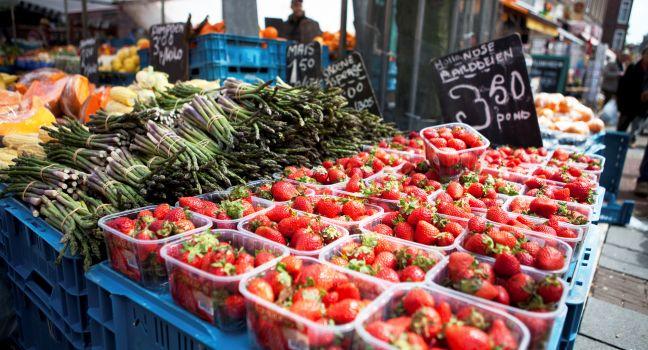
Albert Cuypmarkt

Albert Cuyp Market, The Pijp, Amsterdam, Holland
© Halie Cousineau / Fodors Travel

Over 115 years old, the Albert Cuypmarkt (named for a Golden Age painter) is said to be one of the biggest street markets in Europe. There is a long waiting list for a permanent booth, which means that things can get dramatic around 9 every morning, when the lottery for that day's available temporary spaces takes place. From Monday to Saturday (the busiest day), come rain or shine, thousands of shoppers from throughout the city flock to its more than 260 stalls selling fruit and vegetables, fish, flowers, textiles, and clothing. It's a great place to get a taste of local culture as vendors bark out their bargains over the sound of street musicians. Be sure to try some Dutch snacks, like freshly made stroopwafels (thin waffle cookies with a layer of caramel sandwiched in between) or patat (french fries served with mayonnaise or satay sauce).

Montelbaanstoren

Nieuwmarkt
Montelbaanstoren, Amsterdam, Netherlands
© Halie Cousineau/ Fodors Travel

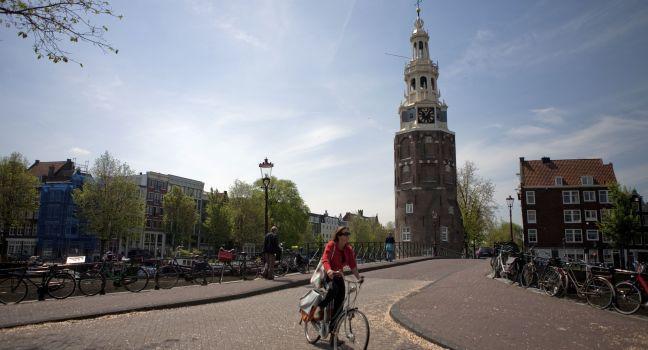
Rembrandt loved to sketch this slightly leaning redbrick tower, which was built in 1516 as part of the city's defenses. In 1606, the Dutch sculptor and architect Hendrick de Keyser oversaw the addition of an octagonal brick superstructure and spire complete with clockworks that was known as Malle Jaap (Crazy Jaap) by locals because the bells pealed at odd times. The year 1610 saw the tower embark on a lean too far, and with lots of manpower and ropes it was reset on a stronger foundation. From 1878 to 2006, it housed the City Water Office. Today it's the office of a company that rents out classic saloon boats (captain included).

Amsterdamse Bos

Beyond Oud-Zuid, straddling Amsterdam and Amstelveen, the largest of Amsterdam's parks covers 1,000 hectares (almost 2,500 acres) and incorporates 200 km (124 miles) of foot, bike, and bridle paths traversed by 116 bridges—67 of which designed in the early-20th-century Amsterdam School style, with characteristic redbrick and sculpted-stone detailing. There are wide recreational fields, a boating lake, the impressive Olympic Bosbaan rowing course (overlooked by the terraces of grand café De Bosbaan), and numerous playgrounds and wonderful water-play areas for toddlers.

One popular family attraction is the Geitenboerderij "De Ridammerhoeve" goat farm ( Nieuwe Meerlaan 4, follow blue signs past Boerderij Meerzicht  020/645–5034  www.geitenboerderij.nl) with a playground and lunchroom, a sunny terrace, and lots of chickens hopping about between the goats. Your kids can bottle-feed the four-legged kind and cuddle bleating babies in the barn.

For public transport to the Amsterdamse Bos, there are various options: visit  9292.nl for up-to-date information or call  0900–9292. You can also rent bikes ( 020/644–5473) year-round at the entrance of the Amsterdamse Bos opposite the visitor center; maps, suggested routes, and signposting are plentiful throughout the park.

If you didn't pack your own lunch, Boerderij Meerzicht is a traditional Dutch pancake house, with a small deer zoo and playground for kids ( Koenenkade 56  020/679–2744  www.boerderijmeerzicht.nl).

ARCAM

The Architecture Centre Amsterdam is dedicated to the city's architecture, urban design, and landscape architecture, and hosts exhibitions, lectures, and tours. They publish a wide range of maps and guides both in print and online, including ARCAM's Architecture Guide, which contains information on more than 600 Amsterdam buildings. Its swoopy silver building has become an architectural icon.

Prins Hendrikkade 600, 1011 VX, Netherlands
020-620–4878
Sight Details
€4
Closed Mon.

Something incorrect in this review?

Dam

Medieval Center

Home to Het Koninklijk Paleis and De Nieuwe Kerk, Dam Square (or just "Dam") is Amsterdam's main square. It traces its roots to the 13th century and the dam built over the Amstel River (hence the city's name, a bastardization of the earlier Aemstelredam). The waters of the Damrak (the continuation of the Amstel) once reached right up to the Dam, with ships and barges sailing to the weigh house. Folks came here to trade, talk, protest---and be executed. In the 17th century, the square was hemmed in by houses and packed with markets. For a taste of that atmosphere, head into the warren of alleys behind the Nieuwe Kerk, with a 1619 proeflokaal (jenever [Dutch gin] tasting house) called De Drie Fleschjes (The Three Small Bottles) on Gravenstraat. In the 19th century, the Damrak was filled in to form the street leading to Centraal Station, and King Louis, Napoléon's brother, demolished the old weigh house in 1808 because it spoiled the view from his bedroom window in the Royal Palace. Today, the Dam is a teeming magnet for celebrations, fairs, street performers, and protests.

Dam, Amsterdam, 1012 AA, Netherlands
Sight Details
Free

Something incorrect in this review?

Damrak

Medieval Center

This unavoidable street leading up to Centraal Station is still lined with a tawdry assortment of shops, hotels, and tourist traps, but it's slowly improving as part of the city's clean-up efforts. Behind the neon signs some examples of lovely Dutch architecture have emerged after decades of hiding. Damrak and its extension, Rokin, were once the Amstel River, bustling with activity, the piers loaded with fish and other cargo en route to the weigh house at the Dam. They were filled in 1845 and 1883, respectively, and now the only open water that remains is a patch in front of the station that provides mooring for tour boats. Damrak now boasts several renovated buildings, and an underground parking lot for bikes has created space on Beursplein for trees and terraces. The new Beurspassage—a passageway linking Nieuwendijk and Damrak—is a particular highlight thanks to a 4,843-square-foot artwork (the largest in the city) called "Amsterdam Oersoep" or Amsterdam primordial soup. It is an homage to Amsterdam’s canals, featuring glass mosaic, tile, terrazzo, and gold chandeliers composed of bicycle parts.

Damrak, Amsterdam, 1012, Netherlands
Sight Details
Free

Something incorrect in this review?

De Waag

Nieuwmarkt

Built in 1488, the Waag functioned as a city gate, Sint Antoniespoort, until 1617. It would be closed at exactly 9:30 pm to keep out not only bandits but also the poor and diseased who squatted outside the city's walls. When Amsterdam expanded, the structure began a second life as a weigh house for incoming goods. The top floor of the building accommodated the municipal militia and several guilds, including the stonemasons, who did the evocative decorations that grace each of the seven towers' entrances. One tower housed a teaching hospital for the Surgeons' Guild. The Theatrum Anatomicum (Anatomy Theater), with its cupola tower covered in painted coats of arms, was the first place in the Netherlands to host public autopsies; for obvious reasons, these took place only in the winter. The building is now occupied by Restaurant-Café In De Waag and the Waag Society (Institute for Art, Science, and Technology).

Nieuwmarkt 4, Amsterdam, 1012 CR, Netherlands
020-422–7772-Restaurant-Café In De Waag
Sight Details
Free

Something incorrect in this review?

Dutch Holocaust Memorial of Names

Unveiled in 2021, 76 years after the end of World War II, the Dutch Holocaust Memorial of Names is the first memorial site in the Netherlands to display all the names of the Dutch victims of the Shoah, including their dates of birth and age at death. Designed by the Polish-Jewish-American architect Daniel Libeskind, the monument is made up of four reflective stainless steel Hebrew letters that translate to "in memoriam," and below it, 102,000 bricks with the names of murdered Jewish, Sinti, and Roma people. Situated in the heart of the Jewish Quarter, it is a touching remembrance.

Haarlemmerpoort

This Neoclassical ceremonial gateway was built in 1840 as an excise post to replace one of the former city gates, which had to be demolished. It has been variously used as a police station, fire station, and public works office; in 1986 it was restored and converted into apartments. It's a useful landmark to find your way to the Westerpark.

Haarlemmerplein 50, 1013 KH, Netherlands

Something incorrect in this review?

Het Spui

Medieval Center

This beautiful and seemingly tranquil tree-lined square hides a lively and radical past---in the 1960s, the Provo counterculture movement held weekly gatherings around the statue in the center of the square. Journalists and bookworms have long favored its many cafés, and the Atheneum News Center (No. 14–16) and its adjoining bookstore are the city's best places to peruse an international array of literature, magazines, and newspapers. More cultural browsing can be enjoyed at the Spui's book market on Friday and at its art market on Sunday.

Spui, Amsterdam, 1012 XM, Netherlands
Sight Details
Free

Something incorrect in this review?

Homomonument

The world's first memorial to persecuted gays and lesbians was designed by Karin Daan and unveiled here in 1987. Three huge triangles of pinkish granite—representing past, present, and future—form a larger triangle. On May 4 (Remembrance Day), there are services here commemorating all homosexual victims in history, with an emphasis on the victims of World War II, when thousands were killed (the 50,000 sentenced were all forced to wear pink triangles stitched to their clothing). Flowers are laid daily for lost friends, especially on the descending triangle that forms a dock of sorts into Keizersgracht. The points of the triangles point to the Anne Frank House, the National Monument on Dam Square, and the COC Center, the gay-and-lesbian organization founded in 1946 (discreetly called the Center of Culture and Leisure Activities). Near the Homomonument is the kiosk housing Pink Point, the best source of information on gay and lesbian Amsterdam.

Westermarkt, 1016 GW, Netherlands
062-474–3350
Sight Details
Free

Something incorrect in this review?

Huis De Pinto

Nieuwmarkt

Jewish financier, economist, and scholar Isaac de Pinto was a significant investor in the Dutch East Indies Company and bought this house in 1651. It was grandly renovated in the style of Dutch Classicism by his son, together with architect Elias Bouwman, in the 1680s. In the 1960s it was almost demolished so that the street could be widened, but activists saved the building. The restored interior features recent additions, such as beautiful painted ceilings and by the entrance, a little cherub reading a book, a reference to the building's current manifestation as a literary and cultural center. The reading room is a peaceful place to while away a few hours on a rainy day (or swap a book in the book exchange library) and ''coffee concerts,'' book presentations, and other cultural events are regularly held here.

Sint Antoniesbreestraat 69, Amsterdam, 1011 HB, Netherlands
020-370–0210
Sight Details
Free
Closed Sun.

Something incorrect in this review?

Mozes en Aäronkerk

Nieuwmarkt

Landmarking the eastern corner of the Waterlooplein, this structure once had a warehouse facade to disguise its function as a clandestine Catholic church. If this church could speak, it would name-drop the great philosopher Spinoza (it was built on the location of his birth house) and Franz Liszt (it hosted a recital of his Graner Messe, attended by the Hungarian composer himself). Originally built in the 1640s, it was rebuilt in 1841 by architect T. F. Suys, then refurbished in 1969. The church's popular name (Moses and Aaron) refers to the figures adorning two gable stones of the original edifice, now seen in the rear wall. In a rare move in a rapidly secularizing country where churches are sometimes turned into carpet stores or bowling alleys, the Mozes en Aäronkerk was reconsecrated in 2014, after a hiatus of 34 years. It's used today by the Catholic Community of Sant'Egidio.

Waterlooplein 205, Amsterdam, 1011 PG, Netherlands
020-233–1522
Sight Details
Free
Closed outside of church services

Something incorrect in this review?

Munttoren

This tower received its current name in 1672, when French troops occupied much of the surrounding republic, and Amsterdam was given the right to mint its own coins here for a brief one-year period. The spire was added by Hendrick de Keyser in 1620, and the weather vane on top in the shape of a gilded ox is a reference to the calves market close by: Kalverstraat. The guardhouse, which now houses a rather touristy Dutch porcelain shop, has a gable stone above its entrance that portrays two men and a dog in a boat. This is a symbolic representation of the city, in which warrior and merchant are bound together by loyalty—that would be the dog—and sailing toward the future.

Muntplein, 1012 WR, Netherlands
Sight Details
Free

Something incorrect in this review?

National Monument

Medieval Center

The National Monument, a towering white travertine obelisk, was erected in 1956 as a memorial to those who died in World War II. Designed by architect J. J. P. Oud, who thought that De Stijl minimalism was in keeping with the monument's message, it's the focal point for Remembrance Day (May 4), when Dutch losses in wars and peacekeeping missions around the world are commemorated. The monument contains 12 urns: 11 are filled with earth from all the Dutch provinces, and the 12th was meant to contain earth from the former colonies (Indonesia, Suriname, and the Antilles) but was never filled. Oud designed the steps to be used as seating, and today it's still a favored rest spot and a great place to watch the world go by.

Dam, Amsterdam, 1012 JL, Netherlands
Sight Details
Free

Something incorrect in this review?

Nes

Red Light District

While it's one of the oldest streets in Amsterdam, the Nes may not one of the prettiest, but it's filled with plenty of theaters and restaurants. For two centuries, it was packed with monasteries and convents, until the Alteration (or Protestant changeover) in 1578, which kick-started Amsterdam's march toward the Golden Age. Adjacent to the southern end of the Nes is Gebed Zonder End, the "Prayer Without End" alleyway, which got its name because it was said you could always hear prayers from behind the walls of the convents that used to line the alley. The Frascati Theater (No. 63) began life as a coffeehouse in 1810, but it wasn't until the 1850s that the street really blossomed with cafés filled with dance, song, operetta performances, and vaudeville, the stars of which often represented the less uptight segment of the Jewish community.

Between Langebrugsteeg and Dam, Amsterdam, 1012, Netherlands

Something incorrect in this review?

Oudemanhuispoort

Red Light District

Landmarked by its now-famous pair of chiseled spectacles set over the Oudezijds Achterburgwal pediment—a sweet reference to old age—this passage led to an Oudemannenhuis, or pensioners' house, founded in 1602. Today bikes (not canes) are in evidence here, as this former almshouse is now part of the University of Amsterdam. One charming relic from its 18th-century days is the covered walkway, which was once lined with traders selling luxury items, whose rents helped subsidize the elderly. Adorned with red shutters, the stalls now house an array of antiquarian booksellers. Atop the Kloveniersburgwal end stands a group of allegorical figures, sculpted by Anthonie Ziesenis in 1786, representing Mercy with the attributes of Abundance (a horn), Enlightenment (a lamp), and Wisdom (a book) flanked by Old Age and Poverty.

Kloveniersburgwal 72, Amsterdam, 1012 DL, Netherlands
Sight Details
Free

Something incorrect in this review?

Ouderkerk aan de Amstel

Just 9 km (5 miles) south of Amsterdam (about a 45-minute bike ride), the village of Ouderkerk aan de Amstel is a perfect little bike trip out of the city along the Amstel. Pick up the river opposite the Stopera—note that the left bank is quieter, and you can bike past rowers, fishermen, cows, and De Zwaan windmill, with a good view over the water of the Riekermolen windmill where Rembrandt sketched. The village, when you get here, includes quaint churches; the 1614 Portuguese Jewish Cemetery, where Spinoza's family is buried; and the Museum Ouder-Amstel, with exhibits on the surrounding area. If you return down the other side of the river, you'll pass a couple of imposing 17th-century summer houses, including the Wester-Amstel ( Amsteldijk-Noord 55, open April through October) with an outside sculpture garden.

1191, Netherlands

Something incorrect in this review?

Sarphatipark

This stunning park was built by and named after noted city benefactor Samuel Sarphati (1813–66), whose statue graces the central fountain. It has undulating paths among the trees, duck ponds, and expanses of grass, and though not very large, it's the perfect place to picnic with everything you picked up at the Albert Cuypmarkt. If you have little ones, there's a wonderful sandpit/playground on the northwest side, while a nature playground was added for bigger kids in the summer of 2020 on the southeast side.

Bounded by Ceintuurbaan and Sarphatipark Sts., 1073 CP, Netherlands

Something incorrect in this review?

Scheepvaarthuis

With its extravagantly phantasmagoric lead-roof detail spilling over various sculpted sea horses, boat anchors, sea gods (Neptune and his four wives), dolphins, and even shoals of fish, this is one of Amsterdam's most delightful early 20th-century structures. Built in the 1910s with a suitably prow-shape front, it was used as the headquarters for the major shipping firms operating in Java and the Spice Islands during the final Dutch colonial years. Today it's the five-star Grand Hotel Amrâth Amsterdam. Twentieth-century master architects Piet Kramer, Johan van der Mey, and Michel de Klerk all contributed to the design of the building; their structure was one of the opening salvos by the fantastic Amsterdam School. After you admire all the ornamentation on the facade, amble around the sides to take in the busts of noted explorers, such as Barentsz and Mercator, along with patterned brickwork and strutting iron tracery. Wander inside to check out the design of the Seven Seas restaurant and have a drink at the classically restored bar. You can book a private tour of the building and its lavish interiors (Sunday at 11:30, in combination with lunch, via Museum Het Schip  www.hetschip.com).

St. Nicolaaskerk

Red Light District

The architect A. C. Bleijs designed this Catholic church with its large dome, twin steeples, and colorful stained-glass windows as a replacement for all the clandestine churches that operated during the Reformation. After the Oude Kerk and the Ons' Lieve Heer op Solder (Our Lord in the Attic) chapel, this church, completed in 1887, became the third (and probably final) Sint-Nicolaas church in Amsterdam. Saint Nicholas, the all-purpose patron saint of children, thieves, prostitutes, sailors, and the City of Amsterdam, transforms into Sinterklaas in mid-November, when he is popularly said to arrive from Spain on a steamboat with his helper Piet (formerly Black Pete). The eve of his birthday on December 6 is celebrated as a family feast when everyone exchanges presents and poems. The church hosts a Choral evensong on Saturday at 5 and a Gregorian chant vesper service on Sunday at 5, September through June.

Prins Hendrikkade 73, Amsterdam, 1012 AD, Netherlands
Sight Details
Free

Something incorrect in this review?

Stadsarchief Amsterdam

Established in 1848, the city's archives comprise millions of maps, drawings, prints, books, photographs, and film about Amsterdam: there are a staggering 50 km (30 miles) worth, making it the largest municipal archive in the world. Highlights—300 of the "most attractive, unusual, valuable, and moving" items—are on permanent display in the Treasury, former bank vaults that look like the tomb of an Egyptian pharaoh. The epic checkerboard building, completed in 1926 and named in honor of its theosophist architect Karel de Bazel, is also fascinating and infused with its creator's religious beliefs. In theosophy, a building is an art form that can express a higher message using mathematical principles to achieve total harmony. Have deep thoughts over lunch in the café or browse the excellent on-site bookstore, which sells just about every available Amsterdam-relevant publication. Special exhibitions are usually also excellent.

Vijzelstraat 32, 1017 HL, Netherlands
020-251–1511
Sight Details
Free, special exhibitions €10
Closed Mon. and weekend mornings

Something incorrect in this review?