937 Best Sights in Germany

Background Illustration for Sights

We've compiled the best of the best in Germany - browse our top choices for the top things to see or do during your stay.

Städelsches Kunstinstitut und Städtische Galerie

Sachsenhausen Fodor's Choice

This is one of Germany's most important art collections, covering 700 years of paintings and sculpture, with a vast collection of paintings by Dürer, Vermeer, Rembrandt, Rubens, Monet, Renoir, and other masters. The downstairs annex features a large collection of works from contemporary artists, including a huge portrait of Goethe by Andy Warhol. The section on German expressionism is particularly strong, with representative works by the Frankfurt artist Max Beckmann and Ernst Ludwig Kirchner. A free smartphone app with a built-in audio guide enhances the experience. There is also an excellent café-restaurant, Holbein's.

Stadtmauer

Fodor's Choice

Rothenburg's city walls are more than 4 km (2½ miles) long and dotted with 42 red-roofed watchtowers. Due to its age, only about half of the wall can be accessed on foot, but it provides an excellent way of circumnavigating the town from above. Let your imagination take you back 600 years as you explore the low, covered sentries' walkways, which are punctuated by cannons, turrets, and areas where the town guards met. Stairs every 200 or 300 yards provide ready access or departure. Called the Tower Trail, there are superb views of the tangle of pointed and tiled red roofs and of the rolling country beyond through viewpoints, many of which are narrow slits, since this was a protection against invaders.  Parts of the wall feature plaques of individuals and groups which contributed to the wall's restoration after WWII.

Steinerne Brücke

Fodor's Choice

This impressive medieval bridge resting on massive stone pontoons is Regensburg's most celebrated sight. It was completed in 1146 and was rightfully considered a miraculous piece of engineering at the time. As the only crossing point over the Danube for miles, it effectively cemented Regensburg's control over trade. The significance of the little statue on the bridge is a mystery, but the figure seems to be a witness to the legendary rivalry between the master builders of the bridge and those of the Dom.

Regensburg, 93059, Germany

Something incorrect in this review?

Recommended Fodor's Video

Stiftung Kunsthaus Heylshof in Worms

Fodor's Choice

Located in the Heylshofgarten, this is one of the leading art museums of the region. It has an exquisite collection of German, Dutch, and French paintings as well as stained glass, glassware, porcelain, and ceramics dating from the 15th to the 19th century.

Stephansg. 9, Worms, 67547, Germany
06241-22000
Sight Details
€5
Closed Jan. and Feb. Closed Mon. Mar.–Dec.

Something incorrect in this review?

Technik Museum

Fodor's Choice
Built on the site of a former aircraft works just outside the city center (about a 10-minute walk from the Kaiserdom), the Technik Museum houses 300 exhibits including space suits, a landing capsule, and an original Russian BURAN space shuttle as part of Europe's largest aerospace exhibition. In addition, there are walk-in exhibits including a Boeing 747 and a 46-meter-long U9 submarine; and there's also a collection of vintage cars, ships, locomotives, and motorcycles. While you're here, don't miss one of the world's biggest collections of mechanical musical instruments at the Wilhelmsbau Museum (entry included in ticket price) or a movie on the curved screen of the IMAX DOME theater. Allow at least three hours to visit this extensive museum, which covers several large buildings.

Thomaskirche

Fodor's Choice

The stained-glass windows attest to the fact that Johann Sebastian Bach served as choirmaster at this Gothic church for 27 years, and Martin Luther preached here on Whitsunday 1539, signaling the arrival of Protestantism in Leipzig. Originally the center of a 13th-century monastery, the tall church (rebuilt in the 15th century) now stands by itself. Bach wrote most of his cantatas for the church's famous boys' choir, the Thomanerchor, which was founded in the 13th century. Today, the church continues to serve as the choir's home as well as a center of Bach tradition.

\n

The great music Bach wrote during his Leipzig years commanded little attention in his lifetime, and when he died he was given a simple grave, without a headstone, in the city's Johannisfriedhof (St. John Cemetery). It wasn't until 1894 that an effort was made to find where the great composer lay buried, and after a thorough, macabre search, his coffin was removed to the Johanniskirche. That church was destroyed by Allied bombs in December 1943, and Bach subsequently found his final resting place in the church he would have selected: Thomaskirche. You can listen to the famous boys' choir during the Motette, a service with a special emphasis on choral music.

\n

Bach's 12 children and the infant Richard Wagner were baptized in the early-17th-century font; Karl Marx and Friedrich Engels also stood before this same font, godfathers to Karl Liebknecht, who grew up to be a revolutionary as well. In front of the church is a memorial to Felix Mendelssohn, rebuilt with funds collected by the Leipzig Citizens Initiative. The Nazis destroyed the original in front of the Gewandhaus.

Thomaskirchhof, Leipzig, D–04109, Germany
0341-222–240
Sight Details
Free; Motette €2

Something incorrect in this review?

Triberg Waterfalls

Fodor's Choice

At the head of the Gutach Valley, the Gutach River plunges more than 500 feet over seven huge granite cascades at Triberg's waterfall, Germany's highest. The pleasant 45-minute walk from the center of town is well signposted. A longer walk goes by a small pilgrimage church and the old Mesnerhäuschen, the sacristan's house. You can do much of the hike free of charge but to climb to the top, you'll need to pay a fee, which also gives you access to the Schwarzwaldmuseum, Triberg-Land (featuring interactive miniature train models), and Triberg Fantasy (an Instagram museum).

Hauptstr. 85, Triberg, 78098, Germany
0722-2724
Sight Details
€8 in summer, €6 in winter

Something incorrect in this review?

Trierer Dom

Fodor's Choice

The oldest Christian church north of the Alps, the Dom was commissioned by Emperor Constantine in AD 330 and built on the site of the torn-down Palace of St. Helen, his mother. While the church burned down in 336, a second, even larger one was built soon after. Parts of the foundations of this third building can be seen in the east end of the present structure (begun in about 1035).

\n

The cathedral you see today is a weighty and sturdy edifice with small round-head windows, rough stonework, and asymmetrical towers, as much a fortress as a church. Inside, Gothic styles predominate—the result of remodeling in the 13th century—although there are also many baroque tombs, altars, and confessionals. The highlight of the Schatzkammer (Cathedral Treasury) is the 10th-century Andreas Tragaltar (St. Andrew's Portable Altar), constructed of oak and covered with gold leaf, enamel, and ivory by local craftsmen. It's a reliquary for the soles of St. Andrew's sandals, as signaled by the gilded, life-size foot on the top of the altar.

Urban Spree

Friedrichshain Fodor's Choice

A sprawling arts and event space, Urban Spree includes an exhibition gallery, workshop, art store, beer garden, and outdoor food court. Largely focused on urban graffiti, photography, and street art, the space also hosts a number of Berlin's alternative events.

Veste Coburg

Fodor's Choice

This fortress, one of the largest and most impressive in the country, is Coburg's main attraction. The brooding bulk of the castle guards the town atop a 1,484-foot hill. Construction began around 1055, but with progressive rebuilding and remodeling, the predominantly late Gothic–early Renaissance edifice bears little resemblance to the original crude fortress. Seek out the elaborate 17th-century Jagdintarsien-Zimmer (Hunting Marquetry Room), home to some of the finest woodwork in southern Germany, as well as the room where Martin Luther lived for six months in 1530 while he observed the goings-on of the Augsburg Diet.

\n

Today, much of the castle is given over to two exceptional museums. The first is the Kunstsammlungen, an impressive art collection with works by Dürer, Hans Holbein, and Riemenschneider, among others, as well as furniture, historical weapons, and coins. The second is the Europäisches Museum für Modernes Glas, a vast and valuable antique glass collection, with most exhibits from the baroque age, along with some modern ceramics.

Festungshof, Coburg, 96450, Germany
09561-8790
Sight Details
€9 Kunstsammlungen; €6 Europäisches Museum für Modernes Glas
Closed Mon. in Nov.–Mar.

Something incorrect in this review?

Veste Oberhaus

Fodor's Choice

The powerful fortress and summer castle, commissioned by Bishop Ulrich II in 1219, protects Passau from an impregnable site across the river from the Rathaus. Today, the Veste Oberhaus is Passau's most important museum, containing exhibits that illustrate the city's 2,000-year history. From the terrace of its café-restaurant (open Easter–October), there's a magnificent view of Passau and the convergence of the three rivers. The fortress is a steep, 15-minute walk from Rathausplatz; there's also a parking lot.

Oberhaus 125, Passau, 94034, Germany
0851-396--800
Sight Details
€5
Closed mid.-Nov.--mid.Mar (except festive period)

Something incorrect in this review?

Viktualienmarkt

Altstadt Fodor's Choice

The city's open-air market really is the beating heart of downtown Munich. Around 100 stalls and shops sell everything from produce to meat to coffee to baked goods, as well as German and international specialties. All kinds of people come here for a quick bite, from well-heeled businesspeople and casual tourists to local workers. It's also the realm of the garrulous, sturdy market women who run the stalls with dictatorial authority; do not try to select your pickings by hand: ask, and let it be served to you. There's a great beer garden (open pretty much whenever the sun is shining), where you can enjoy your snacks with cold local beer. A sign above the counter tells you what's on tap. The choice rotates throughout the year among the six major Munich breweries, which are displayed on the maypole. These are also the only six breweries officially allowed to serve their wares at the Oktoberfest.

Wallberg

Fodor's Choice

For the best vista in the area, climb the Wallberg, the 5,700-foot mountain at the southern end of the lake. It's a hard four-hour hike up, or a short 15-minute ride on the Wallbergbahn. At the summit are a restaurant and sun terrace with panoramic views, as well as several trailheads: choose between a 30-minute walk to the Wallberggipfel viewpoint and back, a 6½-hour hike up to Zum Risserkogel and then down to the bottom of the cable-car, and everything in between. In winter, the nearby skiing is excellent.

Wallbergbahn Bergstation, Rottach-Egern, 83700, Germany
08022-6800-Wallbergbahn
Sight Details
Wallberbahn: €15 one-way; €27 return

Something incorrect in this review?

Wallfahrtskirche St. Anton

Fodor's Choice

Perched on a hill overlooking Partenkirchen, this charming old pilgrimage church turned war memorial site is worth the walk (15 minutes up from Ludwigstrasse; 10 minutes back down) for its beautiful 18th-century frescoes by the renowned painter Johann Evangelist Holzer. The numerous memorial plaques combined with the peaceful mountainside location makes this a contemplative stop.

Weltenburg Abbey

Fodor's Choice
The first abbey to be built on this site was founded in 600 by the Benedictines (who themselves built over a bronze-age temple). The present abbey dates from 1716–51 and is considered a pinnacle of European baroque architecture. Weltenburg was disbanded after Bavarian secularization, but reinstated in 1842 by King Ludwig II and repopulated with monks from a neighboring abbey, who carried on the 500-year-old beer brewing tradition. In fact, Weltenburg carries the distinction of being the oldest monastic brewery in the world, and visitors are encouraged to partake of the golden beverage in the abbey's lovely baroque courtyard along with a meal or snack in the abbey restaurant (where the beer is the star of the show by a longshot). Weltenburg is just under four miles from town and is reachable by frequent ferrys from the port.
Asamstrasse 32, Kelheim, 93309, Germany
09441–204–0
Sight Details
Daily 9–7

Something incorrect in this review?

Wilhelm Busch Museum

Fodor's Choice

This section of the Georgenpalais, near Herrenhausen, is devoted to the works of cartoonists and caricaturists with an emphasis on Wilhelm Busch, the \"godfather of the comic strip,\" whose original drawings and effects are on display. More than a century ago, Busch (1832–1908) wrote and illustrated a popular children's book, Max und Moritz, which tells the story of two boys who mixed gunpowder into the village tailor's pipe tobacco and, with fishing lines down the chimney, filched roasting chickens off the fire. The first American comic strip, The Katzenjammer Kids (1897), drew not only on Busch's naughty boys (they even spoke with a German accent) but also on his loose cartoon style.

Wormser Dom St. Peter

Fodor's Choice

In contrast to Speyer's Romanesque cathedral, the Worms Cathedral of St. Peter is much more Gothic. In part this is simply a matter of chronology, since Speyer Cathedral was finished in 1061, nearly 70 years before the one in Worms was even begun—and long before the lighter, more vertical lines of the Gothic style evolved. In addition, Speyer Cathedral was left largely untouched, but the Worms Cathedral underwent frequent remodeling. The Gothic influence here can be seen both inside and out, from the elaborate tympanum with biblical scenes over the southern portal (today's entrance) to the great rose window in the west choir and the five sculptures in the north aisle recounting the life of Christ. The cathedral was gutted by fire in 1689 in the War of the Palatinate Succession. For this reason, many of the furnishings are baroque, including the magnificent gilt high altar from 1742, designed by the master architect Balthasar Neumann (1687–1753). The choir stalls are no less decorative. They were built between 1755 and 1759 in rococo style. Walk around the building to see the artistic detail of the exterior.

Deutsche Zeppelin Reederei GmbH

Fodor's Choice

For an unforgettable experience, take a scenic zeppelin flight out of Friedrichshafen airport. The flying season runs from March to November, and prices start at €210 for half an hour. For those who prefer to stay grounded, you can also tour the Zeppelin NT (New Technology) in its hangar.

Sammlung Boros

Mitte Fodor's Choice

This private collection has become one of Berlin’s star attractions, thanks to its unusual location inside a hulking WWII bunker in Mitte. Contemporary art collector Christian Boros bought the bunker in 2003 to house his art, and built a glass penthouse on top to house his family. The best works are those created specifically for the space by well-known artists such as Ai Weiwei, Olafur Eliasson, and Tomás Saraceno. Since this is a private home, admission is only allowed on guided tours, which take place Thursday to Sunday and can booked online. The tours are popular, so book as early as you can (months in advance).

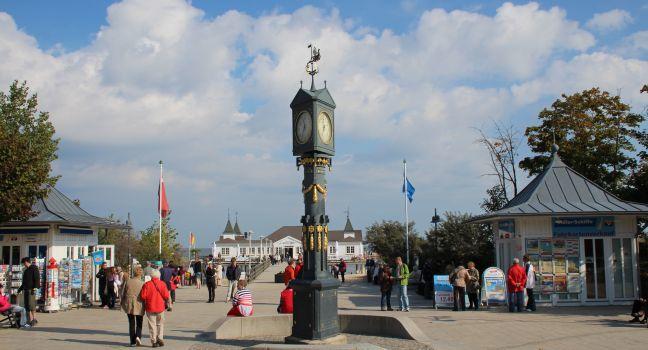
Ahlbeck

Famous square with clock by the beach of Ahlbeck on Usedom island,Baltic Sea,Germany. Typical white architecture famous for the touristic parts of the former German East.
(c) Giuliachristin | Dreamstime.com

The island's main town is also one of its best resorts. The tidy and elegant resort is one of the three Kaiserbäder (imperial baths)—the two others are Heringsdorf and Bansin—where Emperor Wilhelm II liked to spend his summers in the early 20th century. Noble families and rich citizens followed the emperor, turning Ahlbeck into one of the prettiest summer retreats on the Baltic Coast. Ahlbeck's landmark is the 19th-century wooden pier with four towers. Stroll the beach to the right of the pier and you'll arrive at the Polish border.

Kurstr.1, Ahlbeck, 17419, Germany

Something incorrect in this review?

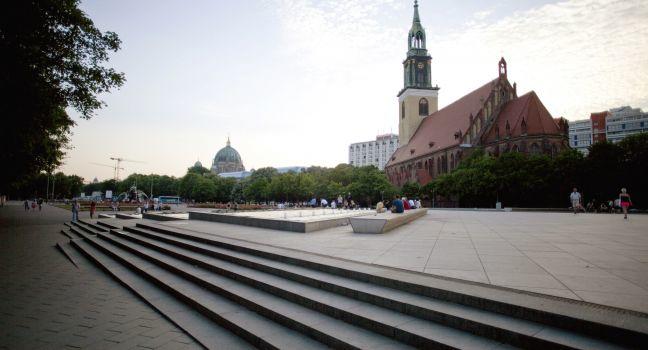
Alexanderplatz

Mitte
© Halie Cousineau/ Fodor’s Travel

This bleak square, bordered by the train station, the Galeria Kaufhof department store, and the 37-story Park Inn by Radisson Berlin Alexanderplatz hotel, once formed the hub of East Berlin and was originally named in 1805 for Czar Alexander I. German writer Alfred Döblin dubbed it the \"heart of a world metropolis\" (a quote from his 1929 novel Berlin Alexanderplatz is written on a building at the northeastern end of the square). Today it's a basic center of commerce and the occasional festival. The unattractive modern buildings are a reminder not just of the results of Allied bombing but also of the ruthlessness practiced by East Germans when they demolished what remained. A famous meeting point in the south corner is the World Time Clock (1969), which even keeps tabs on Tijuana.

Berlin, Germany

Something incorrect in this review?

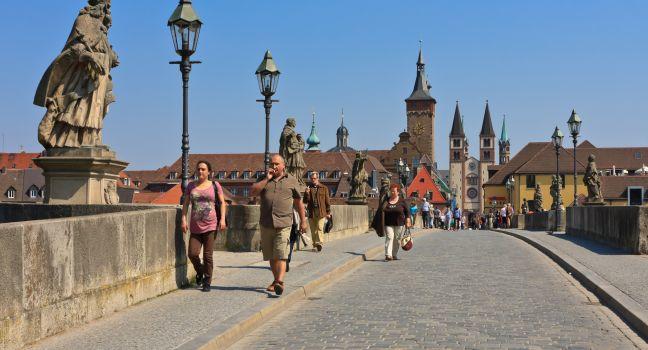
Alte Mainbrücke

WURZBURG, GERMANY - APRIL 20th 2011: People walking over the Alte Mainbrucke in Wurzburg with many nice statues of saints is known as the oldest bridge (built 1473-1543) on a sunny spring day
Xseon / Shutterstock

A stone bridge—Germany's first—built in 1120 once stood on this site, over the Main River, but that ancient structure was replaced beginning in 1476. Twin rows of graceful statues of saints now line the bridge, placed here in 1730, at the height of Würzburg's baroque period. They were largely destroyed in 1945, but have been lovingly restored since then. Note the Patronna Franconiae (commonly known as the Weeping Madonna). There's a beautiful view of the Marienberg Fortress from the bridge.

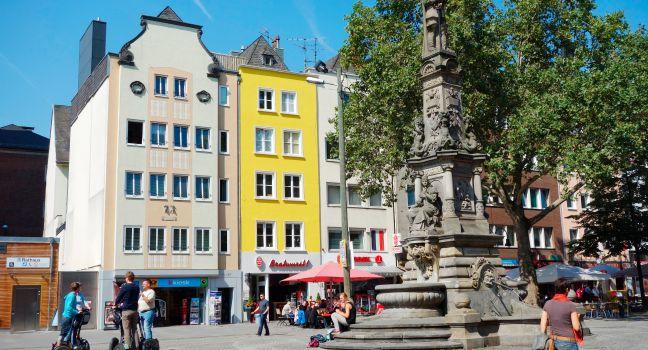
Alter Markt

Altstadt
Some ancient colored houses and old fountain at Alter Markt in old town Cologne along river Rhine in North Rhine-Westphalia, Germany. Photo was taken in august 2013. Photo taken on: August 27th, 2013
(c) Gunold | Dreamstime.com

The square has an eclectic assembly of buildings, most of them postwar. However, two 16th-century houses survived the war intact—Nos. 20 and 22, which are today a Kölsch brewpub, Zum Prinzen. The oldest structure dates from 1135. In late November and December, Alter Markt is the site of one of the city's prettiest Christmas markets.

Cologne, 50667, Germany

Something incorrect in this review?

Alter Markt

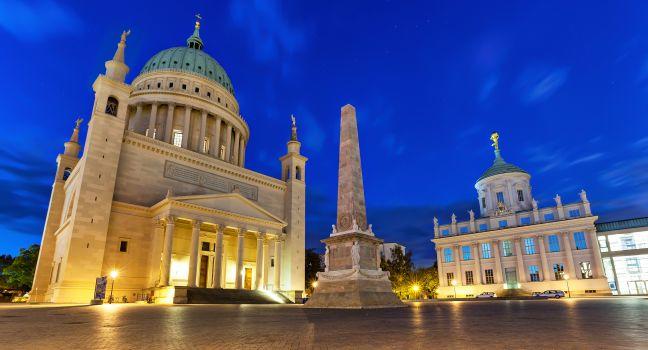
St. Nicholas Church and old city hall on Alter Markt square in Potsdam, Germany.
(c) Bbsferrari | Dreamstime.com

The hub of Potsdam's historical center was home to the city's baroque palace for three centuries. The area was heavily damaged by Allied bombing in World War II and then further destroyed by the East German regime in 1960. After reunification, Potsdam decided to rebuild its palace, and the re-created structure, with a combination of modern and historic elements, has housed the state parliament since 2013. Thanks to private donors, a magnificent replica of the Fortunaportal, or Fortune's Gate, now stands proudly at the center of the square. A gilded figure of Atlas tops the tower of the Altes Rathaus (Old Town Hall), built in 1755 in the model of an Italian palazzo, its dome meant to mimic the Pantheon's in Rome. The Potsdam Museum contains a large collection of paintings, photographs, and historical objects. Karl Friedrich Schinkel designed the Alter Markt's domed Nikolaikirche (St. Nicholas Church), which was also heavily damaged in the war and only reopened in 1981 after extensive renovations.

Alter Markt, Potsdam, 14467, Germany

Something incorrect in this review?

Altes Rathaus

Altstadt
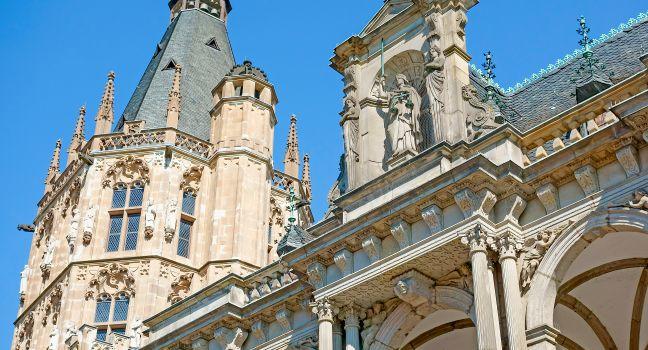
The City Hall (German: Rathaus) is a historical building in Cologne. Domicile of the city government, including the city council and offices of the Lord Mayor. Photo taken on: August 23rd, 2012
(c) Tbe | Dreamstime.com

The Rathaus is worth a look, even from the outside. It's the oldest town hall in Germany, with elements remaining from the 14th century. The famous bell tower rings its bells daily at 9, noon, 3, and 6. Standing on pedestals at one end of the town hall are figures of prophets made in the early 15th century. Ranging along the south wall are nine additional statues, the so-called Nine Good Heroes, carved in 1360.

Rathauspl. 2, Cologne, 50667, Germany
0221-2210

Something incorrect in this review?

Altes Rathaus

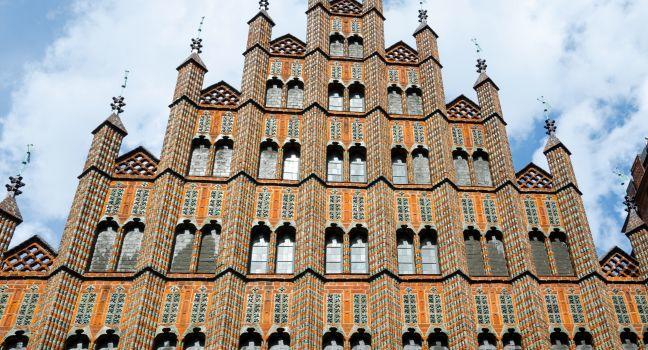
Pinnacle gables at the Old Town Hall, Hannover, Lower Saxony, Germany, Europe.
(c) Yovcheva | Dreamstime.com

It took nearly 100 years, starting in 1410, to build this gabled brick edifice that once contained a merchants' hall and an apothecary. In 1844 it was restored to the style of about 1500, with exceptional Gothic gables and an ornamental frieze. The facade's fired-clay frieze depicts coats of arms and representations of princes, and a medieval game similar to arm wrestling using only the fingers. This marvelous picture above the outer right arched window in the Schmiedestrasse can only be seen by following the \"red line\" around the Old Town Hall. Inside is a modern interior with boutiques and a restaurant.

Karmarschstr. 42, Hannover, 30159, Germany
Sight Details
Free

Something incorrect in this review?

The Bauhaus Building

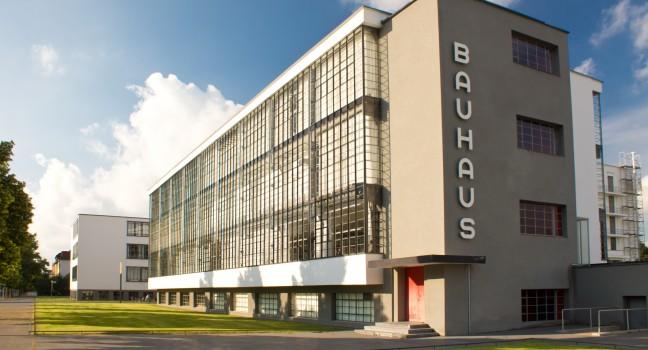
Dessau, Germany; Bauhaus - complex of modern architecture on April 23, 2011, Dessau, Germany. This iconical piece of architecture was designed in 1925 by Walter Gropius and is in UNESCO;
Leonid Mylnikov / Shutterstock

The architecture and design school is still operating in this building, where artists conceived styles that influenced the appearance of such cities as New York, Chicago, and San Francisco. Other structures designed by Gropius and the Bauhaus architects, among them the Meisterhäuser, are also open for inspection off Ebertallee and Elballee.

Gropiusallee 38, Dessau, D–06844, Germany
0340-650–8251
Sight Details
€8.50 per site

Something incorrect in this review?

Bavaria Statue and Hall of Fame

Ludwigsvorstadt
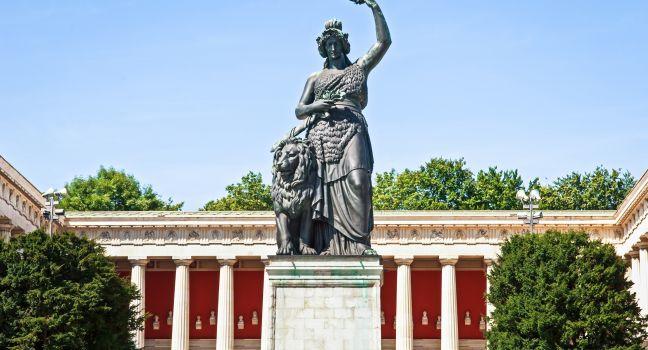
Famous statue of bavaria at the theresienwiese in munich, germany.
(c) Fottoo | Dreamstime.com

Overlooking the Theresienwiese, home of the Oktoberfest, is a 19th-century hall of fame (Ruhmeshalle) featuring busts of famous Bavarian scientists, artists, engineers, generals, and philosophers, and a monumental bronze statue of the maiden Bavaria. Unsurprisingly, it was commissioned by the art- and architecture-obsessed King Ludwig I, though not finished before his abdication in 1848. The Bavaria is more than 60 feet high and at the time was the largest bronze figure since antiquity. The statue is hollow, and an initial 48 steps take you up to its base. Once inside, there are 66 steps to her knee, and a further 52 all the way into the braided head, where the reward is a view of Munich through Bavaria's eyes.

Bayerisches Nationalmuseum

Lehel
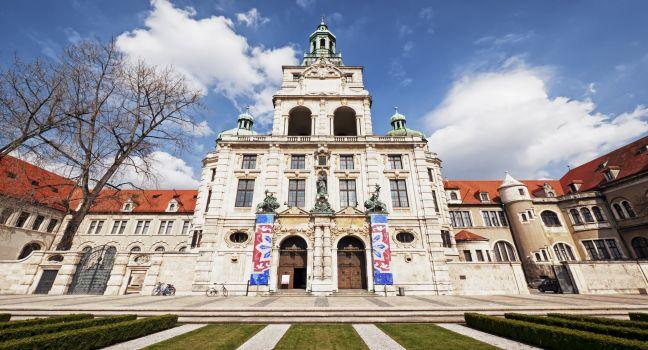
Famous bayerisches nationalmuseum in munich.
(c) Fottoo | Dreamstime.com

Although the museum places emphasis on Bavarian cultural history, it has art and artifacts of international importance and regular exhibitions that attract worldwide attention. The museum is a journey through time, principally from the early Middle Ages to the 20th century, with medieval and Renaissance wood carvings, a unique collection of Christmas crèches (the Krippenschau), and a significant Jugendstil (art nouveau) collection.

Belvedere auf dem Pfingstberg

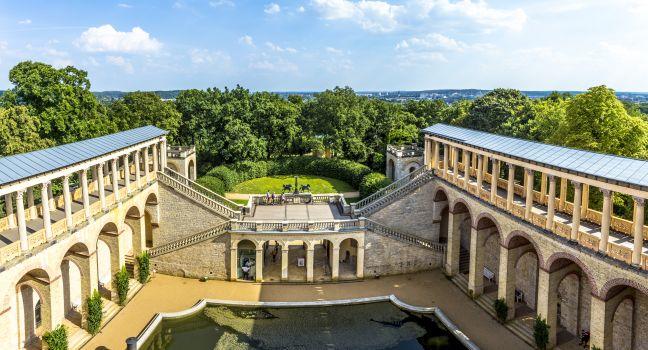
POTSDAM, GERMANY - AUG 8, 2015: view of the Belvedere, a palace in the New Garden on the Pfingstberg hill in Potsdam, Germany. Frederick William IV constructed the castle in 1847.
(c) Meinzahn | Dreamstime.com

Commissioned by King Friedrich Wilhelm IV, the Belvedere on Pfingstberg was built in the Italian Renaissance style with grand staircases, colonnades, and perfect symmetry. It served as a pleasure palace and lofty observation platform for the royals, and the towers still offer one of the best views of Potsdam.

Potsdam, 14469, Germany
0331-2005–7930
Sight Details
€8
Closed Dec.–Feb. and weekdays Mar.–Nov.

Something incorrect in this review?