937 Best Sights in Germany

Background Illustration for Sights

We've compiled the best of the best in Germany - browse our top choices for the top things to see or do during your stay.

Kollwitzplatz

Prenzlauer Berg
Kollwitzplatz, Berlin, Germany
© Halie Cousineau/ Fodors Travel

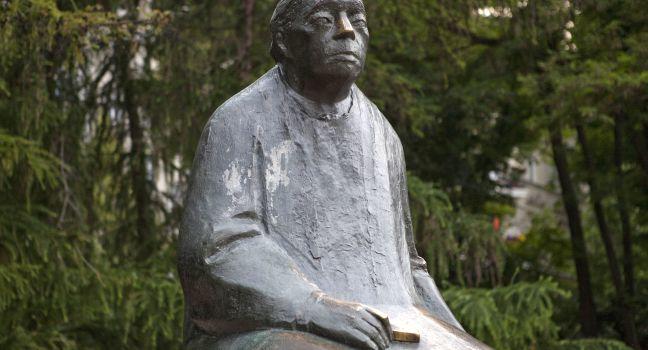
Named for the painter, sculptor, and political activist Käthe Kollwitz (1867–1945), who lived nearby, the square is the center of the old working-class district of Prenzlauer Berg. Kollwitz, who portrayed the hard times of area residents, is immortalized here in a sculpture based on a self-portrait. Ironically, this image of the artist now has a view of the upwardly mobile young families who have transformed the neighborhood since reunification. Bars and restaurants peel off from the square, and one of the best organic markets in town takes over on weekends.
Kollwitzpl., Berlin, 10405, Germany

Something incorrect in this review?

Kölnisches Stadtmuseum

Altstadt
City Museum in Cologne, Rhineland, Germany.
(c) Moskwa | Dreamstime.com

The triumphs and tragedies of Cologne's rich past are packed into this museum relocated in March 2024 at the site of a former luxury shopping mall. Here you'll find an in-depth chronicle of Cologne's history—including information about the lives of ordinary people and the destruction incurred during World War II. For those who've always wanted to be privy to the inside stories surrounding local words such as Klüngel, Kölsch, and Karneval, the answers are waiting to be discovered within the museum's walls.

Kulturbrauerei

Prenzlauer Berg
Kulturbrauerei, Berlin, Germany
© Halie Cousineau/ Fodors Travel

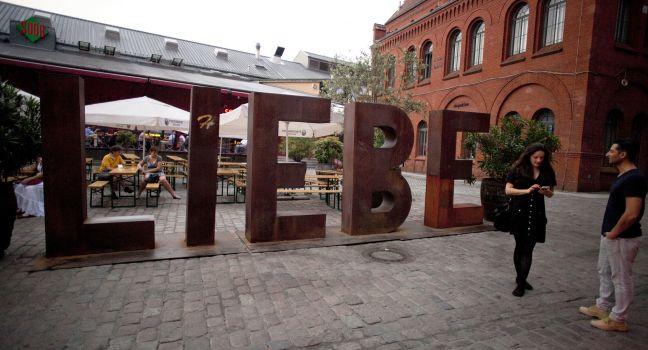
The redbrick buildings of the old Schultheiss brewery are typical of late-19th-century industrial architecture. Parts of the brewery were built in 1842, and at the turn of the 20th century the complex expanded to include the main brewery of Berlin's famous Schultheiss beer, then the world's largest brewery. Today, the multiplex cinema, pubs, clubs, and a concert venue that occupy it make up an arts and entertainment nexus (sadly, without a brewery). Pick up information at the Prenzlauer Berg tourist office here, and come Christmastime, visit the Scandinavian-themed market, which includes children's rides.

Schönhauser Allee 36, Berlin, 10435, Germany
030-4435–2170

Something incorrect in this review?

Recommended Fodor's Video

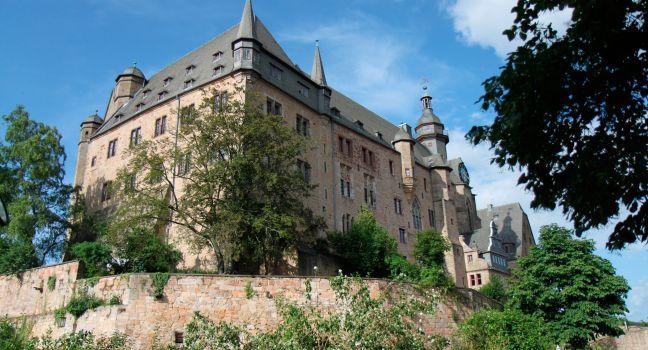
Landgrafenschloss

Marburg Castle in Germany on a clear day with clouds and a view of the towers, walls, clock and surrounding trees.
(c) Zackzuchowski | Dreamstime.com

Sitting at the highest point in the town, this castle was finished in 1500 and survived the war unscathed. It offers panoramic views of Marburg below. Only the main wing can still be visited for temporary exhibitions.

Landgrafenschloss, Marburg, Germany
06421-282–2355
Sight Details
€5
Closed Mon.

Something incorrect in this review?

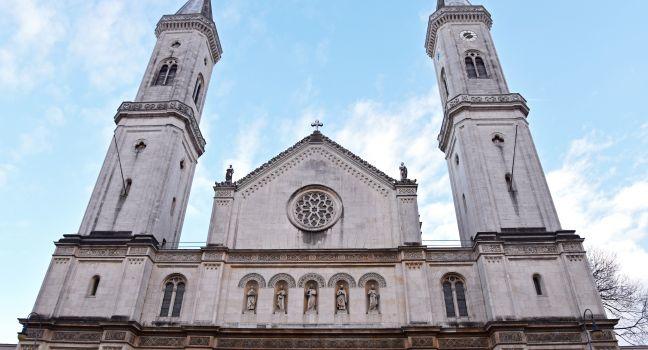
Ludwigskirche

Maxvorstadt
The Catholic Parish and University Church St. Louis, called Ludwigskirche, in Munich is a monumental church in neo-romanesque style with the second-largest altar fresco of the world.
(c) Annemario | Dreamstime.com

Planted halfway along the stark, neoclassical Ludwigstrasse is this superb twin-towered Byzantine- and Italian-influenced church, built between 1829 and 1838 at the behest of King Ludwig I to provide his newly completed suburb with a parish church. From across the road, look up to see the splendidly colored, 2009 mosaic on the church's roof. Inside, see one of the great modern frescoes, the Last Judgment by Peter von Cornelius, in the choir. At 60 feet by 37 feet, it's also one of the world's largest.

Ludwigstr. 22, Munich, 80539, Germany
089-287–7990

Something incorrect in this review?

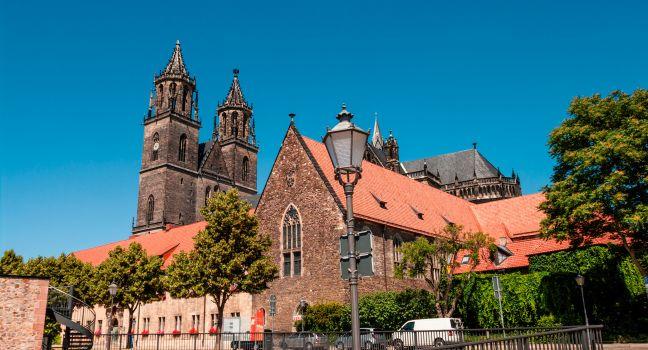
Magdeburg Cathedral

Cathedral of Magdeburg at river Elbe, Germany
(c) Neurobite | Dreamstime.com
The city's major landmark and Germany's first Gothic cathedral, the impressive Magdeburg Cathedral's magnificent towers are visible from miles around. Constructed on the site of an ancient abbey, the cathedral took over 300 years to build, beginning around 1200, with the completion of the steeples—Germany's tallest—in 1520. Filled with important statuary, paintings, and artifacts that date from the Gothic to the present day, the bright, soaring space is a pleasure to behold.
Am Dom 1, Magdeburg, 39104, Germany
0391–541–0436
Sight Details
€3.50 for a guided tour; €5 for cathedral tower tour
Apr.–Oct, daily 10–5; Nov.–Mar., daily 10–4

Something incorrect in this review?

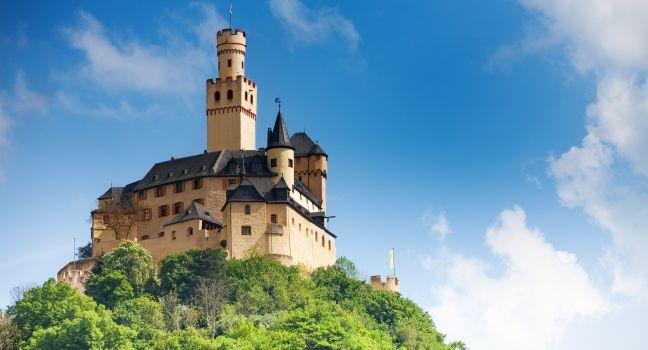
Marksburg Castle

View Marksburg castle in Germany, Europe over blue sky on top of the high mountain.
(c) Serrnovik | Dreamstime.com
Rising high above the town, the dramatic 12th-century Marksburg Castle—part of a Unesco World Heritage Site—makes for some breathtaking vistas from above and below. Unlike other castles along the Rhine, which suffered in the various wars and battles, Marksburg is the only one to survive undamaged. A marvel of medieval architecture, the castle functioned mostly as a strategic base and not a family seat, but its enormous kitchen, Gothic dining hall, painted chapel, armory, and truly medieval torture chamber, with a gruesome collection of perversely imaginative instruments, are all fascinating remnants of life in the 14th and 15th centuries. There is a gift shop and a café offering drinks, light snacks, and meals at the castle.
Marksburg, Braubach, 56338, Germany
2627–536
Sight Details
€6
Mid-Mar.-Oct., daily 10–5; Nov.-mid-Mar., daily 11–4

Something incorrect in this review?

Marktplatz

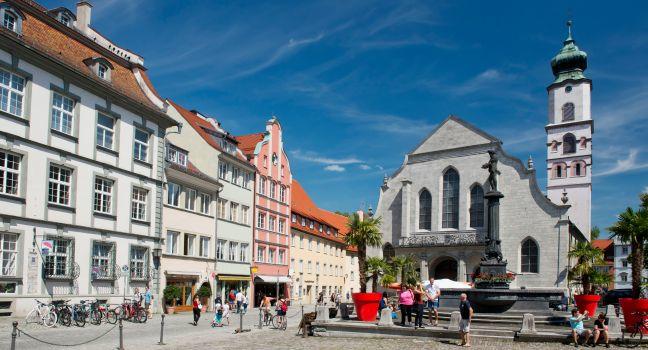
The church of St Stephen in Lindau, a picturesque village situated on an island on the Bavarian shore of the Constance Lake.
(c) Faaabi | Dreamstime.com

Lindau's market square is lined by a series of sturdy and attractive old buildings. The Gothic Stephanskirche (St. Stephen's Church) is simple and sparsely decorated, as befits a Lutheran place of worship. It dates to the late 12th century but went through numerous transformations. One of its special features is the green-hue stucco ornamentation on the ceiling, which immediately attracts the eye toward the heavens. In contrast, the Catholic Münster Unserer Lieben Frau (St. Mary's Church), which stands right next to the Stephanskirche, is exuberantly baroque.

Marktplatz

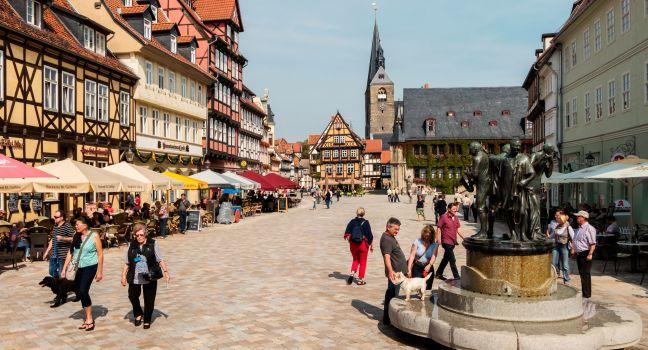
The Market Square in the UNESCO world heritage town of Quedlinburg in Germay.
(c) Deniskelly | Dreamstime.com

The Altstadt (Old Town) is full of richly decorated half-timber houses, particularly along Mühlgraben, Schuhof, the Hölle, Breite Strasse, and Schmale Strasse. Notable on the Marktplatz are the Renaissance Rathaus, with a 14th-century statue of Roland signifying the town's independence, and the baroque 1701 Haus Grünhagen. Street and hiking maps and guidebooks (almost all in German) are available in the information office near the Rathaus.

Markt 4, Quedlinburg, D–06484, Germany
03946-905624

Something incorrect in this review?

Michaeliskirche

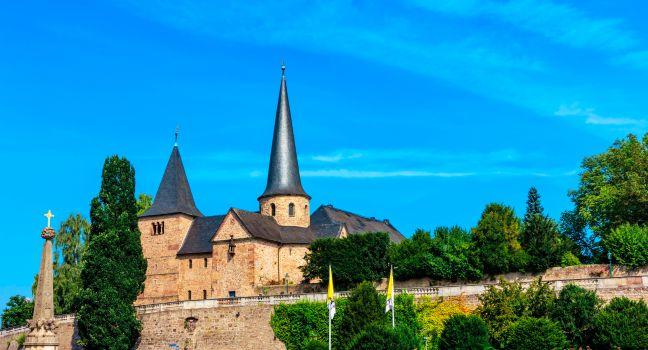
Cathedral Square with Michael Church in Fulda, Hesse, Germany.
(c) Moskwa | Dreamstime.com
Dating back to AD 819, this is one of Germany's oldest churches. Formerly a part of the Benedictine order, the church's interior is bare bones and yet impressive with its domed ceiling and arched cupola.
Michaelsberg 1, Fulda, 36037, Germany
Sight Details
Free

Something incorrect in this review?

Münchhausen Museum

Münster

Konstanz Minster (Cathedral) - Germany, Baden-Wurttemberg.
(c) Electropower | Dreamstime.com

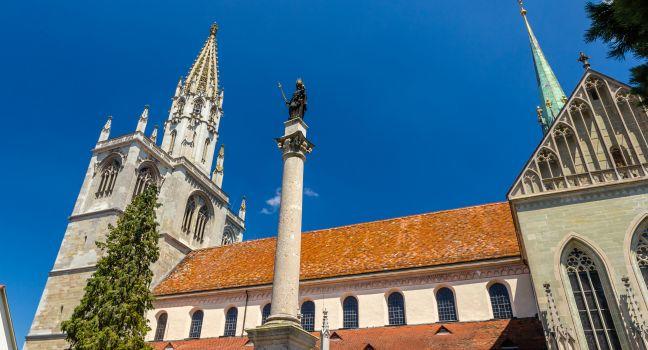
Konstanz's cathedral, the Münster, was the center of one of Germany's largest bishoprics until 1827, when the seat was moved to Freiburg. Construction on the cathedral continued from the 10th through the 19th century, resulting in an interesting coexistence of architectural styles: The twin-tower facade is sturdily Romanesque; the elegant and airy chapels along the aisles are full-blown 15th-century Gothic; the complex nave vaulting is Renaissance; and the choir is severely neoclassical. The Mauritius Chapel behind the altar is a 13th-century Gothic structure, 12 feet high, with some of its original vivid coloring and gilding. It's studded with statues of the Apostles and figures depicting the childhood of Jesus. For €4, you can climb the Münsterturm (Münster Tower) and get views over the city and lake.

Münsterpl. 4, Konstanz, 78462, Germany

Something incorrect in this review?

Museum Brandhorst

Maxvorstadt
Brandhorst museum in Munich
(c) Tomnex | Dreamstime.com

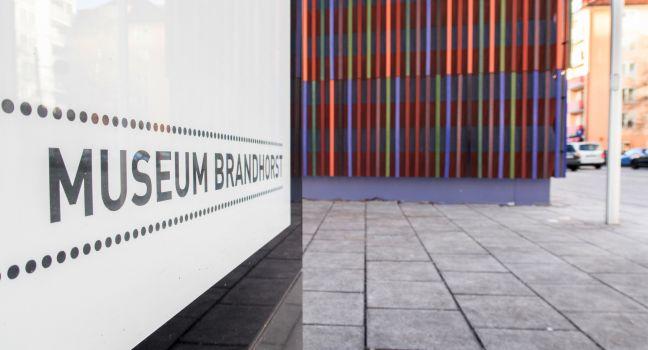
This eye-catching multicolored building is filled with videos, paintings, sculptures, and installations by artists such as Damien Hirst, Gerhard Richter, and Joseph Beuys, and is a real treat for contemporary art fans. It's also home to Europe's largest collection of works by Andy Warhol and features an extensive number of pieces by abstract artist Cy Twombly. 

Theresienstr. 35a, Munich, 80333, Germany
089-2380–52286
Sight Details
From €7
Closed Mon.

Something incorrect in this review?

Museum Fünf Kontinente

Lehel
Five continents museum in munich
(c) Tomnex | Dreamstime.com

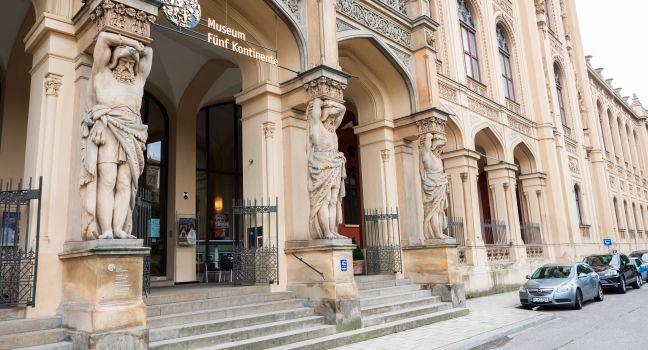
Founded in 1862, this museum houses an enormous quantity of ethnographic articles from around the world, including arts, crafts, photographs, and library material. The extensive museum takes a peek into non-European cultures from Africa, America, Asia, Australia, the Near and Middle East, and the South Seas to see how they differ (or not) from Europe with both permanent displays and special exhibits.

Museum für Fotografie–Helmut Newton Stiftung

Charlottenburg
Museum of Photography, Berlin, Germany
© Halie Cousineau/ Fodors Travel

Native son Helmut Newton (1920–2004) pledged this collection of 1,000 photographs to Berlin months before his unexpected death. The man who defined fashion photography in the 1960s through the 1980s was an apprentice to Yva, a Jewish fashion photographer in Berlin in the 1930s. Newton fled Berlin with his family in 1938, and his mentor was killed in a concentration camp. The photographs, now part of the state museum collection, are shown on a rotating basis in the huge Wilhelmine building behind the train station Zoologischer Garten. You'll see anything from racy portraits of models to serene landscapes. There are also rotating exhibitions from other photographers, such as Mario Testino and Jean Pigozzi.

Jebensstr. 2, Berlin, 10623, Germany
030-6642–4242
Sight Details
€12
Closed Mon.

Something incorrect in this review?

Museum Ludwig

Innenstadt
Germany, federal state of North Rhine-Westphalia; City Cologne: Museum Ludwig: Museum of Modern Art, which forms part of the Ludwig Museums and displays contemporary visual art. The modern museum building with its striking architecture is characteristic of
(c) Sjors737 | Dreamstime.com

This museum is dedicated to art from the beginning of the 20th century to the present day. Its American pop-art collection (including Andy Warhol, Jasper Johns, Robert Rauschenberg, Claes Oldenburg, and Roy Lichtenstein) rivals that of many American museums. It is also home to the third-largest Picasso collection in the world, something one might not expect to find in Cologne.

Heinrich-Böll-Pl., Cologne, 50667, Germany
0221-2212–6165
Sight Details
€12
Closed Mon.

Something incorrect in this review?

Neue Synagoge

Mitte
Neue Synagoge, Berlin, Germany
© Halie Cousineau/ Fodors Travel

This meticulously restored landmark, built between 1859 and 1866, is an exotic amalgam of styles, the whole faintly Middle Eastern. Its bulbous, gilded cupola stands out in the skyline. When its doors opened, it was the largest synagogue in Europe, with 3,200 seats. The synagogue was damaged on November 9, 1938 (Kristallnacht—Night of the Broken Glass), when Nazi looters rampaged across Germany, burning synagogues and smashing the few Jewish shops and homes left in the country. It was destroyed by Allied bombing in 1943, and it wasn't until the mid-1980s that the East German government restored it. The effective exhibit on the history of the building and its congregants includes fragments of the original architecture and furnishings. Sabbath services are held in a modern addition.

Oranienburger Str. 28–30, Berlin, 10117, Germany
030-8802–8316
Sight Details
€7; audio guides €3
Closed Sat.

Something incorrect in this review?

Neue Wache

Mitte
Neue Wache, Berlin, Germany
© Halie Cousineau/ Fodors Travel

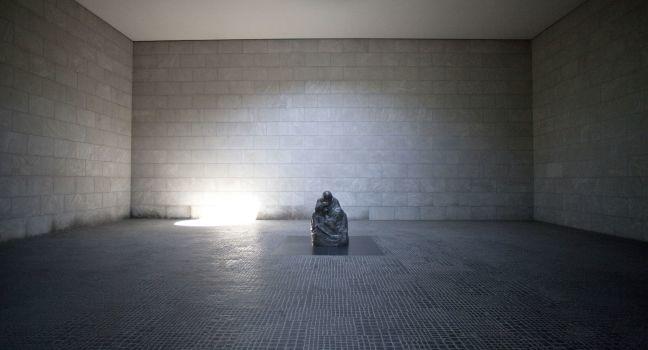
One of many Berlin projects by the early-19th-century architect Karl Friedrich Schinkel, this building served as both the Royal Prussian War Memorial (honoring the dead of the Napoleonic Wars) and the royal guardhouse until the kaiser abdicated in 1918. In 1931 it became a memorial to those who fell in World War I. Badly damaged in World War II, it was restored in 1960 by the East German state and rededicated as a memorial for the victims of militarism and fascism. After unification it regained its Weimar Republic appearance and was inaugurated as Germany's central war memorial. Inside is a copy of Berlin sculptor Käthe Kollwitz's Pietà, showing a mother mourning over her dead son. The inscription in front of it reads, "to the victims of war and tyranny."

Berlin, 10117, Germany
Sight Details
Daily 10–6

Something incorrect in this review?

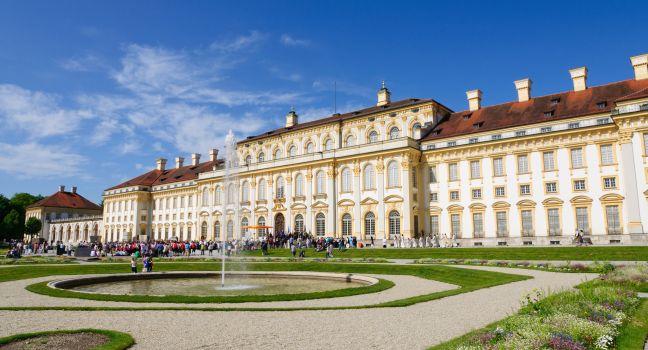
Neues Schloss Schleissheim

Neues Schloss of the Schleissheim Palace, Germany;
Scirocco340 / Shutterstock

Duke Wilhelm V found the perfect peaceful retreat outside Munich, and in 1598 built what is now known as the Altes Schloss Schleissheim (Schleissheim Old Palace). In 1685 Elector Max Emanuel added Lustheim, which houses one of Germany's most impressive collections of Meissen porcelain, and at the beginning of the 18th century the Neues Schloss Schleissheim (Schleissheim New Palace). This baroque palace's rooms display great works of art and outstanding interior decoration.

Nikolaiviertel

Mitte
Nikolaiviertel, St. Nicholas' Church, Berlin, Germany
© Halie Cousineau/ Fodors Travel

Renovated in the 1980s and a tad concrete-heavy as a result, this tiny quarter grew up around Berlin's oldest parish church, the medieval, twin-spire St. Nikolaikirche (St. Nicholas's Church), dating from 1230 (though rebuilt in 1987) and now a museum. The adjacent Fischerinsel (Fisherman's Island) area was the heart of Berlin almost 800 years ago, and retains a bit of its medieval character. At Breite Strasse you'll find two of Berlin's oldest buildings: No. 35 is the Ribbeckhaus, the city's only surviving Renaissance structure, dating from 1624, and No. 36 is the early-baroque Marstall, built by Michael Matthais between 1666 and 1669. The area feels rather artificial, but draws tourists to its gift stores, cafés, and restaurants.

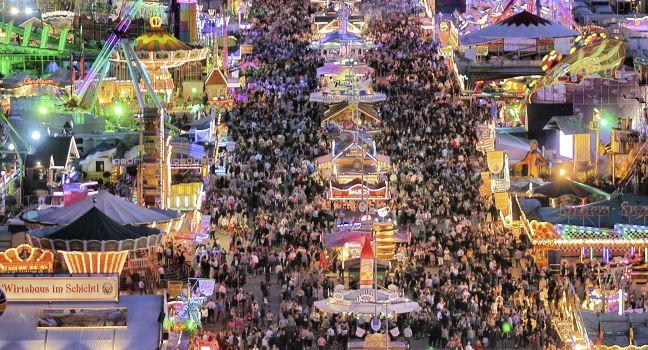
Oktoberfest Grounds at Theresienwiese

Ludwigsvorstadt
MUNICH - SEPTEMBER 28: Large numbers of tourists and locals come to see the attractions of the world's famous fun fair and beer festival Oktoberfest in Munich, Germany at night on September 28, 2012.; Shutterstock ID 114852403; Project/Title: 15 Places to
Intrepix / Shutterstock

The site of Oktoberfest and the winter Tollwood music festival, the approximately 100-acre grounds are named after Princess Therese von Sachsen-Hildburghausen, who celebrated her marriage to the future King Ludwig I here in 1810 with thousands of Münchners. The event was so successful that it grew into an international beer and fair-ride bonanza lasting 16 to 18 days and attracting more than 6 million people annually. While Oktoberfest originally began in October, it now starts in September to take advantage of better weather. Note that unless a festival is happening, there's really no reason to visit the grounds, which is little more than an empty field.

Olympiapark

Milbertshofen
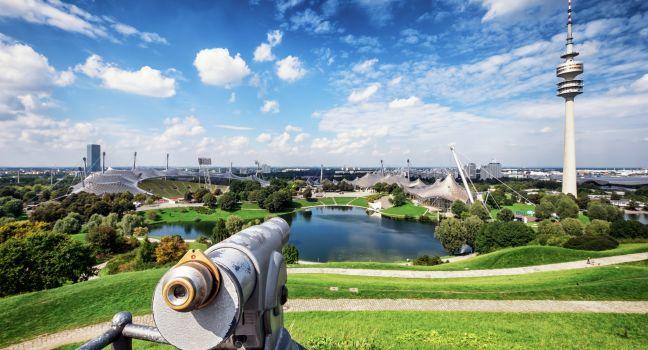
Munich, Germany - TV Tower in Munich's Olympic Park (Germany).
(c) Fottoo | Dreamstime.com

Built for the 1972 Olympic Games on the staggering quantities of rubble delivered from the wartime destruction of Munich, the Olympiapark was—and still is—considered an architectural and landscape wonder. The jewel in the crown is the Olympic Stadium, former home of Bayern Munich soccer team. With its truly avant-garde sweeping canopy roof, winding its way across various parts of the complex, it was an inspired design for the big events of the 1972 Olympic Games. Tragically, a bigger event relegated what was heading to be the most successful Games to date to the sidelines. It was from the adjacent accommodation area that a terrorist attack on the Israeli team began, eventually leaving 17 people dead.

\n

Unlike many former Olympic sites around the world, today the area is heavily used; it's home to numerous concerts and sporting events, and is a haven for joggers, swimmers, and people just wishing to relax. Tours of the park are conducted on a Disneyland-style train throughout the day. For the more adventurous, how about climbing the roof of the Olympic Stadium and rappelling down or zip-lining 115 feet in the air across the stadium? 

Spiridon-Louis-Ring 21, Munich, 80809, Germany
089-3067–0
Sight Details
Stadium €3.50; Stadium tour €10
Stadium closed Mon.; Olympic Tower closed until 2026.

Something incorrect in this review?

Park Babelsberg

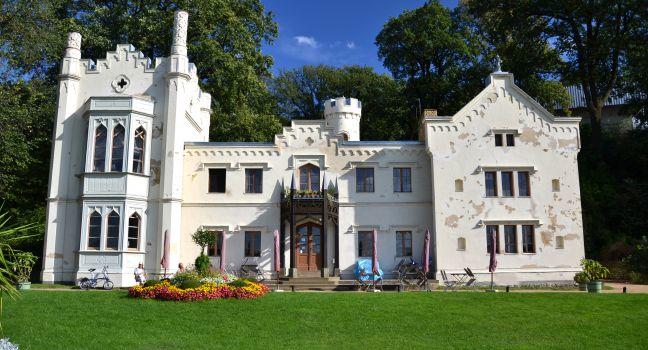
Kleine schloss - small castle in babelsberg park in Potsdam, Germany.
(c) Toniguetta | Dreamstime.com

Less well known than the gleaming Sanssouci but still impressive, the Schloss Babelsberg was once the summer residence of Wilhelm I. The expansive park surrounding it has acres and acres of charm, with expansive views, a waterfront promenade, and plenty of historical buildings. Although the castle itself is currently under extensive renovation, there's still plenty to explore, such as the Dampfmaschinenhaus, a 19th-century steam-engine building right on the water, or the Kleines Schloss, which literally translates as “small castle” and today houses an elegant, wood-paneled café. Climb the Flatowturm (Flatow Tower) for a 360-degree view of the surrounding parkland and waterways, and the city of Potsdam in the distance. The tower frequently showcases small historical exhibitions, like a recent one about park landscaping in Germany through the ages, detailing how Park Babelsberg has been restored to its former glory after the fall of the Berlin Wall.

Schlosspark Babelsberg 10, Potsdam, 14482, Germany
0331-969–4200

Something incorrect in this review?

Planten un Blomen

Neustadt
HAMBURG, GERMANY - AUGUST 14, 2015: Beautiful view at Planten un Blomen park. Planten un Blomen is an urban park with a size of 47 hectares.
(c) Gl0ck33 | Dreamstime.com

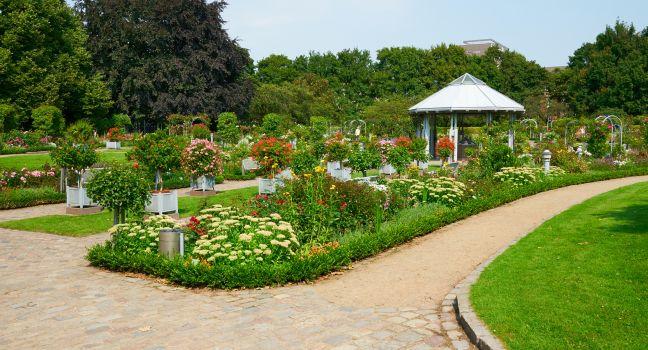
In 1821, a botanist planted a sycamore tree in a park near Dammtor train station. From this tree, a sanctuary for birds and plants evolved and a botanical garden that resembles the current park opened in 1930. This 116-acre inner-city oasis features a grand Japanese garden, a minigolf course, an outdoor roller-skating and ice-skating rink, trampolines, and water features. If you visit between May and October, you'll see the Wasserlichtkonzerte, the play of an illuminated fountain set to organ music. Make sure you get to the lake in plenty of time for the nightly show, which begins at 10 pm.

Poppelsdorfer Schloss

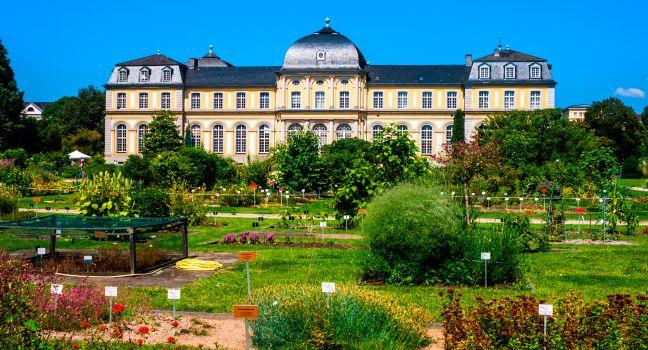
Poppelsdorf Palace and botanical garden in Bonn, Germany. Photo taken on: July 07th, 2013
(c) Mathes | Dreamstime.com

This former electors' palace, built in the baroque style between 1715 and 1753, now houses the university's mineralogical collection. Its botanical gardens are home to 12,000 species, among the largest variety in Germany.

Meckenheimer Allee 171, Bonn, 53115, Germany
0228-735–523-garden
Sight Details
Mineralogical collection €2.50; botanical garden free weekdays, €3 Sun.
Museum closed Mon., Tues., Thurs., and Sat. Garden closed Sat. (weekends in winter)

Something incorrect in this review?

Potsdam Filmmuseum

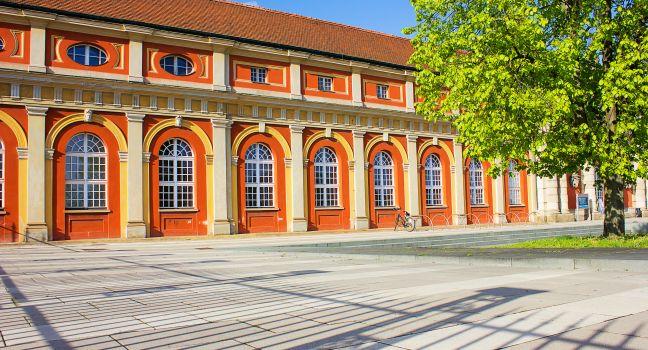
Film Museum in Potsdam, Germany.
(c) Stockfotoart | Dreamstime.com

Inside this beautiful baroque building, originally the Marstall or Prussian royal stables, film buffs can look into the history of film production in the area---many early silent films, including Fritz Lang’s Metropolis, were made in the town of Babelsberg, right next to Potsdam, and modern-day filmmakers continue to use the studios. A permanent exhibition called "Traumfabrik" ("The Dream Factory") details 100 years of filmmaking in Babelsberg. The cinema screens contemporary and historic films, and includes an old film organ, which is still used today to provide music and sound effects alongside silent film screenings.

Breitestr. 1A, Potsdam, 14467, Germany
0331-271–810
Sight Details
Permanent exhibition €5, temporary exhibitions €3

Something incorrect in this review?

Rathaus

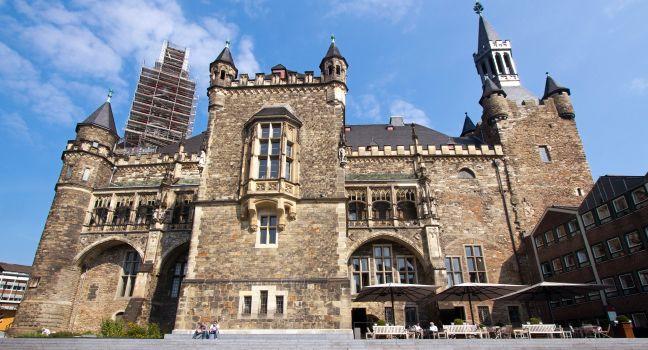
Aachen, Germany - August 28, 2013: The historical town hall (Rathaus) with people sitting in an outdoor cafe in Aachen, Germany on August 28, 2013.
(c) Jank1000 | Dreamstime.com

Aachen's town hall sits behind the Dom, across Katschhof Square. It was built in the early 14th century on the site of the Aula Regia, or \"great hall,\" of Charlemagne's palace. Its first major official function was the coronation banquet of Emperor Karl IV in 1349, held in the great Gothic hall you can still see today (though this was largely rebuilt after World War II). On the north wall of the building are statues of 50 emperors of the Holy Roman Empire. The greatest of them all, Charlemagne, stands in bronze atop the Karlsbrunnen in the center of the market square.

Marktpl., Aachen, 52062, Germany
0241-432–7310
Sight Details
€6

Something incorrect in this review?

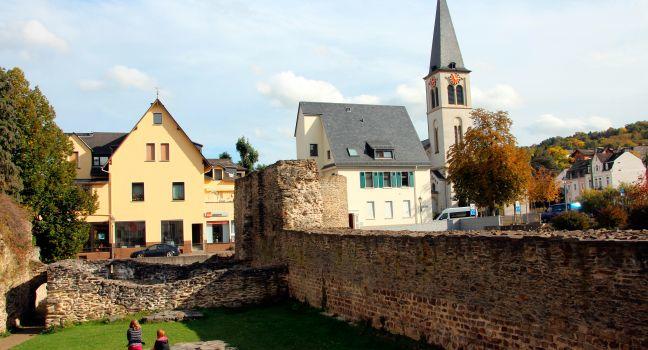
Römerkastell Bodobrica

Roman ruins in small german town Boppard Image taken 10/13/12. Photo taken on: October 13th, 2012
(c) Mirceani | Dreamstime.com

A Roman garrison was established on this site in the 4th century, and would once have been enclosed by a 26-foot-high rectangular wall with 28 defense towers. Today, there are only ruins, set within an open-air archaeological park (sandwiched between Angertstrasse and Kirchgasse), but you can still see portions of the wall and towers.

Kirchgasse 5, Boppard, 56154, Germany

Something incorrect in this review?

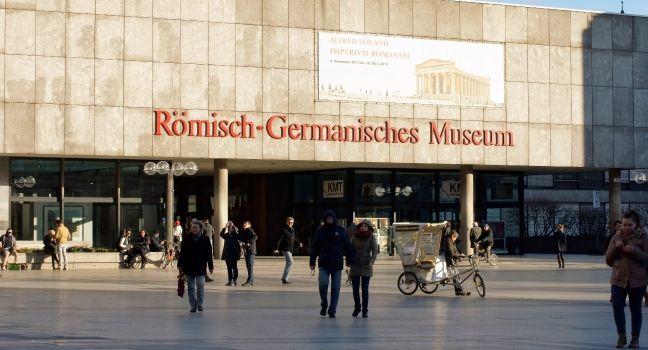
Römisch-Germanisches Museum

Innenstadt
The Roman-Germanic Museum in Cologne. Photo taken on: February 02nd, 2014
(c) Ginton | Dreamstime.com

While this archeological museum is closed for renovations until 2026, a selection of important treasures from its collection of ancient Roman artifacts is on view in the Belgian House, near the Neumarkt Galerie shopping mall. Among them are tombstones and busts from the 1st century, ancient glass vessels decorated with the trademark “Cologne Squiggle,” and everyday objects from Roman life. Placards are in both German and English.

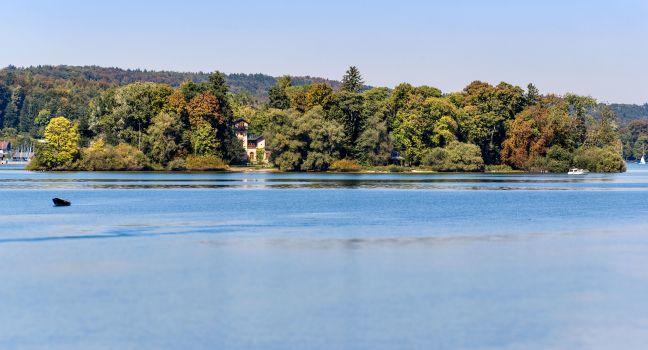
Roseninsel

Rose Island on Lake Starnberg, Bavaria, Germany.
(c) Zwawol | Dreamstime.com

Just offshore is the tiny island where King Maximilian II built a summer villa (called a casino). You can swim to the island's tree-fringed shores or sail across in a dinghy (rentals are available at Possenhofen's boatyard and at many other rental points along the lake). Visits to the casino are available by German-language guided tour only. There is also a ferry service to take you over; the cost is €5 round-trip.