Get FREE email communications from Fodor's Travel, covering must-see travel destinations, expert
trip planning advice, and travel inspiration to fuel your passion.
A church has stood here since 1536, but this enormous version dates from 1905, making it the largest 20th-century Protestant church in Germany. The royal Hohenzollerns worshipped here until 1918, when Kaiser Wilhelm II abdicated and left Berlin for Holland. The massive dome wasn't restored from World War II damage until 1982; the interior was completed in 1993. The climb to the dome's outer balcony is made easier by a wide stairwell, plenty of landings with historic photos and models, and even a couple of chairs. The 94 sarcophagi of Prussian royals in the crypt has been under restoration and will reopen in fall 2025 with new multimedia exhibitions. Sunday services include communion. Guided tours, bookable online, are usually offered only in German.
Binz
Share This
(c) Danielal | Dreamstime.com
The largest resort town on Rügen's east coast has white villas and a beach promenade. Four kilometers (2½ miles) north of Binz lies the fascist resort of Prora, where the Nazis once planned to provide vacation quarters for up to 20,000 German workers. The complex was never used, except by the East German army. Redevelopment of the site began in 2003 and is nearing completion. Luxury apartments are available for rent and there is also a youth hostel. Museums and galleries here today do their best to document the history of the site.
BMW Museum
Milbertshofen
Share This
meunierd/Shutterstock
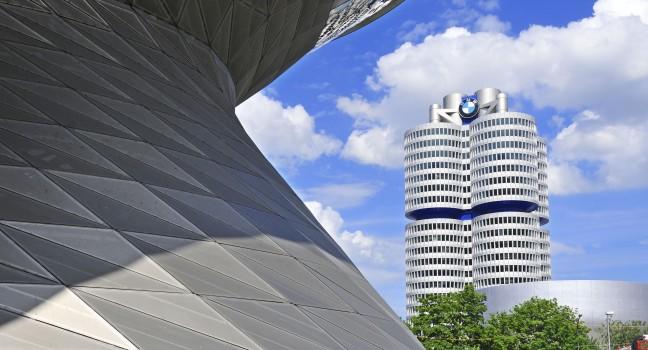
Munich serves as the headquarters for the famous BMW car company. The circular tower of its museum in the Olympiapark is one of the defining icons of Munich's modern cityscape. It contains not only a dazzling collection of BMWs old and new but also items and exhibitions relating to the company's social history and its technical developments.
Recommended Fodor's Video
BMW Welt
Milbertshofen
Share This
(c) Kunertus | Dreamstime.com
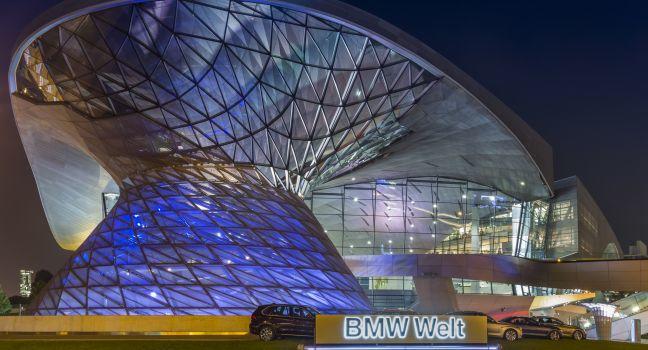
Opened in 2007, the cutting-edge design of BMW Welt, with its sweeping, futuristic facade, is one structure helping to overcome the conservative image Munich has had in the realm of architecture since 1945. Even if you have just a passing interest in cars and engines, this showroom is a must—it has averaged 2 million visitors a year since its opening. In addition to tours of the building, there are readings, concerts, and exhibitions. Tours are in high demand, so it's best to book ahead via telephone or email. You can also visit the BMW Plant to see how a BMW car is made. It can be toured on weekdays (minimum age to participate is six, with an adult). Registration for plant tours, which last for two hours, is only possible with a reservation. The tours start and finish at the north information counter at BMW Welt. Reserve at least two weeks in advance via phone or email; see the website for details.
\n
Brandenburger Tor, Jägertor, and Nauener Tor
Share This
(c) Heiko119 | Dreamstime.com
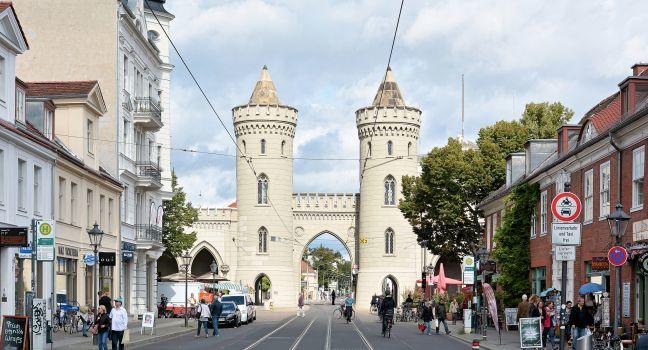
These gates (translated as the Brandenburg Gate, the Hunter's Gate, and the Nauen Gate) are three of the original seven gates that were incorporated into the old city walls. They were mostly ornamental, erected by noblemen to show off their prowess and accomplishments, and were meant to direct the eye along various axes from the center of the city to grand boulevards radiating outwards. If you follow the promenade that traces the now-demolished city walls, you can see all three of these gates in a 10-minute walk. The Brandenburger Tor sits at one edge of Luisenplatz, between the pedestrian streets of the old town and an entrance to Sanssouci Park. Commissioned by Frederick the Great to celebrate his victory in the Seven Years' War, it was built by Karl von Gontard as a Roman triumphal arch. The small Jägertor is really nothing more than a simple archway, crowned by a statue of a deer set upon by hunting dogs. Its diminutive size, however, belies its historical importance: it's the only gate in Potsdam still in its original form instead of a restored version. The sandstone Nauener Tor, which sits at the northern edge of the bustling, shop-filled main corridor Friedrich-Ebert-Strasse, is the oldest example of a neo-Gothic structure in continental Europe. It looks something like a mini-castle with its twin turrets.
Burg Meersburg
Share This
(c) Fottoo | Dreamstime.com
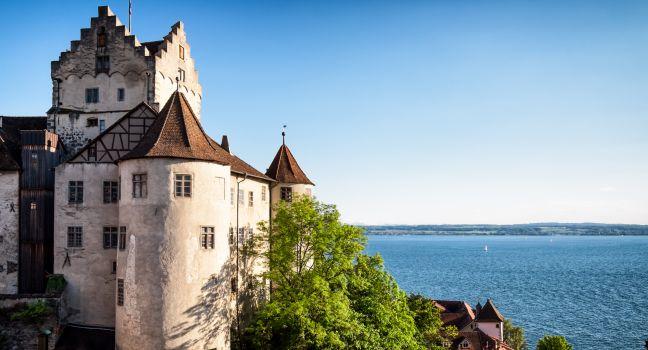
Majestically guarding the town is the original “Meersburg” (Sea Castle). It's Germany's oldest inhabited castle, founded in 628 by Dagobert, king of the Franks. The massive central tower, with walls 10 feet thick, is named after him. The bishops of Konstanz used it as a summer residence until 1526, at which point they moved in permanently. They remained until the mid-18th century when they built themselves what they felt to be a more suitable residence—the baroque Neues Schloss. Plans to tear down the Burg Meersburg in the early 19th century were shelved when it was taken over by Baron Joseph von Lassberg, a man much intrigued by the castle's medieval romance. He turned it into a home for like-minded poets and artists, among them the Grimm brothers and his sister-in-law, the poet Annette von Droste-Hülshoff (1797–1848). Burg Meersburg is still private property, but much of it can be visited, including the richly furnished rooms where Droste-Hülshoff lived and the chamber where she died, as well as the imposing knights' hall, the minstrels' gallery, and the sinister dungeons. The castle museum contains a fascinating collection of weapons and armor, including a rare set of medieval jousting equipment.
Burg Rheinfels
Share This
(c) Maui01 | Dreamstime.com
The castle ruins overlooking the town bear witness to the fact that St. Goar was once the best-fortified town in the Mittelrhein. From its beginnings in 1245, it was repeatedly enlarged by the counts of Katzenelnbogen, a powerful local dynasty, and their successors, the Landgraviate of Hesse. Rheinfels was finally demolished by the French in 1797. Take time for a walk through the impressive ruins and the museum, which has a detailed model of how the fortress looked in its heyday. It's a steep ascent by foot, but during the summer taxis regularly shuttle between St. Goar and St. Elisabeth Church and the castle.
Burg Thurant
Share This
(c) Gerardmeuffels | Dreamstime.com
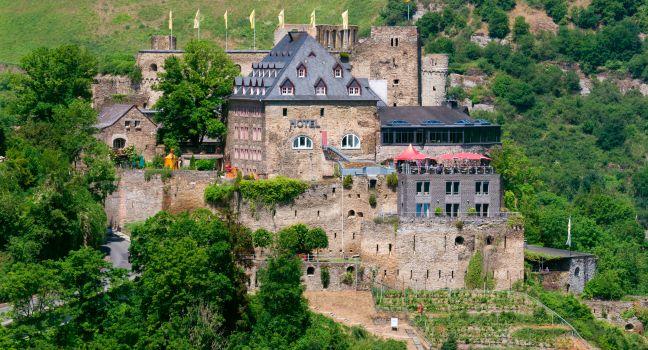
Alken's undoubted highlight, this 12th-century castle towers over the village and the Burgberg (castle hill) vineyard. Castle tours include the Cologne Tower, chapel, cellar, and gardens, as well as views galore. A kiosk in the courtyard serves wine and snacks. Allow a good half-hour for the steep climb up from the riverbank. The castle even has a rental home for up to 6 people, but it requires a 5-night minimum stay.
The Center Potsdamer Platz
Potsdamer Platz
Share This
(c) Sylvaindeutsch | Dreamstime.com
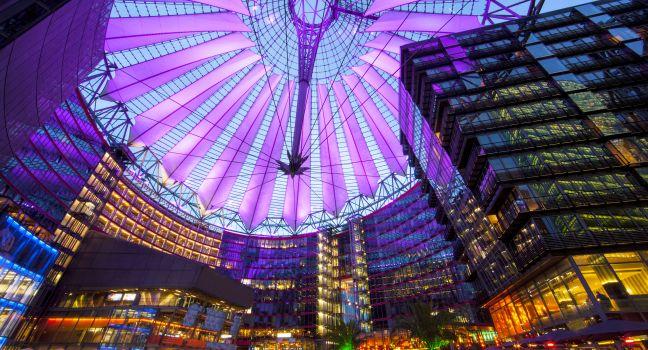
This glass-and-steel construction wraps around a spectacular circular forum. Topping it off is a tent-like structure meant to emulate Mt. Fuji. The architectural jewel, formerly the Sony Center, designed by German-American architect Helmut Jahn, is one of the most stunning public spaces of Berlin's new center, filled with restaurants, cafés, the Legoland Discover Museum, offices, and apartments.
Das Schmetterlingshaus
Share This
(c) Bitbeerdealer | Dreamstime.com
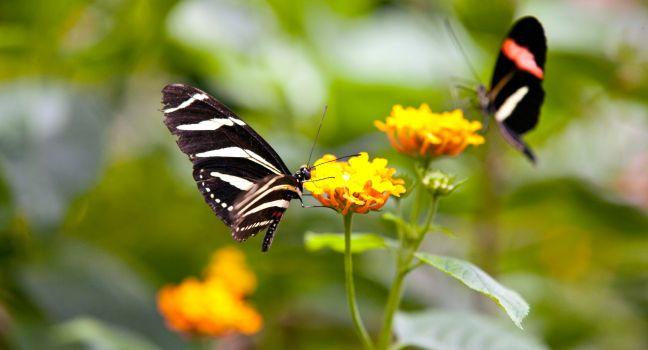
Beyond the flora, the island of Mainau's other colorful extravagance is Das Schmetterlingshaus, Germany's largest butterfly conservatory. On a circular walk through a semitropical landscape with water cascading through rare vegetation, you'll see hundreds of butterflies flying, feeding, and mating. The exhibition in the foyer explains the butterflies' life cycle, habitats, and ecological connections. Like the park, this oasis is open year-round.
Doberaner Münster
Share This
(c) Ricok | Dreamstime.com
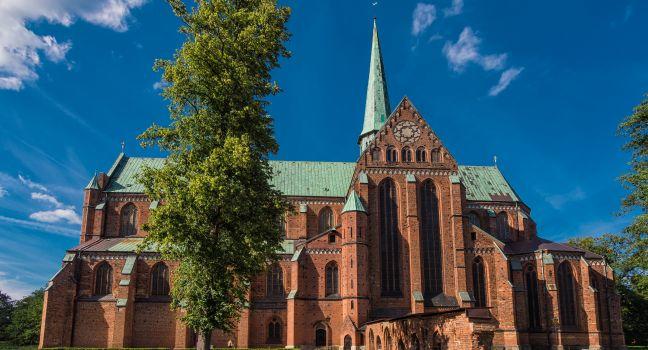
Bad Doberan is home to this meticulously restored redbrick church, one of the finest of its kind in Germany. It was built by Cistercian monks between 1294 and 1368 in the northern German brick Gothic style, with a central nave and transept. The main altar dates from the early 14th century.
Dom St. Peter und Paul
Share This
(c) Borisb17 | Dreamstime.com
Perched high above the city and dominating the skyline, this cathedral is the symbol of Naumburg. For the most part constructed during the latter half of the 13th century, it's considered one of the masterpieces of the late Romanesque period. What makes the cathedral unique, however, is the addition of a second choir in the Gothic style less than 100 years later. The Gothic choir is decorated with statues of the cathedral's benefactors from the workshop of the Naumburger Meister. The Master, now thought to be French, also created a relief depicting the passion with each scene cut from one stone and more than 30 cm (11 inches) deep—a masterpiece, as reliefs at the time were usually 10 cm (4 inches) deep. Be sure to find Neo Rauch's red triptych windows in the St. Elisabeth Chapel. The most famous statues are of Uta and Ekkehard, the city's most powerful patrons. Uta's tranquil face is everywhere, from postcards to city maps.
Dom zu Fulda
Share This
(c) Moskwa | Dreamstime.com
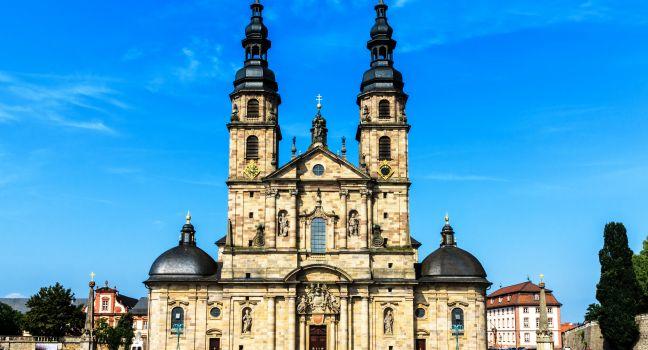
Fulda's 18th-century cathedral, an impressive baroque building with an ornate interior, has two tall spires and stands on the other side of the broad boulevard that borders the palace park. The basilica accommodated the ever-growing number of pilgrims who converged on Fulda to pray at the grave of the martyred St. Boniface, the \"Apostle of the Germans.\" A black alabaster bas-relief depicting his death marks the martyr's grave in the crypt.
\n
\n
Domplatz
Share This
(c) Alexsleepy | Dreamstime.com
Erfurt's most picturesque square is bordered by houses dating from the 16th century and dominated by twin churches. The daily market is a great place to get a Thuringian bratwurst from one of the many stands.
Drachenfels
Share This
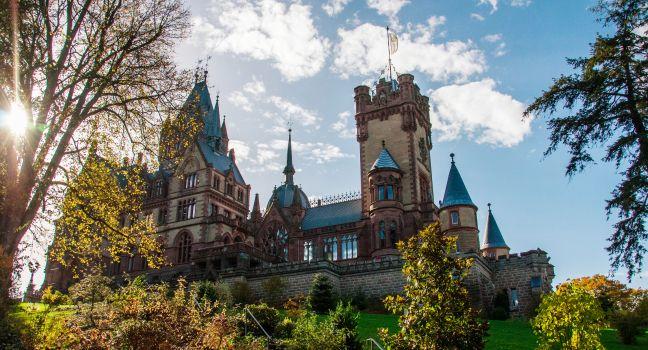
The town of Königswinter has one of the most visited castles on the Rhine, the Drachenfels. Its ruins crown one of the highest hills in the Siebengebirge, with a spectacular view of the Rhine. It's also part of Germany's oldest nature reserve, with more than 100 km (62 miles) of hiking trails. The castle was built in the 12th century by the archbishop of Cologne, and takes its name from a dragon said to have lived in a nearby cave. (The dragon was slain by Siegfried, hero of the epic Nibelungenlied.)
\n
The castle ruins can be reached via two different hikes, each of about 45 minutes. One route begins at the Drachenfelsbahn station, and passes the Nibelungenhalle reptile zoo along the way. The other route starts at Rhöndorf on the other side of the hill. The Siebengebirge Tourist Office can provide a map that includes these and other local hiking trails.
Eiserner Steg
Altstadt
Share This
Jorg Hackemann / Shutterstock
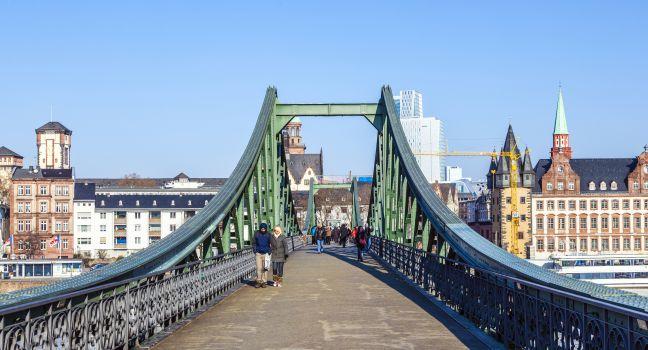
A pedestrian walkway and the first suspension bridge in Europe, the Eiserner Steg connects the city center with Sachsenhausen aross the Main River and offers great views of the Frankfurt skyline. Boat excursions leave from here.
Elisabethkirche
Share This
(c) Olha Rohulya | Dreamstime.com
Marburg's most important building is the Elisabethkirche, which marks the burial site of St. Elizabeth (1207–31), the town's favorite daughter. She was a Hungarian princess, betrothed at age 4 and married at 14 to a member of the nobility, Ludwig IV of Thuringia. In 1228, when her husband died in the Sixth Crusade, she gave up all worldly pursuits. She moved to Marburg, founded a hospital, gave her wealth to the poor, and spent the rest of her very short life (she died at the age of 24) in poverty, caring for the sick and the aged. She is largely responsible for what Marburg became. Because of her selflessness she was made a saint four years after her death. The Teutonic Knights built the Elisabethkirche, which quickly became a pilgrimage site, enabling the city to prosper. You can visit the shrine in the sacristy that once contained her bones, a masterpiece of the goldsmith's art. The church is a veritable museum of religious art, full of statues and frescoes. Walking tours (€14) of Marburg begin at the church on Saturday at 3, year-round. Tours inside the church are held Monday to Friday at 3 from April to October, and Sunday shortly after Mass (around 11:15). Due to major renovations of the interior, the choir and the nave are closed to the public until 2027.
Eschenheimer Turm
City Center
Share This
Ioan Panaite / Shutterstock
Built in the early 15th century, this tower, a block north of the Hauptwache, remains the finest example of the city's original 42 towers. It now contains a restaurant-bar.
The once-bustling street of cafés and theaters of prewar Berlin has risen from the rubble of war and Communist neglect to reclaim the crowds with shopping emporiums. North of the train station you will see the rejuvenated heart of the entertainment center of Berlin's Roaring Twenties, including the Admiralspalast and the somewhat kitschy Friedrichstadt Palast.
Gedenkstätte Bergen-Belsen
Share This
(c) Ronaldwilfredjansen | Dreamstime.com
The site of the infamous POW and concentration camp is now a memorial to the victims of World War II and the Holocaust. Anne Frank was among the more than 70,000 Jews, prisoners of war, homosexuals, Roma, and others who died here. A place of immense suffering, the camp was burned to the ground by British soldiers, who liberated it in April 1945, arriving to find thousands of unburied corpses and typhus, typhoid, tuberculosis, and other diseases spreading rapidly among the survivors. Today, all that physically remains of the camp, which is inside a nature preserve, are the foundations of some of its prisoner barracks and a number of burial mounds overgrown with heather and grass and bearing stark inscriptions such as \"Here lie 1,000 dead.\"
\n
The history of the camp and its victims is explained further through a series of moving video, audio, photo, and text exhibits within the slender, minimalist structure of the 200-meter-long (656-foot-long), 18-meter-wide (59-foot-long) Documentation Center. Built almost entirely of plain concrete panels, the center is softly lit and peaceful inside, its floor sloping gently upward from the entrance and beyond the exhibits to windows that let in light and views of the trees outside.
\n
Visitors to the Memorial should plan to stay at least two or three hours. Ninety-minute tours of the site in German and English leave the Documentation Center information desk from March to October at 11:30 and 2:30 on Friday, Saturday, and Sunday Don't try to see everything when visiting the memorial, but do take some time to walk around outside, visiting the site of the barracks to gain a better understanding of the atrocious living conditions inmates of the camp were forced to suffer.
\n
Bear in mind that the memorial is not recommended for children under the age of 14. Older children should be in the company of an adult.
Gedenkstätte Buchenwald
Share This
(c) Dennis_dolkens | Dreamstime.com
Just north of Weimar, amid the natural beauty of the Ettersberg hills that once served as Goethe's inspiration, sits the blight of Buchenwald, one of the most infamous Nazi concentration camps. Fifty-six thousand men, women, and children from 35 countries met their deaths here through forced labor, starvation, disease, and gruesome medical experiments. Each is commemorated by a small stone placed on the outlines of the barracks, which have long since disappeared from the site, and by a massive memorial tower. In an especially cruel twist of fate, many liberated inmates returned to the camp as political prisoners of the Soviet occupation; they are remembered in the exhibit Soviet Special Camp #2. Besides exhibits, tours are available. To reach Buchenwald by public transportation, take Bus 6 (in the direction of Buchenwald, not Ettersburg), which leaves every 10 minutes from Goetheplatz in downtown Weimar. The one-way fare is €2.70.
Gedenkstätte und Museum Sachsenhausen
Share This
(c) Wastesoul | Dreamstime.com
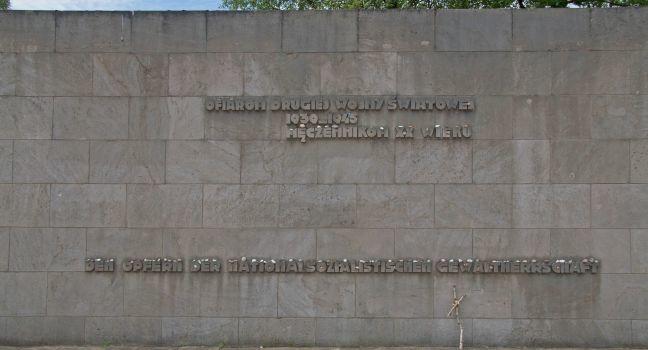
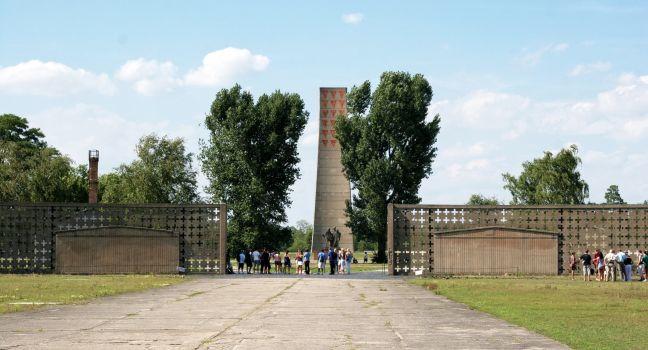
This concentration camp was established in 1936 and held 200,000 prisoners from every nation in Europe, including British officers and Joseph Stalin's son. It is estimated that tens of thousands died here, among them more than 12,000 Soviet prisoners of war. Between 1945 and 1950 the Soviets used the site as a prison, and malnutrition and disease claimed the lives of 20% of the inmates. The East German government made the site a concentration-camp memorial in April 1961. Many original facilities remain; the barracks and other buildings now hold exhibits. Allow three hours at the memorial, whose exhibits and sites are spread apart. Oranienburg is 35 km (22 miles) north of Berlin's center.
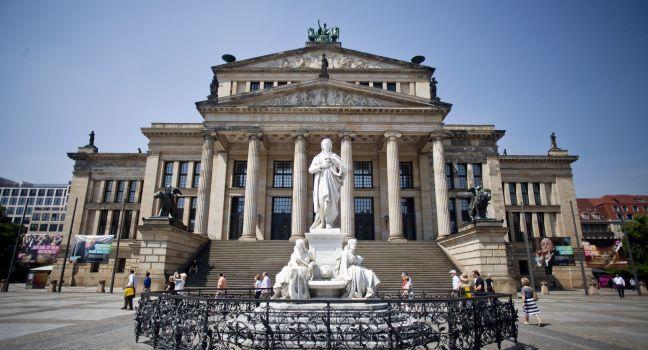
This is without a doubt the most elegant square in former East Berlin. Anchored by the beautifully reconstructed 1818 Konzerthaus and the Deutscher Dom and Französischer Dom (German and French cathedrals), it also hosts one of Berlin's classiest annual Christmas markets.
Goethes Gartenhaus
Share This
(c) Kehli01 | Dreamstime.com
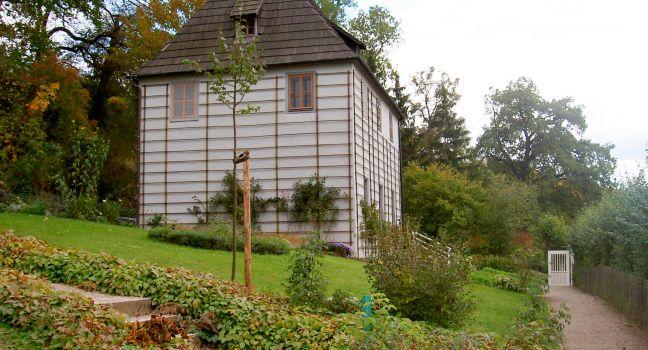
Goethe's first house in Weimar, the beloved Gartenhaus, is a modest country cottage where he spent many happy hours, wrote much poetry, and began his masterly classical drama Iphigenie. The house is set amid meadowlike parkland on the bank of the River Ilm. Goethe is said to have felt very close to nature here, and you can soak up the same rural atmosphere on footpaths along the peaceful little river.
Heilandskirche Sacrow
Share This
(c) Disula | Dreamstime.com
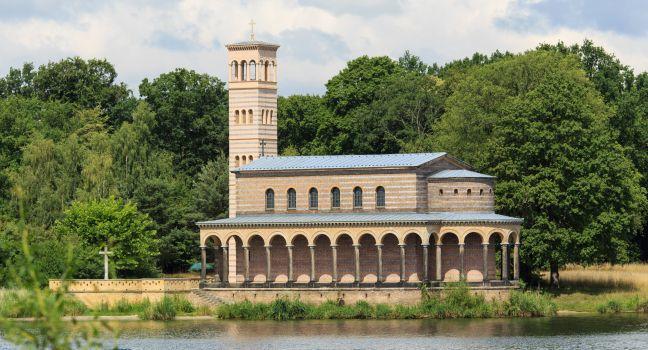
You'd be forgiven for wondering if you'd been transported to Italy when you first glimpse this dreamy lakeside church, complete with a campanile (bell tower) and mosaic-adorned colonnade, from across the Havel Lake or through the Sacrower Schlosspark near Potsdam. Actually, the church suffered a grim fate for many years, trapped in the no-man’s-land of the outer Berlin Wall. From 1961 to 1989, the East German government closed the church, fearing that it would serve as a hiding place for those trying to flee. Now it is restored and again in use, and makes the perfect endpoint to a scenic walk from the lakeside village of Kladow. To reach it, take the S75 train from Central Berlin to S-bahnhof Heerstrasse, then the X34 Bus to Alt-Kladow, then follow Sakrower Landstrasse until it turns into Kladower Strasse and ends at Schloss Sacrow. The path out to the water will take you to the church.
Holländisches Viertel
Share This
(c) Europhotos | Dreamstime.com
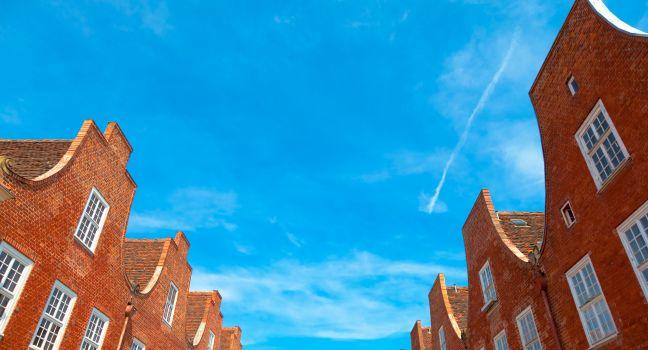
The center of the small Holländisches Viertel—the Dutch Quarter—is an easy walk north along Friedrich-Ebert-Strasse to Mittelstrasse. Friedrich Wilhelm I built the settlement in the 1730s to entice Dutch artisans who would be able to support the city's rapid growth. The 134 gabled, mansard-roof brick houses make up the largest Dutch housing development outside of the Netherlands today. Antiques shops, boutiques, and restaurants fill the buildings now, and the area is one of Potsdam's most visited.
Katharinenkirche
Share This
(c) Prillfoto | Dreamstime.com
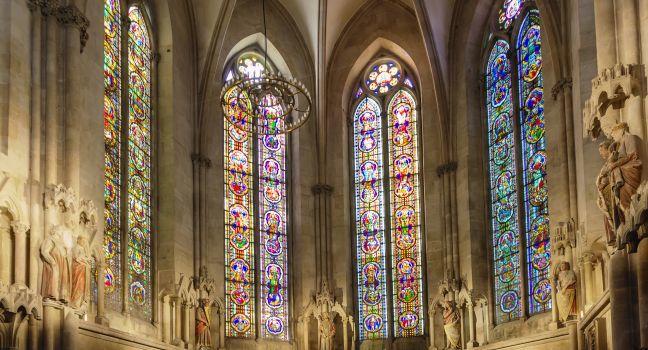
On the way to Oppenheim, the vine-covered hills parallel to the Rhine gradually steepen. Then, unexpectedly, the spires of Oppenheim's Gothic St. Catherine's Church come into view. The contrast of its pink sandstone facade against a bright blue sky is striking. Built between 1225 and 1439, it's the most important Gothic church between Strasbourg and Cologne. The interior affords a rare opportunity to admire magnificent original 14th-century stained-glass windows including two rose windows, the Lily Window and the Oppenheim Rose. The church houses masterfully carved tombstones, and the chapel behind it has a Beinhaus (charnel house) containing the bones of 20,000 citizens and soldiers from the 15th to 18th century. A viewing platform in the crossing tower is accessible, as part of a guided tour, when the shop is open.
Käthe-Kollwitz-Museum
Charlottenburg
Share This
(c) Bragearonsen | Dreamstime.com
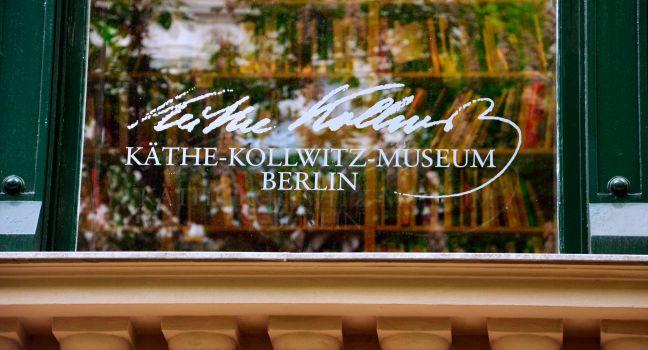
This lovingly curated museum in the Theaterbau (theater building) near Schloss Charlottenburg pays homage to one of Berlin’s favorite artists, the female sculptor, printmaker, and painter Käthe Kollwitz. Perhaps best known for her harrowing sculpture of a mother mourning a dead child inside the Neue Wache on Unter den Linden, she also lent her name to one of the city’s most beautiful squares, the posh, leafy Kollwitzplatz, which contains a sculpture of her.
Kirche St. Georg
Oberzell
Share This
(c) Delstudio | Dreamstime.com
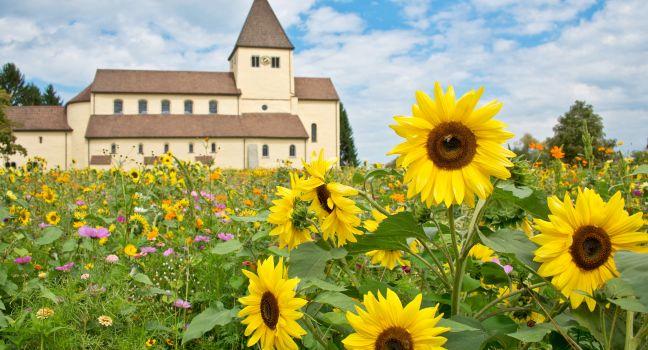
The Kirche St. Georg, in Oberzell, was built around 900; now cabbages grow in ranks up to its rough plaster walls. Small round-head windows, a simple square tower, and massive buttresses signal the church's Romanesque origin from the outside. The interior is covered with frescoes painted by the monks in around 1000. They depict the eight miracles of Christ. Above the entrance is a depiction of the Resurrection. From April through October you can only visit by taking one of the daily guided tours at 11, 1, and 4.
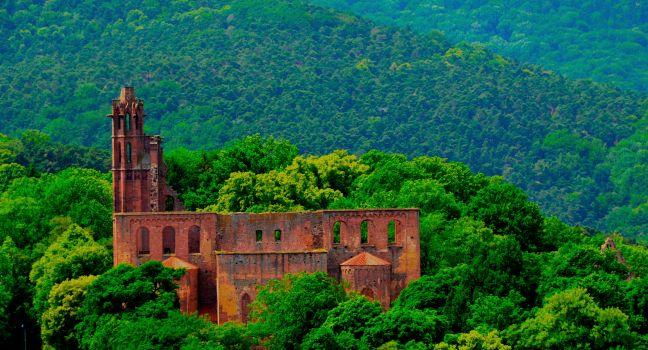
Klosterruine Limburg
Share This
(c) Mpearzzz | Dreamstime.com
Overlooking the suburb of Grethen are the ruins of Kloster Limburg. Emperor Konrad II laid the cornerstone in 1030, supposedly on the same day that he laid the cornerstone of the Kaiserdom in Speyer. The monastery was never completely rebuilt after a fire in 1504, but it's a majestic backdrop for open-air performances in the summer months.
Subscribe to Newsletter
Sign up for Travel Tips & News
I want emails from Fodor's Travel with travel information and promotions. I can unsubscribe
any time using the unsubscribe link at the end of all emails.
Thank you for your interest!
Look out for our newsletters with travel tips and special offers.
Sign up for Travel Tips & News
By signing up for the
newsletter, I agree to the Privacy Policy. You must check the box to subscribe
Thank you for your interest!
Look out for our newsletters with travel tips and special offers.