937 Best Sights in Germany

Background Illustration for Sights

We've compiled the best of the best in Germany - browse our top choices for the top things to see or do during your stay.

Dokumentation Obersalzberg and Kehlsteinhaus
Fodor's choice
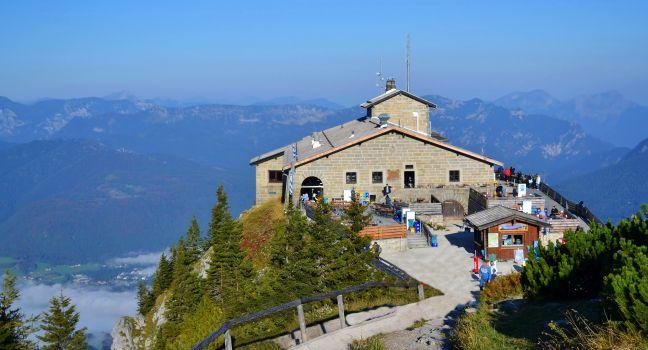
BERCHTESGADEN,GERMANY-SEPTEMBER 28: Tourists visit Kehlstein haus in Obersalzberg on September 28, 2011. The "Eagle's Nest" was built for Adolph Hitler for his 50th birthday.
Lukas Holub / Shutterstock

Located in the hills above Berchtesgaden, this center documents the notorious history of the Third Reich, with a special focus on Obersalzberg and its role in the Holocaust and World War II. The permanent exhibition looks at how the area was transformed from a remote mountain community into a Nazi power center, where Hitler spent more than a quarter of his time in office. It includes some surprisingly rare archive material, as well as access to the bunker complex. English-language multimedia guides are included in the low entrance fee; choose between the short (40-minute) or standard (80-minute) tour.

\n

Dokumentation Obersalzberg is also the starting point for a visit to Kehlsteinhaus (known in English as the Eagle's Nest), the last remaining Nazi-era building of Hitler's once-luxurious mountain retreat. A 15-minute shuttle bus and 45-second elevator whisk you all the way up—alternatively, skip the elevator and walk the last leg in around half an hour. Once at the Kehlsteinhaus (now a restaurant), explore the free history exhibition on the sun terrace, and consider the 1¼-hour scenic round-trip hike to the Kehlstein summit cross. It's also possible to follow the long mountain path back to Berchtesgaden.
Salzbergstr. 41, Berchtesgaden, 83471, Germany
08652-947--960
Sight Details
Dokumentation Obersalzberg: €3. Kehlsteinhaus bus/elevator round-trip: €32
Closed mid-Oct.–mid-May

Something incorrect in this review?

Loreley

Fodor's choice
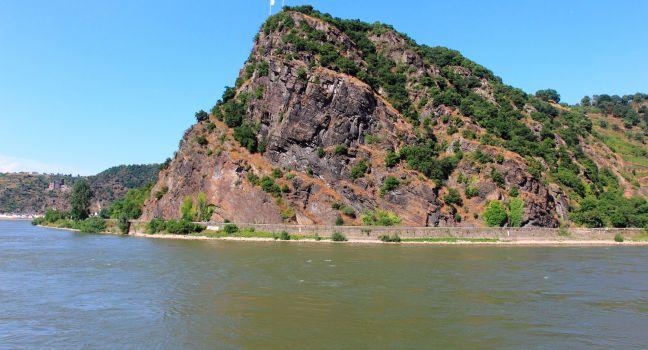
Rock hill near st. goarshausen 120 m above the waterline. Photo taken on: August 03rd, 2013
(c) Ciuciumama | Dreamstime.com

One of the Rhineland's most famous attractions lies 2½ km (1½ miles) south of St. Goarshausen: the steep (430-foot-high) slate cliff of Loreley. It's named after the beautiful blonde nymph Loreley from the story written in 1801 by author Clemens Brentano. Inspired by the sirens of Greek mythology, Brentano's poetic creation describes her sitting on the ledge, singing songs so lovely that sailors and fishermen were lured to their demise in the treacherous rapids. The rapids really are treacherous; the Rhine is at its narrowest here and the current the swiftest.

\n

You can approach Loreley from below or above. Rhine cruise ships stop beneath the rock, often playing a haunting 19th-century ballad inspired by Brentano's poem, while ramblers can tackle the steps up from the B42 to the viewpoint at the top of the rock, complete with bronze Loreley statue. Alternatively, drive up to the Parkplatz Loreley, watch the introductory film at the Tourist Information office, then follow one of the scenic paths—lined with information boards on the region's flora and fauna, geology, wine, and more—to get to the same viewpoint. Finish your trip with a hard-earned beer in the Loreley Biergarten.

Altes Schloss Eremitage

Fodor's choice

This palace east of the city makes an appealing departure from the sonorous and austere Wagnerian mood of much of the town. It's an early 18th-century palace, built as a summer retreat and remodeled in 1740 by the Margravine Wilhelmine, sister of Frederick the Great of Prussia. Although her taste is not much in evidence in the drab exterior, the interior is alive with light and color, displaying her guiding hand in every elegant line. The extraordinary Japanischer Saal (Japanese Room), filled with Asian treasures and chinoiserie furniture, is the finest room. Look out for the decidedly Western-looking Emperor; it's a depiction of Wilhelmine. Guided tours of the palace interiors, which are only in German but come with an English-language leaflet, take place every 45 minutes and last around the same amount of time; prepare to get slightly wet shoes in the enjoyable grotto waterworks. The palace's park and gardens—partly formal, partly natural, and filled with follies and fountains—make for pleasant, idle strolling. 

Recommended Fodor's Video

Niederwalddenkmal

Fodor's choice

High above Rüdesheim and visible for miles around is Germania, a colossal female statue crowning the Niederwald Monument. This tribute to German nationalism was built between 1877 and 1883 to commemorate the rebirth of the German Empire after the Franco-Prussian War (1870–71). Germania faces across the Rhine toward its eternal enemy, France. At her base are the words to a stirring patriotic song: \"Dear Fatherland rest peacefully! Fast and true stands the watch, the watch on the Rhine!\" There are splendid panoramic views from the monument and from other vantage points on the edge of the forested plateau.

\n

You can reach the monument on foot (allow an hour), by car (via Grabenstrasse, Zum Niederwald-Denkmal, and the L-3034), or over the vineyards in the Seilbahn (cable car;  Oberstraße 37 www.seilbahn-ruedesheim.de; open mid-March through October). There's another chairlift to and from Assmannshausen, a red-wine enclave, on the other side of the hill; a \"Ringticket\" covers the cable car up from Rüdesheim to Niederwald, the cable car down from Niederwald to Assmannshausen, and the boat trip back to Rüdesheim; allow three to four hours for it all.

Vierzehnheiligen

Fodor's choice

On the edge of Bad Staffelstein, 21 km (13 miles) southeast of Coburg, stands this tall, elegant, yellow-sandstone edifice whose interior represents one of the great examples of rococo decoration. The church was built by Balthasar Neumann (architect of the Residenz at Würzburg) between 1743 and 1772 to commemorate a vision of Christ and 14 saints—vierzehn Heiligen—that appeared to a shepherd in 1445. The interior, known as \"God's Ballroom,\" is supported by 14 columns. In the middle of the church is the Gnadenaltar (Mercy Altar) featuring the 14 saints. Thanks to clever play with light and color, including the fanciful gold-and-blue trimmings, the dizzying interior seems to be in perpetual motion. Guided tours of the church are given on request; a donation is expected. The easiest way here from Coburg is by car (20 minutes), though the road leading to the church is often closed at weekends so you may have to walk the last half mile. Alternatively, take a 20-minute train to Lichtenfels, then a 10-minute bus to the church.

Bastei Bridge

The Bastei is one of the most famous landmarks in Germany's national park system, offering stunning panoramic views over the Elbe River and surrounding sandstone formations. Towering roughly 540 feet above the river, the rock formation has been a popular destination for centuries. Its main highlight is the Bastei Bridge, a stone structure that connects the jagged cliffs, providing an unforgettable viewpoint. Initially, in 1824, a wooden bridge was constructed to connect the steep sandstone formations, allowing visitors to more easily explore the breathtaking heights. As the area’s popularity grew, attracting more tourists drawn by the dramatic landscape and views over the Elbe River, the wooden structure was replaced.

In 1851, the current stone bridge was built, designed to be more durable and capable of withstanding the elements. The bridge stretches 250 feet and seamlessly blends into the surrounding rocks, providing a sturdy and iconic pathway for travelers while preserving the natural beauty of the area. A shuttle bus runs from the first (most distance) parking lot to the bridge.

Eifel National Park

In the rolling hills of western Germany, Eifel National Park unfolds as a tapestry of natural splendor. This expansive haven features lush forests, tranquil volcanic lakes, and charming meadows, creating an inviting landscape for lovers of the outdoors. Explore scenic trails like the nearly 200-mile Eifelsteig trail that meanders through Monschau and the surrounding countryside. Ramble across the rolling hills, spot elusive wildlife, and soak in the serene beauty of the park's unspoiled wilderness.

Fuggerei and Fuggerhäuser

The world's oldest social housing project, this settlement was established by the wealthy Fugger family in 1516 to accommodate employees of the family's textile mills and Augsburg's deserving poor. The 67 homes with 140 apartments still serve the same purpose and house about 150 people today. It's financed almost exclusively from the assets of the Fugger family foundation, because the annual rent of \"one Rhenish guilder\" (€1) hasn't changed, either. Residents must be Augsburg citizens, Catholic, and destitute through no fault of their own—and must pray three times daily for their original benefactors, the Fugger family. The most famous resident was Mozart's great-grandfather. You can view model apartments at Ochsengasse 51 for a fee, or view the settlement from the exterior from the outside free of charge. The Fuggerei was mostly destroyed during World War II, but it was rebuilt according to original plans, although with such modern conveniences as heating and electricity. Many residents survived Allied bombings by escaping to the little underground shelter the Fugger family had the foresight to build; today, it is a small wartime museum worth making part of your visit.

Monschau Altstadt

Tucked in the heart of Monschau, the Altstadt (Old Town) is a captivating maze of narrow cobblestone streets lined with well-preserved half-timbered houses. Dating back to the medieval period, the area invites leisurely strolls past quaint shops, cozy cafes, and historic buildings. The picturesque townscape, with its vibrant façades and charming architecture, offers a delightful step back in time and a glimpse into the region’s rich heritage.

Schrammsteine

The Schrammsteine offers one of the more adventurous experiences in Saxon Switzerland National Park. To access some of the most spectacular viewpoints, such as the Schrammsteinaussicht, you’ll need to navigate steep paths that often involve climbing ladders and metal railings fixed to the rocks. While the effort adds a bit of thrill, it rewards you with sweeping panoramic views of the Elbe Valley and the surrounding sandstone peaks. These routes are not overly technical but are best suited for hikers comfortable with a bit of scrambling and heights. The full route takes about 2.5 hours and can be traversed by older kids who are able to climb on their own.

Alster Lakes

Altstadt Fodor's choice
Inner Alster Lake is one of two artificial lakes in Hamburg.
(c) Mango2friendly | Dreamstime.com

The twin lakes of the Binnenalster (Inner Alster) and Aussenalster (Outer Alster) provide Hamburg with some of its most celebrated vistas. The two lakes meet at the Lombard and Kennedy bridges. The boat landing at Jungfernstieg, below the Alsterpavillon, is the starting point for lake and canal cruises. Small sailboats and rowboats, rented from yards on the shores of the Alster, are very much a part of the summer scene.

\n

Every Hamburger dreams of living within sight of the Alster, but only the wealthiest can afford it. Those that can't still have plenty of opportunities to enjoy the waterfront, however, and the outer Alster is ringed by 7 km (4½ miles) of tree-lined public pathways.  Popular among joggers, these paths are also a lovely place for a stroll.

Alte Pinakothek

Maxvorstadt Fodor's choice
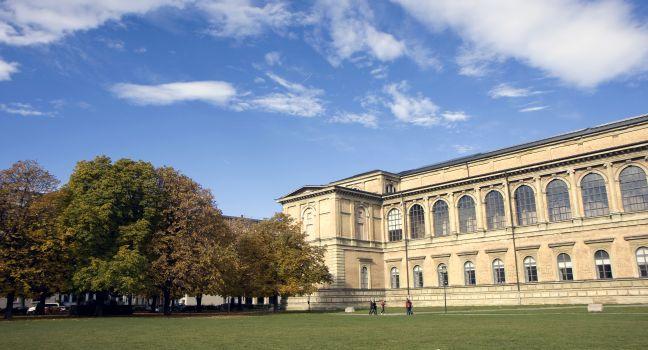
Park in Munich in fornt of the Alte Pinakothek
(c) Evgeshag | Dreamstime.com

With numerous Old Master paintings from the Netherlands, Italy, France, and Germany, the Alte Pinakothek holds one of the most significant art collections in the world. It was originally constructed by Leo von Klenze between 1826 and 1836 to exhibit the collection of 14th- to 18th-century works (started by Duke Wilhelm IV in the 16th century). The collection comprises more than 700 pieces, including masterpieces by Dürer, Titian, Rembrandt, Da Vinci, Rubens (the museum has one of the world's largest Rubens collections), and two celebrated Murillos. While the neighboring Neue Pinakothek is closed for renovations until 2029, a rotating selection from its fine collection of 19th-century art is on view in the lower gallery.

Burg Hohenzollern

Fodor's choice
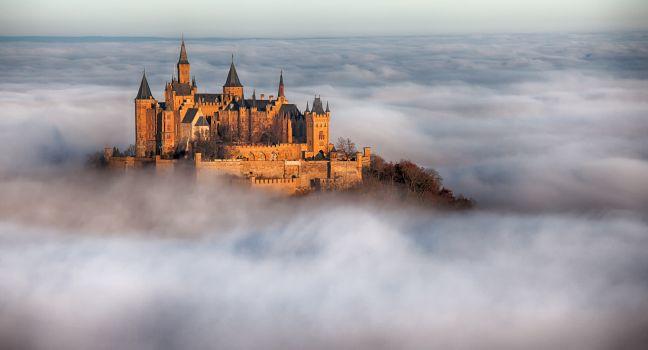
German Castle Hohenzollern over the Clouds; Shutterstock ID 138687191; Project/Title: World's 20 Most Spectacular Palaces; Downloader: Fodor's Travel
Jens Ottoson/Shutterstock

The majestic silhouette of this massive castle is visible from miles away. The Hohenzollern House of Prussia was the most powerful family in German history. It lost its throne when Kaiser William II abdicated after Germany's defeat in World War I. The Swabian branch of the family owns one-third of the castle, the Prussian branch two-thirds. Today's neo-Gothic structure, perched high on a conical wooded hill, is a successor of a castle dating from the 11th century. On the fascinating 45-minute castle tour you'll see the Prussian royal crown and beautiful period rooms, all opulent from floor to ceiling, with such playful details as door handles carved to resemble peacocks and dogs. The restaurant on the castle grounds, Café Restaurant Burg Hohenzollern, offers choices from vegan up to rump steak along with pastries from  the local confectioner,  and there's an outdoor beer garden in season. From the parking lot it's a 20-minute walk to the castle entrance; a shuttle bus is now included in the admission price, and there are English-language tours on request (or you can download the new free self-guided app). While it's better to buy a ticket in advance to ensure entry, you can buy one at the carpark for an additional €3 if they are available for the day.

Burg Trifels

Fodor's choice
The fortress Trifels in Germany on a sunny day.
(c) Fuchsphotography | Dreamstime.com

Burg Trifels is on the highest of three sandstone bluffs overlooking Annweiler, 15 km (9 miles) northwest of Gleiszellen. Celts, Romans, and Salians all had settlements on this site, but it was under the Hohenstaufen emperors (12th and 13th centuries) that Trifels was built on a grand scale. It housed the crown jewels from 1125 to 1274 (replicas are on display today). It was also an imperial prison, perhaps where Richard the Lion-Hearted was held captive in 1193–94. Although it was never conquered, the fortress was severely damaged by lightning in 1602. Reconstruction began in 1938, shaped by visions of grandeur to create a national shrine to the imperial past. The monumental proportions of some parts of today's castle bear no resemblance to those of the original Romanesque structure. The imperial hall is a grand setting for summer concerts. On foot: From Annweiler, follow the local signs for Burg Trifels. The hike is about an hour. By car: Follow the A65 in the direction of Karl-Ludwigshafen, take exit Landau-Süd, then B10 to Annweiler west. From there follow the local signs. Parking is at the foot of the fortress, a 20-minute walk to the top.

Burg Trifels, Annweiler, 76855, Germany
06346-8470
Sight Details
€4.50
Closed Dec. and Jan. Closed weekdays Feb.–mid-Mar. and Nov. Closed Mon. mid-Mar.–Oct.

Something incorrect in this review?

Chilehaus

Altstadt Fodor's choice
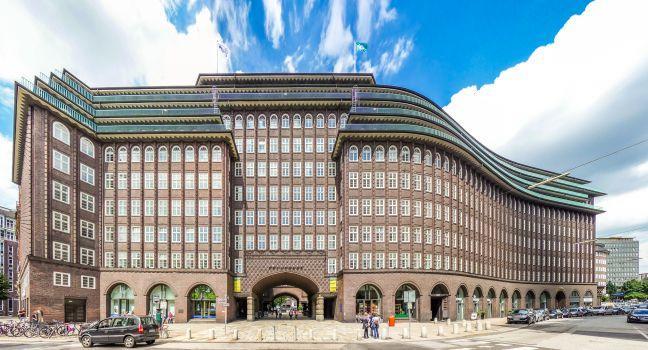
Wide angle view of famous Chilehaus (Chile House) in Hamburg, Germany.
(c) minnystock | Dreamstime.com

Almost 5 million bricks went into the construction of this marvelous building at the heart of the Kontorhausviertel, a collection of handsome office buildings that were built in the 1920–40s and now, together with the nearby Speicherstadt, form a UNESCO World Heritage site. Built in a brick expressionist style in 1924 for expat Brit Henry Brarens Sloman, who emigrated to Chile from Hamburg as a young man, made a considerable fortune trading saltpeter and returned to the city to make his mark, the Chilehaus stands 10 stories high and its impressive, jutting tip resembles the prow of a ship. Still housing business offices, it also counts a number of small cafés, shops, and a bar as residents, and is well worth a visit, particularly at night when illuminated.

DDR Museum

Mitte Fodor's choice
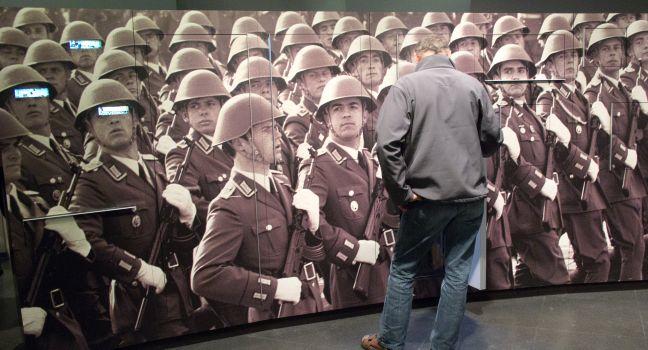
The DDR Museum, is an interactive museum in the centre of Berlin. Its exhibition shows the daily life in East Germany.
Konstantinos Papaioannou | Dreamstime.com

Half museum, half theme park, the DDR Museum is an interactive and highly entertaining exhibit about life during communism. It’s difficult to say just how much the museum benefits from its prime location beside the Spree, right across from the Berliner Dom, but it's always packed, filled with tourists, families, and student groups trying to get a hands-on feel for what the East German experience was really like. Exhibitions include a re-creation of an East German kitchen, all mustard yellows and bilious greens; a simulated drive in a Trabi, the only car the average East German was allowed to own; and a walk inside a very narrow, very claustrophobic interrogation cell.

Deutsches Museum

Isarvorstadt Fodor's choice
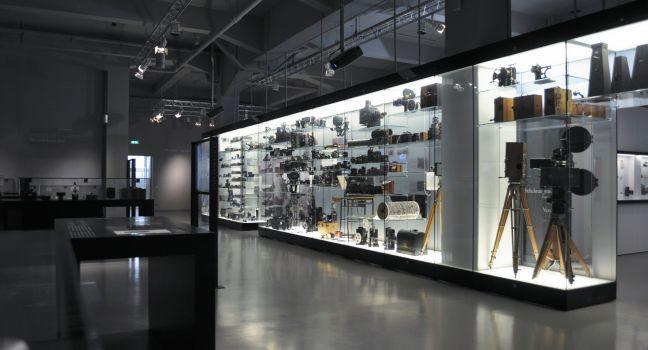
Photocamera Display from Deutsches Museum in Munich, Germany
(c) Ifeelstock | Dreamstime.com

Aircraft, vehicles, cutting-edge technology, and historic machinery fill the seven levels of this monumental building on an island in the Isar River, home to one of the biggest science and technology museums in the world. There are some 215,000 square feet and 20 exhibits to explore (the other half of the museum is closed until 2028 for modernization). Highlights include exhibitions on nanotechnology, biotechnology, and robotics. Children have their own “kingdom,” the Kinderreich, where they can learn about modern technology and science through numerous interactive displays (parents must accompany their children). One of the most technically advanced planetariums in Europe has two to four shows daily, depending on the day, albeit in German only. Two affiliated off-site museums are the Verkehrszentrum (Center for Transportation), on the former trade fair grounds at the Theresienhöhe, and the Flugwerft Schleissheim, an airfield and hangar packed with historical aircraft in Oberschleissheim, north of Munich.

Dom

Fodor's choice
Aachener Dom, center in Aachen Germany.
(c) Kerenby | Dreamstime.com

Aachen's stunning cathedral, the \"chapelle\" of the town's earlier name of Aix-la-Chapelle, remains the single greatest storehouse of Carolingian architecture in Europe, and it was the first place in Germany to be named a UNESCO World Heritage site. Though it was built over the course of 1,000 years and reflects architectural styles from the Middle Ages to the 19th century, its commanding image remains the magnificent octagonal royal chapel, rising up two arched stories to end in the cap of the dome. It was this section, the heart of the church, that Charlemagne saw completed in AD 800. His bones now lie in the Gothic choir, in a golden shrine surrounded by wonderful carvings of saints. Another treasure is his marble throne. Charlemagne had to journey all the way to Rome for his coronation, but the next 32 Holy Roman emperors were crowned here in Aachen (with some exceptions), and each marked the occasion by presenting a lavish gift to the cathedral. In the 12th century Emperor Frederick I (aka Barbarossa) donated the great chandelier now hanging in the center of the Palatine chapel; his grandson, Friedrich II, donated Charlemagne's shrine. English-language guided tours of the cathedral are offered daily at 2.

Münsterpl., Domhof 1, Aachen, 52062, Germany
0241-477–090
Sight Details
Free; guided tours €7

Something incorrect in this review?

East Side Gallery

Friedrichshain Fodor's choice
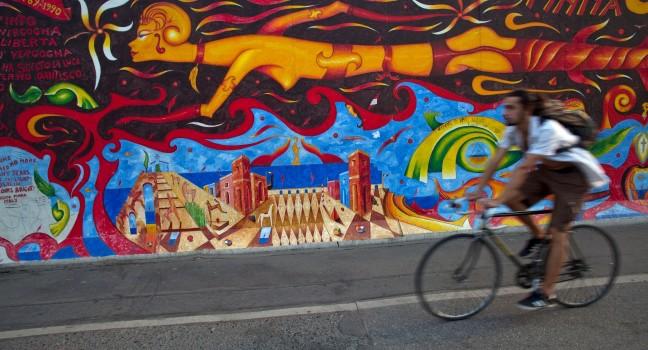
Bicycle rider, East Side Gallery, Berlin, Germany
© Halie Cousineau/ Fodor’s Travel

This 1-km (½-mile) stretch of concrete went from guarded border to open-air gallery within three months. East Berliners breached the wall on November 9, 1989, and between February and June of 1990, 118 artists from around the globe created unique works of art on its longest remaining section. One of the best-known works, by Russian artist Dmitri Vrubel, depicts Brezhnev and Honecker (the former East German leader) kissing, with the caption \"My God. Help me survive this deadly love.\" The stretch along the Spree Canal runs between the Warschauer Strasse S- and U-bahn station and Ostbahnhof. The redbrick Oberbaumbrücke (an 1896 bridge) at Warschauer Strasse makes that end more scenic.

Englischer Garten

Schwabing Fodor's choice
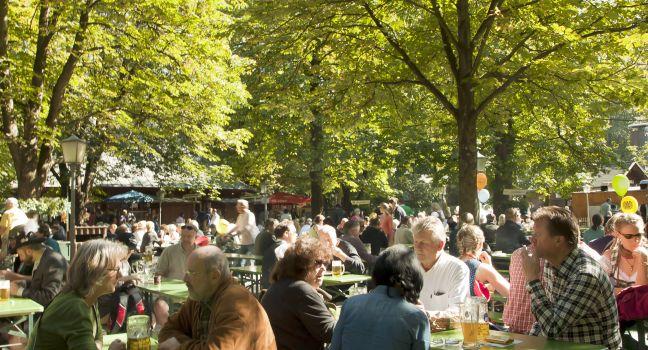
People relax outdoor on a beautiful October day, sitting in the sun, drinking beer and eating Bavarian traditional food in one of the many open air seasonal restaurant (Biergarten) of the Englischer Garten in Munich.
Acrogame | Dreamstime.com

This seemingly endless green space blends into the open countryside at the north of the city. Today's park covers nearly 1,000 acres and has 78 km (48 miles) of paths and more than 100 bridges. The open, informal landscaping—reminiscent of the English-style rolling parklands of the 18th century—gave the park its name. It has a boating lake, four beer gardens (open seasonally), and a series of curious decorative and monumental constructions. In the center of the park's most popular beer garden is a Chinese pagoda, erected in 1790 (reconstructed after World War II). The Englischer Garten is a paradise for joggers, cyclists, musicians, soccer players, sunbathers, and, in winter, cross-country skiers. There's even surfing year-round, at two continuous man-made waves; the larger, Eisbachwelle, below the Eisbach bridge, draws crowds of onlookers. The park has semi-official areas for nude sunbathing—the Germans have a positively pagan attitude toward the sun—so in some areas don't be surprised to see naked bodies bordering the flower beds and paths.

Europa-Park

Fodor's choice
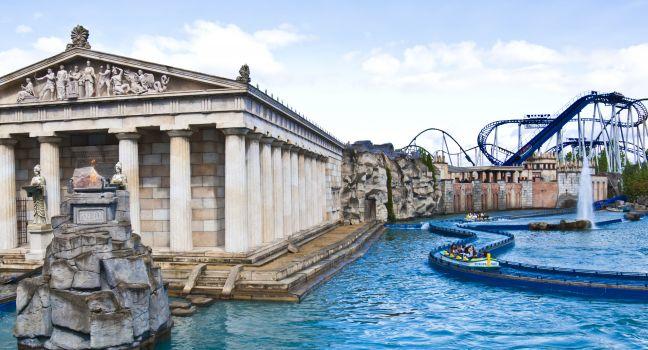
View over the Greek themed area of Europa Park. Poseidon is a high-speed water coaster with incredibly detailed theming, such as the Trojan Horse, and the station being located inside a recreated Acropolis temple. Europa-Park is the largest theme park in G
(c) Preisler | Dreamstime.com

Covering 160 acres, Europa-Park is the continent's largest and busiest amusement park and one of Germany's best-loved attractions. It has a quaint walk-through replica of European villages as well as roller coasters and rides, like the Eurosat CanCan Coaster, a virtual journey inside the Moulin Rouge, and the Silver Star, one of Europe's highest roller coasters. Try the Swiss Bob Run or the Poseidon Water Roller Coaster for even more thrills for the entire family.

Frauenkirche

Fodor's choice
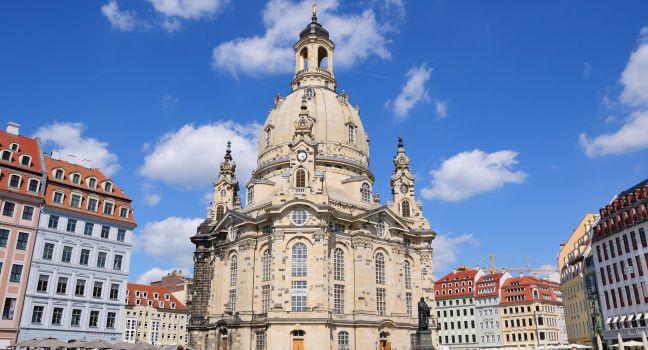
Frauenkirche - Dresden, Germany;
Scirocco340 / Shutterstock

This masterpiece of Baroque church architecture was completed in 1743. The huge dome set on a smaller square base, known as the Stone Bell, was the inspiration of George Bähr, who designed the church to be built \"as if it was a single stone from the base to the top.\" On February 15, 1945, two days after the bombing of Dresden, the burned-out shell of the magnificent Stone Bell collapsed. For the following five decades, the remains of the church, a pile of rubble, remained a gripping memorial to the horrors of war. In a move shocking to the East German authorities, who organized all public demonstrations, a group of young people spontaneously met here on February 13, 1982, for a candlelight vigil for peace.

\n

Although the will to rebuild the church was strong, the political and economic situation in the GDR prevented it. It wasn't until German unification that Dresden seriously began to consider reconstruction. In the early 1990s a citizens' initiative, joined by the Lutheran Church of Saxony and the city of Dresden, decided to rebuild the church using the original stone. The goal of completing the church by 2006, Dresden's 800th anniversary, seemed insurmountable. Money soon started pouring in from around the globe, however, and work began. The rubble was cleared away, and the size and shape of each stone were cataloged. Computer-imaging technology helped place each recovered stone in its original location.

\n

During construction, guided tours and Frauenkirche concerts brought in donations. The biggest supporter of the project in the United Kingdom, the Dresden Trust, is centered in the city of Coventry, itself bombed mercilessly by the German Luftwaffe during the war. The Dresden Trust raised more than €600,000 and donated the gold pinnacle cross that now graces the church dome.

\n

On Sunday, October 30, 2005 (almost a year ahead of schedule), Dresden's skyline became a little more complete with the consecration of the Frauenkirche. Leading the service was the bishop of Coventry. Although the church is usually open to all, it closes frequently for concerts and other events. There is usually a short organ service at noon every day. Check the English-language schedule next to Entrance D.

Georg-Treu-Platz 3, Dresden, D–01067, Germany
0351-656–06100
Sight Details
Free; cupola and tower €10; audio guides in English €3

Something incorrect in this review?

Fressgass

Altstadt Fodor's choice
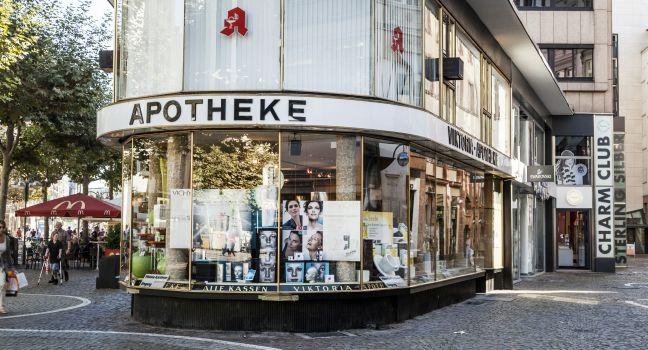
FRANKFURT, GERMANY - OCT 1: famous Victoria Pharmacy at the Grosse Bockenheimer Strasse on OCT 1, 2011 in Frankfurt, Germany. The pharmacy was built in 1950 architecture style.
Jorg Hackemann / Shutterstock

Grosse Bockenheimer Strasse is the proper name of this pedestrian street, nicknamed \"Pig-Out Alley\" because of its amazing choice of restaurants and cafés, wine merchants and late night music clubs, offering everything from crumbly cheeses and smoked fish to vintage wines and chocolate creams. Check the side streets for additional cafés and restaurants, between Börsenstraße and Opernplatz.

Green Citadel of Magdeburg

Fodor's choice
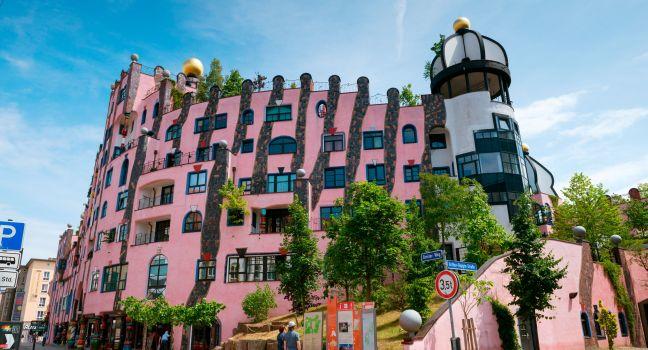
Hundertwasser House (Green Citadel) - one of the most famous landmarks in Magdeburg, Germany.
(c) Lexan | Dreamstime.com
Like an exuberant painting come to life, the Green Citadel is the last, and many say greatest, building by the late Austrian artist and architect Friedensreich Hundertwasser, who designed the citadel as an "oasis for humanity and nature within a sea of rational houses." Renowned throughout Germany and beyond, this ensemble of baroque façades and colorful modern buildings displays the architect's characteristic irregular windows, skewed towers, colorful mosaics, and joyous flourishes. The vast complex also incorporates bustling restaurants and enticing boutiques.

Haus der Kunst

Altstadt Fodor's choice
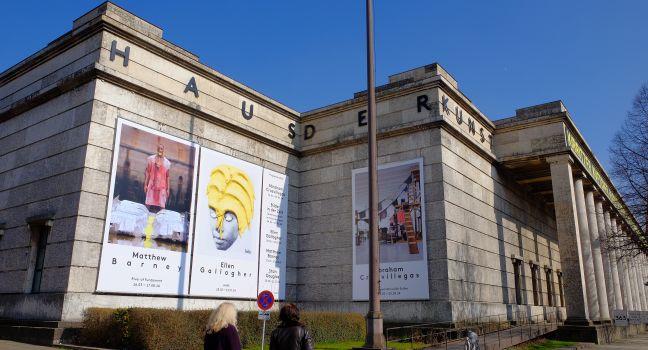
Haus der Kunst museum in munich.
(c) Tomnex | Dreamstime.com

This colonnaded, classical-style building is one of Munich's most significant examples of Hitler-era architecture, and was officially opened as House of German Art by the Führer himself. During the Third Reich it only showed work deemed to reflect the Nazi aesthetic. One of its most successful postwar exhibitions was devoted to works banned by the Nazis. It now hosts cutting-edge exhibitions of art, photography, sculpture, and video installations, as well as theatrical and musical happenings. The adjacent P1 is one of the most famous clubs in the city.

Prinzregentenstr. 1, Munich, 80538, Germany
089-2112–7113
Sight Details
€15 (free last Fri. of the month between 4 and 10 pm)
Closed Tues.

Something incorrect in this review?

Herrenhausen Palace and Gardens

Fodor's choice
Great Gardens, Herrenhausen, Hannover, Lower Saxony, Germany.
(c) Yovcheva | Dreamstime.com

The gardens of the former Hannoverian royal summer residence are the city's showpiece, unmatched in Germany for its formal precision, with patterned walks, gardens, hedges, and chestnut trees framed by a placid moat. In the glasshouses there are over 800 flowering orchids and exotic plants and a grotto decorated with colorful glass mosaic and pebbles by artist Niki de Saint Phalle. The mausoleum in the Berggarten houses the remains of local royalty, including those of King George I of Britain. From May until September there are fireworks displays and fountain shows for a few hours daily (weekdays 10–noon and 3–5, weekends 10–noon and 2–5). The 17th-century palace on the grounds was completely destroyed in 1943, leaving only the fountains and stairs remaining. In 2013, a relatively faithful reconstruction replaced the castle, which now houses a museum dedicated to its history and is used frequently as an event location. Herrenhausen is outside the city, a short ride on Tram Line 4 or 5.

Herrenhauserstr. 5, Hannover, 30419, Germany
0511-1683–4000
Sight Details
Museum and gardens €10 Apr.–Oct., €8 Nov.–Mar.
Museum closed Mon.–Wed. Nov.–Mar.

Something incorrect in this review?

Hohes Schloss

Fodor's choice
Fuessen - High Castle
ArTono / Shutterstock

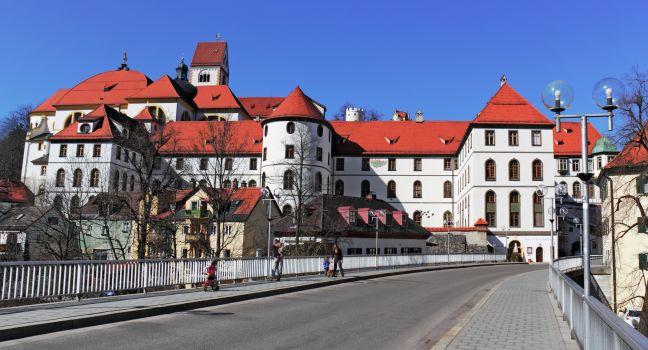
One of the best-preserved late-Gothic castles in Germany, Hohes Schloss (High Castle) was built on the site of the Roman fortress that once guarded this Alpine section of the Via Claudia, the trade route from Rome to the Danube. Evidence of Roman occupation of the area has been uncovered at the foot of the nearby Tegelberg Mountain, and the excavations next to the Tegelberg cable-car station are open for visits daily. The Hohes Schloss was the seat of Bavarian rulers before Emperor Heinrich VII mortgaged it and the rest of the town to the bishop of Augsburg for 400 pieces of silver. The mortgage was never redeemed, and Füssen remained the property of the Augsburg episcopate until secularization in the early 19th century. The bishops of Augsburg used the castle as their summer Alpine residence. It has a spectacular 16th-century Rittersaal (Knights' Hall) with a carved ceiling, and a princes' chamber with a Gothic tile stove.

Holstentor

Fodor's choice
Holsten Gate - Lübeck, Germany; Shutterstock ID 65094772; Project/Title: Fodors; Downloader: Melanie Marin
Scirocco340 / Shutterstock
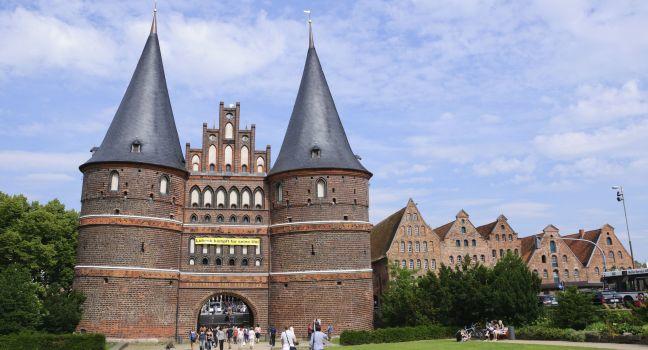
Lübeck’s famous gate was part of the medieval fortifications of the city. It has two faces: one it shows the world and one it shows the city. The \"field side,\" which faces away, appears as if it is made of two defensive towers connected by a middle gate. The \"city side\" looks like one smooth building and has more windows, arcades, and friezes. The inscription on the field side, added in 1871, reads, \"Concordia domi foris pax,\" an abbreviated version of the statement, \"Harmony within and peace outside are indeed the greatest good of all.\" It houses a museum with ship models, suits of armor, and other artifacts from Lübeck's heyday.

Kloster Ettal

Fodor's choice
Ettal Abbey in Upper Bavaria, Germany
Scirocco340 / Shutterstock

This remarkable monastery was founded in 1330 by Holy Roman Emperor Ludwig the Bavarian for a group of knights and a community of Benedictine monks. It still houses 50 monks today, making it the largest Benedictine monastery in Germany. The monastery's highlight is its original 10-sided basilica, which was redecorated in the mid-18th century to become one of the foremost examples of Bavarian rococo. The church's chief treasure is its enormous dome fresco (83 feet wide), painted by Jacob Zeiller. German-language basilica tours are offered every Monday and Thursday at 3 pm, lasting up to 45 minutes.

\n

Outside of the church, visitors can explore the lovely courtyard gardens and the historic brewery and distillery. Both the signature Benediktiner Weissbier and the seven different traditional \"Ettaler liqueurs\" (some made from centuries-old recipes incorporating dozens of mountain herbs) are local favorites. One-hour German-language brewery tours take place every Tuesday and Friday at 3 pm, with 45-minute liqueur distilling tours every Monday and Thursday at 4 pm. Both include tastings, and you can pick up bottles to take away in the monastery shop.

Kaiser-Ludwig-Pl. 1, Ettal, 82488, Germany
08822-740-monastery
Sight Details
Free. Basilica tour €5; brewery tour €12, distillery tour €9

Something incorrect in this review?

Kölner Dom

Altstadt Fodor's choice
Inside the amazing gothic Cologne Cathedral in Germany. Photo taken on: September 27th, 2013
(c) Jchambers | Dreamstime.com

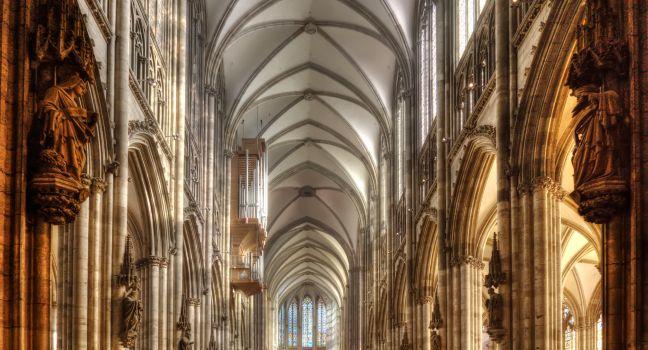
Cologne's landmark embodies one of the purest expressions of the Gothic spirit in Europe. The cathedral, meant to be a tangible expression of God's kingdom on Earth, was conceived with such immense dimensions that construction, begun in 1248, was not completed until 1880, after the original plan was rediscovered. At 515 feet high, the two west towers of the cathedral were briefly the tallest structures in the world when they were finished (before being eclipsed by the Washington Monument). The cathedral was built to house what are believed to be the relics of the Magi, the three kings who paid homage to the infant Jesus (the trade in holy mementos was big business in the Middle Ages—and not always scrupulous). The size of the building was not simply an example of self-aggrandizement on the part of the people of Cologne, however; it was a response to the vast numbers of pilgrims who arrived to see the relics. The ambulatory (the passage that curves around the back of the altar) is unusually large, allowing cathedral authorities to funnel large numbers of visitors up to the crossing (where the nave and transepts meet and where the relics were originally displayed), around the back of the altar, and out again.

\n

Today the relics are kept just behind the altar, in the original, enormous gold-and-silver reliquary. The other great treasure of the cathedral, in the last chapel on the left as you face the altar, is the Gero Cross, a monumental oak crucifix dating from 971. The Altar of the City Patrons (1440), a triptych by Stephan Lochner, Cologne's most famous medieval painter, is to the right. Other highlights are the stained-glass windows, some dating from the 13th century and another, designed by Gerhard Richter with help from a computer program, from the 21st; the 15th-century altarpiece; and the early-14th-century high altar, with its glistening white figures and intricate choir screens. If you're up to it, climb to the top of the bell tower to get the complete vertical experience (at the time of writing, available by guided tour only at  www.domforum.de) but be aware that viewing Cologne from the Dom itself removes the skyline's most interesting feature. The treasury includes the silver shrine of Archbishop Engelbert, who was stabbed to death in 1225.