937 Best Sights in Germany

Background Illustration for Sights

We've compiled the best of the best in Germany - browse our top choices for the top things to see or do during your stay.

Königsallee

Fodor's Choice
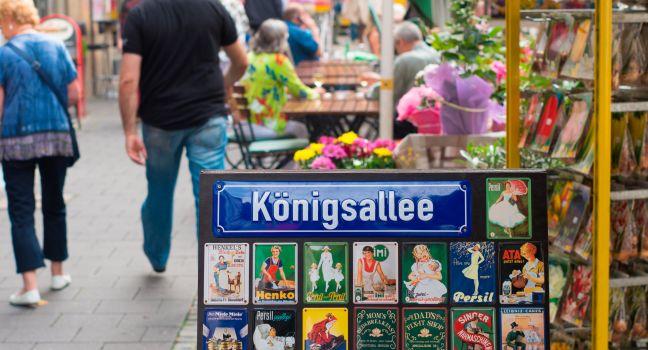
Konigsallee street name sign in dusseldorf, germany. It's famous for the fashion showrooms and luxury retail stores located along its sides.
(c) Hansenn | Dreamstime.com

Düsseldorf's main shopping avenue is a nearly mile-long stretch of designer boutiques and stores, including the Daniel Liebeskind-designed Kö-Bogen shopping mall at its northern tip. Known as \"the Kö,\" this wide, double boulevard is divided by an ornamental waterway fed by the River Düssel. Rows of chestnut trees line the Kö, shading a string of sidewalk cafés. 

Krämerbrücke

Fodor's Choice
Merchants Bridge. Erfurt
(c) Plotnikov | Dreamstime.com

Behind the predominantly neo-Gothic Rathaus, Erfurt's most outstanding attraction spans the Gera River. This medieval bridge, comparable to the Ponte Vecchio in Florence, is the longest of its kind in Europe and the only completely preserved and inhabited bridge of that era. Built in 1325 and restored in 1967–73, the bridge served for centuries as an important trading center. Today antiques shops, bistros, and more fill the majority of the timber-frame houses built into the bridge, some dating from the 16th century. The city is determined to keep the bridge as a site for traditional handicrafts, so look for the marionette maker and the pigment merchant. The bridge comes alive on the third weekend of June for the Krämerbrückenfest.

Erfurt, Germany

Something incorrect in this review?

Kulturforum

Potsdamer Platz Fodor's Choice
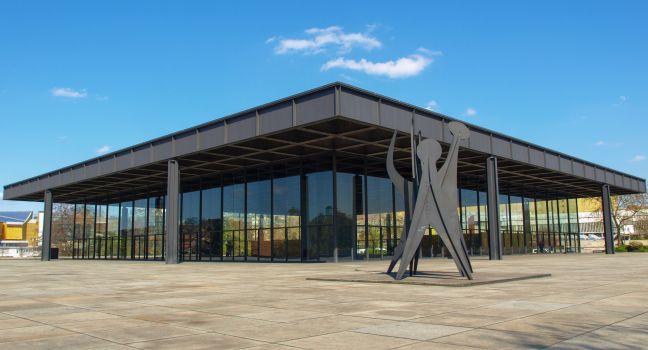
BERLIN, GERMANY - APRIL 23, 2010: The Neue Nationalgalerie art gallery is a masterpiece of modern architecture designed by Mies Van Der Rohe in 1968 as part of the Kulturforum;
Claudio Divizia / Shutterstock

This unique ensemble of museums, galleries, and the Philharmonic Hall was long in the making. The first designs were submitted in the 1960s and the last building completed in 1998. Now it forms a welcome modern counterpoint to the thoroughly restored Prussian splendor of Museum Island, although Berliners and tourists alike hold drastically differing opinions on the area's architectural aesthetics. Whatever your opinion, Kulturforum's artistic holdings are unparalleled and worth at least a day of your time, if not more. The Kulturforum includes the Gemäldegalerie (Picture Gallery), the Kunstbibliothek (Art Library), the Kupferstichkabinett (Print Cabinet), the Kunstgewerbemuseum (Museum of Decorative Arts), the Philharmonie, the Musikinstrumenten-Museum (Musical Instruments Museum), the Staatsbibliothek (National Library), and the Neue Nationalgalerie (New National Gallery).

Recommended Fodor's Video

Marienplatz

Altstadt Fodor's Choice
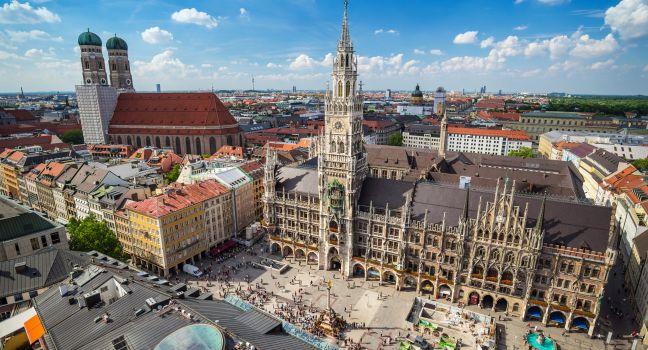
Marienplatz town hall - Munich - Germany.
Noppasinw | Dreamstime.com

Bordered by the Neues Rathaus, shops, and cafés, this square is named after the gilded statue of the Virgin Mary that has watched over it for more than three centuries. It was erected in 1638 at the behest of Elector Maximilian I as an act of thanksgiving for the city's survival of the Thirty Years' War, the cataclysmic, partly religious struggle that devastated vast regions of Germany. When the statue was taken down from its marble column for cleaning in 1960, workmen found a small casket in the base containing a splinter of wood said to be from the cross of Christ. On the fifth floor of a building facing the Neues Rathaus is Café Glockenspiel. It overlooks the entire square and provides a perfect view of the glockenspiel. Entrance is around the back.

Mercedes-Benz Museum

Untertürkheim Fodor's Choice
Stuttgart, Germany - May 25: Mercedes automobile inside the Mercedes-Benz Museum in Stuttgart, Germany, on May 25, 2014. The museum covers the history of the Mercedes-Benz and the brands associated.; Shutterstock ID 196333070; Project/Title: Pacific Northw
Victor Maschek / Shutterstock

The stunning futuristic architecture of this museum is an enticement to enter, but the equally stunning historic and futuristic vehicles inside are the main attraction. Visitors are whisked to the top floor to start this historical timeline tour of motorized mobility in the 1880s, with the first vehicles by Gottlieb Daimler and Carl Benz. Other museum levels focus on a particular decade or category of vehicle, such as trucks and buses, race cars, concept cars, and future technology, including autonomous driving. Historic photos and other artifacts line the walls of the circular walkway that links the levels.  There's a huge gift shop with all kinds of Mercedes-Benz–branded items and a new-car showroom you can muse over appealing models that are sold in Europe but not in North America. If all that technology makes you hungry, enjoy a full meal at Bertha's Restaurant, named for Bertha Benz, which serves farm-fresh local fare, or a quick bite in the Bistro or Deli.

Miniatur Wunderland

Speicherstadt Fodor's Choice
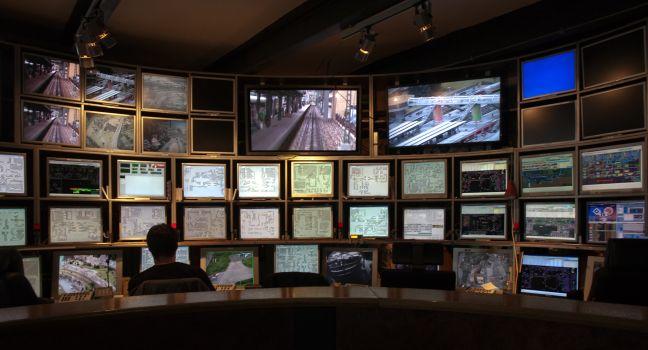
Control operating console in Miniatur Wunderland in Hamburg, Germany.
(c) Mouse_sonya | Dreamstime.com

You don’t need to be a model-railroad enthusiast or a 10-year-old to be blown away by the sheer scale and attention to detail of the Miniatur Wunderland. The largest model railroad in the world features almost 17,000 square feet of little trains click-clacking their way through wonderfully faithful miniature replicas of Hamburg itself as well as foreign towns in Switzerland, Austria, the United States, Italy, Scandinavia, and South America; a new Monaco section was added in 2024. Planes land at a little airport; every 15 minutes, day turns into night, and hundreds of thousands of LED lights illuminate the trains, buildings, and streets. The latest attraction is Yullbee Wunderland, when visitors, who are shrunk down as a small model figure on a scale of 1:87 thanks to the latest VR technology, can experience Wunderland from the perspective of the miniature inhabitants. Unsurprisingly, it's one of Hamburg's most popular attractions, so it's best to book ahead. If you do have to wait, there are free drinks and ice cream for children, and videos to watch ease the pain. Hours are extended on some Tuesdays and weekends.

Neues Palais

Fodor's Choice
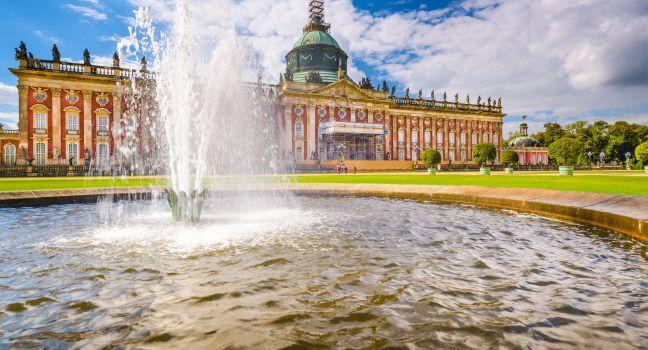
The New Palace Neues Palais in Potsdam, Germany.
(c) Sepavo | Dreamstime.com

A larger and grander palace than Sanssouci, the New Palace stands at the end of the long avenue that runs through Sanssouci Park. It was built after the Seven Years' War (1756–63). Impressive interiors include the Grotto Hall with walls and columns set with shells, coral, and other aquatic decorations, and the luxurious Lower Royal Suite. You can only visit Neues Palais with a guided tour at scheduled times; stop at the Visitor's Center at Neues Palais or the Historic Windmill to pick up a timed ticket (free with the sanssoci+ combined ticket). During the summer months, you can also visit the grandly furnished King's Apartment (closed at the time of this writing for restorations) and rococo-style Palace Theatre (only open on non-performance days and tours in German only).

Potsdam, 14469, Germany
0331-969–4200
Sight Details
Palace grand tour €12; King's Apartment tour €8; grand tour and King's Apartment tour €14; Palace Theatre €8
Closed Tues. King's Apartment and Palace Theatre closed Nov.–Mar.

Something incorrect in this review?

Pinakothek der Moderne

Maxvorstadt Fodor's Choice
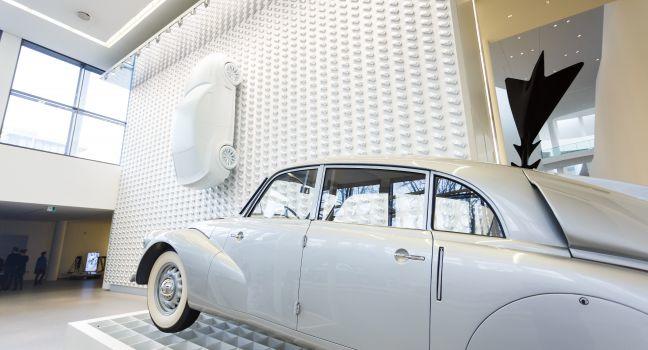
Munich, Germany - January 03 2016: Old white car on the exhibition in Pinakothek der Moderne museum, situated in the city centre of Munich.
(c) Castenoid | Dreamstime.com

This striking 130,000-square-foot glass-and-concrete complex by Stefan Braunfels is home to four outstanding museums under one cupola-topped roof: art, graphic art, architecture, and design, all from the 20th and 21st centuries. There's an outstanding collection of important modern and contemporary artwork, including an entire room devoted to the massive paintings of German postwar artist Georg Baselitz. The design museum is particularly popular, with permanent exhibitions in vehicle design, computer culture, and other design ideas.

Porta Nigra

Fodor's Choice
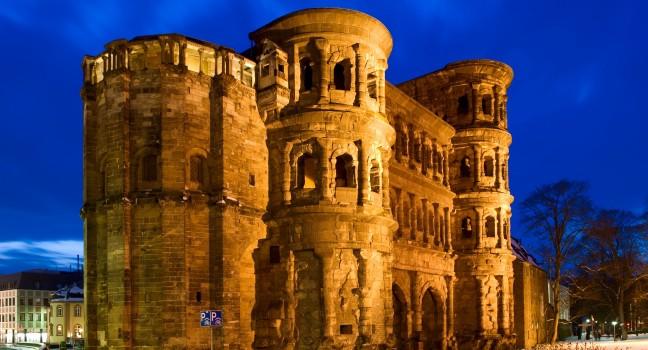
Porta Nigra of Trier, Germany; Shutterstock ID 45868624; Project/Title: Fodors; Downloader: Melanie Marin
Rainprel / Shutterstock

The best-preserved Roman structure in Trier was originally a city gate built in the 2nd century (look for holes left by the iron clamps that held the structure together). The gate served as part of Trier's defenses, and was proof of the sophistication of Roman military might and its ruthlessness. Attackers were often lured into the two innocent-looking arches of the Porta Nigra, only to find themselves enclosed in a courtyard. In the 11th century the upper stories were converted into two churches which remained in use until the 18th century. The tourist office is next door.

Reichsabtei Corvey

Fodor's Choice
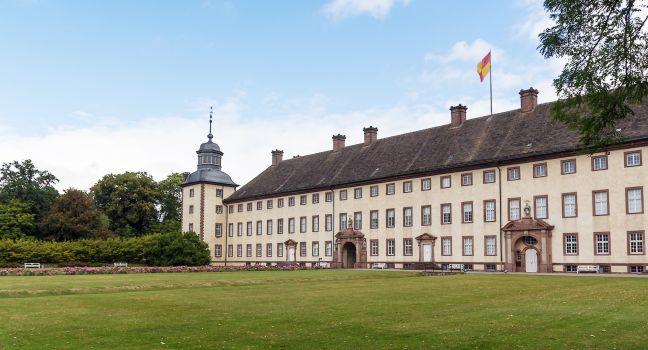
Imperial Abbey of Corvey was one of the most privileged Carolingian monastic sanctuaries in the ninth century Duchy of Saxony; Shutterstock ID 161763419; Project/Title: 10 Best New UNESCO Sites; Downloader: Fodor's Travel
Borisb17 / Shutterstock

The impressive Reichsabtei Corvey, or Schloss Corvey, is idyllically set between the wooded heights of the Solling region and the Weser River. During its 1,200-year history it has provided lodging for several Holy Roman emperors. Heinrich Hoffmann von Fallersleben (1798–1874), author of the poem \"Deutschland, Deutschland über Alles,\" worked as librarian here in the 1820s. The poem, set to music by Joseph Haydn, became the German national anthem in 1922. A garden festival takes place every year in August, and concerts are held in the church and great hall, the Kaisersaal, during the summer. Corvey is reached on an unnumbered road heading east from Höxter (3 km [2 miles]) toward the Weser. There are signposts to \"Schloss Corvey.\"

Höxter, 37671, Germany
05271-168–168
Sight Details
€14; abbey church €5
Closed Nov.–mid-Apr.

Something incorrect in this review?

Römer

Altstadt Fodor's Choice
FRANKFURT AM MAIN, GERMANY, MAY The 3rd 2014: The Romer Square, one of the oldest and most historic sections of Frankfurt am Main, featuring Roman bath ruins and gabled, gothic row houses.
srdjan draskovic / Shutterstock

Three individual patrician buildings make up the Römer, Frankfurt's town hall. The mercantile-minded Frankfurt burghers used the complex for political and ceremonial purposes and for trade fairs and other commercial ventures. Its gabled facade with an ornate balcony is widely recognized as the city's official emblem. The most important events to take place here were the festivities celebrating the coronations of the Holy Roman emperors. The first was in 1562 in the glittering Kaisersaal (Imperial Hall), the last in 1792 to celebrate the election of the emperor Francis II, who would later be forced by Napoléon to abdicate. Unless official business is being conducted, you can see the impressive, full-length 19th-century portraits of the 52 emperors of the Holy Roman Empire, which line the walls of the reconstructed banquet hall, but you have to arrange a tour through a private local operator.

Römerberg 27, Frankfurt, 60311, Germany
069-2123–34920
Sight Details
€3
Closed weekends and during events

Something incorrect in this review?

Schloss Herrenchiemsee

Fodor's Choice
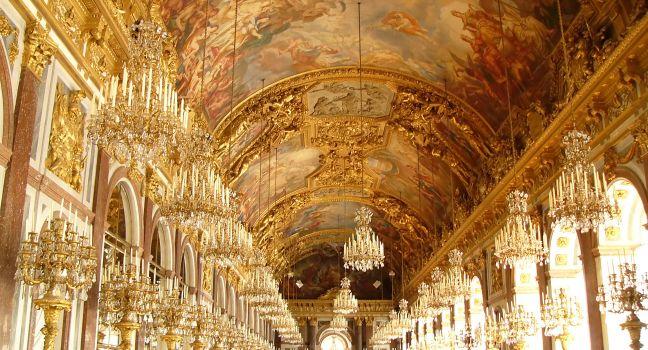
Herrenchiemsee palace hall
Dainis Derics / Shutterstock

Beautiful Chiemsee has drawn generations of Bavarian royalty to its shores for its dreamlike, melancholy air—and it was on one of the lake's three islands, Herreninsel, that King Ludwig decided to build this castle. Painstakingly modeled after Louis XIV's Versailles, the building (as with most of Ludwig's grand projects) was never completed, and Ludwig ultimately only spent nine days here. Nonetheless, what remains is seriously impressive—and seriously ostentatious.

\n

The palace's decadent state rooms can only be visited as part of a 35-minute guided tour, with English-language tours taking place several times a day (and timed to coincide with ferry arrivals). The most spectacular room in the palace is the Hall of Mirrors, but also of interest are the ornate bedrooms, the \"self-rising\" table, the elaborately painted bathroom, and the formal gardens. The south wing houses a museum about King Ludwig's life.

\n

Ferries to Herreninsel leave from Stock, the harbour of Prien, and between mid-April and late October a horse-drawn carriage can whisk you from the boat dock to the palace itself. Elsewhere on the island is the Augustinian Monastery where Germany's postwar constitution was drawn up; it is now a museum.

Herreninsel, Chiemsee, 83209, Germany
08051-688–7900
Sight Details
€11 (incl. Monastery Museum and King Ludwig II-Museum); €5 horse carriage ride

Something incorrect in this review?

Schloss Johannisberg

Fodor's Choice
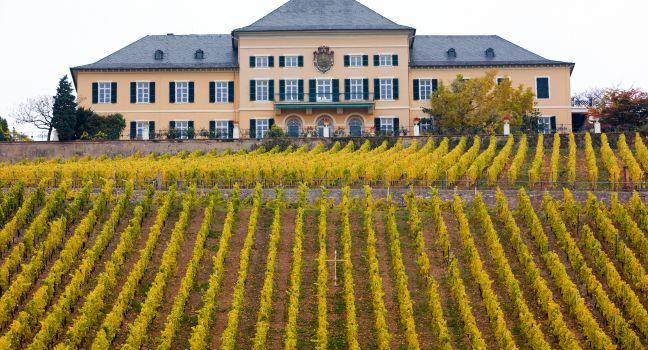
Johannisberg Castle with vineyard, Hessen, Germany.
(c) Phbcz | Dreamstime.com

The origins of this grand wine estate, high in the hills above (and slightly west of) Oestrich-Winkel, date from 1100, when Benedictine monks built a monastery and planted vines on the slopes below. The striking early-18th-century palace is closed to the public, but follow signs for the Weinprobierstand (wine tasting stand), where you can sample the local produce on a scenic terrace overlooking the vineyards. On the way, you'll pass by the beautiful, 12th-century parish church, notable for its suspended red cross. Elsewhere around the complex, you'll find a wine shop, which also offers the estate's gin, as well as Schlossschänke restaurant.

\n

Between April and October, you can book a guided cellar tour and wine tasting (in German only), or throughout the year you can opt for a pricier, exclusive individual/group wine tasting (English option). Schloss Johannisberg is a 10-minute drive or 45-minute hike from the center of Oestrich-Winkel.

Off Am Erntebringer, Geisenheim, 65366, Germany
06722-70090
Sight Details
Cellar tour with wine tasting €30
No tours Nov.--Mar.

Something incorrect in this review?

Schloss Linderhof

Fodor's Choice
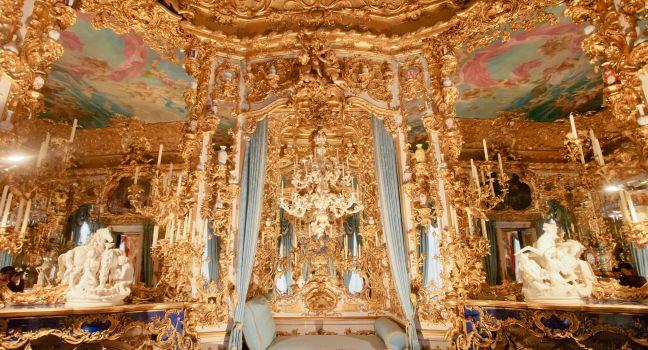
Linderhof palace hall of mirrors.
(c) Shoenberg3 | Dreamstime.com

Built between 1870 and 1879 on the spectacular grounds of his father's hunting lodge a few miles west of Ettal, Schloss Linderhof was the only one of Ludwig II's royal residences to have been completed during his short life. It was the smallest of his country retreats but also his favorite; a charming, French-style rococo confection, it was inspired by the Petit Trianon at Versailles.

\n

From an architectural standpoint, it's a whimsical combination of conflicting styles: lavish on the outside, somewhat overly decorated on the inside. The formal gardens contain interesting elements such as a Moorish pavilion—bought wholesale from the 1867 Paris Universal Exposition. According to hearsay, while staying at Linderhof, the eccentric king would dress up as the legendary knight Lohengrin to be rowed in a swan boat on the grotto pond; in winter he took off on midnight sleigh rides behind six plumed horses and a platoon of outriders holding flaming torches.

\n

The park around the palace is free to visit (parking is €3) but you'll pay for the exhibition, Hunding's Hut, and, of course, the palace itself, which is only accessible with a 25-minute guided tour. The Venus Grotto is closed for restoration until well into 2025. 

Linderhof 12, Linderhof, 82488, Germany
08822-92030
Sight Details
€10 Palace and Hunding's Hut; €2 Exhibition King's Cottage; Park free

Something incorrect in this review?

Schloss Neuschwanstein

Fodor's Choice
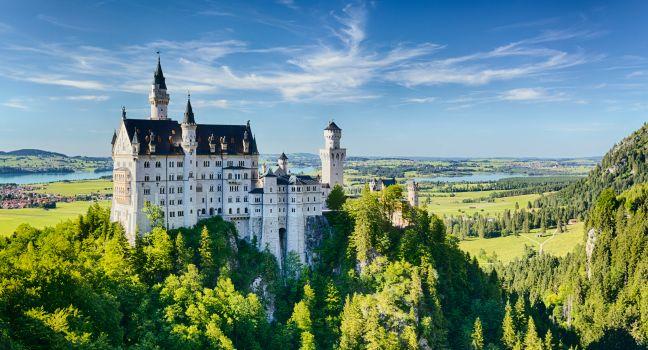
Summer landscape - view of the famous tourist attraction in the Bavarian Alps - the 19th century Neuschwanstein castle.
ptnphoto / Shutterstock

Bavaria's Fairy-Tale King, Ludwig II, commissioned a stage designer in 1868 to create this over-the-top architectural masterpiece high atop Swan's Rock and overlooking the peaceful waters of the Alpsee lake. Just a stone's throw from his childhood summer home of Hohenschwangau, the five-story castle was to pay tribute to the operas of Richard Wagner, for whom Ludwig was a great patron. While the exterior was constructed in Romanesque style and modeled on the Wartburg castle, the interior contains numerous murals alluding to sagas and legends, such as that of Siegfried forging the mighty sword in the entrance to the Royal Apartments and the so-called \"Swan's Corner,\" a living room dedicated to the Swan Knight Lohengrin. King Ludwig's untimely death at the age of 40 under suspicious circumstances put an end to the 17-year-long process of construction of the castle. Despite being incomplete—the extravagant Throne Room, for example, contains no throne—the castle became—and remains—one of Germany's top tourist destinations after Walt Disney used it as inspiration for his castle in the movie Sleeping Beauty and later for the Disneyland castle itself.

\n

There are also some spectacular walks around the castle. The delicate Marienbrücke (Mary's Bridge) is spun like a medieval maiden's hair across a deep, narrow gorge. From this vantage point, there are giddy views of the castle and the great Upper Bavarian Plain beyond. Check the castles' websites to see whether the Pöllatschlucht Gorge hiking trails or the walk to Marienbrücke are open, as they can close in winter or during bad weather.    The castle is a very strenuous climb, so consider taking a bus or horse and carriage (and expect a long wait). The Marienbrücke and transportation often close on snowy days.

Neuschwansteinstr. 20, Hohenschwangau, 87645, Germany
08362-930–830
Sight Details
€18
Purchase timed admission tickets online at www.ticket-center-hohenschwangau.de

Something incorrect in this review?

Schloss Nymphenburg

Nymphenburg Fodor's Choice
The scenery at the Nymphenburg palace in Munich Germany; Shutterstock ID 18390400; Project/Title: Fodors; Downloader: Melanie Marin
gary718 / Shutterstock

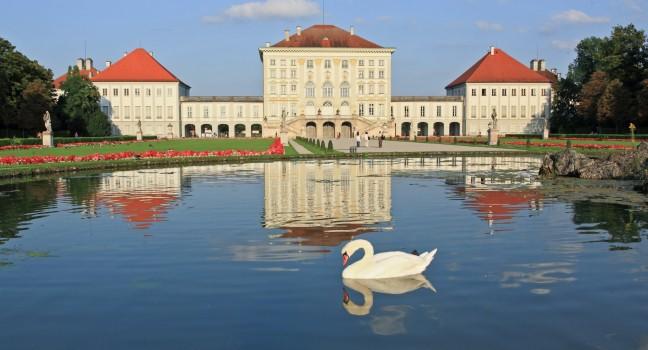
This glorious Baroque and Rococo palace, the largest in Germany, grew in size and scope over more than 200 years. Begun in 1662 by the Italian architect Agostino Barelli, it was completed by his successor, Enrico Zuccalli. It represents a tremendous high point of Italian cultural influence, in what is undoubtedly Germany's most Italian city. Within the original building, now the central axis of the palace complex, is the magnificent Steinerner Saal (Great hall), extending over two floors and richly decorated with stucco and grandiose frescoes by masters such as François Cuvilliés the Elder and Johann Baptist Zimmermann. One of the surrounding royal chambers houses Ludwig I's famous Schönheitsgalerie (Gallery of Beauties), portraits of women who caught his roving eye. The palace park is laid out in formal French style, with low hedges and gravel walks extending into woodland. Among the ancient trees are three fascinating pavilions, including the Amalienburg hunting lodge by François Cuvilliés. It's also worth visiting the former royal stables, now the Marstallmuseum, which houses a fleet of carriages, coaches, and sleighs. In its upper rooms are examples of the world-renowned Nymphenburg porcelain, the electoral porcelain factory founded by Max III Joseph in 1747.

Schloss Sanssouci

Fodor's Choice
Unidentified people in front of Sanssouci Palace in Potsdam. Sanssouci Palace is former summer palace of Frederick the Great, King of Prussia, opened at 1747.
(c) Eterovic | Dreamstime.com

Prussia's most famous king, Friedrich II—Frederick the Great—spent more time at his summer residence, Schloss Sanssouci, than in the capital of Berlin. Executed according to Frederick's impeccable French-influenced taste, the palace, which lies on the northeastern edge of Sanssouci Park, was built between 1745 and 1747. It is extravagantly rococo, with scarcely a patch of wall left unadorned. Visits to the palace are only allowed at fixed times scheduled when tickets are purchased. During peak tourist months, timed tickets can sell out before noon, so book online in advance. From Schloss Sanssouci, you can wander down the extravagant terraced gardens, filled with climbing grapevines, trellises, and fountains to reach the Italianate Friedenskirche, or \"Peace Church,\" which was completed in 1854, and houses a 13th-century Byzantine mosaic taken from an island near Venice.

Potsdam, 14469, Germany
0331-969–4200
Sight Details
Schloss Sanssouci €14; Friedenskirche free
Schloss Sanssouci closed Mon. Friedenskirche closed weekdays Nov.–mid-Mar.

Something incorrect in this review?

Schloss und Bergpark Wilhelmshöhe

Fodor's Choice
Flowerbeds in front of Castle Wilhelmshoehe on Mountain Park in Kassel, Germany.
(c) Hel080808 | Dreamstime.com

The magnificent grounds of the 18th-century Schloss and the Bergpark Wilhelmshöhe, at the western edge of Kassel, are said to be Europe's largest hill park. If you have time, plan to spend an entire day at this UNESCO World Heritage site, exploring its wonderful gardens, water features, museums, and castle. Wear good walking shoes and bring some water if you want to hike all the way up to the giant statue of Hercules that crowns the hilltop.

\n

The Wilhelmshöher Park was laid out as a baroque park in the early 18th century, its elegant lawns separating the city from the thick woods of the Habichtswald (Hawk Forest). Schloss Wilhelmshöhe was added between 1786 and 1798. The great palace stands at the end of the 5-km-long (3-mile-long) Wilhelmshöher Allée, an avenue that runs straight as an arrow from one side of the city to the other.

\n

Kassel's leading art gallery and the state art collection lie within Schloss Wilhelmshöhe as part of the Museumslandschaft Hessen Kassel. Its collection includes 11 Rembrandts, as well as outstanding works by Rubens, Hals, Jordaens, Van Dyck, Dürer, Altdorfer, Cranach, and Baldung Grien.

\n

The giant 18th-century statue of Hercules that crowns the Wilhelmshöhe heights is an astonishing sight. You can climb the stairs of the statue's castlelike base—and the statue itself (you can only mount the statue from April to October)—for a rewarding look over the entire city. At 2:30 pm on Sunday and Wednesday from May through September, water gushes from a fountain beneath the statue, rushes down a series of cascades to the foot of the hill, and ends its precipitous journey in a 175-foot-high jet of water. A café lies a short walk from the statue.

Schlosspark 1, Kassel, 34131, Germany
0561-3168–0160
Sight Details
Park free; a day ticket €6 includes entry to Hercules and Octagon, Schloss Wilhelmshöhe and Löwenburg castle
Schloss Wilhelmshöhe, Hercules and Octagon: closed Mon.

Something incorrect in this review?

Schloss Villa Ludwigshöhe

Fodor's Choice
Schloss Villa Ludwigshöhe, The Pfalz and Rhine Terrace, Germany, Europe.
Wolfgang Staudt, via Wikimedia Commons [CC BY 2.0]

Bavaria's King Ludwig I's Italian-style villa sits on the slopes overlooking Edenkoben and Rhodt unter Rietburg. The house is now used as a space for art exhibitions and musical events: the former dining room is used for classical concerts; the cellars house exhibitions of 20th-century ceramics; and an extensive collection of paintings and prints by the leading German impressionist Max Slevogt (1868–1932) is also on display. Hourly tours are included in the admission fee.

\n

Schloss Villa Ludwigshöhe is reachable by car, bus, or foot; the No. 506 Palatina bus goes directly from Edenkoben on Sunday and holidays. If you opt to walk, the Weinlehrpfad (educational trailpath) takes about 45 minutes. Historical winepresses and vintners' tools are displayed at intervals along the path, which starts at the corner of Landauer Strasse and Villa Strasse in Edenkoben. Due to major renovations the house is closed to the public until 2025.

Villastr. 64, Edenkoben, 67480, Germany
06323-93016
Sight Details
€6
Closed Dec.–mid-Mar. Closed Mon. mid-Mar.–Oct. Closed weekdays in Nov.

Something incorrect in this review?

Stadtschloss

Fodor's Choice
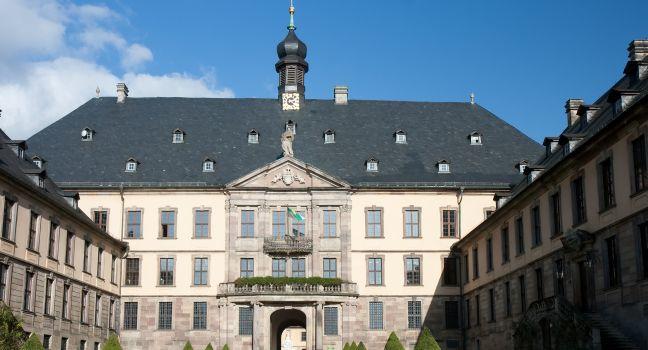
Fuldaer Stadtschloss - Main Entrance, Fulda, Hessen Germany. Photo taken on: October 25th, 2009
(c) Maui01 | Dreamstime.com

The city's grandest example of baroque design is the immense Stadtschloss, formerly the residence of the prince-bishops. The Fürstensaal (Princes' Hall), on the second floor, provides a breathtaking display of baroque decorative artistry, with ceiling paintings by the 18th-century Bavarian artist Melchior Steidl, and fabric-clad walls. The palace also has permanent displays of fine Fulda porcelain.

\n

Also worth seeing is the Spiegelsaal, with its many tastefully arranged mirrors. Pause at the windows of the Grünes Zimmer (Green Chamber) to take in the view across the palace park to the Orangery, a large garden with summer-flowering shrubs and plants.

Tempelhofer Feld

Neukölln Fodor's Choice
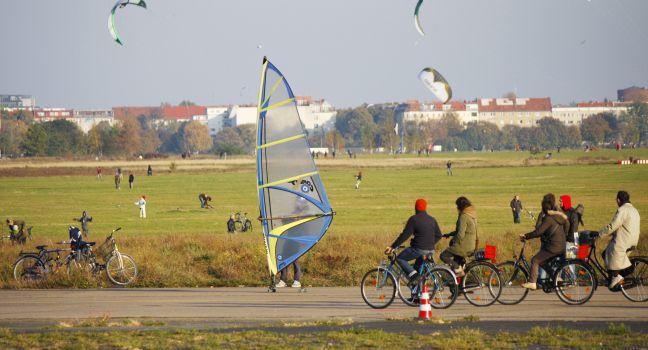
CIRCA OCTOBER 2011 - BERLIN: the Tempelhofer Feld, the former airport of Berlin-Tempelhof which has been redesigned as a public park, Berlin.
(c) Markwaters | Dreamstime.com

Of all Berlin’s many transformations, this one—from airport to park—might be the quickest. The iconic airport (it was the site of the 1948–49 Berlin airlift) had its last flight in 2008. Only two years later, it opened as a park, complete with untouched runways. It's now one of the city’s most beloved and impressive outdoor spots, where bikers, skaters, kite flyers, urban gardeners, picnickers, and grillers all gather. You can explore the Nazi-era airport buildings on a two-hour tour (book online), and there are also frequently rotating exhibitions and lectures on the airport's history at the visitor center to the left of the main entrance. You can also visit the former traffic control tower (THF Tower) for city views along with the exhibition \"100 Years of Tempelhof Airport.\"

Bordered by Columbiadamm and Tempelhoferdamm, Berlin, 12101, Germany
030-2474–9888-guided tours
Sight Details
Park and visitor center exhibitions free; airport building guided tour €17.50; THF Tower €6
Visitor center closed and no guided tours Tues. THF Tower closed Mon. and Tues.

Something incorrect in this review?

Wartburg Castle

Fodor's Choice
Landscape with Wartburg Castle in Eisenach, Germany.
(c) Plotnikov | Dreamstime.com

Begun in 1067 (and expanded through the centuries), this mighty castle has hosted a parade of German celebrities. Hermann I (1156–1217), count of Thuringia and count palatine of Saxony, was a patron of the wandering poets Walther von der Vogelweide (1170–1230) and Wolfram von Eschenbach (1170–1220). Legend has it that this is where Walther von der Vogelweide, the greatest lyric poet of medieval Germany, prevailed in the celebrated Minnesängerstreit (minnesinger contest), which is featured in Richard Wagner's Tannhäuser.

\n

Within the castle's stout walls, Frederick the Wise (1463–1525) shielded Martin Luther from papal proscription from May 1521 until March 1522, even though Frederick did not share the reformer's beliefs. Luther completed the first translation of the New Testament from Greek into German while in hiding, an act that paved the way for the Protestant Reformation. You can peek into the simple study in which Luther worked. Be sure to check out the place where Luther supposedly saw the devil and threw an inkwell at him. Pilgrims have picked away at the spot for centuries, forcing the curators to \"reapply\" the ink.

\n

Frederick was also a patron of the arts. Lucas Cranach the Elder's portraits of Luther and his wife are on view in the castle, as is a very moving sculpture, the Leuchterengelpaar (Candlestick Angel Group), by the great 15th-century artist Tilman Riemenschneider. The 13th-century great hall is breathtaking; it's here that the minstrels sang for courtly favors. Don't leave without climbing the belvedere for a panoramic view of the Harz Mountains and the Thuringian Forest. You can wander the grounds of the Wartburg for free, but the only way into the interior of the castle is to take a guided tour. The English tour takes place every day at 1:30, though a self-guided audio tour is allowed after 3:20 pm daily.

Auf der Wartburg 1, Eisenach, 99817, Germany
03691-2500
Sight Details
€13, includes guided tour

Something incorrect in this review?

Weingut Schloss Vollrads

Fodor's Choice
Residential tower of the Palace of Vollrads in Winkel, Rheingau, Hesse, Germany. Photo taken on: August 09th, 2011
(c) Cmfotoworks | Dreamstime.com

Built in 1211 north of town, Schloss Vollrads is the oldest of Germany's major wine estates. The tower, built in 1330 and surrounded by a moat, was the Greiffenclau residence for 350 years until the present palace was built in the 17th century. There is a popular wine shop here, and the castle's period rooms can be toured during concerts, festivals, and wine tastings—check the website for specific dates. In addition to having a meal in the somewhat pricey restaurant, you can sit outside on the patio in the warmer months and order very good flammkuchen (baked thin-crust pizza, typically with bacon and onions) and sausages from the food truck.

Zugspitze

Fodor's Choice
Zugspitze top of Germany
Noppasin / Shutterstock

Soaring to 9,718 feet, this is Germany's highest mountain and the number-one attraction in the area. Hard to see from Garmisch-Partenkirchen—and often mistaken for the nearby Alpsspitze—it's worth going up to see the view, and the best way to do that is with a \"Zugspitze Round Trip\" ticket. From Garmisch you'll take the historic Bayerische Zugspitzbahn cog railway, which trundles all the way up to Zugspitzplatt, about 8,530 feet above sea level. From here, the Gletscherbahn cable car whisks you right to the summit. Once you've taken in the scenic views (on a clear day you can see four countries), you'll descend on the record-breaking Zugspitze cable car—dropping 2 km (1¼ miles) in just 10 minutes—to catch the cog railway back into town.

Olympia Str. 31, Garmisch-Partenkirchen, 82467, Germany
08821-7970
Sight Details
Zugspitze round-trip €72

Something incorrect in this review?

Zwinger mit Semperbau

Fodor's Choice
Inside the "Zwinger" Palace of Dresden, Germany; Shutterstock ID 61655509; Project/Title: Fodors; Downloader: Melanie Marin
clearlens / Shutterstock

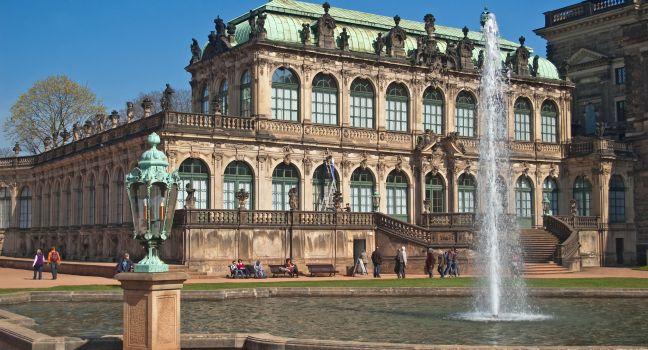
Dresden's magnificent Baroque showpiece is entered by way of the mighty Kronentor (Crown Gate), underneath the crown of Poland, off Ostra-Allee. It contains three different museums.

\n

Augustus the Strong hired a small army of artists and artisans to create a \"pleasure ground\" worthy of the Saxon court on the site of the former bailey, part of the city fortifications. The artisans worked under the direction of the architect Matthäus Daniel Pöppelmann, who came reluctantly out of retirement to design what would be his greatest work, begun in 1707 and completed in 1728. Completely enclosing a central courtyard filled with lawns, pools, and fountains, the complex is made up of six linked pavilions, one of which boasts a carillon of Meissen bells, hence its name: Glockenspielpavillon.

\n

The Zwinger is quite a scene—a riot of garlands, nymphs, and other elaborate ornamentation and sculpture. Wide staircases beckon to galleried walks and to the romantic Nymphenbad, a coyly hidden courtyard where statues of nude women perch in alcoves to protect themselves from a fountain that spits unexpectedly. Stand in the center of this quiet oasis, where the city's roar is kept at bay by the outer wings of the structure. Normal people were allowed onto the balcony and could watch all of the raucous festivities

\n

The Gemäldegalerie Alte Meister, in the northwestern corner of the complex, was built to house portions of the royal art collections. Among the priceless paintings are works by Dürer, Holbein, Jan Van Eyck, Rembrandt, Rubens, van Dyck, Hals, Vermeer, Raphael, Titian, Giorgione, Veronese, Velázquez, Murillo, Canaletto, and Watteau. On the wall of the entrance archway you'll see an inscription in Russian, one of the few amusing reminders of World War II in Dresden. It rhymes in Russian: \"Museum checked. No mines. Chanutin did the checking.\" Chanutin, presumably, was the Russian soldier responsible for checking one of Germany's greatest art galleries for anything more explosive than a Rubens nude. The highlight of the collection is Raphael's Sistine Madonna, whose mournful look is slightly less famous than the two cherubs who were added by Raphael after the painting was completed, in order to fill an empty space at the bottom.

\n

Stretching from the curved gallery that adjoins the Glockenspielpavillon to the long gallery on the east side, this collection of the Porzellansammlung is considered one of the best of its kind in the world. The focus, naturally, is on Dresden and Meissen china, but there are also outstanding examples of Japanese, Chinese, and Korean porcelain.

\n

Holding medieval and Renaissance suits of armor and weapons, the Rüstkammer also has a branch in the Residenzschloss.

Theaterplatz 1, Dresden, D–01067, Germany
0357-4914–2000
Sight Details
€14
Closed Mon.

Something incorrect in this review?

Alte Nationalgalerie

Mitte Fodor's Choice

The permanent exhibit here is home to an outstanding collection of 18th-, 19th-, and early-20th-century paintings and sculpture, by the likes of Cézanne, Rodin, Degas, and one of Germany's most famous portrait artists, Max Liebermann. Its collection has masterpieces from such 19th-century German painters as Karl Friedrich Schinkel and Caspar David Friedrich, the leading members of the German Romantic school.

Bodestr. 1–3, Berlin, 10178, Germany
30-2664–24242
Sight Details
€12 (combined ticket for all Museum Island museums €24)
Closed Mon.

Something incorrect in this review?

Altes Rathaus

Fodor's Choice

At Bamberg's historic core, the Altes Rathaus is tucked snugly on a small island in the Regnitz. To the west of the river is the so-called Bishops' Town; to the east, Burghers' Town. The citizens of Bamberg built this extravagantly decorated building on an artificial island when the bishop of Bamberg refused to give the city the land for a town hall. Industrious citizens quickly realized that the river was a tax haven as it wasn't claimed by anyone as property. The two bridges symbolically connect the spiritual side of Bamberg to the civic center. The outward appearance of the building is deceiving and gives the impression that the half-timbered section and the facade were built separately. The entire building is half-timbered, but the city plastered over the entire building in the 18th century and covered it with trompe-l'oeil frescos. For now, it's a building to be admired from the outside only, as ongoing restoration means the interior (including the Ludwig Collection of Meissen porcelain) is closed for the foreseeable future.

Altes Schloss

Mitte Fodor's Choice

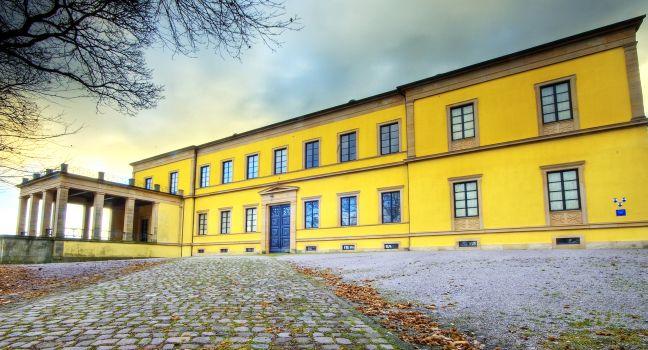
This former residence of the counts and dukes of Württemberg was originally built as a moated castle around 1320. Wings were added in the mid-15th century, creating a Renaissance palace. The palace now houses the Landesmuseum Württemberg (Württemberg State Museum), with exhibits tracing the area's development from the Stone Age to modern times and a floor of jaw-dropping family jewels of the fabulously rich and powerful Württemberg royals. There's also a separate floor dedicated to a children's museum.

Altstadt

Fodor's Choice

Proof of Lübeck's former position as the golden queen of the Hanseatic League is found at every step in the Altstadt, which contains more 13th- to 15th-century buildings than all other large northern German cities combined. This fact has earned the Altstadt a place on UNESCO's register of the world's greatest cultural and natural treasures.

Amphitheater

Fodor's Choice

The sheer size of Trier's oldest Roman structure (circa AD 100) is impressive; in its heyday it seated 20,000 spectators. You can climb down to the cellars beneath the arena—animals were kept in cells here before being unleashed to do battle with gladiators. Gladiatorial performances (1¼ hours) take place Friday through Sunday and holidays at 6 pm from April through October. Tickets can be booked in advance at Tourist Information.