937 Best Sights in Germany

Background Illustration for Sights

We've compiled the best of the best in Germany - browse our top choices for the top things to see or do during your stay.

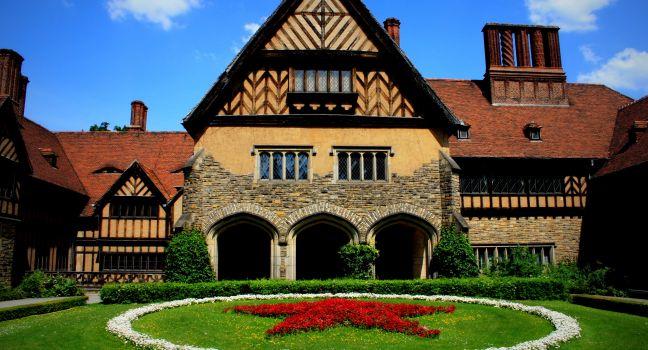
Schloss Cecilienhof

The Cecilienhof Palace is a palace located in the northern part of the Neuer Garten park in Potsdam, close to lake Jungfernsee. Since 1990 is part of the Palaces and Parks of Potsdam and Berlin as World Heritage Site declared by the Unesco.
(c) Maximoangel | Dreamstime.com

Resembling a rambling Tudor manor house, Schloss Cecilienhof was built for Crown Prince Wilhelm in 1913, on what was then the newly laid-out stretch of park called the Neuer Garten. It was here, in the last palace built by the Hohenzollerns, that the leaders of the allied forces—Stalin, Truman, and Churchill (later Attlee)—hammered out the fate of postwar Germany at the 1945 Potsdam Conference. Schloss Cecilienhof is closed for restorations at the time of this writing.
Im Neuen Garten 11, Potsdam, 14469, Germany
0331-969–4200
Sight Details
€12; private apartments of the Crown Prince €8 (with guided tour); Schloss Cecilienhof and private apartments (with guided tour) €14
Closed Mon.

Something incorrect in this review?

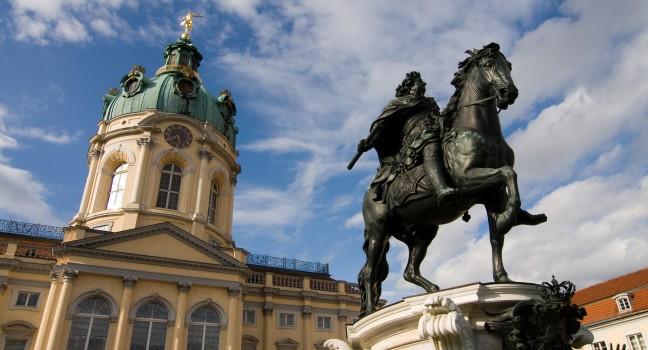
Schloss Charlottenburg

Charlottenburg
Charlottenburg Palace in a district of Berlin Germany.
Mats / Shutterstock

A grand reminder of imperial days, this showplace served as a city residence for the Prussian rulers. In the 18th century, Frederick the Great made a number of additions, such as the dome and several wings designed in the Rococo style. By 1790 the complex had evolved into a massive royal domain that could take a whole day to explore. The Altes Schloss is the main building of the Schloss Charlottenburg complex, with the ground-floor suites of Friedrich I and Sophie-Charlotte. Paintings include royal portraits by Antoine Pesne, a noted court painter of the 18th century. The upper floor has the apartments of Friedrich Wilhelm IV; a silver treasury and Berlin and Meissen porcelain can be seen on its own. The Neuer Flügel (New Building), where Frederick the Great once lived, was designed by Knobelsdorff, who also built Sanssouci, and houses a ballroom called the Golden Gallery and the Silver Vault with beautiful tableware. The lovely gardens include a mausoleum and the Belvedere tea house, which holds a porcelain collection.

Spandauer Damm 20–24, Berlin, 14059, Germany
030-320–910
Sight Details
€19 Tageskarte (day card) for all buildings; gardens free
Closed Mon.

Something incorrect in this review?

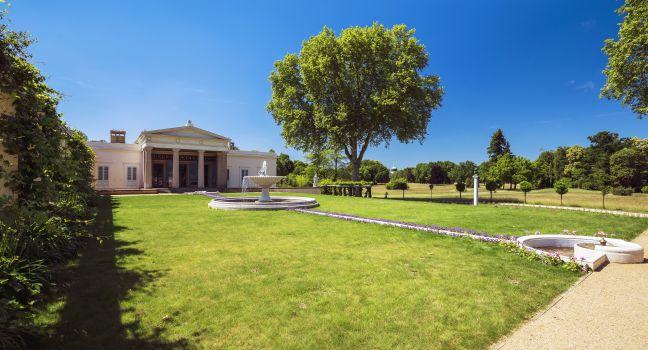
Schloss Charlottenhof

Potsdam, Germany - July 1, 2015: Charlottenhof Palace in the Sanssouci park in Potsdam in Germany.
(c) Nellmac | Dreamstime.com

After Frederick the Great died in 1786, the ambitious Sanssouci building program ground to a halt, and the park fell into neglect. It was 50 years before another Prussian king, Friedrich Wilhelm IV, restored Sanssouci's earlier glory, engaging the great Berlin architect Karl Friedrich Schinkel to build the small Schloss Charlottenhof for the crown prince. Schinkel's demure interiors are preserved, and the most fanciful room is the bedroom, decorated like a Roman tent, with walls and ceiling draped in striped canvas. Friedrich Wilhelm IV also commissioned the Römische Bäder (Roman Baths), about a five-minute walk north of Schloss Charlottenhof (baths closed for restorations at the time of this writing). It was also designed by Schinkel, and built between 1829 and 1840. Like many other structures in Potsdam, this one is more romantic than authentic. Half Italian villa, half Greek temple, it is nevertheless a charming addition to the park.

Geschwister-Scholl-Str. 34a, Potsdam, 14471, Germany
0331-969–4200
Sight Details
Charlottenhof Villa €6 with guided tour; Roman Baths €5
Closed Nov.–Apr., and Mon. May–Oct.

Something incorrect in this review?

Recommended Fodor's Video

Schloss Neuenburg

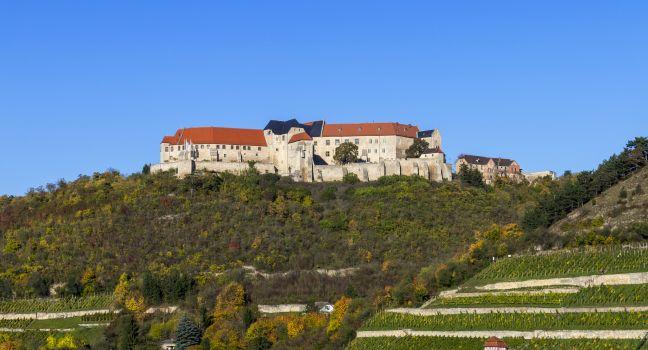
Schloss Neuenburg, Freyburg (Unstrut), Germany, Deutschland.
(c) Fleckus | Dreamstime.com

Since its foundation was laid in 1090 by the Thuringian Ludwig I, this castle has loomed protectively over Freyburg. The spacious residential area and huge towers date from the 13th century, when Neuenburg was a part of Thuringia's eastern defenses. The spartan Gothic double-vaulted chapel from 1190 is one of the few rooms that evoke an early medieval past, since most of the castle was renovated in the 15th century.

Schloss 1, Freyburg, D–06632, Germany
34464-35530
Sight Details
€6.50
Closed Mon.

Something incorrect in this review?

Schloss Philippsruhe

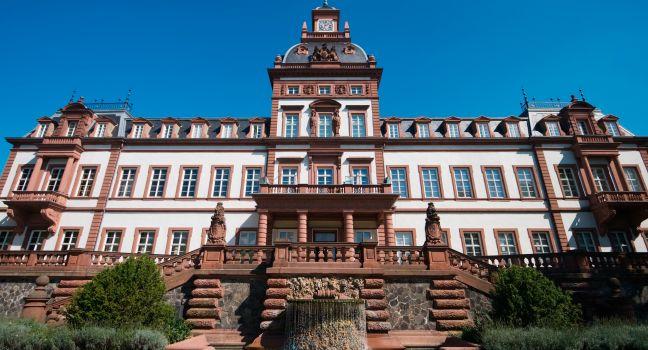
The Schloss Philippsruhe (Palace) in Hanau was started in 1701. Located in Frankfurt's Rhein Main area.
(c) Jchambers | Dreamstime.com

Completed in 1880, this palace mixes a bit of rococo, neo-Renaissance, and neoclassism in its design; a museum inside has a small Grimm exhibit that includes clothing, artifacts, and writings. It's on the bank of the Main in the suburb of Kesselstadt. Historical Hanau treasures, including a priceless collection of faience, are also on display here.

Philippsruher Allée 45, Hanau, 63454, Germany
06181-295–1799
Sight Details
€5
Closed Mon.

Something incorrect in this review?

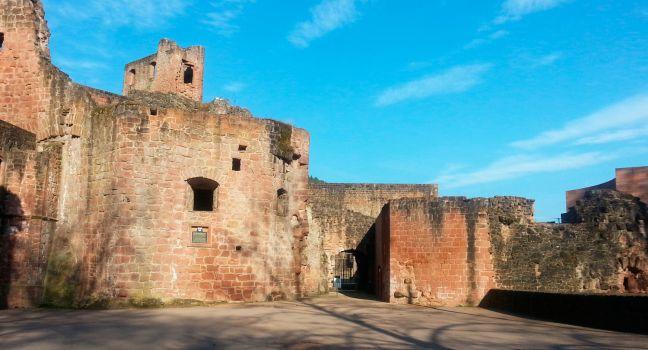
Schloss- und Festungsruine Hardenburg

Kaiserslauterer Str., Bad Dürkheim, 67098, Germany
06322-7530
Sight Details
€4.50
Closed Dec.--Jan. Closed weekdays Feb.–mid-Mar. and Nov. Closed Mon.--Wed. mid-Mar.–Oct.

Something incorrect in this review?

Schokoladenmuseum

Rheinufer
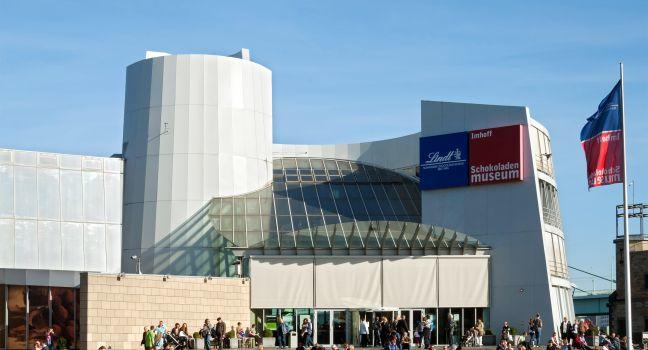
Germany, FEDERAL state of North Rhine-Westphalia; City Cologne: exterior of the Cologne Chocolate Museum. This museum is the first museum in the chain of making chocolate to consumers in a clear way to present historical exhibitions. The building is locate
(c) Sjors737 | Dreamstime.com

This riverside museum south of the cathedral is a real hit. It recounts 3,000 years of civilization's production and enjoyment of chocolate, from the Central American Maya to the colonizing and industrializing Europeans. It's also a real factory, with lava flows of chocolate and a conveyer belt jostling thousands of truffles. The museum shop, with a huge variety of chocolate items, does a brisk business, and the riverside panorama café serves some of the best cake in town.

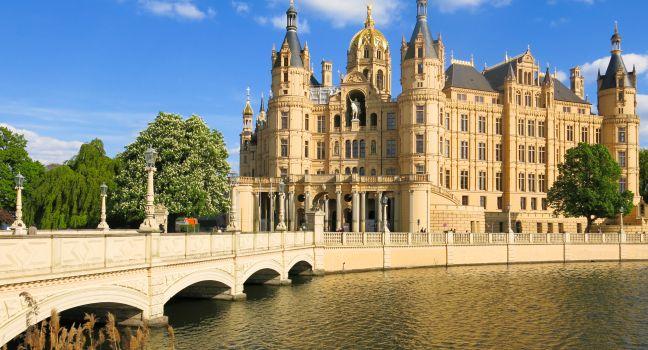
Schweriner Schloss

The castle in Schwerin, Germany.
(c) Mapics | Dreamstime.com

On an island near the edge of Lake Schwerin, this meticulously restored palace once housed the Mecklenburg royal family. The original palace dates from 1018 but was enlarged by Henry the Lion when he founded Schwerin in 1160. As it stands now, the palace is surmounted by 15 turrets, large and small, and is reminiscent of a French château. The portions that are neo-Renaissance in style are its many ducal staterooms, which date from between 1845 and 1857. Today, the castle is a seat of parliament. In 2024, it was, as part of the Residence Ensemble Schwerin, added to UNESCO's World Heritage List. North of the castle's main tower is the Schlossmuseum. The Communist government restored and maintained the fantastic opulence of this rambling, 80-room reminder of an absolutist monarchy—and then used it to board kindergarten teachers in training. Antique furniture, objets d'art, silk tapestries, and paintings are sprinkled throughout the salons (the throne room is particularly extravagant), but of special interest are the ornately patterned and highly burnished inlaid wooden floors and wall panels.

Lennéstr. 1, Schwerin, 19053, Germany
0385-588--41572-museum
Sight Details
€8.50; access to park is free
Closed Mon.

Something incorrect in this review?

Siegessäule

Tiergarten
Berlin Victory Column, Siegessaule, Berlin, Germany
© Halie Cousineau/ Fodors Travel

The 227-foot granite, sandstone, and bronze column is topped by a winged, golden goddess and has a splendid view of Berlin. It was erected in front of the Reichstag in 1873 to commemorate Prussia's military successes and then moved to the Tiergarten in 1938–39. You have to climb 270 steps up through the column to reach the observation platform, but the view is rewarding. The gold-tipped cannons surrounding the column are those the Prussians captured from the French in the Franco-Prussian War.

Grosser Stern 1, Berlin, 10557, Germany
030-391–2961
Sight Details
€3.50

Something incorrect in this review?

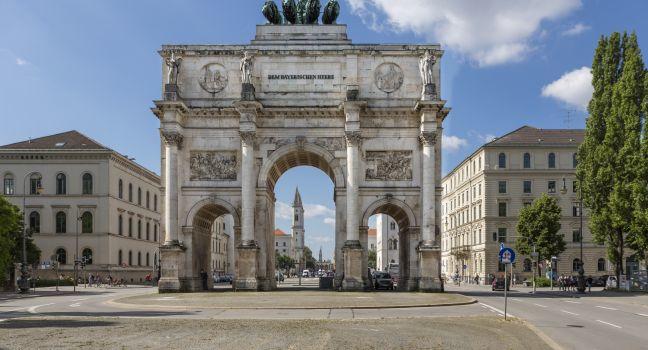
Siegestor

Schwabing
historic Siegestor in Munich, Germany
(c) Haraldmuc | Dreamstime.com

Built to bookend the Feldherrnhalle and mark the end of Ludwigstrasse, Siegestor nowadays also marks the beginning of Leopoldstrasse. Unsurprisingly, it has Italian origins and was modeled on the Arch of Constantine in Rome. It was built (1843–52) to honor the achievements of the Bavarian army during the Wars of Liberation (1813–15) against Napoléon. It received heavy bomb damage in 1944, and at the end of the war Munich authorities decided it should be torn down for safety reasons. Major Eugene Keller, the head of the U.S. military government in the postwar city, intervened and saved it. Its postwar inscription on the side facing the inner city is best translated as: \"Dedicated to victory, destroyed by war, a monument to peace.\"

Leopoldstr. 1, Munich, 80802, Germany

Something incorrect in this review?

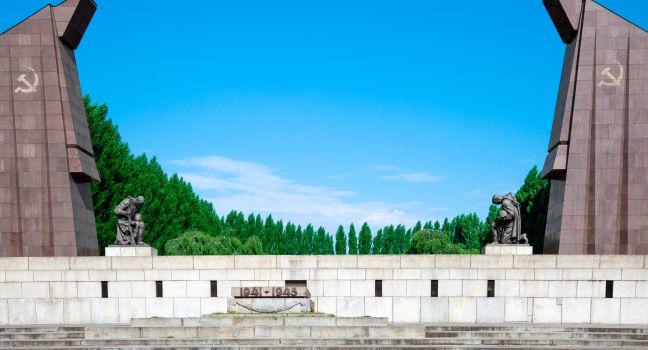
Sowjetisches Ehrenmal Treptower Park

Treptow
Soviet War Memorial, Treptower Park, Treptow, Berlin, Germany
(c) Motorolka | Dreamstime.com

The Sowjetisches Ehrenmal in Treptower Park just might take the hard-earned title of most impressively bombastic monument in Berlin. The size of several city blocks, the memorial celebrates the Soviet WWII victory with inscriptions in both Russian and German, accompanying a series of Socialist realist reliefs lining both sides of an elaborate plaza. At one end stands an enormous bronze of a Russian soldier cradling a child in one arm and wielding a sword with the other, while stomping on a crumpled swastika. Well-placed text and photos educate on the history and importance of the monument, as well as explaining why it was preserved after the fall of the wall.

Berlin, 12435, Germany

Something incorrect in this review?

St. Peter und Paul

OBERAMMERGAU, GERMANY-JUNE 10:St Peter St Paul Church. Joseph Schmuzer led the construction of the churh.The ceiling and wall frescoes were made by Matthew Guenthe; June 10,2012 Oberammergau,Germany
Igor Plotnikov / Shutterstock

Built in 1736, this pretty church with its eggshell-colored exterior and pastel-pink interior, is regarded as the finest work of rococo architect Josef Schmutzer (although it was his son, Franz Xaver Schmutzer, who did a lot of the stuccowork). Striking frescoes by Matthäus Günther and Franz Seraph Zwinck depict Mary as the answerer of prayers as well as a scene from the crucifixion. The latter is said to date back to the 1633 promise by the elders of Oberammergau to hold the passion play every decade if the town were to be saved from the plague.

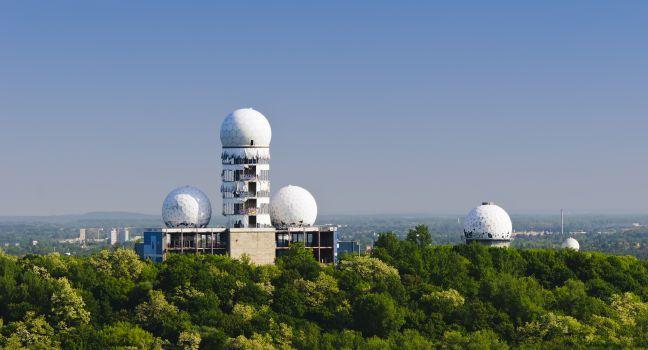
Teufelsberg

Grunewald
Old abandoned american radar station from the cold war in West Berlin, Germany.
(c) Draghicich | Dreamstime.com

When it comes to the strange history of this man-made hill, it's hard to separate truth from rumor and legend. Constructed from the rubble left by World War II bombings, the hill became the site of an important U.S. listening station during the Cold War, the otherworldly ruins of which still stand today, topped with globular, mosquelike roofs.

Berlin, 14055, Germany
0163-858–5096

Something incorrect in this review?

Tiergarten

Tiergarten
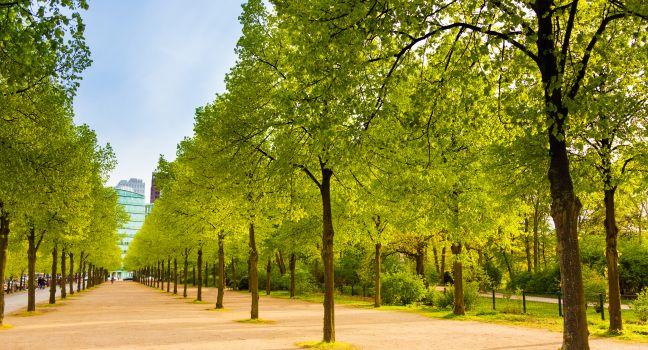
Tiergarten view with rows of trees in Berlin, Germany.
(c) Serrnovik | Dreamstime.com

The quiet greenery of the 520-acre Tiergarten, originally planned as the royal family's private hunting grounds, is a beloved oasis today, with some 23 km (14 miles) of footpaths, meadows, and two beer gardens, making it the third-largest urban green space in Germany. The inner park's 6½ acres of lakes and ponds were landscaped by garden architect Peter Joseph Lenné in the mid-1800s. The park's most popular attraction is the 85-acre Berlin Zoo (Tiergarten literally translates to \"animal garden\").

Berlin, Germany
Sight Details
Free

Something incorrect in this review?

Treptower Park

Treptow
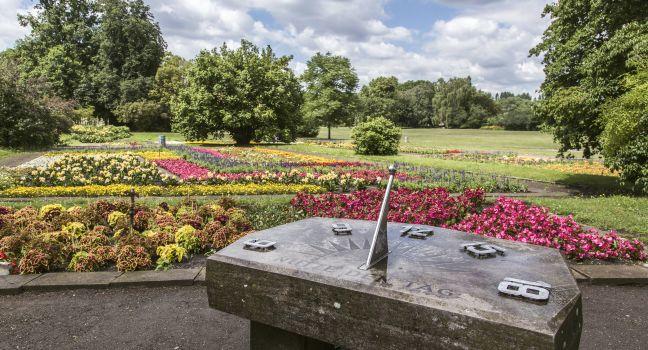
Sunwatch located in Treptower Park, Berlin. There is flowerbeds and trees in the background and blue skies with clouds.
(c) Rbukholt | Dreamstime.com

Perhaps best known for the Soviet War Memorial located in it, this Spree-side park is a lovely place for a stroll. True to their outdoorsy reputations, hardy German families don snow boots even during winter’s darkest days and traipse around the park’s fields and paths, perhaps with a dog in tow, just to get some fresh air. Stick to the waterside promenade for the best people-watching: the elaborate, eccentric houseboats moored there are a glimpse into yet one more alternative Berlin lifestyle.

Berlin, 12435, Germany

Something incorrect in this review?

Wasserburg

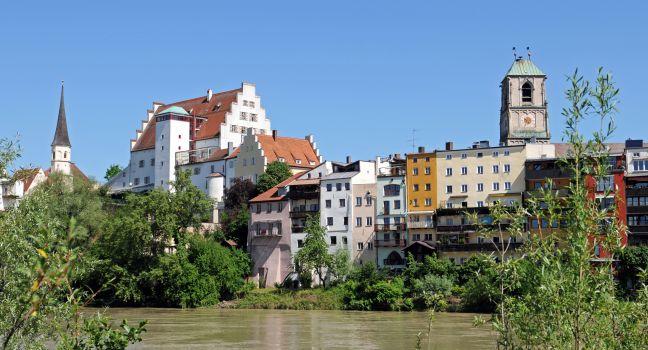
The old town of Wasserburg am Inn is situated on a peninsula of Inn River; Shutterstock ID 56888284; Project/Title: Top 100; Downloader: Fodor's Travel
PeJo / Shutterstock

Six kilometers (4 miles) west of Lindau lies Wasserburg, whose name means \"water castle,\" a description of what this enchanting island town once was—a fortress. It was built by the St. Gallen monastery in 924, and the owners, the counts of Montfort zu Tettnang, sold it to the Fugger family of Augsburg. The Fuggers couldn't afford to maintain the drawbridge that connected the castle with the shore and instead built a causeway. In the 18th century, the castle passed into the hands of the Hapsburgs, and in 1805 the Bavarian government took it over. Wasserburg has some of the most photographed sights of the Bodensee: the yellow, stair-gabled presbytery; the fishermen's St. Georg Kirche, with its onion dome; and the little Malhaus museum, with the castle, Schloss Wasserburg (now a luxury hotel), in the background.

Wernerkapelle

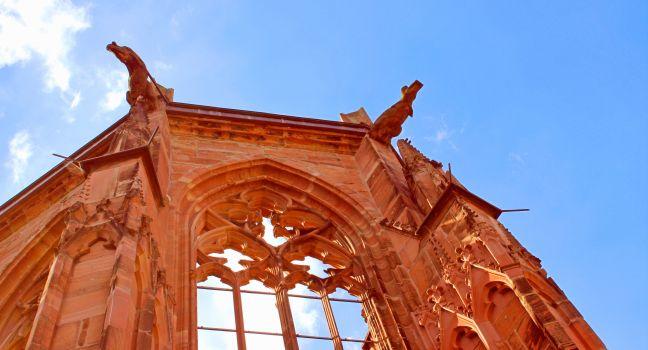
Wernerkapelle, a Gothic chapel ruin on the path to Castle Stahleck above the town of Bacharach, Germany Photo taken: August 10, 2012.
(c) [email protected] | Dreamstime.com

From the southern side of St. Peter's Church, a set of stone steps (signposted) leads to Bacharach's undoubted landmark, the Wernerkapelle. It's a bit of a climb, but well worth for a close-up look at these romantic sandstone ruins, famous for their filigree tracery, as well as for the sweeping views around. The Gothic chapel's roof succumbed to falling rocks in 1689, when the French blew up nearby Burg Stahleck; it's a 10-minute walk from here to the old castle, which lay dormant until 1925 when a youth hostel was built on the foundations.

Bacharach, 55422, Germany

Something incorrect in this review?

Zoo Frankfurt

Ostend
A Golden Lion Tamarin Monkey at Frankfurt Zoo.
(c) Danieldep | Dreamstime.com

Founded in 1858, this is one of the most important and attractive zoos in Europe. Its remarkable collection includes some 4,500 animals of 500 different species, an exotarium (an aquarium plus reptiles), a large ape house, and an aviary, one of the largest in Europe. Nocturnal creatures move about in a special section.

Bernhard-Grzimek-Allee 1, Frankfurt, 60316, Germany
069-2123–3735
Sight Details
From €12

Something incorrect in this review?

Affenberg

On the road between Überlingen and Salem, Affenberg is a 50-plus-acre park that serves as home to up to 200 free-roaming Barbary apes, as well as deer, aquatic birds, gray herons, ducks, coots, and—during nesting time—a colony of white storks.

Mendlishauser Hof, Überlingen, 88682, Germany
07553-381
Sight Details
€12.50
Closed Nov.–mid-Mar.

Something incorrect in this review?

Alamannenmuseum

If you want to learn about early Germans—residents from the 6th, 7th, and 8th centuries whose graves are just outside town—visit the Alamannenmuseum in the Kornhaus, which was once a granary. Archaeologists discovered the hundreds of Alemannic graves in the 1950s.

Karlstr. 28, Weingarten, 88250, Germany
0751-49343
Sight Details
€2
Closed Mon.–Tues.

Something incorrect in this review?

Albertinum

Named after Saxony's King Albert, who between 1884 and 1887 converted a royal arsenal into a suitable setting for the treasures he and his forebears had collected, this massive, imperial-style building houses one of the world's great galleries featuring works from the romantic period to the modern. The Galerie Neue Meister (New Masters Gallery) has an extensive collection ranging from Caspar David Friedrich and Gauguin to Ernst Kirchner and Georg Baselitz.

Tzschirnerpl. 2, Dresden, D-01067, Germany
0351-49849–14973
Sight Details
€14

Something incorrect in this review?

Albrecht-Dürer-Haus

The great painter Albrecht Dürer lived in this beautifully preserved late-medieval house, typical of the prosperous merchants' homes that once filled Nuremberg, from 1509 until his death in 1528. Today, its four stories stand as a testament to his talent. Dürer enriched German art with Renaissance elements, but he was more than a painter, raising the woodcut (a notoriously difficult medium) to new heights of technical sophistication, combining great skill with a haunting, immensely detailed drawing style and complex, allegorical subject matter. While most of the works on display are print copies, with the originals in art galleries across Germany and beyond, they retain their allure: seek out his atmospheric self-portraits. Upstairs, printing techniques using the old press are demonstrated in the studio, and there's an interesting exhibition on Dürer-inspired body art. At 2 pm every Saturday, a guide role-playing Agnes Dürer, the artist's wife, provides English-language tours of the house.

Albrechtsburg

The story of Meissen porcelain actually began high above Old Meissen. Towering over the Elbe River, this 15th-century castle is Germany's first truly residential one, a complete break with the earlier style of fortified bastions. In the central Schutzhof, a typical Gothic courtyard protected on three sides by high rough-stone walls, is an exterior spiral staircase, the Wendelstein, a masterpiece of early masonry hewn in 1525 from a single massive stone block. The ceilings of the castle halls are richly decorated, although many date only from a restoration in 1870. Adjacent to the castle is an early Gothic cathedral. It's a bit of a climb up Burgstrasse to the castle, but a bus runs regularly up the hill from the Marktplatz.

Alte Brücke

Framed by two Spitzhelm towers (so called for their resemblance to old German helmets), this bridge was part of Heidelberg's medieval fortifications. In the west tower are three dank dungeons that once held common criminals. Above the portcullis you'll see a memorial plaque that pays warm tribute to the Austrian forces that helped Heidelberg beat back a French attempt to capture the bridge in 1799. The bridge itself is one of many to be built on this spot; ice floes and floods destroyed its predecessors. The elector Carl Theodor, who built it in 1786–88, must have been confident this one would last: he had a statue of himself erected on it, upon a plinth decorated with river gods and goddesses (symbolic of the Neckar, Rhine, Danube, and Mosel rivers). As you enter the bridge from the Old Town, you'll also notice a statue of an animal that appears somewhat catlike. It's actually a monkey holding a mirror. Legend has it the statue was erected to symbolize the need for both city-dwellers and those who lived on the other side of the bridge to take a look over their shoulders as they crossed—reminding them that neither group was more elite than the other. The pedestrian-only bridge is at the end of Steingasse, not far from the Marktplatz.

Heidelberg, 69117, Germany

Something incorrect in this review?

Alte Hofhaltung

Dating from the 11th century, the oldest building complex in the city, the Castrum Babenberg, was once the seat of the ruling prince-bishops of Bamberg. The Hofhaltung was like a royal estate, with storage, workshops and anything else essential to supplying the court. When the prince-bishop moved into the baroque New Residence, the Hofhaltung served as a library, offices, and council chambers. The original buildings were renovated in the 16th century. The interior courtyard is like stepping back into the Middle Ages, with large half-timber houses covered in boxed geraniums. Inside the main sandstone building is the Katharinenkapelle, a small 12th-century gothic chapel.  Today, the complex houses the Bamberg Historical Museum and the courtyard hosts festivals and concerts.

Alte Kapelle

Erected by the Carolingian order in the 9th century, the sober exterior of the Kollegiatstift unserer Lieben Frau zur alten Kapelle (Basilica of the Nativity of Our Lady Regensburg)—widely known as simply Alte Kapelle (Old Chapel)—gives way to a joyously gilded interior. Step inside to discover rococo treasures galore, including extravagant concoctions of sinuous gilt stucco, rich marble, and giddy frescoes, with the whole place illuminated by light pouring in from the upper windows.

Alter Kornmarkt 8, Regensburg, 93047, Germany

Something incorrect in this review?

Alte Opernhaus

Altstadt

Kaiser Wilhelm I traveled from Berlin for the gala opening of this opera house in 1880. Gutted in World War II, it remained a hollow shell for 40 years while controversy raged over its reconstruction. The exterior and lobby are faithful to the original, though the remainder of the building is more like a modern multipurpose hall. Although classical music and ballet performances are held here, most operas these days are staged at the Frankfurt Opera. Ninety-minute tours are offered on selected dates.

Opernpl. 1, Frankfurt, 60313, Germany
069-13400
Sight Details
Tours from €8

Something incorrect in this review?

Alte Pfarrkirche St. Martin

The original foundation for this church was laid all the way back in the 9th century, though the current building dates to 1280. It showcases Gothic wall paintings from throughout the centuries, including a 7-meter-high (21-foot-high), larger-than-life figure of St. Christopher from 1330 and a Passion of the Christ fresco dating to the 1400s. Starting at this old church, walk 10 minutes along pretty Frühlingstrasse and across Schneggensteg bridge to find the \"new\" 18th-century Parish Church of St. Martin ( Marienpl. 6); its spectacular interior is adorned with vibrant stuccowork by Joseph Schmutzer and rococo work by Matthäus Günther.

Pfarrerhausweg 4, Garmisch-Partenkirchen, 82467, Germany

Something incorrect in this review?

Alte Saline und Quellenhaus

In the early 19th century King Ludwig I built this elaborate saltworks and spa house, in vaulted, pseudomedieval style. The pump installations, which still run, are astonishing examples of 19th-century engineering. A "saline" chapel is part of the spa's facilities, and was built in exotic Byzantine style. A museum in the same complex looks at the history of the salt trade. As the salt deposits beneath the building are no longer top quality, parts of the building have been converted to office spaces and a trendy restaurant, but you can tour the underground infrastructure.

Alte Saline 9, Bad Reichenhall, 83435, Germany
08651-700–2146
Sight Details
€9
Nov.–Mar., closed Mon. and all but 1st Sun. of month

Something incorrect in this review?

Alte Universität

The three-story Baroque structure was built between 1712 and 1735 at the behest of the elector Johann Wilhelm, although Heidelberg's Ruprecht Karl University was originally founded in 1386. Today it houses the University Museum, with exhibits that chronicle the history of Germany's oldest university. The present-day Universitätsplatz (University Square) was built over the remains of an Augustinian monastery that was destroyed by the French in 1693. Be sure to visit the colorful graffiti-filled Student Prison, where bad behavior was punished by old-fashioned lockdown, and the Great Hall, now used mostly for concerts and ceremonies,