1176 Best Sights in France

Background Illustration for Sights

We've compiled the best of the best in France - browse our top choices for the top things to see or do during your stay.

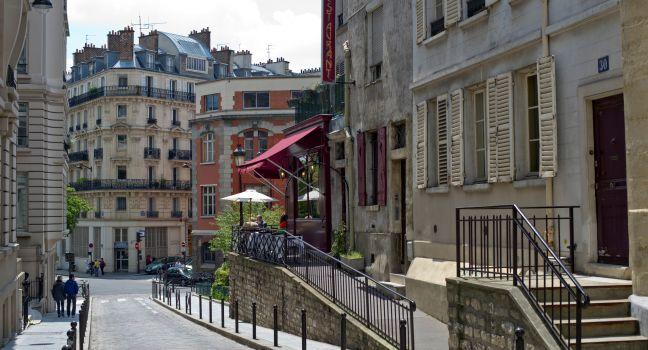
Rue Mouffetard

Latin Quarter Fodor's Choice
Street, Rue Mouffetard, Paris, France
© Zach Nelson / Fodor’s Travel

This winding cobblestone street is one of the city's oldest and was once a Roman road leading south from Lutetia (the Roman name for Paris) to Italy. The upper half is dotted with restaurants and bars that cater to tourists and students; the lower half is the setting of a lively morning market, Tuesday through Sunday. The highlight of le Mouffe, though, is the stretch in between where the shops spill into the street with luscious offerings such as roasting chickens and potatoes, rustic saucisson, pâtés, and pungent cheeses, especially at Androuët (No. 134). If you're here in the morning, Le Mouffetard Café (No. 116) is a good place to stop for a continental breakfast (about €10). If it's apéritif time, head to Place de la Contrescarpe for a cocktail, or enjoy a glass of wine at Cave La Bourgogne (No. 144). Prefer to just do a little noshing? Sample the chocolates at Mococha (No. 89) or the gelato at Gelati d'Alberto (No. 45). Note that most shops are closed on Monday.

Sainte-Chapelle

Ile de la Cité Fodor's Choice
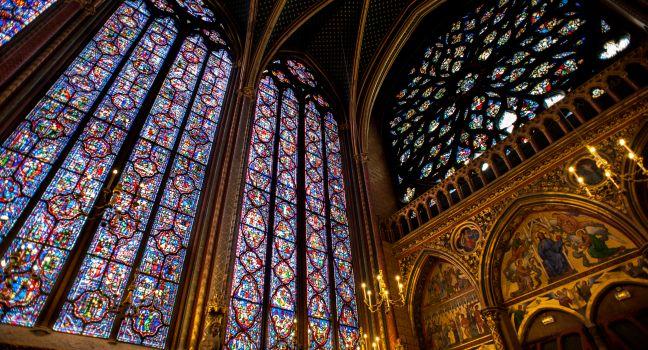
Stained Glass, Interior, Sainte-Chapelle, Paris, France
© Ross Brinkerhoff / Fodor’s Travel

Built by the obsessively pious Louis IX (1214–70), this Gothic jewel is home to the oldest stained-glass windows in Paris. The chapel was constructed over seven years, at phenomenal expense, to house the king's collection of relics acquired from the impoverished emperor of Constantinople. These included Christ's crown of thorns, fragments of the Cross, and drops of Christ's blood—though even in Louis's time these were considered of questionable authenticity.

The narrow spiral staircase by the entrance takes you to the upper chapel where the famed beauty of Sainte-Chapelle comes alive: 6,458 square feet of stained glass are delicately supported by painted stonework that seems to disappear in the colorful light streaming through the windows. Deep reds and blues dominate the background, noticeably different from later, lighter medieval styles such as those of Notre-Dame's rose windows.

The chapel is essentially an enormous magic lantern illuminating 1,130 biblical figures. Besides the dazzling glass, observe the detailed carvings on the columns and the statues of the apostles. The lower chapel is gloomy and plain, but take note of the low, vaulted ceiling decorated with fleurs-de-lis and cleverly arranged Ls for "Louis." Audio guides (€3) are available, or you can download a phone app focusing on the church's stained glass windows.

Sunset is the optimal time to see the rose window; however, to avoid waiting in killer lines, plan your visit for a weekday morning, the earlier the better. Come on a sunny day to appreciate the full effect of the light filtering through all that glorious stained glass. You can buy a joint ticket with the Conciergerie: lines are shorter if you purchase it there or online. The chapel makes a divine setting for classical concerts; check the schedule at  www.classictic.com.

4 bd. du Palais, Paris, 75001, France
01–53–40–60–80
Sight Details
€13; €20 with joint ticket to Conciergerie
Reservation required

Something incorrect in this review?

Villa Kerylos

Fodor's Choice
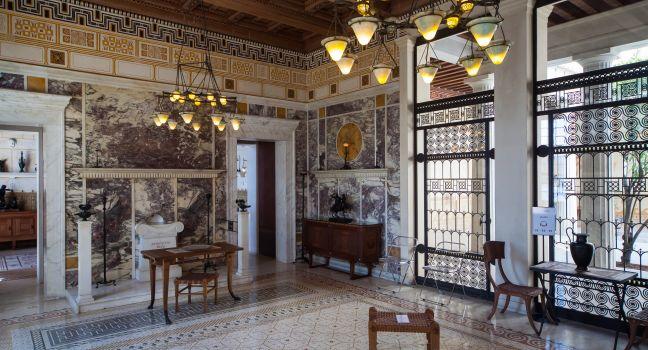
BEAULIEU SUR MER – FRANCE - APRIL 24 : Villa Kerylos in Beaulieu-sur-Mer is a Greek-style property built in the early 1900s by French archaeologist Theodore Reinach, and his wife Fanny Kann, a daughter of Maximilien Kann and Betty Ephrussi, of the E
(c) Photogolfer | Dreamstime.com

One manifestation of Beaulieu's Belle Époque excess is this eye-popping 1902 mansion built in the style of classical Greece (to be exact, of the villas that existed on the island of Delos in the 2nd century BC). It was the dream house of amateur archaeologist Théodore Reinach, who hailed from a wealthy German family, helped the French in their excavations at Delphi, and became an authority on ancient Greek music. He commissioned an Italian architect from Nice, Emmanuel Pontremoli, to surround him with cool Carrara marble, rare fruitwoods, and a dining salon where guests reclined to eat à la grecque. It's one of the most unusual houses in the south of France.

Recommended Fodor's Video

Abbaye aux Hommes

Fodor's Choice

Caen's finest church, of cathedral proportions, is part of the Abbaye aux Hommes, built by William the Conqueror from local Caen stone (which was also used for England's Canterbury Cathedral, Westminster Abbey, and the Tower of London). The abbey was begun in Romanesque style in 1066 and expanded in the 18th century; its elegant buildings are now part of City Hall, and some rooms are brightened by the city's fine collection of paintings. Note the magnificent yet spare facade of the abbey church of St-Étienne, enhanced by two 11th-century towers topped by octagonal spires. Inside, what had been William the Conqueror's tomb was destroyed by 16th-century Huguenots during the Wars of Religion. However, the choir still stands; it was the first to be built in Norman Gothic style, and many subsequent choirs were modeled after it. Guided tours in English are available weekday mornings in July and August. 

Abbaye de Cluny

Fodor's Choice

Founded in the 10th century, the Abbaye de Cluny was the largest church in Europe until the 16th century, when St. Peter's Basilica in Rome was built. Art historians have written themselves into knots tracing the fundamental influence of its architecture in the development of early Gothic style. Cluny's medieval abbots were as powerful as popes; in 1098 Pope Urban II (himself a Cluniac) assured the head of his old abbey that Cluny was the \"light of the world.\" That assertion, of dubious religious validity, did not stand the test of time; after the Revolution the abbey was sold as national property and much of it was used as a stone quarry. Today Cluny stands in ruins, a reminder of the vanity of human grandeur. What remains, however, suggests the size and gorgeous glory of the abbey at its zenith, and piecing it back together in your mind is part of the attraction.

\n

In order to get a clear sense of what you're looking at, start at the Porte d'Honneur, the entrance to the abbey from the village, whose classical architecture is reflected in the pilasters and Corinthian columns of the Clocher de l'Eau-Bénite (a majestic bell tower), crowning the only remaining part of the abbey church, the south transept. Between the two is the reconstructed monumental staircase, which led to the portal of the abbey church, and the excavated column bases of the vast narthex. The entire nave is gone. On one side of the transept is a national horse-breeding center (haras) founded in 1806 by Napoléon and constructed with materials from the destroyed abbey; on the other is an elegant pavilion built as new monks' lodgings in the 18th century. The gardens in front of it once contained an ancient lime tree (destroyed by a 1982 storm) named after Abélard, the controversial philosopher who sought shelter here in 1142. Off to the right is the 13th-century farinier (flour store), with its fine oak-and-chestnut roof and collection of exquisite Romanesque capitals from the vanished choir. The Musée d'Art et d'Archéologie, in the Palais Jean de Bourbon, contains Europe's foremost Romanesque lapidary museum. Vestiges of both the abbey and the village constructed around it are conserved here, as well as part of the Bibliothèque des Moines (Monks' Library).

Abbaye de Fontenay

Fodor's Choice

The best-preserved of the Cistercian abbeys, the Abbaye de Fontenay was founded in 1118 by St-Bernard. The same Cistercian criteria applied to Fontenay as to Pontigny: no-frills architecture and an isolated site—the spot was especially remote, for it had been decreed that these monasteries could not be established anywhere near \"cities, feudal manors, or villages.\" The monks were required to live a completely self-sufficient existence, with no contact whatsoever with the outside world. By the end of the 12th century the buildings were finished, and the abbey's community grew to some 300 monks. Under the protection of Pope Gregory IX and Hughes IV, duke of Burgundy, the monastery soon controlled huge land holdings, vineyards, and timberlands. It prospered until the 16th century, when religious wars and administrative mayhem hastened its decline. Dissolved during the French Revolution, the abbey was used as a paper factory until 1906. Fortunately, the historic buildings emerged unscathed. The abbey is surrounded by extensive, immaculately tended gardens dotted with the fountains that gave it its name. The church's solemn interior is lightened by windows in the facade and by a double row of three narrow windows, representing the Trinity, in the choir. A staircase in the south transept leads to the wooden-roof dormitory (spare a thought for the bleary-eyed monks, obliged to stagger down for services in the dead of night). The chapter house, flanked by a majestic arcade, and the scriptorium, where monks worked on their manuscripts, lead off from the adjoining cloisters. Guided tours of the abbey are available April through mid-November.

Abbaye de Montmajour

Fodor's Choice

This magnificent Romanesque abbey looming over the marshlands north of Arles stands in partial ruin. Founded in the 10th century by a handful of Benedictine monks, the abbey grew according to an ambitious plan of church, crypt, and cloister and, under the management of worldly lay monks in the 17th century, became more sumptuous. When the Catholic church ejected those monks, they sacked the place, and what remained was eventually sold off as scrap. A 19th-century medieval revival spurred a partial restoration, but portions are still in ruins; what remains is a spare and beautiful piece of Romanesque architecture.

The cloister rivals that of St-Trophime in Arles for its balance, elegance, and air of mystical peace. Van Gogh, drawn to isolation, came often to the abbey to reflect, but the strong mistral winds kept him from painting here. The interior, renovated by architect Rudy Ricciotti, is used for world-class contemporary art exhibitions.

Abbaye de Sénanque

Fodor's Choice

If you've fantasized about Provence's famed lavender fields, head to the wild valley some 4 km (2½ miles) north of Gordes (via D177), where this photogenic, 12th-century, Romanesque abbey seemingly floats above a fragrant sea of purple blooms from late June through August. Begun in 1150 and completed at the dawn of the 13th century, the church and adjoining cloister are without decoration but still touch the soul with their chaste beauty. Along with the abbeys of Le Thornet and Silvacane, this is one of a trio of "Three Sisters" built by the Cistercian Order in this area.

Next door, the enormous vaulted dormitory contains an exhibition on Abbaye de Sénanque's construction, and the refectory shelters a display on the history of Cistercian abbeys. The few remaining monks here now preside over a cultural center presenting concerts and exhibitions. The bookshop has a huge collection of books about Provence (lots in English).

Abbaye du Mont-St-Michel

Fodor's Choice

A magnetic beacon to millions of travelers each year, this \"wonder of the Western World\"—a 264-foot mound of rock topped by a history-shrouded abbey—remains the crowning glory of medieval France. Wrought by nature and centuries of tireless human toil, the sea-surrounded mass of granite adorned with the soul-lifting silhouette of the Abbaye du Mont-St-Michel may well be your most lasting image of Normandy. The abbey is perched on a 264-foot-high rock a few hundred yards off the coast: it's surrounded by water during the year's highest tides and by desolate sand flats the rest of the time. Be warned: tides in the bay are dangerously unpredictable. The sea can rise up to 45 feet at high tide and rushes in at incredible speed—more than a few ill-prepared tourists over the years have drowned. Also, be warned that there are patches of dangerous quicksand.

\n

Legend has it that the Archangel Michael appeared in 709 to Aubert, bishop of Avranches, inspiring him to build an oratory on what was then called Mont Tombe. The rock and its shrine were soon the objects of pilgrimages. The original church was completed in 1144, but additional buildings were added in the 13th century to accommodate monks as well as the hordes of pilgrims who flocked here even during the Hundred Years' War, when the region was in English hands. During the period when much of western France was subjected to English rule, the abbey remained a symbol, both physical and emotional, of French independence. Because of its legendary origins and the sheer exploit of its centuries-long construction, the abbey became known as the \"Merveille de l'Occident\" (Wonder of the Western World).

\n

Visitors are welcome to explore the abbey on their own with the help of visitor materials available in 13 languages or via a tablet-led tour (€5). Those who want additional insight can join 45-minute guided tours in English or French (frequency depending on season), which will take you through the impressive Romanesque and Gothic abbey and the spectacular Église Abbatiale, the abbey church, which crowns the rock, as well as the Merveille, a 13th-century, three-story collection of rooms and passageways. The tourism office also offers a list of local experts available for tours on its website. La Merveille was built by King Philippe Auguste around and on top of the monastery; on its second floor is the Mont's grandest chamber, the Salle des Chevaliers. Invest in at least one tour while you are here—some of them get you on top of or into things you can't see alone. If you choose to proceed independently, stop halfway up Grande Rue at the medieval parish church of St-Pierre to admire the richly carved side chapel with its dramatic statue of St-Michael slaying the dragon.

\n

Give yourself at least half a day here, and follow your nose. The mount is full of nooks, crannies, little gardens, and echoing views from the ramparts. It's worth lingering to see the Mont spectacularly illuminated, nightly from dusk to midnight.

Abbaye Royale de Fontevraud

Fodor's Choice

Founded in 1101, the Abbaye Royale de Fontevraud (Royal Abbey) had separate churches and living quarters for nuns, monks, lepers, \"repentant\" female sinners, and the sick. Between 1115 and the French Revolution in 1789, a succession of 39 abbesses—among them a granddaughter of William the Conqueror—directed operations. The great 12th-century Église Abbatiale (Abbey Church) contains the tombs of Henry II of England, his wife Eleanor of Aquitaine, and their son, Richard Cœur de Lion (the Lionheart). Although their bones were scattered during the Revolution, their effigies still lie en couchant in the middle of the echoey nave. Napoléon turned the abbey church into a prison, and so it remained until 1963, when historical restoration work began. The Salle Capitulaire (Chapter House), adjacent to the church, with its collection of 16th-century religious wall paintings (prominent abbesses served as models), is unmistakably Renaissance; the paving stones bear the salamander emblem of François I. Next to the long refectory is the famously octagonal Cuisine (Kitchen), topped by 20 scaly stone chimneys led by the Tour d'Evrault.

Abbaye St-Martin du Canigou

Fodor's Choice

Visitors, tackling a steep, mile-long climb from the parking area, come to make a pilgrimage—aesthetic or spiritual—to this celebrated medieval abbey. It's one of the most photographed in Europe thanks to its sky-kissing location atop a triangular promontory at an altitude of nearly 3,600 feet. St-Martin du Canigou's breathtaking mountain setting was due, in part, to an effort to escape the threat of marauding Saracens from the Middle East. Constructed in 1009 by Count Guifré of Cerdagne, then damaged by an earthquake in 1428 and abandoned in 1783, the abbey was diligently (perhaps too diligently) restored by the Bishop of Perpignan early in the 20th century. The oldest parts are the cloisters and the two churches, of which the lower church, dedicated to Notre-Dame-sous-Terre, is the most ancient. Rising above is a stocky, fortified bell tower.

\n

Masses are sung daily—Easter Mass is especially joyous and moving—but the Abbey can only be visited by guided tour (with French narration only), offered five times daily; reservations are not needed unless traveling as a group of 15 or more.

Aiguille du Midi

Fodor's Choice

This 12,619-foot granite peak is topped with a needle-like observation tower, terrace, and restaurants. The world's highest cable car soars 12,000 feet up, almost to the top (an elevator completes the journey to the summit), providing positively staggering views of 15,700-foot Mont Blanc, Europe's loftiest peak. Be prepared for a lengthy wait, both going up and coming down—and wear warm clothing.

Arènes

Fodor's Choice

The best-preserved Roman amphitheater in the world is a miniature of the Colosseum in Rome (note the small carvings of Romulus and Remus, the wrestling gladiators on the exterior, and the intricate bulls' heads etched into the stone over the entrance on the north side). More than 435 feet long and 330 feet wide, it had a seating capacity of 24,000 in its day. Bloody gladiator battles, criminals being thrown to animals, and theatrical wild-boar chases drew crowds to its bleachers. Nowadays it hosts summer concerts, as well as bullfights that transform the arena (and all of Nîmes) into a sangria-flushed homage to Spain. Self-guided audio tours are available.

Arènes

Fodor's Choice

Rivaled only by the even better-preserved version in Nîmes, the arena dominating old Arles was built in the 1st century AD to seat 21,000 people, with large tunnels through which wild beasts were forced to run into the center. Before being plundered in the Middle Ages, the structure had three stories of 60 arcades each; the four medieval towers are testimony to a transformation from classical sports arena to feudal fortification. Complete restoration of the arena began in 1825. Today it's primarily a venue for the traditional spectacle of the corridas, which take place annually during the féria pascale, or Easter festival. The less bloodthirsty local variant course carmarguaise (in which the bull is not killed) also takes place here. Festival season starts with the Fête des Gardians on May 1, when the Queen of Arles is crowned, and culminates in early July with the award of the Cocarde d'Or (Golden Rosette) to the most successful raseteur. It's best to book event tickets in advance.

24 bis Rond Point des Arènes, Arles, 13200, France
04–90–18–41–20-for arena info
Sight Details
€11, includes admission to Théâtre Antique

Something incorrect in this review?

Artemisia Museum

Fodor's Choice

At this unique museum in the 13th-century Couvent des Cordeliers, you'll learn how the aromatic plants and medicinal herbs of the Montagne de Lure, part of a UNESCO Biosphere Reserve, have traditionally been grown, gathered, and used in remedies, perfumes, and cosmetics. Explanatory panels, botanical illustrations, plant specimens, and fragrance galleries are used to create a multisensory educational experience in theme exhibits such as Lavender, Pickers & Peddlers, The Druggists, Distillation, Plants & Elixirs, and Plants & Beauty. In addition, activity booklets and special displays help children navigate and understand the exhibits. For total immersion, sign up for one of the two-hour perfume workshops, which are offered for both adults (€50) and kids (€25).

At Home with Patricia Wells Cooking Classes

Fodor's Choice

Although Vaison has centuries-old attractions, the most popular for Americans may well be the classes offered by Patricia Wells, the food critic who made a name for herself writing posh columns and The Food Lover's Guide to France. She now introduces people to the splendors of French cooking—in her lovely farmhouse and above her own Chanteduc vineyards outside Vaison. Weeklong culinary seminars are deluxe ($6,000 a student) and exclusive (maximum of 12 students), and the January truffle workshop usually sells out, so book early (online only).

Atelier Cézanne

Fodor's Choice

Just north of the Vieille Ville (Old Town) loop you'll find Cézanne's studio. After the death of his mother forced the sale of the painter's beloved country retreat, Jas de Bouffan, he had this atelier built and some of his finest works, including Les Grandes Baigneuses (The Large Bathers), were created in the upstairs workspace. But what is most striking is the collection of simple objects that once featured prominently in his portraits and still lifes—redingote, bowler hat, ginger jar—all displayed as if awaiting his return. The atelier is behind an obscure garden gate on the left as you climb Avenue Paul-Cézanne.

9 av. Paul-Cézanne, Aix-en-Provence, 13100, France
04–42–16–16–61
Sight Details
€8
Closed Jan., Sun. and Mon. in Feb., and Sun. in Dec.

Something incorrect in this review?

Atelier des Lumières

Oberkampf Fodor's Choice

An abandoned iron foundry in the hip 11e arrondissement is the soaring backdrop for Culturespace's feast for the eyes and the senses, where visitors are invited to actually step into the midst of some of the great masterpieces of 19th- and 20th-century painting (many found in famous Parisian museums). More than 100 video projectors cast vivid scenes of gorgeously colored artwork on the walls, ceilings, and floors, accompanied by a dynamic soundtrack for total immersion into a 30-minute explosion of color and sound.

Au Printemps

Grands Boulevards Fodor's Choice

Encompassing a trio of upscale department stores (Printemps Mode, Printemps Beauté-Maison-Enfant, and Printemps Homme), this vast, venerable retailer has been luring shoppers since 1865 and has lately upped its glamour quotient with elegant storewide restorations—most recently, a spiffed-up, historic grand staircase connecting the main entrances of the Haussmann flagship (Printemps Femme) with the panoramic restaurant Le 7ème Ciel. Besides the clothes, shoes, jewelry, beauty, perfume (the largest selection in Paris), housewares, and everything else, there are appealing dining options here. The top floor of the main building (Printemps Homme) is home to Printemps du Goût, a celebration of French cuisine. Here you can eat in style while taking in spectacular views, either from inside via floor-to-ceiling windows or outside on the wraparound terrace. Noted chefs and food artisans—including master cheesemonger Laurent Dubois, chef pâtissier Nina Métayer, and artisanal crêperie Malo—oversee a gourmet cornucopia. One floor down, Bar Perché "literary café" serves snacks, coffee, and drinks all day in a chic-casual Parisian apartment setting with an outdoor terrace and glorious city views. You can also opt for a leisurely shopping break at Bleu Coupole, on the sixth floor of Printemps Femme under the famous stained-glass cupola, or the magnificent terrace of restaurant Perruche, with 360-degree views over Paris. If you're pressed for time, a two-hour visit with a personal shopper is free and available the day of your visit or by reservation. Shoppers will be pleased to know that Paris's grand department stores are now open Sunday.

Auguste Perret Model Apartment

Fodor's Choice

A fascinating relic of post–World War II Le Havre, the Auguste Perret Model Apartment is a testament to the city's postwar destruction—and to the determination of architects and city planners to create new homes for displaced residents. Sign up for a guided tour at the city's well-appointed Maison du Patrimoine; while the tour is in French, even nonspeakers will find plenty to admire in the collection of mid-century furniture and utility-minded ceramics and artwork. The apartment makes an interesting counterpoint to Perret's nearby masterpiece, the Église St-Joseph. Advance online reservations are required to visit.

Basilique de St-Denis

Fodor's Choice

Built between 1136 and 1286, St-Denis Basilica is one of the most important Gothic churches in France. It was here, under dynamic prelate Abbé Suger, that Gothic architecture (typified by pointed arches and rib vaults) was said to have made its first appearance. The kings of France soon chose St-Denis as their final resting place, and their richly sculpted tombs—along with what remains of Suger's church—can be seen in the choir area at the east end. The basilica was battered during the Revolution; afterward, however, Louis XVIII reestablished it as the royal burial site by moving the remains of Louis XVI and Marie-Antoinette here to join centuries' worth of monarchical bones. The vast 13th-century nave is a brilliant example of structural logic; its columns, capitals, and vault are a model of architectural harmony. The facade, retaining the rounded arches of the Romanesque that preceded the Gothic period, is set off by a small rose window, reputedly the oldest in France. Check out the extensive archaeological finds, such as a Merovingian queen's grave goods. Occasional guided tours in English are offered (see website for exact times); if you'd rather explore on your own, audioguides are available for €3, as is a free English-language information leaflet.

Basilique St-Sernin

Fodor's Choice

Toulouse's most famous landmark and the world's largest Romanesque church once belonged to a Benedictine abbey, built in the 11th century to house pilgrims on their way to Santiago de Compostela in Spain. Inside, the aesthetic high point is the magnificent central apse, begun in 1080, glittering with gilded ceiling frescoes, which date to the 19th century. When illuminated at night, St-Sernin's five-tier octagonal tower glows red against the sky. Not all the tiers are the same: the first three, with their rounded windows, are Romanesque; the upper two, with pointed Gothic windows, were added around 1300. The ancient crypt contains the relics and reliquaries of 128 saints, but its most famed treasure is a thorn that legend says is from the Crown of Thorns.

Basilique Ste-Madeleine

Fodor's Choice

In the 11th and 12th centuries, the celebrated Basilique Ste-Madeleine was one of the focal points of Christendom. Pilgrims poured in to see the relics of St-Mary Magdalene (in the crypt) before setting off on the great trek to the shrine of St-James at Santiago de Compostela, in northwest Spain. Several pivotal church declarations of the Middle Ages were made from here, including St-Bernard's preaching of the Second Crusade (which attracted a huge French following) and Thomas à Becket's excommunication of English king Henry II. By the mid-13th century the authenticity of St-Mary's relics was in doubt; others had been discovered in Provence. The basilica's decline continued until the French Revolution, when the basilica and adjoining monastery buildings were sold by the state. Only the basilica, cloister, and dormitory escaped demolition, and were falling into ruin when ace restorer Viollet-le-Duc, sent by his mentor Prosper Merimée, rode to the rescue in 1840 (he also restored the cathedrals of Laon and Amiens and Paris's Notre-Dame). Guided tours are offered daily in July and August and every Sunday in May, June, September, and October at 2:30 pm.

\n

Today the UNESCO-listed basilica has recaptured much of its glory and is considered to be one of France's most prestigious Romanesque showcases. The exterior tympanum was redone by Viollet-le-Duc (have a look at the eroded original as you exit the cloister), but the narthex (circa 1150) is a Romanesque masterpiece. Note the interwoven zodiac signs and depictions of seasonal crafts along its rim, similar to those at both Troyes and Autun. The pilgrims' route around the building is indicated by the majestic flowers, which metamorphose into full-blown blooms, over the left-hand entrance on the right; an annual procession is still held on July 22. The basilica's exterior is best seen from the leafy terrace to the right of the facade. Opposite, a vast, verdant panorama encompasses vines, lush valleys, and rolling hills. In the foreground is the Flamboyant Gothic spire of St-Père-sous-Vézelay, a tiny village 3 km (2 miles) away.

Bassins des Lumières

Fodor's Choice

Built during World War II as a German U-boat base, this eerie series of underground water-filled artificial caverns has been re-created as an astounding echoing event and exhibition space for conceptual art. More than 100 computer-controlled projectors splash huge images inspired by the work of artists as diverse as Gustav Klimt, Ego Schiele, Salvador Dalí, and Antoni Gaudí onto the interior surfaces of the four chambers, reflected in the deep still water that half-fills them. The music of contemporary and classical composers accompanies the ever-shifting images, creating an immersive and overwhelming sensory experience. Dress warmly; it can get chilly in there.

Berges du Rhône

Fodor's Choice

Lyon has spent the last 15 years spiffing up 5 km (3 miles) of its Berges du Rhône waterfront via pedestrian-only walking paths and cycling routes that take you past water gardens, meadows, sunning decks, pétanque pitches, and a slew of lively bars and cafés all enjoying fabulous views and cool breezes over the Rhône. Open year-round, this is a big summer hot spot for the Lyonnais, who flock here after work to jog, picnic, and simply bask in the warm weather. For a map of the Berges areas, stop in at the tourist office at Place Bellecoeur or have a look online.

Bois de Boulogne

Western Paris Fodor's Choice

When Parisians want to experience the great outdoors without going too far from home, they head to the Bois de Boulogne. Once a royal hunting ground, the Bois is like a vast tamed forest where romantic lakes and wooded paths are complemented by formal gardens and family-friendly amusements. On nice days, it’s filled with cyclists, rowers, rollerbladers, and joggers. Art lovers also flock here thanks to the Fondation Louis Vuitton, a stunning exhibition space dedicated to contemporary art.

The Parc de Bagatelle is a floral garden with irises, roses, tulips, water lilies, and roaming peacocks, while the Pré Catelan contains one of Paris's largest trees: a copper beech more than 200 years old. Romantic Le Pré Catelan restaurant (three Michelin stars), a Belle Époque classic with an elegant terrace, still draws diners and wedding parties. The Jardin Shakespeare inside the Pré Catelan has a sampling of the flowers, herbs, and trees mentioned in Shakespeare's plays, and it becomes an open-air theater for the bard's works in spring and summer. The Jardin d'Acclimatation is an amusement park that attracts hordes of preschoolers on summer Sundays. Boats or bikes can be rented for a few euros at Lac Inférieur. You can row or take a quick "ferry" to the island restaurant, Le Chalet des Îles. Two popular horse-racing tracks are also in the park: the Hippodrome de Longchamp and the Hippodrome d'Auteuil. Fans of the French Open can visit its home base, Stade Roland-Garros.

The main entrance to the Bois is off Avenue Foch near the Porte Dauphine métro stop on Line 2; it is best for accessing the Pré Catelan and Jardin Shakespeare, both off Route de la Grande-Cascade by the lake. For the Jardin d'Acclimatation and the Fondation Louis Vuitton, off Boulevard des Sablons, take Line 1 to Les Sablons or Porte Maillot, where you can walk or ride the Petit Train to the amusement park, which is next door to the foundation. The foundation also offers a €2 return-trip shuttle from Place de l'Étoile. The Parc de Bagatelle, off Route de Sèvres-à-Neuilly, can be accessed from either Porte Dauphine or Porte Maillot, though it's a bit of a hike. You'll want to leave the park by dusk, as the Bois—potentially dangerous after dark—turns into a distinctly “adult” playground.

Paris, 75016, France
01–40–69–96–00-Fondation Louis Vuitton
Sight Details
Parc de Bagatelle €3 (€6 during exhibitions, free Oct.–Mar.); Jardin Shakespeare free; Jardin d'Acclimatation €7 entry, €63 for 10-ride ticket book; Fondation Louis Vuitton €16

Something incorrect in this review?

Bois de Vincennes

Bois de Vincennes Fodor's Choice

Like the Bois de Boulogne to the west, this much-loved retreat on the city's eastern border was landscaped by Napoléon III. Its roots, however, reach back to the 13th century, when Philippe Auguste created a hunting preserve in the shadow of the royal Château de Vincennes, which once ranked as the largest château in Europe. In 1731 Louis XV created a public park here, and the bois (or woods) now features a Japanese garden, La Grande Pagode (a Buddhist temple containing the largest golden statue of the Buddha in Europe), and the exquisite Parc Floral, with acres of flower gardens, a huge kids' park, and summertime jazz and classical concerts. Horse races at the restored Vincennes Hippodrome de Paris are an event for the whole family, but perhaps not the Espace Naturiste, Paris's first area for nudists, opened in 2017. Rowboats are for rent at a pair of lakes: Lac Daumesnil, which has two islands, and Lac des Minimes, which has three. For the kids, there are pony rides, a miniature train, and numerous play areas. Here, too, you'll find the stunning Palais de la Porte Dorée, home to an immigration museum and tropical aquarium. Through late summer, the Parc Floral hosts two beloved music festivals, the Paris Jazz Festival and the Festival Classique au Vert. Grab a picnic and a blanket and enjoy classical music or jazz in the amphitheater or on the lawn in Paris's prettiest park.

Bourse de Commerce–Collection Pinault Paris

Louvre Fodor's Choice

After years of false starts, tycoon François Pinault is now showcasing his billion-dollar trove of contemporary works by bold-faced names such as Mark Rothko and Damien Hirst under the historic iron-and-glass dome of the 19th-century Commerce Exchange, one of the city's most stunning, if underused, buildings. After losing a previous bid to open a museum outside Paris and taking his works to Venice instead, Gucci owner Pinault could only watch as archrival Bernard Arnault opened his Frank Gehry–designed Fondation Louis Vuitton in 2014. Not one to be outdone, Pinault tapped star Japanese architect Tadao Ando to carry out a nearly $140 million redesign of Paris' former grain exchange in 2017. Inside, four levels of exhibition space spiral skyward along a giant concrete cylinder ringed at the top by a walkway offering a bird's-eye view of the galleries below. The sparsity of the collections only contributes to the spaceship-like appeal of the contemporary renovation, with a handful of 19th-century details remaining: double-helix stone staircases, wooden display cases dating to 1889, the engine room on the lower level, and the realist mural adorning the underside of the dome, displaying seasonal panoramas of French traders engaged in commerce with the rest of the world. Paris Mayor Anne Hidalgo, who supplied a 50-year lease, called Pinault's creation an "immense gift" to the city. Free 20-minute tours depart daily from the ground-floor level; on the hour, tours explore the collection, while on the half-hour, they delve into the history and architecture of the building. A children's area allows kids to engage with a tour guide, discovering the collection by way of games and books, while the Halle aux Grains restaurant from Michelin-starred father-and-son team Michel and Sébastien Bras allows you to discover a tasting menu in three, five, or seven courses or an à la carte selection of upscale, contemporary French specialties. Don't miss the 100-foot-tall Medici Column on the back side of the building. It was once the stargazing perch of Marie de Medici's powerful astrologer, Cosimo Ruggieri. Legend has it that on stormy nights, a silhouetted figure can be seen in the metal cage at the top.

Brèche de Roland

Fodor's Choice

This dramatic natural gap is located 12 km (7 miles) west of the village of Gavarnie. Take D923 up to the Col des Tentes, where you can park and walk five hours up to the Brèche de Roland Glacier (you cross it during the last two hours of the hike). For a taste of mountain life, have lunch high up at the Club Alpin Français's Refuge la Brèche de Roland–Sarradets, at an altitude of just under 8,500 feet. This is a serious climb, only doable from mid-June to mid-September, for which you need (at the very least) good hiking shoes and sound physical conditioning. Crampons and ice axes can be rented in Gavarnie.

Gavarnie, 65188, France

Something incorrect in this review?

Capitole/Hôtel de Ville

Fodor's Choice

The 18th-century Capitole is home to the Hôtel de Ville and the city's highly regarded opera company. Halfway up the Grand Escalier (Grand Staircase) hangs a large painting of the Jeux Floraux, the \"floral games\" organized by a literary society created in 1324 to promote the local Occitanian language, Langue d'Oc. The festival continues to this day: poets give public readings here each May, and the best are awarded silver- and gold-plated violets, one of the emblems of Toulouse. At the top of the stairs is the Salle Gervaise, a hall adorned with a series of paintings inspired by the themes of love and marriage. The mural at the far end of the room portrays the Isle of Cythères, where Venus received her lovers, alluding to a French euphemism for getting married: embarquer pour Cythères (to embark for Cythères). More giant paintings in the Salle Henri-Martin, named for the artist (1860–1943), show the passing seasons set against the eternal Garonne. Look for Jean Jaurès (1859–1914), one of France's greatest socialist martyrs, in Les Rêveurs (The Dreamers); he's wearing a boater-style hat and a beige coat. At the far left end of the elegant Salle des Illustres (Hall of the Illustrious) is a large painting of a fortress under siege, portraying the women of Toulouse slaying Simon de Montfort, leader of the Albigensian crusade against the Cathars, during the siege of Toulouse in 1218.

Pl. du Capitole, Toulouse, 31000, France
05–61–22–34–12
Sight Details
Free

Something incorrect in this review?