
26 Best Sights in France

Background Illustration for Sights

We've compiled the best of the best in France - browse our top choices for the top things to see or do during your stay.

Commune Libre du Safranier

Fodor's Choice
Safranier's street
Safranier's street by

A few blocks south of the Château Grimaldi, aka the Picasso Museum, is the Commune Libre du Safranier, a magical little neighborhood with a character (and mayor) all its own since 1966 (it's not technically a part of Antibes). The commune even holds its own festivals throughout the year, celebrating a variety of things like chestnuts, grape harvests, and the Christmas Yule log. Not far off the seaside promenade, Rue de la Touraque is the main street to get here, and you can amble around Place du Safranier, where tiny houses hang heavy with flowers and vines, and neighbors carry on conversations from window to window across the stone-stepped Rue du Bas-Castelet.
Rue Mouffetard

Latin Quarter Fodor's Choice
Street, Rue Mouffetard, Paris, France
© Zach Nelson / Fodor’s Travel

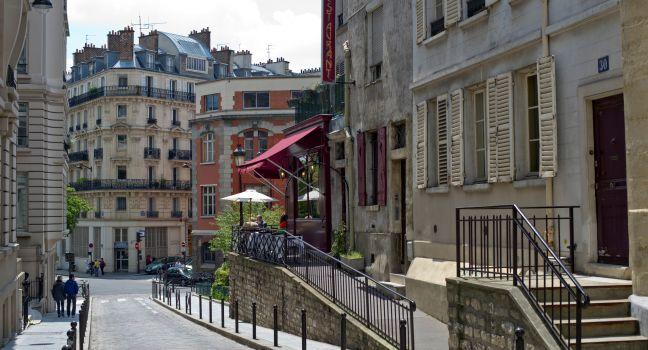
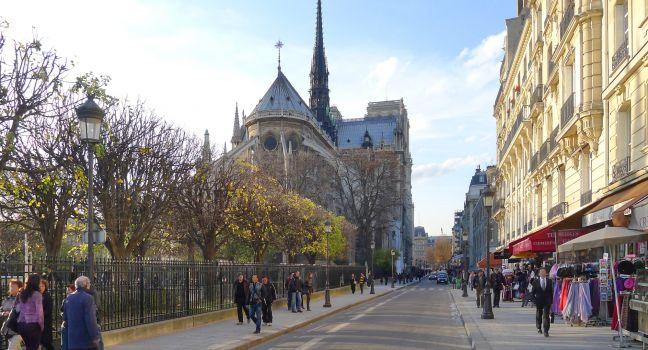
This winding cobblestone street is one of the city's oldest and was once a Roman road leading south from Lutetia (the Roman name for Paris) to Italy. The upper half is dotted with restaurants and bars that cater to tourists and students; the lower half is the setting of a lively morning market, Tuesday through Sunday. The highlight of le Mouffe, though, is the stretch in between where the shops spill into the street with luscious offerings such as roasting chickens and potatoes, rustic saucisson, pâtés, and pungent cheeses, especially at Androuët (No. 134). If you're here in the morning, Le Mouffetard Café (No. 116) is a good place to stop for a continental breakfast (about €10). If it's apéritif time, head to Place de la Contrescarpe for a cocktail, or enjoy a glass of wine at Cave La Bourgogne (No. 144). Prefer to just do a little noshing? Sample the chocolates at Mococha (No. 89) or the gelato at Gelati d'Alberto (No. 45). Note that most shops are closed on Monday.

Cours Saleya

Old Town Fodor's Choice

This long pedestrian thoroughfare—half street, half square—is the nerve center of Old Nice, the heart of the Vieille Ville, and the stage for the city's marketplace and café life. Shoppers come to smell the roses (and mimosas and orange blossoms) before browsing at stalls selling local produce, spices, olives, and little gift soaps in the single row setup, the overflow of which sprawls into leafy Place Pierre Gautier. Market days are Tuesday through Saturday, 6 am to 5:30 pm and Sunday 6 am to 1:30 pm. Arrive early, especially in summer, to avoid being at the mercy of the crowd (and a target for the rampant pickpockets).

On Monday morning, antiques and brocantes (collectibles) draw avid vintage hounds, and, from June to September, there's also an artisanal craft market selling jewelry, pottery, purses, and paintings. At Place Charles Félix on the east end of Cours Saleya is the imposing yellow stone building where Matisse lived on the third and then fourth floor from 1921 to 1938. Today, there’s no plaque that bears his name, only a broken shutter of his workshop to serve as a commemoration. Its future remains uncertain, but for many Niçois, this building is a part of Nice’s heritage.

Recommended Fodor's Video

Petite France

Fodor's Choice

With gingerbread, half-timber houses that seem to lean precariously over the canals of the Ill, plus old-fashioned shops and inviting little restaurants, "Little France" is the most magical neighborhood in Strasbourg. The district, just southwest of the center, is historically Alsatian in style and filled with Renaissance buildings that have survived plenty of wars. Wander up and down the tiny streets that connect Rue du Bain-aux-Plantes and Rue des Dentelles to Grand'Rue, and stroll the waterfront promenade.

Rue du Bœuf

Vieux Lyon Fodor's Choice

Like parallel Rue St-Jean, Rue du Bœuf has traboules, courtyards, spiral staircases, towers, and facades. The traboule at No. 31 hooks through and out onto Rue de la Bombarde. At No. 19 is the standout Maison de l'Outarde d'Or, so named for the great bustard, a gooselike game bird, depicted in the coat of arms over the door. The late-15th-century house and courtyard inside have spiral staircases in the towers, which were built as symbols of wealth and power. Number 20 conceals one of the rare open-shaft spiral staircases allowing for a view all the way up the core. The Hotel Tour Rose at No. 22 has, indeed, a beautiful tour rose (pink tower) in the inner courtyard. At the corner of Place Neuve St-Jean and Rue du Bœuf is the famous sign portraying the bull for which Rue du Bœuf is named, the work of the Renaissance Italy–trained French sculptor Jean de Bologne.

Rue du Bœuf, Lyon, 69005, France

Something incorrect in this review?

Rue St-Jean

Vieux Lyon Fodor's Choice

Once Vieux Lyon's major thoroughfare, this street leads north from Place St-Jean to Place du Change, where money changers operated during medieval trade fairs. The elegant houses along it were built for illustrious Lyonnais bankers and Italian silk merchants during the French Renaissance. The traboule at No. 54 leads all the way through to Rue du Bœuf (No. 27). Beautiful Renaissance courtyards can be visited at No. 50, No. 52, and No. 42. At 27 rue St-Jean, an especially beautiful traboule winds through to 6 rue des Trois Maries. Number 28 has a pretty courtyard, as do No. 18 and No. 24. Maison Le Viste at No. 21 has a splendid facade.

Vieux Valence (Old Town)

Fodor's Choice

Between the Place des Ormeaux next to the cathedral, and Rue Madier de Montjau and the Boulevards Maurice Clerc et Boulevard Bancel, the winding medieval streets of Valence's Old Town are a delight to explore. Along with its leafy squares, welcoming cafés, and gastronomic restaurants, there are several sights to spot. On the Grand Rue you can't miss the Renaissance confection Maison des Têtes (1452) and the Moorish-style Maison Mauresque (1858), at 1 rue Gaston Rey. Closer to the cathedral, an open square funerary chapel called the Pendentif (1545) was one of the first French edifices to be listed as a historic monument, in 1834. The Valence outdoor market, held on several different tree-shaded squares depending on the day (it's worth picking up a schedule at the tourist office or checking online), is particularly picturesque. The Marché Producteurs (local farmers' and organic market) is held from 5 pm to 8 pm every Tuesday under a historic halle on the Place Saint-Jean. The old town is the perfect spot to seek out the Valence specialty called the Suisse, a delicious buttery pastry, somewhere between a brioche and a cookie, that's perfumed with orange flower and flavored with orange rind and rum.

Ancien Cloître Quartier

Ile de la Cité
Rue du Cloitre-Notre-Dame
Mbzt [CC BY-SA 3.0], via Wikimedia Commons

Hidden in the shadows of Notre-Dame is an evocative, often-overlooked tangle of medieval streets. Through the years lucky folks, including Ludwig Bemelmans (who created the beloved Madeleine books) and the Aga Khan, have called this area home, but back in the Middle Ages it was the domain of cathedral seminary students. One of them was the celebrated Peter Abélard (1079–1142)—philosopher, questioner of the faith, and renowned declaimer of love poems. Abélard boarded with Notre-Dame's clergyman, Fulbert, whose 17-year-old niece, Héloïse, was seduced by the compelling Abélard, 39 years her senior. She became pregnant, and the vengeful clergyman had Abélard castrated; amazingly, he survived and fled to a monastery, while Héloïse took refuge in a nunnery. The poetic, passionate letters between the two cemented their fame as thwarted lovers, and their story inspired a devoted following during the romantic 19th century. They still draw admirers to the Père-Lachaise Cemetery, where they're interred ensemble. The clergyman's house at 10 rue Chanoinesse was redone in 1849; a plaque at the back of the building at 9–11 quai aux Fleurs commemorates the lovers.

Paris, 75004, France

Something incorrect in this review?

Antigone

At the far-east end of the city loop, Montpellier seems to transform itself into a futuristic metropolis designed in one smooth, low-slung postmodern style. This is the Antigone district, the result of city planners' efforts (and local industries' commitment) to pull Montpellier up out of its economic doldrums. It worked. This ideal neighborhood, designed by the Catalan architect Ricardo Bofill, covers 100-plus acres with plazas, esplanades, shops, restaurants, and low-income housing constructed out of stone-color, prestressed concrete. Don't miss Place du Nombre d'Or—symmetrically composed of curves—and the long vista that stretches down a mall of cypress trees to the glass-fronted Hôtel de Region.

\n

\n

Montpellier, 34000, France

Something incorrect in this review?

Bercy

Bercy

Tucked away south of the Gare de Lyon in the 12e arrondissement, blocks of stone warehouses that once stored wine are now home to Bercy Village ( 28 rue François Truffaut), a collection of boutiques and eateries that stay open unusually late for Paris. Adjacent to the shops is the tranquil Parc de Bercy, with lawns, ponds, and flower beds crisscrossed by gravel paths, and the Jardin Yitzhak Rabin, a garden named for the late Nobel Peace Prize winner. Nearby, at  51 rue de Bercy, a Cubist building by Frank Gehry houses the Cinémathèque Française, a film buff's paradise, showing classic films, many in English; there are frequent homages to directors and actors, plus a cinema bookshop and museum.

Paris, 75012, France

Something incorrect in this review?

Grand-rue Raymond VII

When peace arrived in the late Middle Ages, the town prospered and many rich residents built pink-sandstone Gothic-style houses—a sizable number of which still line the main street, Grand-rue Raymond VII. Today, many are occupied by painters, sculptors, weavers, leatherworkers, and even creators of illuminated manuscripts, whose ateliers and stores lure the summer crowds.

Grand-rue Raymond VII, Cordes-sur-Ciel, 81170, France

Something incorrect in this review?

Imperial Quarter

The monumental buildings around Avenue Foch and Rue Gambetta were built as a showcase for Germany’s might following its annexation of Metz in the late 19th century. The area forms an architectural encyclopedia of German town-planning, with prime examples of Romanesque Revival, Art Deco, and Jungendstil. The centerpiece is the train station, built using reinforced concrete (a cutting-edge technique at the time) in a style reminiscent of the great castles of the Rhine, much like the central post office at 9 rue Gambetta.

Metz, France

Something incorrect in this review?

La Défense

Western Paris

First conceived in 1958, this Modernist suburb just west of Paris was inspired by Le Corbusier's dream of tall buildings, pedestrian walkways, and sunken vehicle circulation. Built as an experiment to keep high-rises out of the historic downtown, the Parisian business hub has survived economic uncertainty to become the city's prime financial district. Today, 20,000 people live in the suburb, but 180,000 people work here and many more come to shop in its enormous mall. Arriving via métro Line 1, you'll get a view of the Seine, then emerge at a pedestrian plaza studded with some great public art, including César's giant thumb, Joan Miró's colorful figures, and one of Calder's great red "stabiles." The Grande Arche de La Défense dominates the area; it was designed as a controversial closure to the historic axis of Paris (an imaginary line that runs through the Arc de Triomphe, the Arc du Carrousel, and the Louvre Pyramide), but its top floor is no longer accessible.

Parvis de La Défense, Paris, 92800, France

Something incorrect in this review?

La Petite Venise

To find Colmar at its most charming, wander along the calm canals that wind through La Petite Venise, an area of bright Alsatian houses with colorful shutters and window boxes that's south of the town center. Here, amid half-timber buildings bedecked with flowers and willow trees that weep into the eddies of the Lauch River, you have the sense of being in a tiny village.

Quai de la Poissonnerie, Colmar, 68000, France

Something incorrect in this review?

Le Panier

The heart of old Marseille is a maze of narrow cobblestone streets lined by shuttered pastel houses and punctuated by montées (stone stairways) and tiny squares. Long decayed and neglected, the quarter is now a principal focus of urban renewal. In the past few years, an influx of "bobos" (bourgeois-bohemians) and artists has sparked gentrification, bringing charming bed-and-breakfasts, chic boutiques, lively cafés, and artists' ateliers. Although wandering this picturesque neighborhood at will is a pleasure, be sure to stroll along Rue du Panier, the Montée des Accoules, Rue du Petit-Puits, and Rue des Muettes.

Marseille, 13002, France

Something incorrect in this review?

Le Suquet

Climb up Rue St-Antoine into the picturesque Vieille Ville neighborhood known as Le Suquet, on the site of the original Roman castrum. Shops here proffer Provençal goods, and the atmospheric cafés provide a place to catch your breath. The pretty pastel shutters, Gothic stonework, and narrow passageways (not to mention the views) are lovely distractions. In July, you can hear young musicians perform free open-air concerts in the Place de la Castre during the Jeunes Talents festival.

Rue St-Antoine, Cannes, 06400, France

Something incorrect in this review?

Petite Rue des Fabriques d'En Nabot

To see some interesting medieval buildings, walk along the Petite Rue des Fabriques d'En Nabot—near Le Castillet—to the adjacent Place de la Loge, the town's nerve center.

Perpignan, 66000, France

Something incorrect in this review?

Quartier de Chiostra

Around the Palais National in the Haute Ville (Upper Town), it is a joy to wander through the tiny alleys of the Quartier de Chiostra. To take it all in, first head south following the signs to the Belvédère, a stone observation deck that offers a 360-degree panorama of Corte, its Citadelle, and the majestic surrounding peaks. Follow the cobblestone path (as you look down) to the right from the Belvédère, bearing right and across at the Chapelle St-Théophile. Coming into the tiny square on your left, don't miss the open stone staircase on the opposite wall or the prehistoric fertility goddess carved into the wall to the left. Farther downhill you will rejoin the ramp leading into Place Pasquale-Paoli.

Haute Ville, Corte, 20250, France
Sight Details
Free

Something incorrect in this review?

Quartier de la Ponche

Walk along Quai Suffern where the statue of the Bailli de Suffren, an 18th-century customs official, stands guard. Continue past the quayside streets lined with famous cafés to the Môle Jean Réveille, the harbor wall, where, if the wind isn't too strong, you can walk out for a good view of Ste-Maxime across the sparkling bay, the hills of Estérel, and, on a clear day, the distant Alps. Retrace your steps along the digue to the 15th-century Tour du Portalet, and head onward to the old fishermen's quarter, the Quartier de la Ponche, just east of Quai Jean Jaurès.

Here you can find the Port des Pécheurs (Fishermen's Port), on whose beach Bardot did a star turn in And God Created Woman. Complete with gulf-side harbor, St-Tropez's Old Town is a maze of twisting, narrow streets—designed to break the impact of the mistral—that open to tiny squares with fountains. Trellised jasmine and wrought-iron birdcages hang from the shuttered windows, and many of the tiny streets dead-end at the sea.

The main drag here, Rue de la Ponche, leads into Place l'Hôtel de Ville, landmarked by a mairie (town hall) marked out in typical Tropezienne hues of pink and green. Head up Rue Commandant Guichard to the baroque Église de St-Tropez to pay your respects to the bust and barque of St-Torpes, every day but May 17, when they are carried aloft in the Bravade parade honoring the town's namesake saint.

St-Tropez, 83990, France

Something incorrect in this review?

Rue d'Auteuil

Western Paris

This narrow shopping street escaped Haussmann's urban renovations and still retains the country feel of old Auteuil, a sedate bourgeois enclave. Molière once lived on the site of No. 2, and Racine was on nearby Rue du Buis. The pair met up to clink glasses and exchange drama notes at the Mouton Blanc Inn, now a traditional brasserie, at No. 40. Numbers 19–25 and 29 are an interesting combination of 17th- and 18th-century buildings. At the foot of the street, the scaly dome of the Église Notre-Dame d'Auteuil (built in the 1880s) is an unmistakable small-time cousin of Sacré-Coeur in Montmartre. Rue d'Auteuil is at its liveliest on Wednesday and Saturday morning, when a much-loved street market crams onto Place Jean-Lorraine.

Paris, 75116, France

Something incorrect in this review?

Terra Nova

Occupying the high ground within the walls of the citadel, the narrow alleys of the city's marginally more modern quarter are well worth an exploration. Climb the Escalier Romieu steps beside the leafy Jardins Romieu for a sweeping view of the Italian islands of Capraia, Elba, and Montecristo, or take the easier but less scenic route up via the elevator at the southeast end of the Vieux Port. Although it is known as the New Town, it actually dates from the end of the 15th century and is only 100 years younger than the official Old Town below.

Citadelle, Bastia, 20200, France
Sight Details
Free

Something incorrect in this review?

Vieil Orange

This old town neighborhood, which you must cross to hike from one Roman monument to the other, carries on peacefully when there's not a blockbuster spectacle in the theater. Lining its broad squares, under heavy-leaved plane trees, are a handful of shops and a few sidewalk cafés.

Orange, 84100, France

Something incorrect in this review?

Vieille Ville

Go down the steps to Rue Mirabeau and lose yourself in the dense labyrinth of the Vieille Ville, where steep, narrow streets, austere facades, discreet gardens, and random flights of stairs are thrown into shadow by shuttered houses five and six stories tall. 

Grasse, 06130, France

Something incorrect in this review?

Vieille Ville

Within St-Rémy's fast-moving traffic loop, a labyrinth of narrow streets leads you away from the action and into the slow-moving inner sanctum of the vieille ville. Here trendy, high-end shops mingle pleasantly with local life, and the buildings, if gentrified, blend in unobtrusively.

St-Rémy-de-Provence, 13210, France

Something incorrect in this review?

Vieux Céret

Place Picasso is the heart of Old Céret, and the sardana dancers and castellers (human tower troops) who perform here are evidence of the pride locals take in their Catalan heritage. While in this pretty quarter, stroll around Place de la Fontaine des Neuf Jets (Nine Fountains Square). Drop into the church, wander out to the lovely fortified Porte de France gateway, then leave the historic town center and head toward the single-arched medieval Pont du Diable (the Devil's Bridge) on the perimeter of town, said to have been built by the Devil himself in a single night.

Céret, 66400, France

Something incorrect in this review?

Vieux Port

Bordered by Quai de l'Épi, Quai Bouchard, Quai Peri, Quai Suffren, and Quai Jean Jaurès, Vieux Port is a place for strolling and looking over the shoulders of artists painting their versions of the view on easels set up along the water's edge. Meanwhile, folding director's chairs at famous portside cafés like Sénéquier are well placed for observing the cast of St-Tropez's living theater play out their colorful roles. While here, be sure to take the time to enjoy a scoop of ice cream at Glacier Barvarac on Rue Général Allard.

St-Tropez, 83990, France

Something incorrect in this review?