258 Best Sights in France

Background Illustration for Sights

We've compiled the best of the best in France - browse our top choices for the top things to see or do during your stay.

Commune Libre du Safranier

Fodor's Choice
Safranier's street
Safranier's street by

A few blocks south of the Château Grimaldi, aka the Picasso Museum, is the Commune Libre du Safranier, a magical little neighborhood with a character (and mayor) all its own since 1966 (it's not technically a part of Antibes). The commune even holds its own festivals throughout the year, celebrating a variety of things like chestnuts, grape harvests, and the Christmas Yule log. Not far off the seaside promenade, Rue de la Touraque is the main street to get here, and you can amble around Place du Safranier, where tiny houses hang heavy with flowers and vines, and neighbors carry on conversations from window to window across the stone-stepped Rue du Bas-Castelet.

Eiffel Tower

Eiffel Tower Fodor's Choice
Eiffel Tower, Paris, France
Perig / Shutterstock

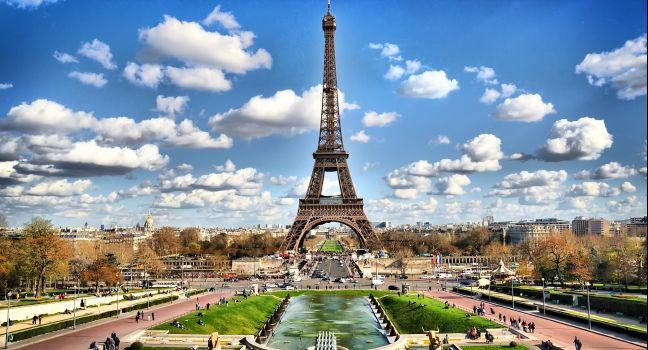
The Eiffel Tower is to Paris what the Statue of Liberty is to New York and what Big Ben is to London: the ultimate civic emblem. French engineer Gustave Eiffel spent two years working to erect this iconic monument for the World Exhibition of 1889. Because its colossal bulk exudes such a feeling of permanence, it's hard to believe that the tower nearly became 7,000 tons of scrap when the concession expired in 1909. Only its potential use as a radio antenna saved the day. Though many prominent Parisians derided it at first, the tower gradually became part of the city's topography. It's most breathtaking at night, when every girder is highlighted in a glittering show of 20,000 golden lights for five minutes every hour on the hour from nightfall until midnight (until 1 am in summer).

More recent enhancements include a renovation of the first level that added a vertigo-inducing "transparent" floor 187 feet above the esplanade as well as a miniturbine plant, four vertical turbine windmills, and eco-friendly solar panels to minimize the tower's carbon footprint over time. You can stride up 704 steps as far as the second level, but only the elevator goes to the top. The view of the flat sweep of Paris at 1,000 feet is sublime—especially if you come in the late evening, after the crowds have dispersed. Beat the crushing lines by reserving your ticket online, or book a skip-the-line guided tour offered by many companies (from €47). Better yet, ride up the private elevator to chef Frédérick Anton's Jules Verne restaurant—with its Michelin star—on the tower's second floor. It's about as dramatic a lunch or dinner spot as you'll find, apart from Madame Brasserie, a chic sit-down bistro helmed by Michelin-starred chef Thierry Marx on the first floor (online reservations for both restaurants are a must). Or you can watch the glimmering lights from the top of the tower over a glass of bubbly or a nonalcoholic drink at the Bar à Champagne. There are also small "buffet" snack shops on the esplanade and the first and second floors. 

At the tower's tippy top is Gustave Eiffel's "secret apartment," which he used as his office, including wax mannequins of Eiffel in conversation with Thomas Edison; the blonde woman in the background represents Claire, Eiffel's oldest daughter, with whom he was very close. You'll also hear actual recordings of Eiffel's voice.

Quai Branly, Paris, 75007, France
08–92–70–12–39-costs €0.35 per min
Sight Details
By elevator from €23; by stairs from €14
Stairs close at 6 pm in off-season (Oct.–June). Closed last 2 wks in Jan. for annual maintenance

Something incorrect in this review?

Jardin des Tuileries

Louvre Fodor's Choice
Nymph Leveque Tuileries, Statue, Jardin des Tuileries, Paris, France
© Halie Cousineau/ Fodor’s Travel

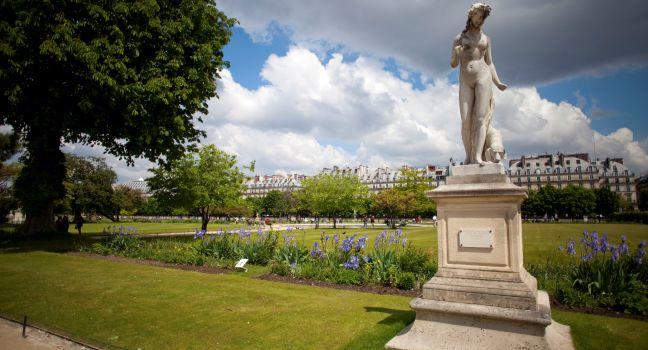
This quintessential French garden, with its verdant lawns, rows of manicured trees, and gravel paths, was designed by André Le Nôtre for Louis XIV. After the king moved his court to Versailles in 1682, the Tuileries became the place for stylish Parisians to stroll. (Ironically, the name derives from the decidedly unstylish factories that once occupied this area: they produced tuiles, or roof tiles, fired in kilns called tuileries.) Monet and Renoir captured the garden with paint and brush. It's no wonder the Impressionists loved it—the gray, austere light of Paris's famously overcast days make the green trees appear even greener.

The garden still serves as a setting for one of the city's loveliest walks. Laid out before you is a vista of must-see monuments, with the Louvre at one end and the Place de la Concorde at the other. The Eiffel Tower looms in the distance on the other side of the Seine, along with the Musée d'Orsay, accessible by a footbridge in the center of the garden.

Begin exploring the garden at the Louvre end, with the Arc du Carrousel, a stone-and-marble arch commissioned by Napoléon to showcase the bronze horses he stole from St. Mark's Cathedral in Venice. The horses were eventually returned and replaced here with a statue of a quadriga, a four-horse chariot. On the Place de la Concorde end, twin buildings bookend the garden. On the Seine side, the former royal greenhouse is now the exceptional Musée de l'Orangerie, home to the largest display of Monet's lovely Water Lilies series, as well as a sizable collection of early 20th-century paintings, including many Impressionist works. On the opposite end is the Jeu de Paume, which hosts some of the city's best photography exhibitions.

Note that the Tuileries is one of the best places in Paris to take kids if they're itching to run around. There's a carousel, trampolines, and, in summer, a funfair. If you're hungry, look for carts serving ice cream from Le Glacier Farmers or sandwiches from Eric Kayser at the eastern end near the Louvre. Within the gated part of the gardens are four cafés with terraces. Pavillon des Tuileries near Place de la Concorde is a good place to stop for late-afternoon tea or an apéritif.

Bordered by Quai des Tuileries, Pl. de la Concorde, Rue de Rivoli, and the Louvre, Paris, 75001, France
01–40–20–90–43
Sight Details
Free

Something incorrect in this review?

Recommended Fodor's Video

Jardin du Luxembourg

St-Germain-des-Prés Fodor's Choice
Luxembourg Gardens, Jardin Du Luxembourg, Paris, France
© Ross Brinkerhoff / Fodor’s Travel

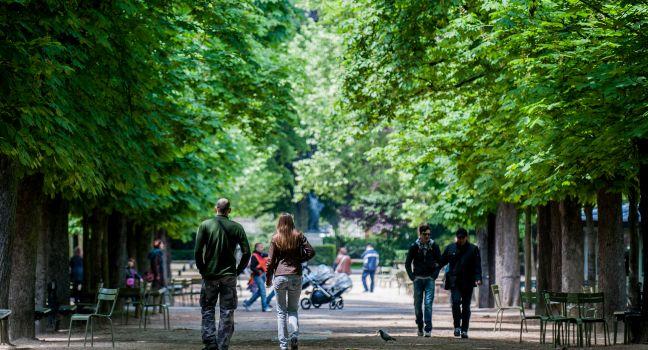
Everything that is charming, unique, and befuddling about Parisian parks can be found in the Luxembourg Garden: groomed trees, ironed-and-pressed walkways, sculpted flower beds, and immaculate emerald lawns meant for admiring, not necessarily for lounging. The tree- and bench-lined paths are a marvelous reprieve from the bustle of the neighborhoods it borders: the Quartier Latin, St-Germain-des-Prés, and Montparnasse. Beautifully austere during the winter months, the garden grows intoxicating as spring brings blooming beds of daffodils, tulips, and hyacinths, and the circular pool teems with wooden sailboats nudged along by children. The park's northern boundary is dominated by the Palais du Luxembourg, which houses the Sénat (Senate), one of two chambers that make up the Parliament. The original inspiration for the gardens came from Marie de Medici, who was nostalgic for the Boboli Gardens of her native Florence; she is commemorated by the recently restored Fontaine de Medicis, a favorite spot in summer for contemplative readers.

Les Marionettes du Théâtre du Luxembourg is a timeless attraction, where, on Wednesday and weekend mornings and afternoons, you can catch classic guignols (marionette shows) for €7.20. The wide-eyed kids might be the real attraction—their expressions of utter surprise, despair, and glee have fascinated the likes of Alfred Eisenstaedt and François Truffaut. The park also has a merry-go-round, swings, and pony rides. The bandstand on the eastern side of the park hosts free concerts on summer afternoons.

As you stroll the paths, you might be surprised by a familiar sight: one of the original (miniature) casts of the Statue of Liberty was installed in the gardens in 1906. There are more than 100 other statues in the gardens, too. Check out the rotating photography exhibits hanging on the perimeter fence near the entrance on Boulevard St-Michel. Attractive refreshment stands sell soft drinks, espresso, crepes, and ice cream, and there's a well-maintained trail around the perimeter that is frequented by joggers. Gendarmes regularly walk the grounds to ensure park rules are enforced; follow guidelines posted on entry gates.

Bordered by Bd. St-Michel and Rues de Vaugirard, de Medicis, Guynemer, Auguste-Comte, and d'Assas, Paris, 75006, France
Sight Details
Free
Closed dusk–dawn

Something incorrect in this review?

Musée d'Orsay

St-Germain-des-Prés Fodor's Choice
Galleries, Musee dOrsay, Paris, France
© Ross Brinkerhoff / Fodor’s Travel

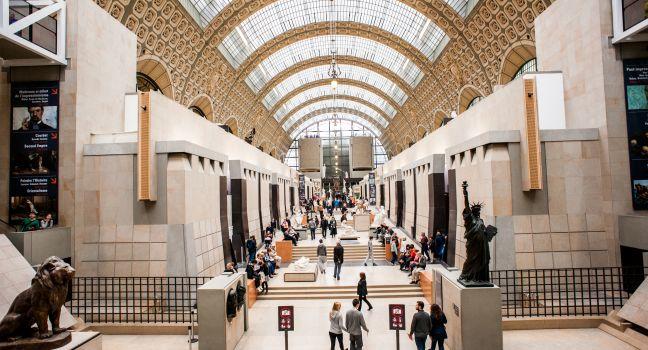
Opened in 1986, this gorgeously renovated Belle Époque train station displays a world-famous collection of Impressionist and Postimpressionist paintings on three floors. To visit the exhibits in a roughly chronological manner, start on the ground floor, take the escalators to the top, and end on the middle floor. If you came to see the biggest names here, head straight for the top floor and work your way down. English audio guides and free color-coded museum maps (both available just past the ticket booths) will help you plot your route.

Galleries off the first floor's main alley feature early works by Manet and Cézanne in addition to pieces by masters such as Delacroix and Ingres. The Pavillon Amont has Courbet's masterpieces L'Enterrement à Ornans and Un Atelier du Peintre. Hanging in Salle 14 is Édouard Manet's Olympia, a painting that pokes fun at the fashion for all things Greek and Roman (his nubile subject is a 19th-century courtesan, not a classical goddess). Impressionism gets going on the top floor, with iconic works by Degas, Pissarro, Sisley, and Renoir. Don't miss Monet's series on the cathedral at Rouen and, of course, samples of his water lilies. Other selections by these artists are housed in galleries on the ground floor. On the middle floor, you'll find an exquisite collection of sculpture as well as Art Nouveau furniture and decorative objects. There are rare surviving works by Hector Guimard (designer of the swooping green Paris métro entrances), plus Lalique and Tiffany glassware. Postimpressionist galleries include work by van Gogh and Gauguin, while Neo-Impressionist galleries highlight Seurat and Signac. The museum also regularly curates large, temporary exhibits of major historic artists.

To avoid the lines here, which are among the worst in Paris, book ahead online or buy a Museum Pass, then go directly to Entrance A2 for tickets with time slots or C1 if you have a museum pass (guards will help direct you). Otherwise, go early. Thursday evening the museum is open until 9:45 pm and is less crowded from 5 pm until closing. Don't miss the views of Sacré-Coeur from the balcony—this is the Paris that inspired the Impressionists. The museum has several restaurants and cafés; Café Cabana's views of the city through the ex-train station's giant clock face are legendary. The Musée d'Orsay is closed Monday, unlike the Louvre, which is closed Tuesday.

1 rue de la Légion d'Honneur, Paris, 75007, France
01–40–49–48–14
Sight Details
€16; €25 combined ticket with Musée Rodin
Closed Mon.

Something incorrect in this review?

Place des Vosges

Marais Quarter Fodor's Choice
Place des Vosges, Paris, France
© Zach Nelson / Fodor’s Travel

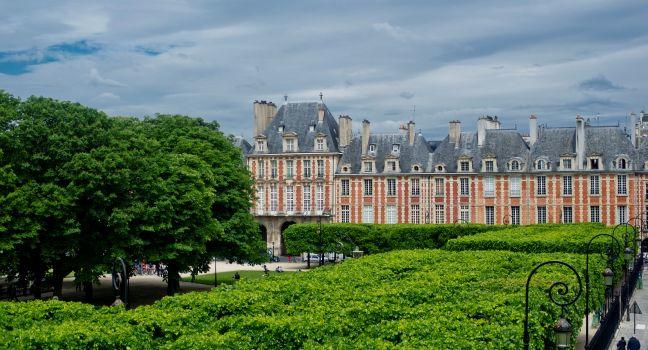
The oldest square in Paris and—dare we say it—the most beautiful, Place des Vosges represents an early stab at urban planning. The precise proportions offer a placid symmetry, but things weren't always so calm here. Four centuries ago, this was the site of the Palais des Tournelles, home to King Henry II and Queen Catherine de Medici. The couple staged regular jousting tournaments, and Henry was fatally lanced in the eye during one of them in 1559. Catherine fled to the Louvre, abandoning her palace and ordering it destroyed. In 1612, the square became Place Royale on the occasion of Louis XIII's engagement to Anne of Austria. Napoléon renamed it Place des Vosges to honor the northeast region of Vosges, the first in the country to pony up taxes to the Revolutionary government. At the base of the 36 redbrick-and-stone houses—nine on each side of the square—is an arcaded, covered walkway lined with art galleries, shops, and cafés. There's also an elementary school, a synagogue (whose barrel roof was designed by Gustav Eiffel), and several chic hotels. The formal, gated garden's perimeter is lined with chestnut trees; inside are a children's play area and a fountain. Aside from hanging out in the park, people come here to visit the house, now a museum, of the man who once lived at No. 6—Victor Hugo, the author of Les Misérables and Notre-Dame de Paris (aka The Hunchback of Notre-Dame).  One of the best things about this park is that you're actually allowed to sit—or snooze or snack—on the grass during spring and summer. There is no better spot in the Marais for a picnic: you can pick up fixings at the nearby street market on Thursday and Sunday morning. (It's on Boulevard Richard Lenoir between Rues Amelot and St-Sabin.) The most likely approach to Place des Vosges is from Rue de Francs-Bourgeois, the main shopping street. However, for a grander entrance, walk along Rue St-Antoine until you get to Rue de Birague, which leads directly into the square.

Off Rue des Francs-Bourgeois, near Rue de Turenne, Paris, 75004, France

Something incorrect in this review?

Arènes

Fodor's Choice

Rivaled only by the even better-preserved version in Nîmes, the arena dominating old Arles was built in the 1st century AD to seat 21,000 people, with large tunnels through which wild beasts were forced to run into the center. Before being plundered in the Middle Ages, the structure had three stories of 60 arcades each; the four medieval towers are testimony to a transformation from classical sports arena to feudal fortification. Complete restoration of the arena began in 1825. Today it's primarily a venue for the traditional spectacle of the corridas, which take place annually during the féria pascale, or Easter festival. The less bloodthirsty local variant course carmarguaise (in which the bull is not killed) also takes place here. Festival season starts with the Fête des Gardians on May 1, when the Queen of Arles is crowned, and culminates in early July with the award of the Cocarde d'Or (Golden Rosette) to the most successful raseteur. It's best to book event tickets in advance.

24 bis Rond Point des Arènes, Arles, 13200, France
04–90–18–41–20-for arena info
Sight Details
€11, includes admission to Théâtre Antique

Something incorrect in this review?

Artemisia Museum

Fodor's Choice

At this unique museum in the 13th-century Couvent des Cordeliers, you'll learn how the aromatic plants and medicinal herbs of the Montagne de Lure, part of a UNESCO Biosphere Reserve, have traditionally been grown, gathered, and used in remedies, perfumes, and cosmetics. Explanatory panels, botanical illustrations, plant specimens, and fragrance galleries are used to create a multisensory educational experience in theme exhibits such as Lavender, Pickers & Peddlers, The Druggists, Distillation, Plants & Elixirs, and Plants & Beauty. In addition, activity booklets and special displays help children navigate and understand the exhibits. For total immersion, sign up for one of the two-hour perfume workshops, which are offered for both adults (€50) and kids (€25).

Bois de Boulogne

Western Paris Fodor's Choice

When Parisians want to experience the great outdoors without going too far from home, they head to the Bois de Boulogne. Once a royal hunting ground, the Bois is like a vast tamed forest where romantic lakes and wooded paths are complemented by formal gardens and family-friendly amusements. On nice days, it’s filled with cyclists, rowers, rollerbladers, and joggers. Art lovers also flock here thanks to the Fondation Louis Vuitton, a stunning exhibition space dedicated to contemporary art.

The Parc de Bagatelle is a floral garden with irises, roses, tulips, water lilies, and roaming peacocks, while the Pré Catelan contains one of Paris's largest trees: a copper beech more than 200 years old. Romantic Le Pré Catelan restaurant (three Michelin stars), a Belle Époque classic with an elegant terrace, still draws diners and wedding parties. The Jardin Shakespeare inside the Pré Catelan has a sampling of the flowers, herbs, and trees mentioned in Shakespeare's plays, and it becomes an open-air theater for the bard's works in spring and summer. The Jardin d'Acclimatation is an amusement park that attracts hordes of preschoolers on summer Sundays. Boats or bikes can be rented for a few euros at Lac Inférieur. You can row or take a quick "ferry" to the island restaurant, Le Chalet des Îles. Two popular horse-racing tracks are also in the park: the Hippodrome de Longchamp and the Hippodrome d'Auteuil. Fans of the French Open can visit its home base, Stade Roland-Garros.

The main entrance to the Bois is off Avenue Foch near the Porte Dauphine métro stop on Line 2; it is best for accessing the Pré Catelan and Jardin Shakespeare, both off Route de la Grande-Cascade by the lake. For the Jardin d'Acclimatation and the Fondation Louis Vuitton, off Boulevard des Sablons, take Line 1 to Les Sablons or Porte Maillot, where you can walk or ride the Petit Train to the amusement park, which is next door to the foundation. The foundation also offers a €2 return-trip shuttle from Place de l'Étoile. The Parc de Bagatelle, off Route de Sèvres-à-Neuilly, can be accessed from either Porte Dauphine or Porte Maillot, though it's a bit of a hike. You'll want to leave the park by dusk, as the Bois—potentially dangerous after dark—turns into a distinctly “adult” playground.

Paris, 75016, France
01–40–69–96–00-Fondation Louis Vuitton
Sight Details
Parc de Bagatelle €3 (€6 during exhibitions, free Oct.–Mar.); Jardin Shakespeare free; Jardin d'Acclimatation €7 entry, €63 for 10-ride ticket book; Fondation Louis Vuitton €16

Something incorrect in this review?

Bois de Vincennes

Bois de Vincennes Fodor's Choice

Like the Bois de Boulogne to the west, this much-loved retreat on the city's eastern border was landscaped by Napoléon III. Its roots, however, reach back to the 13th century, when Philippe Auguste created a hunting preserve in the shadow of the royal Château de Vincennes, which once ranked as the largest château in Europe. In 1731 Louis XV created a public park here, and the bois (or woods) now features a Japanese garden, La Grande Pagode (a Buddhist temple containing the largest golden statue of the Buddha in Europe), and the exquisite Parc Floral, with acres of flower gardens, a huge kids' park, and summertime jazz and classical concerts. Horse races at the restored Vincennes Hippodrome de Paris are an event for the whole family, but perhaps not the Espace Naturiste, Paris's first area for nudists, opened in 2017. Rowboats are for rent at a pair of lakes: Lac Daumesnil, which has two islands, and Lac des Minimes, which has three. For the kids, there are pony rides, a miniature train, and numerous play areas. Here, too, you'll find the stunning Palais de la Porte Dorée, home to an immigration museum and tropical aquarium. Through late summer, the Parc Floral hosts two beloved music festivals, the Paris Jazz Festival and the Festival Classique au Vert. Grab a picnic and a blanket and enjoy classical music or jazz in the amphitheater or on the lawn in Paris's prettiest park.

Carrières des Lumières

Fodor's Choice

This vast old limestone quarry has 66-foot-high stone walls that make a dramatic setting for a multimedia show in which thousands of images are projected onto the walls. Exhibitions change yearly, but past showings have showcased the life and work of Picasso, Van Gogh, Dalí, and Cézanne, and more recent ones have featured Monet and Rousseau.

Cathédrale Notre-Dame

Fodor's Choice

Dark pink, ornately carved Vosges sandstone covers the facade of this most novel and Germanic of French cathedrals, a triumph of Gothic art begun in 1176. Not content with the outlines of the walls themselves, medieval builders lacily encased them with slender stone shafts. The off-center spire, finished in 1439, looks absurdly fragile as it tapers skyward some 466 feet. You can climb 330 steps to the base of the spire for sweeping views of the city, the Vosges Mountains, and the Black Forest.

The interior presents a stark contrast to the facade: it's older (mostly finished by 1275), and the nave's broad windows emphasize the horizontal rather than the vertical. Note Hans Hammer's ornately sculpted pulpit (1485) and the richly painted 14th- to 15th-century organ loft that rises from pillar to ceiling. The left side of the nave is flanked with richly colored Gothic windows honoring the early leaders of the Holy Roman Empire—Otto I and II and Heinrich I and II. The choir is not ablaze with stained glass but framed by chunky Romanesque masonry. Head to the right transept to admire the Pilier des Anges (Angels' Pillar), an intricate Gothic column dating from around 1230.

Just behind the pillar, the Renaissance machinery of the imposing 16th-century Horloge Astronomique whirs into action daily at 12:30 pm (but the line starts at the south door at 11:45 am) with macabre clockwork figures enacting the story of Christ's Passion. One of the highlights: when the apostles walk past, a likeness of Christ as a rooster crows three times.

Château d'Ussé

Fodor's Choice

The most beautiful castle in France is first glimpsed as you approach the Château d'Ussé, and an astonishing array of blue-slate roofs, dormer windows, delicate towers, and Gothic turrets greets you against the flank of the Forest of Chinon. Literature describes this château, overlooking the banks of the River Indre, as the original "Sleeping Beauty" castle; Charles Perrault, author of this beloved 17th-century tale, spent time here as a guest of the Count of Saumur, and legend has it that Ussé inspired him to write the famous story. Although parts of the castle are from the 1400s, most of it was completed two centuries later. By the 17th century, the region was so secure that one fortified wing of the castle was demolished to allow for grand vistas over the valley and the castle gardens, newly designed in the style Le Nôtre had made so fashionable at Versailles.

Only Disney could have outdone this white tufa marvel: the château is a flamboyant mix of Gothic and Renaissance styles—romantic and built for fun, not for fighting. Its history supports this playful image: it endured no bloodbaths—no political conquests or conflicts—while a tablet in the chapel indicates that even the French Revolution passed it by. Inside, a tour leads you through several sumptuous period salons, a 19th-century French fashion exhibit, and the Salle de Roi bedchamber built for a visit by King Louis XV (the red-silk, canopied four-poster bed is the stuff of dreams). At the end of the house tour, you can go up the fun spiral staircases to the chemin de ronde of the lofty towers; there are pleasant views of the Indre River from the battlements, and you can also find rooms filled with waxwork effigies detailing the fable of Sleeping Beauty herself. (Kids will love this.)

Before you leave, visit the exquisite Gothic-becomes-Renaissance chapel in the garden, built for Charles d'Espinay and his wife in 1523–35. Note the door decorated with pleasingly sinister skull-and-crossbones carvings. Just a few steps from the chapel are two towering cedars of Lebanon—a gift from the genius-poet of Romanticism, Viscount René de Chateaubriand, to the lady of the house, the duchess of Duras. When her famous amour died in 1848, she stopped all the clocks in the house (à la "Sleeping Beauty") so as "never to hear struck the hours you will not come again." The castle then was inherited by her relations, the comte and comtesse de la Rochejaquelin, one of the most dashing couples of the 19th century. Today, Ussé belongs to their descendant, the duc de Blacas, who is as soigné as his castle. If you do meet him, proffer thanks, as every night his family floodlights the entire château, a vision that is one of the Loire Valley's dreamiest sights. Long regarded as a symbol of la vieille France, Ussé can't be topped for fairy-tale splendor, so make this a must-do.

Château de Chambord

Fodor's Choice

As you travel the gigantic, tree-shaded roadways that converge on Chambord, you first spot the château's incredible towers—19th-century novelist Henry James said they were "more like the spires of a city than the salient points of a single building"—rising above the forest. When the entire palace breaks into view, it is an unforgettable sight.

With a 420-foot-long facade, 440 rooms, 365 chimneys, and a wall that extends 32 km (20 miles) to enclose a 13,000-acre forest, the Château de Chambord is one of the greatest buildings in France. Under François I, building began in 1519, a job that took 12 years and required 1,800 workers. His original grandiose idea was to divert the Loire to form a moat, but someone (perhaps his adviser, Leonardo da Vinci, who some feel may have provided the inspiration behind the entire complex) persuaded him to make do with the River Cosson. François I used the château only for short stays; yet 12,000 horses were required to transport his luggage, servants, and entourage when he came. Later kings also used Chambord as an occasional retreat, and Louis XIV, the Sun King, had Molière perform here. In the 18th century Louis XV gave the château to the Maréchal de Saxe as a reward for his victory over the English and Dutch at Fontenoy (southern Belgium) in 1745. When not indulging in wine, women, and song, the marshal planted himself on the roof to oversee the exercises of his personal regiment of 1,000 cavalry. Now, after long neglect—all the original furnishings vanished during the French Revolution—Chambord belongs to the state.

There's plenty to see inside. You can wander freely through the vast rooms, filled with exhibits (including a hunting museum)—not all concerned with Chambord, but interesting nonetheless—and lots of Ancien Régime furnishings. The enormous double-helix staircase (probably envisioned by Leonardo, who had a thing about spirals) looks like a single staircase, but an entire regiment could march up one spiral while a second came down the other, and never the twain would meet. The real high point here in more ways than one is the spectacular chimneyscape—the roof terrace whose forest of Italianate towers, turrets, cupolas, gables, and chimneys has been compared to everything from the minarets of Constantinople to a bizarre chessboard. During the year there's a packed calendar of activities on tap, including 90-minute tours of the park in a 4x4 vehicle (€20). A soaring three-story-tall hall has been fitted out to offer lunches and dinners.

Château de Compiègne

Fodor's Choice

The 18th-century Château de Compiègne, where the future Louis XVI first met Marie-Antoinette in 1770, was restored by Napoléon I and favored for wild weekends by his nephew Napoléon III. The first Napoléon's legacy is more keenly felt: his state apartments have been refurbished using the original designs for hangings and upholstery, and bright silks and damasks adorn every room. Much of the mahogany furniture gleams with ormolu, and the chairs sparkle with gold leaf. Napoléon III's furniture looks ponderous by comparison. Behind the palace is a gently rising 4-km (2½-mile) vista, inspired by the park at Schönbrunn, in Vienna, where Napoléon I's second wife, Empress Marie-Louise, grew up. Also here is the Musée du Second Empire, a collection of decorative arts from the Napoléon III era: its showstopper is Franz-Xaver Winterhalter's Empress Eugénie Surrounded by Her Ladies in Waiting, a famed homage to the over-the-top hedonism of the Napoléon Trois era. Make time for the Musée de la Voiture (Vehicle Museum) and its display of carriages, coaches, and old cars—including the Jamais Contente (Never Satisfied), the first car to reach 100 kph (62 mph).

Château de Losse

Fodor's Choice

There are more grandiose castles in France, but few can offer a more intimate a look at how 16th-century nobles lived than the Château de Losse. Built in 1576 on the site of the family's original 11th-century stronghold, the graceful Renaissance-style structure retains the furnishings, artwork, and other authentic trappings of daily life during the Wars of Religion. The beautiful wooded grounds and extraordinary gardens—winner of the Institute de France's Art of the Garden award—overlooking the Vézère River make for a lovely stroll, and a charming café with a grassy terrace is the perfect place for a gourmet lunch. Although tours of the interior are offered only in French, a detailed text and audio guide in English is provided.

Château de Lourmarin

Fodor's Choice

The "new" wing (begun in 1526 and completed in 1540) of this château—which was restored to near perfection in the 1920s—is the prettiest, with a broad art collection, rare old furniture, and ornate stone fireplaces, including two with exotic vases canopes (ancient Aztec figure vases). The château also offers lots of fun activities for kids, and it hosts a series of highly regarded open-air concerts in summer and several contemporary art exhibitions throughout the year.

Château de Vaux-le-Vicomte

Fodor's Choice

The high-roof Château de Vaux-le-Vicomte, partially surrounded by a moat, is set well back from the road behind iron railings topped with sculpted heads. A cobbled avenue stretches up to the entrance, and stone steps lead to the vestibule, which seems small given the noble scale of the exterior. Charles Le Brun's captivating decoration includes the ceiling of the Chambre du Roi (Royal Bedchamber), depicting Time Bearing Truth Heavenward, framed by stuccowork by sculptors François Girardon and André Legendre. Along the frieze you can make out small squirrels, the Fouquet family's emblem—squirrels are known as fouquets in local dialect. But Le Brun's masterpiece is the ceiling in the Salon des Muses (Hall of Muses), a brilliant allegorical composition painted in glowing, sensuous colors that some feel even surpasses his work at Versailles. On the ground floor the impressive Grand Salon (Great Hall), with its unusual oval form and 16 caryatid pillars symbolizing the months and seasons, has harmony and style even though the ceiling decoration was never finished.

The state salons are redolent of le style Louis Quatorze, thanks to the grand state beds, Mazarin desks, and Baroque marble busts—gathered together by the current owners of the château, the Comte et Comtesse de Vogüé—that replace the original pieces, which Louis XIV trundled off as booty to Versailles. In the basement, where cool, dim rooms were once used to store food and wine and house the château's kitchens, you can find rotating exhibits about the château's past and life-size wax figures illustrating its history, including the notorious 19th-century murder-suicide of two erstwhile owners, the Duc and Duchess de Choiseul-Praslin.

Le Nôtre's carefully restored gardens, considered by many to be the designer's masterwork, are at their best when the fountains—which function via gravity, exactly as they did in the 17th century—are turned on (the second and last Saturdays of each month from April through October, 4–6 pm). Christmastime is particularly magical at the château and every Easter children are invited to participate in an enchanting garden Easter egg hunt. The popular illuminated evenings, when the château is dazzlingly lighted by 2,000 candles, are held every Saturday from early May to early October. Open for dinner during this event only, the formal Les Charmilles restaurant serves a refined candlelight dinner outdoors, complete with crystal and white linens, on the lovely Parterre de Diane facing the château (reservations essential). There's also a delightful Champagne bar with lounge chairs and music on these special evenings. At other times, L'Ecureuil (a more casual eatery) is a good choice for lunch or snacks. Call ahead to order a picnic basket filled with fresh regional delights or you are always welcome to bring along your own to enjoy in the extensive gardens. 

Château du Haut-Koenigsbourg

Fodor's Choice

The ruins of the Château du Haut-Koenigsbourg were presented by the town of Sélestat to German emperor Wilhelm II in 1899. The château looked just as a kaiser thought one should, and he restored it with some diligence and no lack of imagination—squaring the main tower's original circle, for instance. The site, panorama, drawbridge, and amply furnished imperial chambers may lack authenticity, but they are undeniably dramatic.

Cité Royale

Fodor's Choice

A "Cité Royale," Loche came to be adorned with a bevy of gorgeously picturesque medieval and Renaissance-era structures—none more imposing than its famous Citadelle, one of the most complete medieval fortifications extant, bristling with portcullises, posterns, keeps, and crenellated ramparts. Sections of these defensive walls are well preserved and function as part of the town.

By the 15th century Loches had become a pleasure dome. Charles VII and his famous amour, Agnés Sorel, set up shop in the town château, the Logis Royal, located on the north end of the citadel, and proceeded to set the style for much of courtly France with unmatched opulence, Italianate art, and the country's top painter, Jean Fouquet. Great hostess that she was, Agnés might have cottoned to the château's son-et-lumière show, presented during July and August and featuring a goodly chunk of Loches's population in chivalric tableaux.

Elsewhere in town are other historic sights (some with separate admissions): the Donjon of Fouques Nerra; the Tour Ronde of Louis XI (with its horrifying dungeons and their fillettes, or cages); a medieval-style garden; the massive Romanesque church of Collegiale St-Ours (on Rue Thomas-Pactius); a magnificent Renaissance-period Hôtel de Ville, built for François I; and the Maison Lansyer, beautifully set into the town ramparts and fitted out with 19th-century salons filled with the works of painter Emmanuel Lansyer (1835–93). There's also a lively night market during July and August.

The Corniche de l'Estérel

Fodor's Choice

Stay on the D559 to the D1098, and you'll find yourself careening along this stunning coastal drive. At the dramatic Pointe de Cap Roux, an overlook allows you to pull off the narrow two-lane highway (where high-season sightseers can cause bumper-to-bumper traffic) and contemplate the spectacular view up and down the coast.

Train travelers have the good fortune to snake along this cliff side for constant panoramas. It's also a hiker's haven. Some nine trails, ranging from an hour to 4½ hours, strike out from designated parking sites along the way, leading up into the jagged rock peaks for extraordinary sea views. (Don't leave valuables in the car, as the sites are littered with glass from break-ins.) There's also a coastal path leaving from St-Raphaël port; you'll see a mix of wild, rocky criques (coves and finger bays) and glamorous villas.

Cours Saleya

Old Town Fodor's Choice

This long pedestrian thoroughfare—half street, half square—is the nerve center of Old Nice, the heart of the Vieille Ville, and the stage for the city's marketplace and café life. Shoppers come to smell the roses (and mimosas and orange blossoms) before browsing at stalls selling local produce, spices, olives, and little gift soaps in the single row setup, the overflow of which sprawls into leafy Place Pierre Gautier. Market days are Tuesday through Saturday, 6 am to 5:30 pm and Sunday 6 am to 1:30 pm. Arrive early, especially in summer, to avoid being at the mercy of the crowd (and a target for the rampant pickpockets).

On Monday morning, antiques and brocantes (collectibles) draw avid vintage hounds, and, from June to September, there's also an artisanal craft market selling jewelry, pottery, purses, and paintings. At Place Charles Félix on the east end of Cours Saleya is the imposing yellow stone building where Matisse lived on the third and then fourth floor from 1921 to 1938. Today, there’s no plaque that bears his name, only a broken shutter of his workshop to serve as a commemoration. Its future remains uncertain, but for many Niçois, this building is a part of Nice’s heritage.

Disneyland Paris

Fodor's Choice

A slightly downsized version of its United States counterpart, Disneyland Paris is nevertheless a spectacular sight, created with an acute attention to detail. Disneyland Park, as the original theme park is styled, consists of five "lands": Main Street U.S.A., Frontierland, Adventureland, Fantasyland, and Discoveryland. The central theme of each land is relentlessly echoed in every detail, from attractions to restaurant menus to souvenirs. In Fantastyland, tots adore Alice's Curious Labyrinth, Peter Pan's Flight, and especially the whirling Mad Hatter's Teacups, while everyone loves the afternoon parades centered around Main Street U.S.A, with huge floats swarming with all of Disney's most beloved characters—just make sure to stake your place along Main Street in advance for a good spot. The focal point of Fantasyland, and indeed Disneyland Paris, is Le Château de la Belle au Bois Dormant (Sleeping Beauty Castle), a 140-foot, bubble-gum-pink structure topped with 16 blue- and gold-tipped turrets.

Top attractions at Frontierland are the chilling Phantom Manor, haunted by holographic ghosts, and the thrilling runaway mine train of Big Thunder Mountain, a roller coaster that plunges wildly through floods and avalanches in a setting meant to evoke Utah's Monument Valley. Whiffs of Arabia, Africa, and the Caribbean give Adventureland its exotic cachet; the spicy meals and snacks served here rank among the best food in the park. Don't miss Pirates of the Caribbean, an exciting mise-en-scène populated by lifelike animatronic figures, or Indiana Jones and the Temple of Doom, a rapid-fire ride that re-creates some of this hapless hero's most exciting moments.

Discoveryland is a high-tech, futuristic eye-popper. Robots on roller skates welcome you on your way to Star Tours, a pitching, plunging, sense-confounding ride based on the Star Wars films; and another robot, the staggeringly realistic 9-Eye, hosts a simulated space journey in Le Visionarium.

The older the child, the more they will enjoy Walt Disney Studios Park, where many of the newer Disney character–theme rides can be found. It's divided into four "production zones," giving visitors insight into different parts of the production process, including Animation Courtyard, where Disney artists demonstrate the various phases of character animation, and Production Courtyard, where you can go on a behind-the-scenes Studio Tram tour of location sites, movie props, studio interiors, and costumes, ending with a visit to Catastrophe Canyon in the heart of a film shoot. The newest stage show, "Together: A Pixar Musical Adventure," takes you on a lively musical romp with all your favorite characters from the movies Monsters Inc., Finding Nemo, Toy Story, and other Pixar classics.

At the Marvel Avengers Campus—the first stage of Disney Paris’s major multiyear transformation to be completed in late 2025—kids become real-life recruits in the superhero universe, taking daring steps alongside Black Widow, Doctor Strange, Black Panther, and the like. The Avengers Assemble: Flight Force high-speed roller coaster offers hardcore thrills (your mission: save the Earth and the Avengers' Campus from Kree missiles), while Spider-Man W.E.B. Adventure takes you on a 3D odyssey to test your web-throwing skills as you fight a horde of Spider Bots. A reimagined Rock 'n' Roller Coaster is every bit as spine-tingling as before, but now features Iron Man and Avengers. The Avengers Campus is small (it can be traversed in five minutes), but it offers animations, a stunt show, three restaurants, and a boutique where superheroes-in-training can stock up on all the essential equipment.

The park's newest nighttime attraction, Disney Tales of Magic, immerses Main Street and Sleeping Beauty castle in eye-popping 3D imagery and favorite songs from cherished movie moments. And there's big plans ahead for 2026, when the World of Frozen, an new park area designed to look like the kingdom of Arendelle, complete with a lake, dancing fountains, and a new Frozen Ever After attraction, is set to open.

Marne-la-Vallée, 77777, France
08–25–30–05–00
Sight Details
€105, 3-day Passport €312; includes admission to all individual attractions within Disneyland or Walt Disney Studios; tickets for Walt Disney Studios are also valid for admission to Disneyland during last 3 opening hrs of same day

Something incorrect in this review?

Domaine de Méjanes Paul Ricard

Fodor's Choice

Near the northern shore of the Etang de Vaccarès, this unique cultural center, funded by the Ricard family of pastis fame and set on one of the larger estates in the Camargue, is a place to meet gardiens (French cowboys) and learn about the taureau, or bull—virtually a totemic creature in these parts. You’ll also gain a better understanding of the regional spectacle known as the course camarguaise, in which raseteurs (runners) try to pluck off a red cockade and two white tassels mounted on the bull’s horns. There is no mise à mort (as in Spanish-style corridas, or bullfights), so the bulls live to enter the arena again and again—some even become such celebrities that they make the covers of French magazines.

Other activities include touring an on-site museum, where exhibits detail the remarkable history of Paul Ricard and the estate; hopping aboard a petit train for a 20-minute tour of the marshlands; or mounting a horse or pony for a beachside trot. At Chez Hélène et Néné restaurant, you can feast on Camargue seafood while gazing at the beach and the ocean. If you want to stay the night, the property has several charming accommodation options—from guest rooms to cottages to colorful wooden, Roma-style caravans. The estate is 36 km (22 miles) east of Aigues-Mortes via the D58, D570, and RD37/D37 and 27 km (17 miles) northeast of Stes-Maries-de-la-Mer via the D570 and RD37/D37.

Domaine de Neuvic

Fodor's Choice

With France as the world's third-largest producer of caviar—much of it from sturgeon raised in basins fed from the abundant rivers around the Dordogne—you'll be assured when a menu says "local caviar" it truly is. At this 50-acre estate, visitors are shown how caviar is produced, from the breeding ponds to harvesting, before tasting the homegrown delicacy. Neuvic offers "initiation" visits along with masterclasses (all booked in advance online) or you can just stop in between Monday and Saturday for a visit of the domaine that includes nature walks along the river and "swimming" with the sturgeon (in waders). The on-site boutique sells all of the various caviars along with a host of other local delicacies. There's also a gourmet restaurant and a chic boutique hotel in the 19th-century Tudor-style château if you're looking for the full caviar experience. The domaine is almost equidistant (about 30 km/19 miles) between Périgeux and Bergerac.

Fondation Vasarely

Fodor's Choice

As the father of "op-art," Victor Vasarely has taken his rightful place among the great artists of the later 20th century. A visit to this exhilarating museum, a short drive or bus ride (lines 2 and 20) from Aix center, will delight art lovers (even those who aren't fans of the genre) of all ages. The building itself is an architectural wonder, composed of 16 hexagonal galleries each housing six of the artist's monumental tapestries, mosaics, paintings, or sculptures. Upstairs, a detailed timeline of Vasarely's life and work reveals the versatility and genius of an artist both of and ahead of his time.

Gorges du Verdon

Fodor's Choice

You are here for one reason only: to explore the extraordinary Gorges du Verdon, also known as—with only slight exaggeration over another, more famous version—the Grand Canyon. Through the eons, the jewel-green torrent of the Verdon River has chiseled away the limestone plateau and gouged a spectacular gorge lined with steep white cliffs and sloping rock falls carpeted with green forest. The jagged bluffs, roaring water, and dense wild boxwood create a savage world of genuinely awe-inspiring beauty, whether viewed from dozens of cliff-top overlooks or explored from the wilderness below.

If you're driving from La Palud, follow the dramatic Route des Crêtes circuit (D23), a white-knuckle cliff-hanger not for the faint of heart. When you approach and leave La Palud, you'll do it via D952 between Castellane and Moustiers, with several breathtaking overlooks. The best of these is the Point Sublime, at the east end. Leave your car by the hotel-restaurant and walk to the edge, holding tight to dogs and children—that's a 2,834-foot drop to the bottom. You can also access the famous drive along D71, called the Route de la Corniche Sublime, from Moustiers. Top lookout points here are the Horserider's Cliff, the Balcon de la Mescla, and the Pont de l'Artuby bridge.

Several trails converge in this prime hiking territory. The most spectacular is the branch of the GR4 that follows the bed of the canyon itself, along the Sentier Martel. This dramatic trek, beginning at the Chalet de la Maline and ending at the Point Sublime, was created in the 1930s by the Touring-Club de France and named for one of the gorge's first explorers. Easier circuits leave from the Point Sublime on sentiers de découverte (trails with commentary) into the gorge known as Couloir Samson.

Grandes Écuries

Fodor's Choice

The grandest stables in France were built by Jean Aubert in 1719 to accommodate 240 horses and 500 hounds used for stag and boar hunting in the forests nearby. Now with 30 breeds of horses and ponies living here in straw-lined comfort, the palatial stables function as the Musée Vivant du Cheval (Living Horse Museum). Equine history is explored through an array of artifacts, prints, paintings, textiles, sculptures, equipment, and weaponry. Visitors can also enjoy the elaborate horse shows and dressage demonstrations year-round; check the website for dates and times.

Hôtel de la Marine

Champs-Élysées Fodor's Choice

This splendid museum is the closest you'll get to Versailles in Paris. It took more than 200 skilled artisans and nearly $160 million to achieve what is hands down Paris’s most ravishing museum to date, allowing the public a glimpse behind the elegant facade of a masterpiece of French 18th-century interior design for the first time in 250 years. No detail was overlooked in the restoration: wallpaper and curtains were painted or sewed by hand using the original 18th-century techniques; the woodwork was painstakingly stripped, restored, and gilded by master craftspeople; and decorative features were created in Paris’s most rarified workshops. 

The mansion is one of two twin structures built in 1758 for Louis XV to mark a new square created in his honor (now Place de la Concorde). Both buildings sat unused before the eastern facade—now the Hôtel de Crillon—was auctioned off to the Duc d’Aumont. The western edifice became the Garde-Meuble de la Couronne, the institution in charge of selecting, maintaining, and storing the king’s furniture. In 1789, it became the headquarters for the navy ministry, which remained in the building for 226 years. The decrees ending slavery and the slave trade in France were signed here in 1794. Visitors can learn about the building's history through state-of-the-art interactive displays in the grand ballroom and loggia, a sprawling balcony facing Place de la Concorde with impressive views of the Assemblée Nationale and the Eiffel Tower. You can take a guided visit (in English) or grab a state-of-the-art headset; well worth it to discover the museum's fascinating history.

The museum also houses the exquisite Al Thani collection, featuring objects and artwork spanning 6,000 years and myriad civilizations, as well as an outpost of the Cordon Bleu cooking school ( www.cordonbleu.edu/paris-hoteldelamarine). The waiting room retains lovely details of the historic mansion while classrooms are equipped with top-of-the-line culinary equipment. At stations designed for two students, participants in these hands-on ateliers glean the secrets of French cuisine from professional chefs; while classes are taught in French, expert interpreters are always present to ensure English-speakers reap the full benefits. Classes start at €33 for a one-hour demonstration, but spring for the €110 two-hour Capitaine or €165 three-hour Amiral for the fullest experience.

Another great pleasure of your visit is lunch, teatime, or a cocktail at the romantic Café Lapérouse (offshoot of the historic Paris restaurant) or Mimosa, across the courtyard, helmed by chef Jean-François Piège, one of the city's star chefs. Both restaurants offer sumptuous interiors and outdoor dining in the interior courtyard or under the pillars overlooking Place de la Concorde.

Jardin des Plantes

Latin Quarter Fodor's Choice

Opened in 1640 and once known as the Jardin du Roi (King's Garden), this sprawling patch of greenery is a neighborhood gem. It's home to several gardens and various museums, all housed in 19th-century buildings that blend glass with ornate ironwork. The botanical and rose gardens are impressive, and plant lovers won't want to miss the towering greenhouses (serres in French)—they are filled with one of the world's most extensive collections of tropical and desert flora. If you have kids, take them to the excellent Grande Galerie de l'Évolution or one of the other natural history museums here: the Galerie de Paléontologie, replete with dinosaur and other skeletons, and the recently renovated Galerie de Minéralogie. If the kids prefer fauna, visit the Ménagerie, a small zoo founded in 1794 whose animals once fed Parisians during the 1870 Prussian siege. The star attractions are Nénette, the grande-dame orangutan from Borneo, and her swinging friends in the monkey and ape house. If you need a break, there are three kiosk cafés in the Jardin.

Entrances on Rue Geoffroy-St-Hilaire, Rue Cuvier, Rue de Buffon, and Quai St-Bernard, Paris, 75005, France
01–40–79–56–01
Sight Details
Museums from €7, zoo €13, greenhouses €7, gardens free
Museums and greenhouses closed Tues.

Something incorrect in this review?