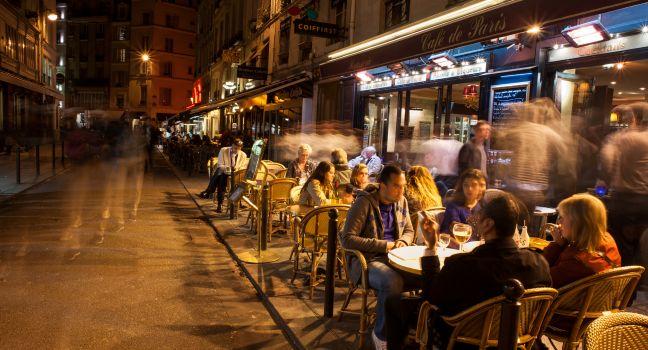
258 Best Sights in France

Background Illustration for Sights

We've compiled the best of the best in France - browse our top choices for the top things to see or do during your stay.

Jardins de Salagon and Priory

Fodor's Choice

On a site occupied since the Gallo-Roman period, this picturesque 11th- to 12th-century priory—designated a Historic Monument by the French Ministry of Culture—presides over 10 acres of themed gardens. The restored priory, with well-preserved Gothic and Romanesque flourishes, houses an ethnological museum that provides insight into the region's various cultures. The garden preserves 2,500 species of native plants and flowers and is organized into five themed areas—like "simple gardens and village plants," which includes field and cultivated plants that were both consumed and used medicinally. There's also a medieval garden, a fragrant garden with benches under the roses and honeysuckle for maximum sensory effect, and a modern "exotic" garden that crosses five continents.

La Cité de Carcassonne

La Cité Fodor's Choice

La Cité de Carcassonne is the original fortified part of the town, often first glimpsed as a fairy-tale-like castle floating on a distant hilltop when approaching by car. Legend has it that Charlemagne laid siege to the original settlement here early in the 9th century, only to be outdone by one Dame Carcas—a clever woman who boldly fed the last of the city's wheat to a pig in full view of the would-be conqueror. Thinking this indicated endless food supplies (and an endless siege), Charlemagne promptly decamped, and the exuberant townsfolk named their city after her. During the 13th century, Louis IX (St-Louis) and his son Philip the Fair strengthened Carcassonne's fortifications—so much so that the town came to be considered inviolable by marauding armies and was duly nicknamed "the virgin of Languedoc."

A town that can never be taken in battle is often abandoned, however, and for centuries thereafter Carcassonne remained under a Sleeping Beauty spell. It was only awakened during the 19th-century craze for chivalry and the Gothic style, when, in 1835, the historic-monument inspector (and poet) Prosper Mérimée arrived. He was so appalled by the dilapidated state of the walls that he commissioned the architect, painter, and historian Viollet-le-Duc (who found his greatest fame restoring Paris's Notre-Dame) to undertake repairs. Today the 1844 renovation is considered almost as much a work of art as the medieval town itself. No matter if La Cité is more Viollet than authentic; it still remains one of the most romantic sights in France.

There’s no mistaking the fact that 21st-century tourism has taken over this UNESCO World Heritage site. La Cité’s streets are lined with souvenir shops, crafts boutiques, restaurants, and tiny "museums" (a Museum of the Inquisition, a School Museum), all out to make a buck and rarely worth that. But you should still plan on spending at least a couple of hours exploring the walls and peering over the battlements across sun-drenched plains toward the distant Pyrénées. Staying overnight within the ancient walls lets you savor the timeless atmosphere after the daytime hordes are gone. There's an annex of the city tourist office at 21 rue Cros Mayrevieille, just inside the Porte Narbonnaise.

La Cité du Vin

Fodor's Choice

The exterior of this contemporary building is inspired by the way wine swirls when it is poured into a glass; inside, you'll find an interactive museum highlighting the world of wine and wine making. Every aspect of the history, culture, and manufacture of wine is explored through a range of interactive exhibits that are explained via an audio guide. The visit concludes with a wine tasting on the panoramic terrace at the top of the building.

Recommended Fodor's Video

La Croisette

Fodor's Choice

Head to this famous waterfront promenade—which runs for 2 km from its western terminus by the Palais des Festivals—and stroll beside the palm trees and flowers and amid the crowds of poseurs (fur coats in tropical weather, mobile phones on Rollerblades, and sunglasses at night). Continue east past the broad expanse of private beaches, glamorous shops, and luxurious hotels—but make sure you are not walking in the bike path or a construction site. “La Croisette Reinvents its Legend” is the city’s slogan for a project to renovate this iconic seaside strip. The multimillion-euro face-lift (due for completion in 2027) will include red pavement—an homage to the red carpet of the Palais des Festivals—as well as new facilities and amenities.

La Filaventure Brun de Vian-Tiran

Fodor's Choice

Through eight generations on the same premises, the Brun de Vian-Tiran family has created France's most beautiful and luxurious woolens from fibers sourced throughout the world, including baby camel, cashmere, merino wool, alpaca, and baby llama. Housed in one of the company's old warehouses, this state-of-the-art museum takes you through the manufacturing process, from fiber to fabric, with interactive exhibits that are fascinating for kids as well as adults. The on-site boutique carries the entire range of luxury bedding and blankets, scarves, slippers, and other items, all of which are usually found only at high-end department stores in Paris.

La Forêt des Cèdres

Fodor's Choice

Created in part to fortify France's supply of cedar and cyprus wood, this magnificent forest, covering hundreds of acres, also provides a cool, quiet place for hiking and picnicking. Information on the forest is available at all of the local tourist offices, and the route to it is well marked from the village of Lacoste. The winding drive provides astounding views of the hilltop villages that dot the countryside.

Le Centquatre-Paris

La Villette Fodor's Choice

Le Centquatre (meaning "104") takes its name from its address in a rough-around-the-edges corner of the 19e arrondissement, near Parc de la Villette. The former site of the city morgue, this soaring art hub is home to an offbeat collection of performance venues, shops, and studios (artists of all genres compete for free studio space, and sometimes you can get a peek of them at work). Contemporary art exhibits, some of which charge a small admission, are presented here, as are all manner of concerts, dance performances, performance art, films, and other events, many of them interactive. On-site you'll also find a restaurant, a café, a bookstore, a vintage shop, and a play area for children. There's much to see and do here for the whole family, so check the website before you visit to confirm what's on.

5 rue Curial, Paris, 75019, France
01–53–35–50–00
Sight Details
Free; prices for exhibits and concerts vary
Closed Mon.

Something incorrect in this review?

Le Jardin Botanique de la Citadelle

Fodor's Choice

The flowering of a 25-year project, this lovely botanical garden is planted on rediscovered 18th-century terraces at the highest point of La Citadelle vineyards, with magnificent views of Ménerbes and the Vaucluse and Ventoux mountains. Stroll its scenic paths to see hundreds of medicinal and aromatic plant species used in traditional medicines for millennia. Afterward, enjoy a tasting at the domaine and entrance to the Musée du Tire-Bouchon, the world's first museum dedicated to the corkscrew.

Les Sites Antiques de Vaison-la-Romaine

Fodor's Choice

Like a miniature Roman Forum, the ancient Quartier de Puymin, part of the largest archaeological site in France, spreads over a field and hillside in the heart of Vaison, visible in passing from the town's streets. Access to a garden, an archaeological museum, and the skeletal ruins of Roman villas below Vaison's ancient theater is via an entry booth across from the tourist office. Although it requires considerable imagination to visualize the structures as they once were, there are some poignant details, such as thresholds that still show the hinge holds for and scrape marks left by swinging doors. 

Closest to the entrance, the foundations of the Maison des Messii (Messii House) indicate that it had a sumptuous design complete with a vast gentleman's library; reception rooms; an atrium with a rain-fed pool; a large kitchen (note the enormous stone vats); and baths with hot, cold, and warm water. To see the accoutrements of everyday Roman life, wander beneath the cypress trees and amid the flowering shrubs of a formal garden to the Musée Archéologique Théo-Desplans. Here, items are displayed by theme: pottery, weapons, gods and goddesses, jewelry, and, of course, sculpture—including a complete figure of the emperor Claudius (1st century) and a strikingly noble nude Hadrian (2nd century).

Cross the park behind the museum to climb into the bleachers of the 1st-century Théâtre Romain, smaller than the one in Orange but also used today for concerts and plays. Across the parking lot is the Quartier de la Villasse, where remnants of a lively market town indicate main-street shops, public gardens, and grand private homes complete with floor mosaics. The most evocative image of all is in the thermes (baths): a neat row of marble-seat toilets lined up over a raked trough that instantly rinsed waste away.

The best way to understand the sites is with a self-guided audio tour (€2, available at the museum). Guided tours led by certified docents are also a possibility, though availability, duration, prices, and themes vary. Check ahead with the museum or the tourist board.

Rue Burrus, Vaison-la-Romaine, 84110, France
04–90–46–51–14-archaeology museum
Sight Details
€9 (all sites; valid for 24 hrs)
Closed Jan.–Feb. 11

Something incorrect in this review?

Mémorial du Débarquement de Provence

Fodor's Choice

On the site of a crucial fort at the summit of Mont Faron, this museum recounts the planning and execution of World War II's Operation Dragoon, a mission meant to resecure the French ports of Marseille and Toulon and cut off German reinforcements. The story unfolds via firsthand accounts in French and English from men and women who fought for the French Resistance, descriptions of life under the occupation, a detailed timeline, and an 11-minute film showing original footage of the August 15, 1944, invasion—and its vast destruction—which was a decisive turning point in the war.

Musée d'Histoire de Marseille

Vieux Port Fodor's Choice

With the Port Antique in front, this modern, open-space museum illuminates Massalia's history with a treasure trove of archaeological finds and miniature models of the city as it appeared in various stages of history. Best by far is the presentation of Marseille's Classical halcyon days. There's a recovered wreck of a Roman cargo boat, its 3rd-century wood amazingly preserved, and the hull of a Greek boat dating from the 4th century BC. The model of the Greek city should be authentic—it's based on an eyewitness description by Aristotle.

Musée de la Chasse et de la Nature

Marais Quarter Fodor's Choice

Mark this down as one of Paris's most distinctive—and fascinating—collections around the theme of "humans and nature." The museum, housed in the gorgeous 17th-century Hôtel de Guénégaud, features lavishly appointed rooms stocked with animal- and hunt-theme art and sculpture by the likes of Rubens and Gentileschi, as well as antique weaponry and taxidermy interspersed with contemporary works by artists such as Jeff Koons, Sophie Calle, and Walton Ford. In a tribute to Art Nouveau, the decor incorporates chandeliers and railings curled like antlers. Older kids will appreciate the jaw-dropping Trophy Room's impressive menagerie of beasts, not to mention the huge polar bear stationed outside. There is a lovely multimedia exhibit on the myth of the unicorn, as well as charming interactive displays on antique weaponry and bird calls. Temporary exhibits take place on the first floor, with works scattered throughout the permanent collection. There's also a spacious café.

Musée de la Romanité

Fodor's Choice

The newest museum in Nîmes is impossible to miss: first for its location, just opposite the Arènes, and second for its exterior featuring a gleaming, translucent facade meant to evoke a Roman toga. Exhibits inside this luminous edifice showcase the city's Roman past with more than 5,000 artifacts, as well as touch screens, interactive displays, and other state-of-the art features that will delight both adults and kids. Highlights include intact mosaics discovered during recent excavations, a model of a domus (Roman house), and a green roof with panoramic views of the amphitheater and all the city's major sites. The sidewalk café is great for a quick lunch or afternoon drink, and the upstairs La Table du 2—which also has impressive views—is a Michelin-starred brasserie that serves lunch and dinner.

Musée du Tire-Bouchon

Fodor's Choice

Don't miss this quirky museum, which has some 1,200 corkscrews—the oldest dating from the 17th century—collected from all over the world. There are also some interesting historical displays on various wine-related subjects.

Musée National de la Marine

Trocadéro Fodor's Choice

Located in the west wing of the Palais de Chaillot and one of five national museums dedicated to all things nautical (other locations are in Brest, Port-Louis, Rochefort, and Toulon), the Paris branch is the country’s foremost treasure trove of art and artifacts documenting maritime development pertinent to France over the centuries. The sparkling new design includes impressive special effects, interactive features, and games for adults and kids. Exhibits highlight a notable collection of models of vessels, from 17th-century flagships to modern warships. Kids can climb a step to get a closer look at a model aircraft carrier or a nuclear submarine cut in half to expose their decks. The main gallery displays several figureheads recovered from sunken ships, including a giant Henry IV, miraculously saved from a shipwreck in 1854 during the Crimean War. An enormous representation of Napoléon, in his favored guise as a Roman emperor, was taken from the prow of the frigate Iéna in 1846. There is also a sinister-looking metal diving suit from 1882 and the menu from a 1935 voyage of the SS Normandie cruise ship. The café-restaurant offers snacks and warm meals along with views of the Eiffel Tower, and the shop stocks original sea-themed artworks, chic clothing, and toys. Free English audioguides are available.

Musée Rodin

Invalides Fodor's Choice

Sculptor Auguste Rodin (1840–1917) briefly made his home and studio in the Hôtel Biron, a magnificent 18th-century mansion that now houses this museum dedicated to his work. He died rich and famous, but many of the works that earned him a place in art history were originally greeted with contempt by the general public, which was unprepared for his powerful brand of sexuality and raw physicality.

Most of Rodin's best-known sculptures are in the gardens. The front one is dominated by The Gates of Hell (circa 1880), which illustrates stories from Dante's Divine Comedy. Rodin worked on the sculpture for more than 30 years, and it served as a "sketch pad" for many of his later works: you can see miniature versions of The Kiss (bottom right), The Thinker (top center), and The Three Shades (top center). The museum also showcases long-neglected models, plasters, and paintings, which offer insight into Rodin’s creative process. Pieces by other artists from his personal collection are on display as well—including paintings by van Gogh, Renoir, and Monet. A room is devoted to works by Camille Claudel (1864–1943), his student and longtime lover, herself a widely acclaimed sculptor. An English audio guide (€6.50) is available for the permanent collection and for temporary exhibitions.  Tickets can be purchased online for priority access. If you wish to linger, L'Augustine café serves meals and snacks indoors or outdoors under the garden's linden trees. The fine museum boutique sells quality gifts and objects d'art, such as reproductions of some of the master's most famous sculptures made from the original molds.

77 rue de Varenne, Paris, 75007, France
01–44–18–61–10
Sight Details
€14 ; €25 combined ticket with Musée d'Orsay
Closed Mon.

Something incorrect in this review?

Navette Maritime

Vieux Port Fodor's Choice

In keeping with the Vieux Port's substantially spiffed-up image, the Marseille regional transportation service now offers efficient public ferry service, with hourly departures from the eastern side to Pointe Rouge (8 am–7 pm), L'Estaque (8:30 am–7:30 pm), and Les Goudes (8:50 am–7:50 pm). The nominal ticket charge (€5, available only on board) is well worth it for the fun and convenience of crossing the port by boat.

Pl. des Huiles on Quai de Rive Neuve side and Hôtel de Ville on Quai du Port, Marseille, 13007, France
Sight Details
€5 (free with métro pass)

Something incorrect in this review?

Palais de Chaillot

Trocadéro Fodor's Choice

Home to four major cultural centers, this honey-colored Art Deco structure on Place du Trocadéro was built in the 1930s to replace a Moorish-style building constructed for the 1878 World's Fair. Its esplanade is also a top draw for camera-toting visitors intent on snapping the perfect shot of the Eiffel Tower. Facing the building from the Place du Trocadéro, to the left are the Cité de l'Architecture et du Patrimoine—billed as the world's largest architectural museum—and the Theâtre National de Chaillot, one of the city's major dance and performance venues, which occasionally stages plays in English. The twin building to the right contains the Musée de l’Homme, a thoroughly modern anthropology museum, and the marvelous Musée National de la Marine, reopened in 2023 after a six-year restoration. Sculptures and fountains adorn the garden leading to the Seine.

Parc Floral de Paris

Bois de Vincennes Fodor's Choice

A lake, a butterfly garden, a bonsai pavillion, and seasonal displays of blooms make the Bois de Vincennes's 70-acre floral park a lovely place to spend a warm afternoon. Kids will also enjoy the extensive playgrounds and the marionette (guignol) theater. A café and a sit-down tea salon make dining easy, but picnicking under the trees is highly recommended, especially when the park hosts jazz and classical concerts (most weekends from June through September). In winter months, some attractions may be closed.

Parc Montsouris

Montparnasse Fodor's Choice

This 38-acre park on the southern edge of the city is one of Paris's best-kept secrets. Home to an enormous variety of flora and fauna, as well as a small rose garden, one can stroll or jog around the hilly footpaths or lounge and picnic on a number of giant lawns. There are free playgrounds for children and a small lake with ducks and other waterfowl. If you're feeling especially energetic and adventurous, cross Boulevard Jourdan and explore the campus of the unique and historic Cité Internationale Universitaire de Paris. The campus is home to a variety of architectural wonders, both modern and historic, which house visiting professors and students from around the world.

Parc Natural Régional du Haut-Languedoc

Fodor's Choice

Stretching from Revel (51 km/32 miles west of Toulouse) to Bedarieux (40 km/25 miles north of Béziers), the Haut Languedoc Regional Natural Park embraces some 3,100 squre km (1,200 square miles) of thickly wooded hills and valleys and is home to diverse wildlife. Its slopes are traversed by Grande Randonnée long-distance walking trails.

Petit Train de la Rhune

Fodor's Choice

Not much on the Petit Train has changed since its inaugural voyage to the peak of La Rhune on June 30, 1924. Today's passengers are still enthralled by the incredible views of the Bay of Biscay and the grassy Basque farmlands below as they ascend—at the less-than-dizzying speed of 8 kph (5 mph)—in the original varnished cars made of pine and chestnut from Pyrenean forests. This high-climbing cogwheel train (one of only three in France) departs from Col de St-Ignace, 3½ km (2¼ miles) west of Sare.

Plage Beau-Rivage

Fodor's Choice

This public city center beach, located between Plage du Veillat and the port of Santa Lucia, is divided into two areas: the sandy Handiplage and a large-pebble stretch. There's a beautiful promenade, as well as park with a playground and minigolf. You can't rent a lounger here, though. Amenities: lifeguards; showers; toilets. Best for: sunset; swimming; walking.

120 bd. Raymond Poincaré, St-Raphaël, 83700, France

Something incorrect in this review?

Plage de la Buse

Fodor's Choice

The entirely public Plage de la Buse is a wonderfully small, fine-pebble strand, with zero star-chasers and strutting high heels. It's protected from the elements by the curved south-facing wall of a huge villa (whose gardens add a lovely tropical feel), making it ideal for novice swimmers. Access is down 50 steps from the Cap-Martin train station (where there are a few parking places) or Le Corbusier trail, but it’s completely BYO: towel, umbrella, and drinks or snacks. There's no bathroom, but the tiny and wonderful Le Cabanon restaurant serves lunch and dinner. Amenities: showers. Best for: solitude; swimming. 

Sentier du Corbusier, Roquebrune-Cap-Martin, 06190, France

Something incorrect in this review?

Plage de la Salis

Fodor's Choice

Stretching from the Antibes Sailing Club to Cap d’Antibes, this public beach has soft white sand and, like it's neighbor, Plage du Ponteil, lovely views. Popular in summer for volleyball, music, and picnics, it also offers facilities for those with mobility challenges. Busy yet charming, it's a favorite with locals and visitors year-round. In winter, kids find it fun to make huts and tipis out of the driftwood that, along with seaweed, washes ashore. Amenities: lifeguards (in summer); toilets; showers; parking (fee); food and drink; water sports. Best for: swimming; walking; sunrise. 

Bd. James Wyllie, Antibes, France

Something incorrect in this review?

Plage du Ponteil

Fodor's Choice

Antibes locals love this beach for its soft sand, beautiful views back onto the Old Town and the Alps, and lively atmosphere. Although it's mostly public, it's also home to the Royal Beach club (open late April–September). Summer brings crowds, so arrive early to claim a spot. Accessible for all, it provides ramps, a water mat for wheelchair users, showers, and toilets. Shaded benches along the promenade make it a perfect year-round spot for seaside walks and people-watching. Amenities: food and drink; lifeguards (in summer); showers; toilets; parking (fee); water sports. Best for: swimming; walking.

8 bd. James Wyllie, Antibes, 06600, France

Something incorrect in this review?

Pont du Gard

Fodor's Choice

The ancient Roman aqueduct is shockingly noble in its symmetry, and its strong arches are a testimony to engineering concepts that were relatively new in the 1st century AD, when the structure was built under Emperor Claudius. Today, the surrounding nature is unsullied, with the Gardon River flowing through a rocky gorge unperturbed by the work of master engineering that straddles it. In fact, one of the preferred ways of viewing the bridge is via canoe or kayak, which are for rent upstream.

You can approach the aqueduct from either side of the Gardon River. If you choose the south side (Rive Droite), the walk to the pont (bridge) is shorter and the views arguably better. Although the spectacular walkway along the top of the aqueduct is now off-limits, the sight of the bridge is still breathtaking. The nearby Espaces Culturels details the rich history of the bridge—and Roman France at the time—and includes an interactive area for kids.

400 rte. du Pont du Gard, Vers-Pont-du-Gard, 84230, France
04–66–37–50–99
Sight Details
Guided tour €15

Something incorrect in this review?

Port de Crouton Plage

Fodor's Choice

Also known as Plage des Pêcheurs, this small strip of fine white sand is located between the ports of La Gallice and Le Crouton, sheltered by stone jetties on either side. The public stretch next to Cap d'Antibes Beach Hotel boasts shallows that slope very gently, making it ideal for kids. It's on a protected bay, so there are no waves, just plenty of shallow water that's bathwater-warm in high summer. Few foreign visitors come here, so it offers a real plage à la française experience. Amenities: parking (fee); showers; toilets. Best for: snorkeling; solitude.

Bd. Marechal Juin, Juan-les-Pins, 06160, France

Something incorrect in this review?

Rocher des Doms

Fodor's Choice

Set on a bluff above town, this lush hilltop garden has grand Mediterranean pines, a man-made lake (complete with camera-ready swans), plus glorious views of the palace, the rooftops of Old Avignon, the Pont St-Bénézet, and formidable Villeneuve across the Rhône. On the horizon loom Mont Ventoux, the Luberon, and Les Alpilles. The garden has lots of history as well: often called the "cradle of Avignon," its rocky grottoes were among the first human habitations in the area.

Carrefour de Buci

St-Germain-des-Prés
Carrefour de Buci
© Ross Brinkerhoff / Fodor’s Travel

A short walk from the neighborhood's namesake St-Germain church, this lively crossroads (carrefour means "intersection") was once a notorious Rive Gauche landmark. During the French Revolution, the army enrolled its first volunteers here. It was also here that thousands of royalists and priests lost their heads during the 10-month wave of public executions known as the Reign of Terror. There's certainly nothing sinister about the area today, though: popular outdoor cafés brim with tourists and locals alike, and colorful coffee-table books are sold alongside take-out ice cream and other gourmet treats. Devotees of the superb, traditional bakery Carton ( 6 rue de Buci) line up for fresh breads and pastries (try the pain aux raisins, tuiles cookies, and tarte au citron).

Intersection of Rues Mazarine, Dauphine, and de Buci, Paris, France

Something incorrect in this review?