134 Best Sights in France

Background Illustration for Sights

We've compiled the best of the best in France - browse our top choices for the top things to see or do during your stay.

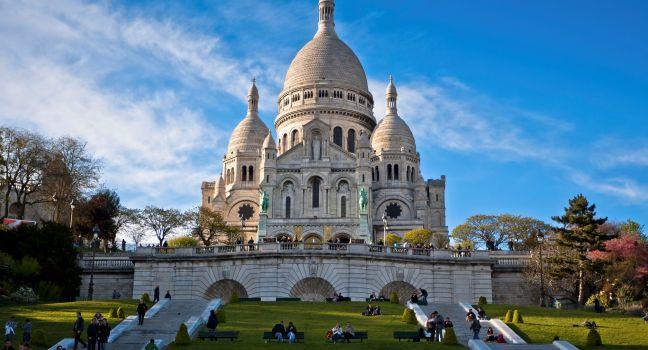
Basilique du Sacré-Coeur

Montmartre Fodor's Choice
The famous basilica of Sacre-Coeur in Montmartre, Paris.
Sergey Kelin / Shutterstock

It's hard not to feel as though you're ascending to heaven when you visit Sacred Heart Basilica, the white castle in the sky, perched atop Montmartre. The French government commissioned it in 1873 to symbolize the return of self-confidence after the devastating years of the Commune and Franco-Prussian War, and architect Paul Abadie employed elements from Romanesque and Byzantine styles when designing it—a mélange many critics dismissed as gaudy. Construction lasted until World War I, and the church was finally consecrated in 1919. Many people now come to Sacré-Coeur to admire the superlative view from the top of its 271-foot-high dome. But if you opt to skip the climb up the spiral staircase, the view from the front steps is still ample compensation for the trip.

Inside, expect another visual treat—namely the massive golden mosaic set high above the choir. Created in 1922 by Luc-Olivier Merson, Christ in Majesty depicts Christ with a golden heart and outstretched arms, surrounded by various figures, including the Virgin Mary and Joan of Arc. It remains one of the largest mosaics of its kind. In the basilica's 262-foot-high campanile hangs La Savoyarde, one of the world's heaviest bells, weighing about 19 tons.

The best time to visit Sacré-Coeur is early morning or early evening, and preferably not on a Sunday, when the crowds are thick. If you're coming to worship, there are daily Masses. To avoid the steps, take the funicular, which costs one métro ticket each way.

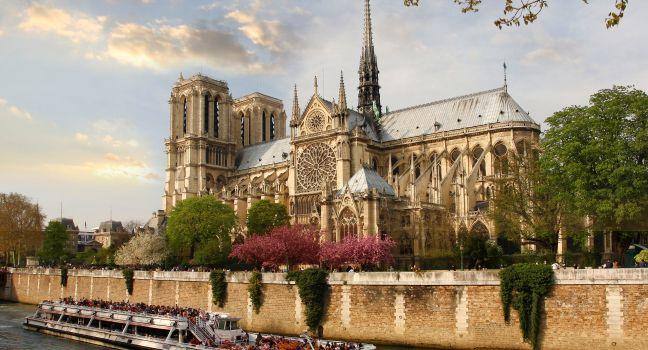
Cathédrale Notre-Dame de Paris

Ile de la Cité Fodor's Choice
Paris, Notre Dame  with boat on Seine, France.
Samot / Shutterstock

Looming above Place du Parvis, this Gothic sanctuary is the symbolic heart of Paris and, for many, of France itself. After a five-year rebuild following the 2019 fire that nearly destroyed it, the cathedral reopened to rapturous reviews in December 2024. Newly luminous and awash in color, the monument enthralls more than ever. And its history remains unchanged: Napoléon was crowned here, and kings and queens exchanged marriage vows before its altar.

Begun in 1163, completed in 1345, badly damaged during the Revolution, and restored in the 19th century by Eugène Viollet-le-Duc, Notre-Dame may not be the country’s oldest or largest cathedral, but in beauty and architectural harmony it has few peers. The front facade has three main entrances: the Portal of the Virgin (left); the Portal of the Last Judgment (center); and the Portal of St. Anne (right). As you enter the nave, the faith of the early builders permeates the interior: the glow of the windows contrasts with the exterior’s triumphant glory. Look down the nave to the transepts—the arms of the church—where, at the south entrance to the choir, you'll glimpse the haunting 12th-century statue of Notre-Dame de Paris, Our Lady of Paris, for whom the cathedral is named. On the choir’s south side is the Treasury, with its small collection of religious artifacts. On the north side is the north rose window, one of the cathedral's original stained-glass panels; at the center is an image of Mary holding a young Jesus.

The best time to visit is early morning, when the cathedral is brightest and least crowded. Guides are available at the entrance (€10); guided tours in English are also available (check the website for specific times). A separate entrance, to the left of the front facade, provides access to the towers via 422 stone steps. These wind up to the bell tolled by the fictional Quasimodo in Victor Hugo's 1831 Notre-Dame de Paris. The famed gargoyles (technically chimeras since they lack functioning waterspouts) were 19th-century additions.

It is obligatory to reserve a tower visit online; lines to climb the tower are shortest on weekday mornings. Down the stairs in front of the cathedral is the Crypte Archéologique, an archaeological museum offering a fascinating subterranean view of this area from the 1st century, when Paris was a Roman city called Lutetia, through medieval times. By day, the most tranquil place to appreciate the cathedral's architectural elements is Square Jean-XXIII, the lovely garden behind the cathedral. By night, Seine boat rides promise stellar views.

6 parvis Notre-Dame–Pl. Jean-Paul II, Paris, 75004, France
01–42–34–56–10
Sight Details
Cathedral free; crypt €9; treasury €10
Crypt closed Mon.

Something incorrect in this review?

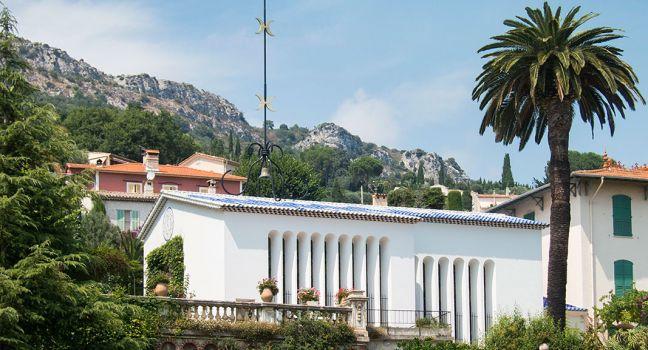
Chapelle du Rosaire

Fodor's Choice
chapelle du rosaire
chapelle du rosaire by Fernando Stankuns

On the outskirts of "new" Vence, toward St-Jeannet, is the Chapelle du Rosaire, better known as the Matisse Chapel. The artist decorated it with beguiling simplicity and clarity between 1947 and 1951 as his gift to nuns who had nursed him through illness. It reflects the reductive art style of the era: walls, floor, and ceiling are gleaming white, and the small stained-glass windows are cool greens and blues. "Despite its imperfections I think it is my masterpiece . . . the result of a lifetime devoted to the search for truth," wrote Matisse, who designed and dedicated the chapel when he was in his 80s and nearly blind.

466 av. Henri-Matisse, Vence, 06140, France
04–93–58–03–26
Sight Details
€7
Closed Sun., Mon., and mid-Nov.–mid-Dec.

Something incorrect in this review?

Recommended Fodor's Video

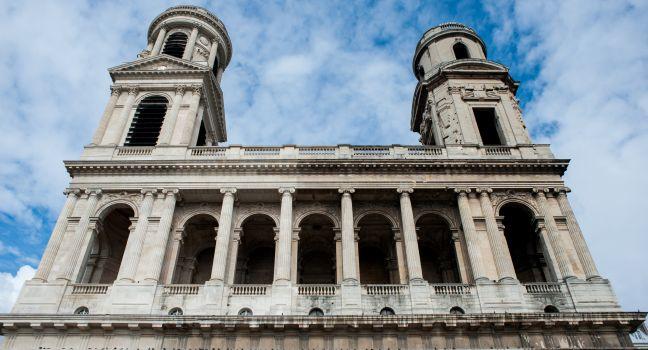
Église St-Sulpice

St-Germain-des-Prés Fodor's Choice
Eglise Saint-Sulpice
© Ross Brinkerhoff / Fodor’s Travel

Dubbed the Cathedral of the Rive Gauche, this enormous 17th-century Baroque church has entertained some unlikely christenings—among them those of the Marquis de Sade and Charles Baudelaire—as well as the nuptials of novelist Victor Hugo. More recently, the church played a supporting role in the best-selling novel The Da Vinci Code, and it now draws scores of tourists to its obelisk (part of a gnomon, a device used to determine exact time and the equinoxes, built in the 1730s). Other notable features include the exterior’s asymmetrical towers and two magnificent Delacroix frescoes, which can be seen in a chapel to the right of the entrance. In the square just in front, view Visconti’s magnificent 19th-century fountain—it's especially beautiful at night.

Sainte-Chapelle

Ile de la Cité Fodor's Choice
Stained Glass, Interior, Sainte-Chapelle, Paris, France
© Ross Brinkerhoff / Fodor’s Travel

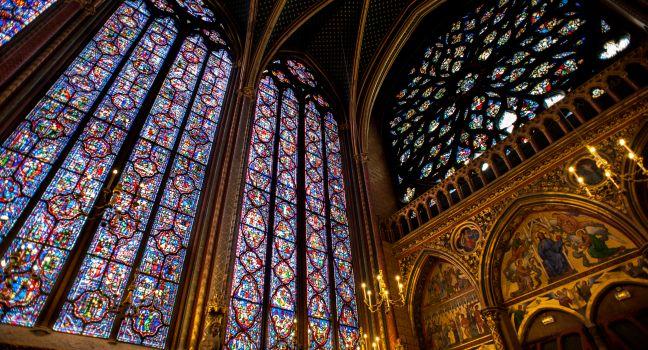
Built by the obsessively pious Louis IX (1214–70), this Gothic jewel is home to the oldest stained-glass windows in Paris. The chapel was constructed over seven years, at phenomenal expense, to house the king's collection of relics acquired from the impoverished emperor of Constantinople. These included Christ's crown of thorns, fragments of the Cross, and drops of Christ's blood—though even in Louis's time these were considered of questionable authenticity.

The narrow spiral staircase by the entrance takes you to the upper chapel where the famed beauty of Sainte-Chapelle comes alive: 6,458 square feet of stained glass are delicately supported by painted stonework that seems to disappear in the colorful light streaming through the windows. Deep reds and blues dominate the background, noticeably different from later, lighter medieval styles such as those of Notre-Dame's rose windows.

The chapel is essentially an enormous magic lantern illuminating 1,130 biblical figures. Besides the dazzling glass, observe the detailed carvings on the columns and the statues of the apostles. The lower chapel is gloomy and plain, but take note of the low, vaulted ceiling decorated with fleurs-de-lis and cleverly arranged Ls for "Louis." Audio guides (€3) are available, or you can download a phone app focusing on the church's stained glass windows.

Sunset is the optimal time to see the rose window; however, to avoid waiting in killer lines, plan your visit for a weekday morning, the earlier the better. Come on a sunny day to appreciate the full effect of the light filtering through all that glorious stained glass. You can buy a joint ticket with the Conciergerie: lines are shorter if you purchase it there or online. The chapel makes a divine setting for classical concerts; check the schedule at  www.classictic.com.

4 bd. du Palais, Paris, 75001, France
01–53–40–60–80
Sight Details
€13; €20 with joint ticket to Conciergerie
Reservation required

Something incorrect in this review?

Basilique de St-Denis

Fodor's Choice

Built between 1136 and 1286, St-Denis Basilica is one of the most important Gothic churches in France. It was here, under dynamic prelate Abbé Suger, that Gothic architecture (typified by pointed arches and rib vaults) was said to have made its first appearance. The kings of France soon chose St-Denis as their final resting place, and their richly sculpted tombs—along with what remains of Suger's church—can be seen in the choir area at the east end. The basilica was battered during the Revolution; afterward, however, Louis XVIII reestablished it as the royal burial site by moving the remains of Louis XVI and Marie-Antoinette here to join centuries' worth of monarchical bones. The vast 13th-century nave is a brilliant example of structural logic; its columns, capitals, and vault are a model of architectural harmony. The facade, retaining the rounded arches of the Romanesque that preceded the Gothic period, is set off by a small rose window, reputedly the oldest in France. Check out the extensive archaeological finds, such as a Merovingian queen's grave goods. Occasional guided tours in English are offered (see website for exact times); if you'd rather explore on your own, audioguides are available for €3, as is a free English-language information leaflet.

Basilique Ste-Madeleine

Fodor's Choice

In the 11th and 12th centuries, the celebrated Basilique Ste-Madeleine was one of the focal points of Christendom. Pilgrims poured in to see the relics of St-Mary Magdalene (in the crypt) before setting off on the great trek to the shrine of St-James at Santiago de Compostela, in northwest Spain. Several pivotal church declarations of the Middle Ages were made from here, including St-Bernard's preaching of the Second Crusade (which attracted a huge French following) and Thomas à Becket's excommunication of English king Henry II. By the mid-13th century the authenticity of St-Mary's relics was in doubt; others had been discovered in Provence. The basilica's decline continued until the French Revolution, when the basilica and adjoining monastery buildings were sold by the state. Only the basilica, cloister, and dormitory escaped demolition, and were falling into ruin when ace restorer Viollet-le-Duc, sent by his mentor Prosper Merimée, rode to the rescue in 1840 (he also restored the cathedrals of Laon and Amiens and Paris's Notre-Dame). Guided tours are offered daily in July and August and every Sunday in May, June, September, and October at 2:30 pm.

\n

Today the UNESCO-listed basilica has recaptured much of its glory and is considered to be one of France's most prestigious Romanesque showcases. The exterior tympanum was redone by Viollet-le-Duc (have a look at the eroded original as you exit the cloister), but the narthex (circa 1150) is a Romanesque masterpiece. Note the interwoven zodiac signs and depictions of seasonal crafts along its rim, similar to those at both Troyes and Autun. The pilgrims' route around the building is indicated by the majestic flowers, which metamorphose into full-blown blooms, over the left-hand entrance on the right; an annual procession is still held on July 22. The basilica's exterior is best seen from the leafy terrace to the right of the facade. Opposite, a vast, verdant panorama encompasses vines, lush valleys, and rolling hills. In the foreground is the Flamboyant Gothic spire of St-Père-sous-Vézelay, a tiny village 3 km (2 miles) away.

Cathédrale Notre-Dame

Fodor's Choice

Constructed between 1150 and 1230, the Cathédrale Notre-Dame is a superb example of early Gothic architecture. The light interior gives the impression of order and immense length, and the first flourishing of Gothic design is reflected in the harmony of the four-tier nave: from the bottom up, observe the wide arcades, the double windows of the tribune, the squat windows of the triforium, and, finally, the upper windows of the clerestory. Medieval stained glass includes the rose window dedicated to the liberal arts in the left transept, and the windows in the flat east end, an unusual feature for France although common in England. The majestic towers can be explored during guided visits; these depart from the tourist office, which occupies a 12th-century hospital on the cathedral square.

Pl. du Parvis, Laon, 02000, France
Sight Details
Cathedral guided tours, including towers €7
Closed weekdays during school term

Something incorrect in this review?

Cathédrale Notre-Dame

Fodor's Choice

Dark pink, ornately carved Vosges sandstone covers the facade of this most novel and Germanic of French cathedrals, a triumph of Gothic art begun in 1176. Not content with the outlines of the walls themselves, medieval builders lacily encased them with slender stone shafts. The off-center spire, finished in 1439, looks absurdly fragile as it tapers skyward some 466 feet. You can climb 330 steps to the base of the spire for sweeping views of the city, the Vosges Mountains, and the Black Forest.

The interior presents a stark contrast to the facade: it's older (mostly finished by 1275), and the nave's broad windows emphasize the horizontal rather than the vertical. Note Hans Hammer's ornately sculpted pulpit (1485) and the richly painted 14th- to 15th-century organ loft that rises from pillar to ceiling. The left side of the nave is flanked with richly colored Gothic windows honoring the early leaders of the Holy Roman Empire—Otto I and II and Heinrich I and II. The choir is not ablaze with stained glass but framed by chunky Romanesque masonry. Head to the right transept to admire the Pilier des Anges (Angels' Pillar), an intricate Gothic column dating from around 1230.

Just behind the pillar, the Renaissance machinery of the imposing 16th-century Horloge Astronomique whirs into action daily at 12:30 pm (but the line starts at the south door at 11:45 am) with macabre clockwork figures enacting the story of Christ's Passion. One of the highlights: when the apostles walk past, a likeness of Christ as a rooster crows three times.

Cathédrale Notre-Dame

Fodor's Choice

Worship on the site of the Cathédrale Notre-Dame, better known as Chartres Cathedral, goes back to before the Gallo-Roman period—the crypt contains a well that was the focus of druid ceremonies. In the late 9th century Charles II (aka "the Bald") presented Chartres with what was believed to be the tunic of the Virgin Mary, a precious relic that went on to attract hordes of pilgrims. The current cathedral, the sixth church on the spot, dates mainly to the 12th and 13th centuries and was erected after most of the previous building, dating to the 11th century, burned down in 1194. A well-chronicled outburst of religious fervor followed the discovery that the Virgin Mary's relic had miraculously survived unsinged. Motivated by this “miracle,” princes and paupers, barons and bourgeoisie gave their money and their labor to build the new cathedral. Ladies of the manor came to help monks and peasants on the scaffolding in a tremendous resurgence of religious faith that followed the Second Crusade. Just 25 years were needed for Chartres Cathedral to rise again, and although it remained substantially unchanged for centuries, a 12-year, €20 million renovation that was completed in 2018 restored the cathedral's famously gloomy interiors to their "original" creamy white, sparking a major controversy among those who embraced the dark interiors. As spiritual as Chartres is, the cathedral also had its more earthbound uses. Look closely and you can see that the main nave floor has a subtle slant. It was designed to provide drainage because this part of the church was often used as a "hostel" by thousands of overnighting pilgrims in medieval times. Those who couldn't afford the entire pilgrimage could walk the cathedral's labyrinth, one of the most beautiful and famous in the world; today it's open for visitors every Friday and for a month during Lent (on other days it is covered with chairs).

Though the windows no longer pop from the previously dark interiors, the gemlike richness of the cleaned and restored stained glass, with the famous deep Chartres blue predominating, is still a thrilling experience. The restoration also uncovered some surprising illustrations of rose windows painted high up in the north and south narthex, just inside the cathedral entrance. The Royal Portal is richly sculpted with scenes from the life of Christ—these sculpted figures are among the greatest created during the Middle Ages. The rose window above the main portal dates from the 13th century, and the three windows below it contain some of the finest examples of 12th-century stained-glass artistry in France. The oldest window is arguably the most beautiful: Notre-Dame de la Belle Verrière (Our Lady of the Lovely Window), in the south choir.

After a 23-year closure and seven years of restoration work, the 14th-century Chapelle St-Piat, in the ambulatory's southeast corner, has finally reopened to visitors. True to its original purpose as a place to house priceless relics, the two-floor chapel now exhibits the cathedral's treasures, including sculptures retrieved from the exterior, a 14th-century rood screen, and other ornate liturgical objects. The soaring edifice is notable for its beautiful stained glass windows and recently discovered murals that are the earliest representations of Chartres Cathedral and its medieval traditions. Four splendid contemporary bay windows, designed by the Korean artist Hai Ja, complete the treasures of this gemlike structure. Visitors have access to both floors and gallery spaces in its two turrets.

Though the crypt is off-limits for everyone but religious pilgrims, you can take a 45-minute guided tour of the cathedral rooftops (€7) up a steep flight of rather worn and slippery stairs, booked directly with the cathedral. Vistas of the town from on high are magnificent, as are the up-close-and-personal views of the ancient gargoyles and buttresses.

Cathédrale Notre-Dame d'Amiens

Fodor's Choice

By far the largest church in France, the Cathédrale Notre-Dame d'Amiens could enclose Paris's Notre-Dame twice. It may lack the stained glass of Chartres or the sculpture of Reims, but for architectural harmony, engineering proficiency, and sheer size, it's incomparable. The soaring, asymmetrical facade has a notable Flamboyant Gothic rose window and is brought to life on summer evenings when a sophisticated 45-minute light show re-creates its original color scheme. Inside, there's no stylistic disunity to mar the perspective, creating an overwhelming sensation of pure space. Construction took place between 1220 and 1264, a remarkably short period in cathedral-building terms. One of the highlights of a visit here is hidden from the eye, at least until you lift up some of the 110 choir-stall seats and admire the humorous, skillful misericord seat carvings executed between 1508 and 1518 (access with guide only). Audio guides can be rented from the tourist office. Guided tours can also be arranged by the tourist office; times vary so check the website.

Pl. Notre-Dame, Amiens, 80000, France
03–22–92–03–32-for cathedral
Sight Details
Towers €8, treasury €5, guided tours €10, audio guides €5
Towers closed Tues. Treasury closed Tues. and Sun.

Something incorrect in this review?

Cathédrale Notre-Dame de Reims

Fodor's Choice

Recently restored for its 800th birthday, this magnificent Gothic cathedral provided the setting for the coronations of French kings. The great historical saga began with Clovis, king of the Franks, who was baptized in an early structure on this site at the end of the 5th century; Joan of Arc led her recalcitrant Dauphin here to be crowned King Charles VII; Charles X's coronation, in 1825, was the last. The east-end windows have stained glass by Marc Chagall and Imi Knoebel. Admire the vista toward the west end, with an interplay of narrow pointed arches. The glory of Reims's cathedral is its facade: it's so skillfully proportioned that initially you have little idea of its monumental size. Above the north (left) door hovers the Laughing Angel, a delightful statue whose famous smile threatens to melt into an acid-rain scowl now that pollution has succeeded war as the ravager of the building's fabric. With the exception of the 15th-century towers, most of the original building went up in the 100 years after 1211. You can climb to the top of the towers and peek inside the breathtaking timber-and-concrete roof (reconstructed in the 1920s with Rockefeller money) for €9. A stroll around the outside reinforces the impression of harmony, discipline, and decorative richness. The east end presents an idyllic sight across well-tended lawns.

Pl. du Cardinal-Luçon, Reims, 51100, France
03–26–47–55–34
Sight Details
Free, towers €9
Towers closed Mon. and mid-Nov.–mid-Feb.

Something incorrect in this review?

Cathédrale St-Étienne

Fodor's Choice

Historically linked more with Paris than Burgundy, Sens was the country’s ecclesiastical center for centuries. Today it's still dominated by Cathédrale St-Étienne, once the French sanctuary for Thomas à Becket and a model for England's Canterbury Cathedral. You can see the 240-foot south tower from miles away. As you draw near, the pompous 19th-century buildings lining the town's narrow main street—notably the meringue-like Hôtel de Ville—can give you a false impression; in fact, the streets leading off it near the cathedral (notably Rue Abelard and Rue Jean-Cousin) are full of medieval half-timber houses. On Monday the cathedral square is crowded with merchants' stalls, and the beautiful late-19th-century market hall—a distant cousin of Baltard's former iron-and-glass Halles in Paris—hums with people buying meat and produce. A smaller market is held on Friday morning.

Begun around 1130, the cathedral once had two towers: one was topped in 1532 by an elegant though somewhat incongruous Renaissance campanile that contained two monster bells; the other was taken down in the 19th century. Note the trefoil arches decorating the exterior of the remaining tower. The gallery, with statues of former archbishops of Sens, is a 19th-century addition, but the statue of St. Stephen (aka St-Étienne) between the doors of the central portal, is thought to date to late in the 12th century. The vast, harmonious interior is justly renowned for its stained-glass windows: the oldest (circa 1200) are in the north transept and include the stories of the Good Samaritan and the Prodigal Son; those in the south transept were manufactured in 1500 in Troyes and include a much-admired Tree of Jesse. Stained glass windows in the north of the chancel retrace the story of Thomas à Becket: Becket fled to Sens from England to escape the wrath of Henry II before returning to his cathedral in Canterbury, where he was murdered in 1170. Below the window—which shows him embarking on his journey in a boat, and also at the moment of his death—is a medieval statue of an archbishop said to have come from the site of Becket's home in Sens. Becket's aube (vestment) is displayed in the annex to the Palais Synodal.

Pl. de la République, Sens, 89100, France
03–86–65–06–57

Something incorrect in this review?

Cathédrale St-Étienne

Fodor's Choice

Dominating the 18th-century Place d’Armes, this Gothic masterpiece rises almost 300 feet above the city, its grandeur amplified by soaring flying buttresses, menacing gargoyles, and elaborate stone carvings on its two portals. The slightly grimy interior only serves to accentuate the beauty of its 70,000 square feet of stained glass windows, dappling colored light inside the nave and earning the cathedral the moniker of “God’s Lantern.” In the ambulatory, Chagall’s 1960 stained glass depicts Old Testament scenes in a flurry of blues and reds, while an illuminating yellow dominates his north transept take on the Garden of Eden.

Cathédrale St-Pierre

Fodor's Choice

Soaring above the town center is the tallest cathedral in France: the Cathédrale St-Pierre. You may have an attack of vertigo just gazing up at its vaults, 153 feet above the ground. Despite its grandeur, the cathedral has a shaky past. The choir collapsed in 1284, shortly after completion, and was rebuilt with extra pillars. This engineering fiasco, paid for by the riches of Beauvais's wool industry, proved so costly that the transept was not attempted until the 16th century. It was worth the wait: an outstanding example of Flamboyant Gothic, with ornate rose windows flanked by pinnacles and turrets. However, a megalomaniacal 450-foot spire erected at the same time came crashing down after just four years, and Beauvais's dream of having the largest church in Christendom vanished forever. Now the cathedral is starting to lean, and cracks have appeared in the choir vaults because of shifting water levels in the soil. No such problems bedevil the Basse Oeuvre (lower edifice; closed to the public), which juts out impertinently where the nave should have been; it has been there for 1,000 years. Fittingly donated to the cathedral by the canon Étienne Musique, the oldest surviving chiming clock in the world—a 1302 model with a 15th-century painted wooden face and most of its original clockwork—is built into the wall of the cathedral. Perhaps Auguste Vérité drew his inspiration from this humbler timepiece when, in 1868, he made a gift to his hometown of the gilded, templelike astrological clock (€5; displays at 10:30, 11:30, 2:30, 3:30, and 4:30 with additional displays at 12:30 and 1:30 from April to September), which features animated religious figurines representing the Last Judgment.

Église St-Joseph

Fodor's Choice

Perhaps the most impressive Modernist church in France, the Église St-Joseph was designed by Auguste Perret in the 1950s. The 350-foot tower powers into the sky like a fat rocket, and the interior is just as thrilling. No frills here: the 270-foot octagonal lantern soars above the crossing, filled almost to the top with abstract stained glass that hurls colored light over the bare concrete walls.

Ensemble Conventuel des Jacobins

Fodor's Choice

An extraordinary structure built in the 1230s for the Dominicans (renamed Jacobins in 1216 for their Parisian base in Rue St-Jacques), this church is dominated by a single row of seven columns running the length of the nave. The easternmost column (on the far right) is one of the finest examples of palm-tree vaulting ever erected, the much-celebrated Palmier des Jacobins, a major masterpiece of Gothic art. Fanning out overhead, its 22 ribs support the entire apse. The original refectory site is used for temporary art exhibitions, dance performances, and community events. The cloister is one of the city's aesthetic and acoustical gems, and in summer hosts piano and early music concerts.

Pl. des Jacobins, Toulouse, 31000, France
05–61–22–23–82
Sight Details
Church free; cloister €5 June–Sept., €4 Oct.–May
Closed Mon.

Something incorrect in this review?

St-Pierre

Fodor's Choice

Like Chartres Cathedral, the church of Saint-Pierre, near the Eure River, is considered a masterpiece of Gothic architecture, and its magnificent 13th- and 14th-century windows are from a medieval period not represented at the cathedral. The oldest stained glass here, portraying Old Testament worthies, is to the right of the choir and dates to the late 13th century.

Rue St-Pierre, Chartres, 28000, France

Something incorrect in this review?

Abbaye de St-Germain

North of Place des Cordeliers is the former Abbaye de St-Germain, which stands parallel to the cathedral some 300 yards away. The church's earliest aboveground section is the 12th-century Romanesque bell tower, but the extensive underground crypt was inaugurated by Charles the Bald in 859 and contains its original Carolingian frescoes and Ionic capitals. It's the only monument of its kind in Europe—a layout retaining the plan of the long-gone church built above it—and was a place of pilgrimage until Huguenots burned the remains of its namesake, a Gallo-Roman governor and bishop of Auxerre, in the 16th century. 

Pl. St-Germain, Auxerre, 89000, France
03–86–18–02–90
Sight Details
Crypt €8
Closed Jan. and Tues. in Nov.–Mar.

Something incorrect in this review?

Abbaye St-Victor

Rive Neuve

Founded in the 4th century by St-Cassien, who sailed into Marseille full of fresh ideas on monasticism that he acquired in Palestine and Egypt, this church grew to formidable proportions. With a Romanesque design, the structure would be as much at home in the Middle East as its founder was. The crypt, St-Cassien's original, is preserved beneath the medieval church, and in the evocative nooks and crannies you can find the 5th-century sarcophagus that allegedly holds the martyr's remains. Upstairs, a reliquary contains what's left of St-Victor, who was ground to death between millstones, probably by Romans. There's also a passage into tiny catacombs where early Christians worshipped St-Lazarus and Mary Magdalene, said to have washed ashore at Stes-Maries-de-la-Mer, in the Camargue.

3 rue de l'Abbaye, Marseille, 13007, France
04–96–11–22–60

Something incorrect in this review?

American Church

Eiffel Tower

Not to be confused with the American Cathedral across the river at 23 avenue George V, this pretty, neo-Gothic, Protestant church was built between 1927 and 1931. It features a pair of Tiffany stained glass windows—a rare find in Europe. Besides ecumenical services, the church hosts architectural tours, free classical and acoustic concerts, and lectures and workshops on well-being and topics of current interest. You can check event listings and download a self-guided PDF tour at the church website.

65 quai d'Orsay, Paris, 75007, France
01–40–62–05–00

Something incorrect in this review?

Basilique de Notre-Dame de l'Épine

Tiny L'Épine is dominated by its twin-tower church, the Flamboyant Gothic Basilique de Notre-Dame de l'Épine. Decorated with a multitude of leering gargoyles, the facade is a magnificent creation of intricate patterns and spires. The interior, conversely, exudes elegance and restraint; note the sculptures depicting the Entombment of Christ and the stone rood screen, carved in the late 15th century.

Rue de l'Église, L'Épine, 51460, France
07–57–40–28–08
Sight Details
Free

Something incorrect in this review?

Basilique Souterraine St-Pie X

Lourdes celebrated the centenary of Bernadette Soubirous's visions by building the world's largest underground church, the Basilique Souterraine St-Pie X, with space for 20,000 people—more than the town's permanent population. The Basilique Supérieure (1871), tall and white, hulks nearby.

97 bd. Rémi Sempé, Lourdes, 65100, France
5–62–42–78–78

Something incorrect in this review?

Basilique St-Andoche

The town's Basilique St-Andoche, one of Burgundy's finest Romanesque churches, is almost as old as the one in Vézelay, though less imposing and much restored. Note the impressive Romanesque nave with 12th-century carved capitals. Inside, there is an exhibition with digital displays and a short film explaining the history of the basilica.

4 rue Savot, Saulieu, 21210, France
03–80–64–07–03
Sight Details
Closed Jan., Feb., Sun. year-round, and Mon. in Nov., Dec., and Mar.

Something incorrect in this review?

Basilique St-Martin

Only two sturdy towers—the Tour Charlemagne and the Tour de l'Horloge (Clock Tower)—remain of the great medieval abbey built over the tomb of St-Martin, the city's 4th-century bishop and patron saint (and credited as the founder of "modern" wine making in France). Most of the abbey, which once dominated the heart of Tours, was razed during the French Revolution. Today the site is occupied by the bombastic neo-Byzantine Basilique St-Martin, which was completed in 1924. There's a shrine to St-Martin in the crypt.

Basilique St-Michel

This majestic basilica dominates the skyline of Menton. Beyond the beautifully proportioned facade—a 19th-century addition—the richly frescoed nave and chapels contain several works by Genovese artists plus a splendid 17th-century organ. Volunteers man the doors here, so you may have to wait for the church to open (usually from 3 pm to 5 pm) before visiting. The parvis is the site of concerts during the August Menton music festival.

Parvis St-Michel, 22 rue St-Michel, Menton, 06500, France

Something incorrect in this review?

Basilique St-Remi

This 11th-century Romanesque-Gothic basilica honors the 5th-century saint who gave his name to the city and baptized Clovis (the first king of France) in 498. The interior seems to stretch into the endless distance, an impression created by its relative murk and lowness. The airy four-story Gothic choir contains some fine stained glass from the 12th century. The holy phial used in the crowning of monarchs was formerly kept alongside the basilica in the Abbaye Royale; today that building houses an interesting museum that highlights the history of the abbey, the Gallo-Roman history of the town, and the military history of the region.

Pl. Chanoine Ladame, Reims, 51100, France
03–26–35–36–90
Sight Details
Museum €5.50
Museum closed Mon.

Something incorrect in this review?

Basilique St-Sauveur

Embracing a range of architectural styles, Basilique St-Sauveur has a Romanesque south front, a Flamboyant Gothic facade, and Renaissance side chapels. The old trees in the Jardin Anglais (English Garden) behind the church provide a nice frame; more spectacular views can be found at the bottom of the garden, which looks down the plummeting Rance Valley to the river below.

Pl. St-Sauveur, Dinan, 22100, France
02–96–39–06–67

Something incorrect in this review?

Basilique St-Urbain

Started in 1261 by Pope Urban IV (a native son) and eventually consecrated in 1389, St-Urbain is one of the most remarkable churches in France—a perfect culmination of the Gothic quest to replace stone walls with stained glass. Its narrow porch frames a 13th-century Last Judgment tympanum, whose highly worked elements include a frieze of the dead rising out of their coffins (witness the grimacing skeleton). Look for a carved crayfish on one of the statue's niches (a testament to the local river culture). Inside, a chapel on the south side houses the Vièrge au Raisin (Virgin with Grapes), clutching Jesus with one hand and a bunch of Champagne grapes in the other.

Pl. Vernier, Troyes, 10000, France
03–25–73–37–13

Something incorrect in this review?

Cathédral St-Gatien

Built between 1239 and 1484, this noted cathedral, one of the greatest churches of the Loire Valley, reveals a mixture of architectural styles. The richly sculpted stonework of its majestic two-tower facade betrays the Renaissance influence on local château-trained craftsmen. The stained glass dates from the 13th century (if you have binoculars, bring them). Also take a look at both the little tomb with kneeling angels, built in memory of Charles VIII and Anne of Brittany's two children, and the Cloître de La Psalette (Psalm Cloister), on the south side of the cathedral, where the canons of St-Gatien created some of the most beautiful illuminated manuscripts in medieval Europe.

Rue Lavoisier, Tours, 37000, France
02–47–70–21–00
Sight Details
Psalm Cloister €4

Something incorrect in this review?