Get FREE email communications from Fodor's Travel, covering must-see travel destinations, expert
trip planning advice, and travel inspiration to fuel your passion.
We've compiled the best of the best in Pennsylvania - browse our top choices for the top
things to see or do during your stay.
Sorry! We don't have any recommendations for Pennsylvania right now.
Sights Filter
Boathouse Row
Fairmount Park
Fodor's Choice
Share This
(c) Fairiegoodmother | Dreamstime.com
These architecturally varied, quaint-looking 19th-century buildings on the park's east side—a National Historic Landmark and riverside city icons built in Victorian Gothic, Gothic Revival, and Italianate styles—are home to the rowing clubs that make up the Schuylkill Navy ( boathouserow.org), an association of boating clubs organized in 1858. The clubs host various races, including the Dad Vail Regatta (held in New Jersey in 2025 due to work being done on the Schuylkill River) and the Head of the Schuylkill Regatta. You can see the boathouse up close from the path along Kelly Drive, but the view of the 15 buildings from the west side of the Schuylkill (along MLK Drive) is a cherished Philly favorite, especially at night when they're outlined with 6,400 LED lights upgraded in 2024 to allow for more special effects and colors; white is the classic look. The close-up look Lloyd Hall (1 Boathouse Row), is a public recreation center with a gymnasium, bicycle rentals in season, a café, and restrooms.
City Hall
Center City East
Fodor's Choice
Share This
(c) Chastainben | Dreamstime.com
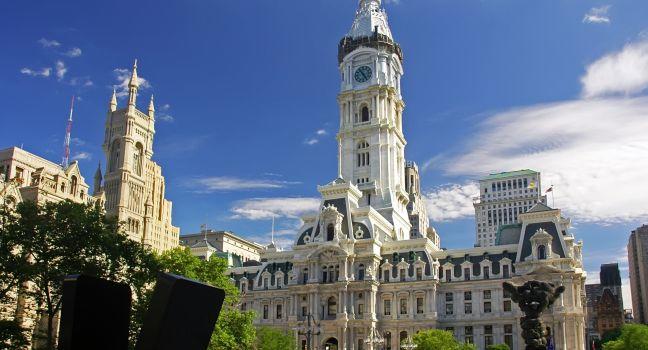
Topped by a 37-foot bronze statue of William Penn, City Hall provides an opportunity to study the trappings of government and get a panoramic view of the city. With close to 700 rooms, it's the largest city hall in the country and the tallest masonry-bearing building in the world: no steel structure supports it. Designed by architect John McArthur Jr., the building took 30 years to build (1871–1901). The result has been called a "Victorian wedding cake of Renaissance styles." Placed about the facade are hundreds of statues by Alexander Milne Calder, who also designed the statue of Penn, a 27-ton cast-iron work that is the largest single piece of sculpture on any building in the world. City Hall is also the center of municipal and state government. Many of the magnificent interiors—splendidly decorated with mahogany paneling, gold-leaf ceilings, and marble pillars—are patterned after the Second Empire salons of part of the Louvre in Paris. On weekday tours you can see the Conversation Hall, the Supreme Court of Pennsylvania, the City Council chambers, and the mayor's reception room. You can attend City Council meetings, held each Thursday morning at 10. To top off your visit, take the elevator from the seventh floor up the tower to the observation deck at the foot of William Penn's statue for a 30-mile view of the city and surroundings. The elevator holds only six people per trip and runs every 15 minutes; the least crowded time is early morning.
Ephrata Cloister
Fodor's Choice
Share This
(c) Leesniderphotoimages | Dreamstime.com
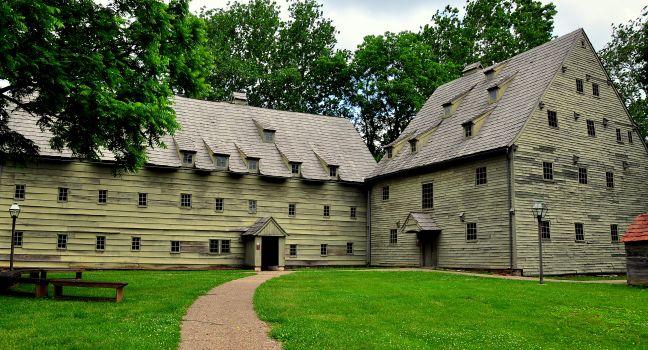
Formerly the home of a unique monastic community, Ephrata Cloister was founded in 1732 by German immigrant Conrad Beissel. He assembled a secluded society of 80 celibate brothers and sisters who lived an austere life of work, study, and prayer. On 250 acres of wilderness, the sect built 30 structures, including a monastery and a printing press. The last celibate member died in 1813, and the members who lived outside the cloister closed the church in 1934. The Commonwealth of Pennsylvania turned the complex into a museum that now offers 75-minute tours of two restored buildings. You can poke through nine others on your own, including the stable, printshop, and crafts shop.
There are few American landmarks as moving as Gettysburg National Military Park, where General Robert E. Lee and his Confederate troops fought and lost to the Union forces of General George Meade from July 1 through 3, 1863. More than 1,300 mournful and inspiring markers and monuments honor the estimated 7,058 soldiers killed in the battle. Thirty-plus miles of marked roads lead through the 6,000-acre park to key battle sites; you can traverse them by driving, bicycling, or hiking yourelf or with a licensed guide, or via guided bus tours. In the first week of July, Civil War reenactors dress in period uniforms and costumes to commemorate the three-day battle.
Independence Hall
Old City
Fodor's Choice
Share This
F11photo | Dreamstime.com
The birthplace of the United States, this redbrick building with its clock tower and steeple is one of the nation's greatest icons. It was constructed in 1732–56 as the Pennsylvania State House. What happened here between 1775 and 1787 changed the course of American history—and the name of the building to Independence Hall. The delegates to the Second Continental Congress met in the Assembly Room in May 1776, united in anger over British troops firing on citizens in Concord, Massachusetts. In this same room, George Washington was appointed commander in chief of the Continental Army, Thomas Jefferson's eloquent Declaration of Independence was signed, and later the Constitution of the United States was adopted. Here the first foreign minister to visit the United States was welcomed; the news of Cornwallis's defeat was announced, signaling the end of the Revolutionary War; and, later, John Adams and Abraham Lincoln lay in state. The memories this building holds linger in the collection of polished muskets, the silver inkstand used by delegates to sign the Declaration of Independence, and the "Rising Sun" chair in which George Washington sat. (After the Constitution was adopted, Benjamin Franklin said about the carving on the chair: "I have the happiness to know that it is a rising and not a setting sun.")
In the East Wing—attached to Independence Hall by a short colonnade—you can embark on free tours that start every 15 to 20 minutes and last 35 minutes. Admission is first-come, first-served; pick up free, timed tickets from the visitor center to avoid waiting in line. The West Wing of Independence Hall contains an exhibit of our nation's founding documents: the final draft of the Constitution, a working copy of the Articles of Confederation, and the first printing of the Declaration of Independence.
In front of Independence Hall, next to the statue of George Washington, note the plaques marking the spots where Abraham Lincoln stood on February 22, 1861, and where John F. Kennedy delivered an address on July 4, 1962. With Independence Hall in front of you and the Liberty Bell behind you, this is a place to stand for a moment and soak up a sense of history. From March through December and on major holidays, free, timed tickets from the Independence Visitor Center are required for entry. Tickets also can be reserved online. For tickets, visit www.recreation.gov/ticket/234639/ticket/90.
Liberty Bell Center
Old City
Fodor's Choice
Share This
drbueller / iStockphoto
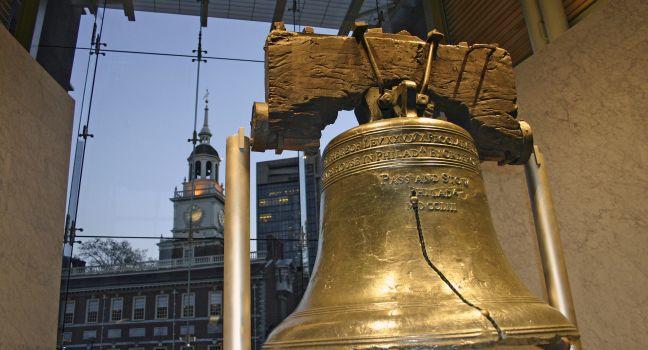
The bell fulfilled the words of its inscription when it rang to "proclaim liberty throughout all the land unto all the inhabitants thereof," beckoning Philadelphians to the State House yard to hear the first reading of the Declaration of Independence. Ordered in 1751 and originally cast in England, it cracked during testing and was recast in Philadelphia by Pass and Stow two years later. To keep it from falling into British hands during the Revolution—they would have melted it down for ammunition—it was spirited away by horse and wagon to Allentown, 60 miles to the north. The Liberty Bell is the subject of much legend; one story says it cracked when tolled at the funeral of Chief Justice John Marshall in 1835. Actually, the bell cracked slowly over a period of years. It was repaired but cracked again in 1846 and was then forever silenced. It was called the State House Bell until the 1830s, when a group of abolitionists adopted it as a symbol of freedom and renamed it the Liberty Bell.
After more than 200 years inside Independence Hall, the bell was moved to a glass-enclosed pavilion for the 1976 Bicentennial, which for many seemed an incongruous setting for such a historic object. In mid-2003 it once again moved to another glass-enclosed pavilion with redbrick accents. This time, great care was taken to improve access and viewing of its former home at Independence Hall, which is seen against the backdrop of the sky—rather than 20th-century buildings. The Liberty Bell complex houses a bell chamber, an interpretive exhibit area with historic displays and memorabilia, and a covered area for waiting in line. The bell is clearly visible from outside, day or night, so if time is an issue (or if the lines are very long), you can see it without entering the building.
During construction for the bell's current home, the foundation and other archaeological remains of the President's House, the home of the nation's chief executives before the capital shifted to Washington, D.C., were discovered, as well as evidence of slaves owned by President George Washington, who lived there during his time in office. A new permanent installation includes a series of video panels focusing on the stories of the nine enslaved African Americans, as well as glass panels through which you can view the remains of the structure's foundation.
National Constitution Center
Historic Area
Fodor's Choice
Share This
(c) Americanspirit | Dreamstime.com
This 160,000-square-foot attraction brings the U.S. Constitution to life with exhibits tracing the development and adoption of the nation's guiding document. The interactive “The Story of We the People” takes you from the American Revolution through the Constitution's ratification to major events in the nation's constitutional history, including present-day events like the inauguration of President Barack Obama, Hurricane Katrina, and the recent economic crisis. Later, you can play the role of a Supreme Court justice deciding an important case, walk among the framers in Signers' Hall, and add your signature to the list of Founding Fathers. The facility has 100-plus exhibits and plays host to many events with major historians, authors, and political figures.
Philadelphia Art Museum
Parkway Museum District
Fodor's Choice
Share This
(c) Sam74100 | Dreamstime.com
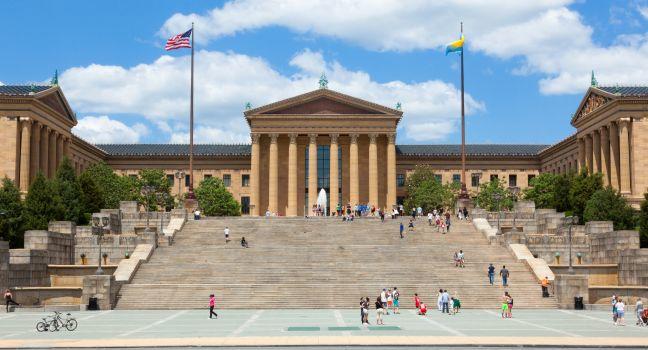
Set on a hill in a majestic 1928 building modeled after Greek temples, the city's premier cultural attraction is one of the country's leading art museums, with permanent collections focused on European, American, and Asian art. The museum’s east entrance is the site of the “Rocky steps,” with people running up the 72 steps immortalized in the movie Rocky and lining up at street level for photos with A. Thomas Schomberg’s Rocky statue. A massive redesign by architect Frank Gehry, completed in 2021, added exhibition space and made navigating the 200-gallery museum more pleasant. Diana, the iconic gilded sculpture of the goddess by Augustus Saint-Gaudens, graces the Great Stair Hall. Expanded first-floor galleries are dedicated to a more inclusive narrative of early American art and to contemporary art. From spring 2026 through summer 2027, the museum and the Pennsylvania Academy of Fine Arts will present A Nation of Artists, a two-museum show that will celebrate American art and include rarely seen works owned by the Middleton family. The European art (1850–1900) collection makes the most of the strong impressionist holdings, and other European collections contain modernist works by artists such as Brancusi, Braque, Matisse, and Picasso. Famous paintings include Van Eyck's St. Francis Receiving the Stigmata, van Gogh's Sunflowers, and Cézanne's The Large Bathers. The museum also has the world's most extensive collection of works by Marcel Duchamp (Nude Descending a Staircase) and fine works by 19th-century Philadelphia artist Thomas Eakins. The Asian art galleries present some spectacular structures moved from around the world, such as a 17th-century Chinese palace hall and a Japanese teahouse. Children like the arms and armor collection, and the 1-acre outdoor sculpture garden has contemporary works. Museum visitors can eat in the café or in the intimate, upscale, Gehry-designed Stir Restaurant (reserve ahead), which focuses on seasonal and regional fare. Friday evenings in the museum feature live music, drinks, and light bites.
Railroad Museum of Pennsylvania
Fodor's Choice
Share This
(c) Leesniderphotoimages | Dreamstime.com
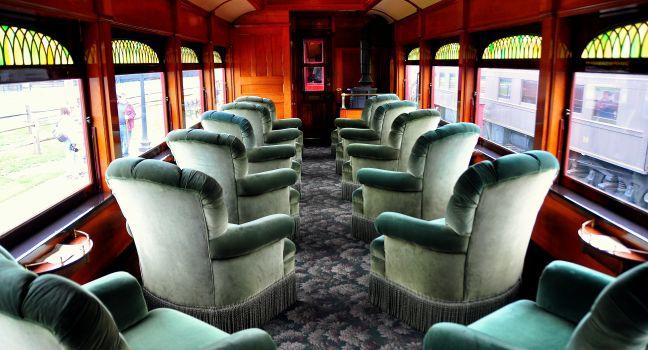
This is an absolute must-see for railroad buffs. In a 100,000-square-foot exhibit hall, the remarkable Smithsonian-affiliated museum showcases a world-class collection of 100-plus vintage locomotives and railroad cars made or operated in Pennsylvania. Exhibits contain a treasure trove of photos, artifacts, and memorabilia documenting the history of railroading in the state.
Reading Terminal Market
Center City East
Fodor's Choice
Share This
Groovysoup | Dreamstime.com
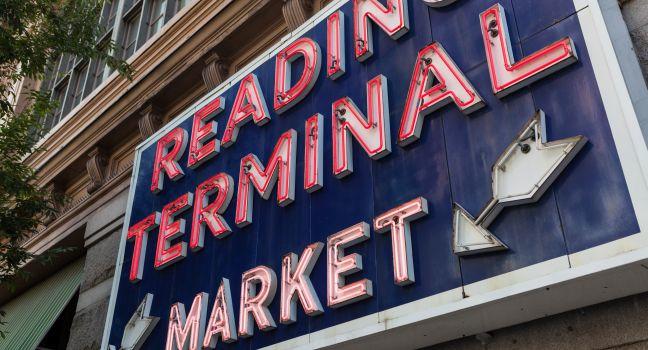
The roots of Reading Terminal Market date to 1892, when the Reading Railroad commissioned a food bazaar to be built in the train shed's cellar as part of its grand expansion plans. Today, the entire building is a National Historic Landmark, and the Reading Railroad train shed is a National Engineering Landmark. The sprawling market—a food heaven for Philadelphians and visitors alike—has more than 80 food stalls and other shops, selling items from hooked rugs and handmade jewelry to South American and African crafts. Try not to miss Miller's Twist for piping hot, freshly rolled soft pretzels; Bassetts Ice Cream, America's oldest ice-cream makers; Metropolitan Bakery, for hearty breads and light pastries; and the Down Home Diner for affordable Southern-style fare; you can also nibble on Greek, Mexican, Thai, and Indian foods. The Pennsylvania Dutch merchants from Lancaster County (closed on Sundays) bring in their specialties like Lebanon bologna, shoofly pie, and scrapple. Many stalls have their own counters with seating; there's also a central eating area. An open kitchen offers regular demonstrations by some of the region's top chefs. The market is open daily 8–6.
Rittenhouse Square
Rittenhouse Square
Fodor's Choice
Share This
Aneta Waberska / Shutterstock
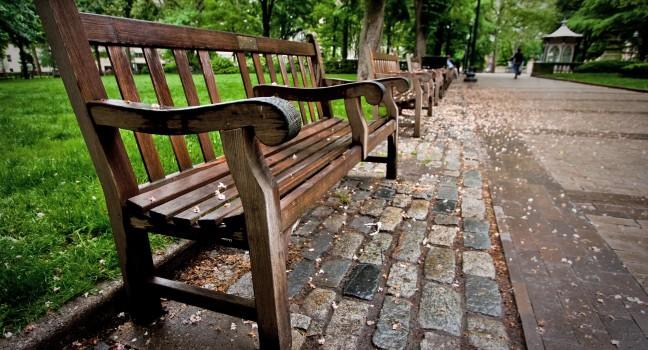
Once grazing ground for cows and sheep, Philadelphia's most elegant square is reminiscent of a Parisian park. One of William Penn's original five city squares, the park was named in 1825 to honor David Rittenhouse, 18th-century astronomer, clockmaker, and the first director of the United States Mint. Many of Philadelphia's celebrities have lived here. Extra paths were made for Dr. William White, a leader in beautifying the square, so he could walk directly from his home to the exclusive Rittenhouse Club across the square and lunch with author Henry James. Until 1950, town houses bordered the square, but they have now been replaced on three sides by luxury apartment buildings and hotels. Some great houses remain, including the former residence of Henry P. McIlhenny on the southwest corner. If you want to join the office workers who have lunch-hour picnics in the park, you can find many eateries along Walnut, Sansom, and Chestnut streets east of the square. Or you can dine alfresco at one of several upscale open-air cafés across from the square on 18th Street between Locust and Walnut. The term "Rittenhouse Row" describes the greater Rittenhouse Square area, bordered by Pine, Market, 21st, and Broad streets.
Valley Forge National Historical Park
Fodor's Choice
Share This
(c) Olivierl | Dreamstime.com
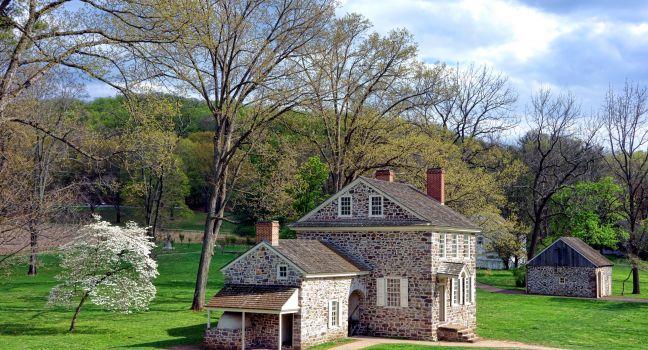
The 3,500-acre park is the location of the 1777–78 winter encampment of General George Washington and the Continental Army, where winter tested and proved the army's perseverance. Begin at the excellent Valley Forge Visitor Center for touring information and to explore displays of historical objects and immersive modern exhibits about the encampment and the men and women of all kinds who spent the winter here. The center also has an area with regional visitor information, an orientation film, and the Encampment Store. Take a nine-stop, 10-mile driving tour (free cell phone guide) or buy the audio guide ($8.95); or take a narrated trolley tour (limited times other than summer; reserve ahead) for $22. Call ahead if you want to hire a private tour guide. Stops include reconstructed log huts of the Muhlenberg Brigade and the National Memorial Arch, which pay tribute to the soldiers, and Washington's headquarters.
\n
In 1777 the army had just lost the nearby battles of Brandywine, White Horse, and Germantown, but Washington and his troops were actually encouraged (although exhausted), because they had fought the British well. While the British occupied Philadelphia, Washington's soldiers endured horrid conditions—blizzards, inadequate food and clothing, and disease. Although no battle was fought at Valley Forge, 2,000 soldiers (of about 12,000) died here. The troops did win the war of will, regaining strength under the leadership of Prussian drillmaster Friedrich von Steuben. In June 1778 Washington led his troops away from Valley Forge in search of the British.
\n
The park contains more than 35 miles of jogging and bicycling paths (bike rentals available in summer; call ahead) and hiking trails, and you can picnic in designated areas. A leisurely visit takes about half a day.
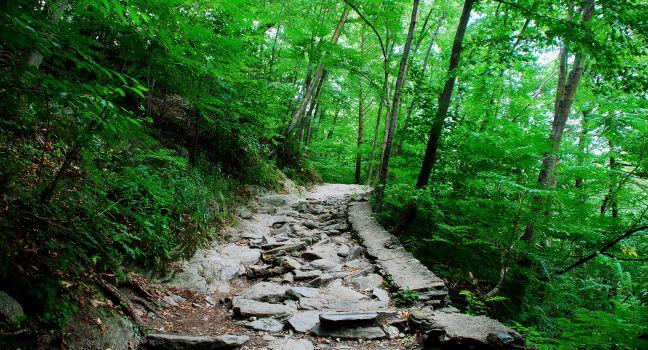
There are many great sections of Fairmount Park, but the 1,800 acres around Valley Green known as Wissahickon Valley Park may be the most stunning. Miles and miles of trails running along and above the river lead to covered bridges, a statue of a Lenape chief (rife with inaccuracies but created with good intentions), caves used by a 17th-century free-love cult, large boulders that drip water, and mallards quacking for bread bits. Forbidden Drive, on which cars are forbidden, runs from Northwestern Avenue (the westernmost part of Chestnut Hill) all the way to Lincoln Drive, where it connects to a bike and walking path that leads one way to Historic Rittenhouse Town (where you can also park and enter) and the other way to Manayunk and Kelly Drive, with additional bike/walking paths that take you to the city or out along the Schuylkill to Valley Forge. There are also many miles of surprisingly difficult mountain-bike trails. The Valley Green Inn is a very attractive restaurant with decent food at Forbidden Drive and Valley Green Road. Other recommended spots to hike to include Hudson and Andorra Meadows, Thomas Mill Covered Bridge, and Toleration Statue.
Italian Market
Bella Vista
Fodor's Choice
Share This
(c) F11photo | Dreamstime.com
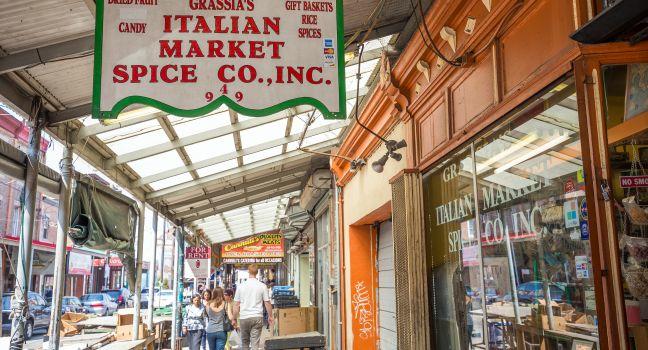
It's more Naples than Philadelphia: vendors crowd the sidewalks and spill out onto the streets; live crabs wait for the kill, while it's too late for the lambs and pigs displayed in butcher-shop windows; fresh, seasonal produce is piled high. The market dates to the turn of the last century, when it was founded by Italian immigrants. You'll find fresh pastas, cheeses, spices, meats, fruits and vegetables, and dry goods and kitchen equipment, as well as junky dollar-stores and funky boutiques. These days the market has become more diversified, with the addition of several Mexican grocers, a natural foods grocer, taquerias, a sandwich shop popular with foodies, and several coffee spots.
1719 Museum & Hans Herr House
Fodor's Choice
Share This
Built in 1719 and listed on the National Register of Historic Places, the Hans Herr House is the oldest building in Lancaster County and the oldest remaining Mennonite meeting house in the Western Hemisphere. It is believed to have been the residence of Herr, a Mennonite bishop, and was where his descendants lived. The main house remained a home until the early 1900s, when it fell into disuse. Never modernized, the house retains most of its original old-country German features, which were preserved when it was restored in the 1970s. An hour-plus tour covers the house and grounds, which include two other Pennsylvania German homes, Colonial-era barns and outbuildings, and a collection of period farm equipment. The site's re-created Native American longhouse, which illuminates the culture of the Conestoga–Susquehannock tribe, is a highlight.
Academy of Music
Center City West
Fodor's Choice
Share This
The only surviving European-style opera house in America is the current home of the Opera Philadelphia and the Pennsylvania Ballet; for the past century, it was home to the Philadelphia Orchestra. Designed by Napoleon Le Brun and Gustav Runge, the 1857 building has a modest exterior; the builders ran out of money and couldn't put marble facing on the brick, as they had intended. The lavish interior, modeled after Milan's La Scala, has elaborate carvings, murals on the ceiling, and a huge Victorian crystal chandelier.
The Andy Warhol Museum
Fodor's Choice
Share This
The devotes seven floors to the work of the native Pittsburgher and pop-art icon. Set inside an old warehouse, the museum includes thousands of works in many media: painting, drawing, photography, sculpture, film, and video. An enormous collection of source material—audiotape interviews with friends and associates, thousands of photographs, books, and magazines—sheds light on the artist, the man, his creative processes, and his legacy. Many of Warhol's seminal works, like his Brillo Box sculptures and Elvis paintings, are on display, as are rotating exhibits and programs.
Barnes Foundation
Parkway Museum District
Fodor's Choice
Share This
One man's collection and now a Parkway treasure, the Barnes Foundation displays some of the most fabled paintings of impressionist, postimpressionist, and modern art—181 Renoirs, 69 Cézannes, 59 Matisses, 46 Picassos, 7 van Goghs, 6 Seurats, and plenty more—in a handsome, modern limestone-and-glass museum. Highlights include Cézanne's The Card Players, Georges Seurat's Models, van Gogh's The Postman (Joseph-Etienne Roulin), Monet's Studio Boat, Matisse's La Danse II triptych mural, Renoir's The Artist's Family, and Picasso's Acrobat and Young Harlequin. The collection was amassed after 1912 in Merion, Pennsylvania, by Dr. Albert C. Barnes (1872–1951), who made his fortune as co-inventor of an antiseptic; he conceived the foundation as an educational institution.
Barnes wanted to help people "see as an artist saw," and to do this he created each gallery wall as an "ensemble" that reflected visual relationships: a Picasso could hang side by side with an African sculpture, and below an Old Master sketch and an iron door hinge. Works have no labels, but a free mobile guide, accessed via smartphone, provides information. Barnes's will decreed that nothing in the displays could be changed, so when the collection moved to the Parkway in 2012, the galleries were re-created within a structure that also has rooms for special exhibitions and a high-ceilinged court with a café. The pretty, pricier Garden Restaurant, with indoor and outdoor (in season) seating, serves delicious modern American fare.
Brandywine Museum of Art
Fodor's Choice
Share This
In a beautifully converted Civil War–era gristmill, the museum presents the art of Chadds Ford native Andrew Wyeth (1917–2009), a major American realist painter, as well as works by his father, N. C. Wyeth, illustrator of many children's classics; and Jamie Wyeth, Andrew's son. The collection also emphasizes still lifes, landscape paintings, and American illustration, with works by such artists as Howard Pyle and Horace Pippin. A glass-wall lobby on each of the three floors overlooks the river and countryside that inspired artists. Seasonal guided tours (advance reservations suggested) of three other buildings enhance the museum experience; children under age seven are not permitted on these. The N. C. Wyeth House and Studio, set on a hill, holds props N. C. used in creating his illustrations. His daughter, Carolyn Wyeth, lived and painted here until 1994. Andrew Wyeth's Studio, where the artist produced many notable works, is on view, too. You can also tour the Kuerner Farm, which Andrew painted in many of his best-known paintings. A shuttle takes you from the museum to the buildings for an hour-long guided tour. Several trails on (or that pass through) the property, a gift shop, and the Millstone Café, all acessible without paying admission, round out the offerings.
\n
Carnegie Museums of Pittsburgh
Fodor's Choice
Share This
The the Museum of Art, the Museum of Natural History, the Music Hall, and the Carnegie Library, are all under one Beaux-Arts roof. Don't miss the 19th-century French and 20th-century American paintings, the Hall of Architecture, the Hall of Mammals, Egyptian collections, and one of the country's oldest dinosaur collections.
The Comcast Center
Center City West
Fodor's Choice
Share This
Now Philadelphia's second-tallest building, the 975-foot Comcast Center is also one of its most eco-friendly: the 58-story design by Robert A. M. Stern Architects uses 40% less water than a traditional office building and also deploys its glass-curtain-wall facade to reduce energy costs significantly. Not to be missed is The Comcast Experience, a 2,000-square-foot high-definition video "wall" in the building's lobby, which also features Humanity in Motion, an installation of 12 life-size figures by Jonathan Borofsky that appear to be striding along girders 110 feet above. The building is also the site of an upscale food court and a seasonal outdoor café.
Delaware Canal State Park
Fodor's Choice
Share This
Completed in 1832 during America's great era of canal building, the 60-mile-long Delaware Canal runs from Bristol north to Easton, and today its towpath draws bicyclists and walkers who appreciate the scenic path with its canal and Delaware River views. It's easy to access the towpath in New Hope. In addition, the restored Locktender's House and Lock 11 (145 S. Main St.fodc.org Closed weekends Nov.–Apr.) explore how locks work and what daily life was like on the canal.
Eastern State Penitentiary Historic Site
Fairmount
Fodor's Choice
Share This
Designed by John Haviland, Eastern State was the most expensive building in America when it opened in 1829; this massive, crumbling structure, now a popular site for visitors, was built in a hub-and-spoke design that became the model for 300 prisons from China to South America. Its system of solitary confinement (to encourage penitence) and firm discipline was ultimately recognized as flawed. Before it closed in 1971, the atmospheric prison was home to Al Capone, Willie Sutton, and Pep the Dog, who allegedly killed the cat that belonged to a governor's wife. The prison's excellent audio tour is included with admission, and thoughtful permanent and changing exhibits, including art installations, examine contemporary issues relating to criminal justice and needed reforms. Some guided tours are available; reserve in advance. The site hosts many events including Halloween Nights, a crowd-favorite selection of haunted house experiences, and has some evening openings in warmer weather. Most areas you visit are unheated, so bundle up well in winter. In summer or fall, stroll through or sit in narrow Corinthian Gardens ( fespp.com), a multiuse garden just outside the prison along Corinthian Avenue.
Elfreth's Alley
Old City
Fodor's Choice
Share This
This alley is the oldest continuously occupied residential street in America, dating back to 1702. Much of Colonial Philadelphia resembled this area, with its cobblestone streets and narrow two- or three-story brick houses. These were modest row homes rented by craftsmen, such as cabinetmakers, silversmiths, pewterers, and those who made their living in the shipping industry. The earliest houses have pent eaves; taller houses, built after the Revolution, show the influence of the Federal style. The Elfreth's Alley Museum includes two homes that have been restored by the Elfreth's Alley Association: No. 124, home of a Windsor chair maker, and No. 126, a Colonial dressmaker's home, with authentic furnishings and a Colonial kitchen. In early June residents celebrate Fete Day, when some of the 30 homes are open to the public for tours hosted by guides in Colonial garb. In December, residents again welcome visitors for “Deck the Alley,” a holiday-themed celebration. Both of these special events require advance tickets. You can stop at the museum and purchase an audio tour or simply stroll down the street anytime.
Fallingwater
Fodor's Choice
Share This
About an hour and a half southeast of Pittsburgh is Frank Lloyd Wright's residential masterwork—a stone, concrete, and glass house dramatically cantilevered over a waterfall. In 1936, Edgar J. Kaufmann—who'd made a fortune as owner of Kaufmann's, Pittsburgh's premier department store—hired Wright to design a weekend retreat for his family on a piece of land in Mill Run. Wright's design incorporated much of what was already on the site, including rocks, trees, and a rushing creek. Battles of will between Kaufmann and Wright over the details of the house design became legendary. Wright wanted to cover the concrete parapets of the house with gold leaf; Kaufmann didn't. Kaufmann wanted a swimming pool on one of the balconies; Wright didn't. And so on. Despite their many differences, they produced an amazing house. The only way to see the house is on a guided tour; children under six cannot tour the house. Reservations are essential for the detailed tour.
Fort Mifflin
South Philadelphia
Fodor's Choice
Share This
There are number of strange, forgotten sights in Philadelphia that in any other city would be a major, if not the major tourist attraction. Fort Mifflin may be the best of these sights in Southwest Philadelphia. The fort is enormous and nearly always empty. Within its walls, spread out on a huge lawn, are cannons and carriages, officers' quarters, soldiers' barracks, an artillery shed, a blacksmith shop, a bomb shelter, and a museum. The exhibits are dated, but the stories are fascinating, from the 40-day battle in 1777 to hold off British ships coming up the Delaware to the use of the site as a prison during the Civil War. The fort was almost totally destroyed during the Revolution, but was rebuilt in 1798 from plans by French architect Pierre L'Enfant, who also designed Washington, D.C. If you wander off beyond the fort and into the other parts of the 49-acre National Historic Landmark, you will find a long embankment of overgrown and unexcavated battlements from the 1800s. From Penn's Landing it's an easy jaunt on I–95.
The Franklin Institute
Parkway Museum District
Fodor's Choice
Share This
Founded in 1824 to honor Benjamin Franklin, this large science museum is as clever as its namesake, thanks to many dazzling hands-on exhibits. Visitors of all ages can experience everything from sitting in the cockpit of a T-33 jet trainer to walking through an enormous artificial heart (15,000 times life-size). To optimize your time, study the daily schedule of science demonstrations and events online before visiting. Also check special exhibitions such as a major traveling show premiering in early 2026 that will look at the creativity of Universal Destinations and Experiences' theme parks. Don't miss the 30-ton white-marble statue of Franklin; you can see the likeness (and an accompanying 3½-minute multimedia presentation) without paying admission. Weekday afternoons are less busy.
The Franklin Air Show celebrates powered flight with the Wright Model B Flyer and has virtual reality flight simulator experiences. Wondrous Space examines everything from gravity and asteroids to space careers and possible life beyond Earth. The SportsZone conveys the physics, physiology, and material science behind your favorite sport by simulating surfing, testing your reaction time, and more. Shows in the Fels Planetarium (one show included in general admission) focus on the stars, space exploration, comets, and other phenomena. Open seasonally, the outdoor Science Park has play equipment and picnic tables.
Gettysburg National Military Park Museum and Visitor Center
Fodor's Choice
Share This
The museum and visitor center is the place to start your exploration of the events and impact of the Battle of Gettysburg. A dozen galleries display a compelling mix of the museum's more than 40,000 artifacts, such as scores of weapons, uniforms, and a wooden desk believed to have been used by General Robert E. Lee. Interactive video and audio displays further illuminate the events, the centerpiece being the 377-foot-long "Battle of Gettysburg" cyclorama, a painting in-the-round depicting Pickett's Charge. Made in 1884, the painting is the largest in North America and one of the last cycloramas in existence, now completely restored. Stand in the center with the lights down while stirring narration and special effects immerse you in the story. It's paired with a documentary film, A New Birth of Freedom, in a 45-minute experience. In the main entry hall the National Park Service has an information desk offering help with everything from battlefield walking tours to free ranger-conducted programs. Private, licensed guides may also be hired at the center. There is a restaurant and a bookstore on-site.
Headhouse Square
Society Hill
Fodor's Choice
Share This
This open-air Colonial marketplace, extending from Pine Street to Lombard Street, is a reminder of the days when people went to central outdoor markets to buy food directly from farmers. It was first established as New Market in 1745, and George Washington was among those who came here to buy butter, eggs, meat, fish, herbs, and vegetables. The Head House, a boxy building with a cupola and weather vane, was built in 1803 as the office and home of the market master, who tested the quality of the goods. Today it's the site of a year-round farmers' market, featuring dozens of vendors selling local, seasonal produce, plus everything from honey and flowers to pickles and pastries. On some summer weekends, the square is also home to an arts-and-crafts fair featuring the work of Delaware Valley artists.
Hersheypark
Fodor's Choice
Share This
Billed as the "Sweetest Place on Earth," Hersheypark offers more than 65 amusement park rides and attractions, including 15 roller coasters; classic rides and kiddie rides; the Boardwalk, a waterpark with a lazy river and wave pool; ZooAmerica, a wildlife park with hundreds of animals; and tons of live entertainment options. Among the park's vintage rides is the Comet, a 1946 wooden roller coaster. Holidays are celebrated with themed decorations and activities.
Subscribe to Newsletter
Sign up for Travel Tips & News
I want emails from Fodor's Travel with travel information and promotions. I can unsubscribe
any time using the unsubscribe link at the end of all emails.
Thank you for your interest!
Look out for our newsletters with travel tips and special offers.
Sign up for Travel Tips & News
By signing up for the
newsletter, I agree to the Privacy Policy. You must check the box to subscribe
Thank you for your interest!
Look out for our newsletters with travel tips and special offers.