


162 Best Sights in Philadelphia, Pennsylvania

Reviews Updated by
Philadelphia continues on its upward trend of development in terms of new construction, a restaurant renaissance, and a cultural revival. The city rests its heels on an impressive past, and thanks to aggressive civic leadership and a close-knit local community, it continues to push toward an exciting future. And in many ways, it’s only started to realize its potential.
Philadelphia is a place of contrasts: Grace Kelly and Rocky Balboa; Vetri—one of the nation's finest Italian haute-cuisine restaurants—and the fast-food heaven of Jim's Steaks; Independence Hall and the modest Mario Lanza Museum; 18th-century national icons with 21st-century–style skyscrapers soaring above them. The Philadelphia Orchestra performs in a stunning concert hall—the focal point of efforts to transform Broad Street into a multicultural Avenue of the Arts. Along the same street, 25,000 Mummers dressed in outrageous sequins and feathers historically have plucked their banjos and strutted their stuff in a parade every New Year's Day. City residents include descendants of the staid Quaker Founding Fathers, the self-possessed socialites of the Main Line, and the unrestrained sports fans, who are as vocal as they are loyal.
Philadelphia has a population of just over 1.5 million, but is known as a city of neighborhoods (some say there are 109). Shoppers haggle over the price of tomatoes in South Philly's Italian Market; families picnic in the parks of Germantown; street vendors hawk soft pretzels in Logan Circle; and all around the city vendors sell local produce and other goods at farmers' markets. There’s also a strong sense of neighborhood loyalty: ask a native where he's from and he'll tell you: Fairmount, Fishtown, or Frankford, rather than Philadelphia.
Today you can find Philadelphia's compact 5-square-mile downtown (William Penn's original city) between the Delaware and the Schuylkill (pronounced skoo-kull) rivers. Thanks to Penn's grid system of streets—laid out in 1681—the downtown area is a breeze to navigate. The traditional heart of the city is Broad and Market streets (Penn's Center Square), where City Hall now stands. Market Street divides the city north and south; 130 South 15th Street, for example, is in the second block south of Market Street. North–south streets are numbered, starting with Front (1st) Street, at the Delaware River, and increasing to the west. Broad Street is the equivalent of 14th Street. The diagonal Benjamin Franklin Parkway breaks the rigid grid pattern by leading from City Hall out of Center City into Fairmount Park, which straddles the Schuylkill River and Wissahickon Creek for 10 miles.
Although Philadelphia is the sixth-largest city in the nation (about 1.5 million people live in the city, more than 6 million in the metropolitan area), it maintains a small-town feel. It's a cosmopolitan, exciting, but not overwhelming city, a town that's easy to explore on foot yet big enough to keep surprising even those most familiar with it.
Boathouse Row

These architecturally varied, quaint-looking 19th-century buildings on the park's east side—a National Historic Landmark and riverside city icons built in Victorian Gothic, Gothic Revival, and Italianate styles—are home to the rowing clubs that make up the Schuylkill Navy ( boathouserow.org), an association of boating clubs organized in 1858. The clubs host various races, including the Dad Vail Regatta (held in New Jersey in 2025 due to work being done on the Schuylkill River) and the Head of the Schuylkill Regatta. You can see the boathouse up close from the path along Kelly Drive, but the view of the 15 buildings from the west side of the Schuylkill (along MLK Drive) is a cherished Philly favorite, especially at night when they're outlined with 6,400 LED lights upgraded in 2024 to allow for more special effects and colors; white is the classic look. The close-up look Lloyd Hall ( 1 Boathouse Row), is a public recreation center with a gymnasium, bicycle rentals in season, a café, and restrooms.
City Hall
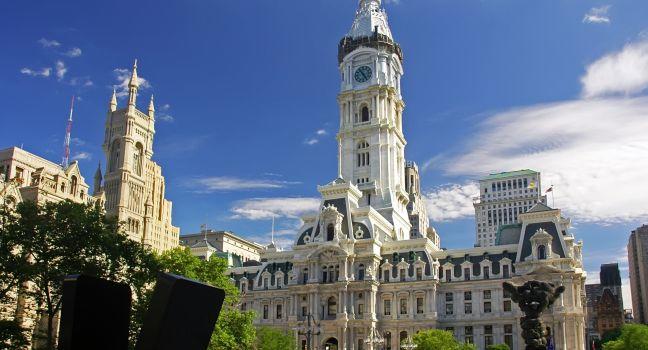
Topped by a 37-foot bronze statue of William Penn, City Hall provides an opportunity to study the trappings of government and get a panoramic view of the city. With close to 700 rooms, it's the largest city hall in the country and the tallest masonry-bearing building in the world: no steel structure supports it. Designed by architect John McArthur Jr., the building took 30 years to build (1871–1901). The result has been called a "Victorian wedding cake of Renaissance styles." Placed about the facade are hundreds of statues by Alexander Milne Calder, who also designed the statue of Penn, a 27-ton cast-iron work that is the largest single piece of sculpture on any building in the world. City Hall is also the center of municipal and state government. Many of the magnificent interiors—splendidly decorated with mahogany paneling, gold-leaf ceilings, and marble pillars—are patterned after the Second Empire salons of part of the Louvre in Paris. On weekday tours you can see the Conversation Hall, the Supreme Court of Pennsylvania, the City Council chambers, and the mayor's reception room. You can attend City Council meetings, held each Thursday morning at 10. To top off your visit, take the elevator from the seventh floor up the tower to the observation deck at the foot of William Penn's statue for a 30-mile view of the city and surroundings. The elevator holds only six people per trip and runs every 15 minutes; the least crowded time is early morning.
Recommended Fodor's Video
Independence Hall

In the East Wing—attached to Independence Hall by a short colonnade—you can embark on free tours that start every 15 to 20 minutes and last 35 minutes. Admission is first-come, first-served; pick up free, timed tickets from the visitor center to avoid waiting in line. The West Wing of Independence Hall contains an exhibit of our nation's founding documents: the final draft of the Constitution, a working copy of the Articles of Confederation, and the first printing of the Declaration of Independence.
In front of Independence Hall, next to the statue of George Washington, note the plaques marking the spots where Abraham Lincoln stood on February 22, 1861, and where John F. Kennedy delivered an address on July 4, 1962. With Independence Hall in front of you and the Liberty Bell behind you, this is a place to stand for a moment and soak up a sense of history. From March through December and on major holidays, free, timed tickets from the Independence Visitor Center are required for entry. Tickets also can be reserved online. For tickets, visit www.recreation.gov/ticket/234639/ticket/90.
Liberty Bell Center
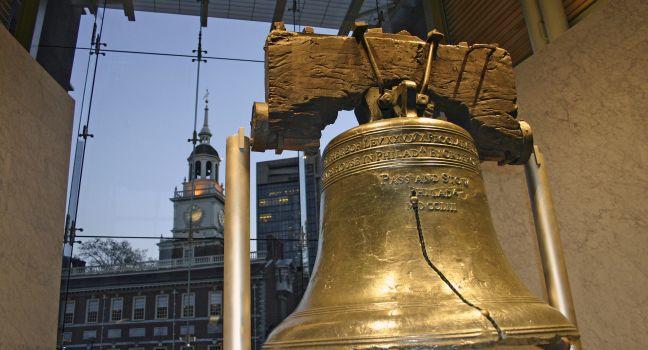
After more than 200 years inside Independence Hall, the bell was moved to a glass-enclosed pavilion for the 1976 Bicentennial, which for many seemed an incongruous setting for such a historic object. In mid-2003 it once again moved to another glass-enclosed pavilion with redbrick accents. This time, great care was taken to improve access and viewing of its former home at Independence Hall, which is seen against the backdrop of the sky—rather than 20th-century buildings. The Liberty Bell complex houses a bell chamber, an interpretive exhibit area with historic displays and memorabilia, and a covered area for waiting in line. The bell is clearly visible from outside, day or night, so if time is an issue (or if the lines are very long), you can see it without entering the building.
During construction for the bell's current home, the foundation and other archaeological remains of the President's House, the home of the nation's chief executives before the capital shifted to Washington, D.C., were discovered, as well as evidence of slaves owned by President George Washington, who lived there during his time in office. A new permanent installation includes a series of video panels focusing on the stories of the nine enslaved African Americans, as well as glass panels through which you can view the remains of the structure's foundation.
National Constitution Center

This 160,000-square-foot attraction brings the U.S. Constitution to life with exhibits tracing the development and adoption of the nation's guiding document. The interactive “The Story of We the People” takes you from the American Revolution through the Constitution's ratification to major events in the nation's constitutional history, including present-day events like the inauguration of President Barack Obama, Hurricane Katrina, and the recent economic crisis. Later, you can play the role of a Supreme Court justice deciding an important case, walk among the framers in Signers' Hall, and add your signature to the list of Founding Fathers. The facility has 100-plus exhibits and plays host to many events with major historians, authors, and political figures.
Philadelphia Art Museum
Reading Terminal Market
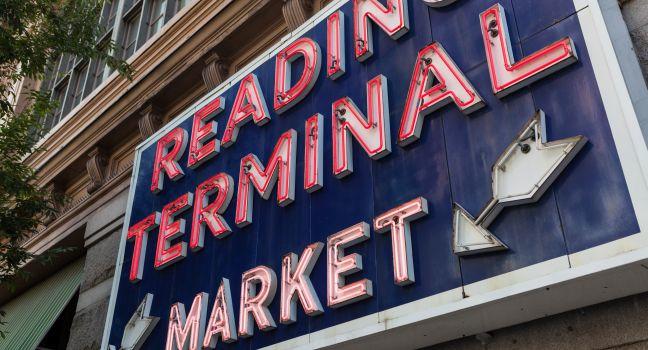
The roots of Reading Terminal Market date to 1892, when the Reading Railroad commissioned a food bazaar to be built in the train shed's cellar as part of its grand expansion plans. Today, the entire building is a National Historic Landmark, and the Reading Railroad train shed is a National Engineering Landmark. The sprawling market—a food heaven for Philadelphians and visitors alike—has more than 80 food stalls and other shops, selling items from hooked rugs and handmade jewelry to South American and African crafts. Try not to miss Miller's Twist for piping hot, freshly rolled soft pretzels; Bassetts Ice Cream, America's oldest ice-cream makers; Metropolitan Bakery, for hearty breads and light pastries; and the Down Home Diner for affordable Southern-style fare; you can also nibble on Greek, Mexican, Thai, and Indian foods. The Pennsylvania Dutch merchants from Lancaster County (closed on Sundays) bring in their specialties like Lebanon bologna, shoofly pie, and scrapple. Many stalls have their own counters with seating; there's also a central eating area. An open kitchen offers regular demonstrations by some of the region's top chefs. The market is open daily 8–6.
Rittenhouse Square
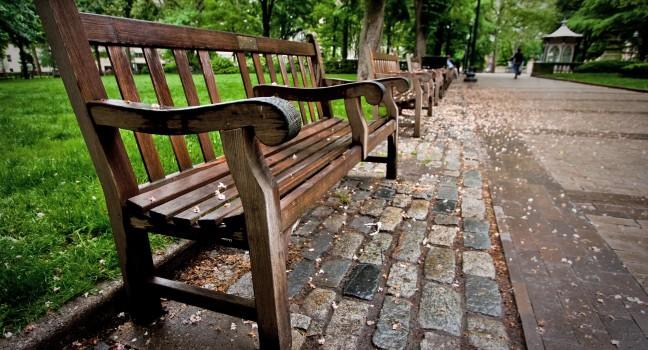
Once grazing ground for cows and sheep, Philadelphia's most elegant square is reminiscent of a Parisian park. One of William Penn's original five city squares, the park was named in 1825 to honor David Rittenhouse, 18th-century astronomer, clockmaker, and the first director of the United States Mint. Many of Philadelphia's celebrities have lived here. Extra paths were made for Dr. William White, a leader in beautifying the square, so he could walk directly from his home to the exclusive Rittenhouse Club across the square and lunch with author Henry James. Until 1950, town houses bordered the square, but they have now been replaced on three sides by luxury apartment buildings and hotels. Some great houses remain, including the former residence of Henry P. McIlhenny on the southwest corner. If you want to join the office workers who have lunch-hour picnics in the park, you can find many eateries along Walnut, Sansom, and Chestnut streets east of the square. Or you can dine alfresco at one of several upscale open-air cafés across from the square on 18th Street between Locust and Walnut. The term "Rittenhouse Row" describes the greater Rittenhouse Square area, bordered by Pine, Market, 21st, and Broad streets.
Wissahickon Valley Park (Valley Green)
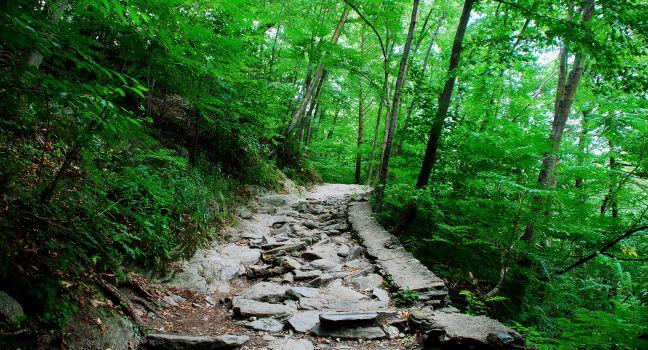
There are many great sections of Fairmount Park, but the 1,800 acres around Valley Green known as Wissahickon Valley Park may be the most stunning. Miles and miles of trails running along and above the river lead to covered bridges, a statue of a Lenape chief (rife with inaccuracies but created with good intentions), caves used by a 17th-century free-love cult, large boulders that drip water, and mallards quacking for bread bits. Forbidden Drive, on which cars are forbidden, runs from Northwestern Avenue (the westernmost part of Chestnut Hill) all the way to Lincoln Drive, where it connects to a bike and walking path that leads one way to Historic Rittenhouse Town (where you can also park and enter) and the other way to Manayunk and Kelly Drive, with additional bike/walking paths that take you to the city or out along the Schuylkill to Valley Forge. There are also many miles of surprisingly difficult mountain-bike trails. The Valley Green Inn is a very attractive restaurant with decent food at Forbidden Drive and Valley Green Road. Other recommended spots to hike to include Hudson and Andorra Meadows, Thomas Mill Covered Bridge, and Toleration Statue.
Italian Market
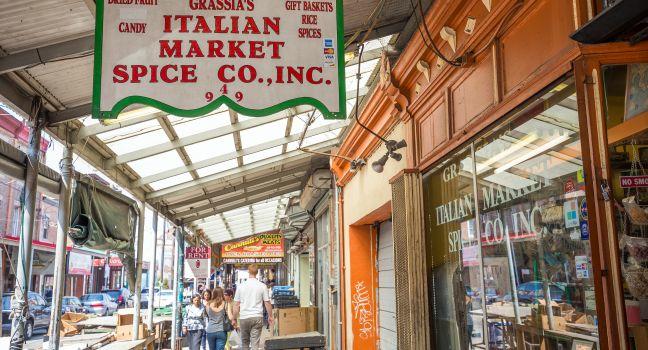
It's more Naples than Philadelphia: vendors crowd the sidewalks and spill out onto the streets; live crabs wait for the kill, while it's too late for the lambs and pigs displayed in butcher-shop windows; fresh, seasonal produce is piled high. The market dates to the turn of the last century, when it was founded by Italian immigrants. You'll find fresh pastas, cheeses, spices, meats, fruits and vegetables, and dry goods and kitchen equipment, as well as junky dollar-stores and funky boutiques. These days the market has become more diversified, with the addition of several Mexican grocers, a natural foods grocer, taquerias, a sandwich shop popular with foodies, and several coffee spots.
Academy of Music
The only surviving European-style opera house in America is the current home of the Opera Philadelphia and the Pennsylvania Ballet; for the past century, it was home to the Philadelphia Orchestra. Designed by Napoleon Le Brun and Gustav Runge, the 1857 building has a modest exterior; the builders ran out of money and couldn't put marble facing on the brick, as they had intended. The lavish interior, modeled after Milan's La Scala, has elaborate carvings, murals on the ceiling, and a huge Victorian crystal chandelier.
Barnes Foundation
Barnes wanted to help people "see as an artist saw," and to do this he created each gallery wall as an "ensemble" that reflected visual relationships: a Picasso could hang side by side with an African sculpture, and below an Old Master sketch and an iron door hinge. Works have no labels, but a free mobile guide, accessed via smartphone, provides information. Barnes's will decreed that nothing in the displays could be changed, so when the collection moved to the Parkway in 2012, the galleries were re-created within a structure that also has rooms for special exhibitions and a high-ceilinged court with a café. The pretty, pricier Garden Restaurant, with indoor and outdoor (in season) seating, serves delicious modern American fare.
The Comcast Center
Now Philadelphia's second-tallest building, the 975-foot Comcast Center is also one of its most eco-friendly: the 58-story design by Robert A. M. Stern Architects uses 40% less water than a traditional office building and also deploys its glass-curtain-wall facade to reduce energy costs significantly. Not to be missed is The Comcast Experience, a 2,000-square-foot high-definition video "wall" in the building's lobby, which also features Humanity in Motion, an installation of 12 life-size figures by Jonathan Borofsky that appear to be striding along girders 110 feet above. The building is also the site of an upscale food court and a seasonal outdoor café.
Eastern State Penitentiary Historic Site
Elfreth's Alley
Fort Mifflin
There are number of strange, forgotten sights in Philadelphia that in any other city would be a major, if not the major tourist attraction. Fort Mifflin may be the best of these sights in Southwest Philadelphia. The fort is enormous and nearly always empty. Within its walls, spread out on a huge lawn, are cannons and carriages, officers' quarters, soldiers' barracks, an artillery shed, a blacksmith shop, a bomb shelter, and a museum. The exhibits are dated, but the stories are fascinating, from the 40-day battle in 1777 to hold off British ships coming up the Delaware to the use of the site as a prison during the Civil War. The fort was almost totally destroyed during the Revolution, but was rebuilt in 1798 from plans by French architect Pierre L'Enfant, who also designed Washington, D.C. If you wander off beyond the fort and into the other parts of the 49-acre National Historic Landmark, you will find a long embankment of overgrown and unexcavated battlements from the 1800s. From Penn's Landing it's an easy jaunt on I–95.
The Franklin Institute
The Franklin Air Show celebrates powered flight with the Wright Model B Flyer and has virtual reality flight simulator experiences. Wondrous Space examines everything from gravity and asteroids to space careers and possible life beyond Earth. The SportsZone conveys the physics, physiology, and material science behind your favorite sport by simulating surfing, testing your reaction time, and more. Shows in the Fels Planetarium (one show included in general admission) focus on the stars, space exploration, comets, and other phenomena. Open seasonally, the outdoor Science Park has play equipment and picnic tables.
Headhouse Square
This open-air Colonial marketplace, extending from Pine Street to Lombard Street, is a reminder of the days when people went to central outdoor markets to buy food directly from farmers. It was first established as New Market in 1745, and George Washington was among those who came here to buy butter, eggs, meat, fish, herbs, and vegetables. The Head House, a boxy building with a cupola and weather vane, was built in 1803 as the office and home of the market master, who tested the quality of the goods. Today it's the site of a year-round farmers' market, featuring dozens of vendors selling local, seasonal produce, plus everything from honey and flowers to pickles and pastries. On some summer weekends, the square is also home to an arts-and-crafts fair featuring the work of Delaware Valley artists.
Independence Visitor Center
This is the city's official visitor center as well as the gateway to Independence National Historical Park. Here, you'll find a fully staffed concierge-and-trip-planning desk, which provides information on the Park, the Philadelphia Museum of Art, the Philadelphia Zoo, and other attractions, as well as a reservation and ticketing service. Before you set off on a walking tour, acquaint yourself with Colonial American history by watching the Founding Fathers come to life in the 30-minute movie Independence, one of the films shown in the center's two theaters. On the mezzanine level upstairs, there's Liberty View Terrace, a great outdoor platform with views of Independence Mall. There's also a café for quick bites, accessible restrooms, and an excellent gift shop, where you can stock up on books, videos, brochures, prints, wall hangings, and souvenirs of historic figures and events. An atrium connects the visitor center to a renovated underground parking area.
John Heinz National Wildlife Refuge at Tinicum
Part of the appeal of this refuge is its truly strange location for a nature preserve: it's between the airport and an oil refinery, and visitors seem to really enjoy the oddity of it. More than 280 species of hawks, swallows, herons, egrets, geese, gallinules, eagles, orioles, ducks, and other birds have been spotted at this 1,200-acre preserve, the largest remaining freshwater tidal marsh in Pennsylvania. There are 10 miles of foot trails, an observation deck, and boardwalks through the wet areas. The refuge is also home to fox, deer, muskrat, turtles, and frogs, and you'll likely see large carp and catfish flopping about the lilies. An environmental education center has some explanatory exhibits on wetlands and regional wildlife. There are many guided tours. You can even canoe, kayak, and mountain bike, but there are no rentals here. Binoculars and fishing rods are available for loan, free of charge. The refuge is convenient to I–95, which you can pick up from Penn's Landing.
Kelly Drive
One of the city's most scenic byways for a drive, woodsy Kelly Drive also has a popular walking, running, and biking path that parallels the road as it stretches more than 4 miles along the eastern side of the Schuylkill River from behind the Philadelphia Art Museum to City Avenue. You can make an almost 9-mile loop on bike or foot by crossing Falls Bridge and returning on the path parallel to the west side's Martin Luther King, Jr. Drive. MLK Drive closes to cars on weekends late March–November and has great Boathouse Row views. (The MLK Bridge has ongoing construction so check ahead to see if it's open.)
Sights, as well as river views, can distract you as you head north from the museum: Boathouse Row (rent a bike at Wheel Fun Rentals by Lloyd Hall); the Ellen Phillips Samuel Memorial Sculpture Garden with 17 statues on three terraces (and other park artworks; see associationforpublicart.org/tours), and nearby Laurel Hill Cemetery. Kelly Drive is named for John B. Kelly Jr., a city councilman and Olympic rower who was the brother of actress Grace Kelly. Parts of Kelly Drive sometimes close to cars for events, mostly on weekends, including rowing regattas (fun to watch; schedule on boathouserow.org) on the Schuylkill, mostly spring through fall.
Kimmel Center for the Performing Arts
Intended to make a contemporary design statement, the Kimmel Center for the Performing Arts has some architectural oomph with its dramatic vaulted glass roof. The 450,000-square-foot venue by architect Rafael Viñoly includes the 2,500-seat Verizon Hall, the more intimate 650-seat Perelman Theater, a central plaza, and a rooftop terrace bar. Making their home at the Kimmel are the Philadelphia Orchestra, Philadanco, Philadelphia Chamber Music Society, Chamber Orchestra of Philadelphia, and the Philly Pops. Free performances are given before some performances and on many weekends in the center's Commonwealth Plaza.
Museum of the American Revolution
Penn Museum
This is considered one of the world's finest archaeological and anthropological museums and research institutes—and would likely be a bigger draw to the city if its location next to a hospital megaplex made it easier to visit. The vast collection includes a large Egyptian sphinx, numerous mummies, a crystal ball once owned by China's dowager empress, some of the oldest writing known to humanity—Sumerian cuneiform clay tablets—and 4,600-year-old golden jewels from the royal tombs of Ur (modern-day Iraq). Other collections focus on artifacts from Africa, Asia, Central and North America, ancient Europe, and more. Much revamped (and still revamping), the museum mixes in contemporary culture to connect the past to the present, such as with Native American tribes, who helped reimagine the North American galleries. Two of the main Egyptian galleries will be closed until about 2027, but some Egyptian highlights remain on view in other rooms. The museum specializes in tours like Ancient Alcohol or Global Guides, where guides are native to the area they are speaking about. You can download self-guided tours like Amazing Artifacts from the museum's website, where you can also check out what events might be happening during your visit. The koi pond and gardens out front are free to enter and a great hideaway to enjoy a snack and a little respite.
Pennsylvania Academy of the Fine Arts
The nation's first art school and museum (founded in 1805) displays a notable collection of American art that ranges from the Peale family and Gilbert Stuart to Andrew Wyeth and Faith Ringgold. Fox Hunt by Winslow Homer and The Artist in His Museum by Charles Willson Peale are two famous works. PAFA's most prized work, The Gross Clinic by Thomas Eakins, depicts Samuel D. Gross, a celebrated 19th-century surgeon, presiding over an operation; the masterwork is co-owned with the Philadelphia Art Museum. The striking 1876 Gothic revival building was designed by Philadelphia architects Frank Furness and George Hewitt with a multicolor stone-and-brick exterior and an interior in rich hues of red, yellow, and blue; in time for America's 250th birthday, there's a new installation from its permanent collection. Until then, changing exhibitions in different mediums are presented in the adjacent modern Samuel M. V. Hamilton Building, an 11-story facility that holds classrooms and studios for continuing education and certificate students. Between the two buildings is the pedestrian Lenfest Plaza featuring Paint Torch, a 51-foot-tall sculpture of a paintbrush by Claes Oldenburg. The Barnes Foundation and the Philadelphia Art Museum may get more visitor attention, but art lovers will appreciate this special place.
Philadelphia Distilling
Please Touch Museum
Philadelphia's deservedly popular interactive children's museum, aimed at children ages eight and younger, instills a sense of wonder and fun from the get-go with a towering entrance hall that has a 40-foot-tall sculpture of the Statue of Liberty's torch as its centerpiece. The museum occupies a majestic beaux arts–style building constructed for the 1876 Centennial Exhibition, one of just two public buildings still standing from the event. It fills 65,000 square feet with more than 15 themed exhibits, including areas designed for toddlers, where kids can learn through hands-on play. Some popular areas are Food and Family, a mock supermarket; River Adventures, a water area; Wonderland, themed to Alice's adventures; a Makerspace and a Creative Arts Studio for inventing and creating; and a Rocket Room for space adventures. Another highlight is a circa-1908 Dentzel Carousel ride with 52 colorful animals. The 2025 season finale of the TV show Abbott Elementary, about the school's field trip, was filmed at the beloved museum. From fall 2025 through fall 2026, Please Touch will present a special exhibition, Discovering Democracy, as part of the nation's 250th birthday celebrations. All visitors require advance reservations. Allow about three hours for a visit; weekdays are less crowded. The museum has a café, and there's some free parking in the park.
Rittenhouse Row
Shop-'til-you-droppers make a beeline for Rittenhouse Row, the area between Broad and 21st streets and Spruce and Market streets. Lately chains like J.Crew, Aritzia, and Lululemon have been taking over Walnut Street between Rittenhouse Square and Broad Street, but this is still the greatest concentration of chic stores, tony boutiques, and jewelers you'll find in the city.


