162 Best Sights in Philadelphia, Pennsylvania

Background Illustration for Sights

Philadelphia continues on its upward trend of development in terms of new construction, a restaurant renaissance, and a cultural revival. The city rests its heels on an impressive past, and thanks to aggressive civic leadership and a close-knit local community, it continues to push toward an exciting future. And in many ways, it’s only started to realize its potential.

Philadelphia is a place of contrasts: Grace Kelly and Rocky Balboa; Vetri—one of the nation's finest Italian haute-cuisine restaurants—and the fast-food heaven of Jim's Steaks; Independence Hall and the modest Mario Lanza Museum; 18th-century national icons with 21st-century–style skyscrapers soaring above them. The Philadelphia Orchestra performs in a stunning concert hall—the focal point of efforts to transform Broad Street into a multicultural Avenue of the Arts. Along the same street, 25,000 Mummers dressed in outrageous sequins and feathers historically have plucked their banjos and strutted their stuff in a parade every New Year's Day. City residents include descendants of the staid Quaker Founding Fathers, the self-possessed socialites of the Main Line, and the unrestrained sports fans, who are as vocal as they are loyal.

Philadelphia has a population of just over 1.5 million, but is known as a city of neighborhoods (some say there are 109). Shoppers haggle over the price of tomatoes in South Philly's Italian Market; families picnic in the parks of Germantown; street vendors hawk soft pretzels in Logan Circle; and all around the city vendors sell local produce and other goods at farmers' markets. There’s also a strong sense of neighborhood loyalty: ask a native where he's from and he'll tell you: Fairmount, Fishtown, or Frankford, rather than Philadelphia.

Today you can find Philadelphia's compact 5-square-mile downtown (William Penn's original city) between the Delaware and the Schuylkill (pronounced skoo-kull) rivers. Thanks to Penn's grid system of streets—laid out in 1681—the downtown area is a breeze to navigate. The traditional heart of the city is Broad and Market streets (Penn's Center Square), where City Hall now stands. Market Street divides the city north and south; 130 South 15th Street, for example, is in the second block south of Market Street. North–south streets are numbered, starting with Front (1st) Street, at the Delaware River, and increasing to the west. Broad Street is the equivalent of 14th Street. The diagonal Benjamin Franklin Parkway breaks the rigid grid pattern by leading from City Hall out of Center City into Fairmount Park, which straddles the Schuylkill River and Wissahickon Creek for 10 miles.

Although Philadelphia is the sixth-largest city in the nation (about 1.5 million people live in the city, more than 6 million in the metropolitan area), it maintains a small-town feel. It's a cosmopolitan, exciting, but not overwhelming city, a town that's easy to explore on foot yet big enough to keep surprising even those most familiar with it.

Shofuso Japanese Cultural Center

Fairmount Park Fodor's Choice

Designed by Japanese architect Junzo Yoshimura, this exquisite replica of a traditional 17th-century house, reassembled here in 1958 after being exhibited at the Museum of Modern Art in New York City, is set in 1.2 acres of gardens with a teahouse, tiered waterfall, Japanese trees, and a koi pond. Shofu-So means "pine breeze villa," and the roof is made of the bark of the hinoki, a Japanese cypress. The house was created as an example of buildings that influenced mid-20th-century architecture. Twenty murals by acclaimed Japanese contemporary artist Hiroshi Senju decorate the main rooms, enhancing the serene spirit of the compact house and gardens. Staff is on hand to answer questions. Check the website for periodic tea ceremonies (reservations required) and events; Shofuso is one site of Philadelphia's Cherry Blossom Festival each spring. Note: Shofuso is not wheelchair accessible, and visitors must remove their shoes to enter the house.  Timed tickets are required, so it's best to reserve ahead. A visit takes 30 minutes to an hour, more if you linger and soak in this escape from the urban bustle. 

N. Horticultural Dr. and Lansdowne Dr., Philadelphia, PA, 19131, USA
215-878–5097
Sight Details
$15
Closed mid-Dec.–late Mar.; Mon. and Tues. late Mar.–Oct; and weekdays Nov.–mid-Dec.

Something incorrect in this review?

World Cafe Live

University City Fodor's Choice

While the venue gets its name from a well-known WXPN-FM program, and WXPN is housed in the same building, World Cafe Live is in fact a separate entity, even though aesthetically it hews to the XPN sound of acoustic, independent, and world-beat contemporary music. There are two live concert spaces, the larger of which, Downstairs Live, can pack in up to 650 concertgoers. There's a menu, but the food is so-so—better to eat a good meal elsewhere and then come for the show. If you can land gratis tickets via online pre-registration, XPN’s “Free at Noon” is a wholly unique concert experiencenotable artists break the routine, performing stripped-down lunchtime sets for an intimate crowd. Adele, John Legend, Kacey Musgraves, the Pixies, and the Pretenders are just a few of the big names who have graced the daytime stage. The upstairs venue is more of a drop-in place to listen to quality, mostly local bands.

Chanticleer

Chanticleer. Philadelphia, Pennsylvania.
Susan Harris/Flickr, [CC BY 2.0]

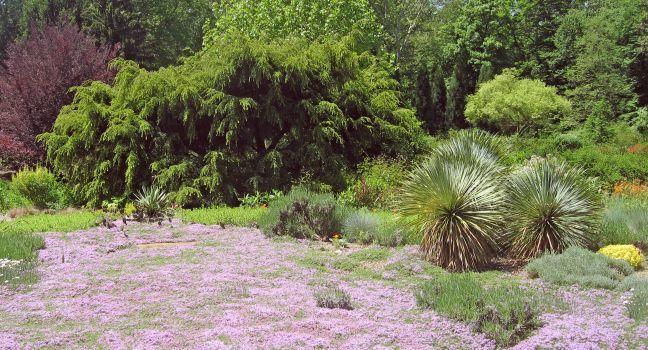
At this 35-acre pleasure garden circling a country estate even the old tennis court has been transformed into a garden. If you enjoy flowers and paths, this is a great stop. It's lavish, but its over-the-top opulence is part of what makes it so enjoyable.

786 Church Rd., Wayne, PA, 19087, USA
610-687–4163
Sight Details
$10
Apr.–Nov., Wed.–Sun. 10–5; May–Aug., Fri. 10–8; some 8 am openings scheduled in summer
Visitors may be turned away if the parking lot is full

Something incorrect in this review?

Recommended Fodor's Video

Cliveden

Germantown
The Chew House, also known as Cliveden, in the Germantown section of Philadelphia, PA.  Americans soldiers fought from inside of the house during the Battle of Germantown in the Revolutionary War
Daniel M. Silva / Shutterstock

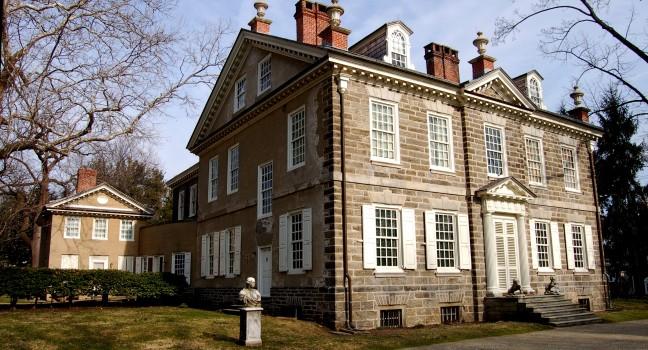
The grounds take up an entire block, and they are free to walk around. Cliveden's (rhymes with lived in) unique history, impressive architecture, and the guides who spin a good yarn combine to make the site perhaps the best visiting experience of the historic Germantown homes. The elaborate country house was built in 1767 by Benjamin Chew (1722–1810), a Quaker and chief justice of the colonies, and something of a fence-straddler during the Revolution. Cliveden was at the center of the Battle of Germantown, occupied by British troops, and the walls still bear the marks of American cannon fire. An elaborate reenactment of the Battle of Germantown is held here annually on the first Saturday in October. Cliveden excels at its robust programming, which is year-round, and much of which explores the experiences of slaves, servants, and workers at Cliveden, and larger themes of Northern slavery and slaveholders, like the Chew family, who owned plantations in the South. The house, on 6 acres, can be seen on a 45-minute guided tours. Off-season tours can be arranged by calling.

6401 Germantown Ave., Philadelphia, PA, 19144, USA
215-848–1777
Sight Details
$15
Closed Mon.–Wed. and Dec.–Apr.; tours on the hr, last tour at 3 pm

Something incorrect in this review?

Grumblethorpe

Germantown
Grumblethorpe Tenant House, Germantown, Pennsylvania
Smallbones [Public Domain], via Wikimedia Commons

The blood of General James Agnew, who died after being struck by musket balls during the Battle of Germantown, stains the floor in the parlor of this Georgian house—and no one has bothered to clean it up yet! Built by Philadelphia merchant and wine importer John Wister in 1744, Grumblethorpe is one of Germantown's leading examples of early-18th-century Pennsylvania-German architecture. The Wister family lived here for 160 years, and during the Revolution a teenage Sally Wister kept a diary that has become an important historical source for what that time was like. On display are period furnishings and family mementos, but the best part of the house is the large garden. Wisteria, the flowering vine, is named after Charles Wister (John's grandson), who was an avid botanist and amateur scientist, and there is plenty of it in the garden. There are also an enormous hundred-year-old rosebush, a peony alley, a two-story arbor with climbing clematis and a grapevine working its way across its base, and tulips in season.

Tours are offered May–October, on the second Saturday of the month; additional tours can be scheduled.

5267 Germantown Ave., Philadelphia, PA, 19144, USA
215-843–4820
Sight Details
$10
Closed Nov.–Apr.

Something incorrect in this review?

Independence Seaport Museum

Penn's Landing
Picton Castle, a 179’ long, 284-ton, three-masted barque sails in front of the Independence Seaport Museum (formerly the Philadelphia Maritime Museum) in the Penn's Landing complex along the Delaware River during Parade of Sails as part of Tall Ship
(c) Aneese | Dreamstime.com

Philadelphia's maritime museum houses many nautical artifacts, figureheads, and ship models, as well as interactive exhibits that convey just what the Delaware and Schuylkill rivers have meant to the city's fortunes over the years. You can climb in the gray, cold, wooden bunks used in steerage; unload cargo from giant container ships with a miniature crane; or even try your hand at designing your own boat. Enter the museum by passing under the three-story replica of the Benjamin Franklin Bridge, and be sure to check out the Seaport Boat Shop and Ship Model Shack, where members of the Philadelphia Ship Model Society put together scale-model ships in front of visitors' eyes. Tickets to tour the USS Becunia in addition to the museum cost slightly more. During summer season only, visitors can dine at the adjacent Liberty Point restaurant.

211 S. Columbus Blvd., Philadelphia, PA, 19106, USA
215-413–8655
Sight Details
$33 for museum and USS Olympia

Something incorrect in this review?

Academy of Natural Sciences of Drexel University

Parkway Museum District

One of this natural history museum's most popular attractions is Dinosaur Hall, with reconstructed skeletons of a Tyrannosaurus rex and some 30 others of its ilk, but interactive stations with docents and exhibits on topics including current environmental issues also help visitors engage with science and nature. Other areas are the Big Dig (open weekends at this writing), where you can hunt for real fossils, and Outside In, a hands-on experience where kids can climb into an eagle's nest, visit with animals, and more. State-of-the-art changing exhibitions are another highlight. The more than 35 dioramas of animals from around the world displayed in their natural habitats still have appeal and are gradually being renovated. Founded in 1812, the academy is considered the oldest natural history institution in the western hemisphere and a world leader in the fields of natural-science research and education; the present building dates from 1876.  Plan your visit ahead using the website's floor plan and program list. Weekdays and late afternoons are generally less busy times to visit.

1900 Benjamin Franklin Pkwy., Philadelphia, PA, 19103, USA
215-299–1000
Sight Details
$25 (tickets are cheaper online)
Closed Mon. and Tues.

Something incorrect in this review?

Adventure Aquarium

This high-tech, hands-on science education center is the home of "Shark Realm," a 550,000-gallon tank stretching two stories high and thick with sharks, stingrays, and sawfish. The daring can traverse “Shark Bridge,” a V-shaped rope suspension bridge just above the exhibit. In the "Hippo Haven,” hippopotamuses cohabitate with birds, lizards, and tortoises also native to Africa. There are also up-close "animal experiences," penguin feedings, live animal talks, and immersive 3D theater presentations. The aquarium features a coffee shop, an eco-friendly marketplace, and a beer garden (with outdoor seating during the warmer months). To get here, drive or take the ferry from Penn's Landing. Tickets are cheaper if you purchase online ahead of time.

African American Museum in Philadelphia

Old City

Opened in the Bicentennial year of 1976, this is the first museum of its kind funded and built by a city. The centerpiece is "Audacious Freedom: African Americans in Philadelphia 1776–1876," an interactive and immersive exhibit that uses technology to tell the stories of pioneers in the freedom movement. The list includes Frances Ellen Watkins Harper, a suffragist and conductor on the Underground Railroad; Thomas Morris Chester, the first black lawyer to argue before the U.S. Supreme Court; and Elizabeth Taylor Greenfield, a renowned singer who performed for Queen Victoria. Visiting and rotating exhibitions dive deep into the artistic, cultural, and political contributions of African Americans. The museum's gift shop stocks one of the city’s widest selections of books on black culture, history, fiction, poetry, and drama, along with textiles, sculpture, jewelry, prints, and tiles.

701 Arch St., Philadelphia, PA, 19106, USA
215-574–0380
Sight Details
$14
Closed Mon.–Wed.

Something incorrect in this review?

American Swedish Historical Museum

South Philadelphia

This neoclassical building in FDR Park celebrates Swedish contributions to American history. The Swedes settled the Delaware Valley in the mid-1600s, and it was a pair of Swedish brothers who sold William Penn the land that became Philadelphia. Modeled after a 17th-century Swedish manor house, the museum features galleries and rooms that concentrate on specific eras and industrious characters. The John Ericsson Room honors the designer of the Civil War ship the USS Monitor; the Jenny Lind Room contains memorabilia from the P. T. Barnum–led American tour the soprano known as the “Swedish Nightingale” embarked upon in 1850. Other rooms display handmade dolls, crafts, paintings, and drawings, all in addition to rotating cultural exhibitions. It's not the most riveting place on paper, but the unconventional location, combined with its examination of overlooked history, make for an interesting visit.

1900 Pattison Ave., Philadelphia, PA, 19145, USA
215-389–1776
Sight Details
$15
Closed Mon.

Something incorrect in this review?

Arch Street Meeting House

Old City

This site has been home to a Quaker gathering place since 1682. The current simple-lined building, constructed in 1804 for the Philadelphia Yearly Meeting of the Society of Friends, is still used for that purpose, as well as for weekly services. Among the most influential members in the 19th century was Lucretia Mott (1793–1880), a leader in the women's suffrage, antiwar, and antislavery movements. A small museum in the building presents a series of dioramas and a slide show depicting the life and accomplishments of William Penn (1644–1718), who gave this land to the Society of Friends. Tours take place during the day April through October, and by appointment only November through March.

320 Arch St., Philadelphia, PA, 19106, USA
215-627–2667
Sight Details
$5
Closed Mon.–Wed. and mid-Dec.--Feb.

Something incorrect in this review?

Arthur Ross Gallery

University City

Penn's official art gallery contains treasures from the university's collections—especially prints and drawings—and special exhibitions that have had a modern/contemporary bent in recent years. The gallery shares its historical-landmark building, designed by Frank Furness, with the Fisher Fine Arts Library.

220 S. 34th St., Philadelphia, PA, 19104, USA
215-898–2083
Sight Details
Free
Closed Mon. and holidays

Something incorrect in this review?

Athenaeum of Philadelphia

Housed in a national landmark Italianate Revival brownstone built in the mid–19th century, the Athenaeum is a research library specializing in architectural history and design with a collection that features millions of items. The library, founded in 1814, was refurbished in 2022 and contains significant materials on the French in America and on early American travel, exploration, and transportation. Besides books, the Athenaeum has notable paintings and period furniture; changing exhibits are presented in the gallery. Research is by appointment only.

219 S. 6th St., 19106, USA
215-925–2688
Sight Details
Closed Sun. and most holidays

Something incorrect in this review?

Avenue of the Arts

Center City East

Broad Street, the city's main north–south thoroughfare, has been reinvented as a performing arts district. Although most of the cultural institutions are situated along South Broad Street from City Hall to Spruce Street, the avenue's cultural, education, and arts organizations reach as far south as Washington Avenue in South Philadelphia and as far north as Dauphin Street in North Philadelphia. The main venue is the Kimmel Center for the Performing Arts, at Broad and Spruce streets, which includes a 2,500-seat concert hall designed for the Philadelphia Orchestra. The newest addition is the Suzanne Roberts Theatre, a 365-seat facility that is home to the Philadelphia Theatre Company.

408 S. Broad St., Philadelphia, PA, USA
215-731–9668

Something incorrect in this review?

Bartram's Garden

South Philadelphia

Established in 1728 by pioneering botanist John Bartram, this is America's oldest surviving botanical garden. Bartram, with his son William, collected and identified thousands of indigenous North American (and beyond) plants, showcasing them for both scientific and commercial purposes. Today, the 45-acre National Historic Landmark on the west bank of the Schuylkill River boasts a diversity of flora to wander leisurely about—from flowering shrubs and trees (azalea, rhododendron, magnolia) to rare specimens like the Franklinia, a tree that died out in its native Georgia, surviving today only because Bartram cultivated it. The best months to come are April–June, when the gardens are fragrant and filled with the lively chatter of birds, but summer and fall also have their charms. The original 18th-century farmhouse still stands, and you can tour its rooms and various exhibits, including Native American artifacts from the property dating back 3,000 years.

Drive or take a cab, as the grounds are tucked down a driveway in an out-of-the-way part of Southwest Philadelphia.

5400 Lindbergh Blvd., Philadelphia, PA, 19143, USA
215-729–5281
Sight Details
Garden free to the public daily

Something incorrect in this review?

Battleship New Jersey

The World War II–era USS New Jersey, one of the most decorated battleships in the history of the U.S. Navy, is now a floating museum. It's docked in Camden, New Jersey, just south of the Freedom Mortgage Pavilion amphitheater. A 90-minute guided tour takes you around the upper and lower decks of the ship, or you can explore this fascinating vessel on your own. Some recently launched tours include evening small-group tours of the engine room and other specific areas; and families and groups can arrange to tour, dine, and sleep on the vessel overnight.

The Bellevue Hotel

Center City West

Though its name has been changed many times, this building will always be "the Bellevue" to Philadelphians. The hotel has had an important role in city life, much like the heroine of a long-running soap opera. The epitome of the opulent hotels characteristic of the early 1900s, the Bellevue Stratford was the city's leading hotel for decades. It closed in 1976 after the first outbreak of Legionnaires' disease, which spread through the building's air-conditioning system during an American Legion convention. In late 2024, the hotel reopened after a major renovation, which restored many of its historic elements. It's worthwhile to stop into the lobby to see why people call the Bellevue "the grand dame of Broad Street."

200 S. Broad St., Philadelphia, PA, 19102, USA
215-893–1234

Something incorrect in this review?

Belmont Plateau

Fairmount Park

Literally the high point of a visit to Fairmount Park, the plateau has a stunning view from 243 feet above river level that takes in sweeping park vistas, recreation areas, and, 4 miles away, the Philadelphia skyline. This area is busy on weekends but may be empty during the week, depending on the weather. The large Palladian house on the plateau, Belmont Mansion, dates to 1745 and is an event space. It's also home to the small, rather dated but moving Underground Railroad Museum at Belmont Mansion ( belmontmansion.org  215/878–8844 or 267/736–0007  $15  closed Fri.–Wed. ), which has an introductory room with panels of historical information to read and some artifacts, a film with information about the Underground Railroad and the mansion's role as a stop on it, and additional displays seen on a tour in some of the mansion's rooms. 

2000 Belmont Mansion Dr., Philadelphia, PA, 19131, USA

Something incorrect in this review?

Benjamin Franklin Bridge

Old City

When the bridge opened in 1926, its 1,750-foot main span made it the longest suspension bridge in the world. Paul Cret, architect of the Rodin Museum, was the designer. The bridge, which crosses the Delaware River, is mainly used by cars and the PATCO commuter train, which has several stops in Center City and South Jersey. The bridge is most impressive when it's lit at night. Start the 1¾-mile walk (one way) from either the Philadelphia side, two blocks north of the U.S. Mint, or the Camden, New Jersey, side, where there are metered parking lots. Enjoy stunning city views along the way, but know it's best to walk across on mornings or cooler days, as there's no shade.

5th and Vine Sts., Philadelphia, PA, 19106, USA
215-218–3750
Sight Details
Free
Weather and construction conditions may restrict access to the walkway. For updates call 215/218–3750 Ext. 2255 (weekdays 9–5). All other times call DRPA Police Radio at 856/968–3301 or 215/218–3750 Ext. 3301

Something incorrect in this review?

The Benjamin Franklin Museum

Old City

This museum built on the site that was Benjamin Franklin's first permanent home in Philadelphia was thoroughly renovated in 2013, reopening as the Benjamin Franklin Museum. The exhibits combine the latest touch-screen displays and computer-generated animation with a chess set, eyeglasses, and other items actually used by the Renaissance man. Franklin's multifaceted roles as scientist, inventor, philosopher, writer, politician, and businessman are represented in various rooms via interactive displays. Franklin, publisher of Poor Richard's Almanack, helped draft the Declaration of Independence and negotiate peace with Great Britain. He also helped found Pennsylvania Hospital, the University of Pennsylvania, the Philadelphia Contributionship, and the American Philosophical Society. In the courtyard adjacent to the museum, architect Robert Venturi erected a steel skeleton of Franklin's former home. You can peek through "windows" into cutaways to see wall foundations, outdoor privies, and other original elements uncovered during excavation. At the Market Street side are several houses, now exhibition halls, that Franklin rented in addition to his main home. Here, too, you can find a restoration of a Colonial-era print shop and an operational post office. Don't forget to get a letter hand-stamped with a "b. free franklin" cancellation.

Betsy Ross House

Old City

It's easy to find this little brick house with the gabled roof: just look for the 13-star flag displayed from its second-floor window. Whether Betsy Ross, also known as Elizabeth Griscom Ross Ashbourn Claypoole (1752–1836), actually lived here and whether she really made the first Stars and Stripes is debatable. Nonetheless, the house, built around 1740, is a splendid example of a Colonial Philadelphia home. The eight-room house overflows with artifacts such as a family Bible and Ross's chest of drawers and reading glasses. You may have to wait in line, as this is one of the city's most popular attractions. The house, with its winding narrow stairs, is not accessible to people with disabilities. Alongside the house is a courtyard with a fountain, as well as the graves of Ross and her third husband, John Claypoole. Visitors can meet Betsy in her upholstery shop (the only working Colonial upholstery shop in the country) and enjoy interactive historical programming.

Bishop White House

Old City

Built in 1787, this restored upper-class house embodies Colonial and Federal elegance. It was the home of Bishop William White (1748–1836), rector of Christ Church, the first Episcopal bishop of Pennsylvania and spiritual leader of Philadelphia for 60 years. White, a founder of the Episcopal Church after the break with England, was chaplain to the Continental Congress and entertained many of the country's first families, including Washington and Franklin. The second-floor study still contains much of the bishop's own library. The building is currently not open to the public. 

Bouvier's Row

Society Hill

Three of the Victorian brownstones on a stretch of 3rd Street near Locust Street, often called Bouvier's Row, were once owned by the late Jacqueline Kennedy Onassis's ancestors. Michel Bouvier, her great-great-grandfather—the first of the family to come from France—and many of his descendants lie in the family vault at Old St. Mary's Church, a few blocks away on 4th Street. These are private residences and can be viewed from the outside only.

258–262 S. 3rd St., Philadelphia, PA, 19106, USA

Something incorrect in this review?

Bryn Mawr College

The 1939 film Philadelphia Story, a depiction of Main Line society life, starred Katharine Hepburn, a graduate of Bryn Mawr College, the first college for women that offered graduate degrees. Founded in 1885 and modeled after Cambridge and Oxford colleges, Bryn Mawr introduced the "collegiate Gothic" style of architecture to the United States.

Calder Gardens

Parkway Museum District

Focused on art and nature, this lively new Parkway cultural destination opposite the Barnes Foundation includes a building by architectural firm Herzog & de Meuron for works by sculptor Alexander Calder (1898–1976) and naturalistic gardens by landscape designer Piet Oudolf. Extensive public programming, from performances to wellness activities, is planned, and galleries and outdoor spaces present rotating displays of art from the Calder Foundation. The third generation of Calders whose creations can be seen in Philadelphia, Alexander Calder is noted for his mobiles but also produced stabiles (static sculptures), wire sculptures, oil paintings, jewelry, and other works.

2100 Benjamin Franklin Pkwy., Philadelphia, PA, 19103, USA
215-278--7250
Sight Details
$18
Closed Tues.

Something incorrect in this review?

Carpenters' Hall

Old City

This handsome, patterned red-and-black brick building dating from 1770 was the headquarters of the Carpenters' Company, a guild founded to support carpenters, who were both builders and architects in this era, and to aid their families. In September 1774 the First Continental Congress convened here and addressed a declaration of rights and grievances to King George III. The year 2024 marked the 300th anniversary of the Carpenters' Company and the 250th anniversary of the First Continental Congress. The Carpenters' Company still owns and operates the building. Today re-creations of Colonial settings include original Windsor chairs and candle sconces and displays of 18th-century carpentry tools.

320 Chestnut St., Philadelphia, PA, 19106, USA
215-925–0167
Sight Details
Free; donations accepted
Closed Mon.; closed Tues. in Jan. and Feb.

Something incorrect in this review?

Cathedral Basilica of Saints Peter and Paul

Parkway Museum District

The basilica of the archdiocese of Philadelphia is the spiritual center for the Philadelphia area's 1½ million Roman Catholics. Topped by a huge, distinctive copper dome, the large brownstone building was built between 1846 and 1864 in the Italian Renaissance style. Many of the interior decorations are by Constantino Brumidi, who painted the dome of the U.S. Capitol. Several Philadelphia bishops and archbishops are buried beneath the altar. Pick up a brochure for a self-guided tour by the entrance or gift shop, or see the website.

1723 Race St., Philadelphia, PA, 19103, USA
215-561–1313
Sight Details
Free

Something incorrect in this review?

Cherry Street Pier

Penn's Landing

Spread out across 55,000 square feet, the multiuse Cherry Street Pier is among the newer gems of Philadelphia’s slow but gradual Delaware River revitalization efforts. It's a great place to explore and soak in views of the Ben Franklin Bridge, waterfront scenery, and beyond, especially during the warmer months. It's free to walk around, but there's plenty to purchase here, as it's home to artists’ studios, artisan craft fairs, and continually changing exhibits throughout the versatile space. There's a diversity of snacks, too. Popular concessions include a variety of sweets, local brews, and comfort foods.

Chinatown Friendship Arch

Chinatown

Conceptualized by the late Sabrina Soong, a Chinese-American architect/artist and Philadelphia resident, the 40-foot-tall, 88-ton “China Gate” has welcomed visitors to historic Chinatown since its introduction in 1984. Designed in a manner reminiscent of China’s Qing dynasty, it features materials and cultural flourishes fabricated by artisans from Philadelphia’s sister city of Tianjin, China. The Chinese characters emblazoned on the “Friendship Arch” translate simply to “Philadelphia Chinatown,” a paean to the neighborhood’s historic importance and resilience.

Christ Church

Old City

The Anglicans of the Church of England built a wooden church on this site in 1697. When they outgrew it, they erected a new church, the most sumptuous in the colonies, probably designed by Dr. John Kearsley and modeled on the work of famed English architect Sir Christopher Wren. The symmetrical, classical facade with arched windows, completed in 1754, is a fine example of Georgian architecture; the church is one of the city's treasures. The congregation included 15 signers of the Declaration of Independence. The bells and the soaring 196-foot steeple, the tallest in the colonies, were financed by lotteries run by Benjamin Franklin. Brass plaques mark the pews of George and Martha Washington, John and Abigail Adams, Betsy Ross, and others. Two blocks west of the church is Christ Church Burial Ground. Guided tours are available throughout the day.

20 N. American St., Philadelphia, PA, 19106, USA
215-922–1695
Sight Details
$10 for Christ Church admission and guided tour, $8 for Burial Ground admission and self-guided tour
Closed Sun.

Something incorrect in this review?