7 Best Sights in New Orleans, Louisiana

Background Illustration for Sights

We've compiled the best of the best in New Orleans - browse our top choices for the top things to see or do during your stay.

Audubon Park

Uptown Fodor's Choice
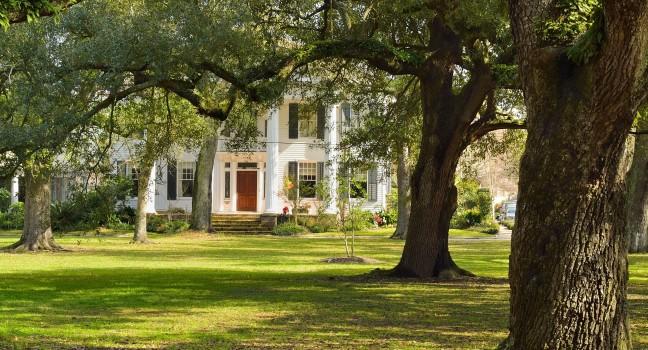
Villa at Audubon Park in New Orleans.
gibleho / Shutterstock

Formerly the plantation of Etienne de Boré, the father of the granulated-sugar industry in Louisiana, this large, lush patch of greenery stretches from St. Charles Avenue across Magazine Street to the river. Designed by John Charles Olmsted, nephew of Frederick Law Olmsted (who laid out New York City's Central Park and Asheville's Biltmore Estate), this park contains the world-class Audubon Zoo; a 1.8-mile track for running, walking, or biking; picnic and play areas; Audubon Park Golf Course; tennis courts; a swimming pool; horse stables; and a river view known by locals as the Fly. Calm lagoons wind through the park, harboring egrets and other indigenous species. The park and zoo were named for the famous ornithologist and painter John James Audubon, who spent many years working in and around New Orleans.

Alcée Fortier Park

Bayou St. John

Situated at Esplanade Avenue and Mystery Street, this tiny sliver of a park was named for the philanthropist and professor Alcée Fortier, who owned much of the surrounding area in the late 19th century and who founded a public school. A neighborhood favorite, the park is almost completely maintained by the efforts of local volunteers who tend the lush landscaping, which includes palms, caladiums, and azaleas, keep up the collection of whimsical sculptures and art, and make sure the concrete chess tables are ready for game time (complete with baskets of chess pieces). A focal point of the Bayou St. John neighborhood, Alcée Fortier Park is surrounded by a concentration of hip restaurants and neighborhood grocers.

1301--1399 Mystery St., New Orleans, LA, 70119, USA

Something incorrect in this review?

Bayou St. John

Bayou St. John

A bayou is a natural inlet, usually a slow-moving, narrow waterway that emerges from the swamp at one end and joins a larger body of water at the other. This bayou—the only one remaining in New Orleans—borders City Park on the east and extends about 4 miles from Lake Pontchartrain to just past Orleans Avenue. It is named for John the Baptist. June 23 (St. John's Eve, and therefore the day before his feast day) was the most important day in the year for voodoo practitioners, and it was notoriously celebrated on the bayou's banks in the 1800s. The first European settlers in the area, most likely trappers, coexisted with Native Americans here beginning in 1704, and this is the waterway that ships coming from the Gulf of Mexico used to deliver goods into the city center. Today, the bayou is still a popular destination among New Orleanians, whether for tradition's sake—as is the case for the famed Mardi Gras Indians, who gather here for their annual celebrations—for a festival such as the Bayou Boogaloo in May, or simply for a relaxing afternoon of fishing, canoeing, or picnicking along the grassy banks. Scenic biking and walking trails run alongside the waterway all the way to the lake. Follow them and you'll discover a little-known island, a fort in ruins, and the graceful old homes of picturesque Moss Street that morph into the dazzling waterfront mansions of Bancroft Drive.

Bell St. and Moss St., New Orleans, LA, 70119, USA

Something incorrect in this review?

Recommended Fodor's Video

Cypress Grove Cemetery

Mid-City

This expansive and still-used cemetery was founded by the Fireman's Charitable and Benevolent Association in 1840 to honor the city's volunteer firemen and their families. Over time, as the cemetery expanded, leading architects and craftsmen were called upon to design and build tombs commemorating the lives of many of New Orleans's most prominent citizens. Crafted in marble, granite, and cast iron, tombs at Cypress Grove are among the nation's leading examples of memorial architecture, including entrance pylons and lodges resembling Egyptian ceremonial architecture. Of particular note is the Chinese Soon On Tong Association's tomb, which features a grate in front so that visitors can burn prayers written on paper in it. Admission is free and visitors are encouraged to explore on their own, although outside companies do offer tours.

Lake Lawn Metairie Cemetery

Mid-City

The largest cemetery in the metropolitan area, known to locals simply as Metairie Cemetery, is the final resting place of nine Louisiana governors, seven New Orleans mayors, and musician Louis Prima. Many of New Orleans's prominent families are also interred here in elaborate monuments ranging from Gothic crypts to Romanesque mausoleums to Egyptian pyramids. The arrangement of tombs reflects the cemetery's former life as a horse-racing track, with the tombs arranged around the perimeter and interior. Cemetery staff are happy to offer a map to anyone who asks.

Luling Mansion

Bayou St. John

Also called the "Jockey's Mansion," this massive, three-story Italianate mansion is a neighborhood landmark (and now a popular setting for Hollywood film crews). Designed by the prominent New Orleans architect James Gallier Jr., it was built in 1865 for Florence A. Luling, whose family had made a fortune selling turpentine to Union soldiers when they occupied New Orleans during the Civil War. When the Louisiana Jockey Club took over the Creole Race Course (now the Fair Grounds) in 1871, they purchased the mansion and used it as a clubhouse for the next 20-odd years. It is not open to the public.

1436 Leda Ct., New Orleans, LA, 70119, USA

Something incorrect in this review?

Milton H. Latter Memorial Library

Uptown

This former private house serves as the most elegant public library in New Orleans. Built in 1907, the Italianate Beaux-Arts mansion was once the home of the silent-movie star Marguerite Clark. The Latter family bought it and donated it to the city as a library in 1948 in memory of their son, who was killed in World War II. An extensive renovation restored the home to its former grandeur.

5120 St. Charles Ave., New Orleans, LA, 70115, USA
504-596–2625
Sight Details
Closed Sun.

Something incorrect in this review?